Juneau: Glacier Bay National Park, Tlingit Culture, Alaska Marine Highway, Eaglecrest Skiing, Southeast Alaska Seafood, and the Juneau Icefield
Juneau: Glacier Bay NP (105km west by aircraft 13,300 sqkm UNESCO 1992, bay covered 1,500m deep ice 1750 retreated 100km most rapid documented glacier retreat world, John Muir four trips 1879 1880 1888 1890 Muir Glacier named for him now retreated 48km, William Skinner Cooper 1916 first measured plant succession, Johns Hopkins Glacier calves so dense NPS limits access 3km, 1,045 glaciers remain), Tlingit (17,000 enrolled Central Council Tlingit Haida, Raven Eagle moiety exogamous clan crest system, totem pole western red cedar Alaska yellow cedar stacked crests mythological beings, Sitka NHP 18 totem poles 106 Metlakatla 1905 Lewis Clark Centennial moved from Portland, Sealaska Heritage Institute Juneau 105 S Seward Tlingit Haida Tsimshian Celebration festival every 2 years 5,000+ participants), AMHS (1963 Juneau HQ 9 vessels 35 communities, Sitka 8,500 former Russian capital, Ketchikan 14,000 Creek Street Norwegian Festival, Petersburg 3,000 Little Norway, Wrangell 2,000 only Alaska community 4 flags Tlingit Russian British American, Haines 2,600 Haines Highway to Alaska system, Bellingham to Juneau 38-48 hours orca Dall porpoises bald eagles black bears), Eaglecrest (640 acres 540m vertical 900cm annual snowfall deepest SE Alaska, municipally owned Douglas Island 18km 25min, Auke Bay 18km north whale watching flightseeing kayaking, Herbert Glacier Trail 16km round-trip remote old-growth), seafood (all 5 Pacific salmon species king highest fat, pink 200-400M odd-year run largest single-species wild salmon run world, halibut world record 227kg Dutch Harbor 1996, Hangar on the Wharf Marine Way historic seaplane hangar, Tracy King Crab Shack outdoor crab claws forearm-sized, Taku Glacier Lodge floatplane only salmon bake wilderness), Juneau Icefield (3,800 sqkm 38 named glaciers 5th-largest non-polar icefield world, 600-900cm snowfall accumulation zone, Taku Glacier only advancing tidewater Alaska advanced 8km 1890-1989 closed fjord, JIRP 1946 Maynard Miller 1922-2014 78+ years 1,500+ student researchers 1% volume loss per decade, glacier flow internal shear stress ice crystals bedrock sliding 1-5m per day).
- 1
Glacier Bay National Park - The Park That Was Born
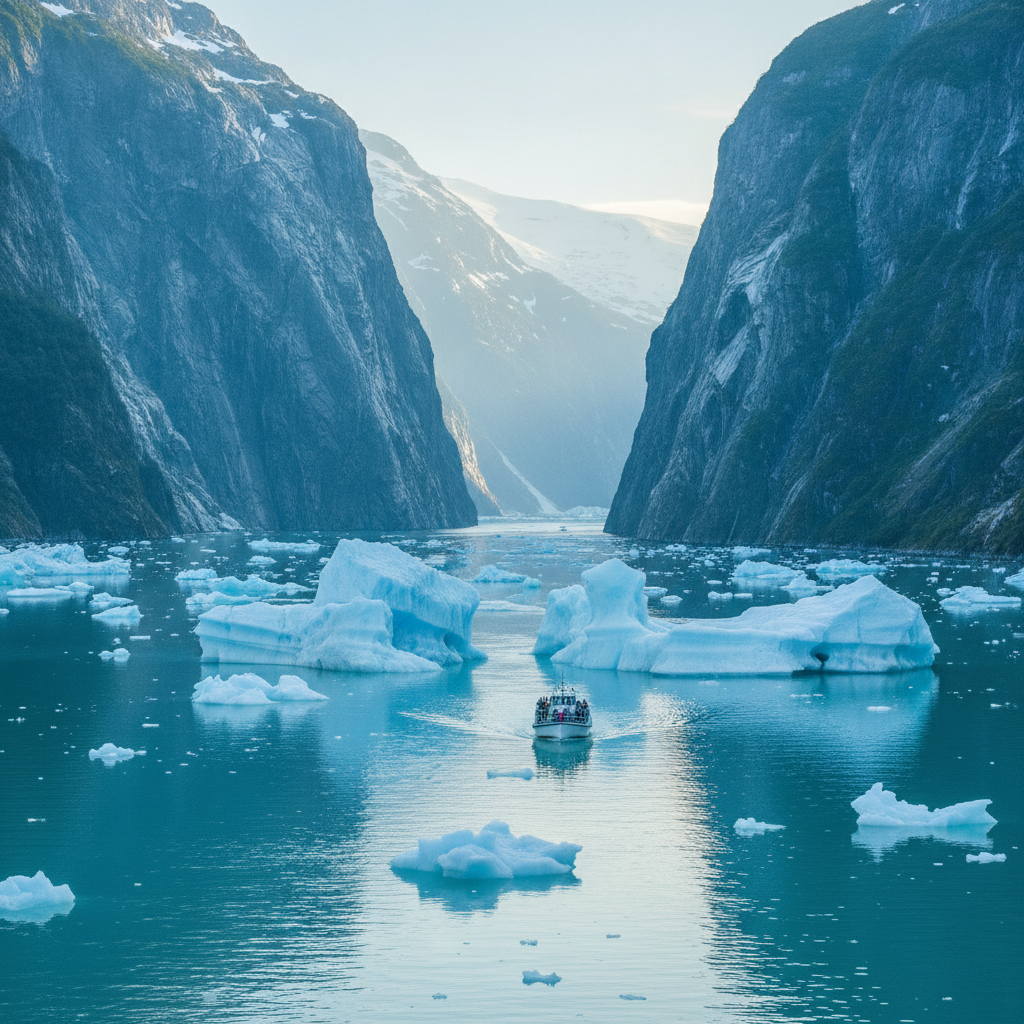
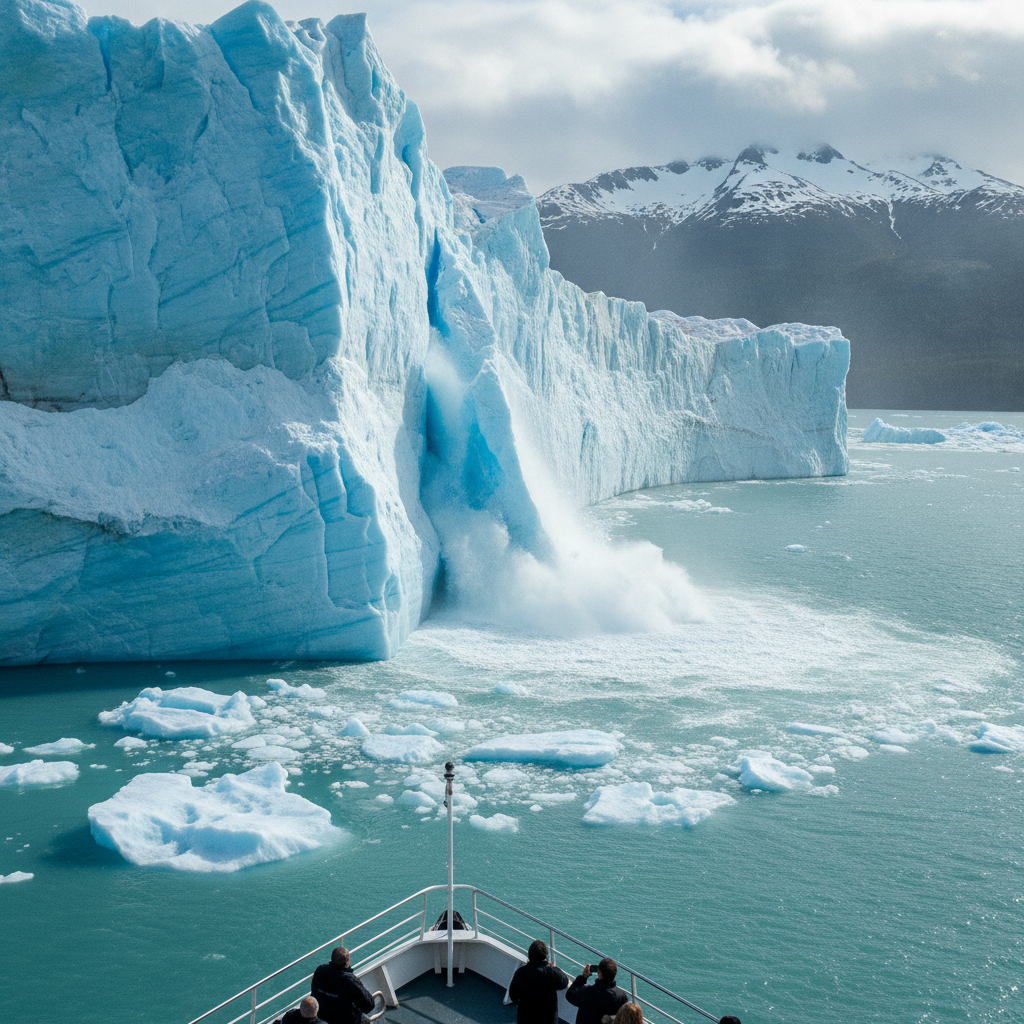
Glacier Bay National Park and Preserve (at 1 Park Road, Gustavus, AK, 105 km west of Juneau by small aircraft or 75 km by high-speed ferry from Juneau, established as a national monument 1925 by Calvin Coolidge, designated a national park December 2, 1980, UNESCO World Heritage Site 1992, 13,300 square km): the national park surrounding Glacier Bay -- a fjord that did not exist as open water 250 years ago. In 1750, the entire bay was covered by the Grand Pacific Glacier, a single massive ice sheet 1,500 m deep at its maximum. The glacier began retreating in approximately 1750 (possibly triggered by the end of the Little Ice Age), and has retreated 100 km since that time -- the most rapid and well-documented glacier retreat in the world, exposing land that has been colonized by plants, animals, and eventually human visitors in an ongoing natural experiment in ecological succession that has been studied since botanist William Skinner Cooper (born June 25, 1884, Detroit; died November 17, 1978, Minneapolis) first measured the plant succession at Glacier Bay in 1916. John Muir at Glacier Bay: the naturalist and writer John Muir (born April 21, 1838, Dunbar, Scotland; died December 24, 1914, Los Angeles) made four trips to Glacier Bay (1879, 1880, 1888, 1890), describing it as a revelation of God in glacial ice and ice-carved rock -- the Muir Glacier (now retreated 48 km from where Muir described it) was named in his honor. The current Glacier Bay: approximately 1,045 glaciers remain in the park, with tidewater glaciers (glaciers reaching the sea) still calving icebergs into the bay at the upper fjords. The Johns Hopkins Glacier (the most active tidewater glacier in the park): calves so frequently and densely that the National Park Service limits boat access to within 3 km of the ice face.
- 2
The Tlingit People and Southeast Alaska Native Culture
The Tlingit people (Lingit in their own language -- the People of the Tides, or the People): the indigenous people of the Southeast Alaska coast, the Yukon interior, and the northern British Columbia coast, with a population of approximately 17,000 enrolled members of the Central Council of Tlingit and Haida Indian Tribes of Alaska (the largest federally recognized tribe in Alaska). The Tlingit oral tradition, clan structure, and art: the Tlingit social structure is organized into two moieties (the Raven and the Eagle/Wolf, which are exogamous -- members must marry someone from the opposite moiety), with each moiety subdivided into approximately 20 clans, each owning specific crests (the animal and supernatural beings that form the basis of the totem pole tradition). The Tlingit totem pole: the most recognizable art form of the Pacific Northwest Coast, carved from western red cedar (in Alaska, typically from Alaska yellow cedar (Callitropsis nootkatensis) due to the scarcity of red cedar at northern latitudes) and depicting clan crests, mythological beings, and historical events in the form of stacked supernatural and animal figures. The Sitka National Historical Park (at 106 Metlakatla Street, Sitka, AK, 200 km southwest of Juneau): the collection of 18 totem poles (originals and replicas from the 1905 Lewis and Clark Centennial Exposition in Portland, moved to Sitka) in the old-growth Sitka spruce forest of the park -- the most significant outdoor totem pole collection in Southeast Alaska. The Sealaska Heritage Institute (at 105 S Seward Street, Juneau, the cultural and educational organization of the Tlingit, Haida, and Tsimshian people of Southeast Alaska): the institution preserving and promoting the language, art, and cultural heritage of the three major peoples of the Tongass region, with the annual Celebration festival (held every 2 years in Juneau, drawing 5,000+ participants from Southeast Alaska communities).
- 3
The Alaska Marine Highway and Southeast Alaska Communities
The Alaska Marine Highway System (AMHS, headquartered at 6858 Glacier Highway, Juneau, operated by the Alaska Department of Transportation since 1963): the state-operated ferry system with 9 vessels connecting 35 coastal communities in Southeast Alaska (the Inside Passage route from Bellingham, WA to Southeast Alaska communities), Southcentral Alaska (Prince William Sound communities including Whittier and Valdez), and Southwest Alaska (Kodiak Island and the Alaska Peninsula communities). The ferry network is the lifeline of communities like Sitka (population 8,500, accessible only by sea or air, the former capital of Russian America), Ketchikan (population 14,000, the first Alaska community reached by cruise ships from the south, known for the Creek Street boardwalk, the Saxman Totem Pole Park, and the annual Blueberry Arts Festival), Petersburg (population 3,000, the Norwegian-founded fishing community known as Little Norway for its Scandinavian heritage and the Norwegian Festival held each May), Wrangell (population 2,000, the only community in Alaska to have been governed under four flags: Tlingit, Russian, British, and American), and Haines (population 2,600, at the terminus of the Haines Highway connecting the Inside Passage to the Alaska Highway system). The Inside Passage landscape: the ferry journey from Bellingham, Washington to Juneau (38-48 hours depending on stops) passes through one of the most scenically dramatic waterways in the world, with snow-capped mountains rising from the water's edge, glaciers visible from the deck, and wildlife including humpback whales, orca, Dall porpoises (riding the ferry bow wave), bald eagles, and black bears visible along the shoreline.
- 4
Juneau Outdoor Life - Skiing, Kayaking, and the Eaglecrest
Juneau outdoor recreation: despite (or because of) the extreme rainfall (approximately 160 cm of rain per year in downtown Juneau, with the record year of 1961 recording 244 cm -- making Juneau one of the wettest cities in the United States), Juneau has developed a year-round outdoor lifestyle built on the assumption of wet weather. Juneau residents own more rain gear per capita than any other city in the United States. The Eaglecrest Ski Area (at 3000 Fish Creek Road, Douglas, AK, on Douglas Island across Gastineau Channel from Juneau, 18 km from downtown, accessible by car via the Douglas Bridge and a 25-minute drive): the municipally owned ski area with 640 acres of terrain, 540 m of vertical drop, and an average annual snowfall of 900 cm -- the deepest snowpack of any ski area in Southeast Alaska. The Eaglecrest summer hiking: in summer, Eaglecrest offers exceptional hiking on the alpine ridgeline above the treeline, with panoramic views of the Juneau Icefield, Lynn Canal, and the Chilkat Range. Sea kayaking: the sheltered waters of the Gastineau Channel, Stephens Passage, and the outer coast of the Tongass make the Juneau area one of the finest sea kayaking destinations in North America, with multiple-day paddling routes accessible from Juneau. Auke Bay (the small harbor 18 km north of downtown Juneau, at the junction of the Auke Bay ferry terminal): the departure point for whale-watching tours, flightseeing, and kayaking to the outer fjords. The Herbert Glacier Trail (16 km round-trip from the Herbert River trailhead, accessed from the Glacier Highway 35 km north of Juneau): the most remote single-day hike accessible from the Juneau road system, ending at the face of the Herbert Glacier in the Tongass old-growth forest.
- 5
Southeast Alaska Cuisine - Salmon, Halibut, and the Coastal Kitchen
Southeast Alaska food culture: the most seafood-centric food culture in the United States, based almost entirely on wild-caught Pacific salmon (king/chinook, sockeye/red, coho/silver, pink, and chum/dog salmon), halibut, Dungeness crab, spot prawns, and the rich shellfish of the Inside Passage. The five Pacific salmon species: all five Pacific salmon species are present in the waters surrounding Juneau, with the king salmon (chinook) as the most prized (for its high fat content and rich flavor), the sockeye as the most common commercial species, and the pink as the most abundant by volume (the pink salmon run of Southeast Alaska is the largest single-species wild salmon run in the world, with 200-400 million pink salmon returning to Southeast Alaska rivers every other year in the odd-year cycle). The Southeast Alaska halibut: Pacific halibut (Hippoglossus stenolepis) are abundant in the waters of the Gulf of Alaska and the Inside Passage, with the largest individuals exceeding 230 kg -- the world-record Pacific halibut (227 kg) was caught in Dutch Harbor, AK in 1996. Juneau restaurants: the Hangar on the Wharf (at 2 Marine Way, Juneau, in the historic seaplane hangar on the waterfront): the most consistently praised seafood restaurant in Juneau, with views of the Gastineau Channel and locally caught halibut, salmon, and Dungeness crab. The Twisted Fish Company (at 550 South Franklin Street, Juneau): the restaurant serving the freshest halibut fish and chips in the downtown cruise ship corridor. Tracy's King Crab Shack (at 432 South Franklin Street, the outdoor shack serving Alaska king, snow, and Dungeness crab legs): the most photographed food experience in Juneau, with crab claws the size of a forearm. The seafood market at Taku Glacier Lodge: the renowned lodge accessible only by floatplane from Juneau (15 minutes), offering a salmon bake in the wilderness.
- 6
The Juneau Icefield and the Science of Glaciers
The Juneau Icefield (the 3,800-square-km icefield straddling the Alaska-British Columbia border, feeding 38 named glaciers including the Mendenhall, Taku, Lemon Creek, Eagle, Herbert, and Herbert Glaciers on the Alaska side and the Tulsequah and Llewellyn Glaciers on the BC side): the 5th-largest non-polar icefield in the world, covering an area larger than the US state of Delaware and persisting because the extreme snowfall of the Coast Mountains (600-900 cm of snow per year at the accumulation zone) exceeds the summer melt. The Taku Glacier (the most powerful glacier in the Juneau Icefield, flowing south from the icefield to Taku Inlet, 40 km southeast of Juneau): the only advancing tidewater glacier in the Juneau Icefield -- while all other major Juneau glaciers are retreating, the Taku advanced 8 km between 1890 and 1989 due to the dynamics of its geometry and accumulation rate, closing off the fjord that once allowed ships to reach Taku Lodge. The Juneau Icefield Research Program (JIRP, the field research station at the Camp 10 research station on the Taku Glacier summit snowfield, established 1946 by glaciologist Maynard Miller (born March 20, 1922, Pasadena, CA; died January 13, 2014, Boise, ID)): the longest-running glacier research program in North America, operating continuously for 78+ years, with 1,500+ student researchers having spent summers measuring snowfall, ice depth, and glacier movement on the Juneau Icefield. JIRP measurements document that the Juneau Icefield has lost approximately 1% of its volume per decade since 1948 -- a rate of loss that, if continued, would eliminate the icefield within 200 years. The glacier science: glaciers flow because of the weight of accumulated ice creating internal shear stress, with the ice crystals deforming and sliding along the bedrock -- a process that takes centuries of snow accumulation to initiate and moves ice downslope at 1-5 m per day in an active glacier like the Taku.
Walk this route with audio
Stories play automatically as you reach each stop — no tapping needed.
More in juneau
Juneau: Mendenhall Glacier, Alaska Capital City, Gold Rush History, Tongass Rainforest, Whale Watching, and Practical Info
Juneau: Douglas Island, Cruise Ship Economy, Neighborhoods, Skagway Gold Rush, Chilkat Bald Eagles, and Tongass Wildlife