Juneau: Arts and Culture, Tongass Conservation, State Museum, Rain Culture, Tracy Arm Fjord, and the Future of the Capital
Juneau: arts (Perseverance Theatre 1979 Molly Smith born 1954 Juneau world premieres Alaska Native literature, dual Juneau and DC presence, Juneau Symphony 1962 Centennial Hall 1,000 seats, Juneau Jazz and Classics May 70+ performances Dizzy Gillespie 1990, Alaska Folk Festival April 1974 150+ performers oldest Alaska folk festival), conservation (Tongass clear-cut 1950s-1990s KPC APC below-cost 500,000 acres old-growth, Clinton Roadless Rule January 12 2001 9.4M acres Tongass, Bush exempted 2003 Obama restored Trump 2020 fully exempted Biden 2023 fully restored, Sealaska Corporation 295,000 acres logged 1980s-90s, Federal Subsistence Management 1990 ongoing Alaska Native rural priority conflict), State Museum (395 Whittier USD 21M 2015-2016 expansion, Dakl'awedi clan house screen finest Tlingit formline, formline tradition ovoid primary line positive negative space interlocking, Russian-American Company 1799-1867 artifacts, Rie Munoz born 1921 LA died 2015 Juneau most beloved Alaskan artist 20th century naive style Alaska Native fishing everyday life), rain culture (160cm downtown 350cm+ ridge, October 2003 52.3cm single month more than Phoenix annual, embrace not avoid outdoor activities regardless weather, July August driest 10-12cm 30-40% clear, December 5.5 hours daylight 80% overcast highest SAD rate any US state capital high-intensity light therapy, Juneauans distinguish themselves from cruise tourists by going outside in rain voluntarily), Tracy Arm (670,000 acres 1980 75km south Stephens Passage, Sawyer South Sawyer Glaciers twin tidewater 1km wide fjord bergy bits growlers, Fords Terror 100m entrance 1875 crew member trapped 6 hours violent tidal currents named for experience, Allen Marine Adventure Bound 8-10hr USD 160-200, Stikine River 300km south Wrangell last undammed wild river American Pacific Northwest), future (landslide August 18 2015 16 homes August 2015 Granite Creek, warming 1.5-2C above global average spruce bark beetle 70% white spruce killed 1990s, Juneau Access Road 63km USD 700M-1B planned since 1970s Echo Cove to Katzehin short ferry Haines Highway, 2022 Alaska Airlines service reduction community economic crisis).
- 1
Juneau Arts, Culture, and the Performing Arts Center
Juneau performing arts and culture: despite its geographic isolation and modest population of 32,000, Juneau has a performing arts and arts scene that reflects its status as a state capital and university town. The Juneau Arts and Humanities Council (at 350 Whittier Street, Juneau, in the Juneau Arts and Culture Center (JACC), the former Juneau Federal Building): the primary arts organization of Southeast Alaska, operating galleries, hosting residencies, and managing the public art program for the City and Borough of Juneau. The Perseverance Theatre (at 914 3rd Street, Douglas, AK, the professional theater company established 1979 by Molly Smith (born August 25, 1954, Juneau, AK -- born and raised in the state capital she would later create theater in): the most significant regional theater company in Alaska, now with a dual presence in Juneau and Washington D.C. (a unique model of a small-city theater company with a national presence), producing world premieres and adaptations of Alaska Native literature. The Juneau Symphony (established 1962, performing at Centennial Hall, the convention center at 101 Egan Drive, Juneau, 1,000 seats): the volunteer and semi-professional symphony orchestra presenting a 5-concert season including the annual holiday concert (one of the most attended cultural events in Juneau). The Juneau Jazz and Classics (the annual music festival held each May in Juneau, with 70+ performances in 10 days at venues throughout the city and in free outdoor concerts at Cope Park): the most significant music festival in Southeast Alaska, drawing visiting jazz and classical musicians to Juneau for a festival that has presented Dizzy Gillespie (1990), Billy Taylor, Herbie Mann, and dozens of other jazz luminaries. The Alaska Folk Festival (held annually in April in Juneau, at the Centennial Hall, since 1974): the oldest continuously running folk music festival in Alaska, with 150+ performers and 50+ performances over 5 days.
- 2
The Tongass and Southeast Alaska Conservation Battles
The Tongass National Forest conservation history: the Tongass has been at the center of some of the most consequential conservation battles in US history, reflecting the fundamental conflict between the commercial interests of the Alaska timber industry (employing approximately 2,000-3,000 workers at peak, now approximately 300 in the declining industry), the subsistence rights of Alaska Native peoples, and the ecological and recreational values of the old-growth temperate rainforest. The clear-cut logging history: from the 1950s through the 1990s, the Tongass was logged under long-term contracts with the Ketchikan Pulp Company (KPC) and the Alaska Pulp Corporation (APC) that provided below-cost timber in exchange for logging approximately 10% of the old-growth Tongass -- approximately 500,000 acres of irreplaceable old-growth forest. The Clinton Roadless Rule (January 12, 2001): the rule prohibiting road construction and timber harvesting on 58.5 million acres of national forest roadless areas, including 9.4 million acres of the Tongass. The rule has been the subject of litigation and executive order reversals through every subsequent administration -- exempted under Bush (2003), partly restored under Obama, fully exempted under Trump (2020), fully restored under Biden (2023). The Sealaska and Alaska Native Corporation logging: the Alaska Native Claims Settlement Act gave Sealaska Corporation (the Southeast Alaska regional Native corporation) 295,000 acres of timber land, which Sealaska logged extensively in the 1980s-90s. The Southeast Alaska Subsistence fisheries: the US vs. Alaska subsistence rights dispute (ongoing since the Federal Subsistence Management program established in 1990) -- the right of Alaska Natives and rural Alaska residents to practice subsistence harvesting of fish and wildlife on federal lands, in conflict with the state of Alaska's desire to manage fish and wildlife without federal priority rules.
- 3
The Alaska State Museum and Southeast Alaska Art
The Alaska State Museum (at 395 Whittier Street, Juneau, the primary state museum of Alaska history and art, recently renovated 2015-2016 with a USD 21M expansion designed by USKH Architecture): the most significant collection of Alaska history and art outside of the Anchorage Museum, with major holdings of Tlingit art (the clan house screen from the Dakl'awedi clan, one of the finest examples of Tlingit formline painting), Russian-period artifacts (including items from the Russian-American Company era, 1799-1867), and Alaska landscapes from the 19th and early 20th centuries. The formline tradition: the art style of the Northwest Coast tribes (Tlingit, Haida, Tsimshian, Kwakwaka'wakw, and others), characterized by the ovoid (the rounded rectangular shape used for eyes, joints, and body spaces), the primary formline (the primary curvilinear line that defines the main shapes of the design), and the complex system of positive and negative space that creates the characteristic dense, interlocking patterns of Northwest Coast design. The Alaska State Museum also holds significant collections of Aleut (Unangan) and Yupik art, the natural history collections of Alaska's early naturalists, and the manuscript collection of Alaska territorial history. The Juneau-Douglas City Museum (at 114 West 4th Street, Juneau): the smaller city museum with the original gold rush photographs, the Sealaska Heritage Institute collection of Tlingit regalia, and the rotating exhibitions of contemporary Alaska Native art. The Gallery of the Arts (at 241 Marine Way, Juneau): the primary commercial gallery in Juneau presenting contemporary Alaska and Pacific Northwest art. The Rie Munoz Gallery (at 2101 Jordan Avenue, Douglas): the studio and gallery of Rie Munoz (born October 28, 1921, Los Angeles; died December 29, 2015, Juneau), the most beloved Alaskan artist of the 20th century, whose colorful, naive-style paintings of Alaska Native life, fishing, and the everyday life of small Alaska communities have defined the popular visual image of Alaska for generations.
- 4
Juneau in Rain - The Culture of Precipitation
Juneau and rainfall: with approximately 160 cm of rainfall per year in downtown (and 350 cm+ on the upper ridges of the surrounding mountains), Juneau is one of the wettest state capitals in the United States, and the culture of Juneau is profoundly shaped by the constant rain. The rain gauge record: in October 2003, Juneau recorded 52.3 cm of rain in a single month -- more precipitation than Phoenix receives in an entire year. The Juneau rain culture: the city has developed a distinctive culture of embracing rather than avoiding the rain, with outdoor activities (hiking, kayaking, skiing) pursued regardless of weather conditions, and the local cultural humor that distinguishes a genuine Juneauphile from a cruise ship tourist by their attitude toward the rain. The Juneau microclimate: the mountains immediately surrounding the Gastineau Channel create dramatic precipitation gradients -- the downtown waterfront may be in light rain while the Mendenhall Valley 13 km north is in heavy rain and the Eaglecrest Ski Area on Douglas Island is receiving 10 cm of snow. The best months: July and August are the driest months in Juneau, with an average of 10-12 cm of precipitation and the highest probability (30-40%) of a clear, sunny day. The winter darkness: Juneau receives only 5.5 hours of daylight on the December solstice, combined with overcast skies approximately 80% of the time, creating the darkest urban environment of any US state capital. The SAD (Seasonal Affective Disorder) rate among Juneau residents is significantly higher than the national average, and the city has invested in high-intensity light therapy programs through the Bartlett Regional Hospital. The city nickname: Juneauans frequently joke that their city can be distinguished from a city under siege by the fact that Juneau residents go outside in the rain voluntarily.
- 5
Juneau Day Trips - Tracy Arm Fjord and the Stikine River
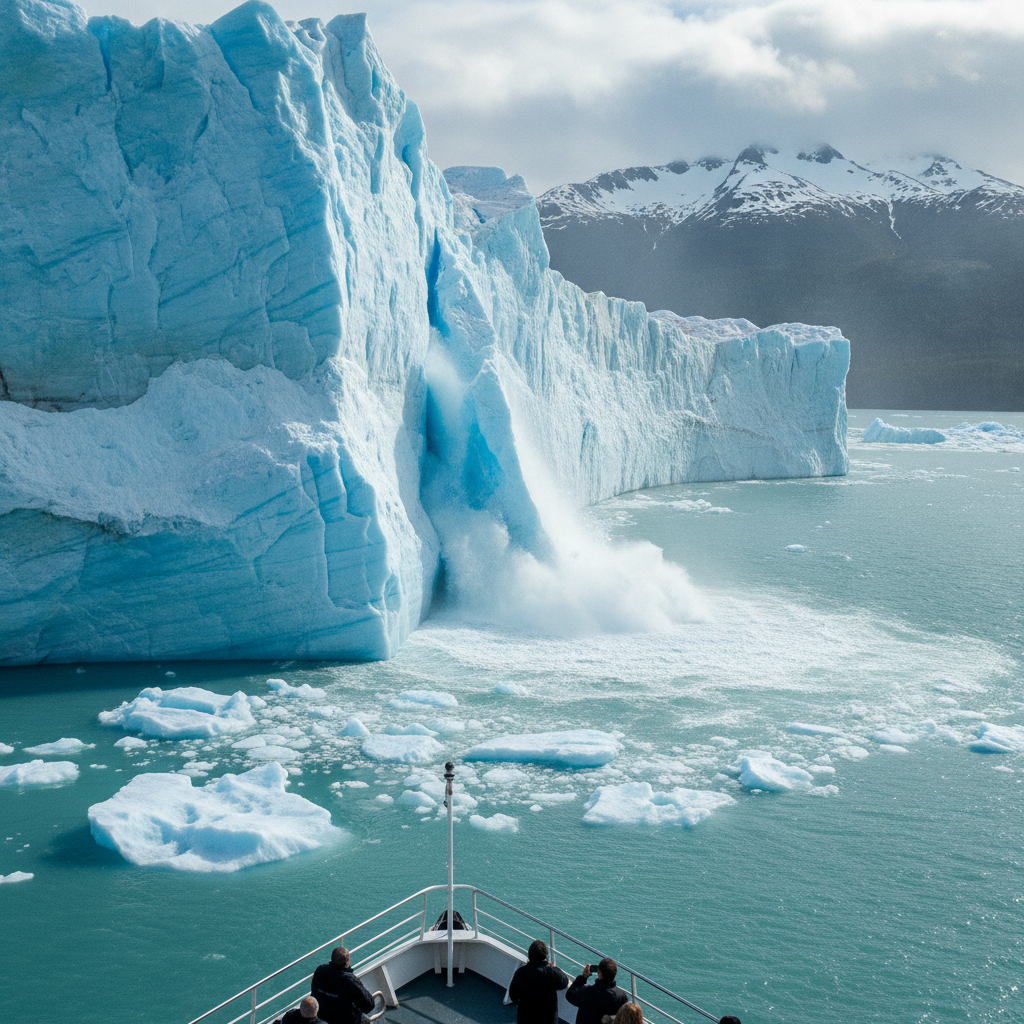
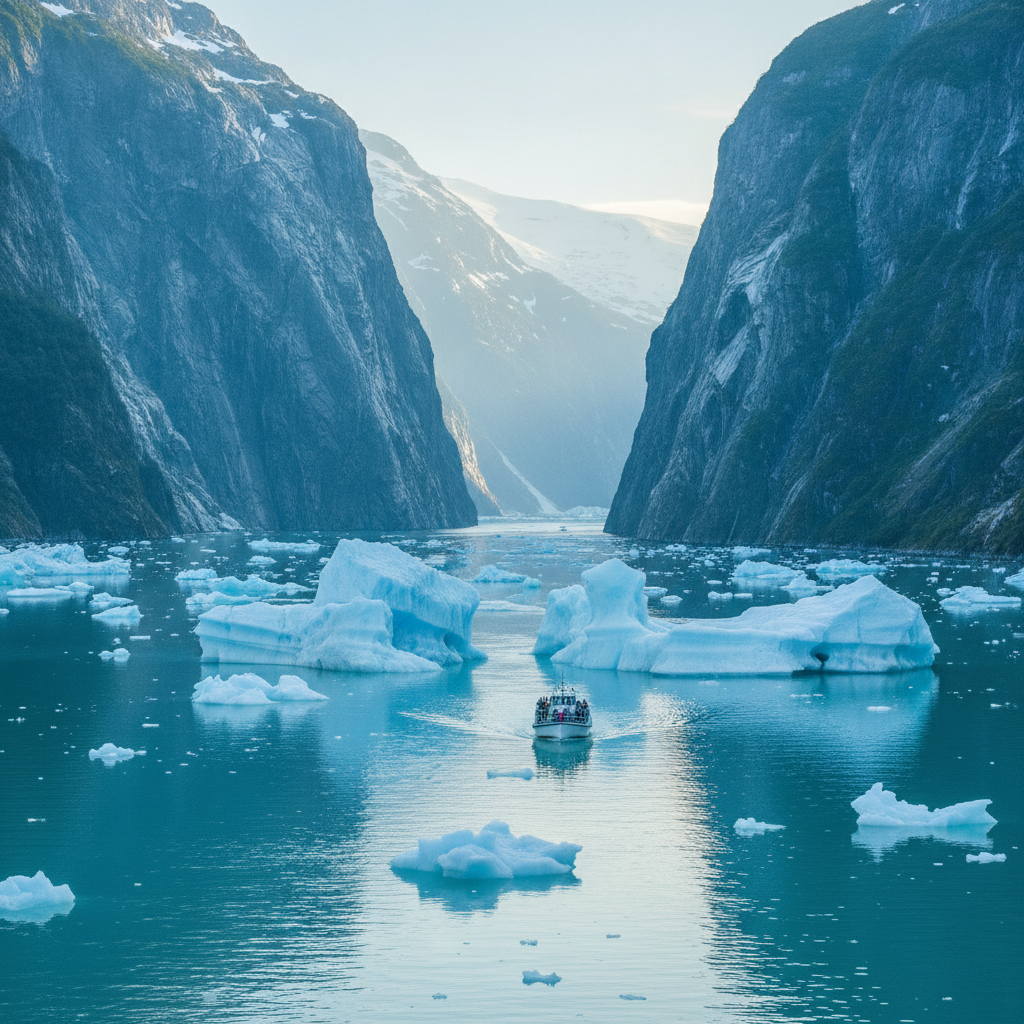
Tracy Arm-Fords Terror Wilderness (at 8510 Old Dairy Road, Juneau, the management office; the wilderness accessible by boat 75 km south of Juneau via Stephens Passage, established 1980, 670,000 acres): the wilderness area protecting the Tracy Arm and Endicott Arm fjords and the Fords Terror fjord -- three glacially carved narrow fjords extending 45-70 km into the mountains from Stephens Passage, with tidewater glaciers at their heads (the Sawyer Glacier and the South Sawyer Glacier in Tracy Arm, the Dawes Glacier in Endicott Arm) and canyon walls rising 900-1,800 m directly from the water. The Sawyer and South Sawyer Glaciers: the twin tidewater glaciers at the head of Tracy Arm, actively calving icebergs into the 1 km wide fjord -- the icebergs (called bergy bits and growlers for their smaller sizes, and the larger bergs up to 6 m above the waterline) drift south through Tracy Arm and must be navigated carefully by tour boats. The Fords Terror: the narrow fjord (100 m wide at its entrance) discovered by a crew member of the USS Hassler in 1875 -- the crew member entered the fjord in a small boat at slack tide and was trapped inside for 6 hours while violent tidal currents made the entrance impassable, naming the fjord for his experience. The boat tours from Juneau: multiple operators (Allen Marine Tours, Adventure Bound Alaska) offer 8-10 hour day trips from Juneau to Tracy Arm by high-speed catamaran, USD 160-200 per person. The Stikine River (300 km south of Juneau by ferry to Wrangell, then 80 km upriver): the last undammed wild river of significant length in the American Pacific Northwest, crossing the international border from British Columbia into Southeast Alaska through the Stikine-LeConte Wilderness.
- 6
Juneau's Future - Climate, Landslides, and the Capital of the Last Frontier
The future challenges of Juneau: the city faces a set of interconnected long-term challenges that are unique among American cities. The landslide risk: Juneau is one of the highest-risk cities in the United States for catastrophic landslides -- the steep, heavily saturated mountain slopes surrounding the city (with 160 cm of annual rainfall saturating the thin volcanic rock soils above the treeline) create conditions for rapid debris flows and rockslides. The August 18, 2015 landslide destroyed 16 homes in the Granite Creek neighborhood; the December 2, 2020 landslide on Mount Juneau above the Gold Creek watershed deposited debris on the Flume Trail; smaller slides are documented every few years. The climate change and warming: Juneau is warming approximately 1.5-2C faster than the global average (the subarctic amplification effect), with the most visible consequence being the acceleration of Mendenhall Glacier retreat and the death of the spruce bark beetle-killed trees (the beetle has killed approximately 70% of mature white spruce trees in the Southeast Alaska uplands since the 1990s due to the warmer winters allowing beetle populations to double). The Juneau Access Improvements Project: the most controversial public works project in Southeast Alaska history -- the proposed 63-km road from Juneau (from the end of the Glacier Highway at Echo Cove, 60 km north of downtown) north to Katzehin, where a short ferry would connect to the existing Haines Highway, providing road access to Juneau from the Alaska interior highway system. The project has been in planning, environmental review, and public debate since the 1970s, with construction costs estimated at USD 700M-1B. The REAL ID and air access: Juneau remains dependent on jet aircraft for most visitors, creating vulnerability to airline schedule changes -- in 2022, Alaska Airlines significantly reduced Juneau service, causing a community-wide economic crisis.
Walk this route with audio
Stories play automatically as you reach each stop — no tapping needed.
More in juneau
Juneau: Mendenhall Glacier, Alaska Capital City, Gold Rush History, Tongass Rainforest, Whale Watching, and Practical Info
Juneau: Douglas Island, Cruise Ship Economy, Neighborhoods, Skagway Gold Rush, Chilkat Bald Eagles, and Tongass Wildlife