The Free-Diving Women With a 90% Population Decline Since the 1960s, the World's Largest Lava Column in an Accessible Cave & the Waterfall That Falls Directly Into the Sea
The haenyeo's matriarchal economic dominance in Jeju coastal villages unique in Korean society; the 90% decline from 30,000 to 3,500 in 60 years; the Manjanggul Cave's 7.6-metre lava column as the world's largest in any accessible lava tube; the 99 rock spires of the Seongsan Ilchulbong crater; Jeongbang Waterfall as the only waterfall in Asia falling directly into the ocean; and Jeju Airport as one of the world's most frequently operated domestic routes at 170 flights per day.
- 1
Hallasan – Korea's Highest Peak & Sacred Mountain
Hallasan (한라산—the 1,950-metre shield volcano at the center of Jeju Island and the highest mountain in South Korea): the volcanic mountain that defines Jeju's landscape, climate, and identity. The Hallasan geology (the shield volcano formed by eruptions from approximately 1.8 million years ago to 25,000 years ago—the volcanic base of Jeju Island is the flat basalt lava shield (the island's gentle slopes and flat coastline) capped by the Hallasan summit cone; the summit contains the Baengnokdam crater lake (백록담—the 'White Deer Lake'—the crater lake at 1,850 metres elevation, 550 metres in diameter and 108 metres deep)): the most iconic single landscape in Jeju. The Hallasan hiking trails (the 5 official trails to the Hallasan summit, with 2 reaching the summit crater): the Seongpanak Trail (9.6 km, 4.5 hours ascent—the longest and most gradual route through the eastern temperate forest, beginning at the Seongpanak car park); the Gwaneumsa Trail (8.7 km, 5 hours ascent through the northern valley—the most dramatic trail with the most exposed ridge walking and the best view of the crater rim): the 2 summit trails are closed October–June in snow conditions. The Hallasan altitude zones (the 5 distinct vegetation zones from the coast to the summit—subtropical coastal forest (0–200m), temperate deciduous forest (200–1,100m), mixed conifer-deciduous forest (1,100–1,500m), subalpine dwarf tree zone (1,500–1,700m), and the alpine grassland of the summit (1,700–1,950m)): the most complete altitude vegetation gradient accessible by foot in South Korea.
- 2
Jeju's Haenyeo – The Free-Diving Women of the Sea
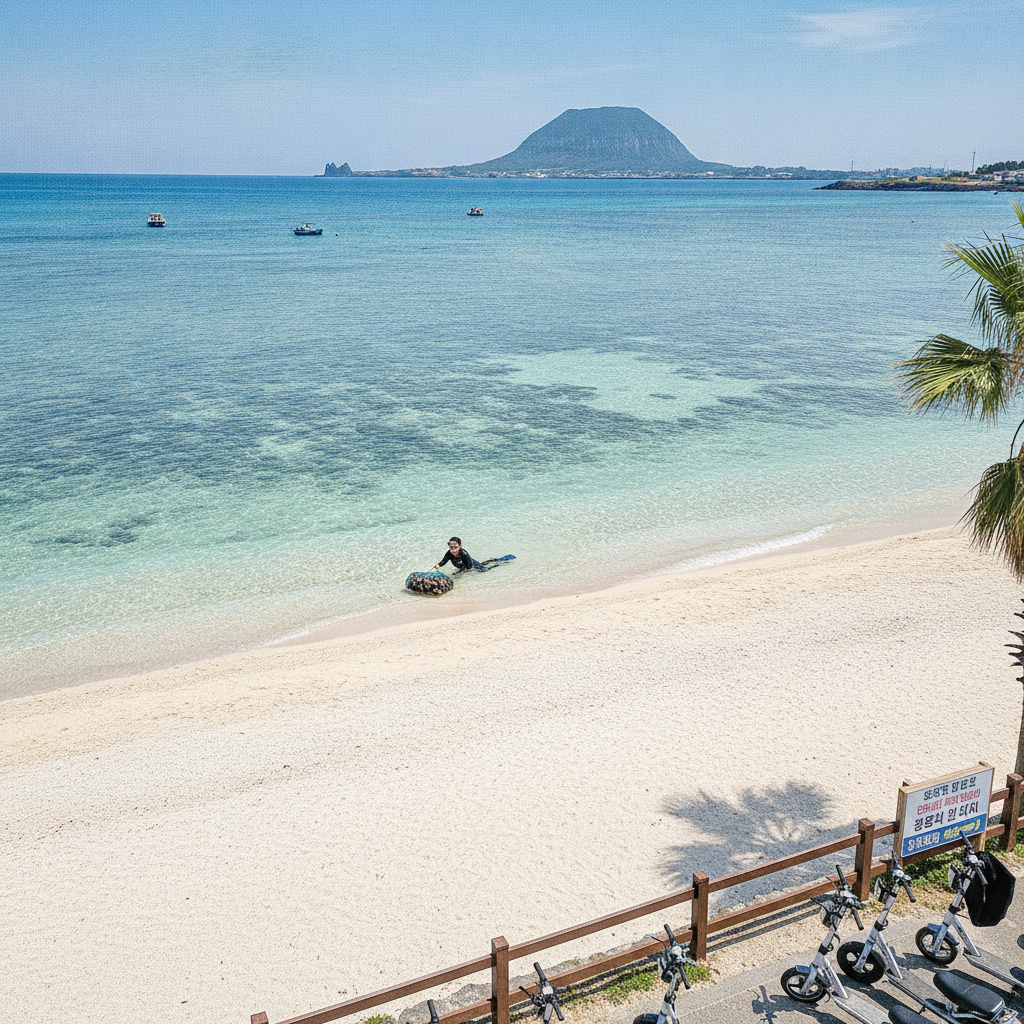
The haenyeo (해녀—literally 'sea women'—the free-diving women of Jeju Island who harvest abalone, turban shells, sea cucumbers, and other marine life from the ocean floor without scuba equipment): the most internationally recognized cultural symbol of Jeju Island and the UNESCO Intangible Cultural Heritage element listed in 2016. The haenyeo tradition (the free-diving practice on Jeju that has been documented since at least the 17th century CE; the haenyeo dive to depths of 10–20 metres on a single breath, holding the breath for 1–2 minutes in water temperatures of 10–25°C depending on season): the physical adaptation (the Jeju haenyeo have been studied by exercise physiologists who found elevated diving reflex responses compared to non-divers, but no other physiological adaptations—the diving ability is entirely training-based). The haenyeo's social structure (the haenyeo organization—the diving cooperatives (어촌계, eo-chon-gye) organized by village, with a hierarchy from apprentice (하군, hagun) to intermediate (중군, junggun) to master diver (상군, sanggun)—the most senior haenyeo are often in their 60s and 70s with the deepest dives): the female economic dominance (the haenyeo tradition created a matriarchal economic structure in Jeju coastal villages that is unique in Korean society). The haenyeo population decline (from approximately 30,000 in the 1960s to approximately 3,500 in 2023—a 90% decline in 60 years due to the aging of the haenyeo community (average age now 65+) and the low take-up by younger generations).
- 3
Jeju's Volcanic Landscape – Oreums & Lava Tubes
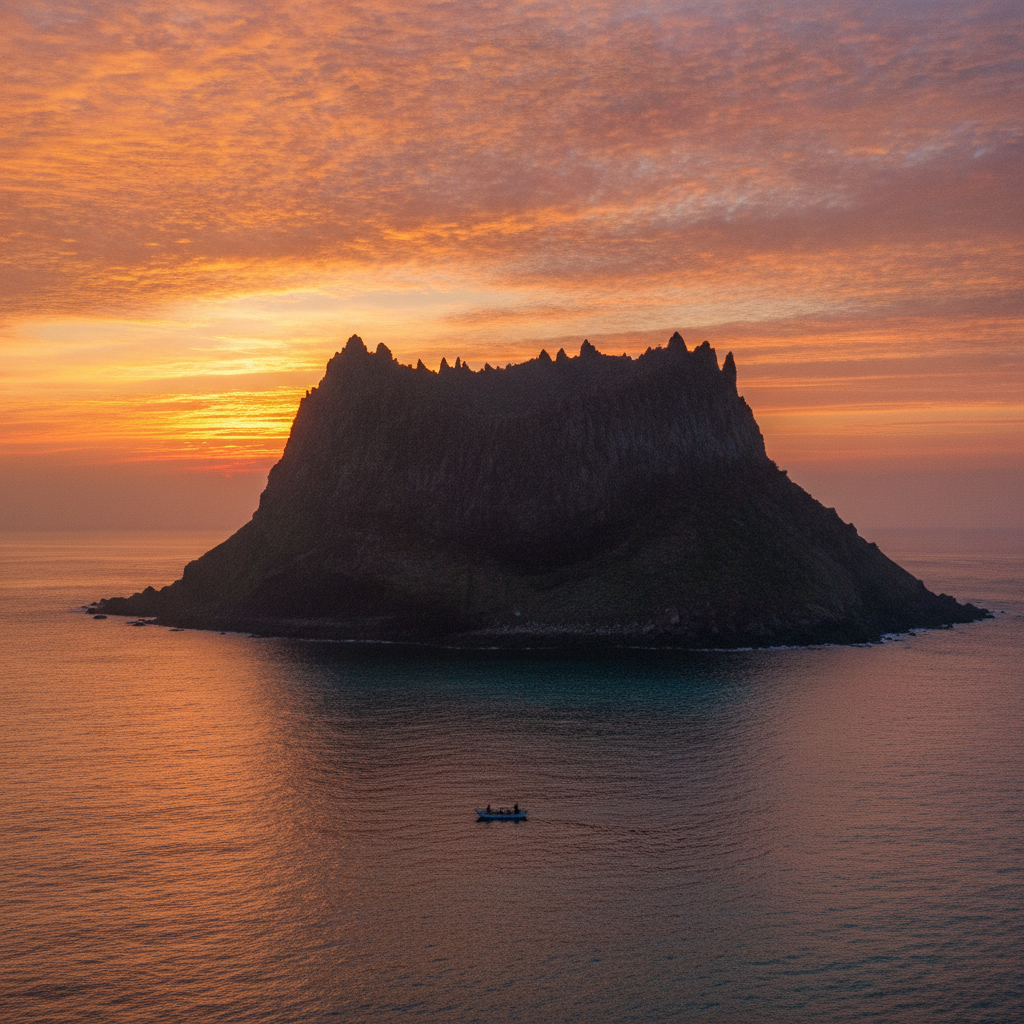
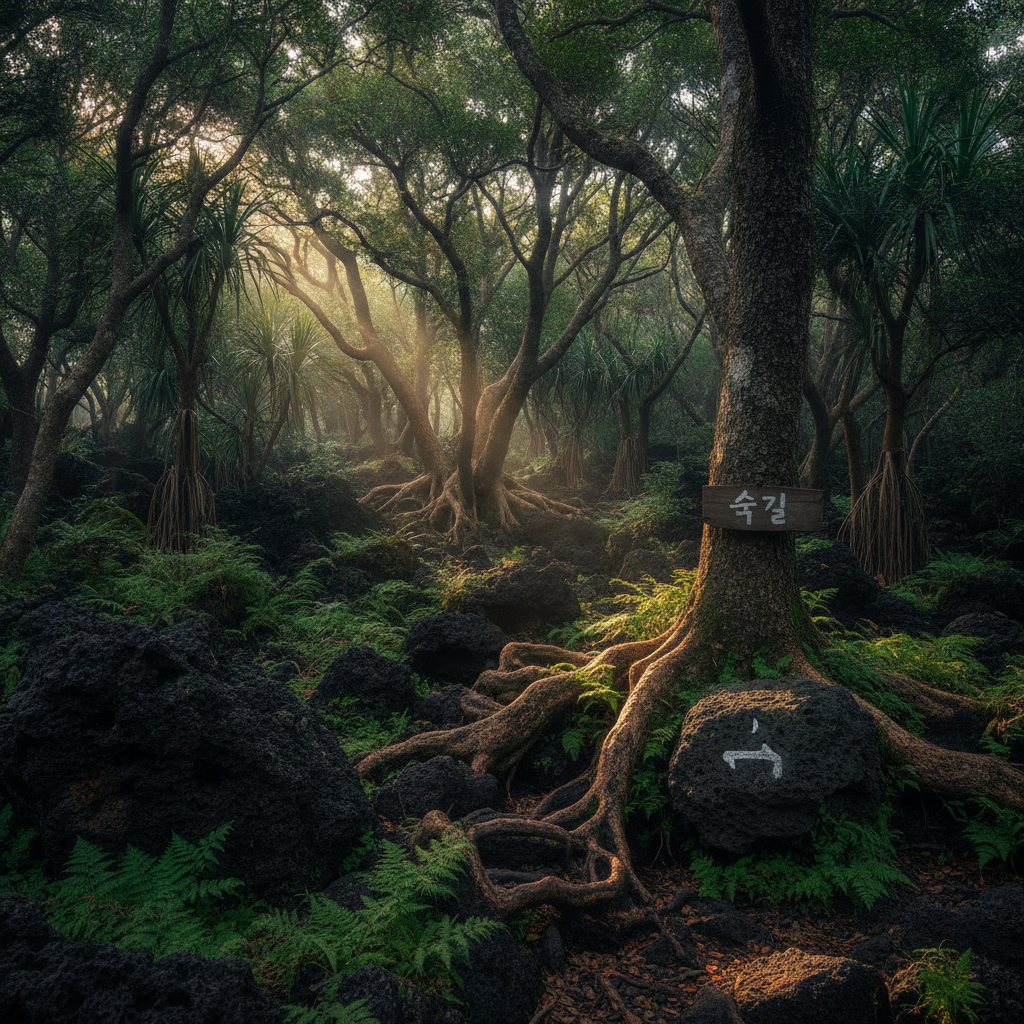
The Jeju volcanic landscape (the island formed entirely by volcanic activity—the 360+ small parasitic cones (오름, oreum) dotting the island are the most distinctive topographic feature of Jeju, giving the island its characteristic bumpy silhouette): the UNESCO World Natural Heritage Site (listed 2007 as the 'Jeju Volcanic Island and Lava Tubes'—the 3 components: the Hallasan Nature Reserve, the Geomunoreum Lava Tube System, and the Seongsan Ilchulbong Tuff Cone). The Geomunoreum Lava Tube System (the 7.4 km lava tube system in the northeastern part of Jeju—the world's most significant exposed lava tube cave system in terms of the diversity of secondary cave mineral structures, with cave coral, lava stalactites, and lava raft formations): the Manjanggul Cave (the most accessible section of the lava tube system—the 1 km illuminated section open to visitors; the cave maintains a constant 11–21°C interior temperature; the largest lava column in the cave (the 7.6-metre lava column at the end of the accessible section—the largest lava column in any accessible lava tube cave in the world)). The Seongsan Ilchulbong (성산일출봉—'Sunrise Peak'—the 182-metre tuff cone that rises from the sea at the northeastern tip of Jeju): the tuff cone (a volcanic cone formed when magma erupted through seawater approximately 100,000 years ago, the steam explosion solidifying the ash into the characteristic rough grey tuff rock): the 99 rock spires around the crater rim and the sunrise view from the crater at dawn.
- 4
Jeju's Black Pork, Tangerines & Local Food
The Jeju food culture (the island culinary tradition shaped by Jeju's volcanic soil, marine resources, and geographic isolation from the mainland): the food dimension that most directly encodes Jeju's distinctiveness from the rest of Korea. The Jeju black pork (제주 흑돼지—the black-bristled native Jeju pig, a heritage breed distinct from the white commercial pigs that dominate Korean pork production): the Jeju black pig's flavor characteristics (the higher intramuscular fat content ('marbling') and the more intense flavor compared to white pigs—attributed to the traditional free-ranging feeding system using Jeju grass, sweet potatoes, and barley): the black pork samgyeopsal (the thick-cut pork belly grilled over charcoal—the most commonly ordered Jeju black pork dish in the restaurant streets of the Dongmun Market area of Jeju City). The Jeju tangerines (감귤, gamgyul—the Satsuma mandarin orange cultivated on Jeju's volcanic slopes since the Goryeo Dynasty (918–1392 CE)): the tangerine orchards (covering approximately 60% of Jeju's agricultural land area—the most visually distinctive agricultural landscape on the island, with the dark green orchards on the volcanic hillsides against the ocean backdrop in October–December when the fruit is ripening). The Jeju traditional foods: the gogi-guksu (the pork broth noodle soup—a thick pork broth with thin wheat noodles, Jeju's answer to the mainland's dwaeji gukbap); the Jeju abalone (the haenyeo-harvested abalone, the most expensive shellfish in Korea, available as raw sashimi, congee (전복죽), or the grilled whole abalone in its shell at the seafood restaurants of Jeju Haenam Port).
- 5
Jeju's Beaches, Waterfalls & Coastal Scenery
The Jeju coastal landscape (the basalt lava coastline of Jeju Island—the most geologically dramatic island coastline in Korea, where the black lava rock meets the turquoise sea in formations that have been compared to Iceland and the Azores): the coastal sites most rewarding for visitors. The beaches: Hyeopjae Beach (협재 해수욕장—the western coast beach famous for its white sand and the shallow turquoise water that contrasts with the black basalt offshore—the clearest water on the Jeju main island and the most photographed Jeju beach); Hamdeok Beach (the northeastern beach—the deepest and most consistent blue water on the island). The waterfalls: Cheonjiyeon Waterfall (천지연 폭포—the 22-metre waterfall in Seogwipo City—the most accessible Jeju waterfall (10-minute walk from the bus stop) and the most dramatically framed (the waterfall falls into a circular basalt pool surrounded by subtropical forest)); Jeongbang Waterfall (정방 폭포—the only waterfall in Asia that falls directly into the ocean from a cliff face—the 23-metre waterfall at the Seogwipo coastline that drops from the basalt cliff straight into the sea below). The Daepo Jusangjeolli Cliff (대포주상절리—the hexagonal basalt column cliff on the Jungmun coastline south of Seogwipo): the columnar jointing formed when lava cooled rapidly in seawater producing the regular hexagonal column pattern (the same formation as the Giant's Causeway in Northern Ireland and Fingal's Cave in Scotland): the most dramatic geological formation on the Jeju coastline.
- 6
Getting to & Around Jeju – Practical Guide
Jeju's transport position (Jeju International Airport is the busiest domestic airport in South Korea—handling approximately 30 million passengers per year, which is the second highest passenger volume of any airport in Korea (after Incheon International)): the most air-connected island in East Asia for domestic tourism. The flights (Seoul Gimpo to Jeju: 55 minutes; the most frequently operated domestic route in the world for several years (approximately 170 flights per day in both directions combined): the carriers (Korean Air, Asiana, Jeju Air, Jin Air, T'way, Eastar Jet, Air Seoul): the LCC fare range (₩30,000–80,000 one way if booked 3–6 weeks ahead; ₩100,000–200,000 at full service level or last-minute)). The Busan to Jeju flight (1h05m; Korean Air, Asiana, Jeju Air: ₩40,000–100,000 one way). The ferry from Mokpo (the Mokpo–Jeju ferry: 4h30m by car ferry or 2h by high-speed ferry—the route for visitors bringing vehicles to Jeju). Within Jeju: the rental car (the most important transport tool on the island—public bus coverage is poor beyond the major sites; all major rental companies operate from Jeju Airport; international driving permit required for foreign visitors; driving is on the right in Korea): the recommended approach is to pick up the rental car at the airport immediately on arrival. The Jeju Bus (the island-wide bus network—Line 100 (coastal perimeter road—the full clockwise circuit of the island in one day) and the mountain-route buses to the Hallasan trailheads): usable for the major attractions if rental car is not available.
Walk this route with audio
Stories play automatically as you reach each stop — no tapping needed.
More in Jeju
The Only Region in South Korea Where You Can Enter Without a Korean Visa, the Best-Selling Water in Korea Bottled from a Hallasan Volcano Spring & the 1.8-Million-Year Geological Timeline Underfoot
The Island with 18,000 Gods, the Adults-Only Sculpture Park on a Family Honeymoon Destination & the Volcanic Fire That Burns 100,000 People's Winter Away
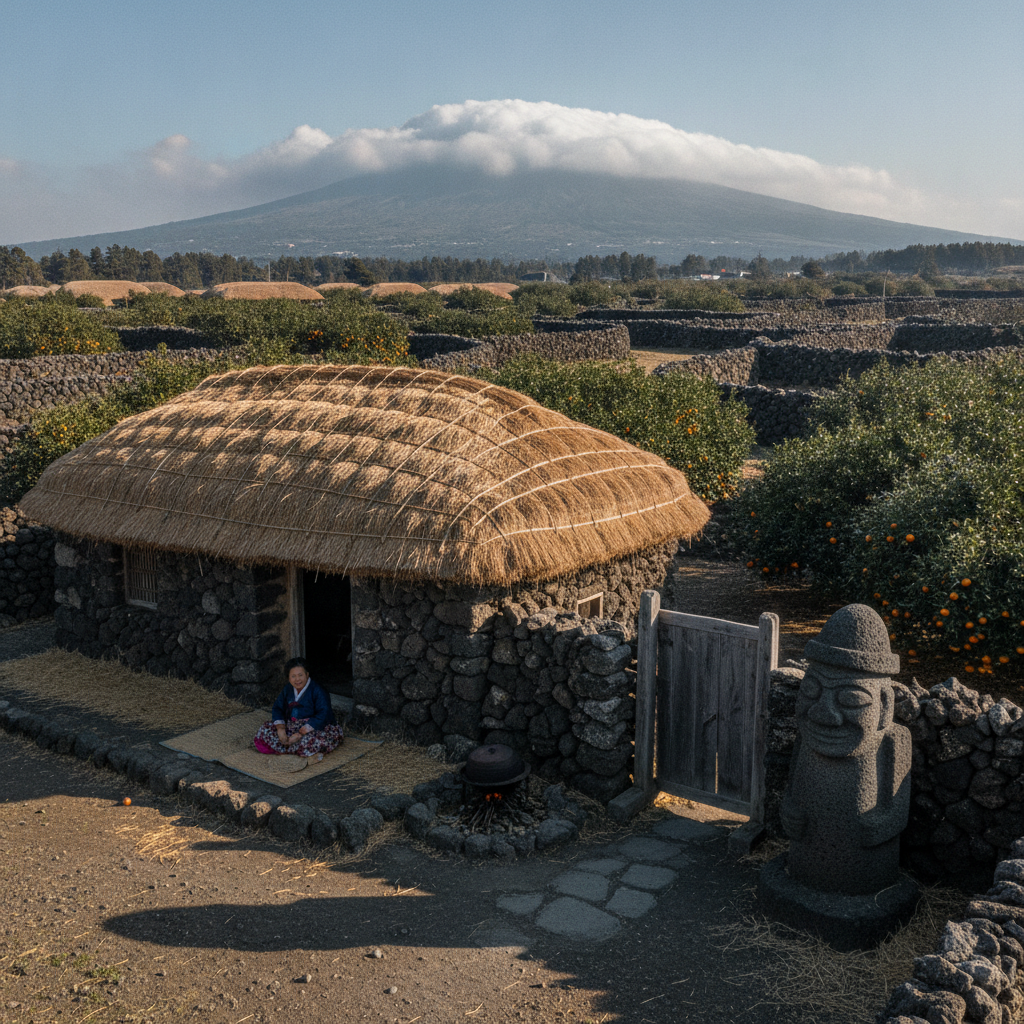
The Island With 22,000 km of Stone Walls (Half the Earth's Circumference), the First Korean Region to Commit to 100% Renewable Energy & the Mountain Under Cloud 200 Days a Year
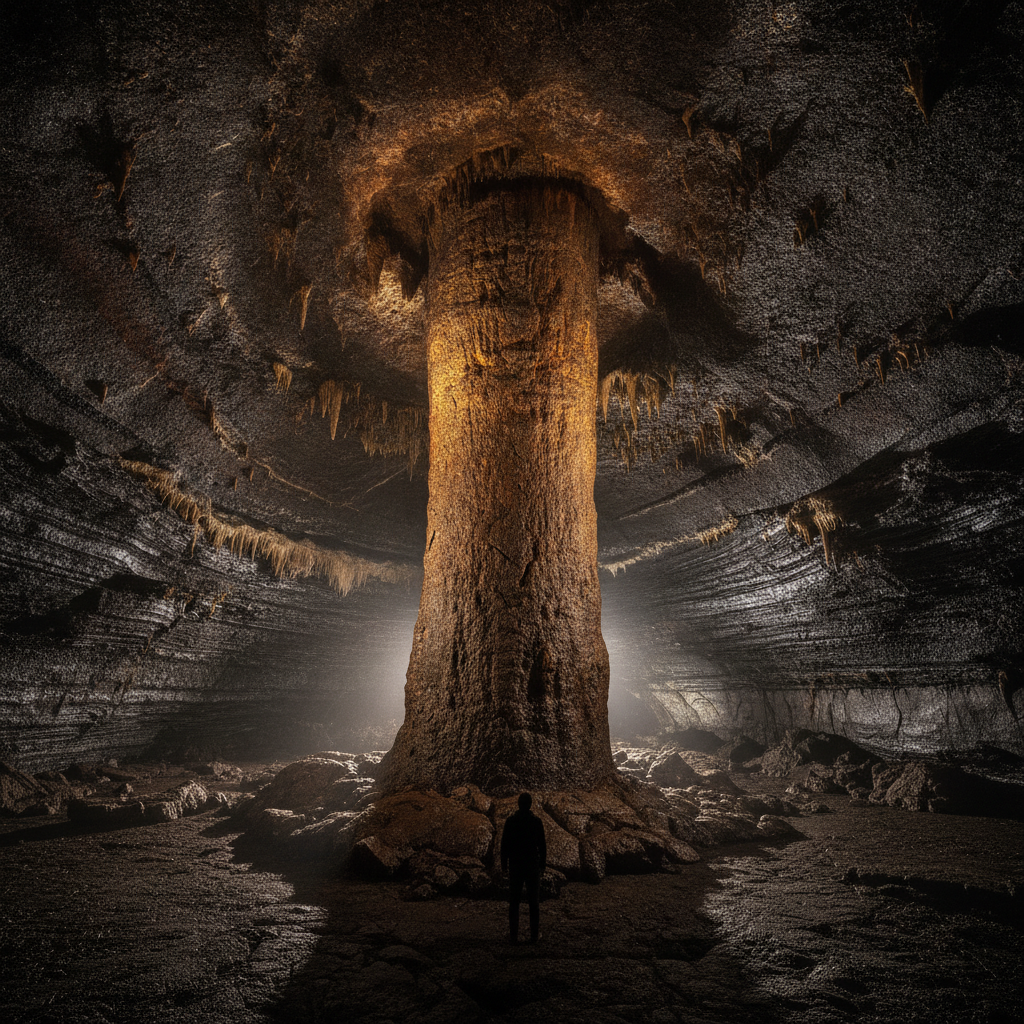
The 250,000-Year-Old Cave That Drained Itself Empty, the 1948 Massacre That Killed 10% of the Island's Population & the Only Road in Korea That Crosses 1,950 Metres