Jakarta Living: Bakso Carts at 2am, Ruang Rupa's 2022 documenta Win & the Thousand Islands' Polluted Reefs
The daily and cultural Jakarta—bakso meatball soup carts knocking through residential streets at midnight and rendang at every Padang restaurant on every commercial block (voted world's most delicious food, available for Rp 35,000), the National Museum's 300+ ethnic group ethnography and Majapahit gold jewellery in a country with 700 living languages, Ruang Rupa collective from Tebet, South Jakarta winning documenta 15 in Kassel (the first Global South collective to lead the world's most important art exhibition), Pulau Tidung's 3-hour ferry ride to reefs degraded by the 13 Jakarta rivers carrying untreated sewage into the bay, the barongsai lion dances restored after Suharto's 32-year ban on Chinese cultural expression, and the Railink Airport Train that turned a 2-hour taxi into 55 minutes for Rp 70,000.
- 1
Jakarta's Street Food Circuit – Nasi Padang to Bakso
Jakarta's street food scene—distributed across the city's markets, street corners, and the rolling carts of keliling (roaming) vendors—reflects Indonesia's extraordinary culinary diversity concentrated in a single city. The most universal staples: nasi goreng (fried rice—eaten at all hours, from breakfast through late night, always customised with additional proteins, pickles, and crackers), bakso (meatball soup—a Chinese-Indonesian invention of springy beef or chicken balls in clear broth, sold from mobile carts pushed through residential streets, announced by distinctive wooden-knock sounds), soto (soup—dozens of regional varieties, the Betawi version with coconut milk and the Surabaya version with yellow turmeric broth being the most distinct). Nasi Padang: the West Sumatran Minangkabau food culture—characterised by the practice of serving all dishes simultaneously on small plates arranged around the rice (you pay only for what you eat; the rest is returned to the kitchen)—is Jakarta's most significant culinary import and the most common restaurant type in the city (Padang restaurants operate on virtually every commercial street). Rendang (the West Sumatran slow-cooked beef in coconut milk and spices—voted the most delicious food in the world in multiple international polls—is served at every Padang restaurant in Jakarta.
- 2
The National Museum – Indonesia's Archipelago in One Building
The National Museum of Indonesia (Museum Nasional—on the west side of Merdeka Square, marked by the bronze elephant statue gift from the King of Thailand in 1871, giving it the popular name 'Elephant Museum')—is the finest museum in Southeast Asia for the archaeology and ethnography of the Indonesian archipelago. The collection: Hindu-Buddhist bronze statues (the finest collection of Javanese Hindu-Buddhist art outside the Prambanan and Borobudur sites themselves), a gold room (the most important pre-colonial gold artefacts in Indonesia, including Majapahit-era gold jewellery and ceremonial objects), an ethnography collection covering all major ethnic groups of the archipelago (300+ ethnic groups in Indonesia), and a geological collection (Indonesia's extraordinary volcanic and tectonic geology represented in maps, samples, and models). The museum's context: Indonesia's 13,000+ islands contain one of the most culturally and linguistically diverse populations in the world (700+ living languages); the National Museum's attempt to represent this diversity in a single building is simultaneously an act of national integration and an impossible compression. Open Tuesday–Sunday 08:00–16:00; entry Rp 25,000 (€1.60) for foreign visitors.
- 3
Jakarta's Art Districts – Kemang to the Gudang Sarinah Gallery
Jakarta's contemporary art scene—concentrated in the Kemang district (South Jakarta—the most cosmopolitan residential area, popular with Jakarta's international community and Indonesian creative class) and in the gallery spaces of the Sudirman central business district—is the largest and most internationally connected art market in Southeast Asia. The key institutions: Gudang Sarinah Ekosistem (a converted garment factory in South Jakarta—the most ambitious new arts venue in Indonesia, opened 2019, housing galleries, performance spaces, a co-working space, a cinema, and food and beverage operations in a campus of 9,000 m²); Dia.Lo.Gue Art Space (Kemang—one of Jakarta's oldest and most consistently programmed contemporary art spaces); Ruang Rupa (an artist collective and gallery in Tebet, South Jakarta—internationally known for curating the 2022 documenta 15 in Kassel, Germany—the first time a collective from the Global South led documenta, and one of the most discussed art events of recent years). The Indonesian art market: Indonesian contemporary art has attracted significant international collector interest since the 2000s; artists like Heri Dono, Entang Wiharso, and Tintin Wulia have international gallery representation.
- 4
The Thousand Islands (Kepulauan Seribu) – Jakarta's Ocean Escape
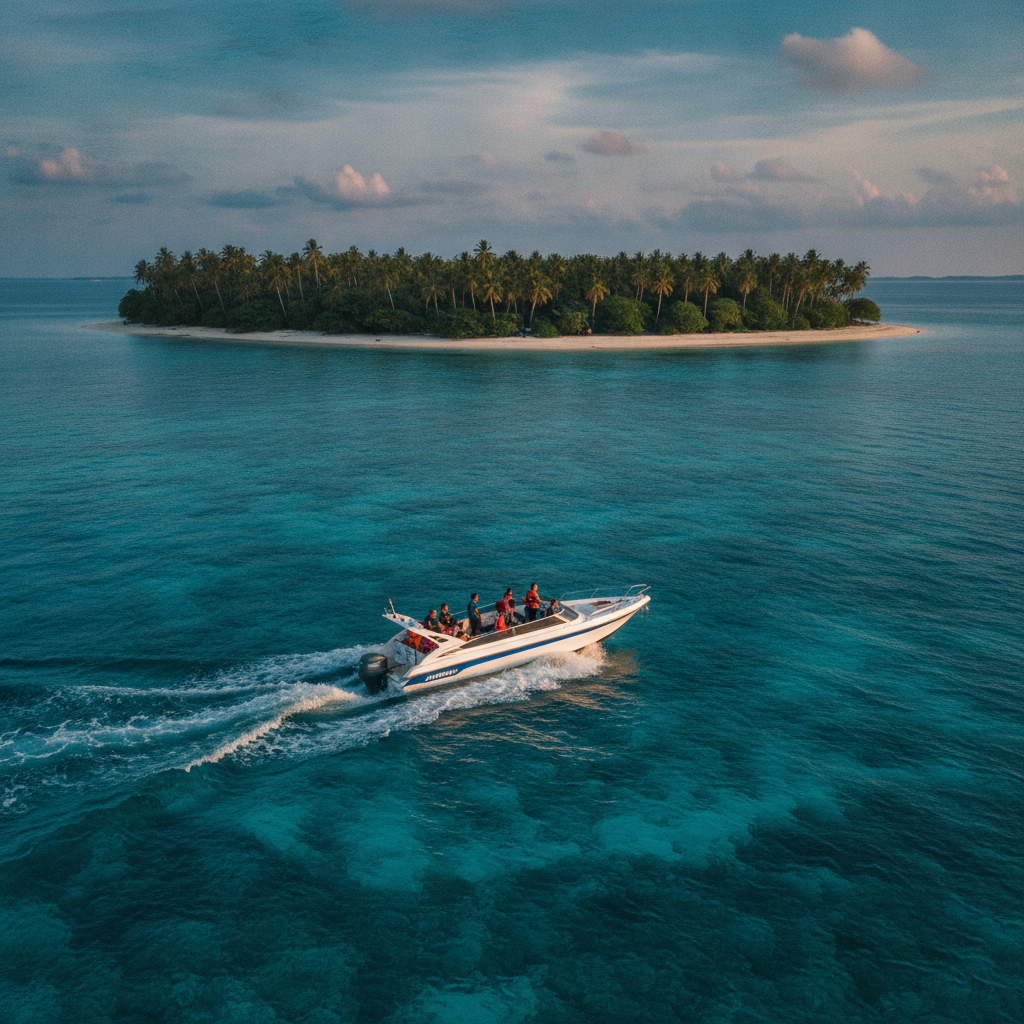
The Kepulauan Seribu (Thousand Islands)—a chain of 105 small coral islands extending 80 km north of Jakarta into the Java Sea—are Jakarta residents' primary ocean escape and a day-trip destination for visitors who find the city's heat, traffic, and density overwhelming. The fast boat to the nearest islands (Pulau Bidadari, Pulau Onrust, Pulau Cipir—the historical Dutch-era islands with colonial ruins, 1 hour from the Muara Angke port): a practical day trip combining beach access and colonial heritage (Pulau Onrust was a VOC ship repair yard and later a quarantine island). The further islands (Pulau Tidung, Pulau Pramuka—2–3 hours by public ferry): coral reefs with reasonable snorkelling (though affected by pollution from Jakarta's rivers), white sand beaches, and basic village accommodation. The environmental context: the Kepulauan Seribu's coral reefs have been significantly degraded by Jakarta's river pollution (the 13 rivers entering Jakarta Bay carry untreated sewage, industrial waste, and plastic; the bay has been described as among the world's most polluted coastal waters), overfishing, and coral bleaching events. Pulau Kotok (the furthest and least polluted of the accessible islands, 3.5 hours) has the best remaining reef.
- 5
Jakarta's Chinese New Year – Indonesia's Largest Celebration
The Chinese New Year (Imlek—from the Hokkien 'Im-lek,' meaning 'Lunar Calendar')—restored to official public holiday status in Indonesia in 2003 by President Megawati Sukarnoputri (after it had been banned during Suharto's New Order, which suppressed Chinese cultural expression for 32 years)—is celebrated in Jakarta's Glodok district with a scale and visual intensity that makes it one of the most spectacular Chinese New Year celebrations outside mainland China and Taiwan. The Glodok celebrations: lion dances (barongsai—a tradition that was also banned under Suharto and has been enthusiastically revived since 2000), firecrackers, temple ceremonies at the Dharma Bhakti Temple, and the dragon parades that close Glodok's streets on the evening of the new year. The post-Suharto Chinese cultural revival: the restoration of Chinese holidays, the permission to display Chinese characters on shop signs (banned during the New Order), and the gradual reintegration of Chinese-Indonesian cultural identity into mainstream Indonesian public life represents one of the more positive cultural developments in post-1998 Indonesia—though the underlying economic tensions that made Chinese Indonesians scapegoats during the 1998 riots remain structurally unresolved.
- 6
Practical Jakarta – Getting There, Getting Around & Safety
Jakarta's Soekarno-Hatta International Airport (CGK)—25 km west of the city centre in Tangerang—is Indonesia's primary international gateway and one of Asia's busiest airports (Terminal 3—the newest—is modern and efficient; Terminals 1 and 2 are older). Airport to city: the Railink Airport Train (launched 2018—the city's most significant airport transport improvement: 55 minutes to Manggarai station in Central Jakarta, Rp 70,000/€4; running every 15 minutes) has transformed airport access from the previous multi-hour taxi ordeal. Getting around Jakarta: TransJakarta BRT (the most cost-effective, Rp 3,500/€0.22 flat fare across the entire network), MRT Jakarta (Rp 3,000–14,000/€0.19–0.90 depending on distance, clean and air-conditioned), GoJek/Grab (motorcycle taxis—ojol—the fastest way to cover short distances in traffic; standard cars available on both apps), Bluebird metered taxis (the most reliable taxi company for non-app users). Safety: Jakarta is generally safe for visitors in tourist and commercial areas; bag snatching from motorcycles (jambret) occurs and awareness of surroundings is advisable at street level. Best areas to stay: Menteng (central, heritage buildings, walkable within the area), Kemang (South Jakarta, international restaurants and cafés), Sudirman/SCBD (modern, close to the business district).
Walk this route with audio
Stories play automatically as you reach each stop — no tapping needed.
More in Jakarta
Jakarta's Layers: 1740 VOC Massacre of 10,000 Chinese, Dangdut's Tabla Beat & 40% of the City Below Sea Level
Jakarta's Permanence: Istiqlal Mosque Facing the Cathedral, Bogor's 15,000-Plant Botanic Garden & the City Worth Staying
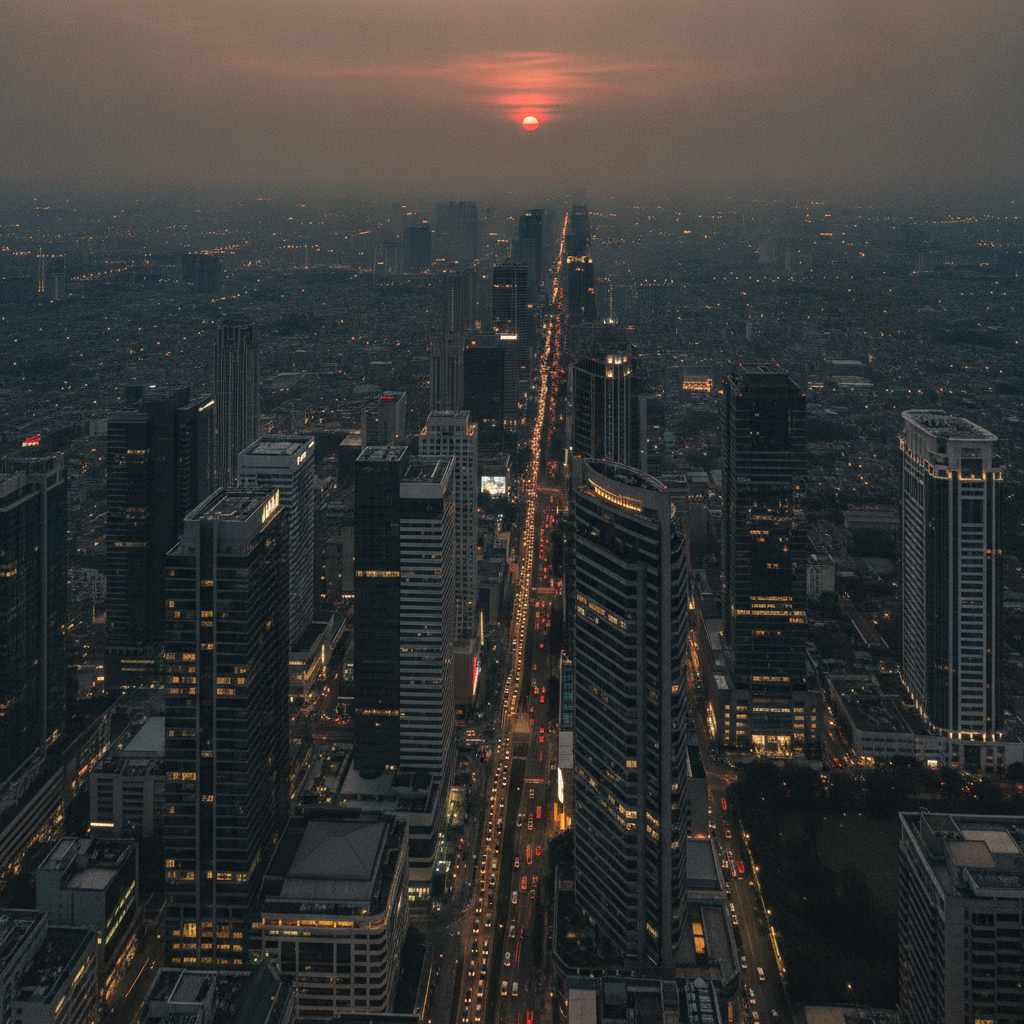
Jakarta's Legacy: Sukarno's 1962 Asian Games Rejection of Western Governance, Ciliwung's 100 Tonnes of Daily Plastic & What Comes After
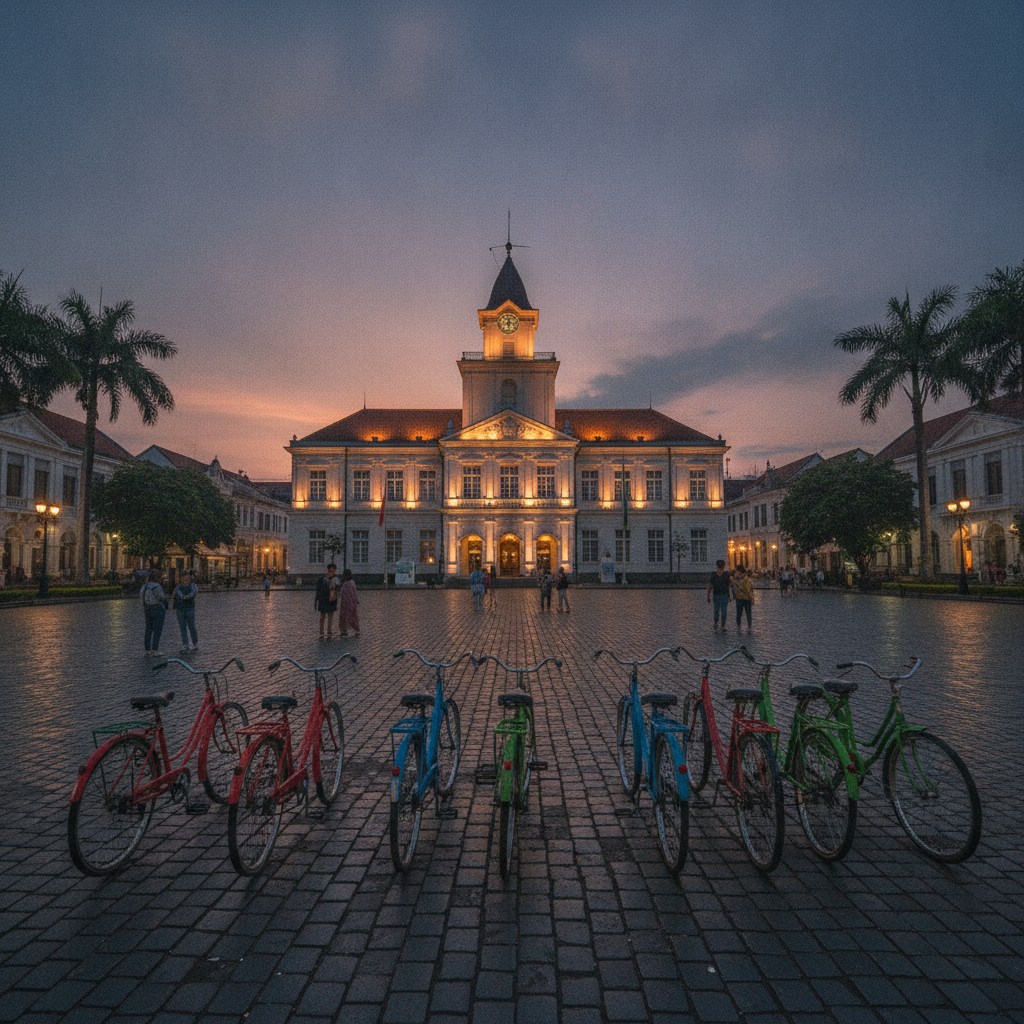
Jakarta: Dutch VOC Town Hall in Kota Tua, World's Worst Traffic & Nusantara Rising in Borneo's Forest