Jakarta's Layers: 1740 VOC Massacre of 10,000 Chinese, Dangdut's Tabla Beat & 40% of the City Below Sea Level
The complex Jakarta—Glodok's Dharma Bhakti Temple (founded 1650) in the Chinatown that survived the 1740 VOC massacre of 10,000 Chinese residents and the 1998 anti-Chinese riots that killed 1,000 more, Jan Pieterszoon Coen's 1619 seizure of Sunda Kelapa and massacre of the Banda Islands nutmeg population to create the colonial Batavia, dangdut's tabla-derived rhythm and Rhoma Irama's concerts where Islamic preaching met Indonesia's most popular music, Suharto's Taman Mini Indonesia Indah built on displaced families' land as a 27-province miniature, the kampung's 60% of Jakarta residents in vehicle-inaccessible gang alleys that urban planners keep proposing to replace with towers, and the Giant Sea Wall proposal for a city sinking 5 metres in 30 years.
- 1
Glodok – Jakarta's Chinatown
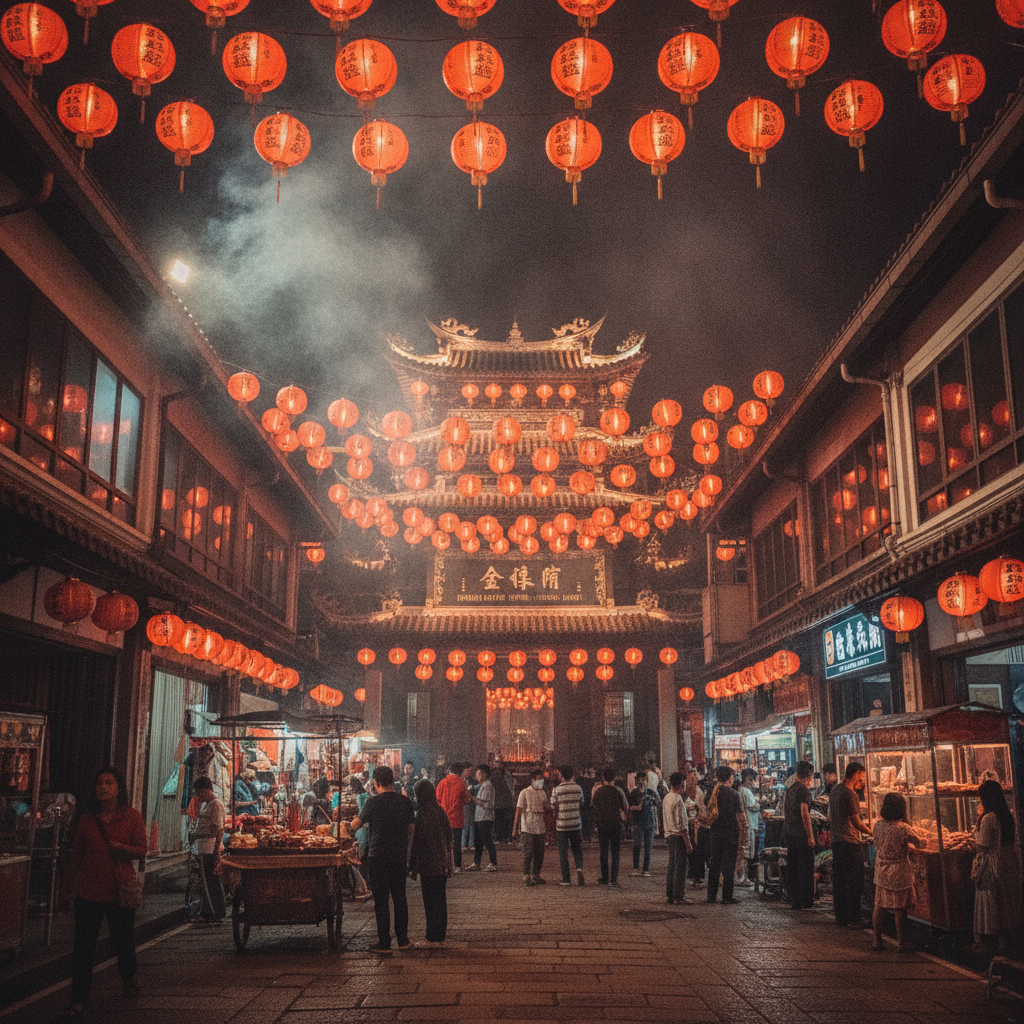
Glodok—the Chinatown district of Jakarta, 1 km south of Kota Tua—is one of Southeast Asia's most historically significant and politically fraught Chinese communities. The Chinese presence in Batavia/Jakarta: brought by the VOC as labourers and traders from the 17th century, the Chinese community became the primary commercial intermediary between the Dutch colonial administration and the indigenous Indonesian population; by 1740 the community was large enough to threaten Dutch control, and the VOC massacred approximately 10,000 Chinese residents of Batavia (the Batavia Massacre of 1740—one of the most overlooked mass killings in colonial history). In 1998, Glodok was the epicentre of the anti-Chinese riots that accompanied the fall of Suharto: over 1,000 people were killed (many in fires at shopping malls they had sheltered in), hundreds of Chinese women were raped, and Chinese-owned businesses were looted and burned. The current Glodok: a rebuilt commercial district with traditional medicines, electronics, and food, and the Dharma Bhakti Temple (the oldest Chinese Buddhist temple in Jakarta, founded 1650). The Jin De Yuan/Dharma Bhakti temple complex is the most tangible link to the 370-year Chinese commercial history of the city.
- 2
Jakarta's Colonial History – From Sunda Kelapa to Batavia
The site of modern Jakarta was, before the Dutch, the port of Sunda Kelapa—a significant trading harbour of the Sunda Kingdom (a Hindu-Buddhist polity controlling West Java) that appears in Chinese, Arab, and Portuguese records from the 12th century onward. The Portuguese reached Sunda Kelapa in 1522 and briefly established a trading agreement; the Banten Sultanate (a Muslim kingdom that had displaced the Hindu Sunda Kingdom) expelled them; the Dutch VOC arrived in 1596 and, under Jan Pieterszoon Coen (one of the most brutal colonial administrators in history, who massacred the population of the Banda Islands to gain control of the nutmeg monopoly), seized the port in 1619, renamed it Batavia, and began constructing the colonial city. The Dutch Batavia grew into the administrative and commercial capital of the VOC's Asian empire—by 1700 it was the wealthiest and most powerful city in Asia under European control. The transition to British administration (1811–1816, during Napoleon's occupation of the Netherlands), then return to Dutch control (as the Dutch East Indies), and finally Indonesian independence (August 17, 1945—proclaimed by Sukarno and Hatta two days after Japan's surrender) transformed Batavia into Jakarta.
- 3
Jakarta's Music Scene – Dangdut, Indie Rock & Kroncong
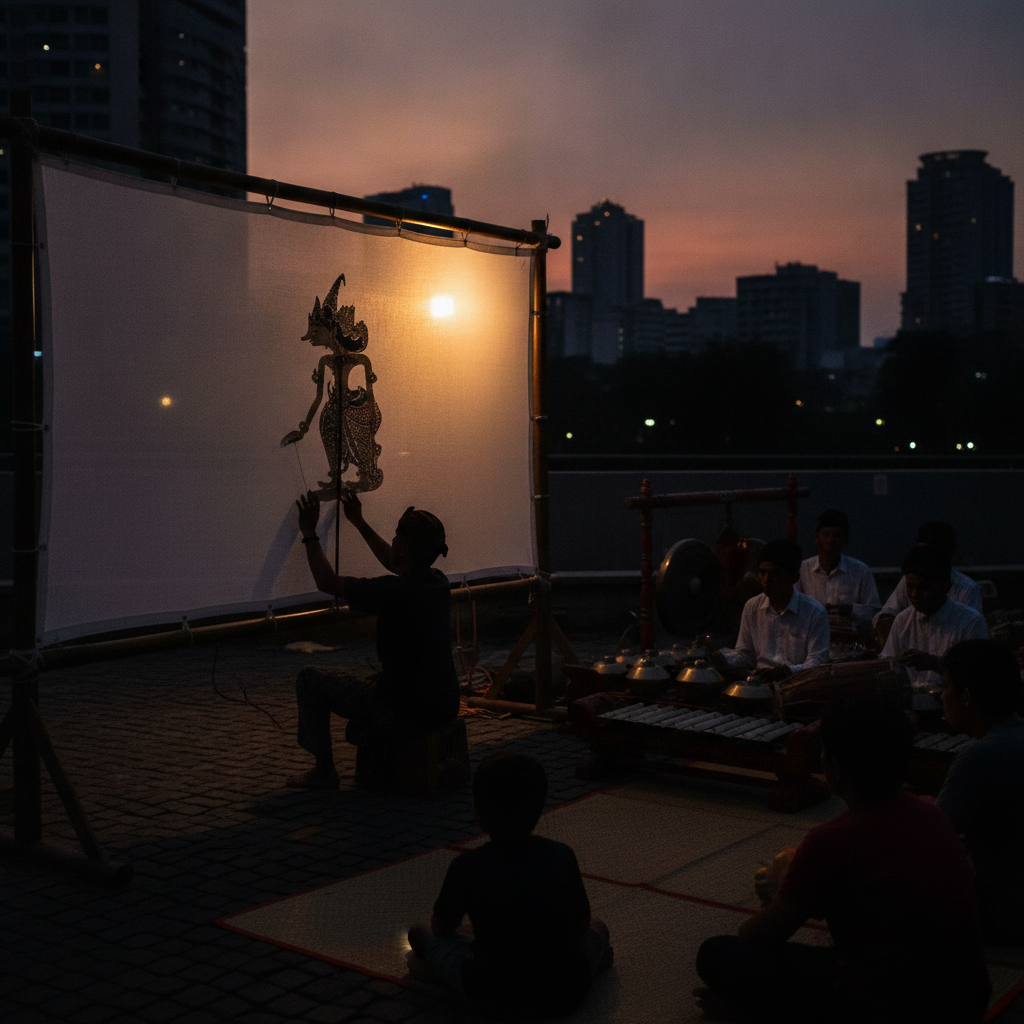
Jakarta is the centre of Indonesia's music industry—the largest music market in Southeast Asia—and the source of musical forms that have no equivalent elsewhere. Dangdut: Indonesia's most popular musical form—a genre built on Hindi film music combined with Malay musical traditions and Islamic sensibility, with a distinctive tabla-derived rhythm and highly ornamented vocal style. The genre was named for the 'dang' and 'dut' sounds of the tabla; its most famous figure, Rhoma Irama ('The King of Dangdut'), was simultaneously the most popular musician in Indonesia and a political figure who used dangdut concerts as vehicles for Islamic preaching. Indie rock: Jakarta has produced a significant indie music scene since the 1990s (Slank—the country's most enduring rock band; Sheila on 7; Noah) with a substantial live music infrastructure (Mostly Jazz Festival, Java Jazz Festival—one of Asia's largest jazz events, held annually in Jakarta). Kroncong: a Portuguese-influenced musical form (brought by Eurasian communities descended from Portuguese-Indonesian unions in the 16th–17th centuries) featuring Portuguese-origin instruments (the ukulele-like kroncong instrument) with Malay and Javanese melodic elements—the oldest continuous musical tradition in Jakarta.
- 4
Suharto's Jakarta – The New Order Architecture
Suharto's New Order regime (1966–1998) left a distinctive physical imprint on Jakarta: a city planned to express the authority of a developmental state, with monumental public buildings, broad boulevards, and modern infrastructure juxtaposed against sprawling kampung (informal settlements). The key New Order projects: the Gelora Bung Karno (GBK) Sports Complex (originally built for the 1962 Asian Games by Sukarno; enlarged by Suharto for the 1986 Asian Games; now the primary sports complex in Indonesia and home of the national football team), the TMII—Taman Mini Indonesia Indah ('Beautiful Indonesia in Miniature'—a theme park built in 1975 by Suharto's wife Ibu Tien showing traditional houses of all 27 Indonesian provinces; controversial for the land acquisition that displaced poor families; now a functioning cultural park). The political geography: Suharto's government built new residential and commercial districts in South Jakarta that housed the New Order elite (the Golden Triangle area—Sudirman-Thamrin-Kuningan), while the urban poor were periodically cleared from kampung near development projects through 'housing rationalisation' programmes.
- 5
Jakarta's Kampung Life – The City Within the City
The kampung (Indonesian for 'village'—used in the urban context for informal settlements built within the formal city fabric) house approximately 60% of Jakarta's 10.5 million residents in a form of urbanism that has no precise equivalent in Europe or North America. Jakarta's kampung: compact, high-density neighbourhoods of small dwellings on narrow gang (alleys) inaccessible to vehicles, built on land that was variously legally titled, unregistered, or occupied without title. The kampung economy: small workshops (batik printing, garment production, food processing), warung (food stalls), and the dense social networks of community organisations (rukun tetangga—the neighbourhood governance unit, a Suharto-era institution that has become genuinely functional) that provide social support in the absence of adequate state welfare. The kampung aesthetic: despite their poverty reputation, many of Jakarta's kampung—particularly those that have been 'kampung improvement' programme beneficiaries—are remarkably liveable neighbourhoods: dense, walkable, socially rich, and in some respects more pleasant than the low-income housing high-rises with which urban planners have periodically proposed replacing them. The Kampung Akuarium (a waterfront kampung in Kota Tua that was demolished in 2016 and rebuilt by residents)—a case study in community resistance to displacement.
- 6
Jakarta's Flooding Problem – The Sinking City
Jakarta's flooding crisis is one of the most severe urban environmental challenges in the world: the city floods regularly during the wet season (November–March)—with major floods in 2007, 2013, 2020, and 2022 affecting hundreds of thousands of people—and the underlying cause (land subsidence from groundwater extraction combined with sea level rise) is structural rather than episodic. The subsidence: Jakarta sits on alluvial soil with a high water table; the city's residents and industries have been extracting groundwater (rather than using the municipal water system, which is inadequate and unreliable) for decades; the extraction has caused the soil to compact and sink. North Jakarta has subsided 2–5 metres over the past 30 years; at current rates, parts of the city will be below the Java Sea level by the 2030s. The responses: the National Capital Integrated Coastal Development (NCICD—the 'Giant Sea Wall' project, proposed since 2014, which would construct a massive offshore sea wall enclosing a new bay for water management and land reclamation); the new MRT and commuter rail infrastructure to reduce groundwater demand; and the capital relocation to Nusantara (the most dramatic acknowledgment that Jakarta's long-term viability as a capital is genuinely uncertain).
Walk this route with audio
Stories play automatically as you reach each stop — no tapping needed.
More in Jakarta
Jakarta Living: Bakso Carts at 2am, Ruang Rupa's 2022 documenta Win & the Thousand Islands' Polluted Reefs
Jakarta's Permanence: Istiqlal Mosque Facing the Cathedral, Bogor's 15,000-Plant Botanic Garden & the City Worth Staying
Jakarta's Legacy: Sukarno's 1962 Asian Games Rejection of Western Governance, Ciliwung's 100 Tonnes of Daily Plastic & What Comes After
Jakarta: Dutch VOC Town Hall in Kota Tua, World's Worst Traffic & Nusantara Rising in Borneo's Forest