Jakarta's Permanence: Istiqlal Mosque Facing the Cathedral, Bogor's 15,000-Plant Botanic Garden & the City Worth Staying
Jakarta beyond the airport layover—Ancol's 552-hectare reclaimed waterfront park on a bay receiving 13 rivers of untreated sewage (the beach that nobody swims at but 15 million visit annually), Blok M's Japanese izakayas and Korean karaoke clubs from the manufacturing FDI that followed each wave of East Asian investment, Kemang murals from the Reformasi political graffiti that established Jakarta's politically engaged street art tradition, Friedrich Silaban's Istiqlal Mosque design (a Christian Batak architect chosen by Sukarno) facing Jakarta Cathedral across Merdeka Square's shared car park, the KRL Commuterline 60 minutes to Bogor's 87-hectare botanical garden with 400 palm species and the world record for corpse flower blooms, and what Jakarta rewards in the visitor who stays.
- 1
Ancol Dreamland & Jakarta's Bay Waterfront
Ancol Dreamland (Taman Impian Jaya Ancol)—a 552-hectare waterfront entertainment park on Jakarta's northern coast, 10 km from the city centre—is the largest recreation complex in Southeast Asia: an integrated destination containing a theme park (Dufan—Dunia Fantasi, the oldest and most popular amusement park in Indonesia), an oceanarium (Sea World), an art market (Pasar Seni), a marina, a beach club, and several hotels. Built from 1966 onwards on reclaimed land (the VOC-era Batavia waterfront, then marshland, then systematically reclaimed)—Ancol is the primary weekend destination for Jakarta's middle-income families, drawing 15+ million visitors annually in pre-pandemic years. The Jakarta Bay waterfront context: the bay that Ancol faces is the same bay that receives the 13 rivers of Jakarta, making the 'beach' at Ancol a stretch of reclaimed land adjacent to heavily polluted water—not a swimming beach in any usual sense. The controversy: the Ancol reclamation is part of the broader Jakarta Bay reclamation project (which includes the controversial private island reclamation that Anies Baswedan as governor cancelled in 2018, then partially reversed by his successors).
- 2
Blok M & the Japanese Community in South Jakarta
Blok M—the commercial and transit hub of South Jakarta, centred on the Blok M bus terminal (a major TransJakarta interchange) and the Blok M Plaza shopping mall—is known internationally within the Japanese expat community as 'Little Tokyo in Jakarta': the neighbourhood has housed the largest concentration of Japanese businesses, restaurants, and community infrastructure in Indonesia since the 1970s when Japanese manufacturing companies established factories in the Jakarta region. The Japanese infrastructure: Blok M has Japanese izakayas, ramen shops, karaoke bars (the Japanese-style private-room karaoke has been widely adopted in Indonesia—kafe karaoke is one of the most popular entertainment forms in Jakarta), Japanese supermarkets (Sogo, the Japanese department store that operated in Blok M before its closure), and Japanese-language services. The broader Japanese presence in Jakarta: 15,000–20,000 Japanese residents in the metropolitan area (primarily corporate assignees), the Japan Club Jakarta (the primary social organisation), and the Japanese School Jakarta (the largest Japanese school outside Japan). The Korean Wave parallel: the growth of the Korean community (following Korean investment in manufacturing and the popularity of K-drama and K-pop) has created a parallel Korean district in Mangga Dua and Sunter.
- 3
Jakarta's Street Art & Urban Creativity
Jakarta's street art scene—concentrated in the Kemang and Cipete areas of South Jakarta, the Condet and Duren Sawit areas of East Jakarta, and the Manggarai rail district of Central Jakarta—has become, since the democratic opening of 1998, one of the most active in Southeast Asia. The political street art that emerged during the Reformasi period (1998–2004)—graffiti, murals, and stencil art commenting on corruption, military impunity, and social inequality—established Jakarta as a centre of politically engaged public art. The transition: from political graffiti to the more commercially integrated street art scene of the 2010s (commissioned murals in the Kemang arts district, street art festivals, Instagram-optimised walls in shopping districts). The mural tradition: Jakarta's murals range from community-commissioned works in kampung improvement programmes (where local artists are paid to create murals that beautify informal settlement walls—a Suharto-era beautification programme strategy that has been maintained and adapted) to the large-format commercial works in the Sudirman corridor. The Jl. Surabaya Antique Market (Menteng)—an open-air street market of antique dealers selling Dutch colonial-era furniture, Japanese occupation artefacts, and Sukarno-era memorabilia—is the most concentrated single location for encountering Jakarta's layered material history.
- 4
Jakarta's Religious Landscape – Islam, Christianity & Confucianism
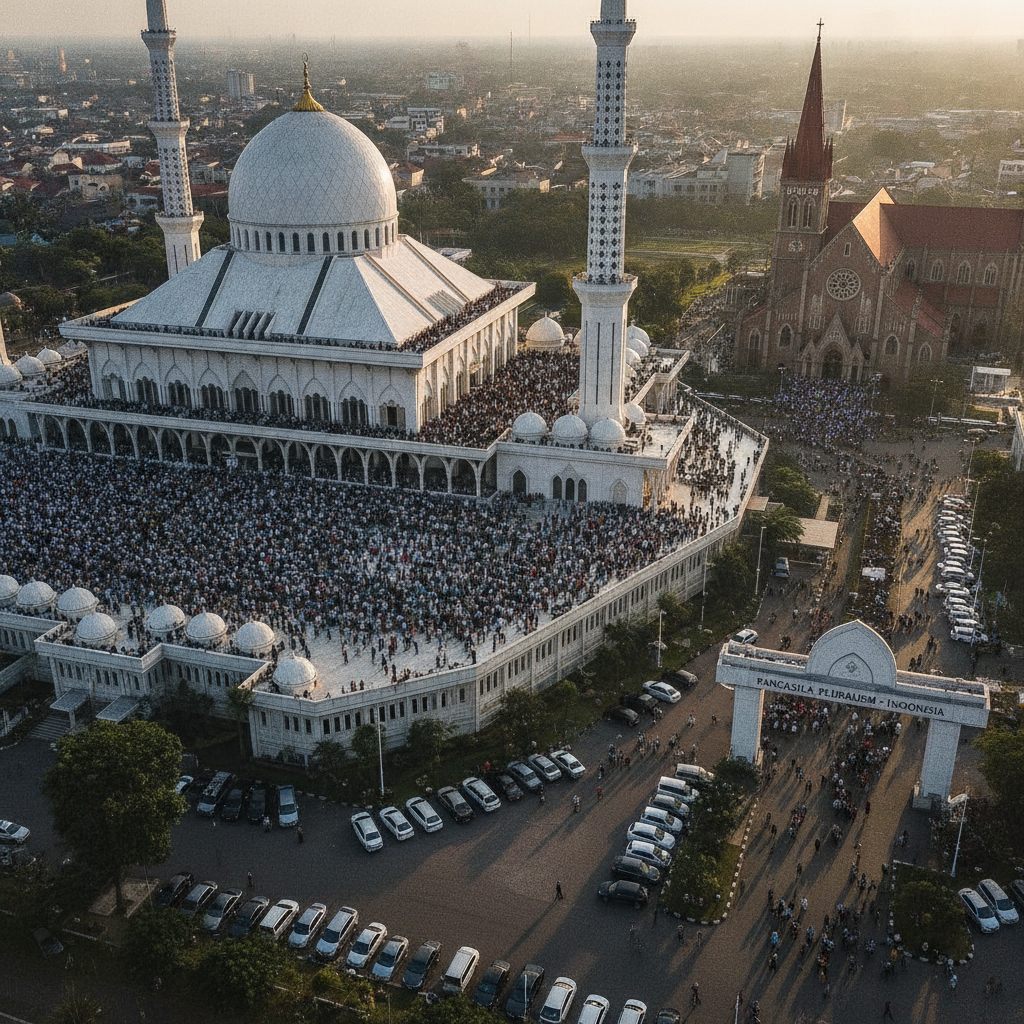
Jakarta's religious composition—87% Muslim, 7% Protestant Christian, 3% Catholic, 2% Hindu and Buddhist combined, plus a small number of Confucianists (an officially recognised religion in Indonesia since 2006)—reflects the city's demographic heterogeneity and the particular history of religion in Indonesia. The Istiqlal Mosque (Masjid Istiqlal—'Independence Mosque'—on the east side of Merdeka Square, directly facing Jakarta Cathedral): the largest mosque in Southeast Asia, built 1978 on the former Fort Prins Frederik site; designed by a Christian architect (Friedrich Silaban, a Batak Christian from North Sumatra—chosen in a competitive process by Sukarno, who wanted the symbolism of inter-religious cooperation); capable of holding 120,000 worshippers. Jakarta Cathedral (Gereja Katedral Jakarta—on the west side of Merdeka Square, facing Istiqlal directly): a neo-Gothic Catholic church completed in 1901, one of the finest colonial-era religious buildings in Jakarta. The two buildings facing each other across the square—the largest mosque in Southeast Asia and the principal Catholic cathedral, sharing a car park between them—are the most cited symbol of Indonesia's official pluralism (Pancasila, the state ideology, includes 'Belief in One God' as a principle that accommodates all religions without mandating any).
- 5
Day Trip to Bogor & the Botanical Gardens
Bogor—60 km south of Jakarta (accessible by KRL Commuterline in 1–1.5 hours, the most convenient and reliable train in Indonesia, departing every 15 minutes from Manggarai or Tanah Abang stations)—is Jakarta's most practical day trip and home to the finest botanical garden in Asia. The Bogor Botanical Gardens (Kebun Raya Bogor): established 1817 by the Dutch naturalist C.G.C. Reinwardt, developed by Sir Stamford Raffles (the founder of Singapore) during the British interregnum (1811–1816), and expanded by the successive Dutch directors into a 87-hectare research garden containing 15,000 plant species, the first natural history museum in Southeast Asia, and the presidential palace of the Indonesian government (Istana Bogor—on the grounds of the garden, used by Indonesian presidents as an informal retreat). The gardens: the most diverse collection of palm trees in the world (400 species), a Victorian-era orchid house, and the famous corpse flower (Amorphophyllum titanum—native to Sumatra, one of the world's rarest and largest flowers, blooming unpredictably every 7–40 years with a smell of rotting flesh; Bogor Botanic Gardens has bloomed more examples than any other place in the world). Bogor's streets: a cooler (altitude 290 metres) and less congested alternative to Jakarta, with its own culinary specialty (asinan Bogor—a vinegar-dressed pickled fruit salad).
- 6
Leaving Jakarta – Asia's Largest City & Its Contradictions
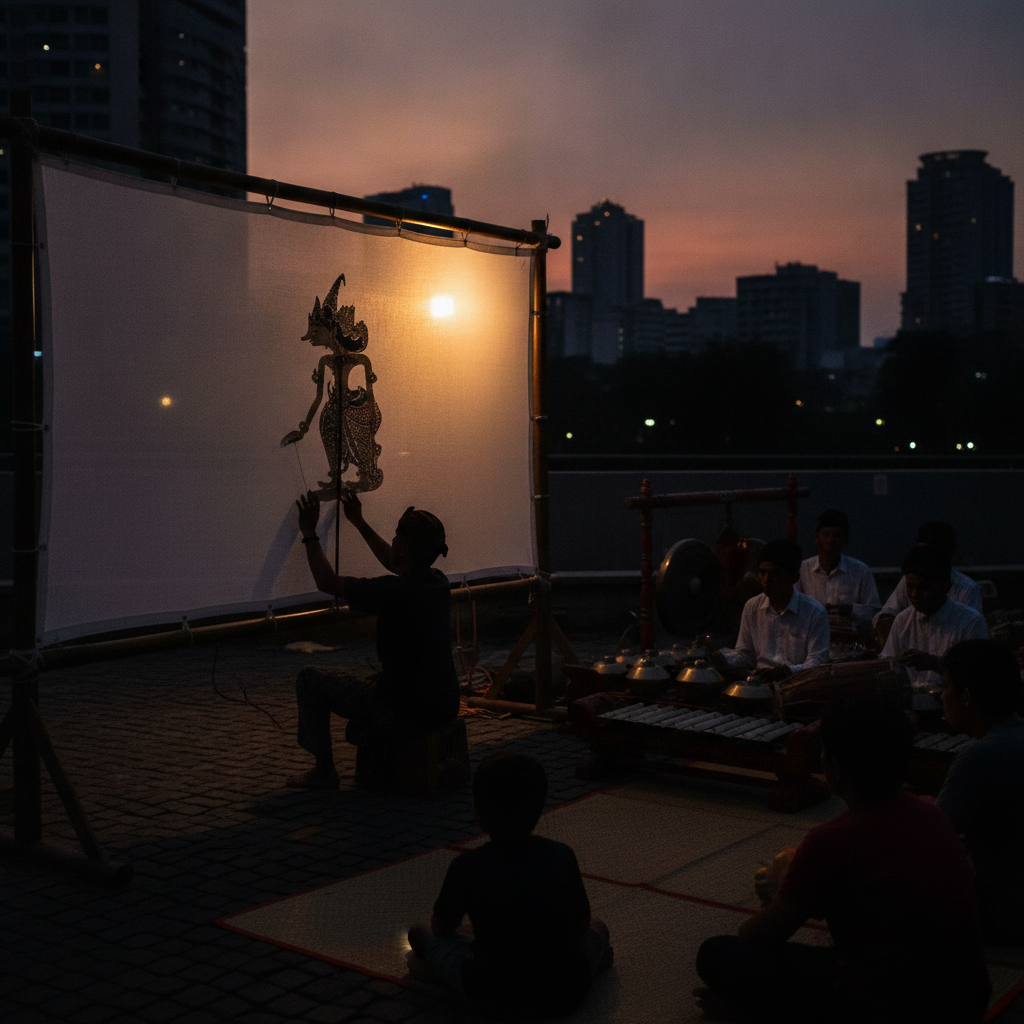
Jakarta is the city that most visitors to Indonesia arrive in, spend as little time as possible in, and leave with incomplete understanding of. The scale—10.5 million in the city, 32 million in the metropolitan area (the second-largest metropolitan area in the world after Tokyo)—is genuinely difficult to process; the traffic (which can make a 10 km journey take 90 minutes), the heat (a humidity that makes outdoor walking in the middle of the day genuinely uncomfortable), and the lack of obvious heritage-district tourism infrastructure (compared to Bali or Yogyakarta) conspire to push visitors through the airport and onto the next flight. What they miss: the scale of the cultural diversity (300 ethnic groups in one city), the food (rendang and nasi Padang and soto Betawi and bakso at midnight), the energy of a city that has grown from 2 million to 32 million in 50 years and is still building its infrastructure, the creative scene (Ruang Rupa's documenta, the street art in Kemang, the wayang orang at the Bharata), and the political complexity of a country that successfully democratised after 32 years of dictatorship and is now navigating what comes next. Jakarta is not easy—but it is one of the world's most significant cities, and it rewards the visitor who stays.
Walk this route with audio
Stories play automatically as you reach each stop — no tapping needed.
More in Jakarta
Jakarta's Layers: 1740 VOC Massacre of 10,000 Chinese, Dangdut's Tabla Beat & 40% of the City Below Sea Level
Jakarta Living: Bakso Carts at 2am, Ruang Rupa's 2022 documenta Win & the Thousand Islands' Polluted Reefs
Jakarta's Legacy: Sukarno's 1962 Asian Games Rejection of Western Governance, Ciliwung's 100 Tonnes of Daily Plastic & What Comes After
Jakarta: Dutch VOC Town Hall in Kota Tua, World's Worst Traffic & Nusantara Rising in Borneo's Forest