Jaipur's Hidden Rajasthan: Chand Baori's 3,500 Steps, Bundi's Kipling Murals & the Manganiyar Music Tradition
Escape the tourist circuit—Chand Baori stepwell's 3,500 zigzag steps descending 19 metres (the prison pit from The Dark Knight Rises), Bundi's blue-painted city with Rajput wall murals Rudyard Kipling called the finest in India, Kota's Chambal River crocodile safaris alongside 150,000 IIT exam-cramming students, Manganiyar hereditary musicians performing 40-generation-old kamaicha melodies from the Thar Desert courts, and Jaipur's lac bangle workshops, silver filigree boxes, and rooftop restaurants where the Hawa Mahal glows amber at sunset.
- 1
Stepwells of Rajasthan – Chand Baori & Abhaneri
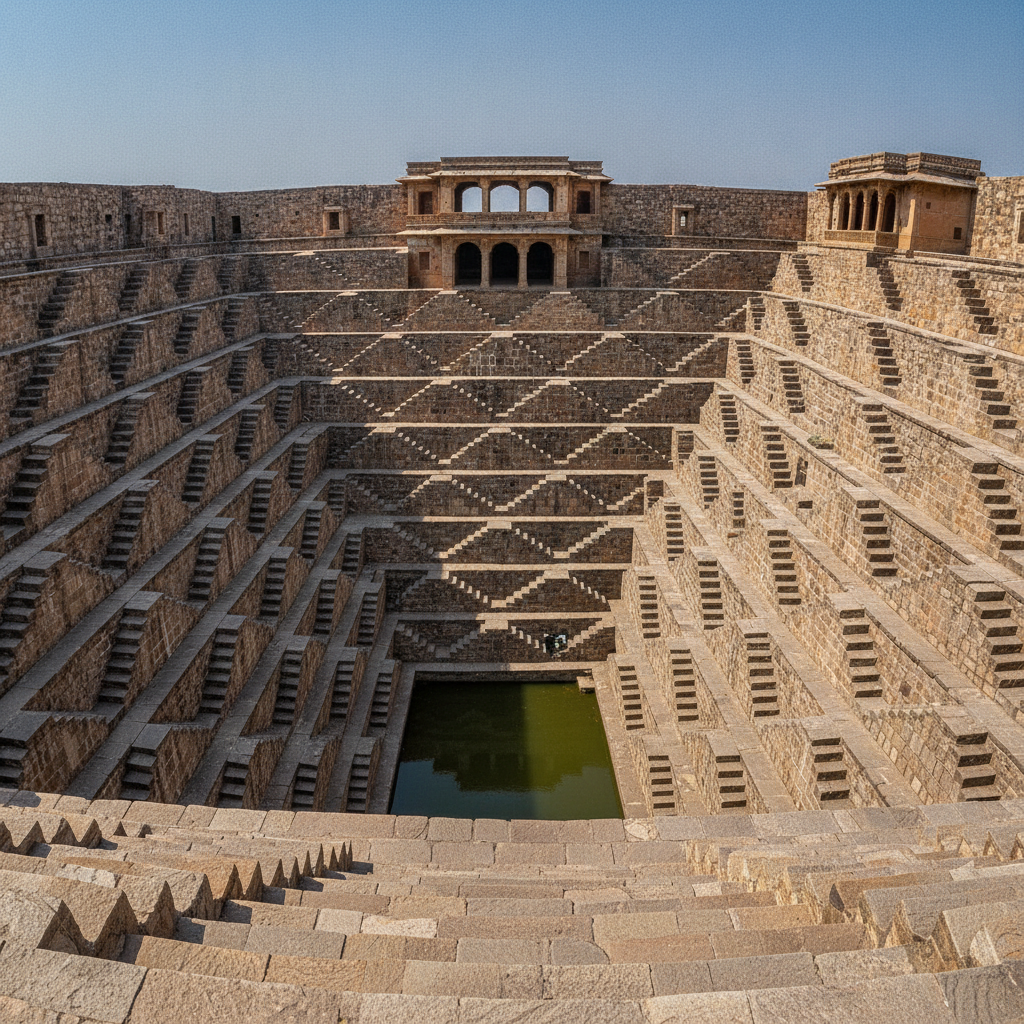
Chand Baori—in Abhaneri village, 95 km from Jaipur (1.5 hours)—is the most spectacular stepwell (vav or baoli) in India: 13 levels of zigzag steps descending 19.5 metres to the water surface, with 3,500 narrow steps in perfect geometric formation. Built in the 8th–9th century by King Chanda of the Nikumbha dynasty, the well was used for water storage and as a gathering place during the hottest months (the temperature at the bottom is 5–6°C cooler than the surface). The stepwell appeared in Christopher Nolan's The Dark Knight Rises (as the prison pit from which Bruce Wayne escapes). Neemrana stepwell (Neemrana Baoli, 122 km from Jaipur) is another remarkable example in a less-visited town.
- 2
Samode Palace & Bundi – Rajasthan's Hidden Gems
Samode Palace—42 km north of Jaipur—is a 400-year-old Rajput palace converted to a heritage hotel, with hand-painted interiors (the Sheesh Mahal at Samode is arguably more intimate and accessible than Amber's). Bundi—210 km south of Jaipur, 3 hours—is the best-preserved and least-visited of Rajasthan's royal towns: a blue-painted city beneath a dramatic fort, with elaborate 17th-century wall murals in the palace (Chitrashala—the gallery of paintings) considered among the finest examples of Rajput painting. Rudyard Kipling wrote part of Kim in Bundi. Taragarh Fort above Bundi has extraordinary views but requires navigating past local children requesting pens and the occasional monkey ambush.
- 3
Kota & Hadoti – The Chambal River Crocodile Safaris
Kota—240 km south of Jaipur on the Chambal River—is Rajasthan's industrial city and the centre of India's Kota coaching industry (over 150,000 students per year travel to Kota to study for the IIT-JEE and NEET competitive entrance exams—a phenomenon generating significant mental health concerns and a Netflix documentary). The Chambal River outside Kota is the habitat of the mugger crocodile (2,000+ individuals) and the Ganges river dolphin; the Chambal Safari at National Chambal Sanctuary sees both species. The 17th-century Kota Garh palace complex contains some of Rajasthan's finest Rajput miniature paintings.
- 4
Rajasthani Folk Music & the Manganiyar Tradition
The Manganiyar and Langa are traditional hereditary musicians of western Rajasthan, who have preserved a living tradition of folk music over 40+ generations. Manganiyar music—performed on the kamaicha (a bowed instrument with resonator), khartal (wooden castanets), dholak (double-headed drum), and accompanied by complex vocal improvisation—was the music of the Rajput courts and the desert communities. The Manganiyar Seduction (a staged concert with 41 musicians in a multi-storey illuminated cabinet, created by director Roysten Abel) has toured internationally. In Jaipur, folk music performances are staged at cultural centres; in Thar Desert villages, authentic performances can be arranged through community tourism initiatives.
- 5
Jaipur's Artisan Clusters – Silver, Lac Bangles & Miniature Painting
Jaipur's artisan economy clusters around specific crafts and specific streets. Silver jewellery making concentrates around Johari Bazaar; the tholia (round silver boxes with intricate filigree work) are Jaipur's most distinctive craft product. Lac bangle making—a traditional craft using shellac resin coloured with natural dyes, the bangles worn in stacks by Rajasthani women—centres in the old city lanes near Tripolia Bazaar. Miniature painting (the Jaipur school of Rajput miniature painting, derived from the Mughal tradition) is practiced by master artists in workshops around Amber and Johari Bazaar; original miniatures cost ₹2,000–200,000 (€24–2,400) depending on detail, size, and artist reputation.
- 6
Jaipur Pink City After Dark – Rooftop Restaurants & Night Bazaars
Jaipur's evenings offer a distinct character from the crowded daytime bazaars. Rooftop restaurants overlooking the Hawa Mahal (Tattoo Rooftop Café, Peacock Rooftop Restaurant) serve Rajasthani thalis and chilled beer as the pink sandstone glows amber at sunset. The Chokhi Dhani resort (20 km from Jaipur) is a recreated Rajasthani village with folk performances, camel rides, and a 10-course traditional meal on banana leaves—touristy but genuinely entertaining with excellent food. The night market around Bapu Bazaar and MI Road is active until 10pm; the best street food (kachori, pyaaz ki kachori, ghevar) comes from small stalls around Johari Bazaar that open in the evening.
Walk this route with audio
Stories play automatically as you reach each stop — no tapping needed.
More in Jaipur
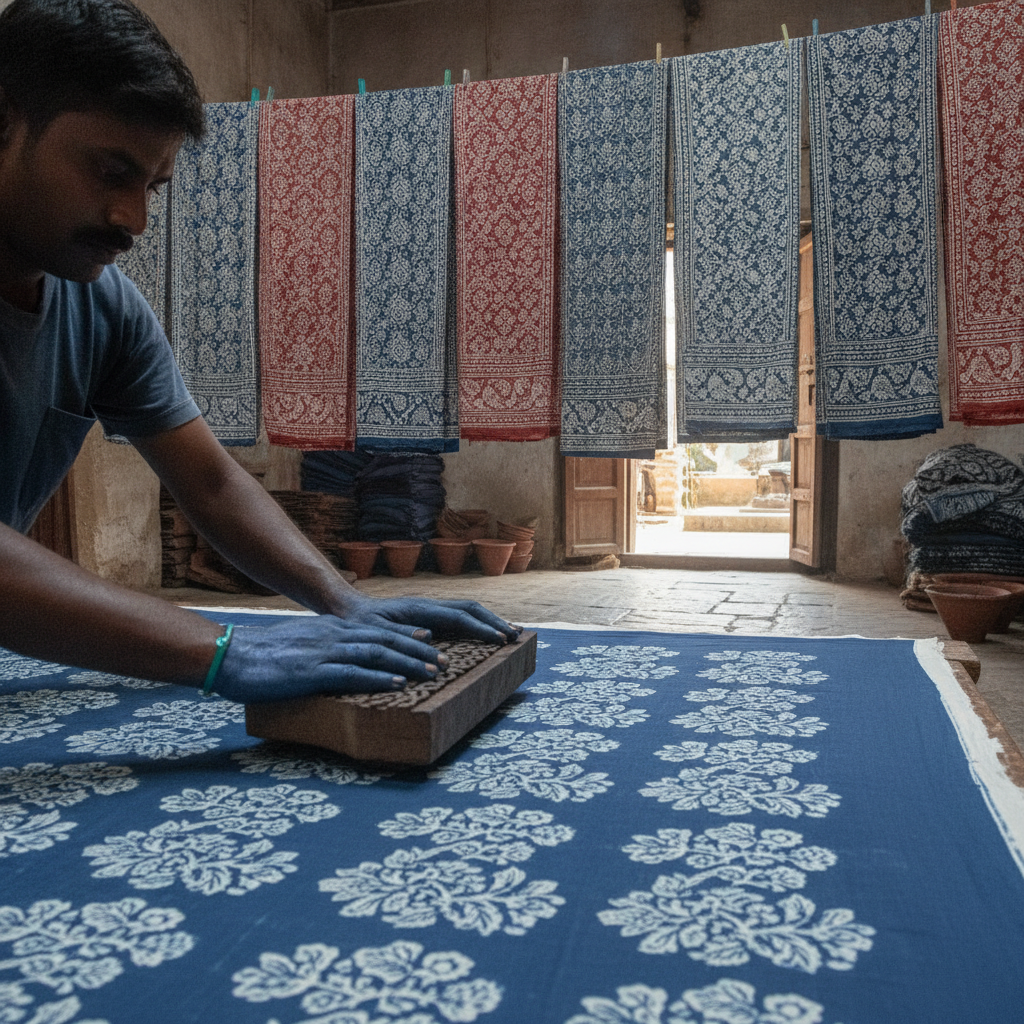
Jaipur Living: Dal Baati Churma, Hand-Block Textiles, the World's Largest Free Literary Festival & Elephant Ethics
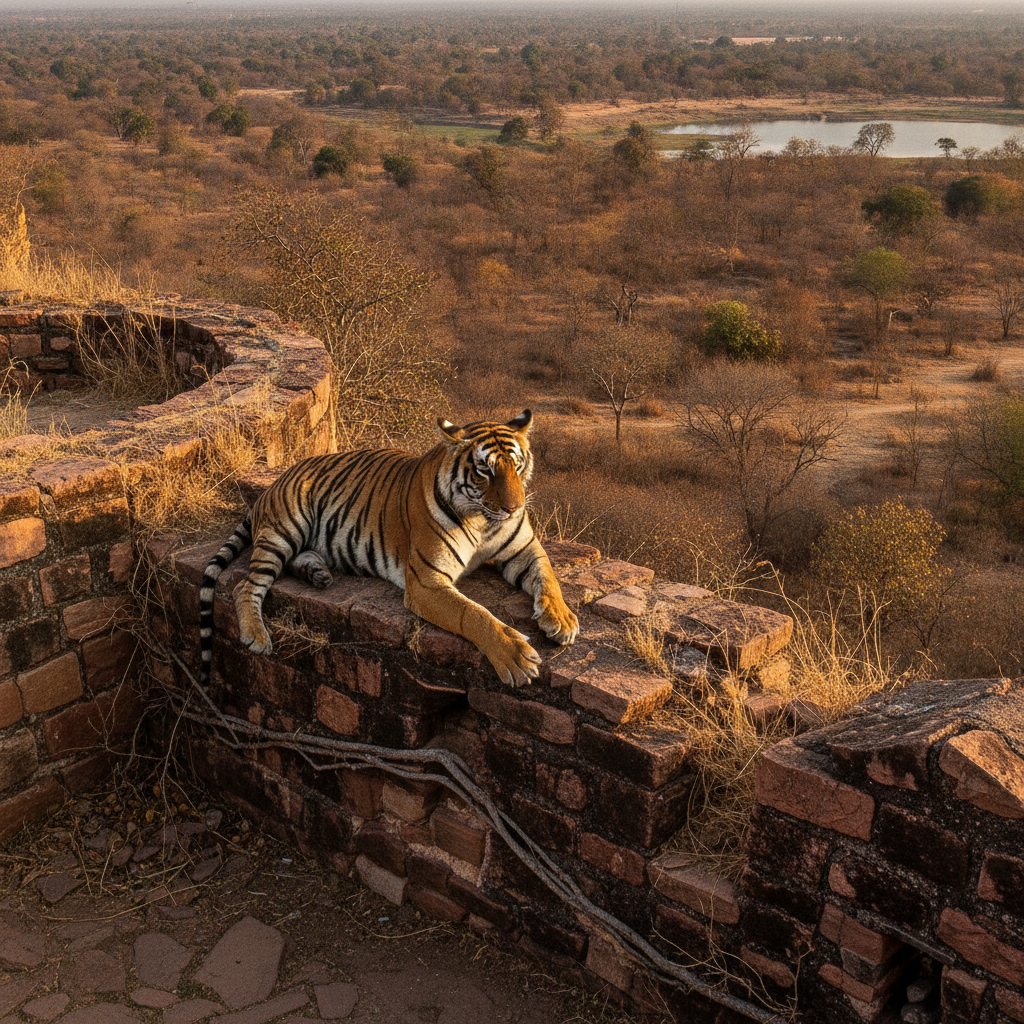
Jaipur's Hinterland: Tiger Spotting in Ruins, the World's Largest Camel Fair & Sufi Pilgrimage at Ajmer
Jaipur Essentials: Amber Fort's Mirror Palace, the Palace of Winds & the World's Largest Stone Sundial
Jaipur's Dynasties: Astronomer Kings, the Most Beautiful Woman in the World & the Floating Water Palace