Jaipur's Hinterland: Tiger Spotting in Ruins, the World's Largest Camel Fair & Sufi Pilgrimage at Ajmer
Venture out from Jaipur—Nahargarh Fort's ghost story and sunset panorama above the city, the world's largest wheeled cannon (never fired in battle) in Jaigarh's treasury, Bengal tigers resting on Mughal-era fort ramparts at Ranthambore (40–60% sighting probability), Pushkar Lake's 52 holy ghats and the world's largest camel fair with 50,000 animals, Shekhawati's havelis with more frescoes per square kilometre than anywhere on earth, and the Dargah of Moinuddin Chishti where 150,000 pilgrims arrive daily to hear qawwali music over a 13th-century Sufi saint's tomb.
- 1
Nahargarh Fort – The Tiger's Lair Above Jaipur
Nahargarh Fort ('Tiger's Lair')—perched on the Aravalli ridge above Jaipur, connected to Amber Fort by a long fortified wall—was built by Maharaja Sawai Jai Singh II in 1734 as a retreat and defensive position. The fort is less crowded than Amber and offers the finest panoramic view of Jaipur city and the surrounding valley. The legend attached to the fort involves the ghost of a Rajput prince (Nahar Singh Bhomia) who frustrated construction until his spirit was appeased with a temple and memorial. The wax museum inside (contemporary addition) is incongruously housed within the historic walls, but the sunset view over Jaipur is among the finest in Rajasthan.
- 2
Jaigarh Fort – The Cannon That Was Never Fired
Jaigarh Fort—also on the Aravalli ridge, connected to Amber Fort by underground passages—was the treasury and arsenal of the Amber kings. It contains the Jaivana cannon, cast in 1720, the world's largest cannon on wheels (6.15 metres long, barrel diameter 28 cm), which has never been fired in battle. The cannon was test-fired once (1820 or 1760—accounts differ); the cannon ball reportedly landed 35 km away and created a small lake where it landed. A persistent rumour circulated in 1975–76 during Indira Gandhi's Emergency that Jaigarh's underground chambers contained a vast Rajput treasury (never found despite an extensive government excavation).
- 3
Ranthambore National Park – Bengal Tigers in Ruins
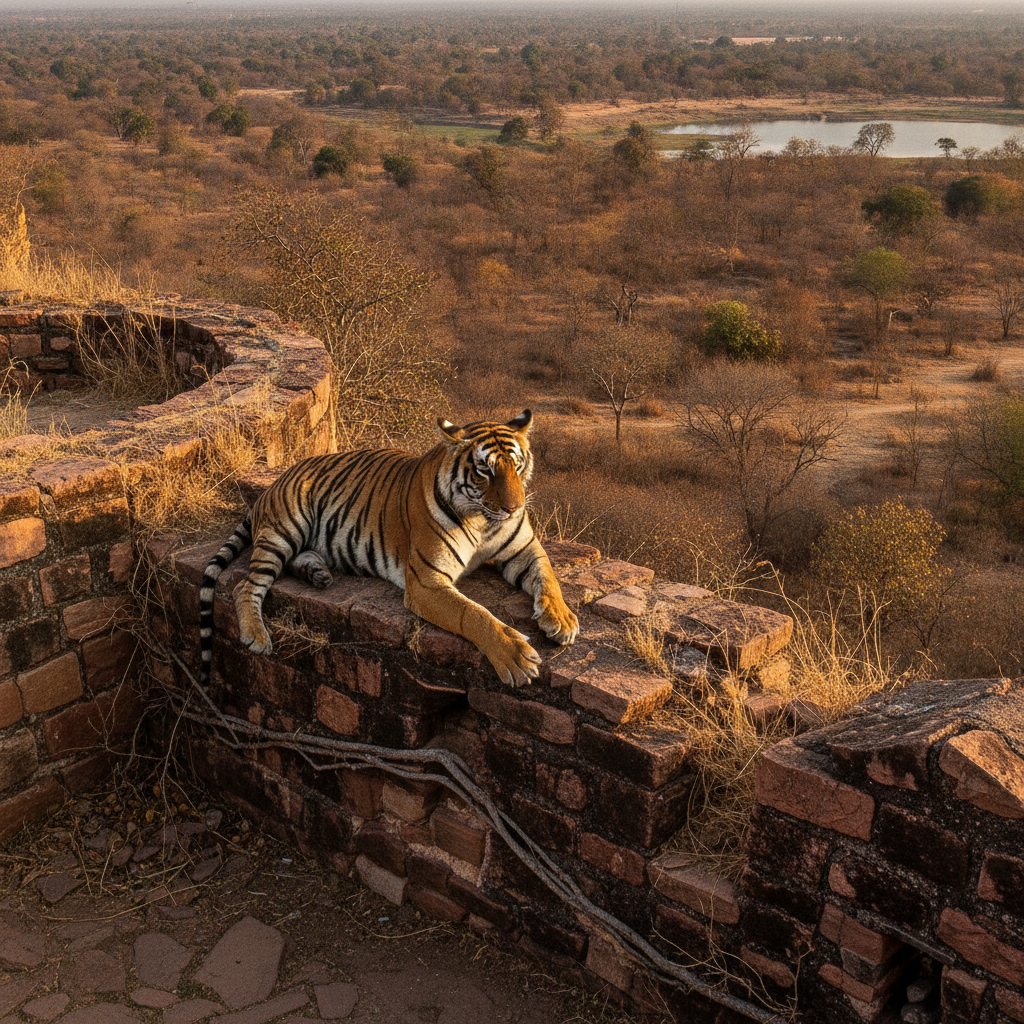
Ranthambore National Park—180 km southeast of Jaipur, 3 hours by train—is India's most famous tiger reserve, uniquely combining Mughal-era ruins (a 10th-century fort with temples and hunting lodges within the park boundary) with excellent tiger spotting. Ranthambore has approximately 75–80 tigers; sighting probability on a morning safari is estimated at 40–60% (higher than most Indian reserves). The famous 'Machli' tigress—who dragged a crocodile out of a lake in front of safari vehicles—was the world's most photographed tiger until her death in 2016. Zone 1–5 are the core zones; Zones 6–10 are buffer—zones 3–5 give the best tiger probability.
- 4
Pushkar – The Holy Lake Town 146 km Away
Pushkar—146 km west of Jaipur (2 hours by car), a small town around Pushkar Lake in the Thar Desert—is one of the holiest Hindu pilgrimage sites, one of only two temples in India dedicated to Brahma (the creator god). The 52 ghats around Pushkar Lake are the site of ritual bathing (puskar snan); the lake is claimed to have been created by a lotus petal dropped by Brahma. Pushkar is alcohol-free and vegetarian (officially). The Pushkar Camel Fair (November—5 days around Kartik Purnima full moon) is the world's largest camel fair: 50,000 camels, horses, and cattle traded over 5 days, with races, folk performances, and 400,000 visitors.
- 5
Shekhawati – The Open-Air Fresco Gallery
Shekhawati region—a roughly triangular area of northern Rajasthan (Sikar, Jhunjhunu, and Churu districts, 100–180 km north of Jaipur)—contains the highest concentration of merchant havelis (mansion houses) with elaborate painted frescoes of any region in the world. In the 18th and 19th centuries, Marwari merchants (who dominated Indian trade) competed to commission the most elaborate painted façades—the frescoes depicting scenes from Hindu mythology, Mughal court life, colonial-era curiosities (trains, aeroplanes, bicycles, Europeans in top hats), and folk tales. Mandawa, Nawalgarh, and Fatehpur are the most accessible towns; the region sees very few foreign tourists.
- 6
Ajmer & Dargah Sharif – Sufi Pilgrimage at the Heart of India
Ajmer—135 km southwest of Jaipur (2 hours)—contains the Dargah Sharif, the shrine of the Sufi saint Moinuddin Chishti (1141–1230 CE), who brought the Chishti order of Sufism to India and is known as Gharib Nawaz ('Benefactor of the Poor'). The dargah is among the most important Islamic pilgrimage sites in South Asia: approximately 150,000 pilgrims visit daily, both Muslim and Hindu. The annual Urs festival (the saint's death anniversary, 6 days in the Islamic month of Rajab) draws 500,000 pilgrims. The shrine is approached through the old city market; the atmosphere—qawwali (Sufi devotional music) performances, rose petals over the tomb, the mingling of Hindu and Muslim devotees—is one of India's most moving experiences.
Walk this route with audio
Stories play automatically as you reach each stop — no tapping needed.
More in Jaipur
Jaipur Living: Dal Baati Churma, Hand-Block Textiles, the World's Largest Free Literary Festival & Elephant Ethics
Jaipur Essentials: Amber Fort's Mirror Palace, the Palace of Winds & the World's Largest Stone Sundial
Jaipur's Dynasties: Astronomer Kings, the Most Beautiful Woman in the World & the Floating Water Palace
Jaipur Unfiltered: Palace-Hotels, Water Crisis, the Most Beautiful Cinema in India & Women's Safety