Sultanahmet: The Historic Heart of Istanbul
Sultanahmet, the historic peninsula district of Istanbul that occupies the tip of land between the Golden Horn and the Sea of Marmara where the original Byzantine city of Constantinople was built in 330 AD by Emperor Constantine I, contains the highest concentration of world-class monuments of any urban district in the world: within walking distance of one another are Hagia Sophia (the greatest surviving building of late antiquity, built in 537 AD by Emperor Justinian I), the Blue Mosque (the only mosque in Istanbul with six minarets, built 1609–1616 by Sultan Ahmed I), Topkapi Palace (the administrative and residential center of the Ottoman Empire for nearly 400 years, 1478–1853), the Basilica Cistern (the largest surviving Byzantine cistern, built 532 AD, capable of storing 80,000 cubic meters of water), and the Grand Bazaar (one of the world's oldest and largest covered markets, established 1461, with 4,000 shops in 61 covered streets).
- 1
Hagia Sophia — 1,500 Years of Sacred History
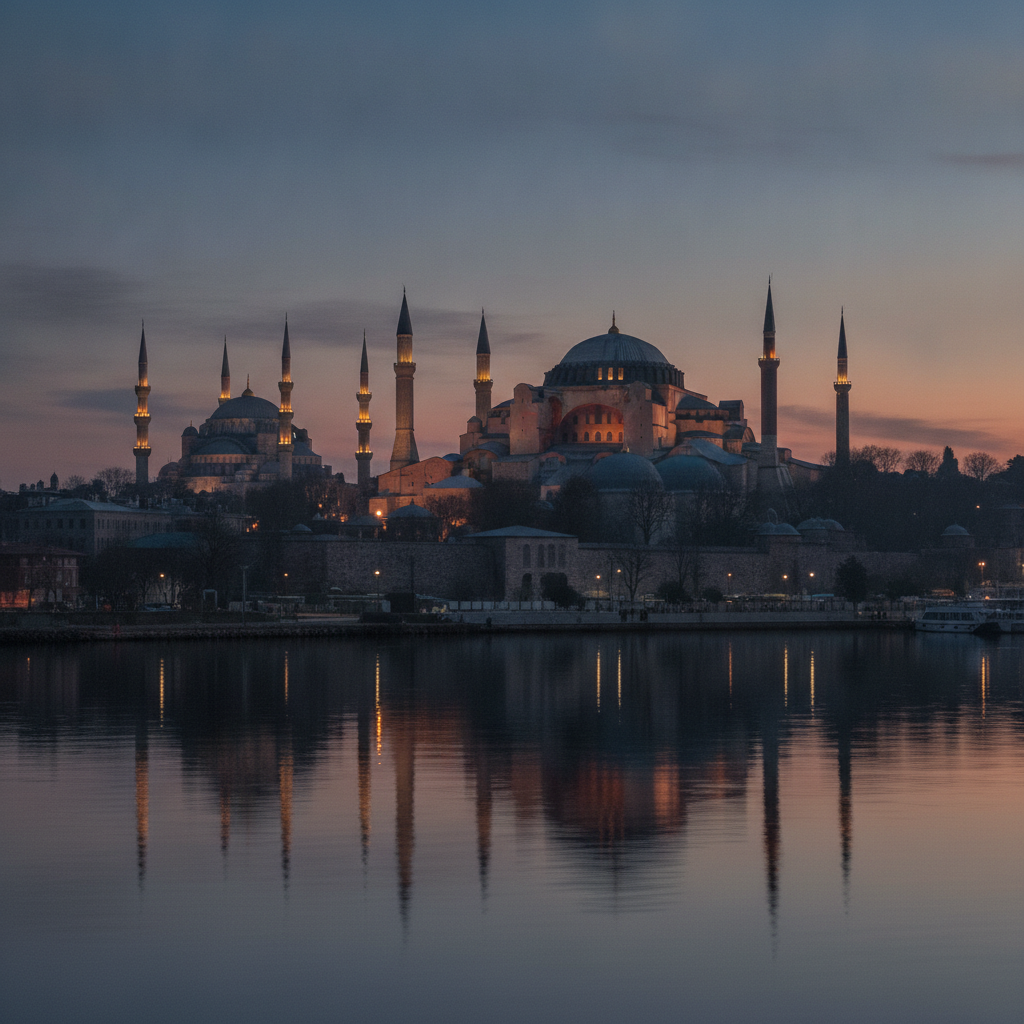
Hagia Sophia (Greek: Holy Wisdom; Turkish: Ayasofya), the massive domed structure at the center of Sultanahmet that has served successively as the most important church in Christendom (537–1453), the most important mosque in the Ottoman Empire (1453–1934), a museum (1934–2020), and again a functioning mosque (2020–present), is one of the greatest architectural achievements in human history and the building that defined the architectural vocabulary of both Byzantine and Ottoman religious architecture for a millennium. Built in just five years (532–537 AD) by Emperor Justinian I using 10,000 workers and materials transported from across the ancient world (including columns from the Temple of Artemis at Ephesus, porphyry from Egypt, and green marble from Thessaly), the dome — 31.2 meters in diameter, rising 55.6 meters above the floor — was the largest dome in the world for nearly 900 years (until the Florence Cathedral dome of 1436) and solved the fundamental engineering problem of placing a circular dome over a square floor plan through the invention of the pendentive, a curved triangular section that transitions the circle of the dome to the square of the supporting walls. The interior gold mosaic decoration (partially obscured by Ottoman plasterwork and calligraphic medallions but still partially visible) depicts Christ, the Virgin Mary, Byzantine emperors, and saints, and dates from the 9th to 14th centuries.
- 2
Blue Mosque — Six Minarets and the Ottoman Imperial Ambition
The Sultan Ahmed Mosque (Blue Mosque), built between 1609 and 1616 by the architect Sedefkâr Mehmed Ağa for Sultan Ahmed I, is the only mosque in Istanbul with six minarets — a distinction that caused a diplomatic incident when Mecca's Grand Mosque at the time also had six minarets, requiring a seventh minaret to be added to the Mecca mosque to restore the proper hierarchy. The mosque's interior (which gives it the popular name 'Blue Mosque') is covered with more than 20,000 İznik ceramic tiles in over 50 different tulip designs in blue, white, and turquoise — the largest collection of Iznik tiles in any single building in Turkey. The mosque directly faces Hagia Sophia across the Atmeydanı (the ancient Hippodrome), a deliberate siting choice by Sultan Ahmed I to assert the mosque's status as the equal of the former Byzantine cathedral. The mosque remains active for prayer, and the five daily prayer times (announced by the muezzin from all six minarets simultaneously) are among the most atmospheric experiences in Istanbul.
- 3
Topkapi Palace — 400 Years of Ottoman Power
Topkapi Palace, the sprawling complex of courtyards, pavilions, gardens, and treasury halls on the tip of the historic peninsula overlooking the confluence of the Bosphorus, Golden Horn, and Sea of Marmara, was the administrative heart of the Ottoman Empire for nearly four centuries (from its construction by Mehmed II in 1478 until 1853, when Sultan Abdulmecid I moved the imperial residence to the European-style Dolmabahçe Palace on the Bosphorus). The palace complex — entered through the Imperial Gate (Bab-ı Hümayun) and structured around three successive courtyards — held the Ottoman state apparatus: the divan (imperial council), treasury, harem, and private apartments of the sultan. The palace museum today houses the most significant collection of Ottoman imperial objects in existence: the Topkapi Dagger (1747, encrusted with three enormous emeralds), the Spoonmaker's Diamond (one of the world's ten largest cut diamonds at 86 carats), the mantle of the Prophet Muhammad, the sword of David, and thousands of Chinese and Japanese porcelain pieces from the imperial kitchen collection. The harem — the private residential quarters of the sultan, his concubines, and family, a self-contained city-within-a-palace containing approximately 300 rooms — is the most visited portion of the complex.
- 4
Basilica Cistern — The Underground Palace
The Basilica Cistern (Turkish: Yerebatan Sarnıcı — Sunken Palace), the largest of the 36 Byzantine cisterns still surviving beneath Istanbul's historic peninsula, was built in 532 AD during the reign of Emperor Justinian I to supply water to the Great Palace of Constantinople and the surrounding buildings. The cistern measures 138 meters by 64.6 meters — approximately the size of two football fields — and is supported by 336 marble columns arranged in 12 rows of 28, each column 9 meters tall, rising from the water to support the brick vaulted ceiling 8 meters above. The columns were repurposed from earlier Roman structures across the empire (many still bear the fluting, capitals, and inscriptions of their original function in earlier temples and public buildings). In the northwest corner, two column bases rest on inverted carved marble Medusa heads — one upright, one on its side — their origin unknown but commonly attributed to the Roman-era Medusa head tradition of placing the head of the monster (whose gaze turned viewers to stone) upside down or sideways to neutralize its power.
- 5
Grand Bazaar — The World's Oldest Shopping Mall
The Grand Bazaar (Kapalıçarşı — Covered Market), built by Sultan Mehmed II in 1461, nine years after his conquest of Constantinople, on the site of a Byzantine cloth market, is one of the oldest and largest covered markets in the world: 61 covered streets, 4,000 shops, and approximately 250,000 visitors per day in peak season, all under a single roof of vaulted stone. The bazaar is organized by trade — the Street of Goldsmiths (Kuyumcular Caddesi) where gold jewelry shops line both sides; the Street of Second-Hand Booksellers; the jewelers' quarter; the carpet section; the section for leather goods — a spatial organization that has remained largely unchanged for 550 years and reflects the Ottoman guild system in which each trade occupied a defined territory within the market. The bazaar's 18 gates (each with a different name) open at approximately 8:30am and close at 7pm, Monday through Saturday.
- 6
Hippodrome (Atmeydanı) — Where Constantinople's History Played Out
The Hippodrome (Atmeydanı — Horse Square), the elongated open square in front of the Blue Mosque that follows the exact footprint of the Roman chariot-racing stadium built by Emperor Septimius Severus in 203 AD and expanded by Emperor Constantine I in 330 AD, was the civic and political heart of Byzantine Constantinople for over a thousand years: the site of chariot races (which served as the primary form of political organizing in the Byzantine state, with the Blue and Green chariot-racing factions functioning as proto-political parties), imperial proclamations, triumphal processions, and public executions. Today three monuments from the original Byzantine stadium survive in the square: the Egyptian Obelisk (brought from Karnak in 390 AD, originally erected by Pharaoh Thutmose III in 1450 BC), the Serpent Column (a bronze column cast in 479 BC to celebrate the Greek victory over the Persians at Plataea, brought to Constantinople by Constantine I), and the Column of Constantine VII Porphyrogennetos (built in 944 AD, its original bronze plating stripped during the Fourth Crusade in 1204).
Walk this route with audio
Stories play automatically as you reach each stop — no tapping needed.
More in istanbul
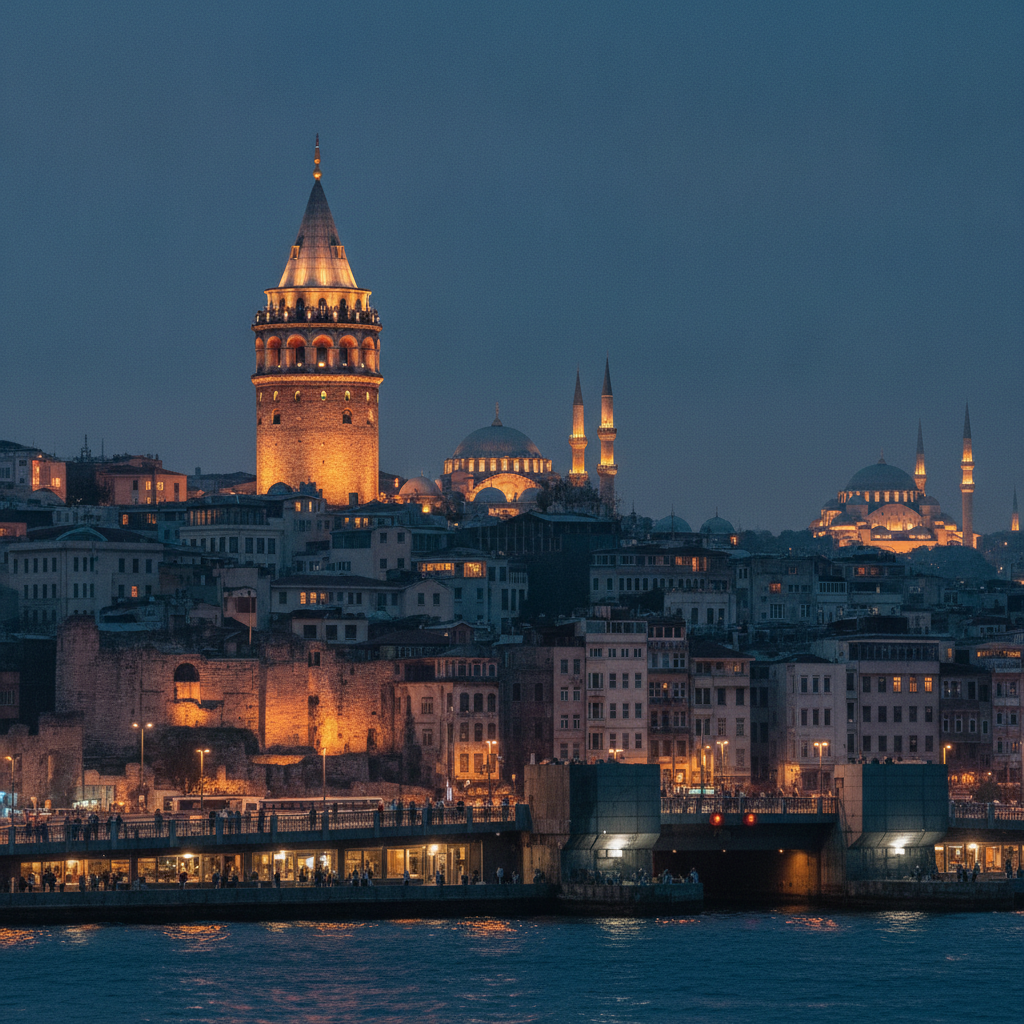
Galata, Beyoğlu & İstiklal: Istanbul's European Soul
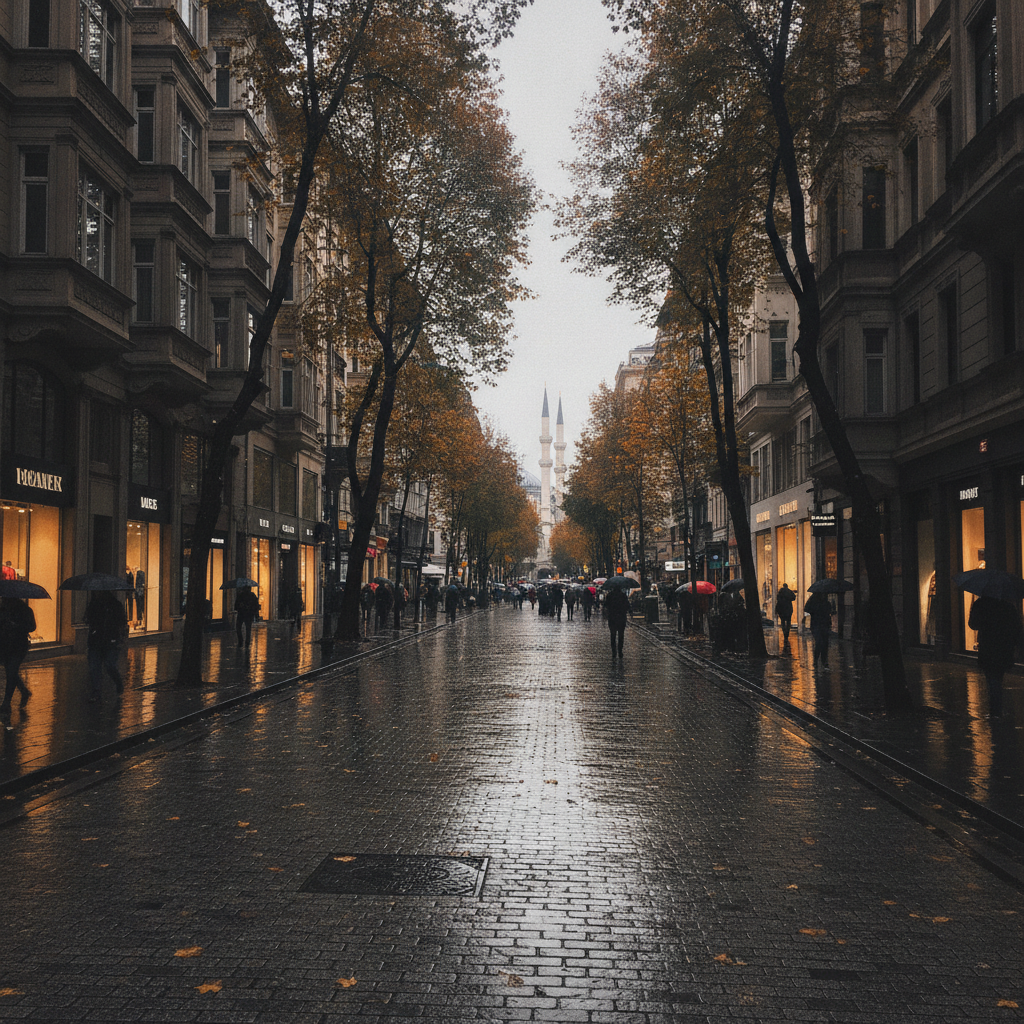
Beşiktaş, Nişantaşı and Yıldız: Istanbul's Affluent European Quarter
Princes' Islands: Istanbul's Car-Free Archipelago
Balat, Fener and the Golden Horn
Fatih and the Faith Mosque: Conservative Istanbul