Galata, Beyoğlu & İstiklal: Istanbul's European Soul
The Galata-Beyoğlu district, occupying the northern shore of the Golden Horn opposite Sultanahmet and rising steeply up the hill from the waterfront to the Taksim Square plateau, is Istanbul's historically non-Muslim and cosmopolitan quarter: a neighborhood that was the home of Genoese traders (who built the Galata Tower in 1348), Greek, Armenian, Jewish, and Levantine merchant families through the Ottoman centuries, European embassies and consulates in the 19th century, and today the center of Istanbul's arts, music, and nightlife scene. İstiklal Caddesi, the 1.4-kilometer pedestrianized main avenue connecting Tünel Square (bottom) to Taksim Square (top), is one of the busiest pedestrian streets in the world, with approximately 3 million people walking its length on weekend days.
- 1
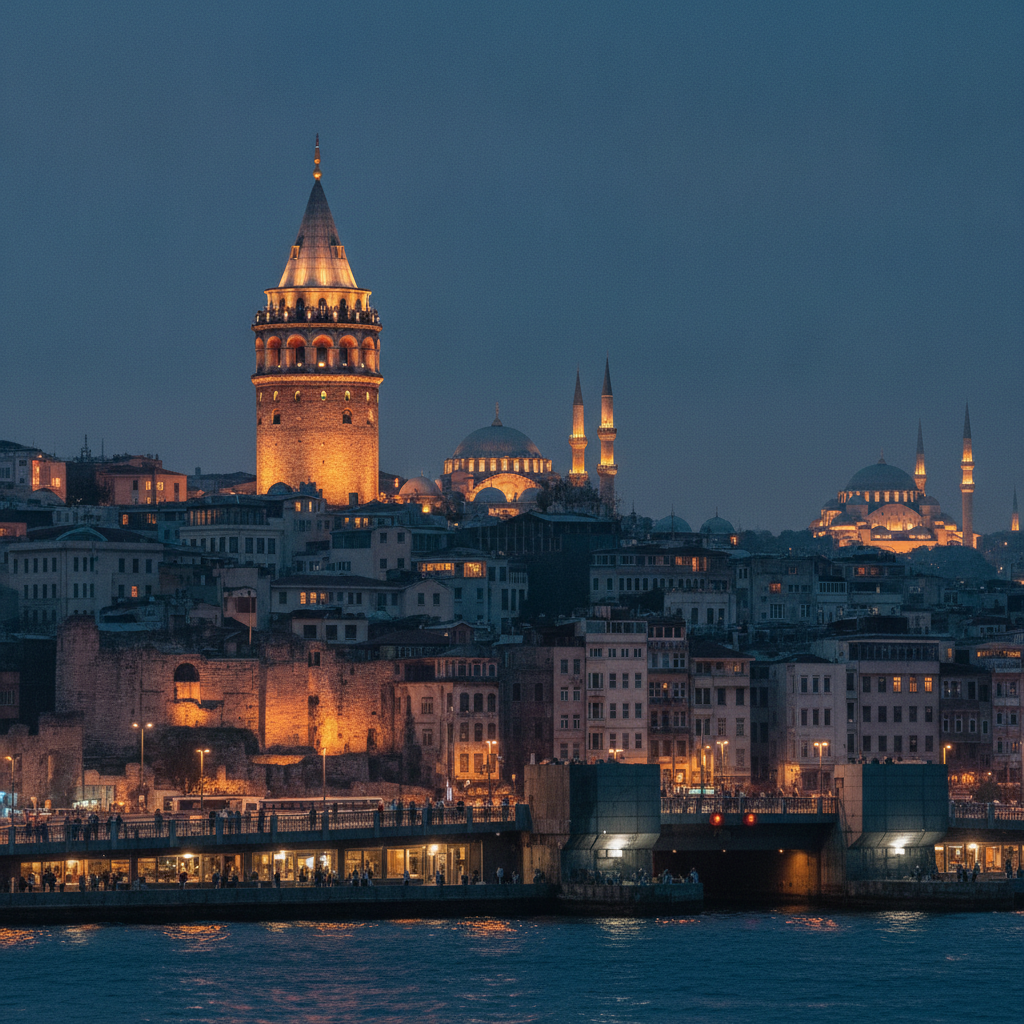
Galata Tower — The Genoese Watchtower over the Golden Horn
Galata Tower (Galata Kulesi), the cylindrical stone tower rising 67 meters above the Galata neighborhood on the northern shore of the Golden Horn, was built by the Genoese in 1348 as the centerpiece of the fortified Genoese trading colony of Galata, which occupied a walled enclave on the northern shore of the Golden Horn and functioned as the primary trading post for Genoese merchants in Constantinople, paying taxes to the Byzantine emperor in exchange for exclusive trading rights. The tower (the tallest structure in the city at the time of its construction) served as a watchtower and lighthouse for ships entering the Golden Horn, and later — under the Ottomans — as a fire observation tower, a prison, and, according to Ottoman legend, the launch point for Hezarfen Ahmed Çelebi, who in 1638 reportedly glided from the tower across the Bosphorus to the Asian shore (a distance of approximately 3.5 kilometers) using constructed wings, making it the earliest recorded human glider flight. The tower's viewing gallery (accessible by elevator and narrow stairs) provides the best panoramic view of Istanbul available from any single point, with simultaneous views of the Golden Horn, the Sea of Marmara, the Bosphorus strait, the domes of Sultanahmet to the south, and the Asian shore to the east.
- 2
Galata Bridge — Fishermen's Platform Over the Golden Horn
Galata Bridge (Galata Köprüsü), the double-deck bridge connecting the Eminönü waterfront in Sultanahmet to the Karaköy waterfront in Galata, crossing the entrance to the Golden Horn, has in its current and predecessor forms been the primary crossing point between the European shores of Istanbul since at least the 15th century. The current bridge (the fifth structure to carry the same name and crossing, rebuilt in 1992) is unique among major urban bridges in that its lower deck is a functioning restaurant and café level — approximately 30 restaurants with outdoor tables cantilevered over the water, serving fish sandwiches and fresh-squeezed pomegranate juice to diners sitting above the waterway. The bridge's upper deck is one of the most photographed scenes in Istanbul: dozens of amateur fishermen standing shoulder-to-shoulder along the railings on both sides, their fishing lines dropping to the Golden Horn below, catching small bluefish and horse mackerel that migrate through the strait seasonally, while the traffic of the city moves around them and the minarets of the Suleymaniye Mosque rise behind.
- 3
İstiklal Caddesi — The Avenue of Independence
İstiklal Caddesi (Independence Avenue), the 1.4-kilometer pedestrianized main street of the Beyoğlu district connecting Tünel Square (at the southern, Golden Horn end) to Taksim Square (at the northern plateau), is one of the busiest pedestrian streets in the world and the social center of Istanbul's European-facing commercial and cultural life. The avenue was laid out in its current form during the Ottoman Tanzimat reform period of the mid-19th century, lined with the neoclassical and Art Nouveau buildings of European embassies, banks, churches (the street contains nine different Christian churches representing different denominations and national communities — the French Catholic Church of St. Antoine, the Greek Orthodox Aya Triada, the Armenian Surp Yerrortutyun, the Italian Catholic St. Maria Draperis), and the famous passages (Çiçek Pasajı — Flower Passage, originally the Cité de Péra built in 1876; Balık Pasajı — Fish Market Passage) that were the shopping arcades of 19th-century Istanbul. The historic Tünel funicular (built 1875, making it the second-oldest underground urban railway in the world after London), connecting Karaköy waterfront to Tünel Square, still operates.
- 4
Pera Museum — Ottoman Orientalism and the Anatolian Weightsystem
Pera Museum (Pera Müzesi), located in a late 19th-century neoclassical building on a side street off İstiklal Caddesi (Tepebaşı neighborhood), is a private art museum — founded and operated by the Suna and İnan Kıraç Foundation — that specializes in Orientalist painting (European artists' depictions of the Ottoman world from the 17th to 19th centuries), Kütahya tiles and ceramics, and Anatolian weights and measures. The museum's prize holding is The Tortoise Trainer (Kaplumbağa Terbiyecisi), the large-format painting by the Ottoman master Osman Hamdi Bey (1906), considered one of the great works of 19th-century art and the only major painting by an Ottoman artist in a European Orientalist tradition: it depicts an elderly dervish training tortoises with small oil lamps on their backs (the tortoises were used, in the real historical practice the painting references, to light garden parties). The painting is reproduced throughout Istanbul on postcards, posters, and souvenirs.
- 5
Taksim Square — Istanbul's Modern Public Center
Taksim Square (Taksim Meydanı), the broad open plaza at the top of İstiklal Caddesi and the northern terminus of the pedestrian avenue, is Istanbul's primary public square and the symbolic center of the modern Turkish Republic's Istanbul: the square takes its name from the taksim (distribution) water reservoir built here in 1732 to distribute water from the Belgrade Forest reservoirs to the city, and has been the site of Istanbul's most significant political events of the 20th and 21st centuries — including the May Day 1977 massacre (34–42 protesters killed), the 2013 Gezi Park protests, and the 2016 coup attempt. The square's dominant structure is the Republic Monument (1928, designed by Italian sculptor Pietro Canonica), depicting Mustafa Kemal Atatürk and the founders of the Turkish Republic. The square is the largest public gathering place in Istanbul and a required reference point for any navigation of the Beyoğlu district.
- 6
Eminönü Waterfront — The Istanbul That Smells of Fish and Sesame
The Eminönü waterfront, the crowded quayside at the foot of the Galata Bridge on the Sultanahmet side of the Golden Horn, is the sensory heart of Istanbul: the place where the city's historical commerce and street life concentrates most densely. The waterfront is the terminal for Bosphorus ferries (Istanbul's public ferry system, operated by IDO and Şehir Hatları, connecting European Istanbul to the Asian shore and to the Prince's Islands), the site of the Spice Market (Mısır Çarşısı — Egyptian Market, built 1663) and its surrounding open-air extension of spice, dried fruit, and nut vendors, and the location of the balık ekmek (fish sandwich) boats: flat-bottomed boats moored to the waterfront that grill fresh fish caught from the Bosphorus over open fires, sliding the fish into half-loaves of white bread and serving them over the gunwale for approximately 25 Turkish Lira each, one of Istanbul's most iconic street food experiences.
Walk this route with audio
Stories play automatically as you reach each stop — no tapping needed.
More in istanbul
Sultanahmet: The Historic Heart of Istanbul
Beşiktaş, Nişantaşı and Yıldız: Istanbul's Affluent European Quarter
Princes' Islands: Istanbul's Car-Free Archipelago
Balat, Fener and the Golden Horn
Fatih and the Faith Mosque: Conservative Istanbul