Fatih and the Faith Mosque: Conservative Istanbul
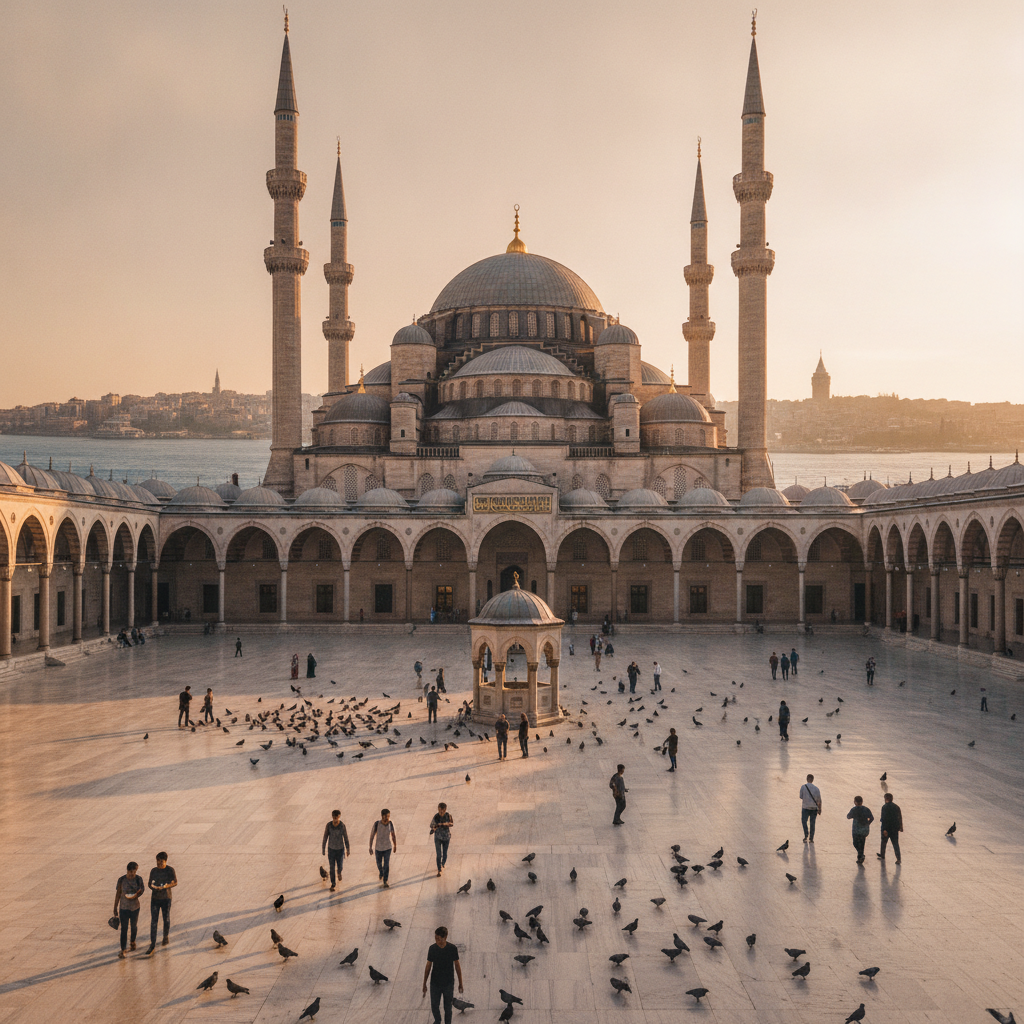
The Fatih district, occupying the central and western portions of the historic peninsula behind Sultanahmet, is Istanbul's most conservative and traditionally Muslim neighborhood: an area of working-class residential streets, small mosques and mescids (prayer rooms), religious schools, and the great Fatih Mosque complex (Fatih Camii — Faith Mosque), built by Sultan Mehmed II immediately after the Ottoman conquest of Constantinople in 1453 on the site of the Byzantine Church of the Holy Apostles (the second-most important church in Byzantium after Hagia Sophia). The surrounding neighborhoods — Vefa (famous for a 500-year-old boza shop), Şehzadebaşı (site of the Şehzade Mosque, Sinan's first major mosque commission), and Kumkapı (Istanbul's fish restaurant district on the Marmara shore) — form the Istanbul that existed before tourism.
- 1
Fatih Mosque (Faith Mosque) — The Conqueror's Foundation
The Fatih Mosque (Fatih Camii — Faith Mosque), the large mosque complex in the center of the historic peninsula that was the first major Ottoman monument built in Istanbul after the conquest of Constantinople in 1453, was constructed by Sultan Mehmed II between 1463 and 1470 on the site of the Byzantine Church of the Holy Apostles — the second-most important church in Christendom (after the Hagia Sophia), the burial place of the Byzantine emperors from Constantine I to Constantine XI (the last emperor), and the source of the architectural type (dome over equal-armed Greek cross) that influenced Christian church architecture in Europe for a millennium. The original Fatih Mosque was destroyed by an earthquake in 1766 and rebuilt in an entirely different style (1767–1771); the current building has little architectural relationship to the original. The mosque complex (külliye) that Mehmed II built — comprising 8 medreses (theological schools), a hospital, a caravanserai, a primary school, and a library — was the largest imperial Ottoman foundation ever built and the model for all subsequent mosque complexes in Istanbul.
- 2
Vefa Bozacısı — 500 Years of Fermented Wheat Drink
Vefa Bozacısı, the small fermented wheat drink shop (boza = a thick, slightly sour, fermented beverage made from wheat, consumed primarily in winter, traditionally drunk cold with a sprinkle of cinnamon and roasted chickpeas on top) located in the Vefa neighborhood approximately 500 meters west of Süleymaniye Mosque, has been operating in the same location since 1876 — making it the oldest continuously operating food and drink establishment in Istanbul and one of the oldest in Turkey. The shop's interior is essentially unchanged from the late 19th century: marble countertops, wooden shelving, old photographs, and a display case containing the silver cup (still displayed behind glass) that Mustafa Kemal Atatürk reportedly drank from when he visited the shop. Vefa Bozacısı produces approximately 1,000 liters of boza per day in season (October–March), and the queue on cold winter nights often extends out the door and down the street.
- 3
Şehzade Mosque — Sinan's Apprenticework
The Şehzade Mosque (Şehzade Camii — Prince's Mosque), built by Mimar Sinan between 1543 and 1548 for Sultan Süleyman the Magnificent in memory of his son Şehzade Mehmed (who died of smallpox at age 21 in 1543), is Sinan's first major mosque commission and the building in which he worked out the structural problems that he would solve more definitively in the Süleymaniye Mosque (1550–1558) and the Selimiye Mosque in Edirne (1568–1575). The mosque's four semi-domes (one on each side of the central dome) create a completely symmetrical plan — unlike later mosques, in which Sinan typically used two semi-domes — but at the cost of visual clarity. Sinan later described the Şehzade as his apprenticework, the Süleymaniye as his journeyman's work, and the Selimiye as his masterwork.
- 4
Column of Constantine — Rome's First Monument in Constantinople
The Column of Constantine (Çemberlitaş — Hooped Stone), the 37-meter porphyry column standing on a stone base in the Çemberlitaş neighborhood (just north of the Grand Bazaar), was erected by Emperor Constantine I in 330 AD to mark the inauguration of Constantinople as the new capital of the Roman Empire, at the center of the Forum of Constantine (the main public square of the new city). The column originally supported a bronze statue of Constantine I depicted as the sun god Apollo (with a radiate crown), which was toppled by a storm in 1105 and replaced by a cross (later removed by the Ottomans). The column's porphyry drums (each weighing approximately 60 tons) were brought from Egypt; according to Byzantine tradition, the column's base contained relics of the True Cross, fragments of the loaves from the Feeding of the Five Thousand, the stone from which Moses drew water, and the palladium of Rome (the sacred bronze statue of Athena supposedly brought by Aeneas from Troy). The column's iron hoops (added in the 5th century to prevent the column from collapsing) give it its Turkish name.
- 5
Sirkeci Station — Orient Express Terminus
Sirkeci Station (Sirkeci Garı), the ornate neo-Moorish and Ottoman railway station built between 1888 and 1890 by the German architect Auguste Jasmund for the Orient Express — the luxury passenger service connecting Paris to Istanbul operated by the Compagnie Internationale des Wagons-Lits from 1883 to 1977 — is the eastern terminus of the most famous railway journey in history and a building that represents the 19th-century moment when Istanbul's Ottoman modernization intersected with European technology and aesthetics. The station's architecture (combining pointed arches, colored glass windows, and geometric patterning from Islamic architecture with the cast-iron and glass construction technology of European railway architecture) was intended to signal the Ottoman Empire's modernity to arriving European passengers. The station is no longer in active use as a railway terminus (the last passenger trains ran in 2012, replaced by the Marmaray tunnel), but the building has been preserved as a restaurant and transportation museum.
- 6
Kumkapı — Istanbul's Fish District on the Marmara Shore
Kumkapı, the neighborhood on the Sea of Marmara shore of the historic peninsula (accessed from Sultanahmet by walking south approximately 1 kilometer, or by tram), is Istanbul's traditional fish restaurant district: a cluster of meyhane (Turkish taverns) and seafood restaurants in the streets around the historic Kumkapı fishing harbor, where the boats that fish the Bosphorus and the Marmara bring their catch. The restaurants, most open since the 1970s or 1980s, serve the standard meyhane menu: cold meze (haydari — yoghurt with herbs; ahtapot salatası — octopus salad; tarama — fish roe paste; enginar — artichoke in olive oil), rakı (the anise spirit that is the national drink of Turkey), and fresh fish grilled over charcoal (including the prized lüfer — bluefish — in season from September to November). The Kumkapı harbor itself, the historic Balıkçılar Çarşısı (Fishermen's Market), and the Byzantine sea wall fragments visible in the neighborhood's streets form the most complete surviving picture of Istanbul's relationship with the sea.
Walk this route with audio
Stories play automatically as you reach each stop — no tapping needed.
More in istanbul
Galata, Beyoğlu & İstiklal: Istanbul's European Soul
Sultanahmet: The Historic Heart of Istanbul
Beşiktaş, Nişantaşı and Yıldız: Istanbul's Affluent European Quarter
Princes' Islands: Istanbul's Car-Free Archipelago
Balat, Fener and the Golden Horn