Asian Istanbul: Kadıköy, Üsküdar and the Other Shore
The Asian shore of Istanbul, accessed from the European side by the public ferry crossing (approximately 20 minutes, departing from Eminönü and Beşiktaş) or by the Marmaray tunnel (opened 2013, the world's first transoceanic railway tunnel, connecting Europe to Asia under the Bosphorus), contains approximately half of Istanbul's 15 million population and an entirely different urban character from the European side: less touristic, more residential, with neighborhoods like Kadıköy (a bohemian market district of independent bookshops, vinyl record stores, fish restaurants, and street food vendors), Üsküdar (a conservative, historically significant Ottoman neighborhood), and Moda (a seaside neighborhood of late 19th-century terraced houses, cafés, and ice cream shops), all facing the Bosphorus and the European skyline across the water.
- 1
Kadıköy Market (Çarşı) — The Asian Shore's Daily Life
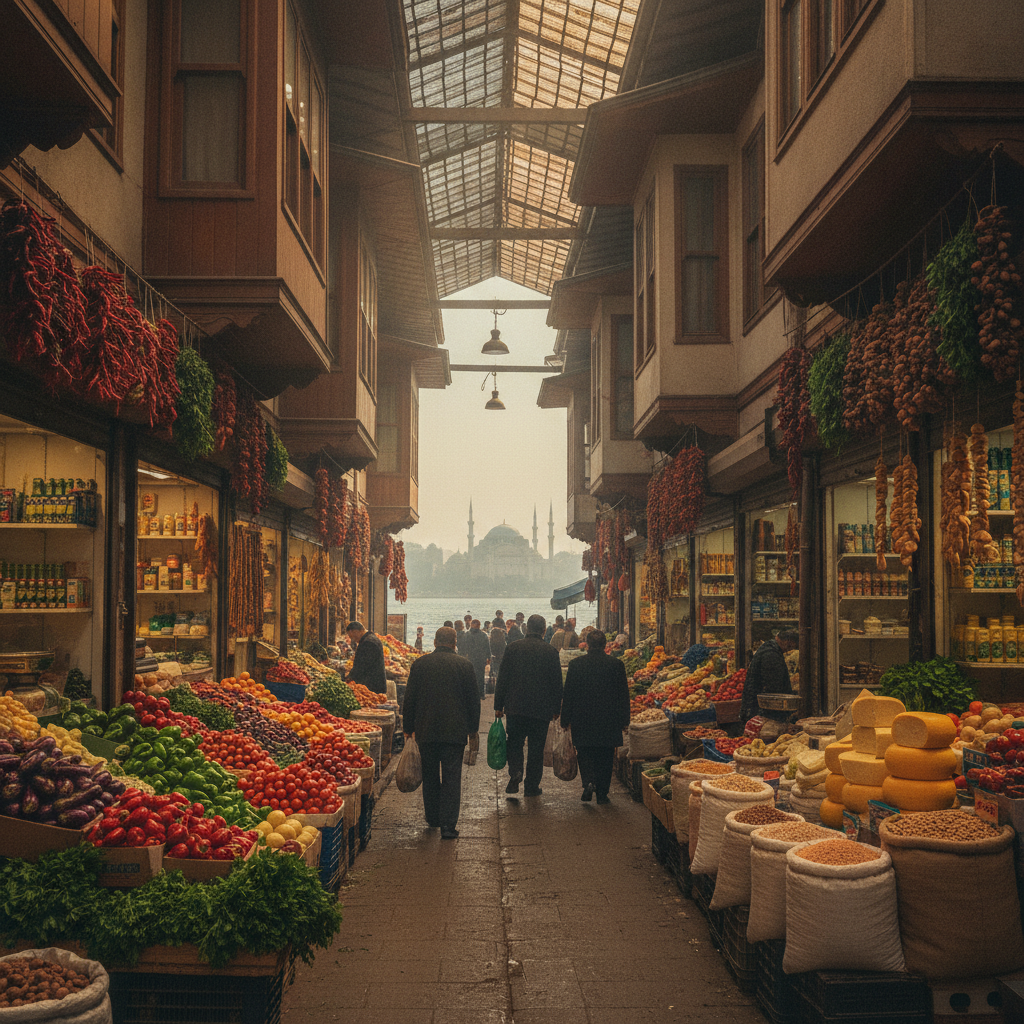
Kadıköy market district, the covered and open-air market area in the center of Kadıköy neighborhood (accessed by the Kadıköy ferry terminal, 20-minute crossing from Eminönü), is the most atmospheric working-class market in Istanbul: a labyrinth of covered streets lined with butchers, fishmongers, greengrocers, cheese merchants, spice vendors, bakeries, and the characteristic Turkish teahouses (çay bahçesi) where men sit for hours over small curved-glass cups of black tea (çay) and backgammon boards. The market produces the authentic sensory experience of Istanbul that the Grand Bazaar in Sultanahmet has long since lost to tourism — the vendors here sell to the residents of Kadıköy and the surrounding Asian neighborhoods, not to tourists. The neighboring streets (particularly Moda Caddesi and the Bahariye pedestrian street) are Kadıköy's restaurant and café strip, with the densest concentration of meyhane (traditional Turkish taverns serving rakı and meze) and independent restaurants in Istanbul.
- 2
Haydarpaşa Station — The Last Ottoman Railway Terminus
Haydarpaşa Station, the monumental neo-Romanesque and German Renaissance-style railway terminus built on a promontory jutting into the Bosphorus at Haydarpaşa (1 kilometer north of Kadıköy ferry terminal) between 1906 and 1909 by German architects Otto Ritter and Helmut Cuno for the German-Ottoman Baghdad Railway consortium, is one of the most architecturally impressive railway stations in the world and the historical terminus of the railway lines connecting Istanbul to Anatolia and the Middle East. The station was financed by the Deutsche Bank as part of Kaiser Wilhelm II's strategic investment in the Ottoman Empire's infrastructure (the Baghdad Railway project, which was intended to connect Istanbul to Baghdad and the Persian Gulf, was a major contributing factor to the geopolitical tensions that led to World War I). The station has been closed to passenger rail service since 2012 due to renovation works.
- 3
Moda — The Asian Shore's Belle Époque Village
Moda, the seafront neighborhood on the southern tip of the Kadıköy peninsula (a 15-minute walk south from Kadıköy ferry terminal along the Bosphorus waterfront), is the most charming neighborhood on Istanbul's Asian shore: a small headland of late 19th-century terraced townhouses, with a waterfront promenade, a small public park (Moda Parkı) with outdoor café tables, a 19th-century ferry terminal building (the Moda Vapur İskelesi, no longer in service), an art deco ice cream shop (Baylan, operating since 1923), and a series of independent cafés and wine bars in the residential streets behind the waterfront. On Sunday mornings, Moda is where Asian Istanbul comes to walk, read, and eat fish sandwiches on the waterfront, with views across the Bosphorus to the old city.
- 4
Üsküdar — The Sacred Asian Shore
Üsküdar, the large, historically significant Ottoman neighborhood directly across the Bosphorus from Eminönü and Sultanahmet (15-minute ferry from Eminönü), is one of Istanbul's oldest settled areas — the site of ancient Chalcedon, one of the first Greek colonies in the Bosphorus region (founded 685 BC), and a major Ottoman neighborhood since the 15th century, home to some of the most beautiful Ottoman mosques outside Sultanahmet: the Şemsi Pasha Mosque (1580, directly on the Bosphorus waterfront, designed by the master Ottoman architect Mimar Sinan), the Mihrimah Sultan Mosque (1548, also by Sinan, built for Süleyman the Magnificent's daughter), and the Çinili Mosque (1640, covered with Iznik tiles of exceptional quality). Üsküdar is also the starting point of the Üsküdar-Haydarpaşa shore road, the most scenic walk on the Asian shore.
- 5
Çamlıca Hill — Istanbul from the Highest Point
Büyük Çamlıca Hill, the 267-meter hill in the Üsküdar district of Istanbul's Asian side (approximately 5 kilometers from the Bosphorus shore), is the highest natural point within the Istanbul metropolitan area and provides the only 360-degree panoramic view of the full extent of the city: on a clear day (best in autumn and winter when visibility is highest) the view extends from the Black Sea coast to the north, across the full length of the Bosphorus, over the Golden Horn and the European skyline with its minarets and domes, to the Sea of Marmara and the Prince's Islands in the south. The hill is topped by the Istanbul Grand Mosque (Çamlıca Camii), completed in 2019 and the largest mosque in Turkey by capacity (63,000 worshippers), with six minarets (the tallest 107.1 meters). The mosque's scale and hilltop position make it visible from virtually every point in Istanbul.
- 6
Bosphorus Ferry — The World's Best Urban Commute
The Istanbul public ferry system (operated by İstanbul Şehir Hatları, a subsidiary of the Istanbul Metropolitan Municipality), running crossing and commuter services between the European and Asian shores of the Bosphorus and the Golden Horn from multiple terminals (Eminönü, Beşiktaş, Kabataş on the European side; Kadıköy, Üsküdar, Bostancı on the Asian side), is one of the world's great public transport experiences: a 20-minute crossing of the Bosphorus on a historic ferry, standing on the open stern deck with a glass of tea, watching the European skyline of minarets and domes shrink behind you and the Asian shore approach ahead, as container ships and fishing boats pass on either side. The crossing costs the same as any Istanbul public transit journey (approximately €0.50 with an Istanbulkart), and the Eminönü–Kadıköy route is the most scenic commute available in any city in the world.
Walk this route with audio
Stories play automatically as you reach each stop — no tapping needed.
More in istanbul
Galata, Beyoğlu & İstiklal: Istanbul's European Soul
Sultanahmet: The Historic Heart of Istanbul
Beşiktaş, Nişantaşı and Yıldız: Istanbul's Affluent European Quarter
Princes' Islands: Istanbul's Car-Free Archipelago
Balat, Fener and the Golden Horn