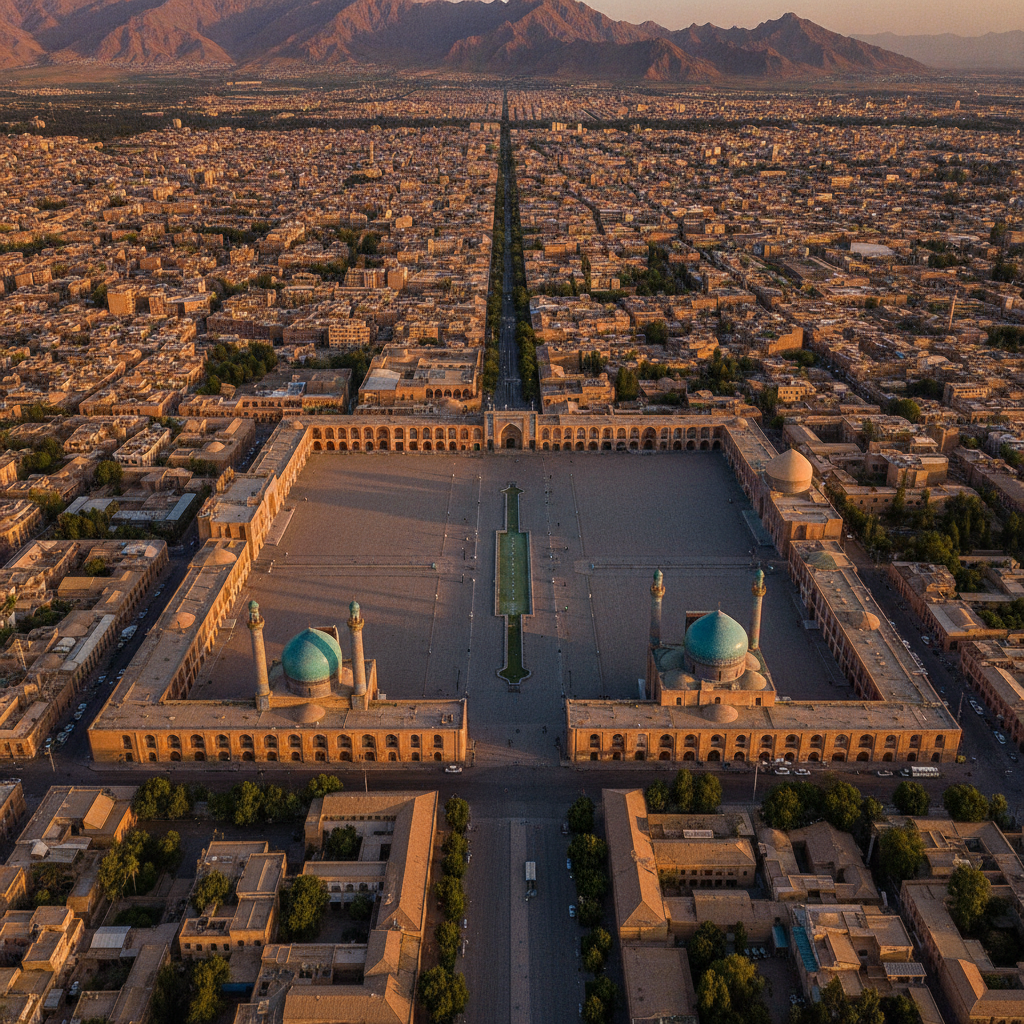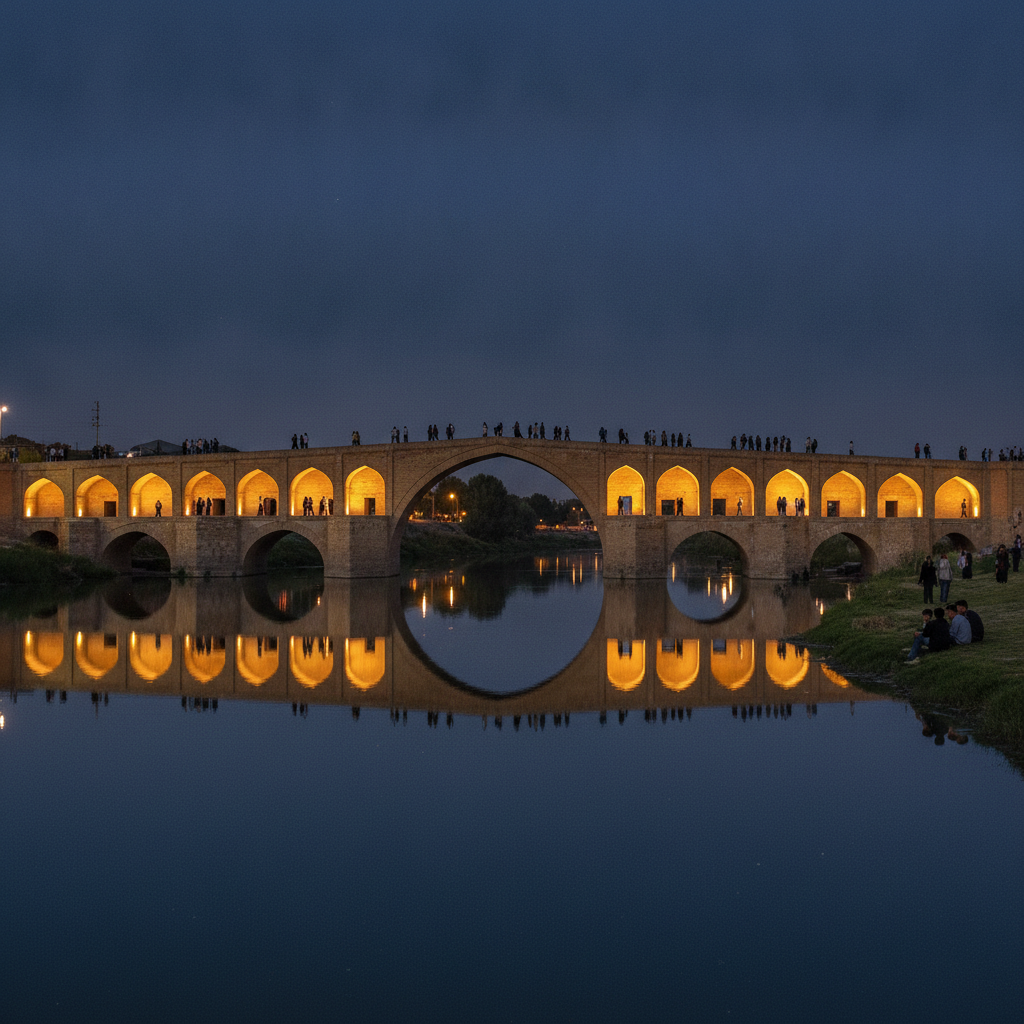
Shah Abbas Deporting 300,000 Armenians from Old Julfa to Isfahan in 1604 for Their Silk-Trading Skills, the Vank Cathedral Combining Armenian and Persian Decorative Styles & the Si-o-se Pol Bridge Designed as Both Crossing and River Weir
Shah Abbas deporting 300,000+ Armenians from Old Julfa (on the Araxes River) to Isfahan in 1604–1605 specifically for their dominance in the Iran-Europe silk trade; the Vank Cathedral combining Armenian church architecture with Safavid Persian tile and European fresco painting; the Si-o-se Pol functioning as both a public promenade bridge and a river weir for upstream irrigation; the Chehel Sotun name (Forty Columns) referring to the optical illusion of 20 columns doubled by their pool reflection; the Jameh Mosque preserving 1,400 years of continuous building from Umayyad to 20th century; and Isfahan gaz nougat made from Astragalus plant sap mixed with pistachios and rose water.
- 1
The Safavid Bridges – Si-o-se Pol & Khaju
The Safavid bridge heritage on the Zayandeh River (the two great Safavid bridges of Isfahan — the most beautiful bridges in the Islamic world and the primary public gathering spaces of modern Isfahan): the bridge heritage guide. The Si-o-se Pol (the Si-o-se Pol (سیوسهپل — Bridge of 33 Arches) — the primary bridge of Isfahan spanning the Zayandeh River: the construction (built 1602 by Allahverdi Khan — the Armenian-born general who was Shah Abbas I's most important military commander — in the years that Allahverdi Khan also began the Shah Mosque and the Ali Qapu Palace: the dimensions (298m long, 14m wide — the longest bridge in Safavid Iran: 33 arches (the Persian number of perfection — 33 is also the number of vertebrae in the human spine in Persian physiological tradition): the dual function (the Si-o-se Pol functions both as a bridge and as a weir: the lower walkways through the bridge arches at water level can be partially dammed to raise the Zayandeh River level for irrigation upstream: the social function (the Si-o-se Pol is the primary public promenade and social space of Isfahan — the lower-level arcades beneath the bridge serve as teahouses and meeting places: the bridge walkways fill with Isfahan families in the evening: the Khaju Bridge (the Khaju Bridge (پل خواجو) 1 km east of Si-o-se Pol — built 1650 by Shah Abbas II: the most ornate of the Isfahan bridges: 133m long, 12m wide, 23 arches: the central pavilion (the royal pavilion at the center of the Khaju Bridge — a 3-story pavilion used by Shah Abbas II to view the Zayandeh River and the city).
- 2
The Armenian Quarter – Jolfa's Christian Heritage
The Jolfa Armenian quarter heritage (the Christian quarter of Isfahan — the home of the Armenian community transplanted to Isfahan by Shah Abbas I in 1605): the Armenian heritage guide. The history (in 1604–1605, Shah Abbas I forcibly relocated the entire Armenian population of Old Julfa (a prosperous Armenian trading city in modern Azerbaijan on the Araxes River) to Isfahan: the deportation (the deportation involved approximately 300,000–350,000 Armenians (the largest single forced population transfer in Iranian history): Shah Abbas destroyed Old Julfa completely after the deportation to prevent the town from being used as a Russian or Ottoman base: the reason (Shah Abbas resettled the Armenians in Isfahan primarily for economic reasons — the Armenian merchants of Old Julfa were the most successful long-distance silk traders in the world (they dominated the Iran-Europe silk trade through the Levant and the Indian Ocean route): the Jolfa quarter (the new settlement (now New Julfa (Jolfa — جلفا) — the Armenian quarter in the south of Isfahan: the quarter retains its Christian character with 13 churches: the Vank Cathedral (the Vank Cathedral (Kelisa-ye Vank — کلیسای وانک) — the Cathedral of the Holy Sisters — the primary church of the New Julfa Armenians: built 1606–1655: the interior (the interior of the Vank Cathedral combines Armenian and Safavid Persian decorative elements: the dome ceiling is covered with Persian-style floral tile: the walls are covered with European-style frescoes depicting Old Testament scenes and the martyrdom of Armenian saints).
- 3
Isfahan's Chehel Sotun Palace – The Hall of Forty Columns
The Chehel Sotun Palace heritage (the Safavid pleasure palace of 40 columns — the primary royal entertainment complex of the Safavid court after the Naqsh-e Jahan area): the palace heritage guide. The Chehel Sotun (the Chehel Sotun (چهل ستون — Forty Columns) Palace — the Safavid royal pleasure palace in a garden setting 1 km west of the Naqsh-e Jahan Square: the UNESCO inscription (the Chehel Sotun was inscribed on the UNESCO World Heritage List as part of the Isfahan ensemble): the talar (the primary architectural feature of the Chehel Sotun is the talar — the elevated columned veranda facing the garden: the talar has 20 wooden columns: the name (the name Forty Columns (Chehel Sotun) refers to the optical illusion created when the 20 wooden columns of the talar are reflected in the pool at the base of the talar — making the apparent count 40 columns): the frescoes (the Chehel Sotun contains the most extensive surviving secular fresco cycle in Iran: the primary frescoes on the reception hall walls: (1) the Battle of Chaldiran (1514) — Shah Ismail I defeating the Ottoman Sultan Selim I: (2) the Battle of Taherabad — Shah Tahmasp II defeating the Uzbeks: (3) the Mughal reception — Shah Abbas I receiving the Mughal Emperor Humayun at the Safavid court (1544): (4) the Uzbek reception — Shah Abbas II receiving Nadr Muhammad Khan of Bukhara (1646): (5) the Nawruz reception — the New Year court ceremony of Shah Tahmasp I).
- 4
The Great Mosque of Isfahan – 1,400 Years of Architecture
The Jameh Mosque of Isfahan heritage (the most architecturally complex and historically layered mosque in Iran — the primary example of the entire development of Persian mosque architecture from the 8th century to the 20th century): the mosque heritage guide. The Jameh Mosque (the Masjed-e Jameh (مسجد جامع اصفهان — the Friday Mosque of Isfahan) on the north side of the old city: the UNESCO inscription (the Jameh Mosque of Isfahan was inscribed on the UNESCO World Heritage List in 2012): the date (the Jameh Mosque of Isfahan was built on the site of a pre-Islamic fire temple — the first mosque on the site dates to the 8th century CE (Umayyad period): the current structure represents 1,400 years of continuous building from the 8th to the 20th century: the four-iwan plan (the Jameh Mosque is the earliest surviving example of the four-iwan mosque plan in Iran — the plan with four large vaulted halls (iwan) facing a central courtyard: the four-iwan plan became the standard mosque form throughout the Iranian world: the Seljuk domes (the two Seljuk period dome chambers (late 11th century): the North Dome (Gonbad-e Khaki — Dome of the Earth) — built 1088 by Nizam al-Mulk (the Seljuk vizier) — the first fully developed ribbed brick dome in Iran: the South Dome (Gonbad-e Khaki) — built 1087 by Taj al-Mulk as a rival to the North Dome — the two domes are considered the culmination of Seljuk structural innovation: the winter prayer hall (the 800-year-old covered winter prayer hall — 54m x 48m — a forest of 200+ ornate brick columns supporting the roof).
- 5
Isfahan Cuisine – The Finest Persian Table
The Isfahan culinary tradition (the cuisine of Isfahan — considered by Iranians the most refined and complete expression of the Persian culinary tradition): the cuisine guide. The Isfahan food tradition (the Isfahan cuisine is distinguished from the cuisine of other Iranian cities by: the heavier use of legumes (advieh polo — spiced rice with lentils is an Isfahan specialty): the greater use of pomegranate (the pomegranate, the verjuice (ab-ghure — the juice of unripe grapes), and the sour grape (ghure) are used more extensively in Isfahan cooking than elsewhere in Iran): the stronger use of sweetness in savory dishes (the Persian sweet-savory tradition is most developed in Isfahan): the primary Isfahan dishes: Biryani-ye Isfahan (not a pilaf — the Isfahan biryani is a fried lamb offal (liver, lung, and heart) dish served in a flatbread): the most uniquely Isfahan dish — it has no equivalent outside the city: the Gaz (the Isfahan gaz (گز) — the traditional Isfahan nougat confection — the most famous confection of Iran: the gaz is made from the dried sap of the angevin plant (Astragalus fasciculifolius) mixed with pistachio nuts and rose water — the sap gives the gaz its distinctive texture (chewy but not sticky): the Isfahan gaz production is centered on the gaz workshops in the Bazar-e Mesgarha section of the Grand Bazaar: the Khoresht-e Mast (the yogurt stew): a sweet-savory dish of lamb pieces cooked in thick yogurt with saffron, rose water, and sugar — considered the most quintessentially Persian of all Isfahan dishes: the Masjed-e Imam tea house: the tea house below the Shah Mosque for mint tea and gaz after mosque visits.
- 6
Isfahan 2-Day Itinerary – The Complete Circuit
The comprehensive Isfahan 2-day itinerary (the optimal sequence for experiencing the UNESCO monuments, bridges, Armenian quarter, and cuisine of Isfahan in 48 hours): the complete circuit. Day 1 (the Naqsh-e Jahan Complex): early morning (08:00 the Naqsh-e Jahan Square before the crowds — the morning light is ideal for photographing the Sheikh Lotfollah Mosque dome (the cream tiles are most luminous in the morning): 09:00 Shah Mosque entry (allow 90 minutes — stand under the dome for the 7-fold echo): 11:00 Sheikh Lotfollah Mosque (allow 45 minutes — the interior in morning light is the most beautiful room in Iran): 12:30 lunch in the Qaysariyeh teahouse adjacent to the bazaar portal: afternoon (14:00 Ali Qapu Palace (allow 60 minutes — the music room on the 6th floor is the primary target): 15:30 Grand Bazaar walk (the copper section (Bazar-e Mesgarha) and the gaz shops for Isfahan nougat): 17:00 Chehel Sotun Palace (allow 60 minutes — the frescoes are the primary target): evening (19:00 Si-o-se Pol Bridge evening promenade — the bridge is at its most social from 19:00 to 22:00 when Isfahan families gather: 20:30 dinner in a traditional restaurant near the Jolfa bridge). Day 2 (Bridges and Alternative Sites): morning (09:00 Jolfa Armenian quarter — Vank Cathedral (allow 90 minutes): the Jolfa cafes for breakfast): afternoon (the Jameh Mosque of Isfahan (Masjed-e Jameh — UNESCO): 14:00 Khaju Bridge: 16:00 the traditional painted houses of the Abbasabad district): evening (return to the Naqsh-e Jahan at sunset for the best light on the Shah Mosque facade).
Walk this route with audio
Stories play automatically as you reach each stop — no tapping needed.
More in Isfahan
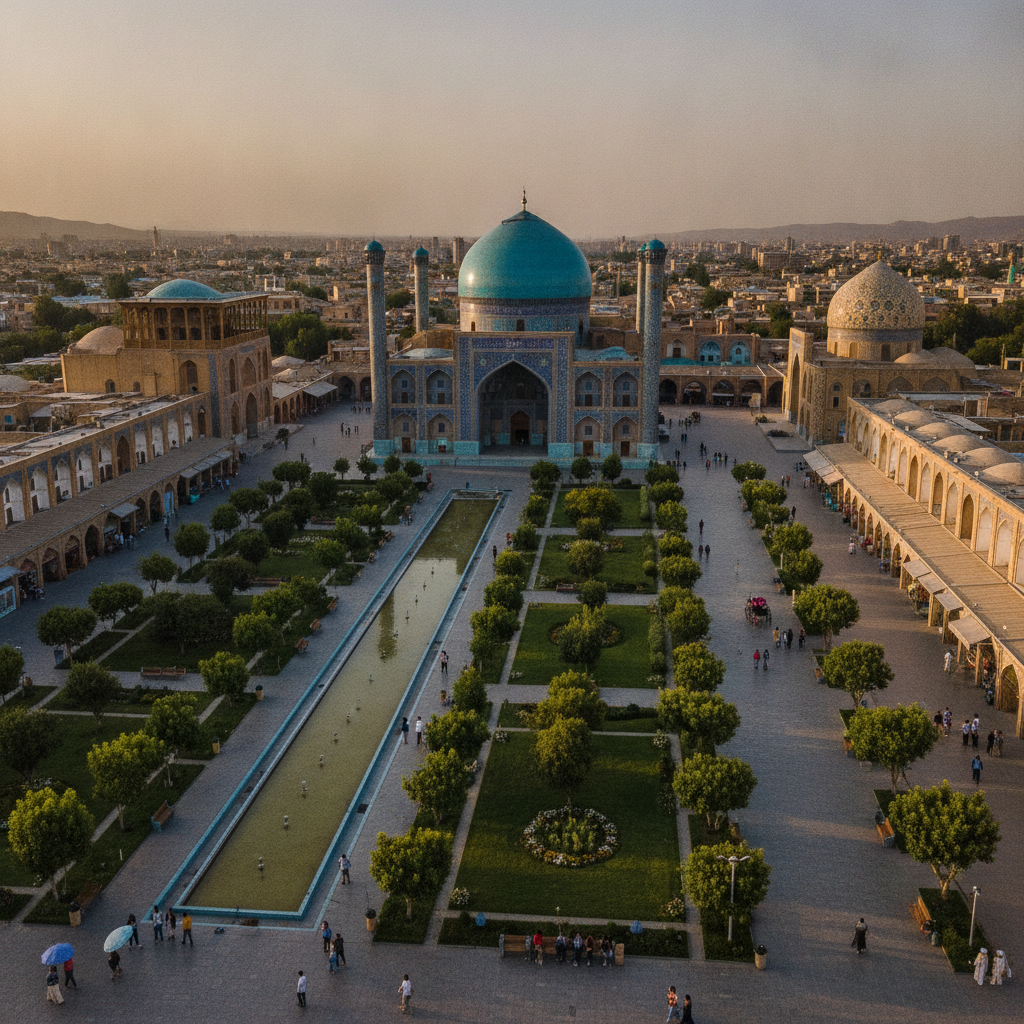
Isfahan Essential: Naqsh-e Jahan Square, the Imam Mosque, Ali Qapu Palace, the Zayandeh River Bridges, and the Most Beautiful Single City in the Islamic World
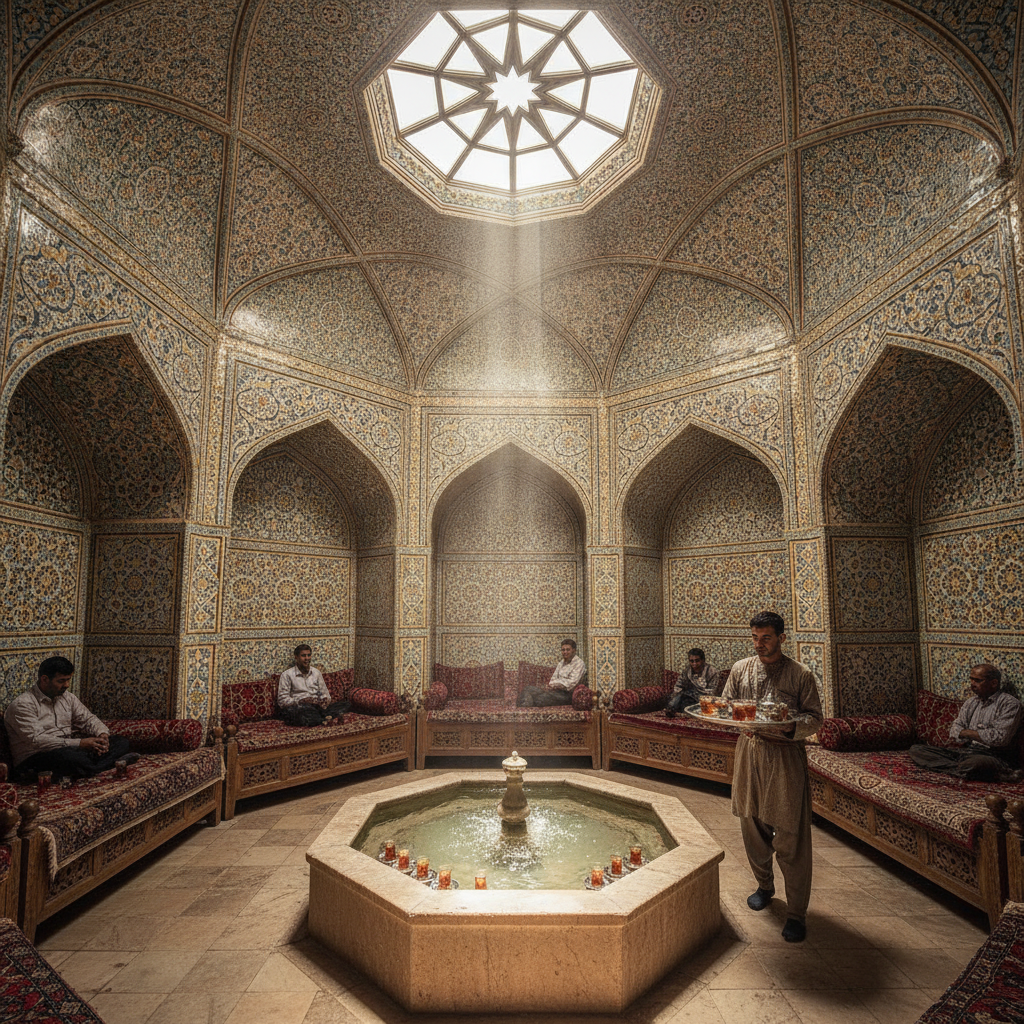
The Julfan Armenian Trading Network Extending from Manila to Amsterdam as the Most Geographically Extensive Private Network in the Pre-Modern World, Mulla Sadra Teaching the Philosophy That Still Dominates Qom Seminaries & the Persian Qanat Delivering Water by Gravity Through 40km of Underground Tunnels
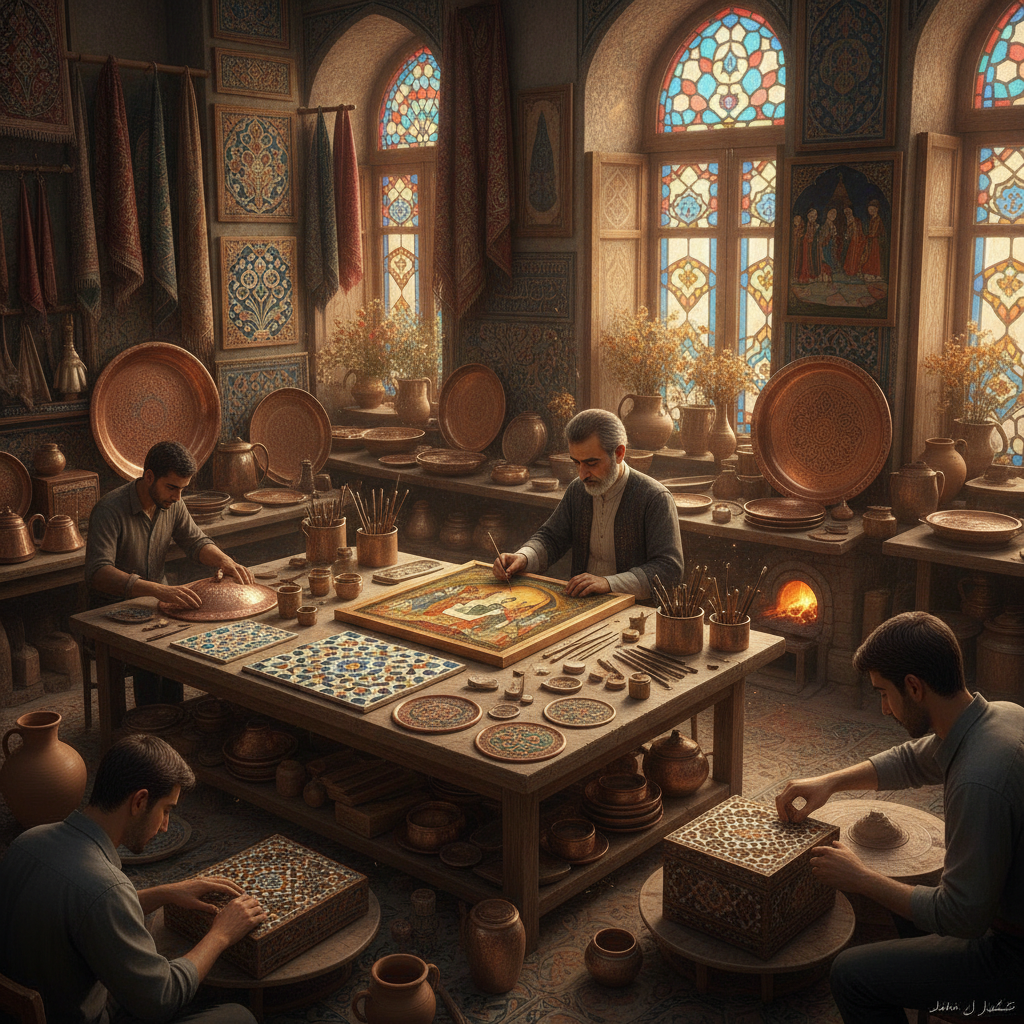
Isfahan Arts: The Miniature Painting, Tile-Making, the Artisan Workshops, the Traditional Crafts, and the Most Comprehensively Craft-Rich Single Iranian City
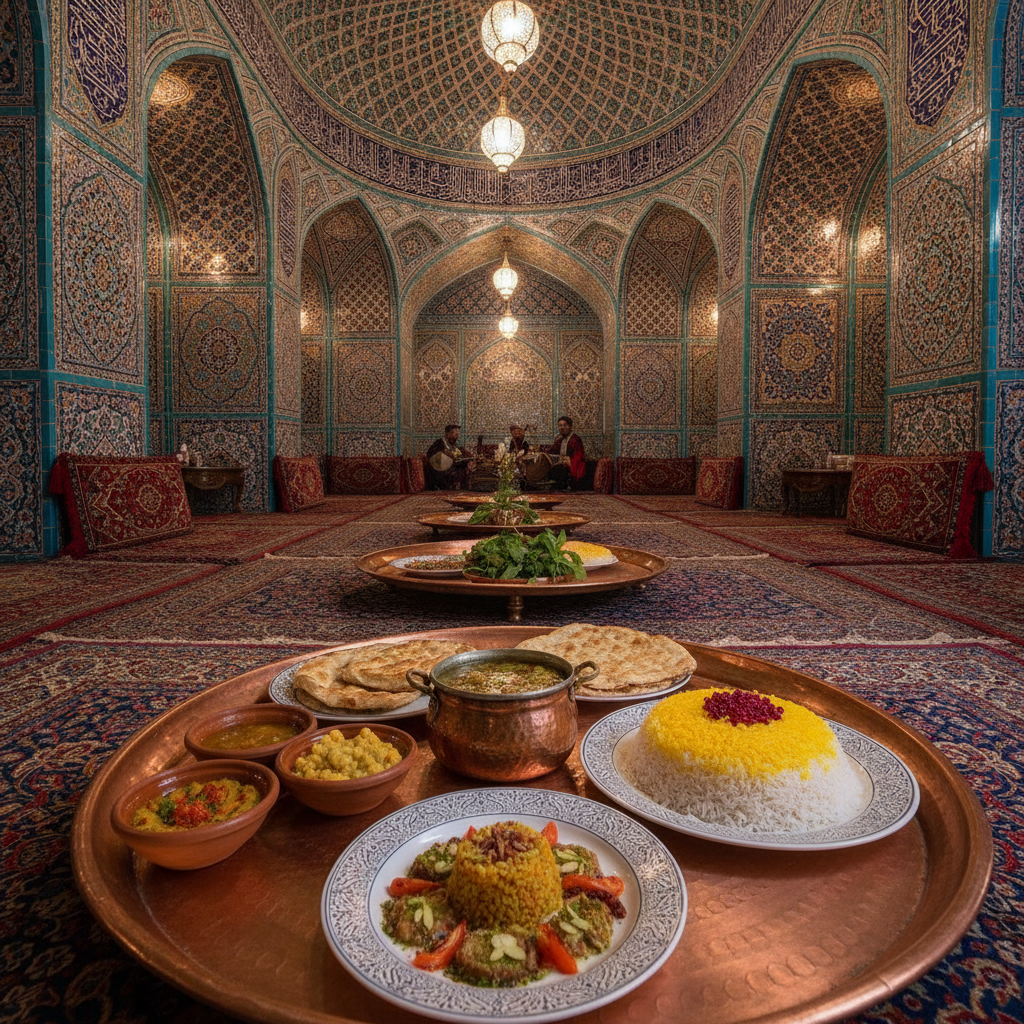
Isfahan Food: The Persian Cuisine, Dizi Lamb Stew, Beryani, Zereshk Polo, and the Most Historically Refined Single Persian Culinary Tradition
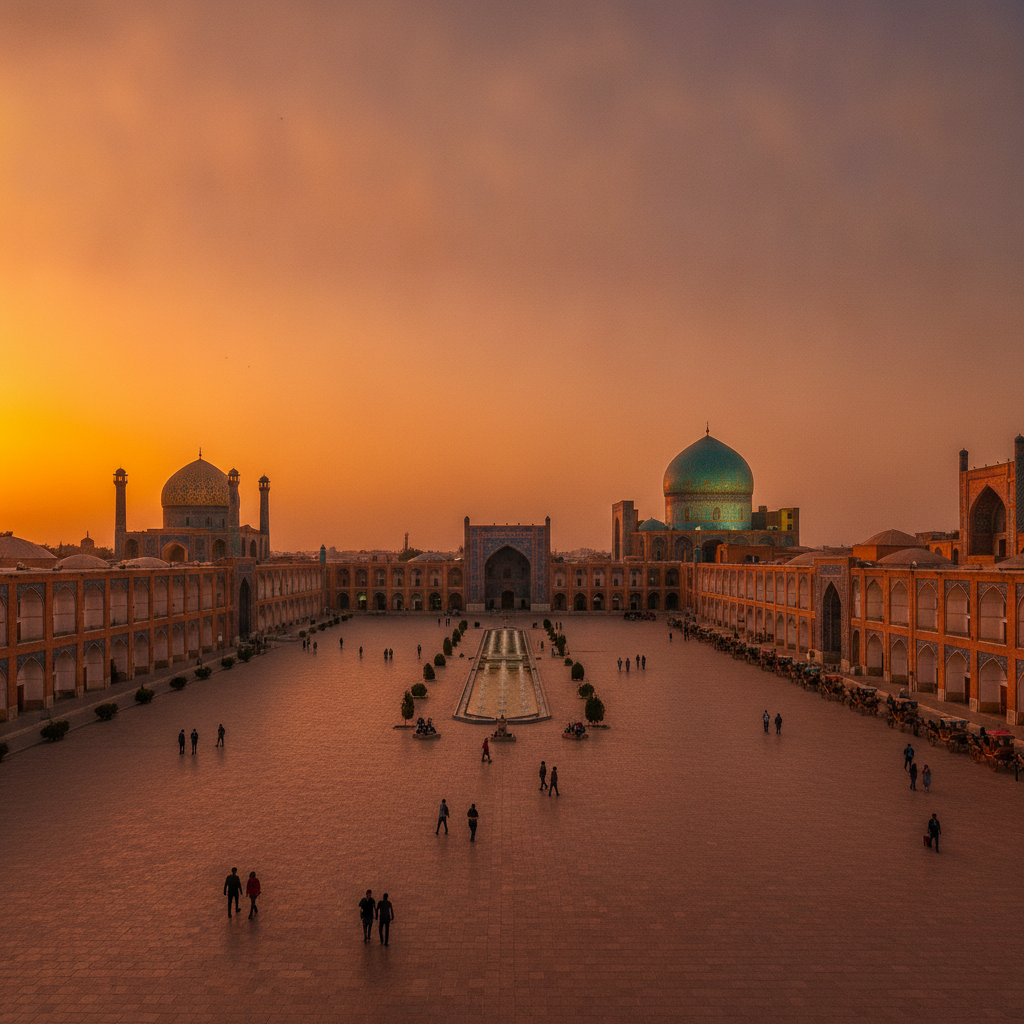
The Shah Mosque 7-Fold Echo Engineered to Amplify the Friday Sermon, the Sheikh Lotfollah Dome Changing Color from Cream to Pink Through the Day & the Naqsh-e Jahan Square Polo Goals Still Standing After 400 Years