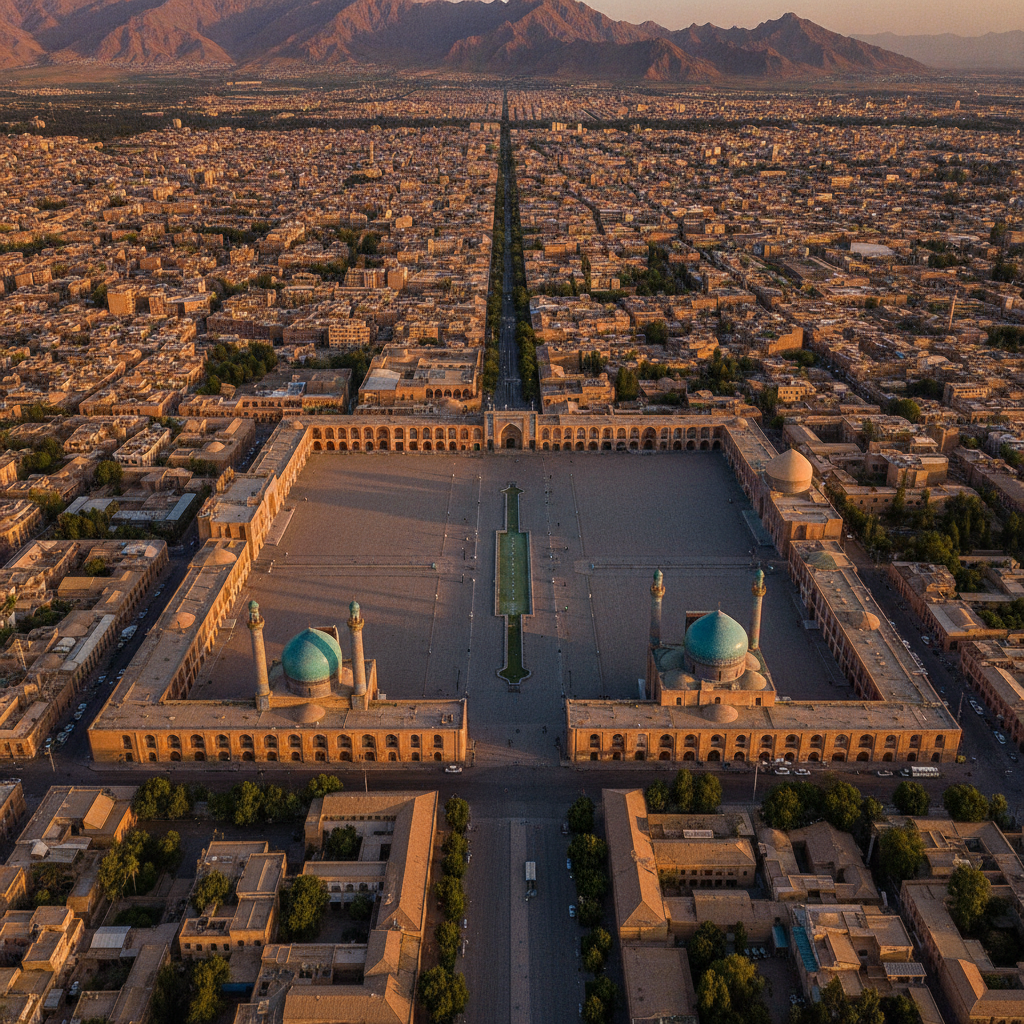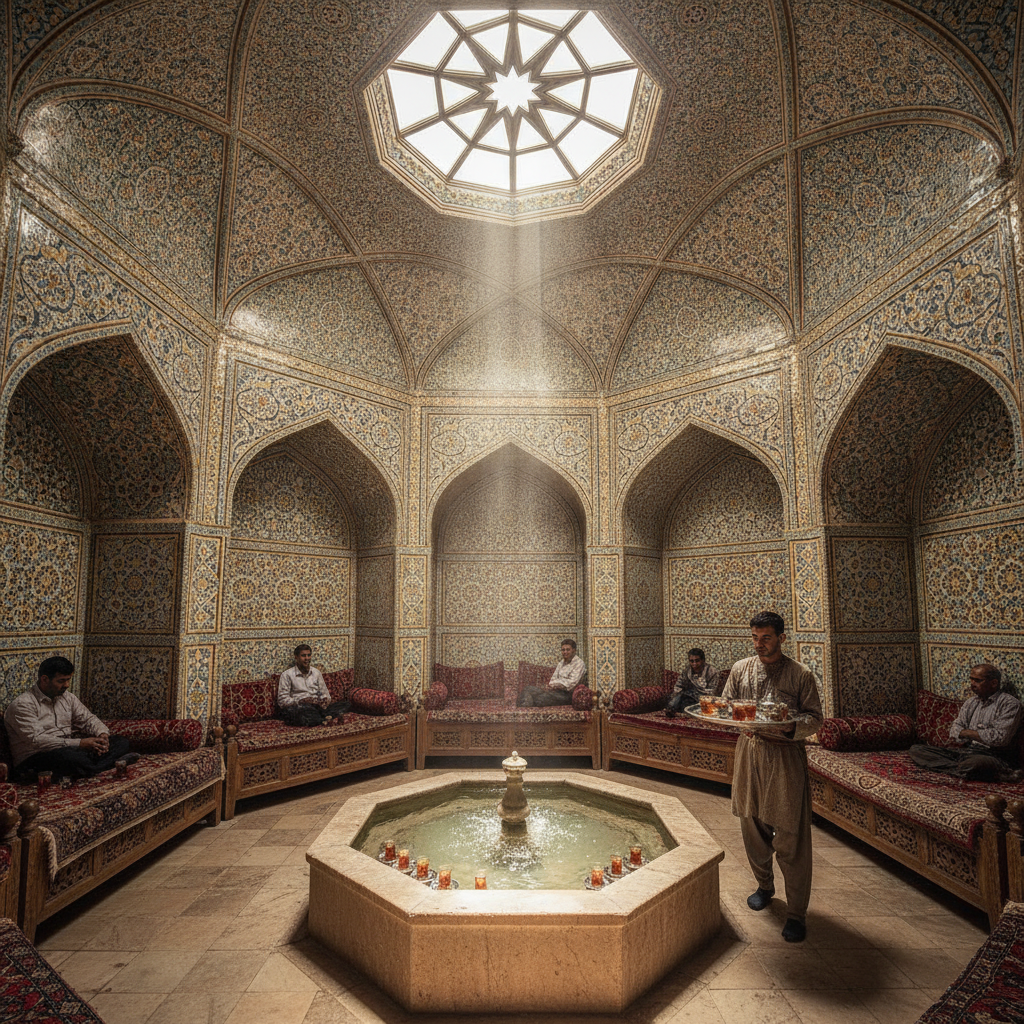
The Julfan Armenian Trading Network Extending from Manila to Amsterdam as the Most Geographically Extensive Private Network in the Pre-Modern World, Mulla Sadra Teaching the Philosophy That Still Dominates Qom Seminaries & the Persian Qanat Delivering Water by Gravity Through 40km of Underground Tunnels
The Julfan Armenian trading network (from New Julfa Isfahan) extending from Manila to Amsterdam — the most geographically extensive private trading network in the pre-modern world; Mulla Sadra's philosophy (Asfar-e Arba'a, 1638) still the dominant philosophy in the Qom seminaries that trained Ayatollah Khomeini; the Persian qanat (UNESCO 2016) delivering water by gravity through 10–40 km of underground tunnels with no pumps; the Chahar Bagh Boulevard's central water channel fed by qanats running 4 km through rows of plane trees; the Hammam-e Ali Gholi Agha (1713) converted to Isfahan's most atmospheric teahouse; and Sohrab Sepehri's Hasht Ketab (Eight Books) the most widely read 20th-century Persian poetry collection.
- 1
Isfahan's Minorities – Armenians, Jews & Zoroastrians
The Isfahan minority heritage (the extraordinary diversity of religious communities that has coexisted in Isfahan for centuries — the Armenian Christians, the Jewish community, and the Zoroastrian community that survived the Islamic conquest): the minority heritage guide. The Armenian community (the Armenian community of New Julfa (the Armenian quarter of Isfahan): the history (Shah Abbas I relocated the Armenians from Old Julfa (on the Araxes River) to Isfahan in 1604–1605 — the forced transplantation of approximately 300,000 Armenians to serve as the commercial and craft backbone of the Safavid economy: the current community (the Armenian community of New Julfa numbers approximately 3,000–5,000 people — significantly smaller than the peak (approximately 30,000 in the 17th century): the Vank Cathedral (the primary church — completed 1655): the 13 churches (New Julfa has 13 Armenian churches — more than any other Iranian city): the Jewish community (the Isfahan Jewish community: the history (the Isfahan Jewish community dates to at least the Achaemenid period — the book of Esther describes the Jews of Persia under Achaemenid rule: the current community (the Isfahan Jewish community numbers approximately 1,000–2,000 people (significantly reduced from approximately 8,000 in 1979 by emigration to Israel and the USA): the primary synagogue (the Molla Nekhoda Synagogue in the old Jewish quarter of Isfahan): the Zoroastrian community (the Zoroastrian community of Isfahan: the fire temple (the Isfahan Zoroastrian fire temple (atashkadeh) in the Khatunabad quarter of Isfahan maintains the sacred fire).
- 2
The Safavid Silk Road – Isfahan as Global Hub
The Safavid-era Silk Road heritage (the role of Isfahan as the commercial hub of the Safavid Empire's international trade — the city that connected the silk routes of Asia with the markets of Europe): the Silk Road heritage guide. The Safavid silk economy (the Safavid Empire derived its primary export income from the silk trade: the Gilan and Mazandaran provinces on the Caspian Sea coast were the primary silk-producing regions of Iran — the mulberry groves and silkworm farms of the Caspian lowlands produced approximately 1,000–3,000 tonnes of raw silk per year: the trade routes (the Safavid silk reached European markets through three routes: (1) the Levant route (via Ottoman Syria and Beirut — the primary but most taxed route): (2) the Armenian merchant route (via New Julfa merchants who maintained trading posts from Isfahan to Venice): (3) the Russia route (via the Caspian Sea to Astrakhan and Moscow)): the Armenian merchants of New Julfa (the New Julfa Armenians were the most successful commercial intermediaries in the Safavid silk trade: the Armenian trading network (the Julfan Armenian trading network) extended from Manila in the Philippines to Amsterdam in the Netherlands — the most geographically extensive private trading network in the pre-modern world: the European visitors (the European travelers who described 17th-century Isfahan: Jean-Baptiste Tavernier (the French jewel merchant who visited Isfahan 6 times between 1632 and 1668 and whose travel accounts are the most detailed records of Safavid commerce): Jean Chardin (the French jeweler and diplomat who lived in Isfahan 1664–1677 — his Voyages en Perse (1711) is the most complete description of Safavid Isfahan).
- 3
Isfahan Hammams – The Persian Bath Culture
The Persian bath culture heritage (the hammam (حمام — the public bath) as the central social institution of traditional Persian urban life — and Isfahan's surviving historic hammam examples): the bath culture guide. The tradition (the Persian hammam tradition predates Islam — the Achaemenid and Sassanid palaces all contained heated bathing rooms: the Islamic hammam is a development of the Roman thermae tradition, brought into the Islamic world through the Byzantine regions of Syria and Egypt: the structure (the traditional Persian hammam structure: the sarbineh (the outer changing room — the social space where clothes were left and where post-bath socializing occurred): the garmkhaneh (the hot room — the main bathing area): the khazineh (the hot water tank — the primary water storage): the khalvat (the private bathing cell for the wealthy): the social role (the hammam was the primary social institution of traditional Persian urban life for both men and women — before the introduction of private household baths: the women's hammam visits (women in traditional Iranian society visited the hammam in gender-segregated hours — the hammam was the primary social space for women outside the domestic sphere): the surviving hammams (the primary historic hammams in Isfahan: the Hammam-e Ali Gholi Agha (the most complete surviving Safavid-era hammam in Isfahan — built 1713 by the eunuch Ali Gholi Agha: now converted to a teahouse (chai-khaneh) with the original changing room and bathing structure preserved): the Hammam-e Vakil (in the Grand Bazaar area).
- 4
The Isfahan School of Philosophy – Islamic Thought
The Isfahan School of Philosophy heritage (the most important development in Islamic philosophy in the post-medieval period — the Safavid-era philosophical school centered in Isfahan under the patronage of Shah Abbas I): the philosophical heritage guide. The school (the Isfahan School of Philosophy (Maktab-e Falsafi-ye Isfahan) — the school of Shia Islamic philosophy that flourished in Isfahan under the Safavid dynasty (late 16th to early 18th century): the primary figures: Mir Damad (Muhammad Baqir Mir Damad, d. 1631) — the founder of the Isfahan School: Mir Damad developed the concept of huduth-e dahri (temporal origination) — a solution to the Islamic philosophical debate about whether the world is eternal or created in time: Mulla Sadra (Sadr al-Din Muhammad al-Shirazi, 1572–1641) — the greatest philosopher of the Isfahan School and arguably the most important Islamic philosopher since Ibn Rushd (Averroes): the primary work (the Asfar-e Arba'a (the Four Journeys) — Mulla Sadra's primary philosophical work — a comprehensive philosophical system integrating Aristotelian logic, Neoplatonic metaphysics, and Shia mysticism: the primary concept (the philosophy of Being — Mulla Sadra's primary contribution is the concept of the primacy of existence (asalat al-wujud) over essence — the position that being is the fundamental metaphysical reality and essence is derived from it: the influence (Mulla Sadra's philosophy has been continuously taught in Shia seminaries (hawzeh) from the 17th century to the present — the Mulla Sadra tradition is the dominant philosophy in the Qom seminaries that trained Ayatollah Khomeini and the current Iranian religious leadership).
- 5
Isfahan's Water System – Qanats & Persian Engineering
The Persian water engineering heritage (the qanat — the underground irrigation canal — the primary engineering achievement of ancient Iran and one of the most extraordinary hydraulic systems in human history): the water engineering heritage guide. The qanat (the qanat (قنات — from the Semitic root meaning canal or reed) — the underground aqueduct system: the technology (the qanat consists of a series of vertical shafts (the access shafts — typically 10–15m deep in the upper section, up to 100m deep at the source) connected by a horizontal underground channel that follows the water table gradient from the mountain slopes to the lowland settlements: the operating principle (the qanat harnesses gravity to deliver water from the water table of the mountain piedmont to the lowland agricultural land — no pumps are needed: the typical Safavid-era qanat around Isfahan was 10–40 km long: the Isfahan qanats (the Isfahan plain is served by a network of qanats from the Zagros mountain piedmont — the qanats supplied the Zayandeh River supplement that irrigated the gardens and agricultural land of the Isfahan plain: the Chahar Bagh Avenue (the primary boulevard of Safavid Isfahan — the Chahar Bagh Avenue (the Four Gardens Boulevard) built by Shah Abbas I in 1596: a 4 km tree-lined boulevard running south from the royal precinct to the Zayandeh River: the central channel (the Chahar Bagh Avenue had a central water channel fed by the qanats that ran the entire length of the boulevard between rows of plane trees, creating a moving water garden in the center of the city): the UNESCO recognition (the Persian qanat system was inscribed on the UNESCO World Heritage List in 2016 — 11 qanats in Iran including examples from the Kerman, Isfahan, and Yazd regions).
- 6
Isfahan Literary Heritage – The City in Persian Poetry
The Isfahan literary heritage (the role of Isfahan in Persian literature — as setting, as inspiration, and as physical evidence of the cultural achievement of Safavid civilization): the literary heritage guide. The Isfahan in poetry (Isfahan has been the subject of Persian poetry from the early Islamic period through the present: the primary poetic tradition about Isfahan: the proverb (Isfahan nesf-e jahan — اصفهان نصف جهان — Isfahan is half the world — the origin of the proverb is disputed — some attribute it to the Safavid poet Hakim Shifa (17th century): the primary description (the most frequently quoted literary description of Isfahan is by the Safavid court poet Hatef Isfahani (1722–1783) who called Isfahan the bride of cities (arus-e shahr-ha): the contemporary poetry (the contemporary Iranian poet Sohrab Sepehri (1928–1980) — one of the most celebrated 20th-century Iranian poets — was born in Kashan (60 km north of Isfahan) and his poetry is saturated with the landscape and light of the Isfahan region: Sepehri's primary collection (Hasht Ketab — Eight Books) is the most widely read collection of 20th-century Persian poetry: the Chahar Bagh Seminary (the Chahar Bagh Madressa — Madressa-ye Chahar Bagh (also called the Madressa-ye Madar-e Shah — the Mother of the Shah's Seminary) — the finest Safavid religious school building in Isfahan: built 1706–1714 by Shah Sultan Husayn as his most important architectural legacy: the building (the Chahar Bagh Madressa is the most elaborately decorated religious building built in the last period of the Safavid dynasty — the dome tile and portal muqarnas are the finest late-Safavid tilework in Isfahan).
Walk this route with audio
Stories play automatically as you reach each stop — no tapping needed.
More in Isfahan
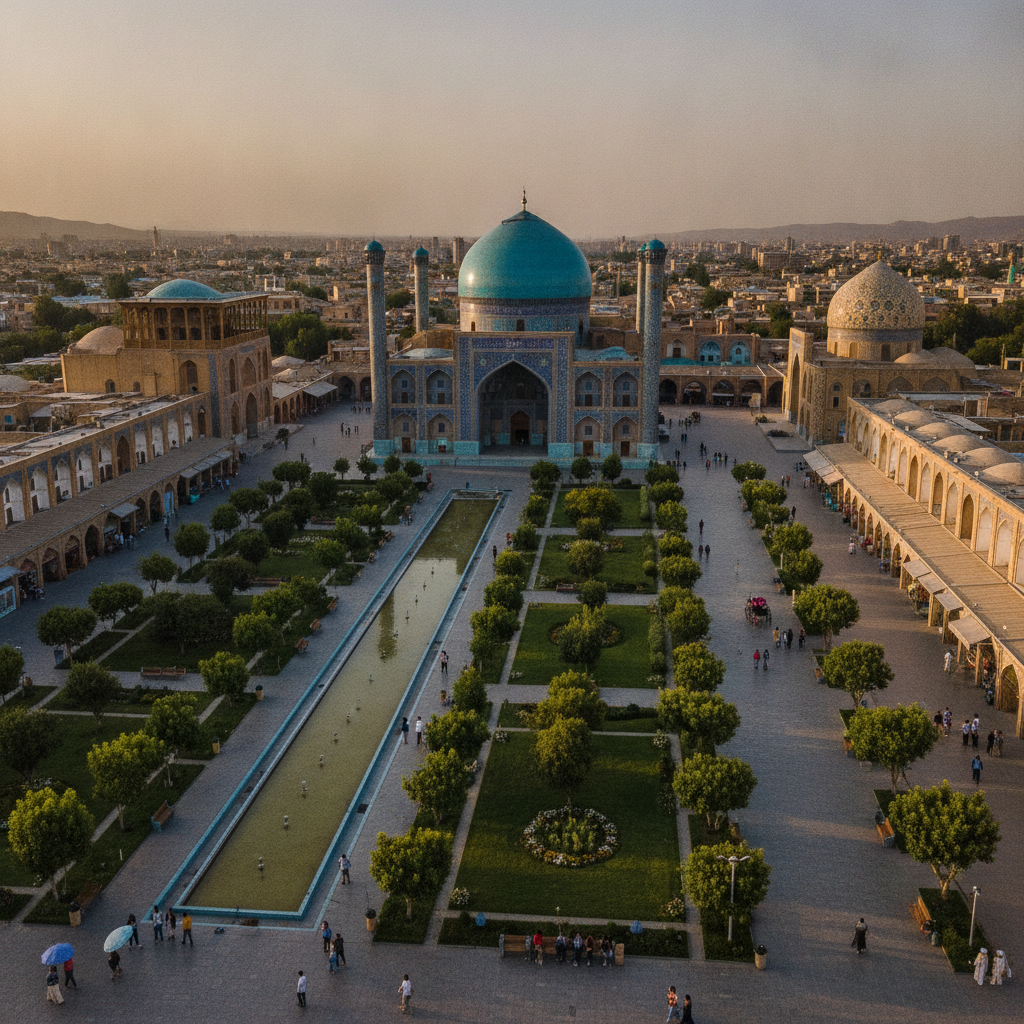
Isfahan Essential: Naqsh-e Jahan Square, the Imam Mosque, Ali Qapu Palace, the Zayandeh River Bridges, and the Most Beautiful Single City in the Islamic World
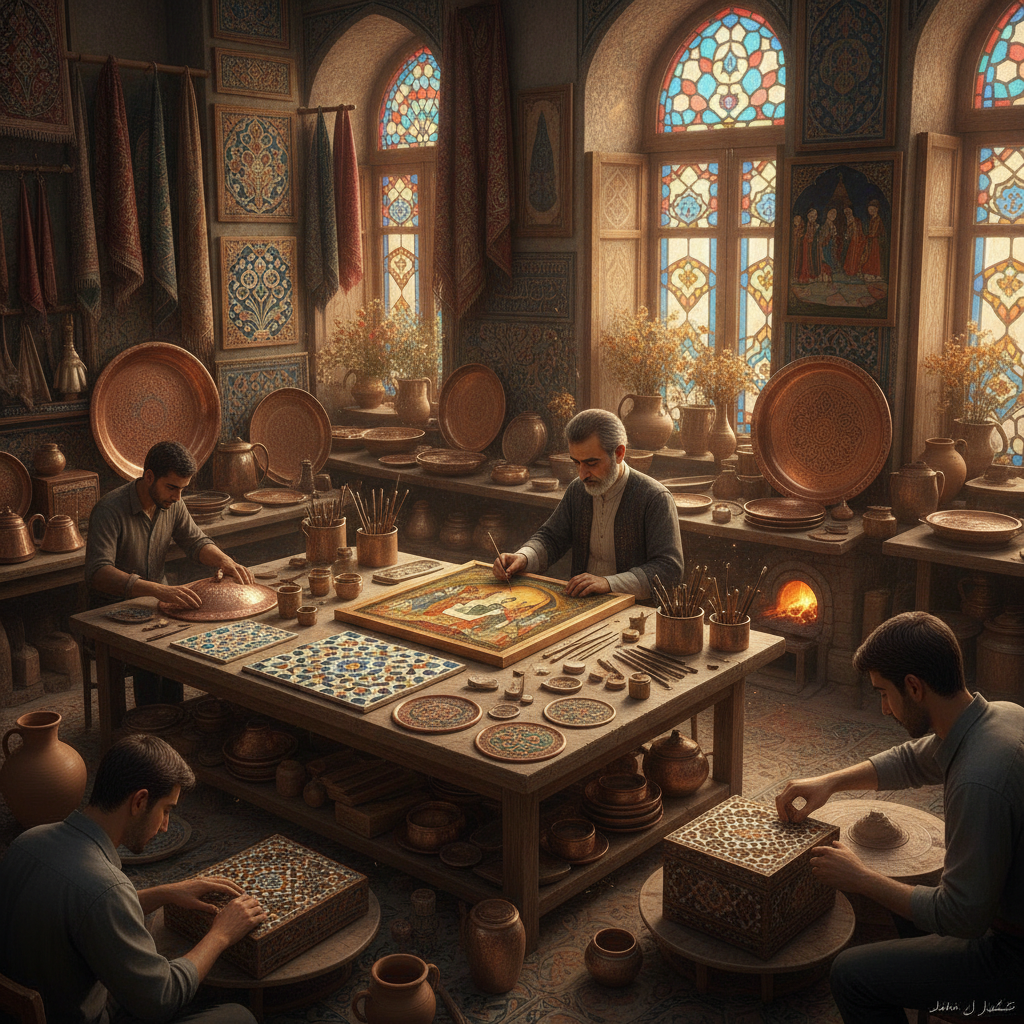
Isfahan Arts: The Miniature Painting, Tile-Making, the Artisan Workshops, the Traditional Crafts, and the Most Comprehensively Craft-Rich Single Iranian City
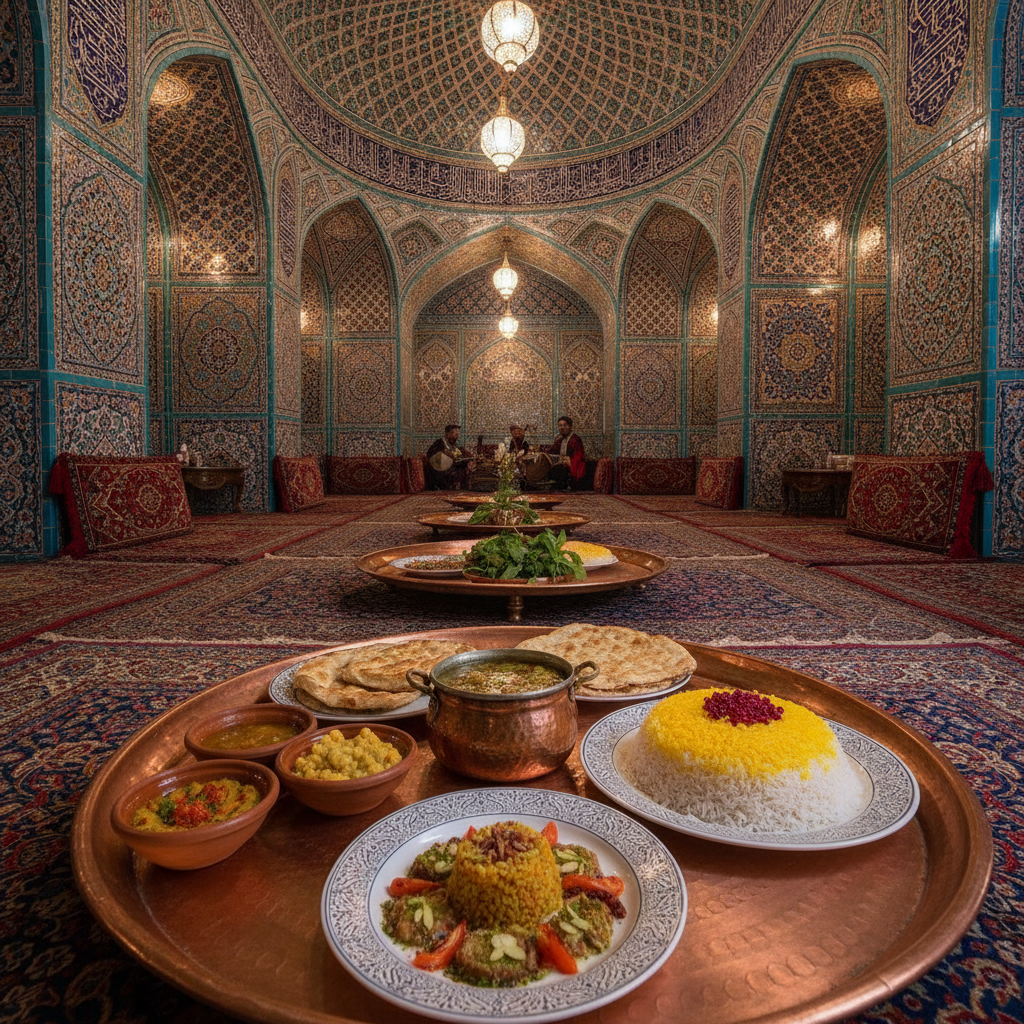
Isfahan Food: The Persian Cuisine, Dizi Lamb Stew, Beryani, Zereshk Polo, and the Most Historically Refined Single Persian Culinary Tradition
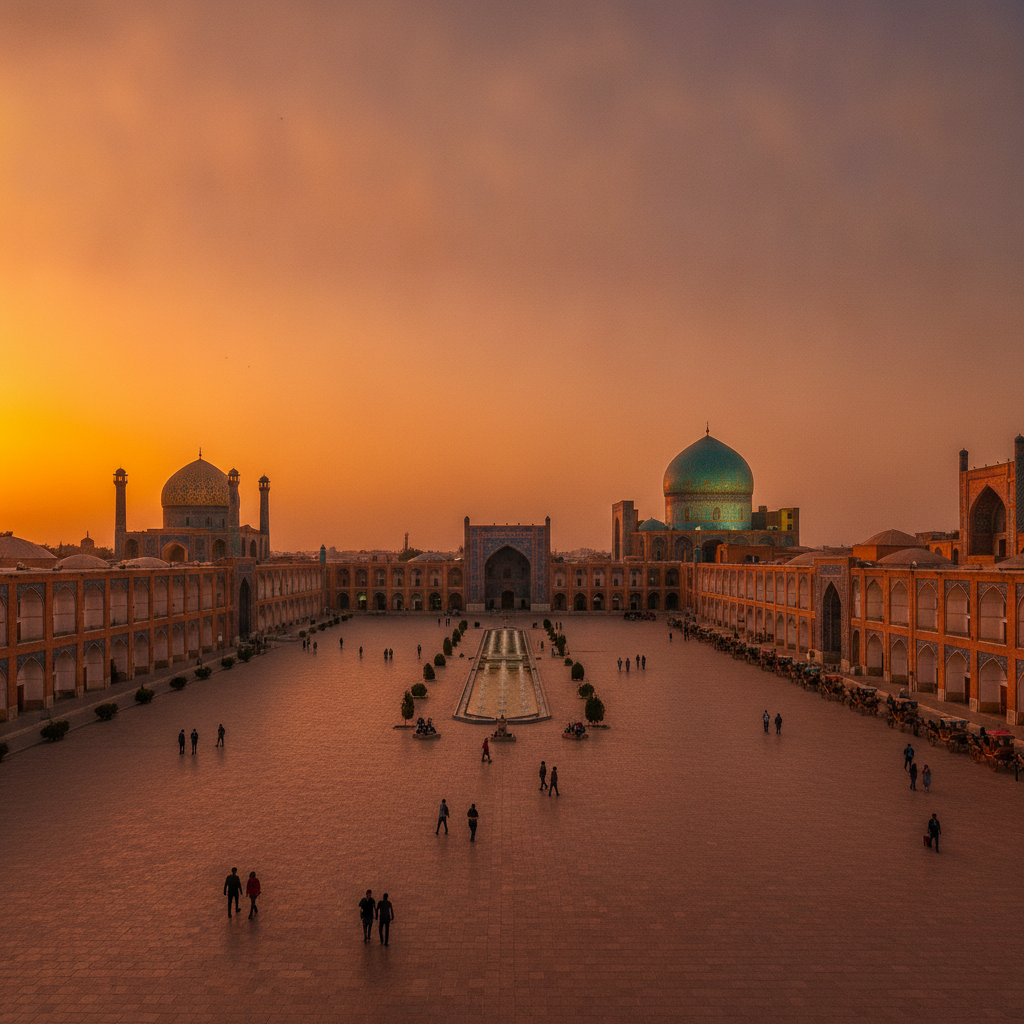
The Shah Mosque 7-Fold Echo Engineered to Amplify the Friday Sermon, the Sheikh Lotfollah Dome Changing Color from Cream to Pink Through the Day & the Naqsh-e Jahan Square Polo Goals Still Standing After 400 Years