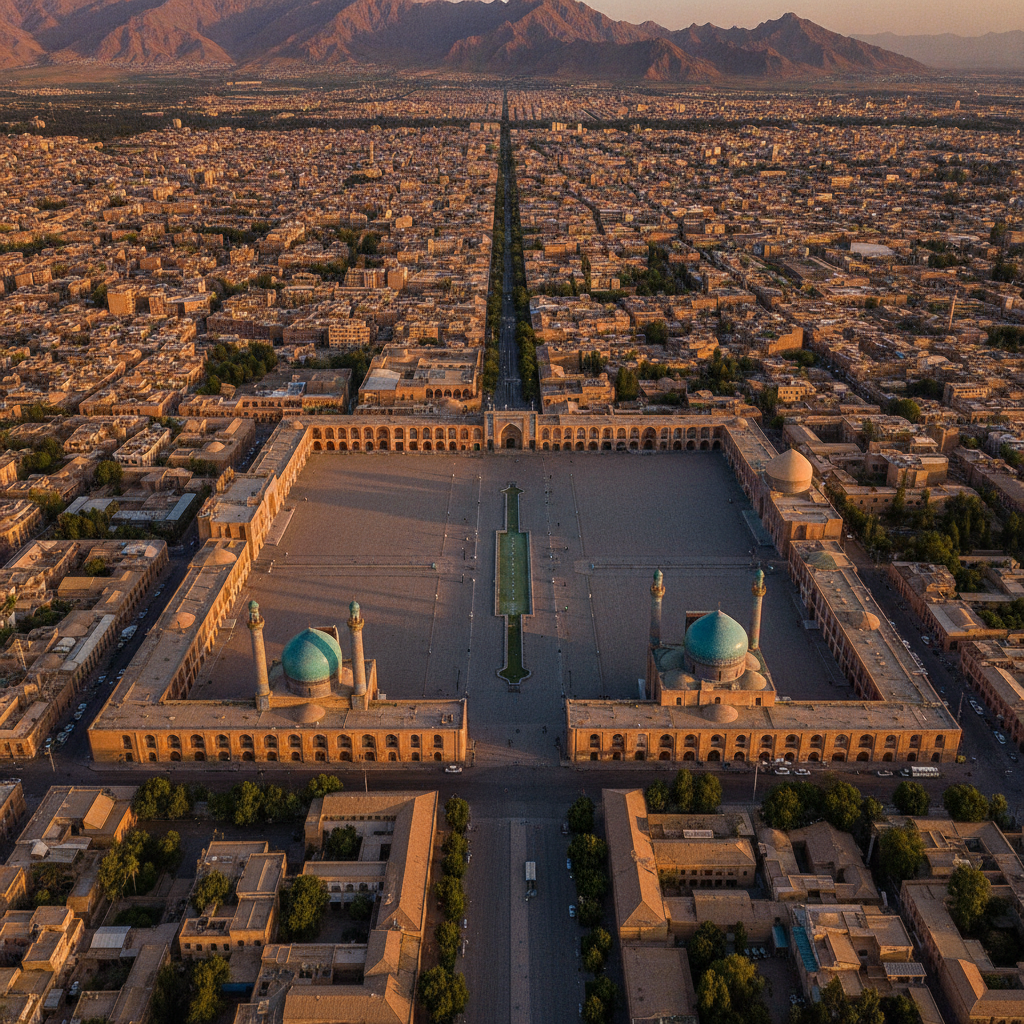
Shah Abbas Built Approximately 999 Caravanserais Spaced One Day's Caravan Journey (30-40km) Apart Across the Entire Iranian Plateau, the Afghan Siege of Isfahan Lasting 7 Months Before the Shah Personally Surrendered His Throne & the Mobarakeh Steel Complex the Largest in the Middle East
Shah Abbas building approximately 700–1,000 caravanserais spaced one day's caravan journey apart across the entire Iranian plateau (the most comprehensive pre-modern road infrastructure in Asia); the 1722 siege of Isfahan lasting 7 months with Shah Sultan Husayn personally surrendering the throne to the Ghilzai Afghan leader Mahmud Hotaki; the Mobarakeh Steel Complex (8 million tonnes/year) built with Krupp and Thyssen German assistance in the 1970s as the largest steel complex in the Middle East; the Jolfa Armenian quarter cafes serving wine as one of the only public alcohol venues in Iran; the Darb-e Imam Timurid portal (1453) preserving pre-Abbas moaraq mosaic tilework; and Isfahan gaz exported to Iranian diaspora communities worldwide.
- 1
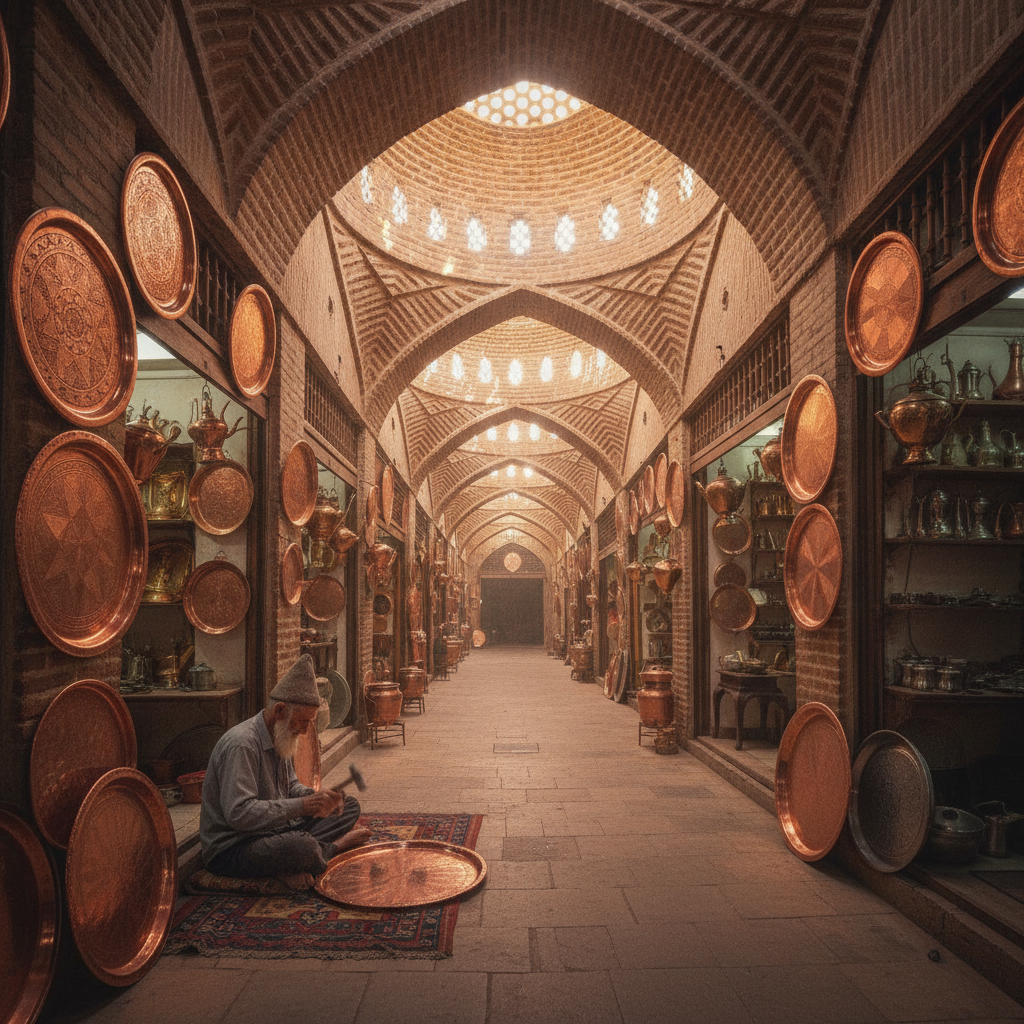
Persian Metalwork – Isfahan's Copper Hammers
The Isfahan metalwork heritage (the copper and brass craft tradition of Isfahan — the sound of the hammering coppersmiths of the Bazar-e Mesgarha as the most distinctive sensory element of the Isfahan bazaar): the metalwork heritage guide. The tradition (the Persian metalwork tradition (Zargar va Mesgar — the goldsmith and coppersmith trades) is one of the oldest continuous craft traditions in Iran: the Elamite metalwork (the earliest Persian metalwork: the Luristan bronzes (1200–650 BCE) — the small bronze horse bits, weapons, and votive objects from the Luristan region of the Zagros Mountains — the most numerous Bronze Age metalwork objects in the world: the Achaemenid metalwork (the Achaemenid gold and silver rhytons (drinking vessels in the form of animal heads) — the primary collection in the National Museum of Iran in Tehran): the Isfahan copper tradition (the Isfahan copper tradition (mesgarha — coppersmiths) is centered in the Bazar-e Mesgarha (the Coppersmith Bazaar) section of the Isfahan Grand Bazaar: the primary products: the minas and trays (the hand-hammered copper trays with engraved geometric and floral patterns): the samovar (the traditional Iranian tea urn — the primary product of the Isfahan coppersmiths for the domestic market): the technique (the Isfahan copper hammering technique: the copper sheet is annealed (heated to 400°C and cooled slowly) to restore workability, then hammered over a wooden or leather form to achieve the desired shape: the engraving (the decorative engraving is done with steel burins — the master engravers of Isfahan can engrave approximately 1cm² per hour on fine copper work).
- 2
The Darb-e Imam Shrine – Isfahan's Hidden Gem
The Darb-e Imam Shrine heritage (the Safavid shrine complex in the heart of the old city — the finest example of early Safavid tile work in Isfahan outside the Naqsh-e Jahan monuments): the shrine heritage guide. The Darb-e Imam (the Darb-e Imam (دربِ امام — Door of the Imam) shrine complex in the historic Dardasht quarter of Isfahan: the history (the shrine dates to 1453 CE — the Timurid period — predating the Safavid move to Isfahan: the complex was expanded under the Safavids: the significance (the Darb-e Imam is significant as the finest surviving example of pre-Abbas Safavid tilework in Isfahan: the tiles (the Darb-e Imam tiles are muqarnas tile (the stalactite vaulted portal) covered in the classic Persian mosaic (moaraq) tile technique: the colors: deep cobalt blue, turquoise, white, and black: the architecture (the complex consists of: the main portal (the most intact original Timurid-Safavid portal in Isfahan): two domed mausoleums: a rectangular prayer hall): the current use (the Darb-e Imam is an active Shia shrine — the tombs of two descendants of Ali ibn Abi Talib (the Prophet's son-in-law) are housed in the mausoleums — the shrine attracts Shia pilgrims alongside art and architecture tourists: the location (the Darb-e Imam is 700m west of the Naqsh-e Jahan Square in the Dardasht neighborhood — the easiest way to reach it is by walking west from the Ali Qapu Palace through the old city streets).
- 3
Isfahan's Caravanserais & the Safavid Road Network
The Safavid road and caravanserai heritage (the extraordinary infrastructure network built by Shah Abbas I — the most comprehensive pre-modern road system in Asia): the infrastructure heritage guide. The Safavid road network (the Safavid road system: Shah Abbas I built or restored a network of caravanserais (karavan saray — کاروانسرای) across the entire Iranian plateau: the caravanserai (the traditional Persian caravanserai is a square walled compound with: a single monumental gateway: a central courtyard with a pool: individual cell rooms (hojreh) arranged around the interior walls (each cell accommodated one merchant and his trade goods): stabling (the ground-floor stabling for camels, horses, and mules surrounding the exterior of the building): the standard spacing (the Safavid caravanserais were spaced one day's caravan journey apart (approximately 30–40 km) along all major Iranian roads: Shah Abbas built approximately 999 caravanserais (the traditional Persian count — in fact historians estimate between 700 and 1,000 Safavid-era caravanserais): the Abbasi Hotel (the most famous surviving Safavid caravanserai in Isfahan — now the Abbas Hotel (Hotel-e Abbas — هتل عباسی): the hotel operates the original Safavid caravanserai courtyard as its central atrium and garden: built by Shah Sultan Husayn (the last effective Safavid Shah) in 1703 — originally built as a caravanserai for the Hajj (Mecca pilgrimage) caravans: the courtyard garden (the finest surviving Safavid garden courtyard in a commercial building in Isfahan — the garden with its central pool and rose beds is open to non-guests).
- 4
The Safavid Fall – The Afghan Invasion of 1722
The Safavid dynasty collapse heritage (the catastrophic fall of the Safavid dynasty (1501–1736) — one of the most dramatic imperial collapses in the history of the Middle East): the historical heritage guide. The decline (the Safavid dynasty reached its peak under Shah Abbas I (1588–1629) and then declined through the reigns of his successors: the primary cause of decline was the gradual weakening of the military (the standing army (ghulam) that Abbas created was expensive to maintain and successive shahs reduced it): Shah Sultan Husayn (Shah Sultan Husayn (r. 1694–1722) — the last effective Safavid Shah — the weakest ruler in the dynasty's history: the Afghan invasion (the Ghilzai Pashtun leader Mahmud Hotaki led a Ghilzai Afghan army from Kandahar against the Safavid Empire in 1721: the siege of Isfahan (the Ghilzai Afghan army besieged Isfahan from March 1722 — the city was defended by the Safavid court but the military capacity had collapsed: the fall (the city surrendered October 22, 1722 after a 7-month siege: Shah Sultan Husayn personally surrendered the throne to Mahmud Hotaki: the consequences (the occupation of Isfahan by the Ghilzai Afghans (1722–1730) was catastrophic: the Afghan forces looted the city, massacred large portions of the population, and destroyed significant portions of the Safavid architectural legacy: the recovery (Nadir Shah (r. 1736–1747) expelled the Afghans and briefly reunified Iran — but the Safavid dynasty never recovered and effectively ended).
- 5
Isfahan's Modern Economy – Steel & Tourism
The Isfahan contemporary economy (the primary industries of modern Isfahan — a city of 2.2 million that balances its UNESCO heritage with significant heavy industry): the contemporary economy guide. The Mobarakeh Steel Complex (the Mobarakeh Steel Complex (Mujamma-ye Fulad-e Mobarakeh) 65 km southwest of Isfahan — the largest steel production complex in the Middle East and one of the 15 largest in the world: the production (the Mobarakeh Steel Complex produces approximately 8 million tonnes of steel annually (2024): the complex was built with German technical assistance (Krupp and Thyssen) in the 1970s as part of the Shah's industrialization program: the importance (the Mobarakeh Steel is the primary hard-currency exporter in the Isfahan province economy and the largest single employer in the region: the environmental impact (the steel complex is one of the primary contributors to Isfahan's air pollution — the dust and particulate matter from the steel operations contribute to the air quality problems in the city along with the vehicle fleet: the tourism economy (Isfahan is the second-most-visited city in Iran after Tehran for foreign tourists: the tourism sector generates approximately USD 300 million annually for Isfahan: the tourist numbers (approximately 100,000–200,000 foreign tourists visit Isfahan annually before the COVID-19 disruption — primarily from East Asia (Japan, South Korea, China), Europe (France, Germany, Italy, Spain), and Arab Gulf states): the gaz confection industry (the Isfahan gaz industry employs approximately 2,000 people in traditional production and exports to Iranian diaspora communities worldwide).
- 6
Isfahan Night – Illuminated Mosques & Bazaar Sounds
The Isfahan evening and night guide (the most rewarding time to experience Isfahan — the transformation of the city after sunset when the monuments are illuminated and the social life of the city reaches its peak): the evening guide. The Naqsh-e Jahan at night (the Naqsh-e Jahan Square illumination: the Shah Mosque and Sheikh Lotfollah Mosque are lit from below by warm floodlights from 20:00 to 23:00 — the blue tile domes glow turquoise against the night sky: the square fills with Isfahan families from 19:00 to 23:00 — the family picnic culture of Isfahan means that families spread plastic cloths on the square brick paving and eat their dinner on the square: the Si-o-se Pol at night (the bridge arcades are lit at 19:30 and the lower-level walkways fill with young people and older men in the teahouse atmosphere: the sound of live traditional music (sometimes) emanates from the under-bridge teahouses: the bazaar at night (the Isfahan Grand Bazaar closes at approximately 19:00 but the Qaysariyeh Portal section adjacent to the square remains open until 21:00 for tourist shopping and gaz-buying: the traditional restaurants (the traditional Iranian restaurants in the streets around the Naqsh-e Jahan Square open for dinner at 19:00 — the best for Khoresht-e Mast (yogurt stew) and Isfahan biryani is the Shahrzad Restaurant on Abbass Abad Street: the Jolfan night (the Armenian Jolfa quarter has a small selection of cafes that serve alcohol (wine and beer) — one of the very few public alcohol venues in Iran — open until 23:00 in the Jolfa district restaurants).
Walk this route with audio
Stories play automatically as you reach each stop — no tapping needed.
More in Isfahan
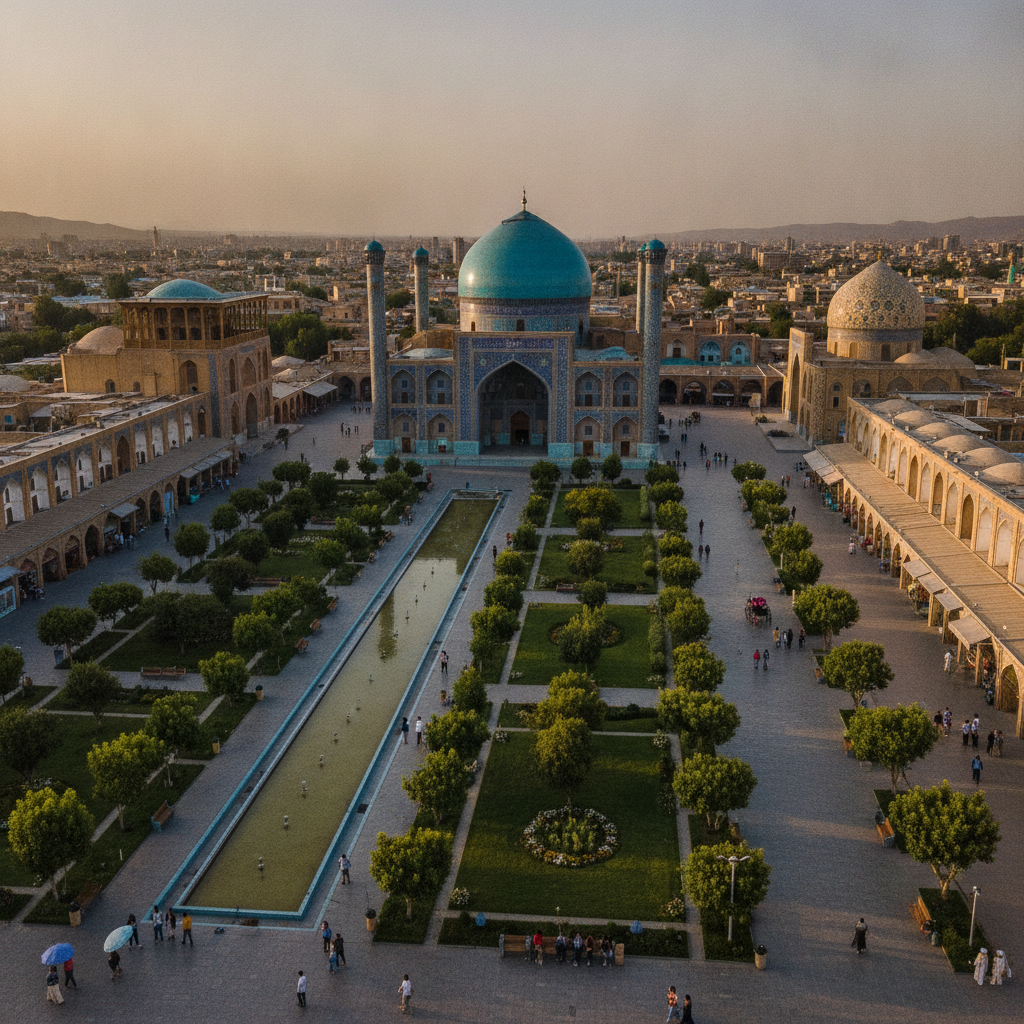
Isfahan Essential: Naqsh-e Jahan Square, the Imam Mosque, Ali Qapu Palace, the Zayandeh River Bridges, and the Most Beautiful Single City in the Islamic World
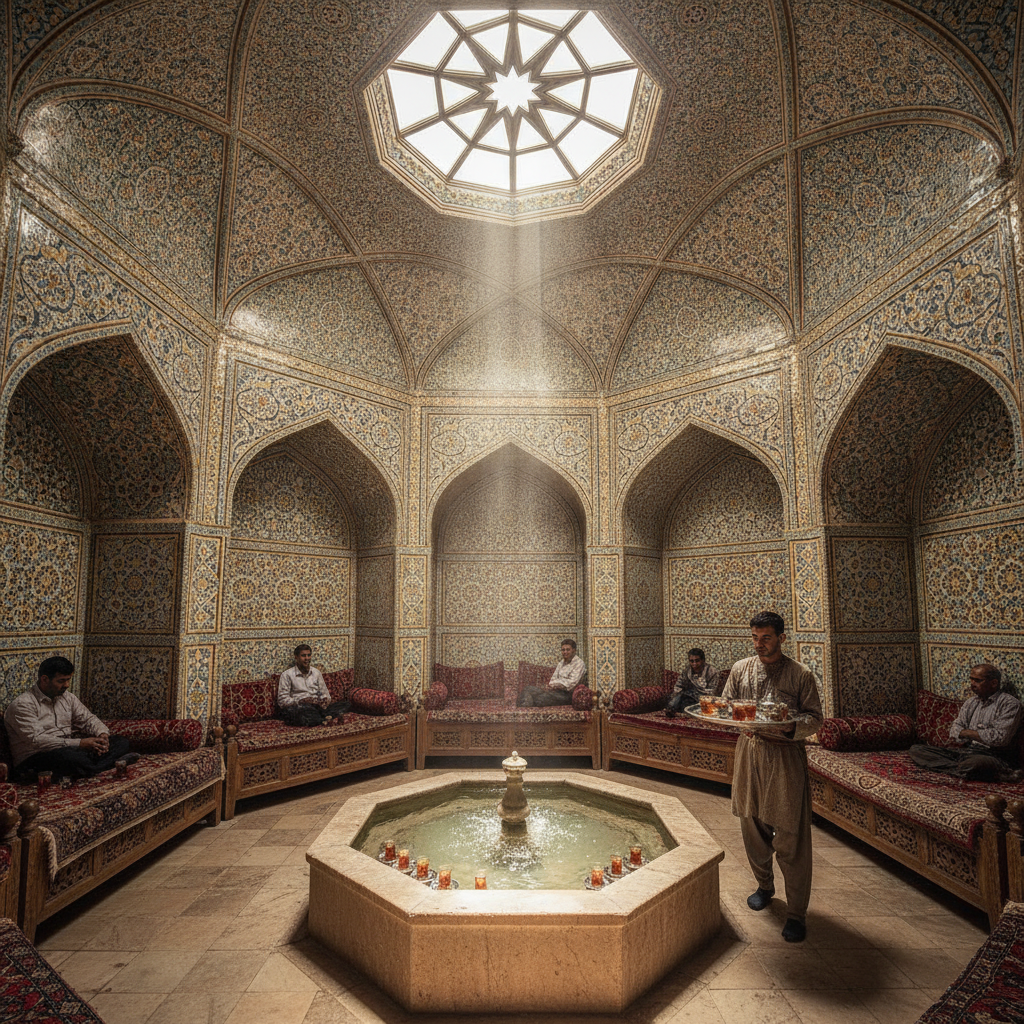
The Julfan Armenian Trading Network Extending from Manila to Amsterdam as the Most Geographically Extensive Private Network in the Pre-Modern World, Mulla Sadra Teaching the Philosophy That Still Dominates Qom Seminaries & the Persian Qanat Delivering Water by Gravity Through 40km of Underground Tunnels
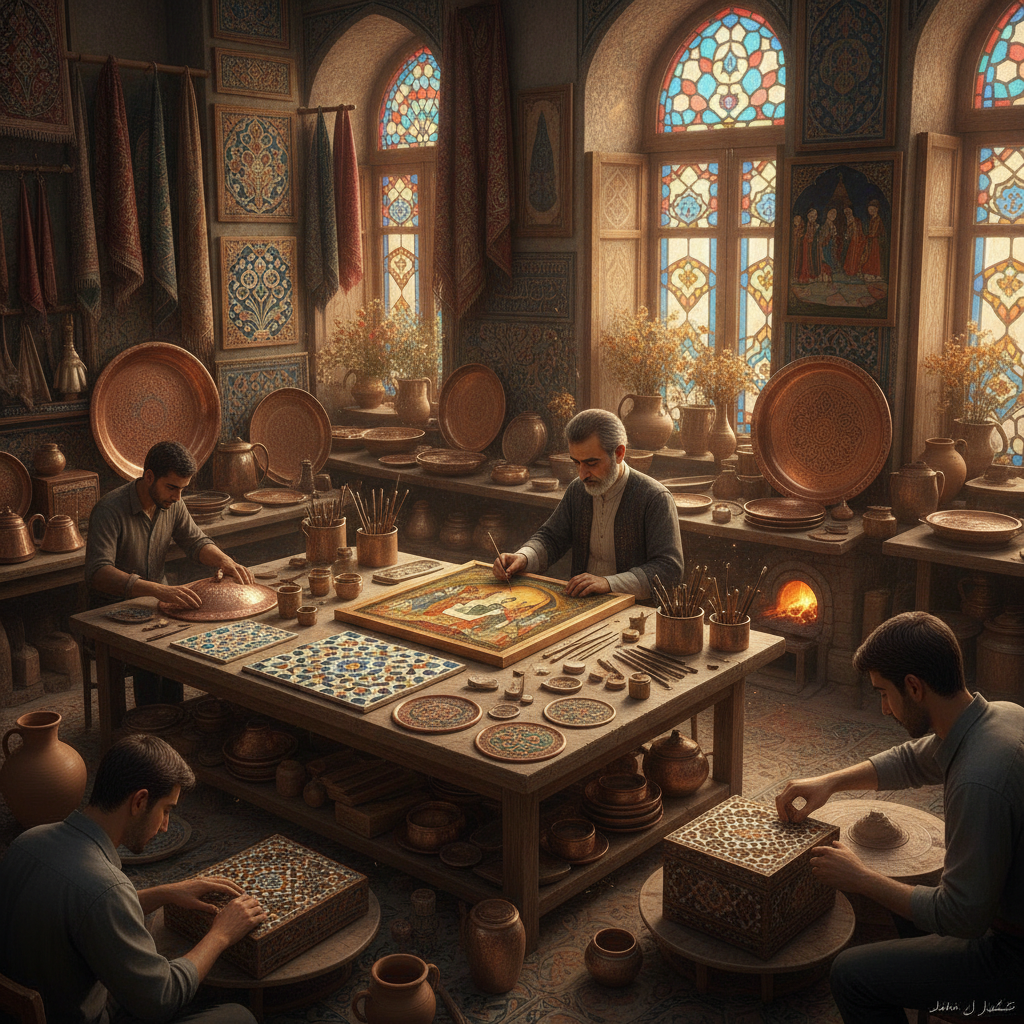
Isfahan Arts: The Miniature Painting, Tile-Making, the Artisan Workshops, the Traditional Crafts, and the Most Comprehensively Craft-Rich Single Iranian City
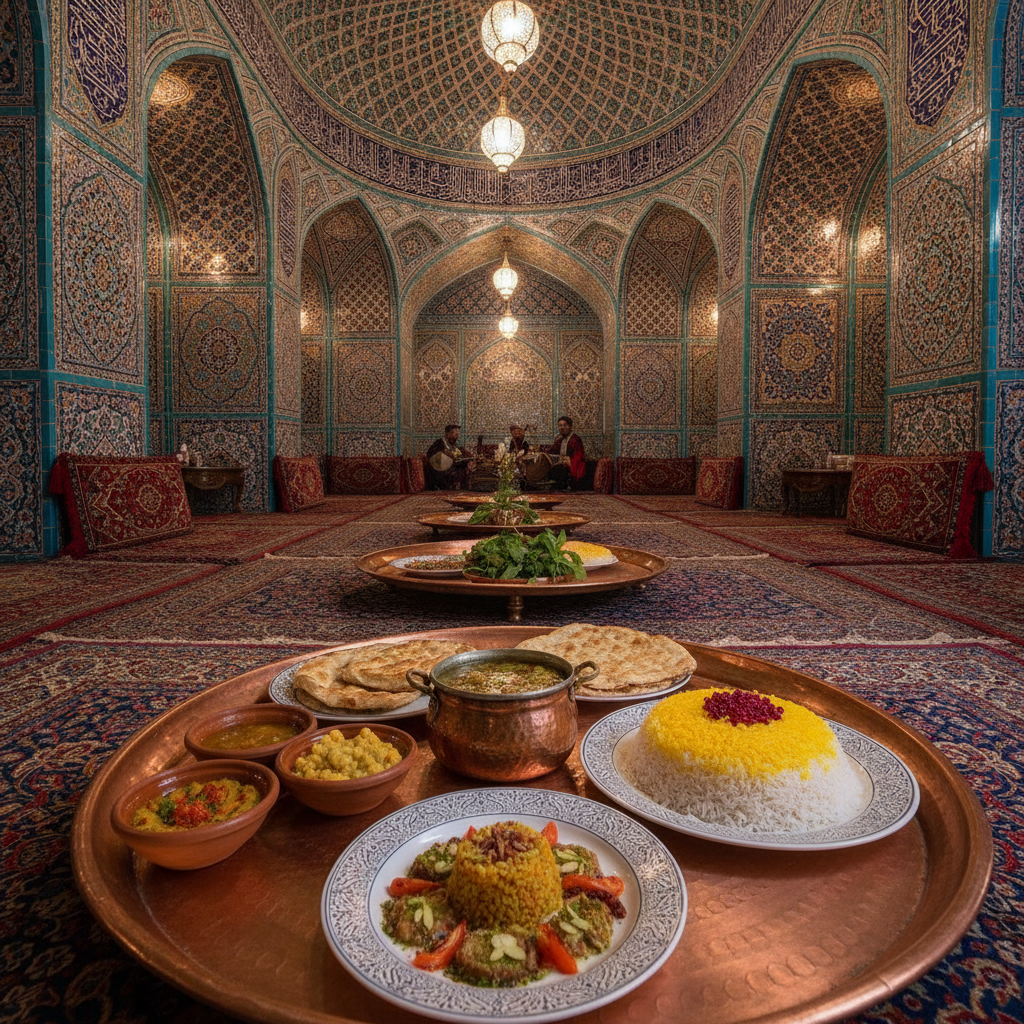
Isfahan Food: The Persian Cuisine, Dizi Lamb Stew, Beryani, Zereshk Polo, and the Most Historically Refined Single Persian Culinary Tradition
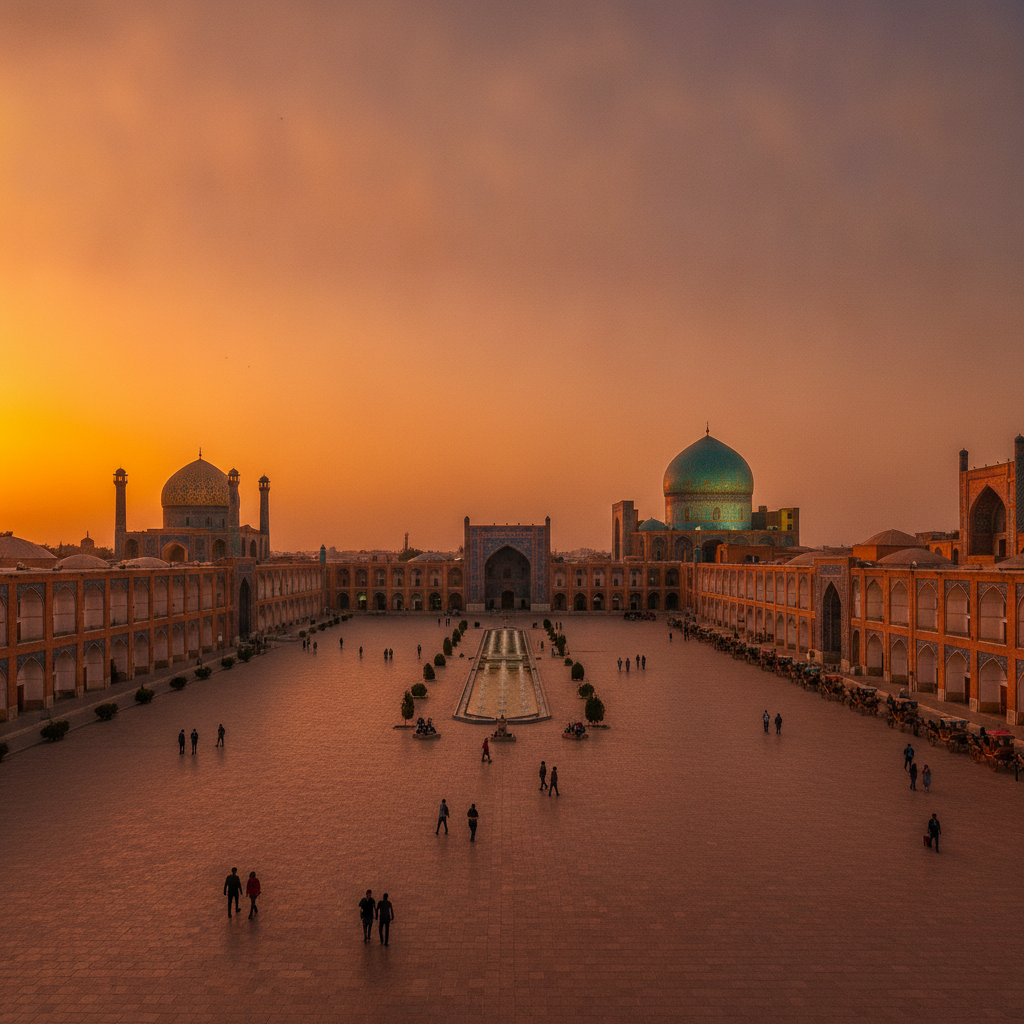
The Shah Mosque 7-Fold Echo Engineered to Amplify the Friday Sermon, the Sheikh Lotfollah Dome Changing Color from Cream to Pink Through the Day & the Naqsh-e Jahan Square Polo Goals Still Standing After 400 Years