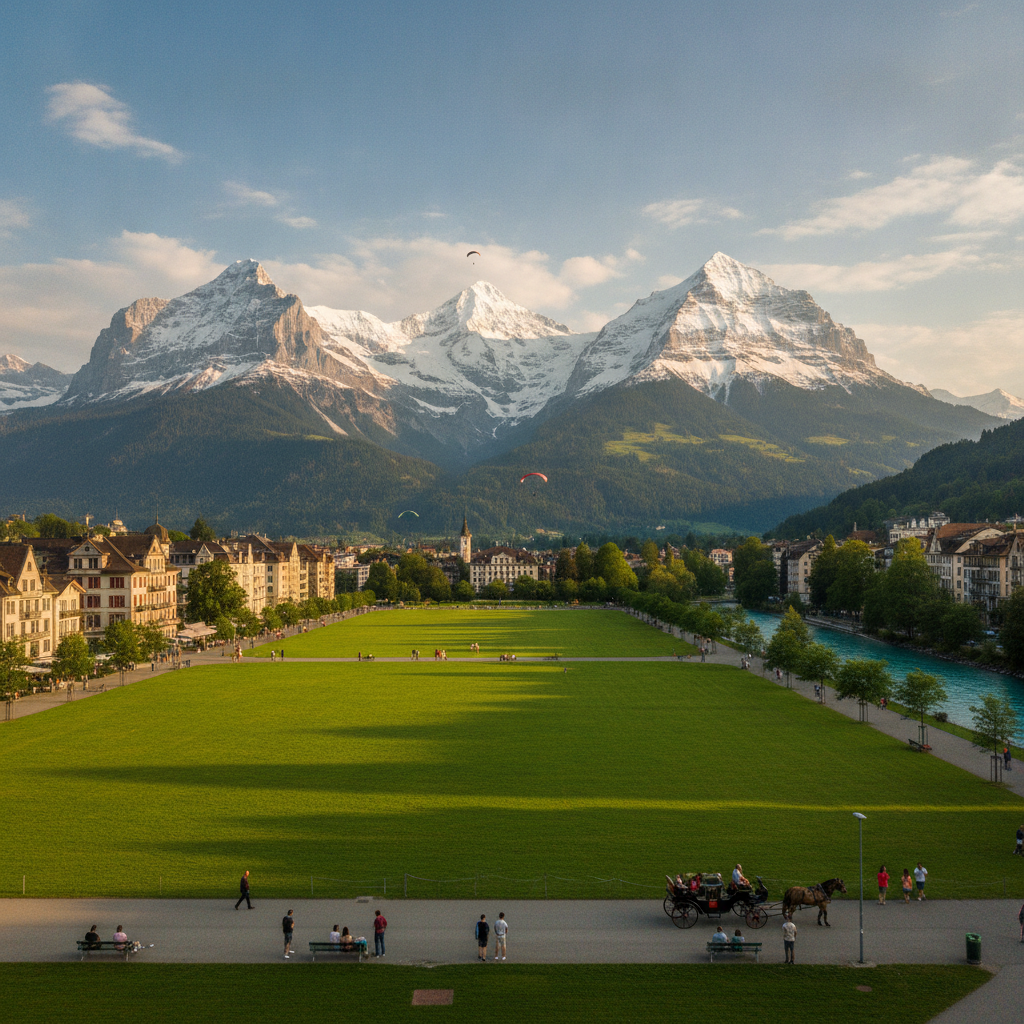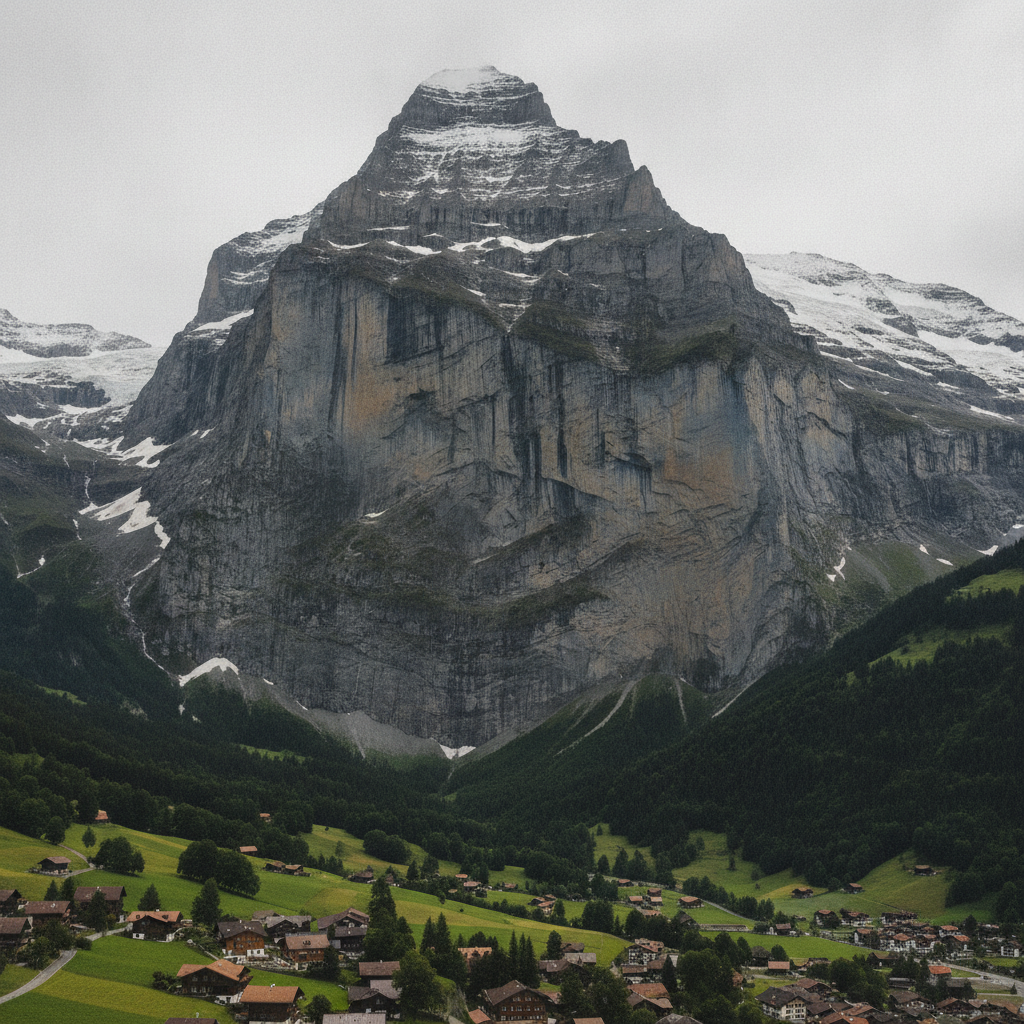
Grindelwald — the Eiger North Face, the Lauberhorn Race & the Alpine Village Culture
Grindelwald is the most complete single mountain resort in the Bernese Oberland — the village at the base of the Eiger north face combines the First adventure mountain, the Jungfrau railway connection, and the most celebrated ski race piste in the world.
- 1
The Eiger North Face — the Most Famous Mountain Wall
Eigernordwand (the Eiger north face, the 1,800m vertical granite wall rising from the Grindelwald valley — the most famous single mountain wall in the history of mountaineering, the face that defined the concept of extreme alpinism): the history (the face attempted 13 times between 1935 and 1938 with 8 fatalities before the first successful ascent by the German-Austrian team of Heckmair, Vörg, Harrer, and Kasparek on July 24 1938, the 4 climbers completing the 27-hour ascent at the peak of the Nazi era — the ascent politicised as a propaganda triumph but the climb itself representing the most technically demanding alpine feat achieved to that date, Heinrich Harrer going on to author 'Seven Years in Tibet', the mountaineering career interrupted by the Second World War), the viewing positions (the best views of the north face: the Kleine Scheidegg at 2,061m the classic position — the north face directly above at 4km distance, the telescope at the Kleine Scheidegg railway station the most commonly used optical aid; the Grindelwald village street the most accessible — the complete face visible from the Dorfstrasse at ground level, no transport required, free, the face turning gold at sunset from this position; and the Eiger Trail at the base — the 6km path at 100m horizontal distance from the face, the most intimately close approach to the wall achievable on foot), the current ascents (the Eiger north face now climbed regularly — the speed record at 2 hours 22 minutes established by Ueli Steck 2015, the fastest ascent of any major Alpine face in history, the face seeing 30-50 ascents per summer season at the standard 2-day rate by skilled alpinists) and the Eigerwand Station (the underground railway station carved through the Eiger face at 2,865m — the window in the north face the viewing platform for the Grindelwald glacier below, the most dramatic single railway window in the world, accessible on the Jungfrau Railway).
- 2
The Lauberhorn — the World's Most Famous Ski Race
Lauberhorn ski race (the FIS Alpine Ski World Cup Downhill race at Wengen, held annually in January, the most watched and the most technically demanding single alpine ski race in the world): the course (the Lauberhorn Downhill course from the start at 2,315m to the finish at the Wengen village at 1,274m — 4.46km, the vertical drop 1,028m, the top speed 161 km/h at the Minschkante section, the race time approximately 2 minutes 28 seconds for the fastest runs — the longest World Cup downhill race in the ski calendar at 4.46km versus the typical 2.5-3km), the race tradition (the race held since 1930 — the oldest downhill ski race in the world, the Lauberhorn the only World Cup event held at the same location for 90+ years, the race the most watched sports event in Switzerland annually with 30,000 spectators on the course and 100+ million television viewers worldwide), the Wengen village (the car-free resort at 1,274m above the Lauterbrunnen valley, the most architecturally intact Belle Époque mountain resort in the Bernese Oberland — the Grand Hotel Regina 1894 the most historically atmospheric hotel in the Swiss Alps after the Rigi Kulm, the village accessible by mountain railway from Lauterbrunnen in 15 minutes at CHF 14 return), the summer hiking (the Lauberhorn summer trails from the Wengen ski infrastructure — the Lauberhorn ridge trail from the start hut to the Kleine Scheidegg the most panoramic summer hiking route on the race mountain, 3 hours, the views of the Eiger, Mönch, and Jungfrau from the ridge the most complete 3-summit view at walking speed) and the Wengernalp (the high alpine pasture at 1,874m between Wengen and Kleine Scheidegg, the July alpine flower meadow — the gentian, the soldanella, and the alpine rose at peak bloom — the most photographed alpine flower meadow in the Bernese Oberland, accessible from Wengen on the Wengernalpbahn railway in 15 minutes).
- 3
Grindelwald Village — Alpine Architecture and the Mountain Town
Grindelwald village (the mountain resort at 1,034m altitude in the Grindelwald valley with the Eiger above and the Grosse Scheidegg to the north, the most visited mountain village in the Bernese Oberland): the village architecture (the Grindelwald Dorfstrasse the primary street with the 18th and 19th century Bernese Oberland timber farmhouses — the characteristic dark-stained timber facades, the flower-box balconies, and the overhanging shingled roofs of the Bernese Alpine tradition, the Chalet Hotel Spinne at the Dorfstrasse the most characteristic Grindelwald Gasthaus building, the Touristik Museum at the Dorfstrasse 16 the most complete single museum of the Grindelwald mountain history including the first attempts on the Eiger north face, CHF 5 adults, May-October), the Grindelwald-Grund (the lower village at 943m with the Grindelwald First gondola base station and the BOB railway station, the gondola ticket office the most visited building in Grindelwald with the queue management system for the First cable car required on summer Saturdays from 9am), the First Gondola (the cable car from Grund to the First at 2,168m in 25 minutes at CHF 49 adults return — the primary Grindelwald mountain experience, the First Cliff Walk and the First Flyer the two most visited attractions, the base station with the rental equipment shop and the café the morning gathering point for 2,000+ visitors per summer day) and the Grindelwald hiking circuit (the valley floor circular walk from the Grindelwald Grund station along the Lütschine River to the Pfingstegg, 2 hours flat walking, the most relaxed hike in the Grindelwald valley without the altitude gain — the valley floor wildflowers in June, the ibex on the cliff above the path in August-September).
- 4
The Grosse Scheidegg and the Black Glacier Walk
Grosse Scheidegg (the 1,962m pass at the north end of the Grindelwald valley connecting to the Rosenlauital valley — accessible from Grindelwald by PostBus May-October in 40 minutes at CHF 12 return or by the 3-hour hiking path along the valley): the Black Glacier (the Schwarze Gletscher — the 'Black Glacier' — the glacier above the Grindelwald valley floor, the dark moraine covering giving the glacier its name, the glacier accessible on foot from the Milchbach parking area 3km from Grindelwald village, the 30-minute glacier approach walk passing the terminal moraine of the glacier's 1860 maximum extent visible as the 20m morainal ridge 300m from the current glacier edge — the most accessible single glacial retreat documentation in the Swiss Alps, the retreat of 2km since 1850 the most visible climate change evidence in the Bernese Oberland), the Grosse Scheidegg pass (the most scenic PostBus route in the Bernese Oberland — the bus from Grindelwald ascending through the alp pastures to the 1,962m pass, the panorama of the Wetterhorn at 3,692m directly above the pass the most vertically impressive single mountain view from a Swiss PostBus stop, the continuation by PostBus to Meiringen and the Aare Gorge the most complete single-day valley circuit from Interlaken), the Rosenlauigletscher (the glacier above the Rosenlaui valley between Grindelwald and Meiringen, the most dramatically crevassed accessible glacier in the Bernese Oberland — the Rosenlaui Glacier Gorge, the 300m gorge carved by the meltwater stream at the glacier base, accessible on foot from the Rosenlaui Hotel, CHF 8 adults, the most geologically active gorge walk in the Swiss Alps) and the Schwarzwaldalp (the high alp restaurant at 1,454m below the Grosse Scheidegg, the most dramatically positioned PostBus stop in the Bernese Oberland — the terrace café with the Wetterhorn and the Grosse Scheidegg panorama the most isolated yet accessible mountain café in the region, the cheese fondue and the Rösti at CHF 22-28 per person).
- 5
Grindelwald Winter Sports — the Big 3 Access
Grindelwald skiing (the most technically complete ski area access of any single Bernese Oberland village — Grindelwald the only village giving direct access to 2 of the Big 3 ski areas: the Grindelwald First ski area directly above the village and the Grindelwald Grund connecting to the Kleine Scheidegg and the Lauberhorn/Jungfrau ski area): the First ski area (41km of ski runs from the First at 2,168m to the Grindelwald Grund at 943m, the snowpark the most developed terrain park in the Bernese Oberland, the ski pass CHF 82 adults per day or included in the Bergbahnen Oberland joint pass), the Kleine Scheidegg ski area (the connection by the Wengernalpbahn mountain railway from Grindelwald Grund to Kleine Scheidegg in 55 minutes at CHF 16 return, the Kleine Scheidegg the junction giving access to the Lauberhorn downhill runs descending to Wengen and the Jungfrau railway connection — the ski pass covering the complete Kleine Scheidegg area included in the Bergbahnen Oberland joint pass at CHF 82 adults per day), the winter hiking (the 50km+ of packed-snow Winterwanderwege in the Grindelwald area, the trail from Kleine Scheidegg to the Eigergletscher station the most dramatic winter walking in the Bernese Oberland — the Eiger north face in winter the most visually overwhelming single mountain presence on any Swiss hiking trail), the ice climbing (the Grindelwald ice climbing at the Steile Rinne above the Oberer Grindelwaldgletscher — the most accessible ice climbing wall in the Bernese Oberland, the 60m WI3 ice wall beginner-friendly when the temperature holds below -5 degrees from December to February, the guide booking at the Grindelwald mountain guide office at Dorfstrasse 103) and the snowshoeing (the snowshoe rental at the First base station at CHF 20 per day, the marked snowshoe trails from Grindelwald First to the Bachalpsee alpine lake — the lake frozen and the Schreckhorn reflection replaced by the snow surface in winter, the 2-hour snowshoe circuit the most meditative winter experience in the Bernese Oberland).
- 6
The Kleine Scheidegg — the Alpine Junction at 2,061m
Kleine Scheidegg (the mountain pass junction at 2,061m where 3 mountain railways meet — the Wengernalpbahn from Grindelwald, the Wengernalpbahn from Wengen/Lauterbrunnen, and the Jungfraubahn to the Jungfraujoch — the most important single mountain railway junction in the Alps, the junction the starting point of the Jungfrau Railway tunnel through the Eiger): the junction (the Kleine Scheidegg station the most visited single point in the Bernese Oberland at 1.2 million railway passengers per year — every Jungfraujoch visitor passes through Kleine Scheidegg in both directions, the station building with the terrace restaurant and the Hotel Bellevue des Alpes the facilities, the Hotel Bellevue the most historically embedded small mountain hotel in the Bernese Oberland — the same hotel where Heinrich Harrer and the 1938 Eiger team prepared for their ascent), the Jungfrau Railway (the tunnel railway from Kleine Scheidegg to the Jungfraujoch, the 9km tunnel through the Eiger and the Mönch taking 35 minutes, the windows at the Eigerwand station at 2,865m and the Eismeer station at 3,160m cut through the north face of the Eiger and the Grindelwald glacier face respectively — the Eigerwand window the only opening in the Eiger north face not associated with climbing), the Kleine Scheidegg-Männlichen trail (the 5km walk from the Scheidegg junction west to the Männlichen ridge at 2,343m, the most popular single trail in the Bernese Oberland, gentle 300m ascent, 2 hours, the Eiger north face in direct line of sight for the entire route), and the telescope (the public telescope at the Kleine Scheidegg station terrace, the most commonly used optical aid for viewing the Eiger north face climbers in action in the July-August climbing season, the telescope the most visited piece of optical equipment in Switzerland by tourist use, available from the railway terrace at no cost between 9am and 4pm).
Walk this route with audio
Stories play automatically as you reach each stop — no tapping needed.
More in interlaken
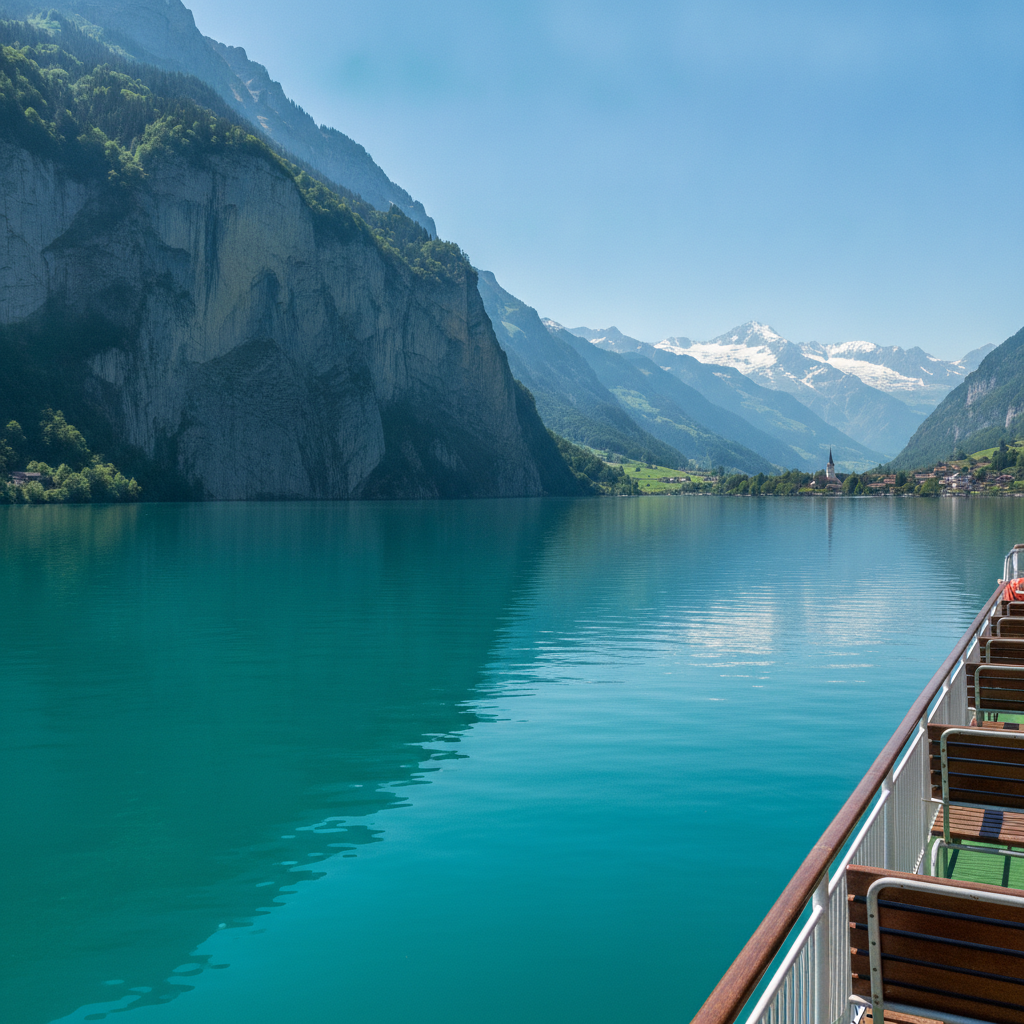
Interlaken's Two Lakes — Lake Thun, Lake Brienz & the BLS Steamer Circuit
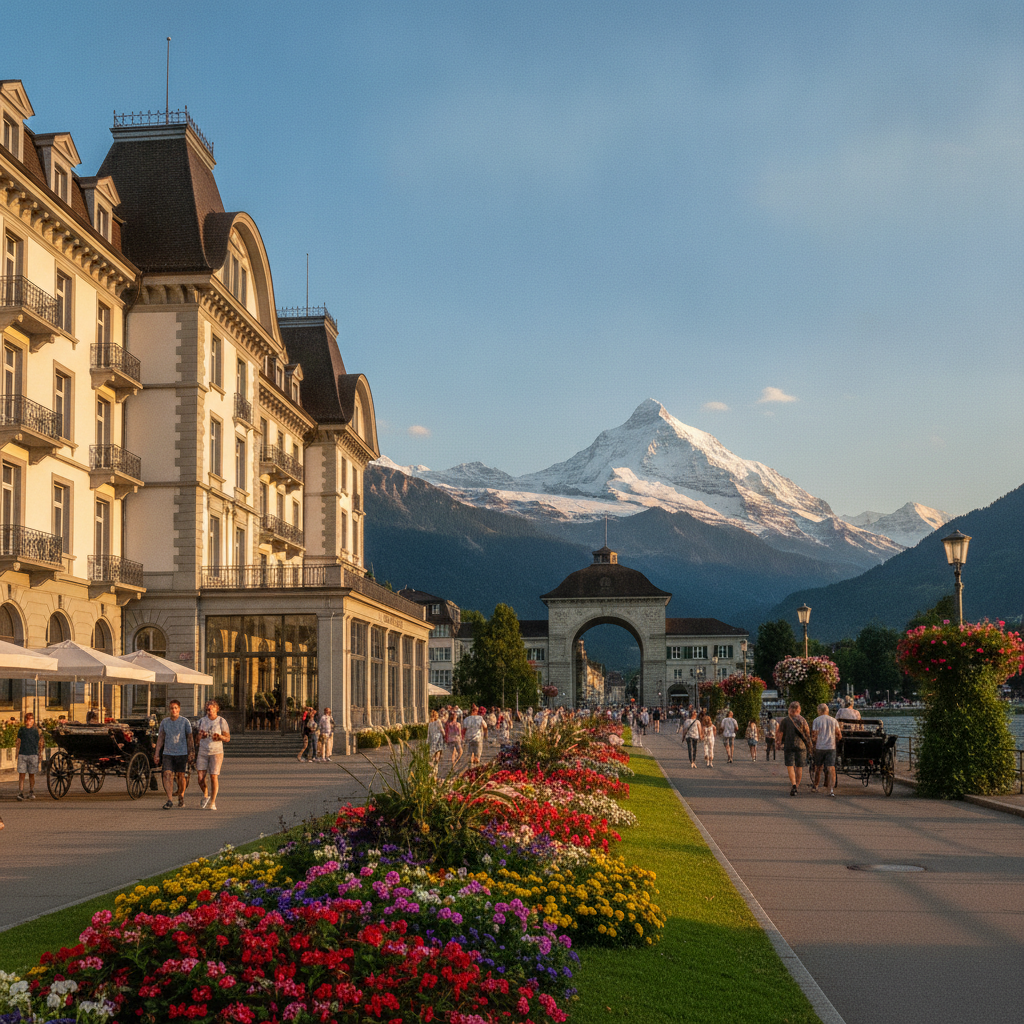
Interlaken's Harder Kulm, Grand Hotels, Paragliding & the Seasons Guide
Interlaken Hiking — Schynige Platte, the Männlichen, Harder Kulm & the Bernese Trails
Interlaken — the Jungfraujoch, the Eiger & the Top of Europe