Innsbruck Practical — Getting Around, Seasons, Culture & the Innsbruck Card
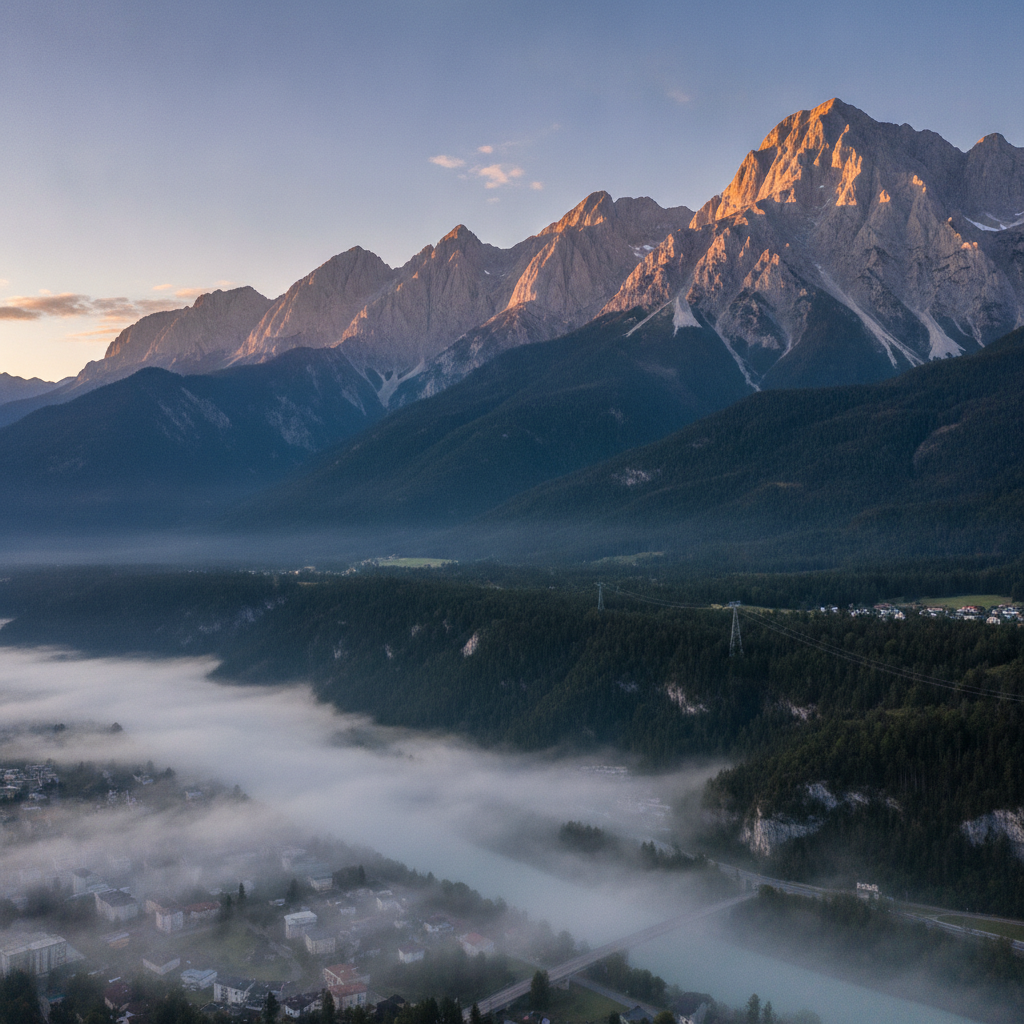
Innsbruck is the most practical Alpine city for the active visitor — the city centre walkable, the mountains accessible in 30 minutes, the Austrian Tyrol's cultural institutions concentrated within 1km of the Golden Roof.
- 1
Getting Around Innsbruck
Innsbruck transport: the Old Town walkable (the Golden Roof, the Hofburg, the Tyrolean Folk Museum, the Nordkettenbahn city station, and the Congress Hall all within 1km of each other — the morning museum circuit achievable on foot without any public transport), the tram and bus network (the IVB Innsbruck public transport, the single trip at €2.40, the 24-hour pass at €5.70, the key lines: tram 3 from the central station south to Igls — the Olympic ski resort — in 30 minutes, bus 4134 to the Stubai Glacier bus terminal in 55 minutes, bus F to the airport in 20 minutes, all bus and tram trips within the Innsbruck city zone included in the Innsbruck Card), the Innsbruck Card (the tourist card at €46/24h, €55/48h, €64/72h including: the Nordkettenbahn cable car return, the Bergisel ski jump tower, the Schloss Ambras, the Swarovski Kristallwelten shuttle and entry, the Tyrolean Folk Museum, the Hofburg, and all IVB city transport — the card saves money for visitors doing the Nordkette cable car and 2+ museums, available at the Innsbruck tourist information at Burggraben 3 in the Old Town and at the airport, the most financially logical structure for a 2-day Innsbruck visit), cycling (the Innsbruck bicycle sharing at €1/30 minutes, the Inn River cycle path the primary cycling route connecting the city centre to the Innsbruck recreational park at Baggersee in 15 minutes and to the Tivoli stadium in 10 minutes) and walking in the Old Town (the Herzog-Friedrich-Straße the primary pedestrian street, the Old Town compact enough to complete the main sights in 3-4 hours on foot).
- 2
The Innsbruck Seasons — Alpine Summer and Olympic Winter
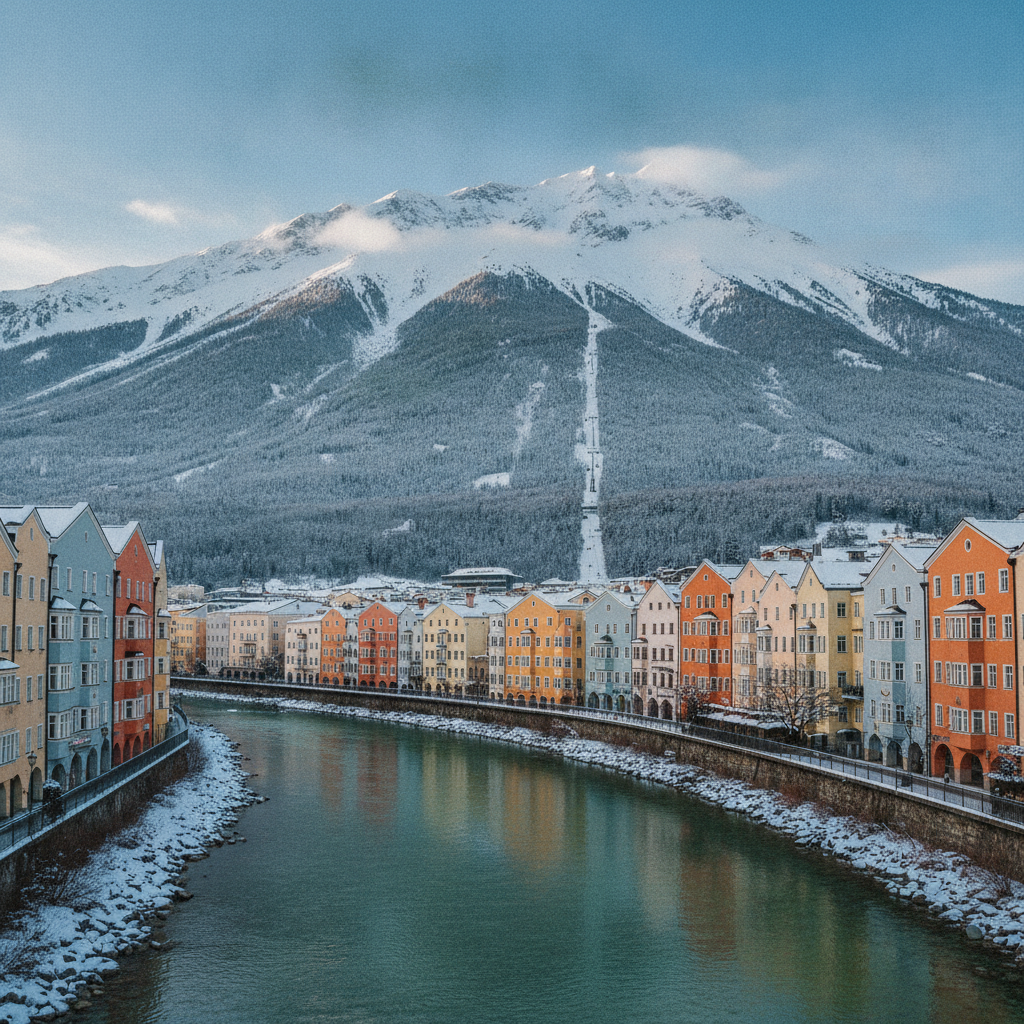
Innsbruck seasonal guide: Summer (June-August, the primary Alpine hiking season, the Nordkette hiking trails at maximum accessibility, the Stubai Glacier accessible for both skiing and glacier hiking, the Inn River cycle path and the outdoor swimming in the Baggersee at maximum use — the lake 4km from the city centre, the natural lake beach with the mountain view the most relaxed summer recreation near Innsbruck, the city temperature 24-28 degrees, the mountain temperatures at 2,000m 10-15 degrees cooler, the accommodation at €80-160 per night in the city centre), Autumn (September-October, the most atmospheric season in the Tyrol — the Ahornboden maple forest 30km north in the Karwendel the most photographed autumn landscape in Austria, the Ötztal grape harvest and the South Tyrolean wine festivals, the Innsbruck city centre at its least crowded, the accommodation at €70-130, the Stubai Glacier opening for the first ski runs in October — the only Austrian ski area consistently opening before November), Winter (November-April, the primary ski season, the Innsbruck city the base for the Stubai Glacier and the Nordkette ski area, the Olympic bob run at the Patscherkofel operational, the city under snow the most dramatic version of the Alpine backdrop — the Nordkette in full winter white visible from the Herzog-Friedrich-Straße the most dramatic urban winter view in the Alps, the accommodation at €90-180 at the peak Christmas and February periods) and Spring (April-May, the transition season — the glacier skiing at peak conditions on the Stubai, the city at its emptiest and cheapest, the Inn Valley in bloom from mid-April, the Innsbruck Easter markets in the Old Town the most low-key and most locally attended of the Austrian holiday markets).
- 3
The Hofkirche and the Maximilian I Tomb
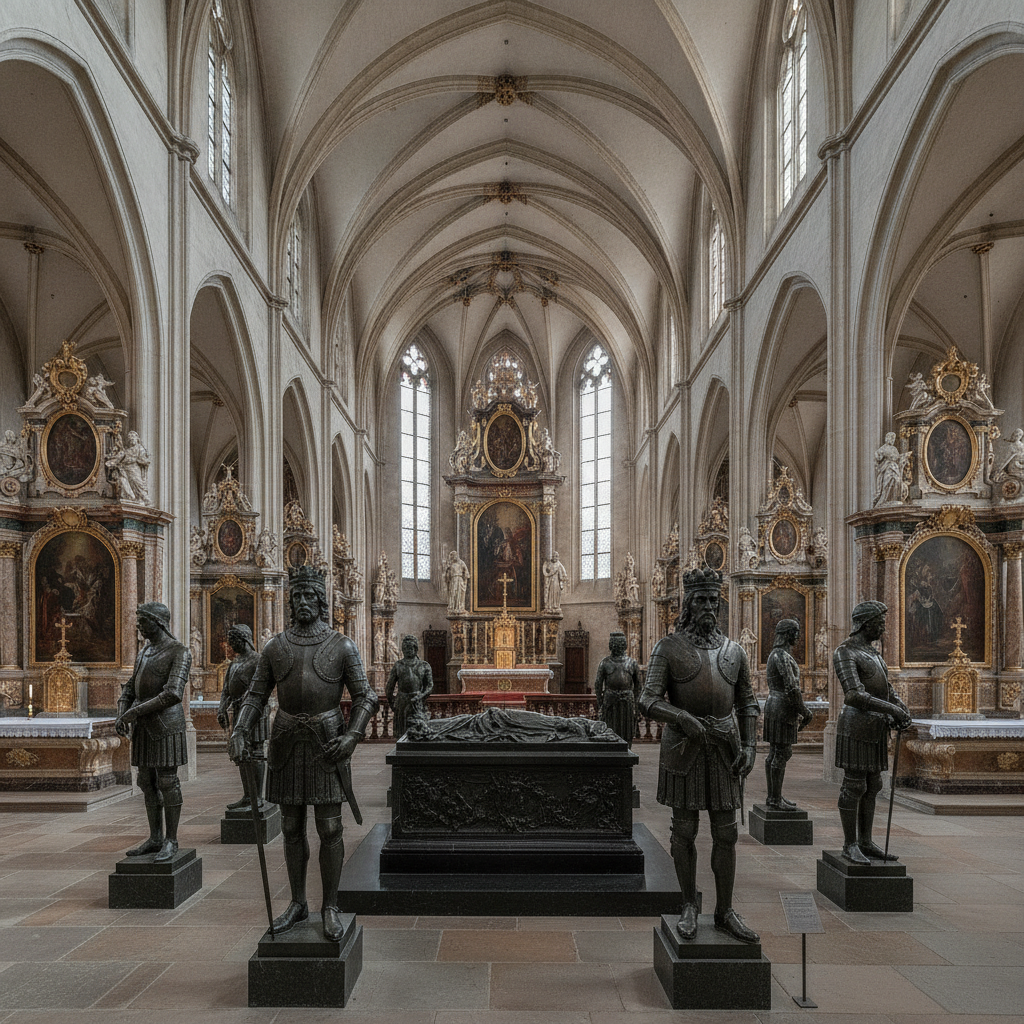
Die Hofkirche (the Court Church, Universitätsstraße 2 adjacent to the Tyrolean Folk Museum, the Gothic-Renaissance church built 1553-1563 by Emperor Ferdinand I for the tomb of his grandfather Emperor Maximilian I — the most important funerary monument in Austrian history, the church free, open daily 9am-5pm): the Maximilian Tomb (the black marble cenotaph of Maximilian I at the centre of the nave — the cenotaph the most elaborate funerary monument in the Holy Roman Empire, the actual burial of Maximilian I at Wiener Neustadt, only his heart buried at the Hofkirche — the cenotaph surrounded by the 28 over-life-sized bronze figures of the imperial ancestors and the relatives standing guard, the 'Black Men' as the Innsbruck people call them — the 28 figures including: Clovis, King of the Franks; Godfrey of Bouillon, the Crusader King of Jerusalem; King Arthur of Britain — the legendary ruler included for his exemplary knightly virtues; and Theodore, the Ostrogoth King, the 28 figures the most ambitious programme of historical bronze sculpture in the German-speaking world, the figures cast from 1508-1550 by the most important bronzecasters in the Empire), the 23 marble reliefs (the reliefs on the cenotaph sides depicting the 24 most important events in Maximilian's life — the relief of the Maximilian riding through the reef at the Martinswand cliff in the Zirl gorge, without visible means of support, the most discussed single relief in the programme) and the Silver Chapel (the Silberne Kapelle, the side chapel of 1578 with the silver Madonna on the altar — the silver statue donated by Archduke Ferdinand II for the fulfillment of his vow at the Battle of Mühlberg 1547, the most devotionally significant single object in the Hofkirche).
- 4
Innsbruck's Art Scene — Museum Ferdinandeum and Contemporary Galleries
The Tiroler Landesmuseum Ferdinandeum (Museumstraße 15, the state museum of the Tyrol, the most comprehensive art and history collection in western Austria, €12 adults, Tuesday-Sunday 9am-5pm, Thursday until 8pm): the art collection (the Gothic altar paintings and sculptures of the Tyrolean late medieval tradition — the 15th-century winged altarpieces from the Tyrolean parish churches the most specifically regional collection, the works of the Veit Stoss school and the Michael Pacher tradition the finest examples; the 16th-century portraits of the Tyrolean court — the most complete collection of Tyrolean Renaissance painting, the portraits documenting the court culture of Archduke Ferdinand II at Ambras; the 19th-century Tyrolean landscape painting — the Biedermeier period romanticization of the Alpine landscape, the most nationally popular painting tradition in Austria after the Vienna Secession; and the contemporary Austrian painting from 1945 to the present with a focus on the Tyrolean artists), the natural history collection (the geological collection the most relevant to visitors interested in the Alpine landscape — the glacier cores, the mountain rocks, the fossil fauna of the Innsbruck basin — and the archaeology of the Ötztal Ötzi discovery — the replica of Ötzi the Iceman displayed with the objects found with the mummy, the closest Innsbruck sees to the original which is kept in the South Tyrol Museum in Bolzano) and the Zaha Hadid Architecture exhibition (the rotating exhibition on the Innsbruck works of Zaha Hadid in the context of her wider career, the exhibition the most complete documentation of the Hadid-Innsbruck connection, in the contemporary gallery of the Ferdinandeum).
- 5
The Inn River and the Innsbruck Neighbourhood Walk
The Inn River (the Inn River — the 517km river flowing from the Swiss Alps through the Inn Valley of the Tyrol and into the Danube at Passau in Germany — the defining geographic element of Innsbruck, the city built on the terrace above the south bank of the river, the name Innsbruck meaning 'Bridge over the Inn' — the bridge the point at which the Alpine pass traffic from Italy and France crossed the river, the crossing the reason for the city's existence): the Innrain terrace (the row of painted facades along the north bank of the Inn facing south to the Bergisel hill and east to the city centre, the most photographed view in Innsbruck when the camera position is the river bridge with the Nordkette behind the facades — the coloured 18th and 19th century merchant houses of the north bank visible from the Old Town bridges, the River Walk the most relaxed stroll in Innsbruck at 7am before the tourist circuit opens), the Innsbruck city beach (the river bank park on the south side of the Inn immediately east of the Universitätsbrücke bridge, the beach the urban recreation area of Innsbruck in summer — the artificial pebble beach, the sunbathing terraces, and the river swimming — the Inn water temperature 15-18 degrees in July-August, cold but swimmable, the current fast requiring the swimming to be done at the designated safe sections, the river beach the most authentic local Innsbruck experience for the summer visitor), and the Innsbruck neighbourhood walk (the walk from the Golden Roof north through the Old Town arcades to the Innbrücke bridge, across the river to the Mariahilf church — the pilgrimage church of 1649 on the north bank, the most important Baroque church outside the Old Town — and east along the Innrain to the University quarter, the complete urban circuit of the Innsbruck centre taking 90 minutes at a moderate pace including the church interiors).
- 6
Innsbruck with Children — Family Activities in the Alps
Innsbruck family activities (the city the most family-friendly in the Austrian Alps — the combination of the mountain cable cars, the museums with the interactive elements, the outdoor swimming, and the Olympic sports experiences making Innsbruck the correct family Alpine destination): the Nordkettenbahn family day (the Nordkette cable car to Seegrube at 1,905m the most dramatic family excursion from any Austrian city, the Seegrube with the short marked family trails, the Alpine Flower Garden, and the children's playground at the station, the Zaha Hadid funicular stations the design element that engages children as well as architecture students, the cable car return the most exciting 8 minutes in the Austrian Alps for the under-12 age group), the Innsbrucker Kletterwald (the climbing forest at the Baggersee lake 4km east of the city, the rope course in the trees with 9 different difficulty levels from 1m to 15m above the ground, €20 per person for 3 hours, the most popular family outdoor activity in the Innsbruck suburban area, accessible by bus or bicycle in 20 minutes), the Schloss Ambras children's programme (the Habsburg armoury the most viscerally engaging museum for children in the Innsbruck area — the 16 suits of full tournament armour the most immediately impressive museum objects for the under-12 visitor, the castle exterior and the water feature moat the correct approach for the family visit, the guided family tour in German at 11am on Sundays May-October at €5 supplement) and the Alpine Zoo Innsbruck (Weiherburggasse 37, the highest-altitude zoo in Europe at 727m, accessible by bus or by the 30-minute walk up the Weiherburggasse path, the zoo presenting only the Alpine and sub-Alpine fauna — the eagle, the wolf, the bear, the lynx, the chamois, the ibex, the marmot, the most ecologically correct zoo collection in the Alps — €11 adults, €6 children, daily 9am-6pm in summer).
Walk this route with audio
Stories play automatically as you reach each stop — no tapping needed.
More in innsbruck
Innsbruck Cultural Circuit — the Hofkirche, the Ferdinandeum & the Tyrolean Folk Museum
Innsbruck Food & Drink — Tyrolean Cuisine, Alpine Markets & the South Tyrol Wine Connection
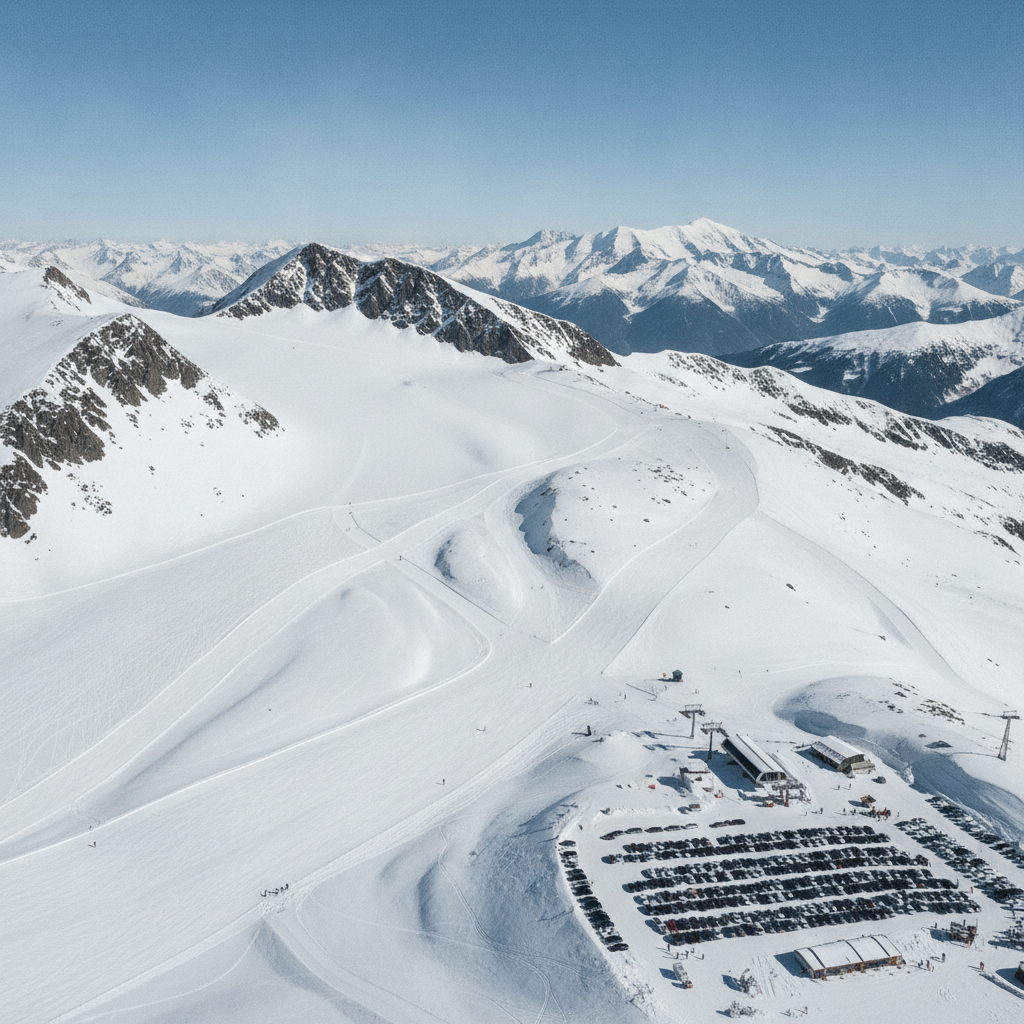
Innsbruck Alpine Adventures — Skiing, Hiking & the Stubai Glacier Year-Round
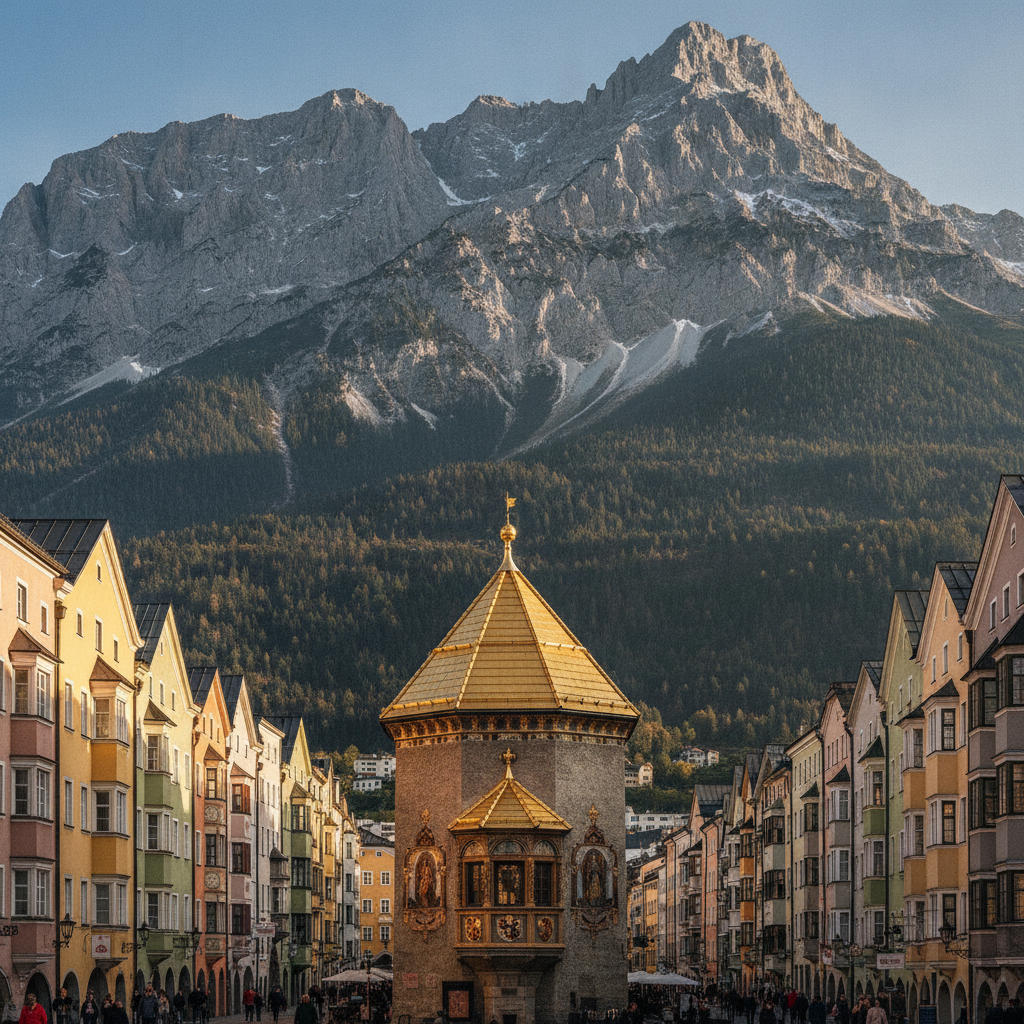
Innsbruck — the Golden Roof, the Nordkette Alps & the Tyrol's Imperial and Alpine Capital