Innsbruck Food & Drink — Tyrolean Cuisine, Alpine Markets & the South Tyrol Wine Connection
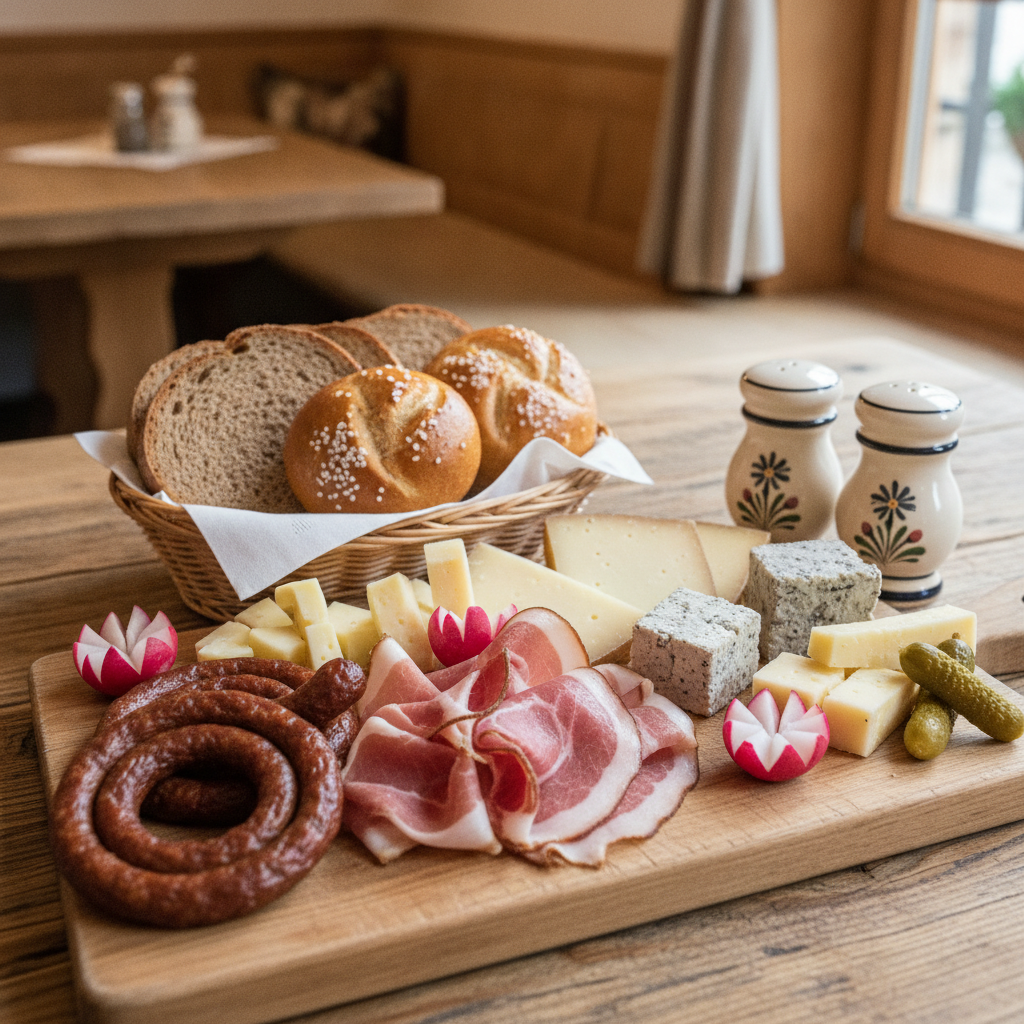
Tyrolean cuisine is the most robustly Alpine of the Austrian regional cooking traditions — the Tiroler Gröstl hash, the Speckknödel dumpling, and the Brettljause cold platter reflect the calorie requirements of the Alpine farmers and the mountain workers, while the South Tyrolean wine connection brings the Lagrein and the Gewürztraminer to the Innsbruck table.
- 1
The Innsbruck Market — the Markthalle and the Wochenmarkt
Innsbruck markets (the 2 primary food markets of Innsbruck, both concentrated in the Old Town and the river embankment area): the Markthalle (the covered market hall at Innrain 2 on the south bank of the Inn River, the year-round covered market Monday-Friday 7am-6pm and Saturday 7am-1pm, the most complete local food market in Innsbruck with 50+ permanent stalls — the Tyrolean farmers selling the Alpine dairy products: the mountain cheese from the Allgäu and the Karwendel Alps at €3-6 per 100g, the Tyrolean Graukäse — the grey whey cheese made from skimmed milk, the most pungent and the most distinctively Tyrolean cheese — and the Ziegenkäse goat cheese from the Inn Valley farms), the Wochenmarkt (the outdoor weekly market on the Innrain embankment Thursday mornings 7am-1pm, the largest outdoor market in the Tyrol — the seasonal produce from the Inn Valley farms and the South Tyrolean growers, the apple varieties in autumn the most diverse display of Austrian apple cultivation, the South Tyrolean apple growers the dominant presence at the market from September to December, the market the most locally attended and the least touristic food experience in Innsbruck), the Südtiroler Speck (the DOP-protected dry-cured pork belly from the South Tyrol — the Speck the defining charcuterie product of the German-speaking Alps, produced by the combination of the dry salting with salt, pepper, rosemary, and juniper berries and the cold smoking in the traditional smokehouse over beechwood and juniper — the correct Speck identifiable by the DOP label 'Südtiroler Speck g.g.A.' at €3-5 per 100g, the Innsbruck market the most accessible source for the authentically produced Speck in the Austrian Tyrol) and the Tyrolean cheeses (the Bergkäse mountain cheese, the Graukäse grey cheese, the Almkäse alp cheese, and the Ziegenkäse goat cheese the four primary Tyrolean cheese varieties, the Bergkäse the most internationally known at €2-4 per 100g for the 12-month ripened variety, the Graukäse the most distinctive at €1.50-3 per 100g with the strongest flavour of any Alpine cheese, the correct accompaniment to the Tyrolean rye bread Vinschgauer at €2-3 per loaf).
- 2
The Tiroler Gröstl — the Quintessential Tyrolean Dish
Tiroler Gröstl (the most quintessentially Tyrolean main course — the hash of the sliced cooked potatoes, the diced Speck or the beef, the onions, and the caraway seeds fried together in butter in the cast-iron pan, served in the pan with a fried egg on top and the wilted green cabbage or the pickled cucumbers on the side, the dish the Alpine farmer's technique for using the leftover boiled potatoes and the cold meat from the previous day's dinner, the practical-historical origin giving the dish its position as the most authentically Alpine of the Tyrolean main courses): the correct Gröstl experience (the Gasthaus Innbrücke at Innstraße 2 — the river-bank Gasthaus the most traditionally equipped kitchen in Innsbruck for the Gröstl, the cast-iron pan served at the table on the wooden board, the egg fried to the over-easy stage with the yolk still running, the €13-15 price point the most reliable indicator of the authentic version versus the tourist menu Gröstl at €18-20 in the Old Town restaurants; the Weisses Rössl at Kiebachgasse 8 the second-best address for the Gröstl in the Old Town, the Tyrolean lard used instead of the neutral frying oil the flavour indicator of the traditional version), the Knödel variations (the Tyrolean dumpling — the Knödel — in the 3 primary forms: the Semmelknödel from the white bread — the standard Austrian dumpling — the Speckknödel with the smoked bacon in the dough — the specifically Tyrolean version, served in the beef broth as the Speckknödelsuppe or as the side to the roast pork — and the Käseknödel with the grated Alpine cheese in the dough, the most flavourful of the 3 varieties, the 3-Knödel plate the most satisfying and the most cost-effective lunch in Innsbruck at €12-14 at the Gasthof Weisses Kreuz) and the Kaiserschmarrn (the dessert of the Austrian Alps — the shredded pancake torn in the pan and served with the plum compote and the icing sugar, €8-12 for the large portion for 2 persons, the ski hut Kaiserschmarrn on the Nordkette the most atmospherically consumed version).
- 3
South Tyrolean Wine — the Lagrein, Gewürztraminer and the Mountain Reds
South Tyrolean wine (the wines of the South Tyrol — the Südtirol DOC wine region, the most northerly DOC wine region in Italy, the most quality-focused mountain wine region in central Europe, the wines produced on the south-facing terraces of the Italian Alps at 200-1,000m altitude — accessible in Innsbruck at the Vinothek W at Meraner Straße 7 and the Südtirol wine shops of the market hall): the Lagrein (the primary red wine grape of the South Tyrol, a variety found only in the Trentino-Alto Adige region and genetically linked to the Teroldego and the Marzemino varieties, the Lagrein producing full-bodied red wines with the colour of dark violet and the taste profile of the dark plum, the chocolate, and the tobacco — the Gries Lagrein from the Bolzano basin the most famous single-site expression, the most under-appreciated quality red wine in central Europe at €12-25 per bottle, the Kellerei Bozen cooperative the most reliable producer for the quality-to-price ratio), the Gewürztraminer (the white wine grape originating in the South Tyrolean village of Tramin/Termeno — the grape exported globally giving the wine region the most internationally dispersed legacy of any Austrian-culture wine area, the South Tyrolean Gewürztraminer the reference expression — the spice, the rose petal, the lychee aromas at their clearest in the cool-altitude South Tyrolean version, the Nals Margreid and the Tramin winery the most recommended producers, the wine at €15-35 per bottle), the Pinot Grigio and the Pinot Bianco (the two most widely planted white varieties in the South Tyrol, the cool mountain altitude giving the wines a freshness and an acidity absent from the Veneto versions, the most accessible daily-drinking white wines from the Italian Alps, available at the Innsbruck supermarkets at €8-15 per bottle) and the wine bars of Innsbruck (the Vinothek W at Meraner Straße 7 the primary wine bar for the South Tyrolean wines in Innsbruck, the 100+ wines by the glass from €4.50, the comprehensive South Tyrolean wine selection the most educational single sitting for the visitor new to the regional wines).
- 4
The Innsbruck Coffee House Tradition
Austrian coffee culture in Innsbruck (the Kaffeehaus — the coffeehouse — the defining social institution of the Habsburg urban tradition, the Innsbruck version slightly less formal than the Viennese original but following the same fundamental principles: the single coffee purchased entitles the guest to sit for as long as desired, the glass of water provided without charge, the daily newspapers and the weeklies available on the wooden Zeitungshalter press holders, the waiter in the white apron the human institution inseparable from the experience): the Café Central (Gilmstraße 5, the most historically established coffeehouse in Innsbruck since 1878, the Habsburg period interior with the marble tables and the wooden panelling, the Innsbruck commercial and professional class the primary clientele for 140 years, the most authentically bourgeois social experience in the Tyrolean capital, the Einspänner — the black coffee with the whipped cream on top in the glass — the most photographed coffee order at the Central), the coffee orders (the Austrian coffee vocabulary: the Melange — the half coffee half milk foam, the standard morning order; the Verlängerter — the extended espresso with the hot water, the afternoon order; the Schwarzer — the single espresso, the post-lunch order; the Einspänner — the black coffee with the cream in the glass, the Biedermeier order; the Fiaker — the black coffee with the rum and the whipped cream, the convivial afternoon order; the Kapuziner — the coffee with the cream, the predecessor of the cappuccino, the historical order — the orders distinguishable by the colour through the glass, the darker the more concentrated, the waiter expected to know the distinction without the explanation), the Innsbruck café circuit (the Café Katzung at Universitätsstraße 8 the Innsbruck academic coffeehouse adjacent to the university, the Café Maximilian at Maximilianstraße 2 the most contemporary address, and the Café Sacher at Maria-Theresien-Straße 3 the Innsbruck branch of the Hotel Sacher chain — the Sachertorte €8.50 per slice the most expensive slice of chocolate cake in the Tyrol and the most historically correct) and the Strudel tradition (the Apfelstrudel — the apple strudel — the primary accompaniment to the afternoon coffee in Innsbruck, the paper-thin pastry dough stretched over the kitchen table and filled with the stewed apples, the raisins, the cinnamon, and the breadcrumbs, the most technically demanding Austrian pastry, the Café Central version the correct benchmark for the Innsbruck visitor at €5.50 per portion with the vanilla sauce).
- 5
Innsbruck Farm Shops and the Tyrolean Souvenir Food
Tyrolean food souvenirs (the most authentic and the most practically portable Innsbruck food products for the visitor to take home): the Tyrolean Speck (the Südtiroler Speck DOP the most internationally recognized Austrian food export, available vacuum-packed in the Innsbruck Markthalle at €15-25 per 250g package, the vacuum package maintaining the product in ideal condition for 8 weeks unrefrigerated — the correct format for the travelling food souvenir, the producers to look for at the Innsbruck market: the Senfter and the Moser labels the most widely distributed authentic producers, the shop-sealed supermarket Speck acceptable but the Markthalle farmhouse producer the most flavourful version), the Tyrolean honey (the Tiroler Almhonig — the mountain alp honey produced by the beehives at the summer alp pastures, the most flavourful honey in the Austrian Alps, the taste reflecting the wildflower meadow flora at 1,500-2,000m altitude — the mountain mint, the Alpine clovers, and the gentian — at €8-15 per 250g jar at the Innsbruck market, the Alpenblütenhonig the summer wildflower variety the most complex, the Lärchenhonig the larch honey the most distinctive), the Tyrolean schnapps (the Tiroler Schnaps tradition the most developed in Austria — the Williams pear schnapps, the elderflower schnapps, the mountain herb schnapps, the aged plum Slivovitz-equivalent — produced at the farmhouse distilleries of the Inn Valley and the Ötztal, the Hochstrafner distillery products at the Innsbruck market the most widely available authentic farmhouse schnapps, the 50cl bottle at €20-35 the correct souvenir format) and the Berchtesgaden-equivalent (the Innsbruck equivalent of the Salzburg Mozart ball: the Innsbruck Alpen Trüffel — the Alpine truffle chocolates from the Innsbruck chocolate makers, not a DOP or a registered product but a tradition specific to the Tyrolean chocolate makers, available at the Metzler Confiserie at Herzog-Friedrich-Straße 16, the most distinctive Innsbruck confectionery souvenir at €12-20 per 100g).
- 6
The Innsbruck Wine and Spirits Scene
Innsbruck wine and spirits (the Innsbruck drinking culture shaped by 3 geographic influences: the Austrian wine tradition from the east, the South Tyrolean wine from the south, and the Alpine schnapps tradition from the surrounding valleys — the most varied wine and spirits landscape of any Austrian city outside Vienna): the Austrian wine context (the Austrian wine regions — the Wachau, the Kamptal, the Kremstal, and the Burgenland — accessible in Innsbruck at the Weinhandlung Hager at Anichstraße 15, the comprehensive Austrian wine shop with the most complete Grüner Veltliner and Riesling selection in Innsbruck, the Grüner Veltliner the Austrian national white grape — the peppery, mineral white wine that is the most produced wine in Austria, at €10-35 per bottle depending on the producer and the vineyard classification), the craft beer scene (the Tyrolean craft beer tradition developed since 2010 — the Innsbrucker Brauhaus at Ing.-Etzel-Straße 2 the primary Innsbruck craft brewery, the 4 house-brewed beers: the Zirbe Ale — the stone pine aromatized pale ale the most distinctively Tyrolean, the hop aroma of the Zirbe pine cones giving the beer the mountain forest character — the Nordkette Dunkel — the dark lager brewed with the roasted malt, the most traditional Alpine beer style — and the seasonal specials available on tap at the brewery tap-room, open daily from 4pm, the most interesting single-visit beer destination in the Tyrol), the schnapps culture (the Austrian Schnapskultur — the tradition of the digestif schnapps drunk from the small glass at the end of the meal at every Tyrolean Gasthaus, the schnapps offered free with the meal at the traditional houses or sold for €3-5 per 4cl glass, the Williams pear the most universally served variety in Innsbruck, the Tyrolean herbal schnapps — the Kräuterschnaps — the most complex alternative) and the glühwein and punch (the winter drinking culture from November to April — the Glühwein mulled wine at every Innsbruck Christmas market stall at €4-5 per cup, the Tyrolean Punsch — the hot punch with the rum and the fruit juices — at the Innsbruck Old Town stalls during the Advent season, the most social and the most characteristic Innsbruck winter outdoor drink).
Walk this route with audio
Stories play automatically as you reach each stop — no tapping needed.
More in innsbruck
Innsbruck Cultural Circuit — the Hofkirche, the Ferdinandeum & the Tyrolean Folk Museum
Innsbruck Alpine Adventures — Skiing, Hiking & the Stubai Glacier Year-Round
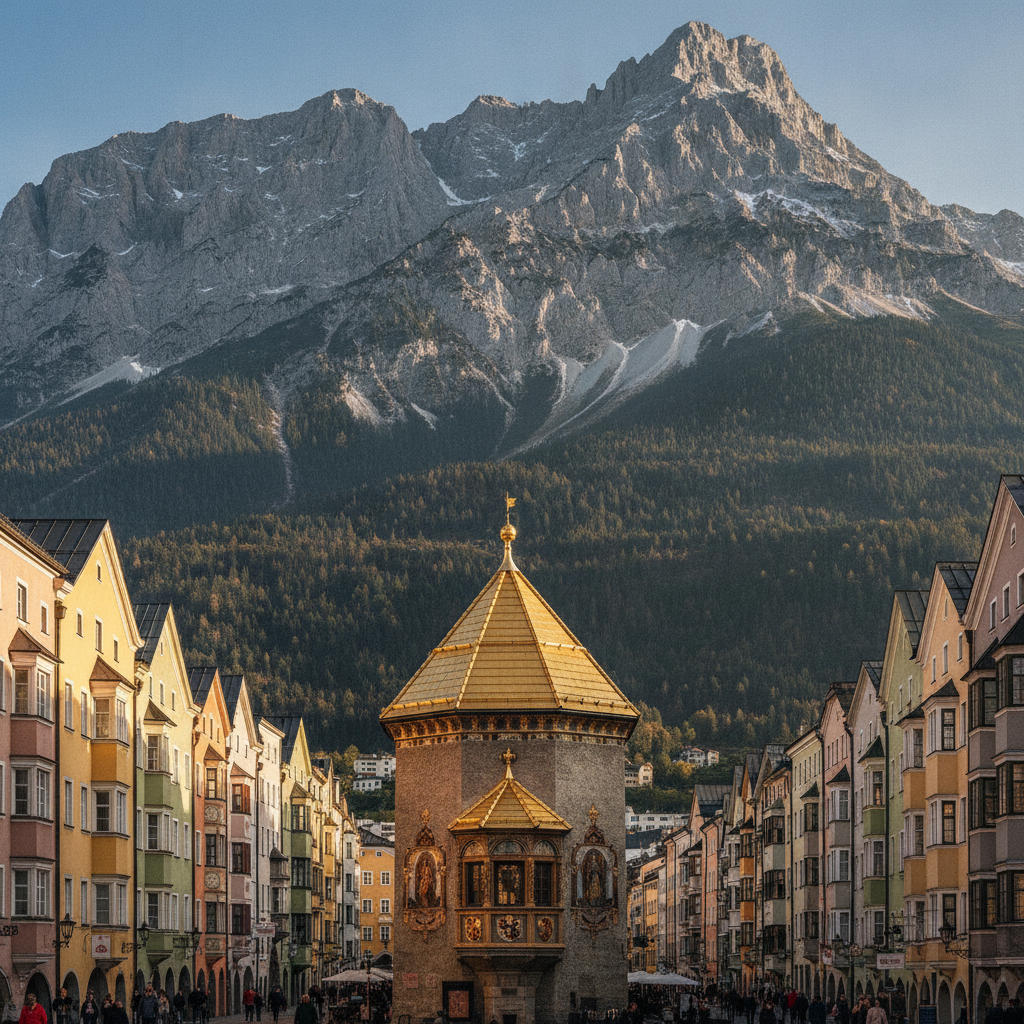
Innsbruck — the Golden Roof, the Nordkette Alps & the Tyrol's Imperial and Alpine Capital
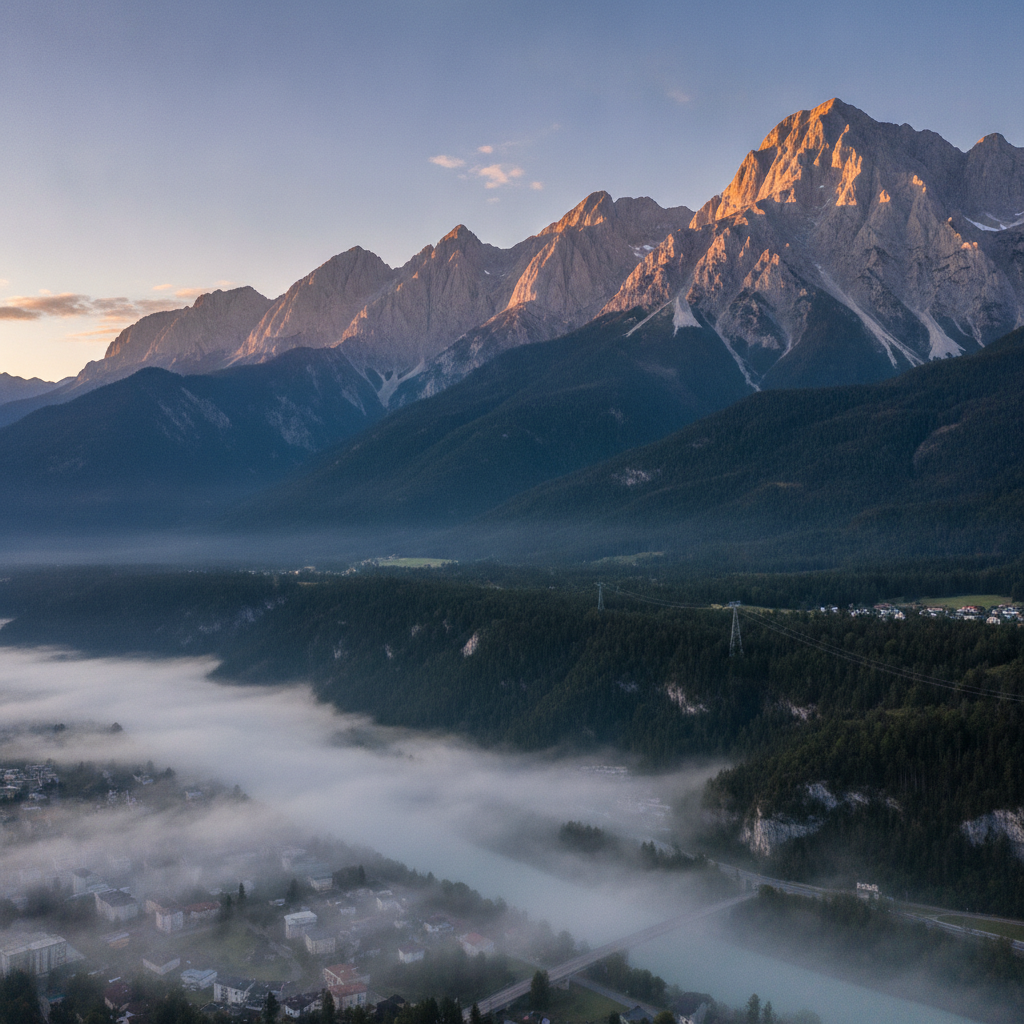
Innsbruck Day Trips — the Brenner Pass, South Tyrol, Bolzano & the Karwendel