Iguazu Food, Culture, and the Guarani Heritage of Misiones Province
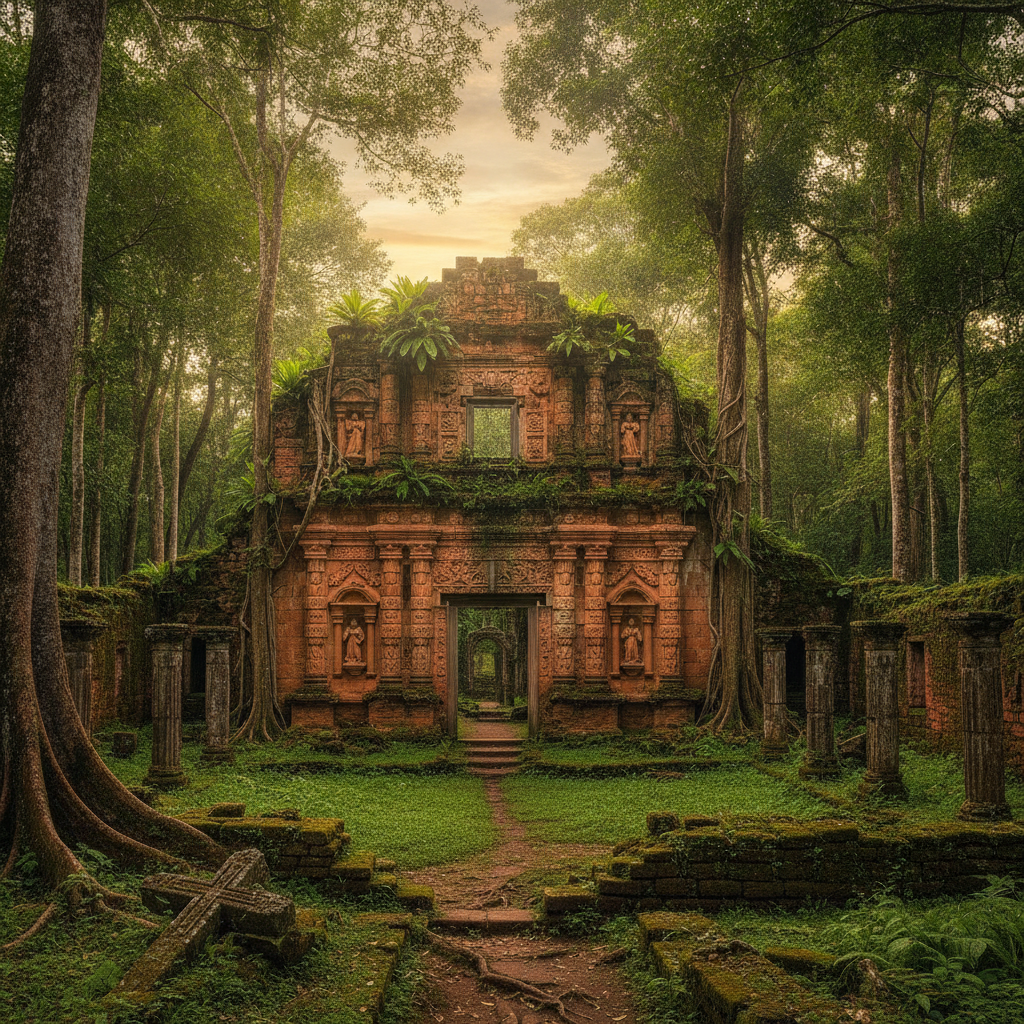
The Misiones province of Argentina and the surrounding triple frontier region have a cultural character shaped by the meeting of indigenous Guarani traditions, the legacy of Jesuit mission civilization, the waves of European immigration that transformed the population in the 19th and 20th centuries, and the contemporary cross-border commerce between Argentina, Brazil, and Paraguay. The food, music, crafts, and social life of the region reflect this layered heritage in ways that distinguish Misiones from other Argentine provinces.
- 1
Guarani Culture: Language, Cosmology, and Contemporary Communities
The Guarani people, whose language and cultural traditions shaped the entire upper Parana region for millennia before European contact, maintain a living presence in the Misiones province and surrounding areas of Paraguay and southern Brazil through approximately 20,000 Mbya Guarani community members organized in villages distributed across the Atlantic Forest. The Mbya Guarani have maintained their language, spiritual practices, and forest-based subsistence economy with greater continuity than many other indigenous groups in southern South America, and their communities in the Misiones forest are recognized as legitimate land rights holders under Argentine and Brazilian indigenous law. Guarani cosmology is centered on the concept of the Land Without Evil, a paradise sought through continuous spiritual practice and migration; this cosmological aspiration drove the historic Guarani migrations across South America and continues to shape the spiritual orientation of contemporary Mbya communities. The Guarani language, in its Paraguayan form, is spoken as a first language by the majority of the Paraguayan population and is an official language of Paraguay alongside Spanish; in Argentina and Brazil, Guarani is spoken primarily within indigenous communities but has contributed numerous words to Argentine and Brazilian Spanish and Portuguese. Cultural tourism programs that include visits to Mbya Guarani communities near Iguazu have been developed as a way of generating income for the communities while sharing aspects of their culture with visitors; these programs are most ethically engaged when they are community-controlled and when visitors approach them with respect for the complexity of the indigenous situation rather than with expectations of a folkloric performance.
- 2
Misiones Food: Chipas, Reviro, and the Yerba Mate Culture
The food culture of Misiones province reflects the mixture of Guarani, Jesuit mission, and European immigrant influences that characterizes the regional identity, with a cuisine centered on corn, cassava, and yerba mate as indigenous staples and supplemented by the pasta, sausages, and bread-baking traditions brought by German, Polish, Ukrainian, and Italian immigrants in the late 19th and early 20th centuries. Chipas, the small cheese-and-cassava rolls cooked in traditional clay ovens and sold at roadside stalls throughout Misiones and Paraguay, are the most ubiquitous food of the region and the most immediate edible connection to the pre-Columbian Guarani diet; they are typically eaten hot from the oven as a breakfast or snack food. Reviro, a cooked cassava-flour dough that functions as a bread substitute in the traditional Misionero diet, is less frequently encountered in restaurants serving visitors but remains a staple in rural homes and is sold at regional food festivals. The yerba mate culture of the region, in which dried and ground leaves of the native mate tree are infused in hot or cold water and drunk communally through a metal straw called a bombilla, is not merely a beverage habit but a social ritual that structures the rhythm of daily life and functions as a primary medium of social connection and hospitality. The production of yerba mate, which requires the plantation cultivation and processing of the mate plant, is one of the main agricultural industries of Misiones and creates the characteristic landscape of mate plantations alternating with remnant Atlantic Forest that defines the visual character of the province.
- 3
European Immigration: Germans, Poles, and Ukrainians in Misiones
The colonization of Misiones province by European immigrants in the late 19th and early 20th centuries, organized under Argentine government settlement schemes that offered land grants to agricultural colonists, brought substantial communities of Germans, Poles, Ukrainians, Swedes, and smaller groups of other nationalities to the red-earth forests of the province; their descendants maintain cultural identities and physical traces of their origins in the landscapes and architecture of Misiones towns. The German and Swiss communities in the areas around Eldorado and Puerto Rico in the north of the province established agricultural operations producing timber, citrus, and mate that have continued through multiple generations; the German-origin population maintains cultural institutions including schools, churches, and social clubs that preserve aspects of German language and tradition. The Ukrainian community, one of the largest concentrations of Ukrainian diaspora in South America, established colonies in the central Misiones area and constructed the characteristic Ukrainian Byzantine-style churches that punctuate the landscape with their distinctive domes and colored tile facades; the Apostoles municipality hosts a Ukrainian cultural festival annually that attracts visitors from throughout Argentina. The Polish community settled primarily in the area around Wanda and Andresito in the north of the province, and Polish cultural traditions including food, music, and the Catholic parish structure have been maintained by the community across several generations. The result of this European immigration superimposed on the indigenous Guarani landscape and the prior Jesuit mission civilization is a provincial culture of considerable complexity and internal diversity that does not conform to any single national or ethnic identity.
- 4
Mate: The Sacred Drink of the Guarani and the Social Glue of the Region
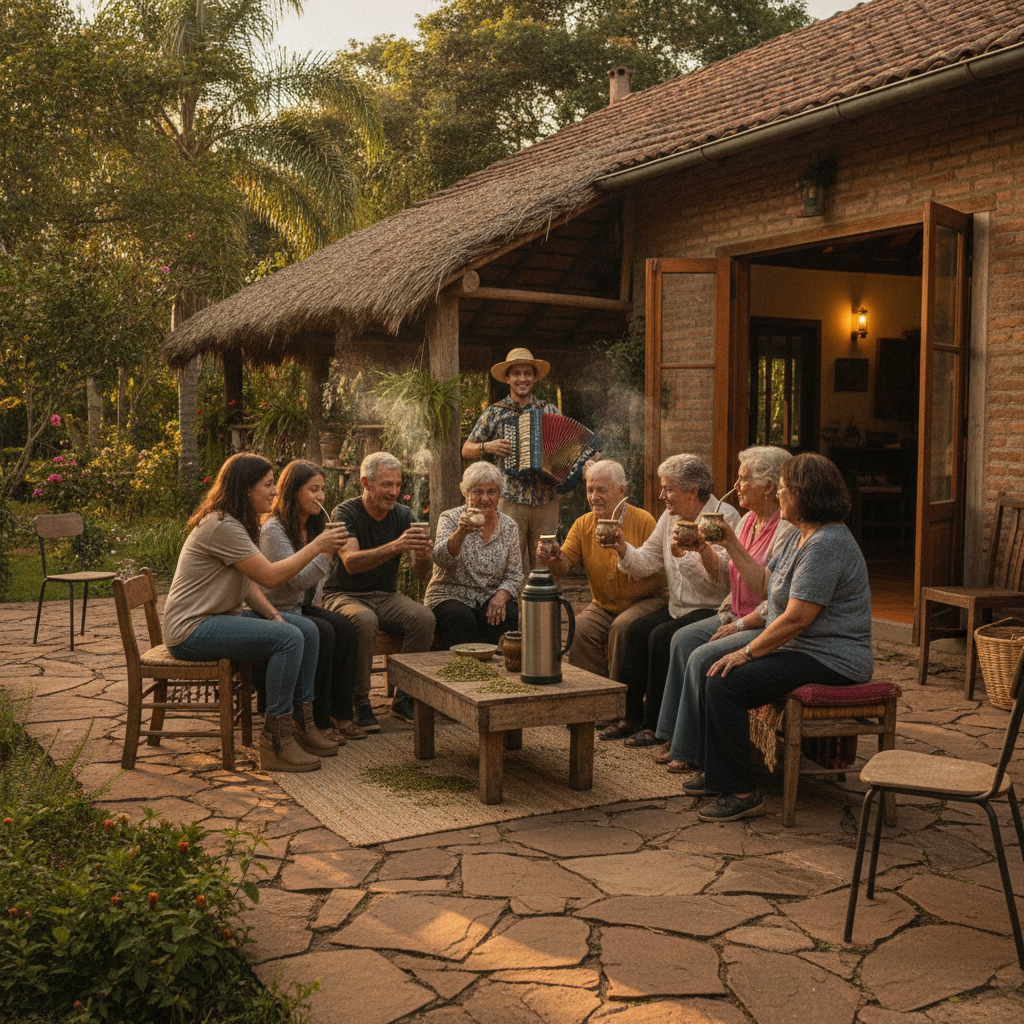
Yerba mate, the caffeinated infusion prepared from the dried leaves of Ilex paraguariensis, a tree native to the upper Parana region, is the most culturally significant beverage in Argentina, Uruguay, and Paraguay and is consumed at a rate per capita that exceeds coffee in all three countries; Misiones province, where the mate plant grows natively and is cultivated commercially, is the heartland of mate culture in Argentina. The preparation and sharing of mate follow a specific social protocol: the preparer, called the cebador, fills a small gourd with dried mate leaves, pours hot water at approximately 80 degrees Celsius over the leaves, and passes the gourd with its metal straw to the first person in the circle, who drinks the contents completely and returns the gourd to the cebador for refilling; the gourd circulates continuously until the mate is exhausted or the participants wish to stop. Refusing the offered mate gourd is a social signal that one does not wish to continue participating in the round; accepting it creates a social bond and an obligation to participate until one chooses to stop by returning the gourd with a verbal signal of gratitude. The social function of mate sharing is analogous to the coffee break in northern European cultures or the tea ceremony in East Asian contexts: it creates a structured pause in the working day that facilitates social interaction and relationship maintenance. Visitors to the Iguazu region who are offered mate by local residents or tour guides are participating in one of the most genuine and unsimulated cultural experiences available in South America, and accepting the invitation with openness is universally appreciated by the hosts.
- 5
Paraguayan Influence: Guarapo, Mbejú, and the Cross-Border Food Culture
The close geographical and cultural proximity of the Argentine Misiones region to Paraguay, separated only by the Parana River, creates a cross-border food culture in which Paraguayan dishes and ingredients move freely into the Argentine regional cuisine and Argentine commercial products move in the opposite direction. Guarapo, the fermented sugarcane juice beverage that is the traditional working-class drink of rural Paraguay, is produced and consumed in the border areas of Misiones alongside the more Argentine mate and wine culture. Mbejú, the traditional Guarani flat cake made from cassava starch and fresh cheese cooked on a clay griddle, is consumed throughout the triple frontier region and represents one of the oldest surviving pre-Columbian food preparations in continuous use. The asado culture of Argentina extends across the border into the Paraguayan food traditions around Ciudad del Este and Puerto Iguazu, but the Paraguayan version of the communal grilled meat meal incorporates more indigenous starches and fewer European cuts than the Argentine original. The street food ecosystem of Puerto Iguazu reflects the triple frontier location: Argentine empanadas, Paraguayan chipas, Brazilian salgados, and a variety of fried snacks reflecting all three food cultures are available from vendors along the main tourist streets. Understanding the food culture of the Iguazu region as a cross-border phenomenon rather than a purely Argentine or purely Brazilian one is essential to making sense of the variety and hybridity of what visitors encounter at the markets, street stalls, and restaurants of Puerto Iguazu and Foz do Iguazu.
- 6
Music and Festivals: Chamame, Polca Paraguaya, and the Misiones Cultural Calendar
The musical culture of Misiones province and the triple frontier region is dominated by the chamame accordion tradition of the Argentine northeast, a musical form of Guarani and European immigrant origin that is the official music of the Corrientes and Misiones provinces and has been recognized by UNESCO as intangible cultural heritage. Chamame is a couple dance music with a distinctive syncopated rhythm, performed on the diatonic accordion accompanied by guitar and sometimes bandoneón; the dance involves close embrace and intricate footwork that reflects both European waltz and polka influences and indigenous rhythmic traditions. The polca paraguaya, the national dance and music of Paraguay, shares many characteristics with chamame and the two forms are in continuous dialogue across the border, with Paraguayan musicians regularly performing in Misiones venues and Argentine chamame artists appearing in Paraguayan festivals. The Fiesta Nacional del Chamame in Corrientes, held in January, is the largest folk music festival in Argentina and draws performers and audiences from the entire region including significant participation from Paraguayan and Brazilian musicians. In Misiones itself, the annual Semana de las Flores y las Artesanias in Iguazu municipality celebrates the regional crafts tradition including the basket weaving, pottery, and woodcarving of Guarani communities alongside the folk music and food of the province. The festivals of the triple frontier region are generally accessible to visitors with Spanish or Portuguese and provide some of the most authentic engagement with regional culture available in an area where the primary tourist infrastructure is oriented toward the falls rather than the surrounding human geography.
Walk this route with audio
Stories play automatically as you reach each stop — no tapping needed.
More in Iguazu
Iguazu Falls: Devil's Throat, Upper and Lower Circuits, and the Three-Country Border
Iguazu Practical Guide: Getting There, Accommodation, Costs, and Planning Your Visit

Iguazu Photography Guide: Best Viewpoints, Light, and Technical Tips
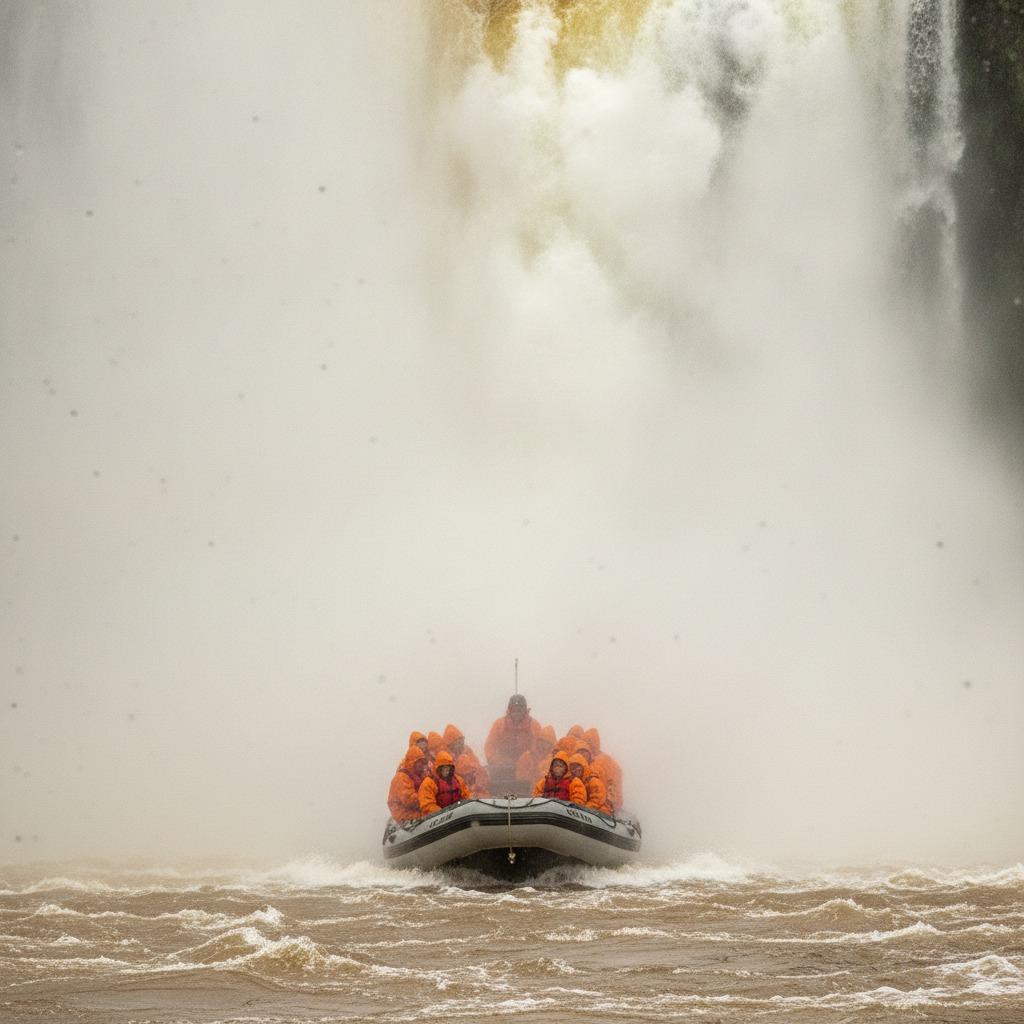
Iguazu Adventure Activities: Boat Rides, Jungle Trails, Rappelling, and Helicopter Flights

Itaipu Dam: Engineering Marvel, Binational Hydropower, and the Drowned Guaira Falls