Iguazu Falls: Devil's Throat, Upper and Lower Circuits, and the Three-Country Border
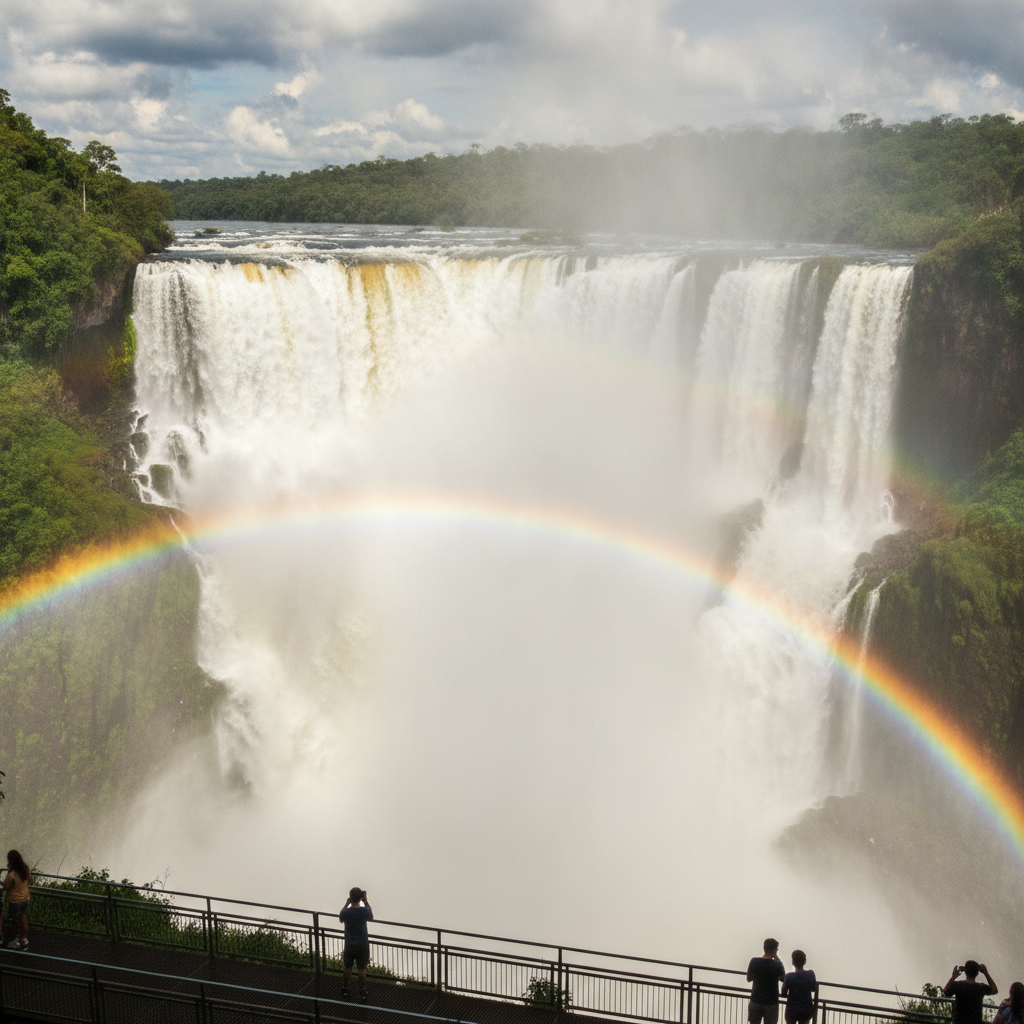
Iguazu Falls, straddling the border between Argentina and Brazil at the point where Paraguay, Argentina, and Brazil converge, is one of the most spectacular natural phenomena on Earth and a UNESCO World Heritage Site on both sides of the border. The falls consist of 275 individual cascades spread across nearly 3 kilometers of the Iguazu River, with a maximum height of 82 meters at the principal cataract known as the Devil's Throat. Eleanor Roosevelt, on first seeing the falls, reportedly said they made Niagara Falls look like a kitchen faucet, and the comparison reflects the overwhelming scale and power of the water system, which drains a watershed of 1.3 million square kilometers and carries an average flow of 1,746 cubic meters per second that can increase to 50,000 cubic meters per second during floods.
- 1
Garganata do Diabo: The Devil's Throat and the Heart of the Falls
The Garganta del Diablo or Devil's Throat, a U-shaped canyon 150 meters wide and 700 meters long into which 14 of the most powerful cataracts of the Iguazu system plunge in an almost vertical wall of white water, is the undisputed centerpiece of the falls and the single most dramatic natural spectacle in South America. Access to the Devil's Throat is from the Argentine side via a walkway that extends over the upper Iguazu River to a platform at the very lip of the canyon, from which visitors stand at eye level with the top of the falls and look down into a permanent cloud of mist that rises 30 meters above the canyon and is visible from kilometers away. The sound at the Devil's Throat platform is physically overwhelming: the combined roar of the cataracts eliminates all other sound and creates a sensory environment unlike anything in ordinary experience. The platform is best visited in the morning when the light from the east illuminates the mist and creates rainbows in the canyon; later in the day the canyon falls into shadow and the light becomes less dramatic. The spray at the platform is intense enough to soak clothing and camera equipment within minutes, making waterproof protection essential for any electronic devices.
- 2
Argentine Upper Circuit: The Panoramic View of the Complete Falls System
The Upper Circuit of the Argentine national park at Iguazu consists of a series of walkways along the upper edge of the falls that provide panoramic views across the full width of the Iguazu system from above, giving visitors a perspective on the scale and variety of the individual cataracts that is impossible to perceive from any single viewpoint. From the upper walkways, the falls appear as a continuous wall of white water extending along the full visible curve of the river, with the mist columns rising above each major cataract and merging into a single cloud formation visible from the Brazilian side across the river. The upper circuit walkways pass above the Salto Bossetti, Salto Bernabé Mendez, and several other named cataracts, each with its own character and volume depending on the season and the water level of the Iguazu River. The vegetation along the upper circuit trail is Atlantic Forest, the most endangered forest type in South America with less than 12 percent of its original extent remaining; Iguazu National Park on the Argentine side protects one of the largest surviving fragments, and the birdlife visible from the upper circuit trails includes toucans, parrots, swifts that nest behind the falls, and the great dusky swifts that roost on the cliff faces.
- 3
Argentine Lower Circuit: Close-Up Encounters with Individual Cataracts
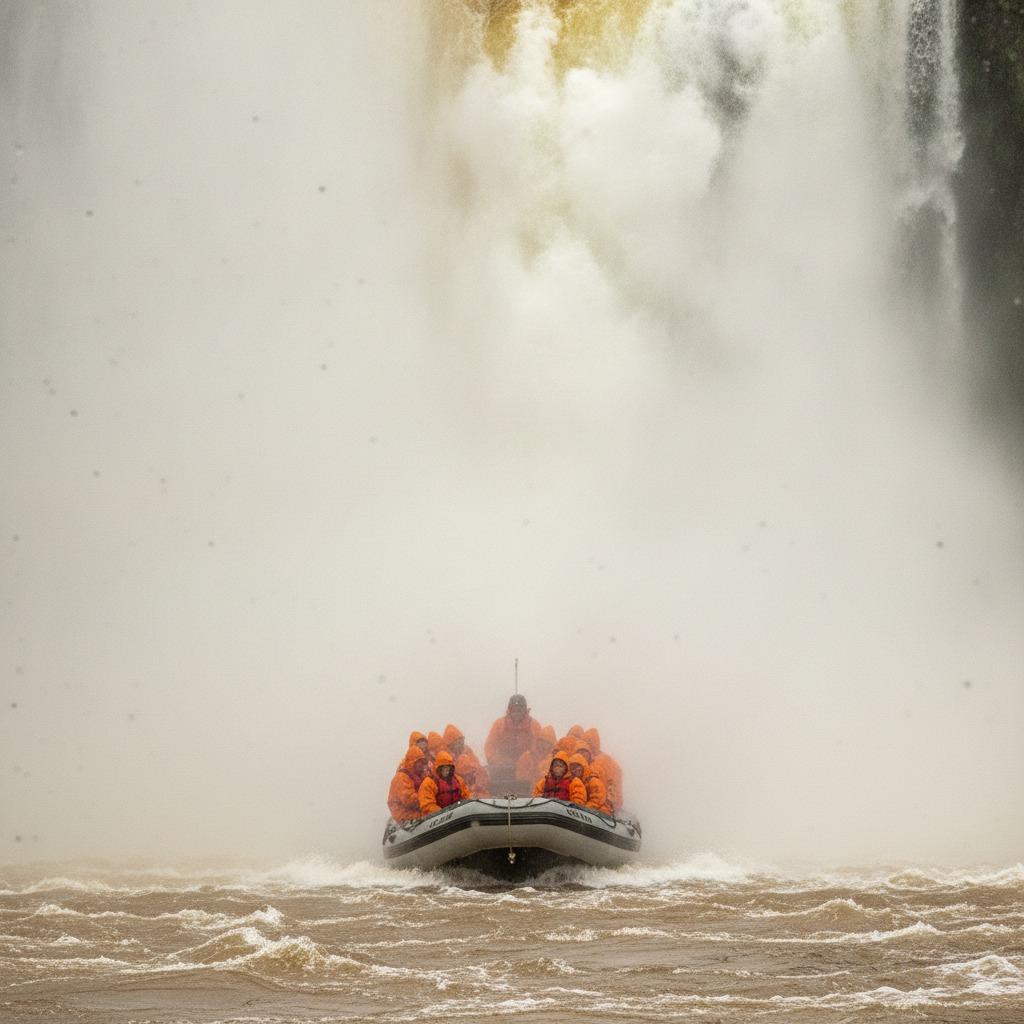
The Lower Circuit of the Argentine national park descends to the level of the Iguazu River and follows walkways and catwalks that bring visitors within meters of the base of individual cataracts, providing an entirely different experience from the panoramic upper circuit and one that emphasizes the physical power and spray of the water at close range. The San Martin Island, reached by a short boat crossing from the lower circuit, offers a 360-degree view of surrounding cataracts from an elevated position at the center of the falls and is one of the most rewarding viewpoints in the Argentine park for photography. The lower circuit is the wettest section of the Argentine park, with spray from the surrounding cataracts reaching the walkways throughout and creating a permanently humid microclimate that supports the most lush and dense vegetation in the park. The Salto Dos Hermanas and Salto Ramirez cataracts visible from the lower circuit are less massive than the Devil's Throat but more intimate in scale, and the combination of viewing angles from below and beside the falls creates a more immersive experience of the water than the panoramic perspectives of the upper circuit. The boat excursions that depart from the lower circuit area, which take small groups directly into the spray zone beneath the major cataracts, are optional but provide an experience of the physical scale and power of the falls that cannot be replicated by any walkway vantage point.
- 4
Brazilian Side: The Panoramic Perspective and Macuco Safari
The Brazilian side of Iguazu Falls, accessed through Foz do Iguazu and the Brazilian national park, offers a single panoramic walkway that runs along the south bank of the Iguazu River and provides views across the full width of the Argentine side falls, with the Devil's Throat at the far end of the panoramic walk. The Brazilian perspective is the one most frequently reproduced in photographs of Iguazu Falls because it shows the full extent of the falls from a distance that allows the entire system to be comprehended in a single visual field; the Argentine side, by contrast, places the visitor inside the falls rather than opposite them. The walkway on the Brazilian side descends to a platform at the base of the Devil's Throat elevator that brings visitors to water level and provides the most dramatic close-up view of the Devil's Throat from the Brazilian territory; during periods of high water the spray at this platform drenches visitors completely. The Macuco Safari boat excursions from the Brazilian side navigate up the Iguazu River through Atlantic Forest and then into the falls zone beneath the major cataracts, offering the same type of immersive wet experience as the Argentine boat excursions. The Brazilian park also contains the Marco das Tres Fronteiras, a point on the Iguazu River where the borders of Argentina, Brazil, and Paraguay meet in the water, and boat tours from Foz do Iguazu visit this geographical curiosity which has become a significant tourist attraction in its own right.
- 5
Iguazu Wildlife: Coatis, Swifts, Butterflies, and Atlantic Forest Fauna
The national parks on both sides of Iguazu Falls protect fragments of the Upper Parana Atlantic Forest, one of the most biodiverse forest ecosystems in the world, and the wildlife visible to visitors along the walkways and trails is extraordinarily rich by any standard of nature tourism. Coatis, the ring-tailed relatives of raccoons, are the most visible large mammals in the park and have become habituated to human presence to the degree that they approach visitors along the walkways in search of food; feeding them is prohibited and inadvisable as they can bite when frustrated. Great dusky swifts nest in the cliff faces behind the falls and are visible in large flocks swooping through the spray zones, navigating through the water curtains to reach their nests with a precision that reflects generations of adaptation to the falls environment. The butterfly diversity at Iguazu is exceptional, with several hundred species present in the park; the moist microclimate created by the falls spray supports permanent butterfly activity even in drier months, and the mineral-rich mud along the riverbanks attracts large aggregations of blue morpho butterflies. Toucans of multiple species are regularly seen from the upper circuit walkways and can be approached closely enough for photography; the keel-billed and toco toucans are the most frequently observed. Capuchin monkeys, tapirs, peccaries, and caimans are present in the parks but are less frequently seen by visitors who remain on the main circuits rather than exploring the interior forest trails.
- 6
Foz do Iguazu and Puerto Iguazu: Twin Gateway Cities
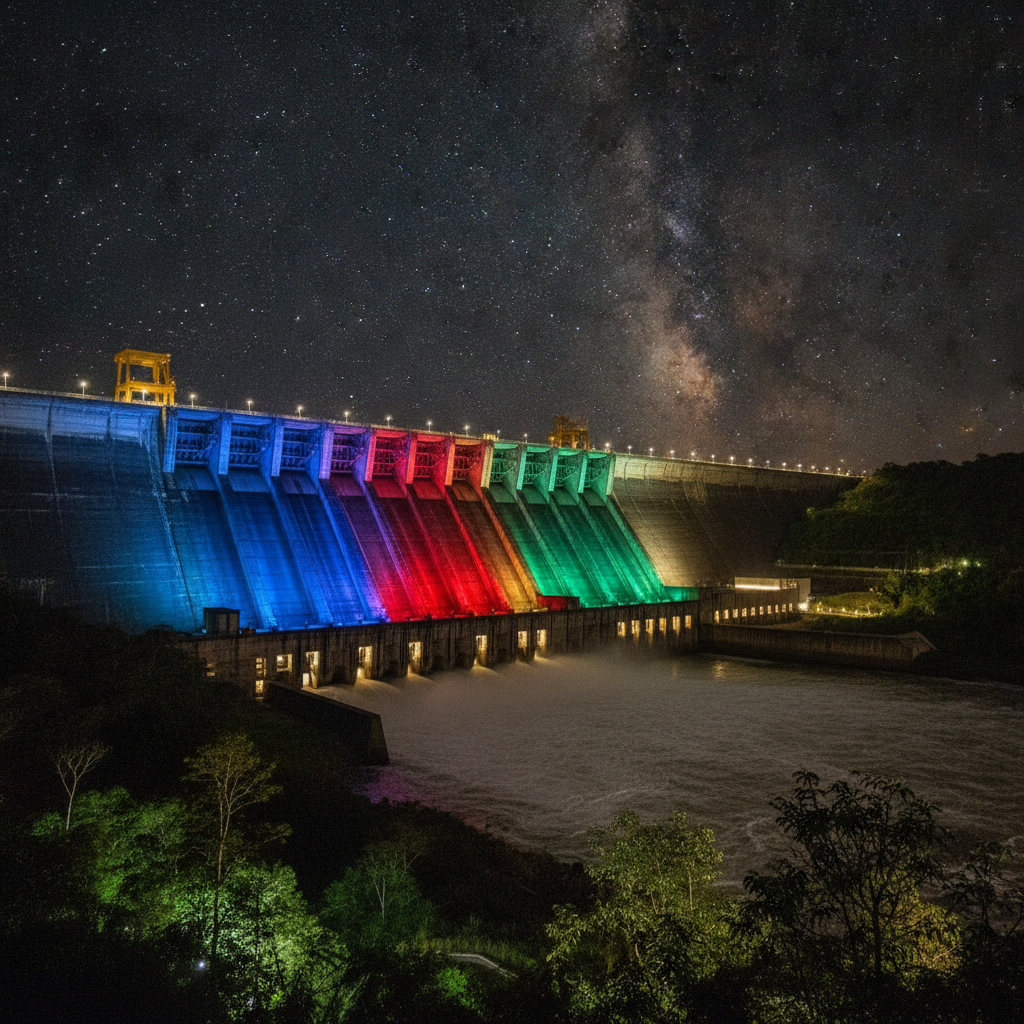
Foz do Iguazu on the Brazilian side and Puerto Iguazu on the Argentine side are the twin cities that serve as gateway bases for visiting the falls, and their different characters reflect the broader differences between Brazilian and Argentine tourist infrastructure and urban culture. Puerto Iguazu is a small and relaxed Argentine town of roughly 80,000 inhabitants whose economy is entirely organized around the falls tourism, with a strip of hotels and restaurants along the main avenue and a town center that has the character of a provincial Argentine town rather than an international tourist destination. Foz do Iguazu on the Brazilian side is a significantly larger city of approximately 260,000 inhabitants with a more complex economy that includes the Itaipu Dam hydroelectric facility, cross-border commerce with Paraguay at Ciudad del Este, and a more developed hotel and restaurant infrastructure than Puerto Iguazu. The Itaipu Dam, the largest hydroelectric facility in the world by energy output until the Three Gorges Dam surpassed it in 2012, is a major attraction in its own right and is visited from Foz do Iguazu; tours of the facility provide a striking contrast between the natural spectacle of the falls and the engineering spectacle of the dam that regulates the same river system. Choosing which side to base oneself involves tradeoffs: the Argentine park is generally considered to offer the more immersive experience of the falls while the Brazilian park provides the better panoramic photography perspective, and many visitors stay two nights on each side to experience both.
Walk this route with audio
Stories play automatically as you reach each stop — no tapping needed.
More in Iguazu
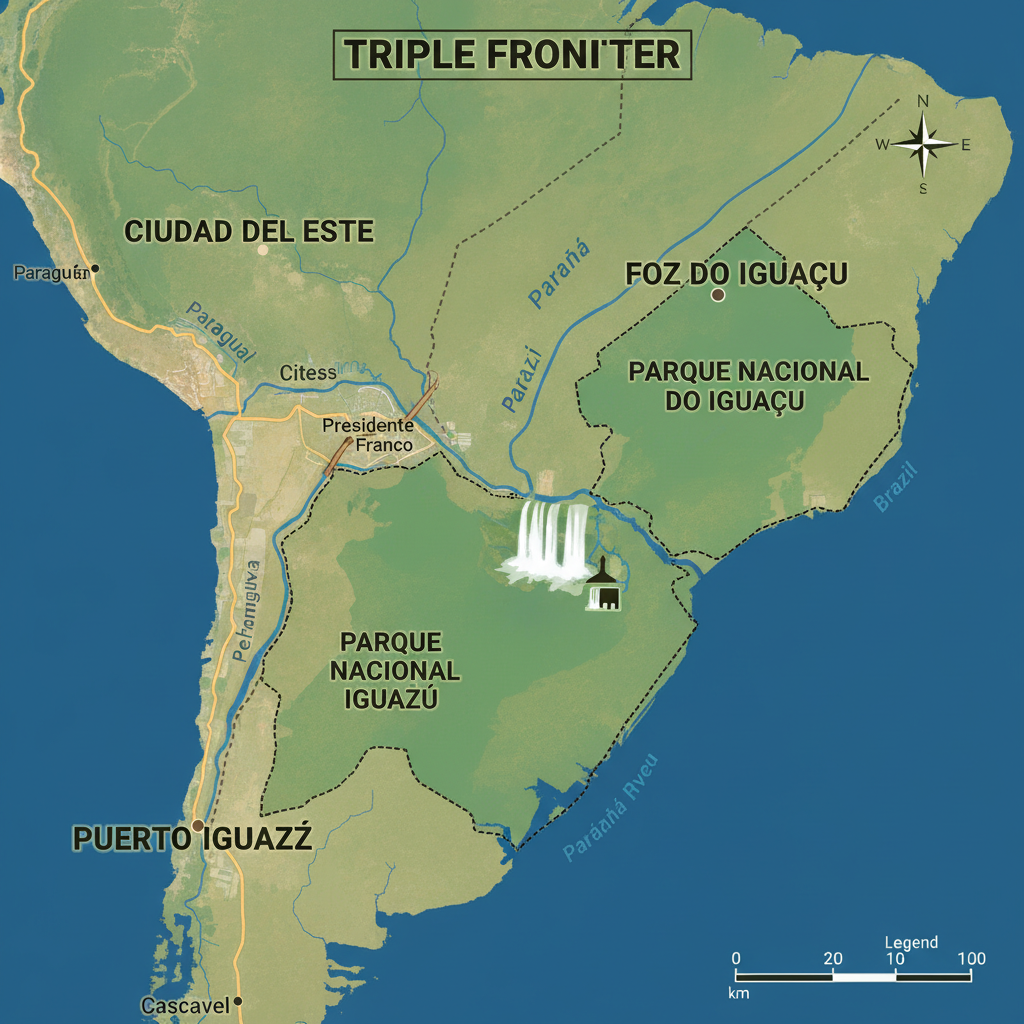
Iguazu Practical Guide: Getting There, Accommodation, Costs, and Planning Your Visit
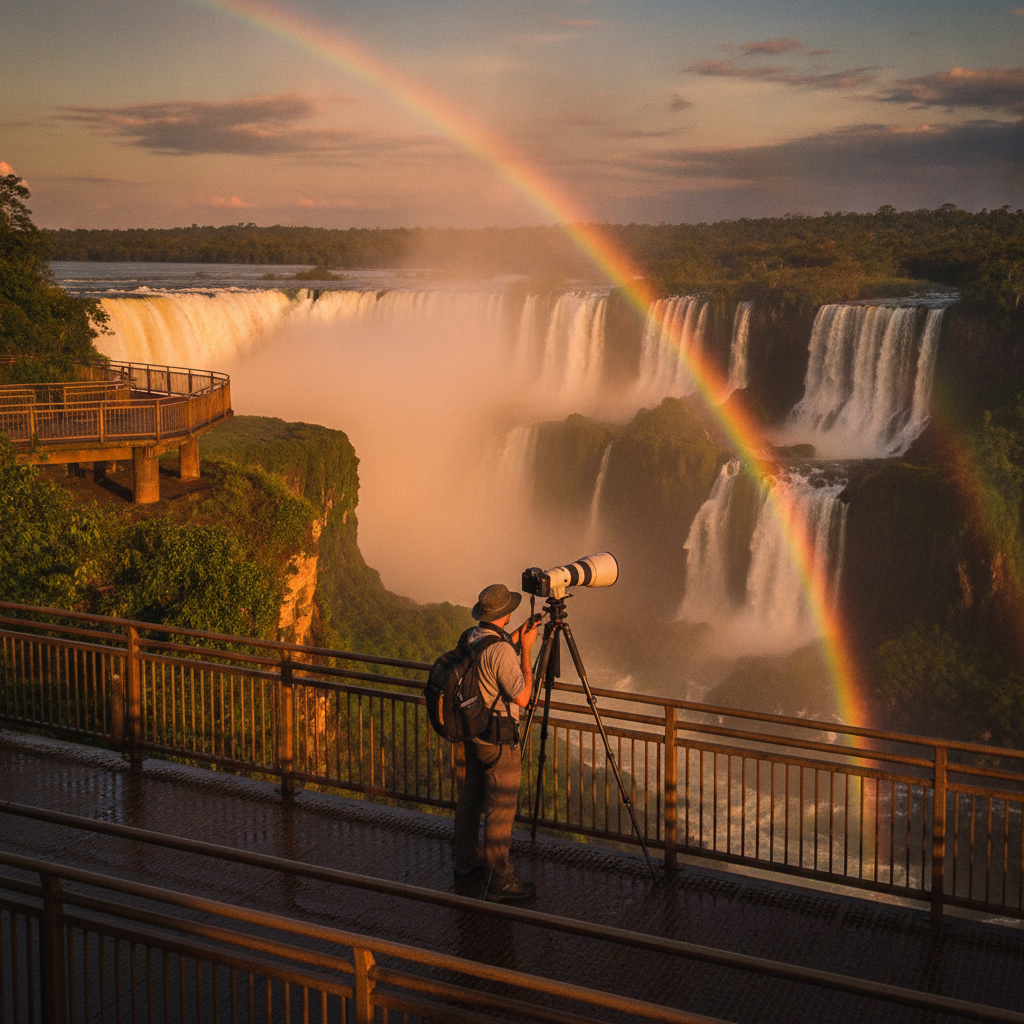
Iguazu Photography Guide: Best Viewpoints, Light, and Technical Tips
Iguazu Food, Culture, and the Guarani Heritage of Misiones Province
Iguazu Adventure Activities: Boat Rides, Jungle Trails, Rappelling, and Helicopter Flights
Itaipu Dam: Engineering Marvel, Binational Hydropower, and the Drowned Guaira Falls