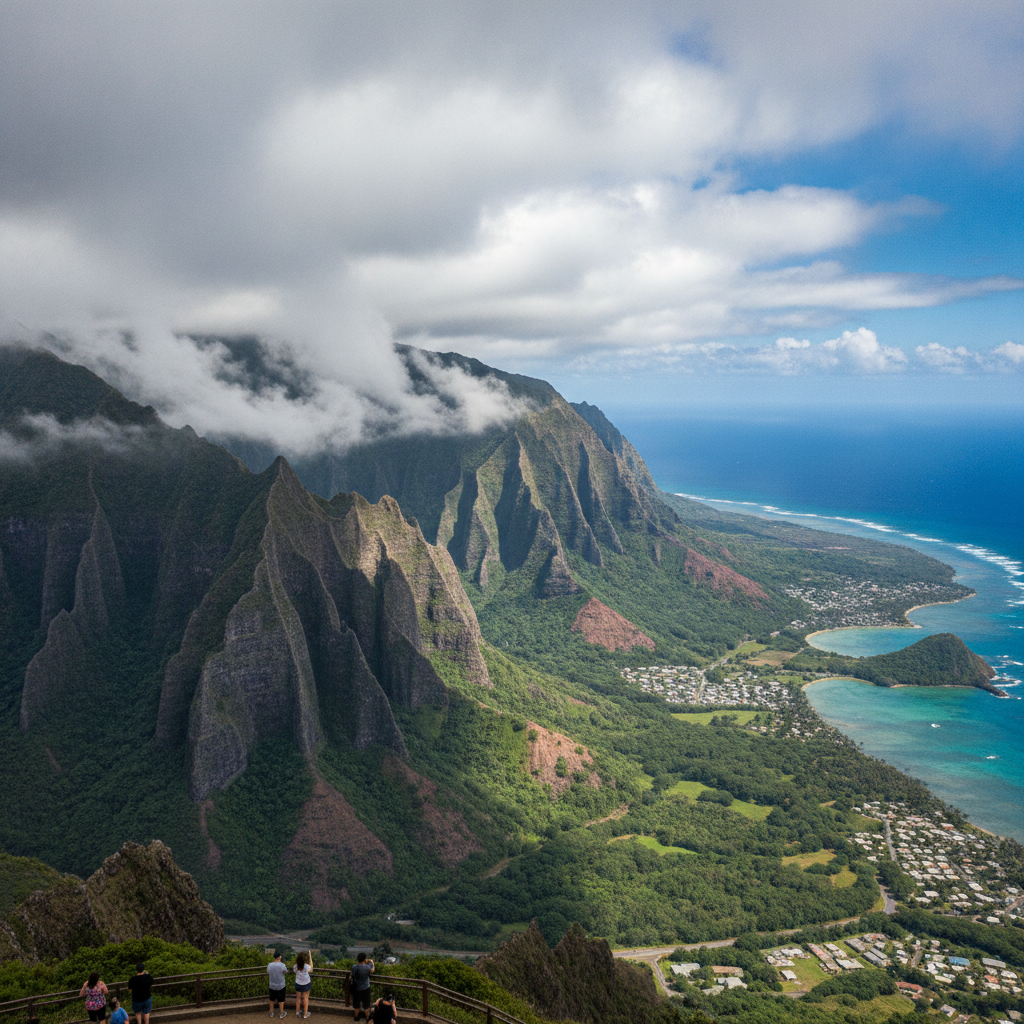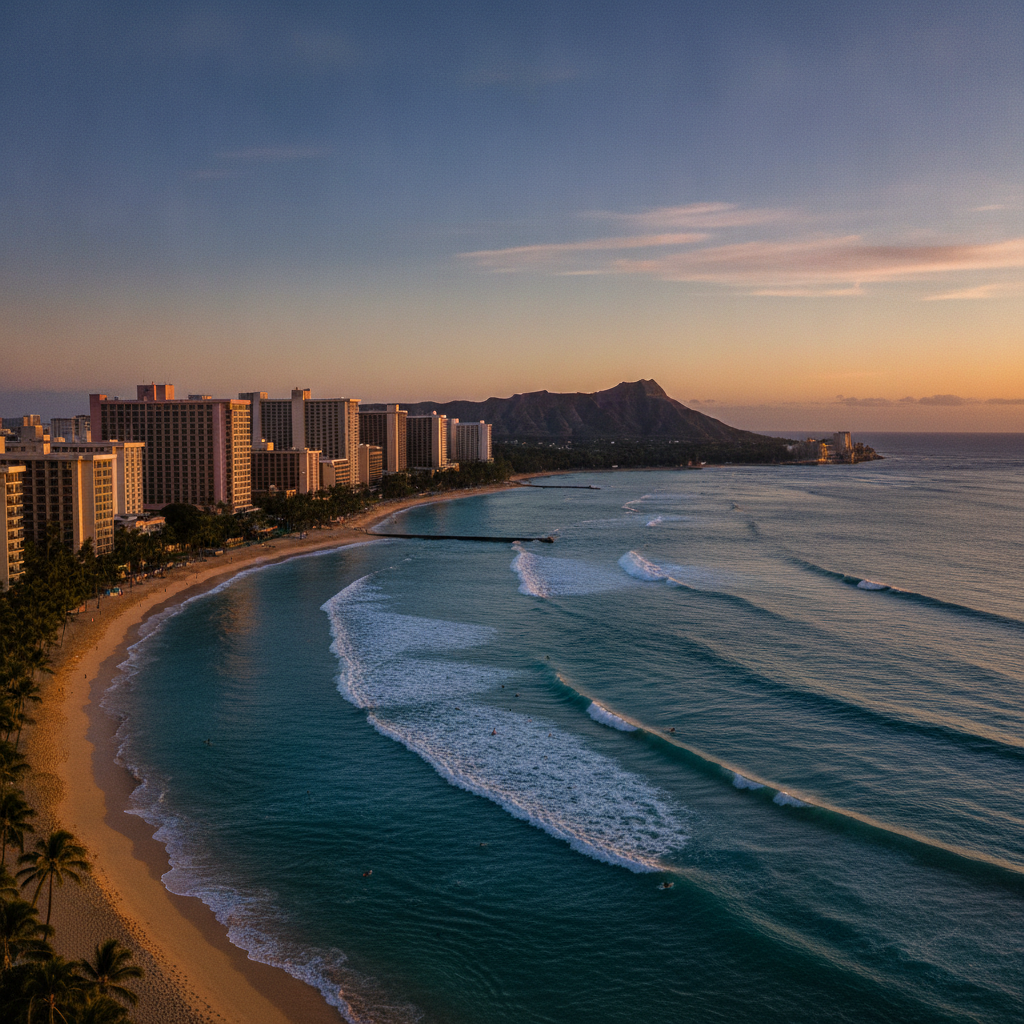
Honolulu: Waikiki Beach and Diamond Head Summit Hike, Pearl Harbor National Memorial (USS Arizona and USS Missouri), North Shore Seven Mile Miracle Surf (Pipeline, Sunset Beach), Polynesian Cultural Center, Hawaiian Plate Lunch and Practical Guide
Honolulu: the crossroads of the Pacific (Hawaiian history, Kamehameha unification, Queen Liliuokalani overthrow, statehood 1959), Waikiki Beach and Diamond Head trail, Pearl Harbor attack of 7 December 1941 (USS Arizona Memorial, USS Missouri surrender site), North Shore Pipeline and Triple Crown of Surfing, Polynesian Cultural Center (seven island villages, luau), and complete practical guide (plate lunch, shave ice, poke, TheBus network).
- 1
Honolulu - the Crossroads of the Pacific
Honolulu (population approximately 400,000 city, 1 million Oahu island): the capital city of Hawaii, the 50th US state, and the most isolated major city in the world — 3,800 km from Los Angeles, 6,200 km from Tokyo. Honolulu sits on the south shore of Oahu, the third largest Hawaiian island. Hawaii history: the Hawaiian islands were formed by a volcanic hotspot in the Pacific Plate; the Big Island of Hawaii has the youngest and most active volcanoes (Kilauea, the most continuously active volcano on earth). The Hawaiian people (the kanaka maoli, the indigenous Polynesian people of Hawaii): the ancestors of the modern Native Hawaiian population arrived from the Marquesas Islands approximately 400-600 CE and from Tahiti approximately 1000-1300 CE, making the settlement of Hawaii one of the most remarkable achievements of Polynesian navigation. Captain James Cook was the first European to reach Hawaii (January 1778); he named the islands the Sandwich Islands after the Earl of Sandwich. The Kingdom of Hawaii (1795-1893): the unified Hawaiian monarchy was established by Kamehameha I after the Battle of Nuuanu (1795); Queen Liliuokalani was the last Hawaiian monarch, deposed in the US-backed overthrow of 1893. Hawaii statehood: Hawaii became the 50th US state on 21 August 1959.
- 2
Waikiki Beach and Diamond Head
Waikiki Beach (the 3.2 km crescent of beach in the Honolulu tourist district, between the Ala Wai Canal and Diamond Head): the most famous beach in the United States and the most visited beach in the Pacific. Waikiki character: the dense concentration of hotels (the Royal Hawaiian Hotel, the pink palace of the Pacific, built 1927; the Moana Surfrider, the oldest hotel in Hawaii, built 1901; the Hilton Hawaiian Village; and hundreds of others), the Duke Kahanamoku statue (the memorialized father of modern surfing, who won Olympic gold medals in swimming and popularized Hawaiian surfing), and the consistent gentle surf that is the ideal learning wave for first-time surfers. Diamond Head (Le Ahi, the extinct volcanic tuff cone crater at the eastern end of Waikiki, 232 m): the most iconic natural landmark of Oahu. The Diamond Head Crater Trail (the 2.4 km trail inside the Diamond Head State Monument, climbing from the crater floor to the summit rim): the most popular hike in Hawaii, with the panoramic view of Waikiki and the south Oahu coast from the summit. The name Diamond Head: the basalt calcite crystals found by British sailors in the 1820s were mistaken for diamonds, giving the crater its English name. Le Ahi (the Hawaiian name, meaning the brow of the tuna fish): the crater's shape from the sea resembled the forehead of a tuna fish to the native Hawaiians.
- 3
Pearl Harbor - December 7 1941 and American History
Pearl Harbor National Memorial (on the west shore of Oahu, approximately 10 km from Honolulu): the site of the Japanese attack of 7 December 1941 that brought the United States into World War II. The attack: at 7:55 am on Sunday 7 December 1941, 353 Japanese aircraft in two waves attacked the US Pacific Fleet at Pearl Harbor. 2,403 Americans were killed, 1,178 wounded, 4 US battleships sunk (including the USS Arizona), and the Pacific Fleet was severely damaged. President Roosevelt addressed Congress the following day, calling 7 December a date which will live in infamy, and Congress declared war on Japan within hours. The USS Arizona Memorial (the white concrete memorial spanning the sunken hull of the USS Arizona, which still holds the remains of 1,102 of the 1,177 sailors and marines who died when the ship sank): the primary memorial at Pearl Harbor. The USS Missouri (the battleship on which the formal surrender of Japan was signed on 2 September 1945, ending World War II): now moored as a museum ship at Pearl Harbor, with the bronze plaque marking the spot where the surrender documents were signed. The Pearl Harbor Visitor Center (the primary visitor facility, with the museum, the films, and the boat transfer to the Arizona Memorial): free admission; the boat transfer tickets must be reserved in advance online.
- 4
North Shore Oahu - Big Wave Surfing and the Seven Mile Miracle
The North Shore of Oahu (the stretch of coast from Haleiwa to Turtle Bay, approximately 55 km north of Waikiki, 1 hour by road): the most famous stretch of surfing coastline in the world. The Seven Mile Miracle: the approximately 11 km coastline from Haleiwa to Sunset Beach contains the highest concentration of world-class surf breaks on earth, including Pipeline, Backdoor, Off the Wall, Rocky Point, Sunset Beach, and Waimea Bay. Pipeline (Banzai Pipeline, at Ehukai Beach Park): the most famous surf break in the world, where the ocean swell refracts over a shallow lava reef to produce a near-perfect barreling tube wave. The waves at Pipeline in the November-February winter swell season reach 6-9 m face height and are regarded as the most dangerous and most beautiful waves surfed. The Vans Triple Crown of Surfing (annual in November-December at the North Shore): the three-event surf contest series that is the world most prestigious surfing competition, consisting of the Hawaiian Pro at Haleiwa, the Vans World Cup at Sunset Beach, and the Billabong Pipeline Masters at Pipeline. Waimea Bay (the large bay with the right-hand point break that surfs in the biggest swells of the season): the Eddie Aikau Big Wave Invitational (the Quicksilver in Memory of Eddie Aikau contest) is held at Waimea when the surf reaches a minimum of 8 m; the event has been held only 10 times since its establishment in 1985.
- 5
Polynesian Cultural Center and Hawaiian Culture
The Polynesian Cultural Center (at Laie, on the northeast coast of Oahu, approximately 60 km from Waikiki, 1 hour by road): the primary Polynesian cultural attraction in the United States and one of the most visited paid attractions in Hawaii. The PCC is operated by the Church of Jesus Christ of Latter-day Saints and employs approximately 1,000 students from Pacific Island nations at the adjacent Brigham Young University Hawaii campus. The PCC villages: the seven living villages representing Hawaii, Tonga, Samoa, Fiji, Tahiti, Aotearoa (New Zealand Maori), and Marquesas, with performers from each island group demonstrating traditional crafts, music, and dance. The PCC luau (the traditional Hawaiian feast): the largest commercial luau in Hawaii, with the imu ceremony (the underground oven cooking of kalua pork). The hula: the traditional Hawaiian dance form, divided into kahiko (the ancient, more formal hula with chant and percussion) and auana (the modern hula, with Western-influenced melody and costuming). The ukulele (the four-string instrument of Portuguese origin introduced to Hawaii in 1879 by Portuguese immigrants from Madeira): a fundamental Hawaiian cultural expression. The lei (the garland of flowers, shells, feathers, or leaves presented as a gesture of welcome or love): the traditional Hawaiian greeting, with the plumeria lei being the most commonly associated with tourist Hawaii.
- 6
Honolulu Practical Guide - Food, Transport, and Hawaiian Islands Overview
Honolulu practical: the Daniel K. Inouye International Airport (HNL): direct flights from Los Angeles (5.5 hours), San Francisco (5 hours), Seattle (5.5 hours), Sydney (9 hours), Tokyo (8 hours), and Auckland (9 hours). The primary inter-island airline is Hawaiian Airlines (connecting Honolulu to Maui, Kauai, Hilo, and Kona). Honolulu food: the plate lunch (the Hawaiian lunch tradition of a protein, two scoops of white rice, and macaroni salad) is the foundational local food. Rainbow Drive-In (at Kapahulu, near Waikiki): the most famous plate lunch restaurant in Hawaii. The Hawaiian food traditions: poke (the raw fish salad of cubed ahi tuna, soy, sesame oil, and onion), loco moco (the hamburger patty over rice with fried egg and gravy), the shave ice (the Hawaiian snow cone, more finely shaved and with more complex syrups than the mainland snow cone), and the malasada (the Portuguese fried doughnut, without a hole, introduced by the Portuguese immigrant workers). Leonard Malasadas (at Kapahulu): the primary malasada bakery in Honolulu, with a permanent line on weekends. The TheBus (the Oahu public bus network): covers most of Oahu including Waikiki, Pearl Harbor, and the North Shore (the North Shore bus takes approximately 2 hours from Waikiki). Best season: April-May and September-October (shoulder season; lower prices, less crowded, warm and dry).
Walk this route with audio
Stories play automatically as you reach each stop — no tapping needed.
More in honolulu
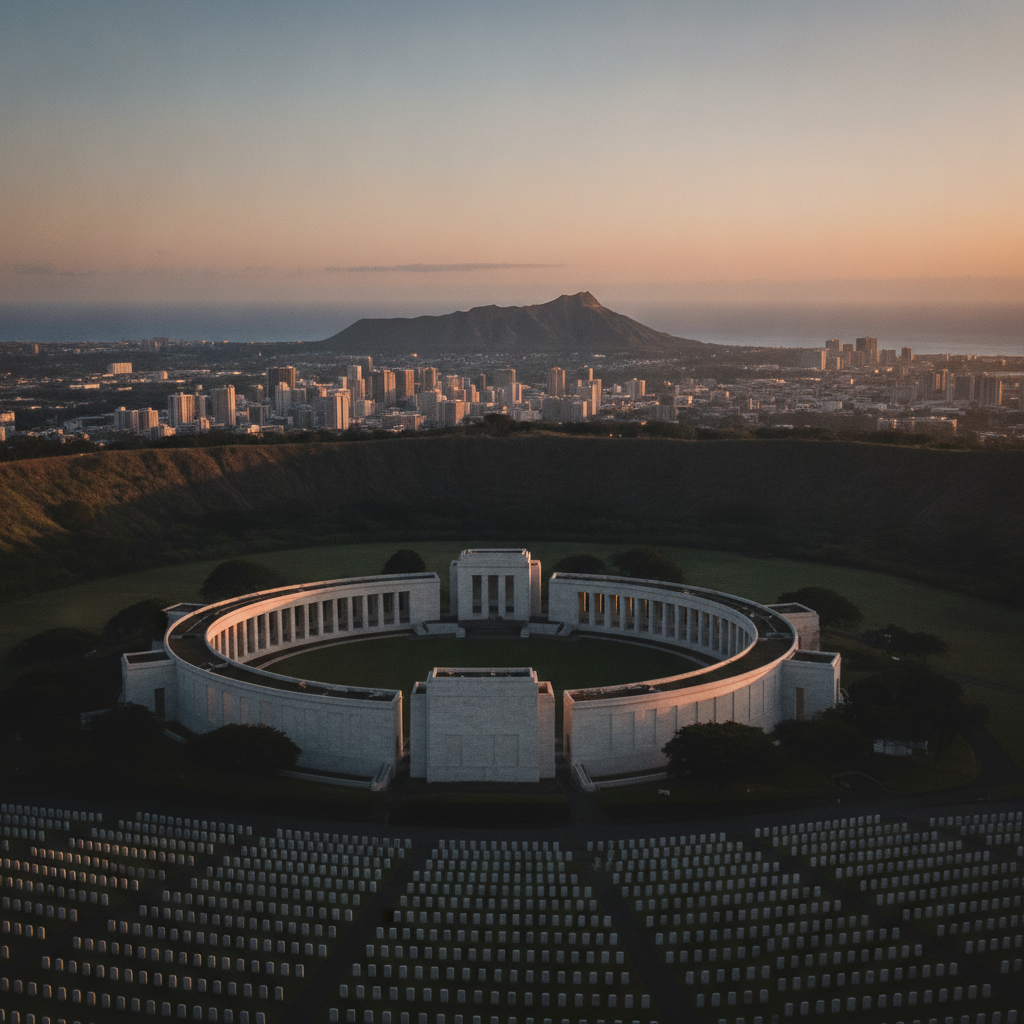
Honolulu: Kamehameha Dynasty History and Kapu Abolition, Ala Moana Center (world largest outdoor mall), Aloha Stadium Swap Meet and Spam Musubi, Luau and Sunset Cocktail Scene (House Without a Key), Punchbowl National Memorial Cemetery (From Here to Eternity), and Island Hopping Guide to Maui, Kauai, Molokai, and Big Island
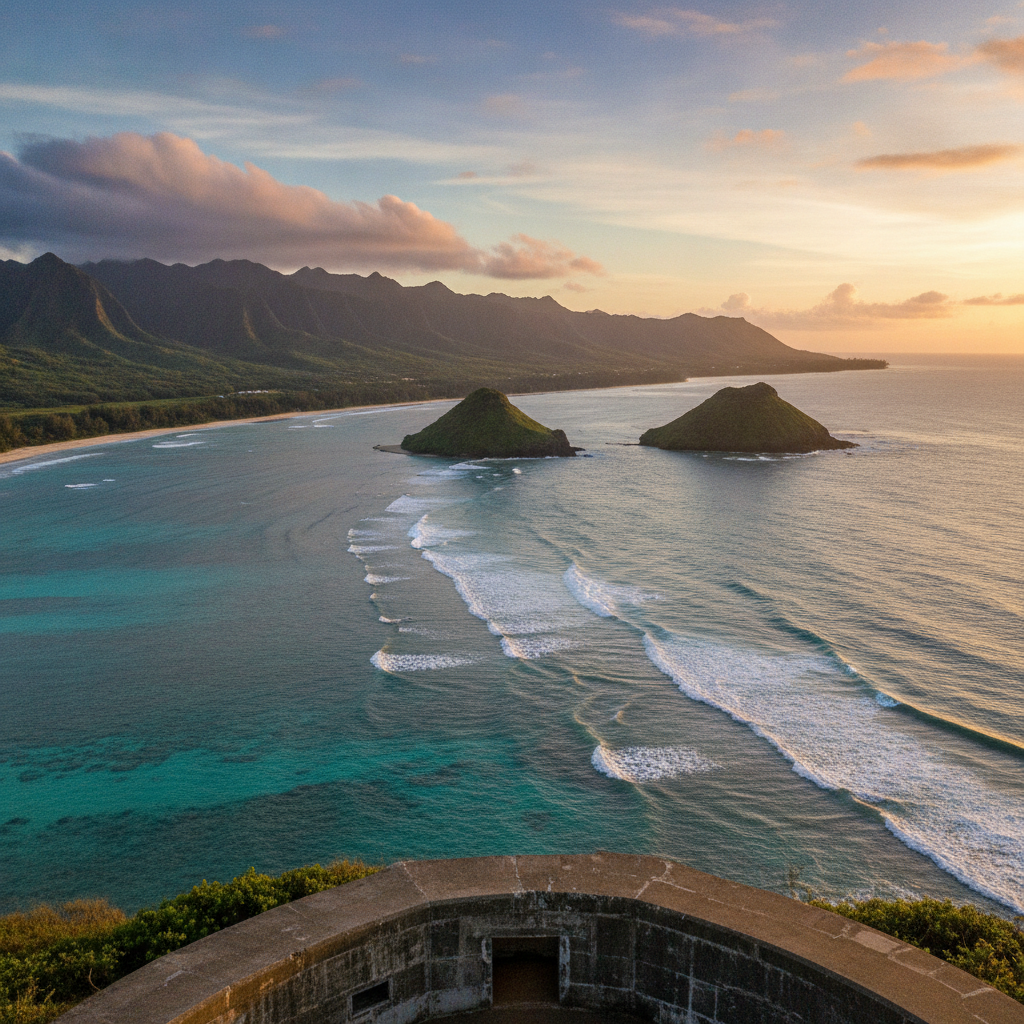
Honolulu: Koko Head Crater Trail and Sandy Beach, Kailua Beach and Lanikai Pillbox Hike, Haleiwa North Shore Town (surf culture, Matsumoto Shave Ice), Waimea Valley Sacred Cultural Site, Dole Plantation Pineapple History, and Hawaii Volcanoes National Park Big Island Day Trip
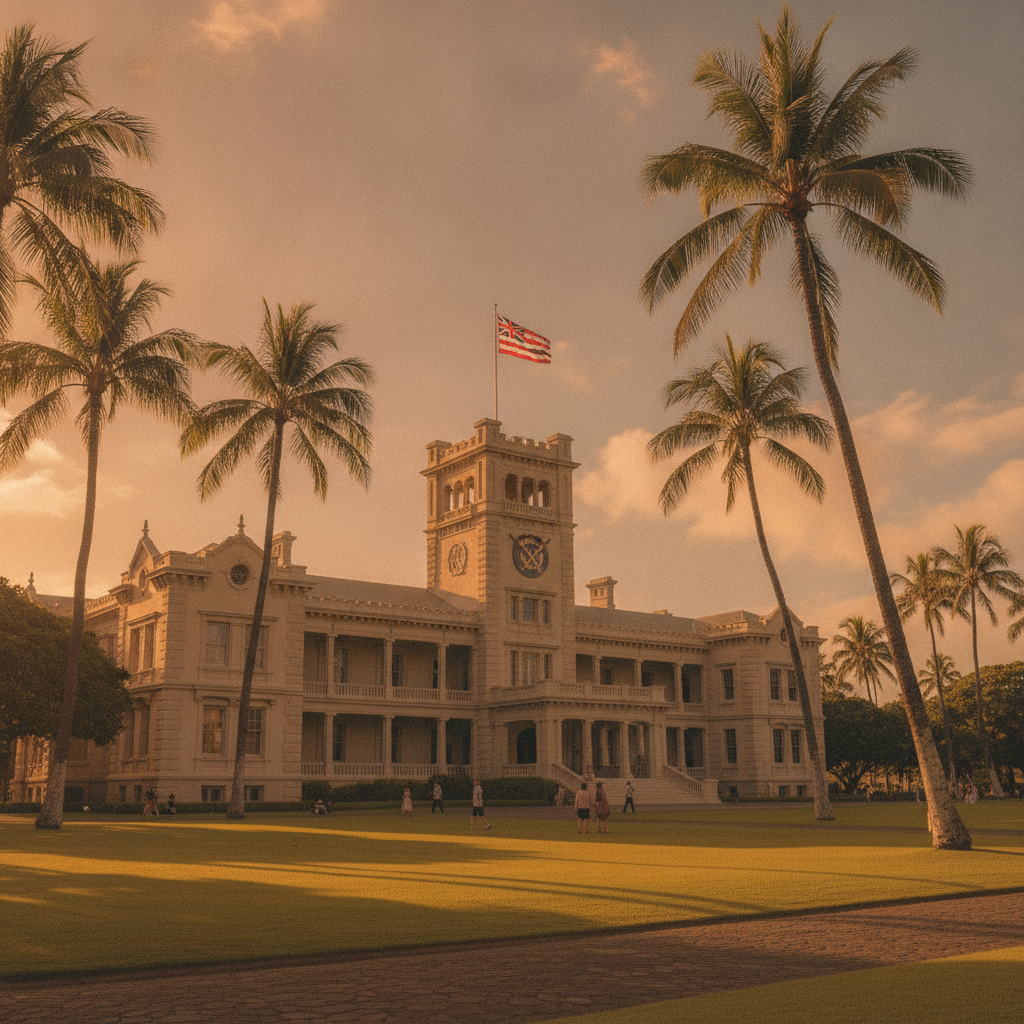
Honolulu: Iolani Palace (Hawaiian Kingdom overthrow 1893), Bishop Museum (Pacific natural and cultural history), Nuuanu Pali Lookout (Battle of Nuuanu 1795), Manoa Falls Rainforest Trail, Hanauma Bay Snorkeling Reserve, and Chinatown Asian Food Scene