Honolulu: Iolani Palace (Hawaiian Kingdom overthrow 1893), Bishop Museum (Pacific natural and cultural history), Nuuanu Pali Lookout (Battle of Nuuanu 1795), Manoa Falls Rainforest Trail, Hanauma Bay Snorkeling Reserve, and Chinatown Asian Food Scene
Honolulu deep history: Iolani Palace (King Kalakaua, Queen Liliuokalani, the 1893 overthrow, the 1993 US Apology Resolution), Bishop Museum (Hawaiian featherwork, Polynesian navigation, Pacific collections), Nuuanu Pali Battle 1795 (Kamehameha unification), Manoa Falls rainforest hike, Hanauma Bay coral reef snorkeling (timed-entry reservation required), and Chinatown food scene (Oahu Market, Vietnamese pho, saimin, Honolulu Museum of Art).
- 1
Iolani Palace and the Overthrow of the Hawaiian Kingdom
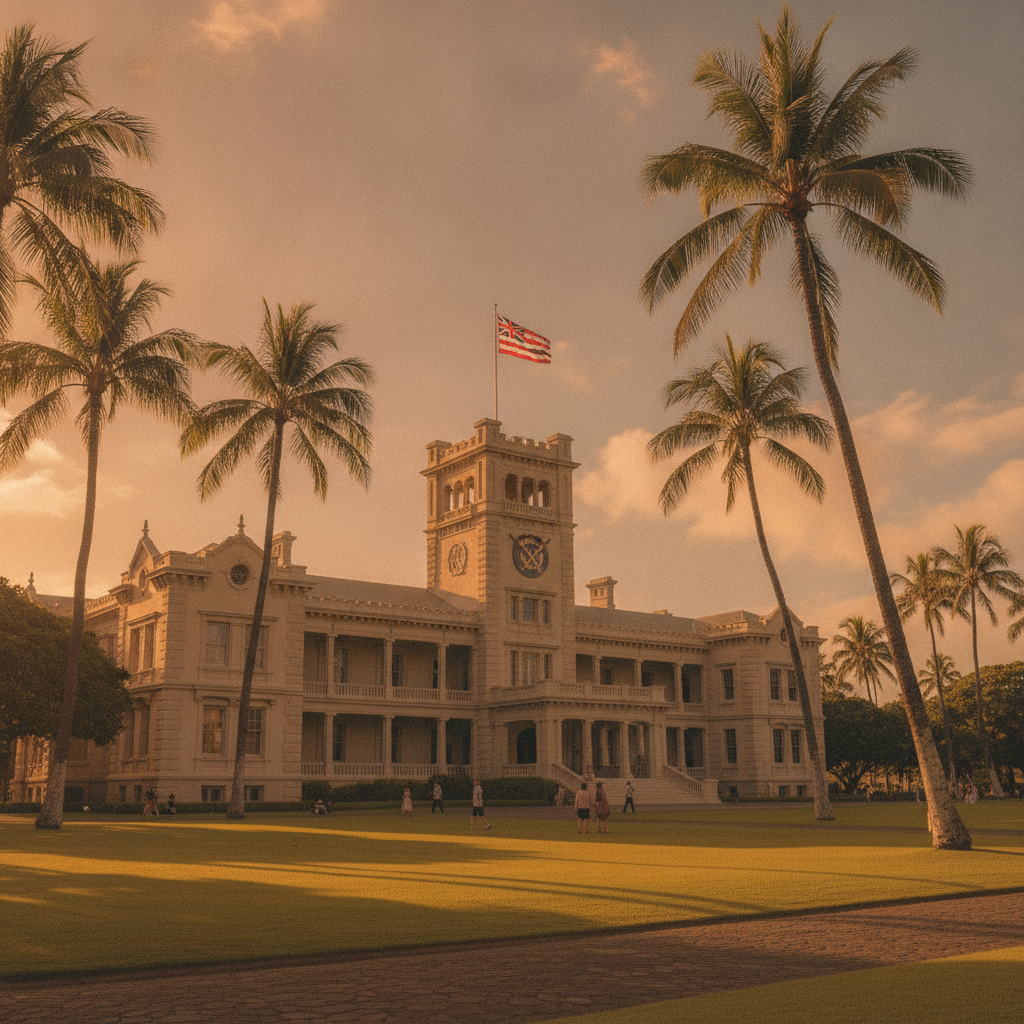
Iolani Palace (at King and Richard streets, downtown Honolulu): the only official state residence of royalty in the United States, built 1882-1882 by King Kalakaua, who reigned 1874-1891. Iolani Palace history: King Kalakaua, who called himself the Merrie Monarch, was a passionate advocate for Hawaiian culture and the hula (which had been suppressed by American missionaries). He composed the Hawaiian national anthem Hawaii Ponoi. The palace was the first building in Honolulu to have electricity (before the White House and Buckingham Palace) and had a telephone installed in 1882. Queen Liliuokalani, the last Hawaiian monarch (reigned 1891-1893): she was deposed on 17 January 1893 in a coup organized by American businessmen (primarily sugar planters, led by Lorrin Thurston) with the support of US Marines from the USS Boston. She was imprisoned in Iolani Palace from January to September 1895, and was forced to abdicate in exchange for the pardons of her supporters who had attempted a counter-revolution. She composed the famous song Aloha Oe (Farewell to Thee). President Grover Cleveland investigated the overthrow and concluded it was illegal, but was unable to restore the monarchy due to Congressional opposition. The US formally apologized for the overthrow in the Apology Resolution of 1993 (signed by President Clinton). The Republic of Hawaii was annexed by the United States in 1898.
- 2
Bishop Museum - Natural and Cultural History of the Pacific
The Bishop Museum (at 1525 Bernice Street, in the Kalihi neighborhood, approximately 3 km from Waikiki): the largest museum in Hawaii and the premier natural and cultural history museum in the Pacific. The Bishop Museum was founded in 1889 by Charles Reed Bishop as a memorial to his wife, Princess Bernice Pauahi Bishop, the last descendant of the Kamehameha dynasty. The museum collection: approximately 24 million specimens and cultural objects from Hawaii and the Pacific, making it one of the largest collections of Polynesian artifacts in the world. The Hawaiian Hall (the Victorian-era three-story hall, the core of the museum): the most important repository of Hawaiian cultural artifacts, including royal featherwork (the magnificent feather cloaks and helmets of the Hawaiian ali-i, the ruling class), carved wooden temple images (ki-i akua), surfboards (papa he-e nalu, including boards of the ali-i that were up to 5 m long), and objects of daily life. The Pacific Hall: Polynesian, Melanesian, and Micronesian cultural objects. The Science Adventure Center: natural history of Hawaii (the geology of the Hawaiian hot-spot chain, the ecology of the native forest). The Bishop Museum planetarium (the Jhamandas Watumull Planetarium): Hawaiian star navigation and the Polynesian celestial navigation system that enabled the settlement of the Pacific.
- 3
Nuuanu Pali Lookout and the Battle that United Hawaii
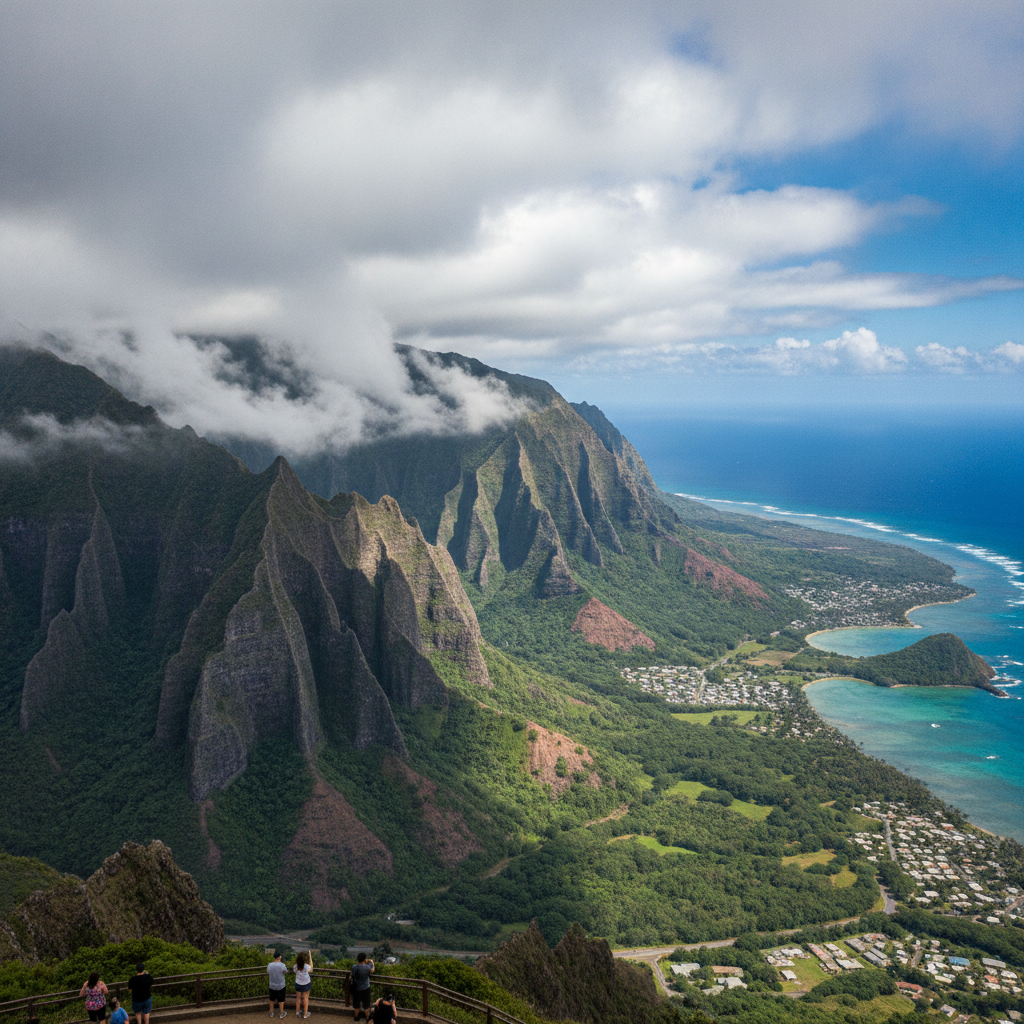
The Nuuanu Pali Lookout (at the crest of the Koolau Range at an elevation of 365 m, approximately 12 km northeast of Honolulu, 20 minutes by car): the most dramatic viewpoint on Oahu, looking from the forested green walls of the Koolau pali (cliff) down to the Windward Coast of Oahu and the blue of Kaneohe Bay. The Battle of Nuuanu (1795): the decisive battle in which Kamehameha I, with the support of two Western advisors and their cannons, defeated the Oahu forces of Chief Kalanikupule. After the battle, the surviving Oahu warriors were driven to the edge of the pali and fell (or were thrown) to their deaths on the rocks approximately 300 m below. The battle gave Kamehameha control of Oahu and, combined with his subsequent victories, effectively unified all the Hawaiian islands under his rule, establishing the Kingdom of Hawaii. The Old Pali Highway (the historic roadway through the Nuuanu Valley, now a hiking and driving route below the lookout): built in 1898 and superseded by the Pali Tunnels. The Nuuanu Valley (the green valley below the pali, visible from the lookout): the location of the Royal Mausoleum (the burial site of the Kamehameha dynasty and the Kalakaua dynasty). The tradewinds (the persistent northeast winds that funnel through the pali): the winds at the lookout regularly reach 50-80 km/h, strong enough to blow hats and umbrellas from the lookout railing.
- 4
Manoa Falls Trail and Oahu Rainforest Hiking
The Manoa Falls Trail (in the Manoa Valley, approximately 6 km north of Waikiki, the trailhead at the end of Manoa Road): a 2.4 km round-trip hike through the dense lowland rainforest of the Manoa Valley to the 46 m Manoa Falls. Manoa Valley character: the Manoa Valley is one of the wettest valleys on Oahu, receiving over 4,000 mm of rain per year (compared to Waikiki on the south shore, which receives approximately 600 mm per year), due to the tradewinds depositing moisture on the windward slopes of the Koolau Range. The rainforest vegetation: the trail passes through a dense canopy of introduced species (Australian tree ferns, bamboo, ginger, guava, mountain apple) mixed with native Hawaiian trees (the ohia lehua, the most common native Hawaiian tree, whose red flowers were sacred to Pele the volcano goddess). The Lyon Arboretum (at the base of the Manoa Valley, adjacent to the trailhead): the University of Hawaii research arboretum with collections of native and tropical plants. The Manoa Heritage Center (a short walk from the Lyon Arboretum): the site of Kuali-i spring, a sacred Hawaiian water source. Mosquitoes: the Manoa Valley mosquitoes (introduced to Hawaii in 1826) are responsible for the avian malaria epidemic that has devastated native Hawaiian birds at low elevations (below 1,500 m); wear insect repellent on this trail.
- 5
Hanauma Bay Nature Preserve - Snorkeling and Coral Reef
Hanauma Bay Nature Preserve (on the southeast coast of Oahu, approximately 15 km east of Waikiki, 25 minutes by car or bus): a state nature preserve centered on the most visited snorkeling site in Hawaii. Hanauma Bay geology: the bay is a tuff cone crater (the same type of volcanic formation as Diamond Head) formed approximately 32,000 years ago, with the seaward wall eroded by wave action to create the enclosed bay. The coral reef: the bay contains a fringing coral reef within the protected bay, sheltering a dense population of reef fish (the humuhumunukunukuapua-a, the official state fish of Hawaii; parrotfish; surgeonfish; yellow tang; green sea turtles). The preservation history: Hanauma Bay was designated a Marine Life Conservation District in 1967 (the first in Hawaii) after overfishing and visitor pressure had severely damaged the reef. By the 1980s visitor numbers had reached 13,000 per day, and the reef had been heavily damaged; the bay was closed for two years in 1990 for recovery, and a reservation system (required since 2022) limits visitors to approximately 1,400 per day. The educational video (mandatory for all visitors before entering the bay): the 9-minute orientation on reef protection, marine life, and rules. Practical: arrive early (the parking lot fills before 8 am); book the timed-entry reservation online; the bay is closed Tuesdays for reef recovery.
- 6
Honolulu Asian Food Scene Chinatown and Local Culture
Honolulu Chinatown (the historic district west of downtown Honolulu, bounded by Nuuanu Avenue, Beretania Street, and the waterfront): one of the oldest Chinatowns in the United States, with a continuous Chinese immigrant community since the 1850s. The Chinatown markets: the Oahu Market (the covered wet market on Kekaulike Street, open since 1904) and the surrounding shops sell fresh fish (opah, mahi-mahi, ahi tuna, opakapaka), tropical produce (lychee, rambutan, longans, dragon fruit, soursop), and Chinese medicinal herbs. The Chinatown food scene: the Vietnamese pho restaurants on Hotel Street, the Filipino bakeries (the pan de sal, the ensaymada), the dim sum restaurants, and the izakaya bars have made Chinatown Honolulu one of the most diverse food neighborhoods in the US. The Honolulu Museum of Art (at 900 South Beretania Street, adjacent to Chinatown): the primary fine arts museum in Hawaii, with the most important collection of Asian art in the Pacific, including Japanese woodblock prints (ukiyo-e), Chinese bronzes, Korean celadon, and Southeast Asian sculpture. The Honolulu Night Market (monthly on the last Friday of each month in Chinatown): the food and arts market in the Chinatown alleys. The local food staples: saimin (the Hawaiian ramen, a thin wheat noodle in a light broth with green onion, kamaboko fish cake, and char siu pork, served at drive-ins and plate lunch restaurants throughout Honolulu).
Walk this route with audio
Stories play automatically as you reach each stop — no tapping needed.
More in honolulu
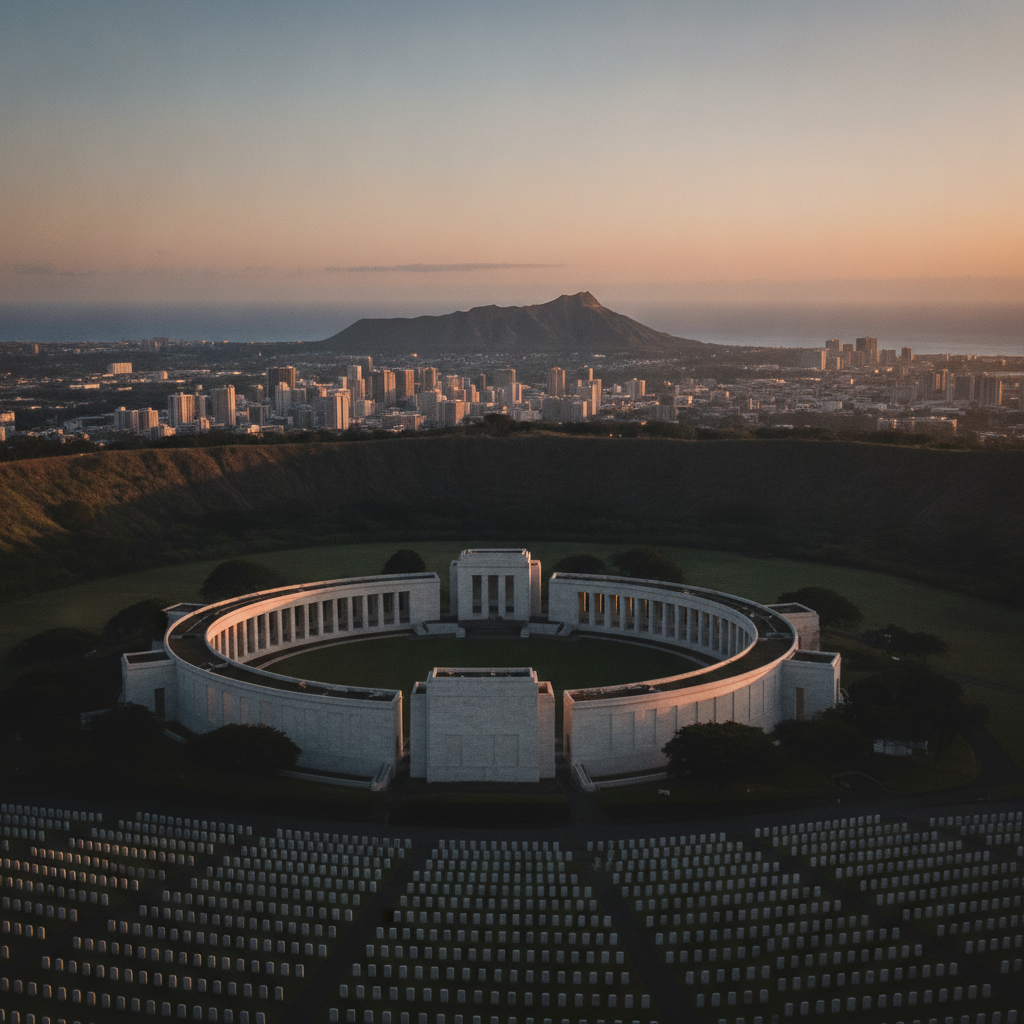
Honolulu: Kamehameha Dynasty History and Kapu Abolition, Ala Moana Center (world largest outdoor mall), Aloha Stadium Swap Meet and Spam Musubi, Luau and Sunset Cocktail Scene (House Without a Key), Punchbowl National Memorial Cemetery (From Here to Eternity), and Island Hopping Guide to Maui, Kauai, Molokai, and Big Island
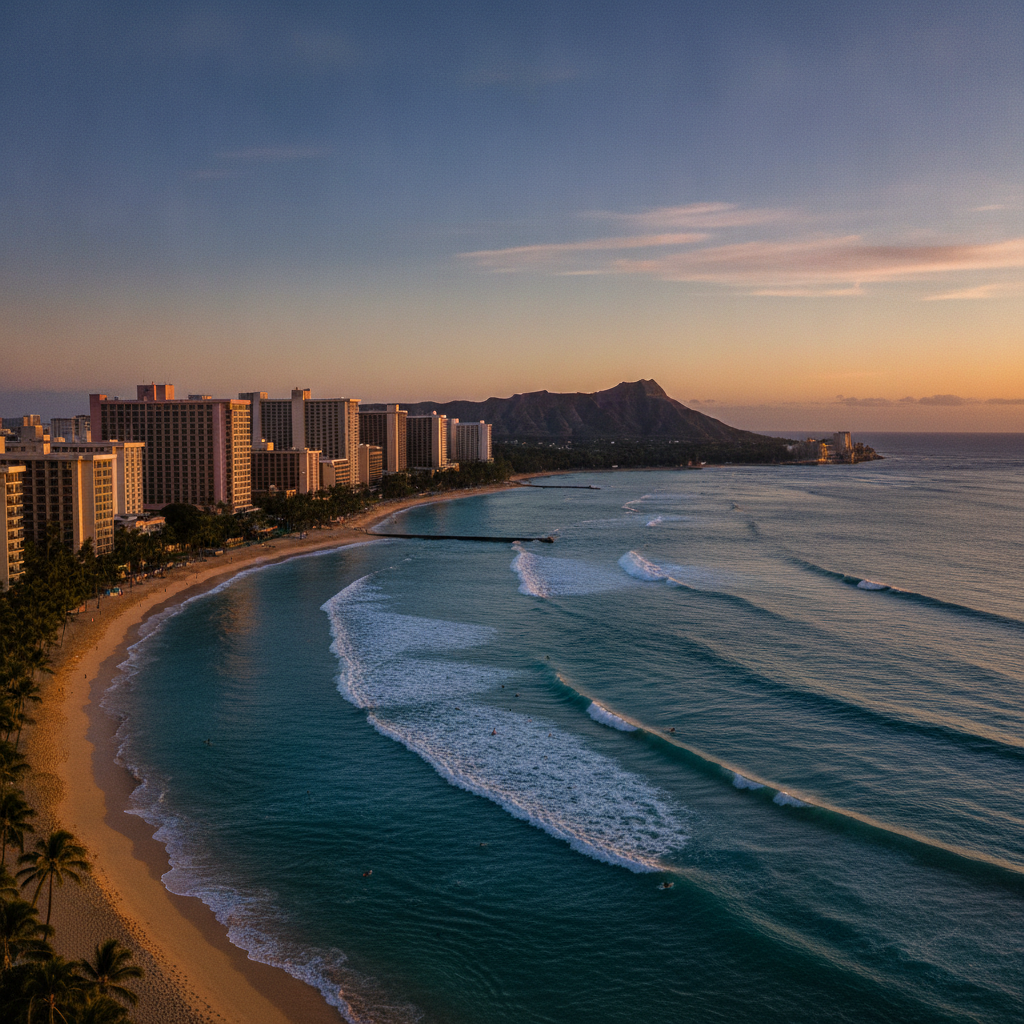
Honolulu: Waikiki Beach and Diamond Head Summit Hike, Pearl Harbor National Memorial (USS Arizona and USS Missouri), North Shore Seven Mile Miracle Surf (Pipeline, Sunset Beach), Polynesian Cultural Center, Hawaiian Plate Lunch and Practical Guide
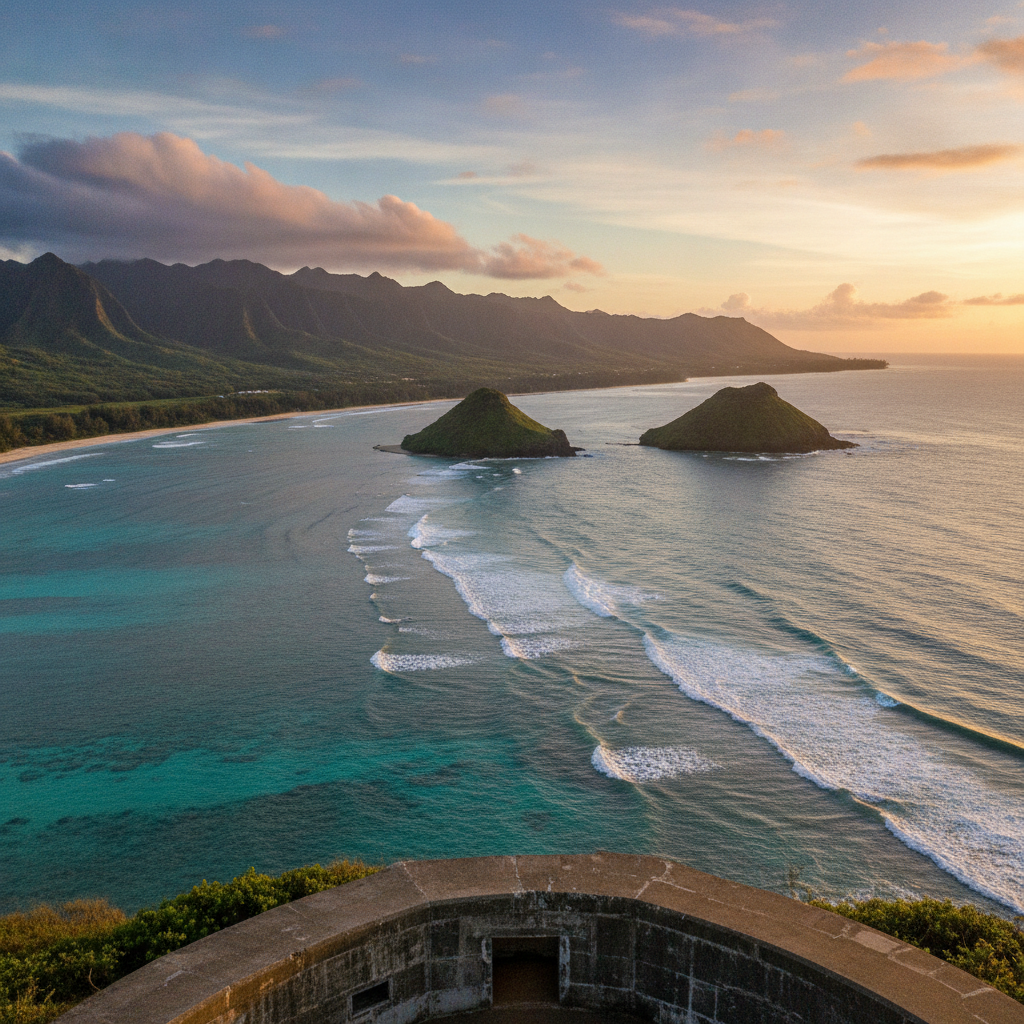
Honolulu: Koko Head Crater Trail and Sandy Beach, Kailua Beach and Lanikai Pillbox Hike, Haleiwa North Shore Town (surf culture, Matsumoto Shave Ice), Waimea Valley Sacred Cultural Site, Dole Plantation Pineapple History, and Hawaii Volcanoes National Park Big Island Day Trip