Stanley, Repulse Bay & Aberdeen: Hong Kong's Southern Coastline
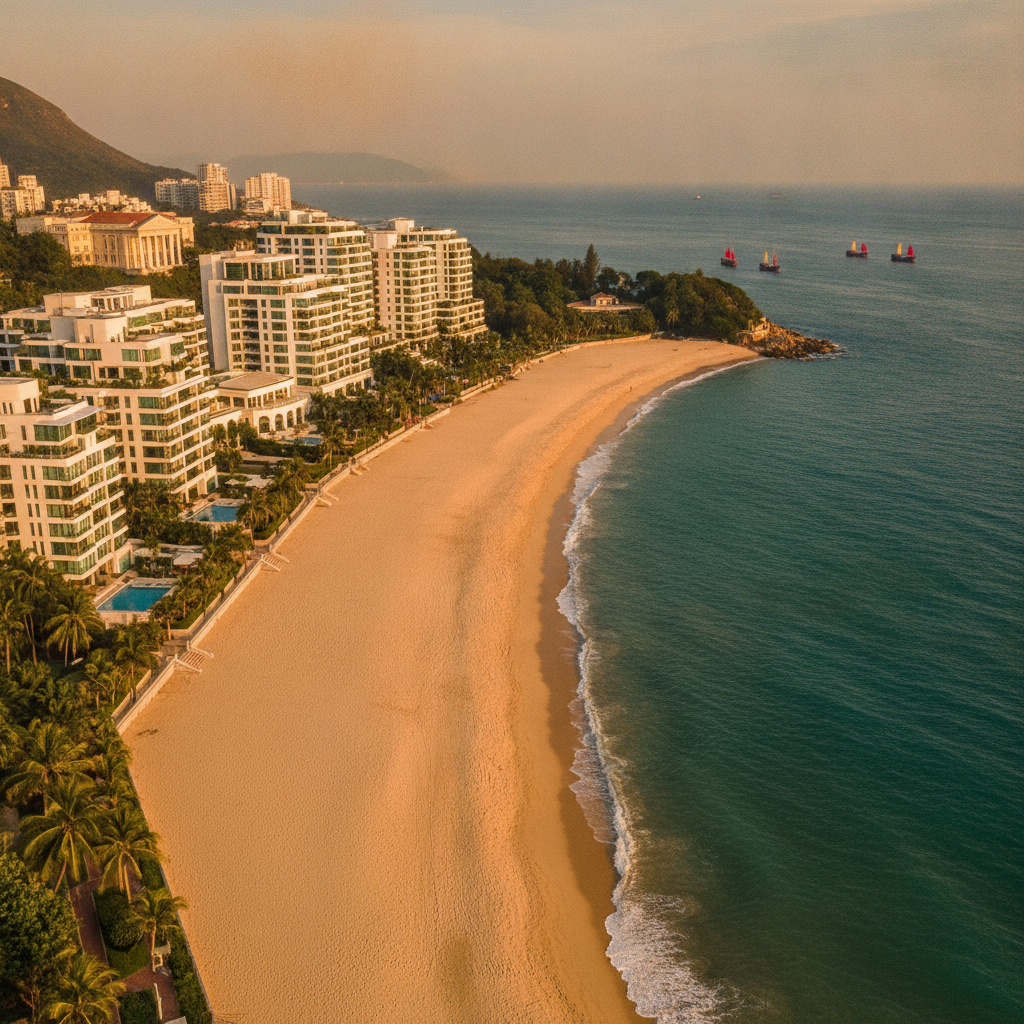
The southern coast of Hong Kong Island — Stanley, Deep Water Bay, Repulse Bay, and Aberdeen — is the antithesis of the dense urban north: a series of curved sandy bays, colonial-era architecture, boat-filled typhoon shelters, and the oldest surviving settlement in Hong Kong at Stanley, with its famous market, Tin Hau temple, and the last resting place of the British WWII garrison.
- 1
Stanley Market & Stanley Military Cemetery (1844)
Stanley (赤柱, Chek Chue, the settlement on the southern coast of Hong Kong Island — the oldest continuously inhabited urban settlement in Hong Kong: when the British arrived in 1841, Stanley was already a substantial fishing village with a population of approximately 2,000, making it by far the largest settlement on Hong Kong Island at the time of cession; the original village was centred around the Tin Hau Temple (Tin Hau Temple Road, Stanley, the temple on the waterfront dedicated to the sea goddess Tin Hau that has stood on this site since at least 1767 — the date inscribed on one of its foundation stones — and which survived the Japanese occupation of Hong Kong 1941-1945 during which it was used by Japanese forces as a military store; the temple also contains one of the two remaining South China tigers — a stuffed specimen — in Hong Kong, along with the skin of a tiger killed in Sheung Shui in 1942) — Stanley Market (Stanley Main Street and Stanley New Street, the covered and open-air market in the streets immediately above and around Stanley Bay, selling clothing, linen, art prints, jewellery, and tourist goods; the market has operated in this form since the 1980s and is the largest fabric and casual clothing retail market in Hong Kong).
- 2
Stanley Military Cemetery & Murray House (1844/2001)
Stanley Military Cemetery (Bungalow Path, Stanley, the military burial ground established in 1843 — the first formal cemetery in Hong Kong — containing the graves of British soldiers and sailors who served in the colony from the earliest years of British occupation through the Second World War; the cemetery is most significant as the burial site of officers and soldiers of the Royal Scots Regiment and the Middlesex Regiment who died in the Battle of Hong Kong (8-25 December 1941) when the Japanese 38th Division under Major General Takashi Sakai attacked and overran the British garrison in 18 days — approximately 1,200 Allied soldiers died in the battle and 10,000 were taken prisoner; the 1,700 graves in the cemetery range from the 1840s through 1945 and include soldiers from Britain, Canada, India, and other Commonwealth nations) — adjacent to Murray House (Murray Road, Stanley, the 19th-century military barracks building (1848) originally built in Central at the current site of the Bank of China Tower, dismantled stone by stone in 1982 when the Bank of China Tower was constructed, with each stone numbered for reassembly, and rebuilt at Stanley Waterfront Plaza in 2001 — one of the most remarkable heritage preservation projects in Hong Kong history; the building now houses restaurants on its ground floor).
- 3
Deep Water Bay & Repulse Bay (1920s)
Deep Water Bay (Deep Water Bay Road, the first of the southern coast beaches encountered when approaching from the Aberdeen Tunnel — a small, sheltered bay with a narrow beach popular with local families; the typhoon shelter at the eastern end of the bay houses the Royal Hong Kong Yacht Club's Deep Water Bay outstation and is surrounded by some of the most expensive private houses in Hong Kong — the waterfront homes on Island Road, Deep Water Bay are among the highest-priced residential properties in the world, typically selling for HKD 300-800 million per house) — Repulse Bay (Repulse Bay Road, the most popular beach on Hong Kong Island and historically the most fashionable, dating from the opening of the Repulse Bay Hotel in 1920: the original hotel (demolished 1982) was the premier luxury hotel in southern Hong Kong Island and was used as a British headquarters during the Battle of Hong Kong in 1941 before being captured by Japanese forces; the current Repulse Bay apartment complex (opened 1989) is built in the architectural style of the original hotel with a large rectangular hole in the centre of the building — the hole placed there, according to popular belief, to allow the dragon that lives in the hills behind the bay to reach the sea without obstruction; the beach itself (approximately 500 metres of pale sand) is the most crowded beach in Hong Kong on summer weekends and has the highest lifeguard-to-swimmer ratio of any public beach in Asia).
- 4
Tin Hau Temple Repulse Bay & Kwun Yam Shrine
The Tin Hau Temple and Kwun Yam Shrine (Repulse Bay Beach, the temple complex at the southwestern end of Repulse Bay Beach — the Tin Hau Temple (dedicated to the goddess of the sea, a consistent patron deity throughout the southern coastline of Hong Kong where fishing communities have lived for centuries) and the Kwun Yam Shrine (dedicated to Kwun Yam, the Buddhist goddess of mercy — the same deity as Guan Yin in Mandarin, Chenrezig in Tibetan, and Kannon in Japanese — who is among the most widely worshipped deities in Cantonese Buddhist culture; the Kwun Yam statue at Repulse Bay stands 24 metres tall and faces the sea, flanked by figures of the Goddess of Fortune and the God of Longevity; the complex also features a bridge said to add three years to the life of those who cross it — the Bridge of Longevity (長壽橋) — which is among the most visited spots for Cantonese believers seeking divine assistance with fertility, health, and long life; the complex as a whole is among the most colourful and photogenic religious sites in Hong Kong, with dozens of statues of gods, animals, and mythological creatures arranged across the platform at the water's edge).
- 5
Aberdeen Typhoon Shelter & Floating Restaurants (1970s)
Aberdeen (香港仔, Heung Gong Jai, 'Little Hong Kong' — the original name that gave its name to the entire colony, referring to the settlement at the western end of the Aberdeen Harbour between Hong Kong Island and the small island of Ap Lei Chau; Aberdeen was the main settlement on Hong Kong Island before the British arrived and the primary commercial centre of the southern coast through the 19th and early 20th centuries) — the Aberdeen Typhoon Shelter (Aberdeen Promenade, the largest boat community in Hong Kong: the Tanka (疍家) people — the 'boat people' of southern China, who have lived their entire lives on boats in the protected harbour of Aberdeen for at least 300 years — at their peak in the 1960s numbered approximately 25,000 people living aboard approximately 3,000 sampans, junks, and motor launches in the typhoon shelter; the current community (approximately 2,000 people on 600 boats) is the last significant floating community in Hong Kong and is accessible by sampan taxi from the Aberdeen Promenade) — the Jumbo Floating Restaurant (Jumbo Kingdom, the famous floating restaurant that was moored in Aberdeen Harbour from 1976 until April 2020 when it was closed due to declining revenues; the 4,000-tonne floating structure — three storeys with a capacity of 2,300 diners — was designed to resemble a imperial palace and was at its peak in the 1970s-80s the most famous restaurant in Hong Kong, hosting Queen Elizabeth II, Tom Cruise, and numerous heads of state; the structure was towed to international waters in June 2022 and sank in the South China Sea on 23 June 2022).
- 6
Ocean Park Hong Kong (1977) & Aberdeen Country Park
Ocean Park Hong Kong (Ocean Park Road, Aberdeen, the marine-themed amusement park that opened on 10 January 1977 on a 91-hectare site straddling the ridge between the southern slope of Mount Nicholson and the Aberdeen waterfront, connected by a 1.5-kilometre cable car that traverses the ridge to give access to both the lowland (Waterfront) and highland (Summit) sections of the park; Ocean Park held the Guinness World Record for the most visited theme park in Asia from 2008-2011 (7.9 million visitors in 2008) and was the most visited tourist attraction in Hong Kong for over 30 years before the opening of Hong Kong Disneyland in 2005; the park is most famous for its pair of giant pandas (An An and Jia Jia, loaned from the Chinese government in 2007 and 1999 respectively; Jia Jia died in 2016 at the age of 38 — the oldest giant panda in captivity — and An An still lives at the park as of 2024), its marine aquarium (one of the largest in Asia), and the Grand Aquarium (an underwater tunnel aquarium housing 5,000 fish of 400 species) — the park also offers rollercoasters and thrill rides at the Summit section, accessible by the 5.72-minute cable car ride over the ridge).
Walk this route with audio
Stories play automatically as you reach each stop — no tapping needed.
More in hongkong
Star Ferry, Tsim Sha Tsui Waterfront & Victoria Harbour: The Soul of Hong Kong
Victoria Peak, Peak Tram & Central: Hong Kong's Defining Panorama
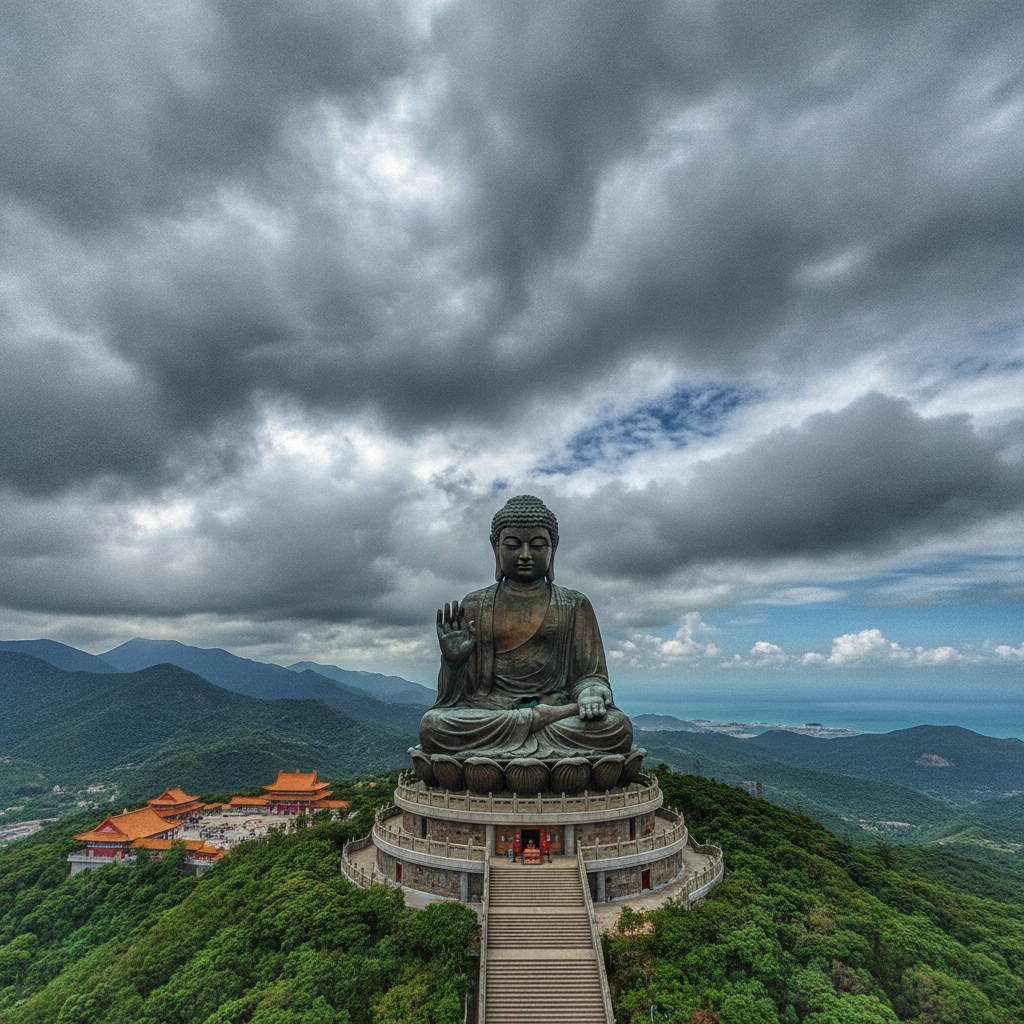
Lantau Island: Big Buddha, Ngong Ping 360 Cable Car & Po Lin Monastery
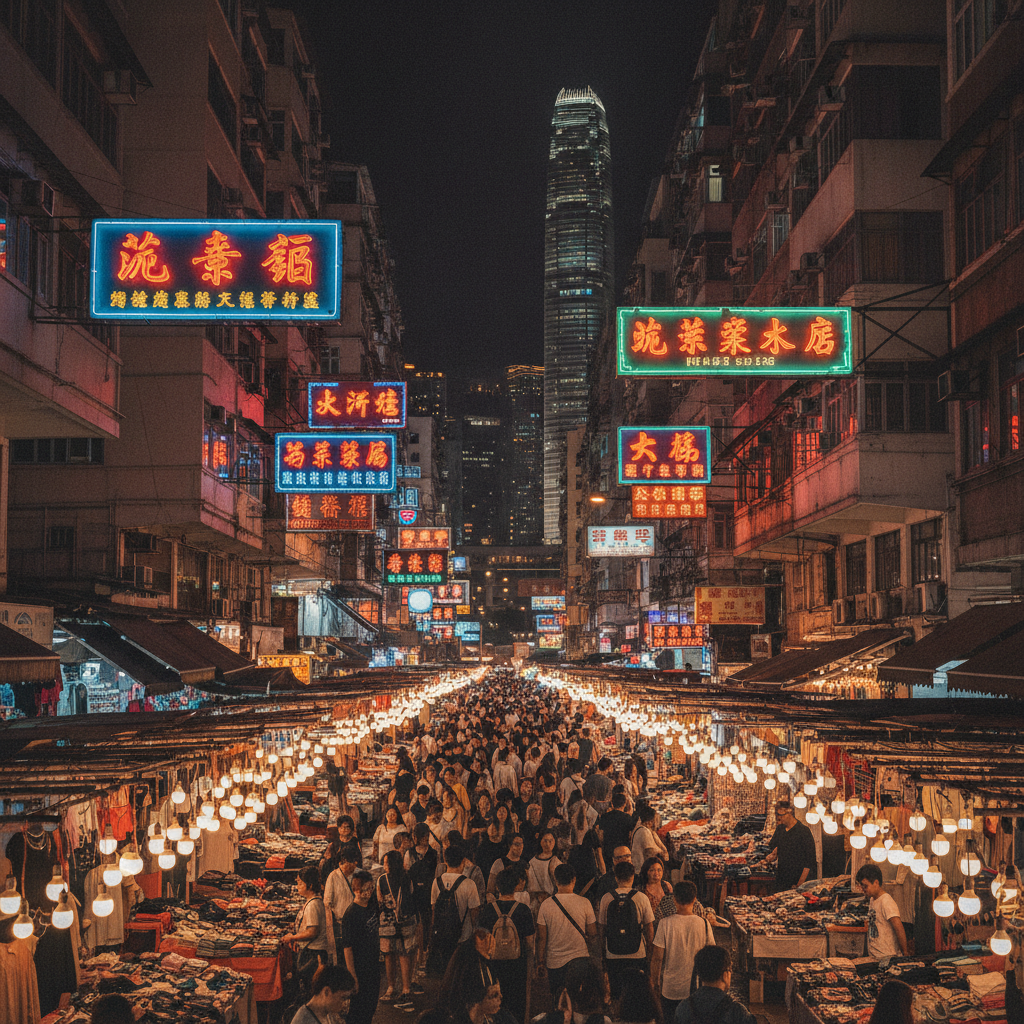
Mong Kok: Ladies' Market, Goldfish Market, Flower Market & Bird Garden
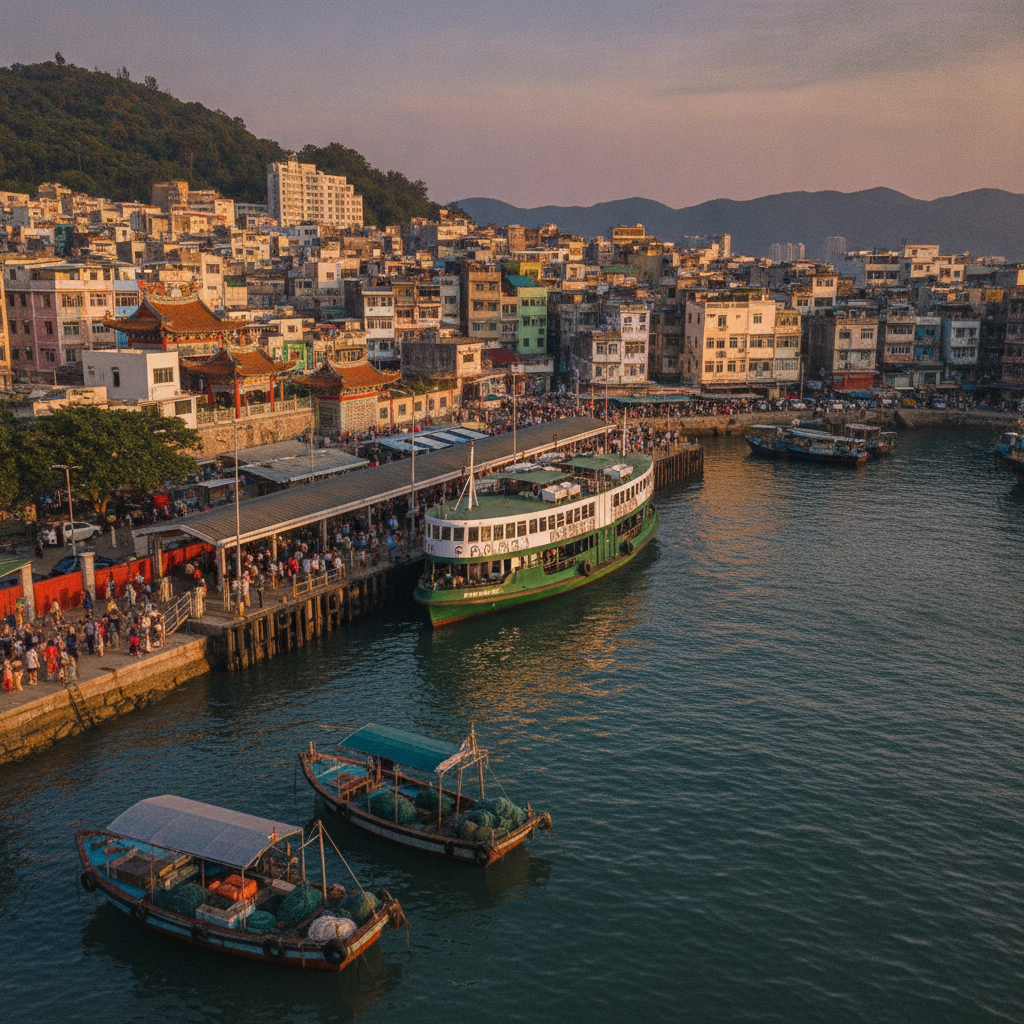
Cheung Chau & Lamma Island: Hong Kong's Car-Free Outlying Islands