Cheung Chau & Lamma Island: Hong Kong's Car-Free Outlying Islands
The outlying islands of Cheung Chau and Lamma — together forming the most visited island destinations beyond Hong Kong Island and Lantau — offer the most complete contrast to urban Hong Kong available within the SAR: car-free communities (Cheung Chau has been car-free since the British era, with only emergency vehicles allowed), traditional fishing village architecture, independently-owned seafood restaurants, and hiking trails connecting secluded beaches that feel genuinely remote despite being 30-60 minutes by ferry from Central.
- 1
Central Ferry Piers (Outlying Islands Terminal) — Pier 5 & Pier 6
Central Ferry Piers (Pier 5 for Cheung Chau, Pier 6 for Lamma Island's Yung Shue Wan, Hong Kong Outlying Islands Ferry Terminal, Connaught Road Central, the principal departure point for all ferry services to Hong Kong's outlying islands — the terminal consists of ten numbered piers running along the northern waterfront of Hong Kong Island between the Macau Ferry Terminal to the west and the Star Ferry Pier to the east; services to Cheung Chau are operated by Hong Kong & Kowloon Ferry (HKKF) with departures every 30-60 minutes (journey time approximately 55 minutes on the ordinary ferry, 35 minutes on the fast ferry); services to Lamma Island's Yung Shue Wan are operated by HKFF; the ferry terminal is itself historically significant: the area of reclaimed land on which it stands was only created in the 1990s as part of the Central and Wan Chai Reclamation project — the original shoreline of Hong Kong Island ran along what is now Connaught Road; the ferry terminal was designed by the Hong Kong government's Architectural Services Department and opened in 2006, replacing a series of aging piers that had served the outlying islands since the 1960s; the terminal interior contains ticketing offices, a McDonald's, and convenience stores, but the real attraction is the open-air waiting areas on the upper deck from which the harbour view — the Star Ferry Pier to the east, Kowloon to the north, and the container terminals to the west — is arguably better than from many of Hong Kong's official observation decks).
- 2
Cheung Chau Ferry Pier & Cheung Chau Village — The Bun Festival
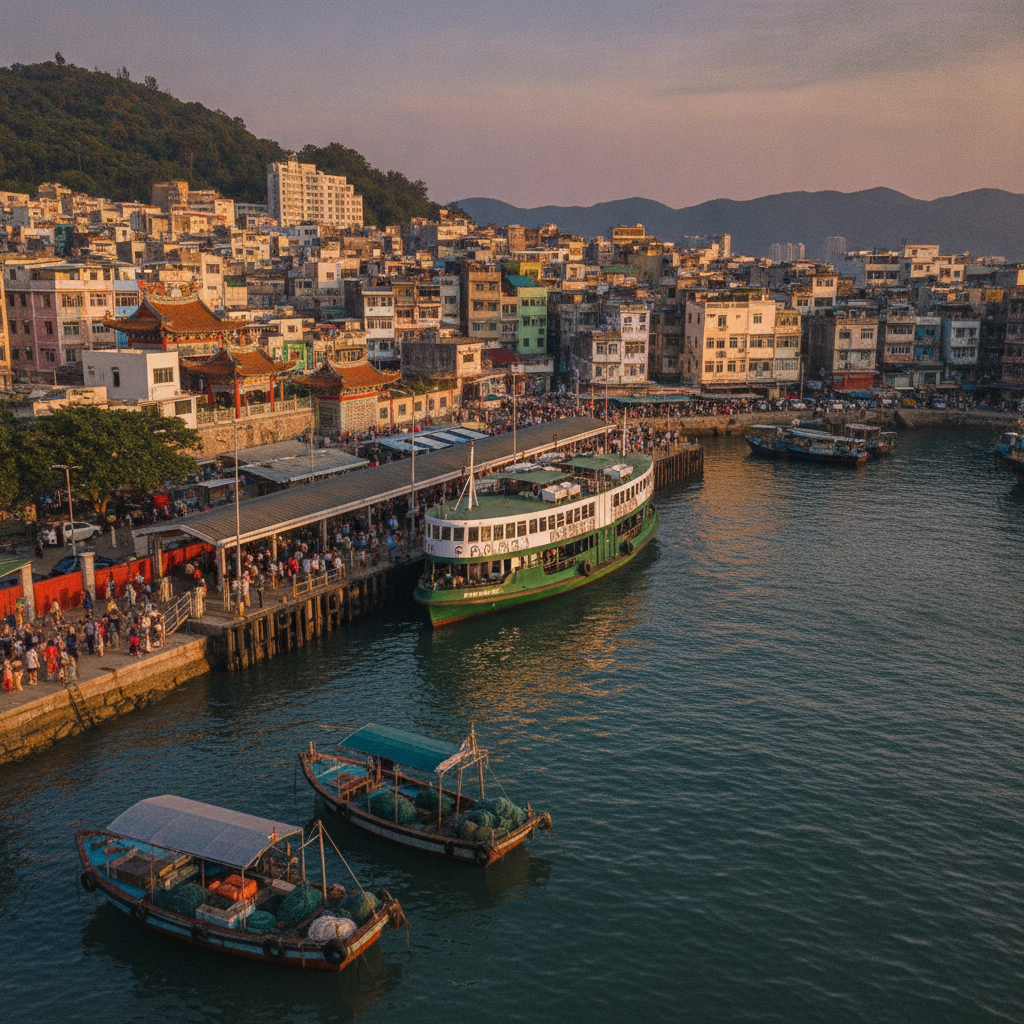
Cheung Chau Ferry Pier (Praya Road, Cheung Chau, the main landing point on Cheung Chau island — Cheung Chau (長洲, Long Island) is a dumbbell-shaped island of approximately 2.4 square kilometres located 10 kilometres southwest of Hong Kong Island; the island has a permanent population of approximately 23,000 people (making it the most densely populated of Hong Kong's outlying islands) living in an area that has no private cars — the island's road network (such as it is) is navigable only by pedestrians, bicycles, and motorized vehicles operated by the fire service, police, and ambulance; the absence of private cars (a consequence of the island's narrow lanes that predate the automobile era, combined with a government decision in the colonial period to simply never permit private car registration on the island) gives Cheung Chau a pace and texture that is completely unlike any other part of Hong Kong; Cheung Chau is most famous for the annual Cheung Chau Bun Festival (長洲太平清醮, Cheung Chau Tai Ping Ching Chiu), held in the fourth lunar month (usually April or May) — a five-day Taoist festival culminating in the Bun Scrambling Competition (搶包山), in which competitors race up a 14-metre bamboo tower covered in 9,000 lucky buns (steamed buns made from lotus paste, imprinted with the character 平安 'peace') in a race against the clock; the festival is one of the most extraordinary traditional rituals surviving in Hong Kong and was designated an Intangible Cultural Heritage of China in 2011).
- 3
Cheung Chau Pak Tai Temple (1783) & Tung Wan Beach
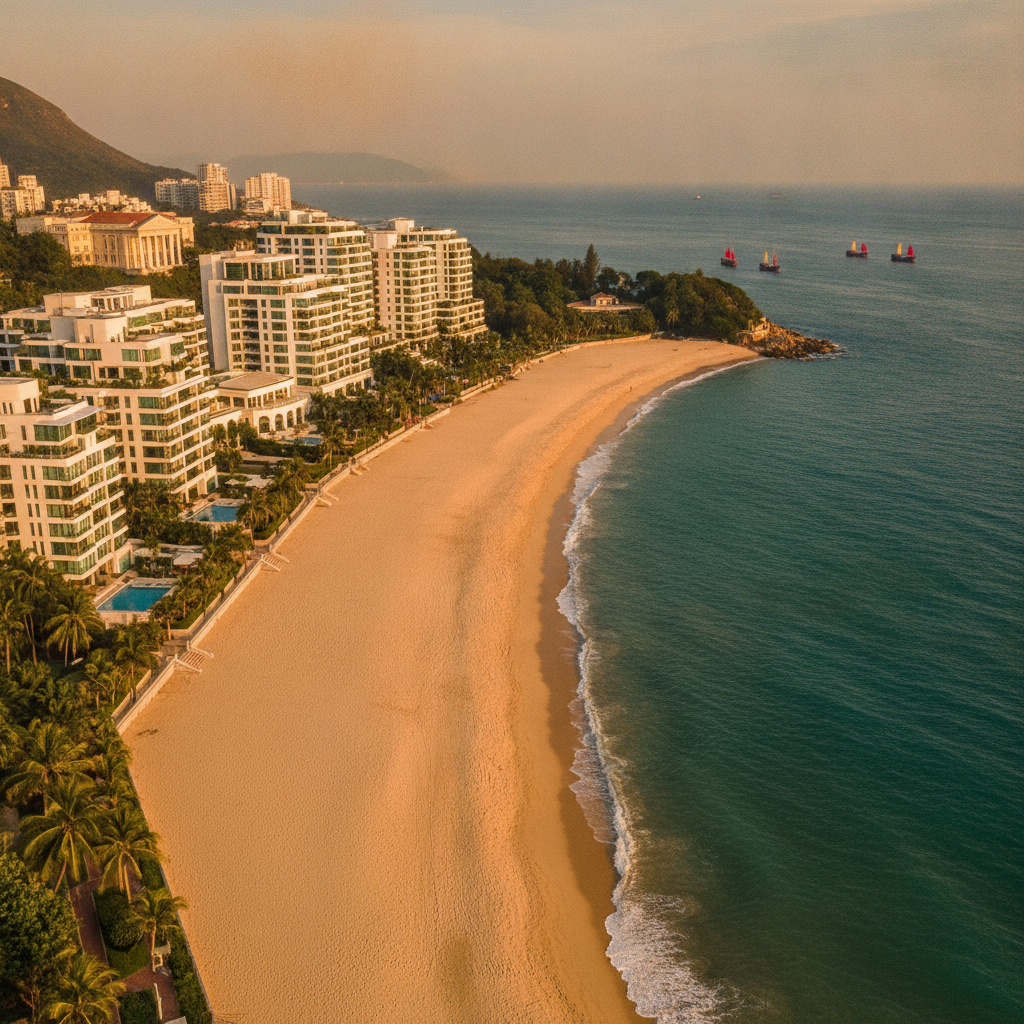
Pak Tai Temple (Pak Tai Temple Road, Cheung Chau, the most important temple on Cheung Chau island — dedicated to Pak Tai (北帝, the Supreme Emperor of the Dark Heaven), a Taoist deity associated with the sea and worshipped by fishermen throughout southern China; the present temple was built in 1783 (making it one of the oldest extant temples on the outlying islands) on the site of an earlier structure; the temple contains several artifacts of historical significance including a 19th-century iron sword (sword of the Northern Emperor) and an image of Pak Tai said to have been brought to Cheung Chau from Guangdong Province; the temple is the focal point of the Bun Festival — the bamboo Bun Mountain towers are constructed in the square directly in front of the temple; adjacent to the temple is Tung Wan Beach (東灣, East Bay), one of the three main beaches on Cheung Chau and the island's windward east-facing beach, popular for windsurfing (Cheung Chau is the home island of Lee Lai-shan, the windsurfer who won Hong Kong's first and only Olympic gold medal at the 1996 Atlanta Olympics, and the island maintains the Shek O Beach Windsurfing Centre in her honour); the beach is flanked at its southern end by the Warwick Hotel, the only hotel on Cheung Chau island).
- 4
Lamma Island — Yung Shue Wan (榕樹灣) Village
Yung Shue Wan (榕樹灣, Banyan Bay), Lamma Island, the main settlement on the northern part of Lamma Island (南丫島, South Y Island) — the second-largest outlying island after Lantau, with a permanent population of approximately 6,000 people (plus several thousand expatriate residents who commute to Central by ferry, drawn to Lamma by its lower rents and village atmosphere); Yung Shue Wan consists of a main street (Yung Shue Wan Main Street) running approximately 600 metres from the ferry pier to the village temple, lined on both sides with independently-owned seafood restaurants, cafes, bars, a bakery (Bookworm Cafe), a hair salon, and the assorted small shops and services that make up village life; the village has been a destination for Hong Kong expatriates and adventurous locals since the 1970s, when the low rents and accessible ferry service attracted a bohemian community of artists, writers, and foreign residents; Lamma Island is notable for being the childhood home of Jackie Chan (born Chan Kong-sang on 7 April 1954 in Victoria Peak Hospital, but raised in Pok Fu Lam and later on Lamma Island before his father found work with the US Embassy in Canberra, Australia); the island has no private cars; the Lamma Island Country Trail (approximately 6km) connects Yung Shue Wan to Sok Kwu Wan via the island's central ridge, passing through secondary forest and offering views of the South China Sea and the distant Hong Kong skyline).
- 5
Lamma Island Seafood Restaurants — The Fresh Catch Experience
The seafood restaurants of Lamma Island's Yung Shue Wan and Sok Kwu Wan — the most celebrated non-Cantonese seafood dining experience in Hong Kong and one of the most distinctive dining traditions in the territory: the seafood restaurants on Lamma Island operate on a system unique in Hong Kong in that many of them maintain their own large fish tanks (some extending as floating structures into the harbour) in which live seafood is displayed for selection; diners choose their fish, shellfish, crustaceans (mantis prawns, mud crabs, razor clams, abalone), and cephalopods (squid, cuttlefish) directly from the tanks, the catch is weighed, the price is agreed per kilogram, and the selected seafood is prepared to order by the kitchen — typically steamed with ginger and spring onion for whole fish, or wok-fried with garlic and chili or black bean sauce for shellfish; the experience is entirely different from the Cantonese seafood restaurants of Aberdeen or Sai Kung in that the Lamma restaurants are almost all large, informal, and family-operated, with plastic chairs and round tables on open-air terraces overlooking the water; the restaurants are most atmospheric in the evening from approximately 6:30 PM onwards, when the cooking smells, the noise of the kitchen, and the lamps reflecting off the water create a distinctly Hong Kong ambiance that has remained largely unchanged since the 1980s).
- 6
Sok Kwu Wan (索罟灣) — Southern Lamma & Return Ferry
Sok Kwu Wan (索罟灣, Fishing Net Bay), the southern settlement on Lamma Island — a smaller and (relative to Yung Shue Wan) more rustic village with a single seafood restaurant row extending along the waterfront, the Lamma Island Rainbow Seafood Restaurant (established 1961, one of the oldest operating seafood restaurants in the territory) being the most famous; Sok Kwu Wan is accessible from Yung Shue Wan either via the Lamma Island Country Trail (approximately 3-4 hours walking) or by ferry from Aberdeen (10 minutes) or from Central Pier 4 (35 minutes); the Sok Kwu Wan ferry pier serves the direct Aberdeen-Sok Kwu Wan service, which is also notable for passing under the Tsing Ma Bridge (the 1.377-kilometre suspension bridge connecting Tsing Yi to Lantau Island, completed in 1997, which at the time of its completion was the world's longest road-and-rail suspension bridge) — the Aberdeen approach to Sok Kwu Wan by ferry provides one of the most unusual perspectives on the Tsing Ma Bridge, viewed from directly below at water level; the return ferry from Sok Kwu Wan to Central typically takes 35-40 minutes on the Lamma 1 fast ferry, providing a final view of the Hong Kong Island skyline from the sea as the ferry approaches Central Pier 4.
Walk this route with audio
Stories play automatically as you reach each stop — no tapping needed.
More in hongkong
Star Ferry, Tsim Sha Tsui Waterfront & Victoria Harbour: The Soul of Hong Kong
Victoria Peak, Peak Tram & Central: Hong Kong's Defining Panorama
Lantau Island: Big Buddha, Ngong Ping 360 Cable Car & Po Lin Monastery
Mong Kok: Ladies' Market, Goldfish Market, Flower Market & Bird Garden
Central, SoHo & the Mid-Levels Escalator: Hong Kong's Vertical City