Ben Thanh Market, District 1 & the Colonial Heart of Saigon
District 1 (Quận 1 — the central district of Ho Chi Minh City, containing the highest concentration of colonial French architecture, five-star hotels, international restaurants, and tourist attractions in the city) is the historic core of French colonial Saigon and the starting point for any exploration of Ho Chi Minh City.
- 1
Ben Thanh Market — The Icon of Saigon
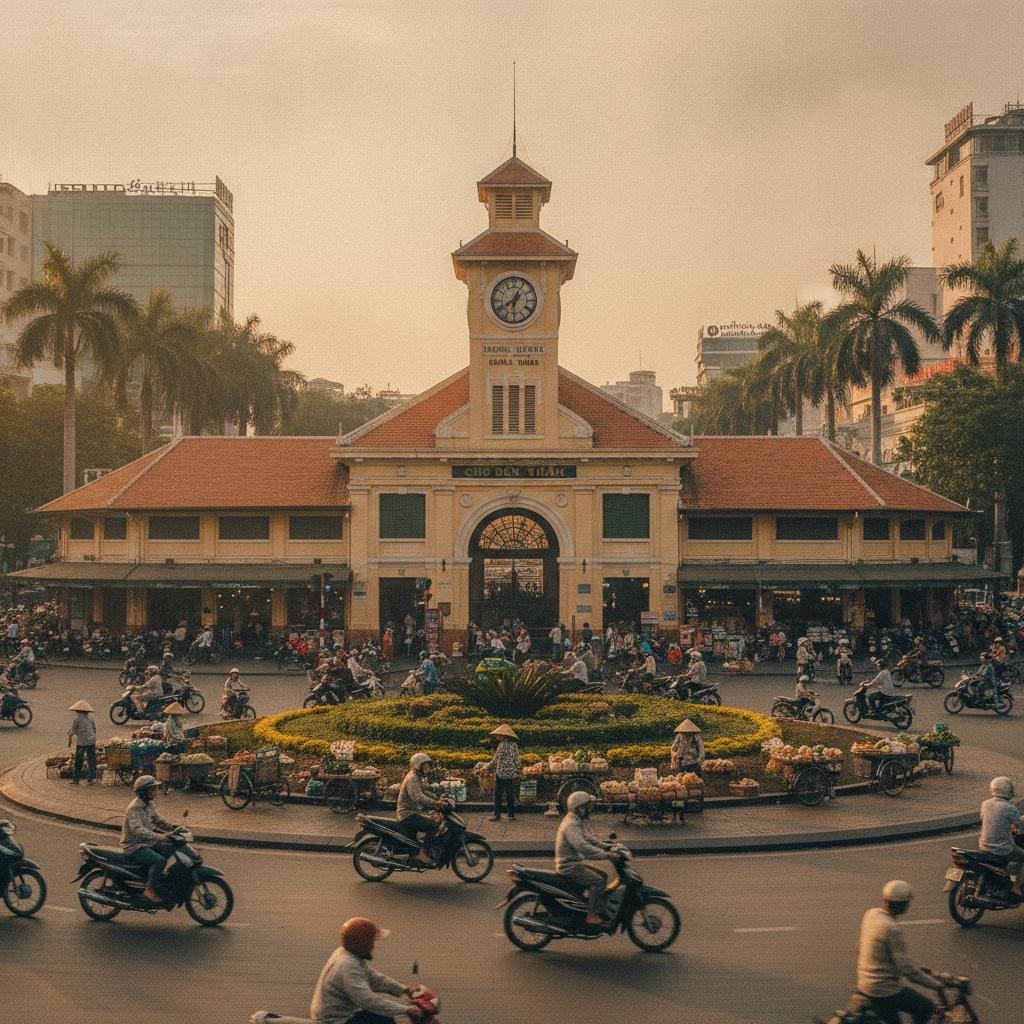
Ben Thanh Market (Chợ Bến Thành — 'Market on the Bank of the Fortress', at the Ben Thanh roundabout on the border of Districts 1, 3, and 5 — the most famous market in Vietnam and the most recognized landmark of Ho Chi Minh City): the market building (the current French colonial structure built 1914 on the site of the original 1859 market established by the French colonial administration, featuring the characteristic clock tower (the bell tower visible from far away, the market's most reproduced image) and the four entrance gates) contains approximately 1,400 stalls in the covered interior (fresh produce, meat, seafood, dried goods, spices, fabrics, clothing, lacquerware, and tourist souvenirs in the day market) and the outdoor night market (the stalls and vendor tables that extend onto the surrounding pedestrianized streets from 6 PM to midnight, the most visited night market in the city); the market is the most important nexus of Saigon street food culture, with the food stalls (pho, bún bò Huế, bánh xèo (Vietnamese sizzling rice crepes), cơm tấm (broken rice), and bành mì) along the interior market alleys and outside the market gates representing the full range of Vietnamese cuisine.
- 2
Nguyen Hue Boulevard — The Champs-Élysées of Saigon
Nguyen Hue Boulevard (Đường Nguyễn Huệ — the 670-metre pedestrian boulevard running from the City Hall (Trụ sở UBND Thành phố — the 1908 ornate yellow French colonial city hall with the decorative facade visible at the north end of the boulevard, now illuminated in gold at night) to the Saigon River waterfront — the civic spine of central Ho Chi Minh City and the site of public celebrations and festivals): the boulevard (pedestrianized in 2015 as Ho Chi Minh City's 'walking street', the most ambitious public space improvement in the city since independence) is lined with the international flagship stores (the Apple Store, luxury fashion boutiques, and international coffee chains), the Union Square luxury mall (at the south end of the boulevard), and the Ho Chi Minh City Flower Festival (the annual Tết festival that transforms Nguyen Hue into a garden for the Vietnamese New Year celebrations (January-February) — the most important public event in the city, drawing hundreds of thousands of visitors); the large Ho Chi Minh statue (the seated bronze statue of Ho Chi Minh in front of the City Hall, one of the most photographed statues in Vietnam) is at the north end of the boulevard.
- 3
Central Post Office & Notre-Dame Cathedral — French Saigon
The Saigon Central Post Office (Bưu điện Trung tâm Sài Gòn — at 2 Công xã Paris (Paris Commune Square), directly adjacent to Notre-Dame Cathedral in District 1 — the most beautiful colonial building in Vietnam): the post office (built 1886-1891 by the French colonial administration, the architectural design attributed to Gustave Eiffel's company (though Eiffel himself may not have been directly involved) — the characteristic yellow and green exterior with the arched windows and the clock face above the entrance, the single-vault iron-and-glass interior (the fan-vaulted iron structure and glass roof covering the main hall, similar in concept to a 19th-century European railway station or exhibition hall) is the finest example of colonial-era iron-and-glass construction in Southeast Asia): the interior of the post office (the portraits of Ho Chi Minh and the map of southern Vietnam on the wall facing the entrance, the long wooden counters staffed by uniformed postal workers, and most importantly the vendor stalls along the side walls selling lacquerware, silk scarves, and postal souvenirs (the Vietnamese stamps (tem thư) are particularly notable as collectibles)) retains the original 1891 ironwork and is still fully operational as a working post office; Notre-Dame Cathedral (Nhà thờ Đức Bà — the 1880 brick cathedral with twin 58-metre bell towers, built from 600,000 red bricks imported from Marseille) is directly adjacent.
- 4
Saigon River & the Waterfront — The Soul of the City
The Saigon River (Sông Sài Gòn — the 256 km river flowing from the Cambodian border through Ho Chi Minh City to join the Dong Nai River (Sông Đồng Nai) before flowing into the South China Sea (Biển Đông) — the geographic and historical reason for the city's existence): Saigon was founded as a port because of the Saigon River's navigability (allowing ocean-going vessels to reach the city directly from the sea — the river is navigable to vessels of approximately 30,000 tonnes up to the city centre), and the city's identity as a major commercial port has defined its character since the first French colonial settlement in 1859; the Saigon River waterfront (the eastern edge of District 1, along Ton Duc Thang Boulevard (Đường Tôn Đức Thắng) from the Khanh Hoi Bridge (Cầu Khánh Hội) south to the Ben Nghe Canal (Kênh Bến Nghé)) offers views across the river to District 2 (Thu Duc) and the Binh Khanh terminal of the Cat Lai Container Port (the second-busiest container port in Vietnam, handling approximately 4 million TEUs per year); the Saigon River ferry (the small passenger ferry from the foot of Ham Nghi Boulevard to the Thu Thiem district on the east bank) is the cheapest and most atmospheric river crossing in the city.
- 5
Ho Chi Minh City Museum of Fine Arts — Vietnamese Art
Ho Chi Minh City Museum of Fine Arts (Bảo tàng Mỹ thuật Thành phố Hồ Chí Minh — at 97A Phó Đức Chính Street in District 1, in a French colonial villa — the most important art museum in southern Vietnam): the museum (housed in a 1930s French-Chinese hybrid colonial building, with the characteristic yellow-stucco exterior and the ornamental Chinese roof tiles and window mouldings that characterize the 'Indochinese' colonial architectural style) contains the finest collection of Vietnamese fine art in southern Vietnam, including the best collection of 20th century Vietnamese lacquer paintings (tranh sơn mài — the Vietnamese lacquer painting tradition, developed in the 1930s at the Indochina School of Fine Arts (Trường Cao đẳng Mỹ thuật Đông Dương), using the traditional Vietnamese lacquer technique (the application of multiple layers of lacquer varnish, mixed with crushed eggshell (vỏ trứng), gold and silver leaf, and coloured pigments) in a fine art context — one of the most distinctive art forms in Southeast Asia) and the collection of Vietnamese sculpture (from the Cham cultural tradition (the sculptural tradition of the Cham Kingdom (192-1832 CE), the Indianized kingdom of coastal Vietnam, whose carved stone religious sculpture (the most significant non-Chinese artistic tradition in Vietnam)) to the Socialist Realist sculpture of the 1950s-1980s).
- 6
Pham Ngu Lao & the Backpacker District
Pham Ngu Lao (Phạm Ngũ Lão — the backpacker and budget accommodation district of Ho Chi Minh City, covering the area around Pham Ngu Lao Street, Bui Vien Street (Đường Bùi Viện — 'Walking Street' (Phố Đi Bộ Bùi Viện), the pedestrianized bar street famous for its neon lights, beer bars, and street food vendors open until 4 AM — the most hedonistic street in Vietnam), and De Tham Street in District 1): the Pham Ngu Lao area (the most international and backpacker-oriented neighbourhood in Vietnam, the starting point for most independent travel itineraries through Vietnam) has been the hub of budget tourism in Ho Chi Minh City since the opening of Vietnam to foreign tourism in the late 1980s following the Đổi Mới (Renovation) economic reform policy (1986); the area contains the highest concentration of travel agencies (bus tickets to Cambodia, the Mekong Delta, Mui Ne, Da Lat, Nha Trang, Hoi An, Da Nang, and Hanoi), guesthouses, budget hotels, and tour operators in the city; Bui Vien Street (the 'Walking Street' that becomes the most intense nightlife scene in Vietnam after dark, with hundreds of beer bars, rooftop clubs, hostels with rooftop pools, and street food vendors) is the social centre of the backpacker district.
Walk this route with audio
Stories play automatically as you reach each stop — no tapping needed.
More in ho-chi-minh-city
Saigon River, District 2 & the New Face of Ho Chi Minh City
Mekong Delta & Floating Markets — The River World Beyond Saigon
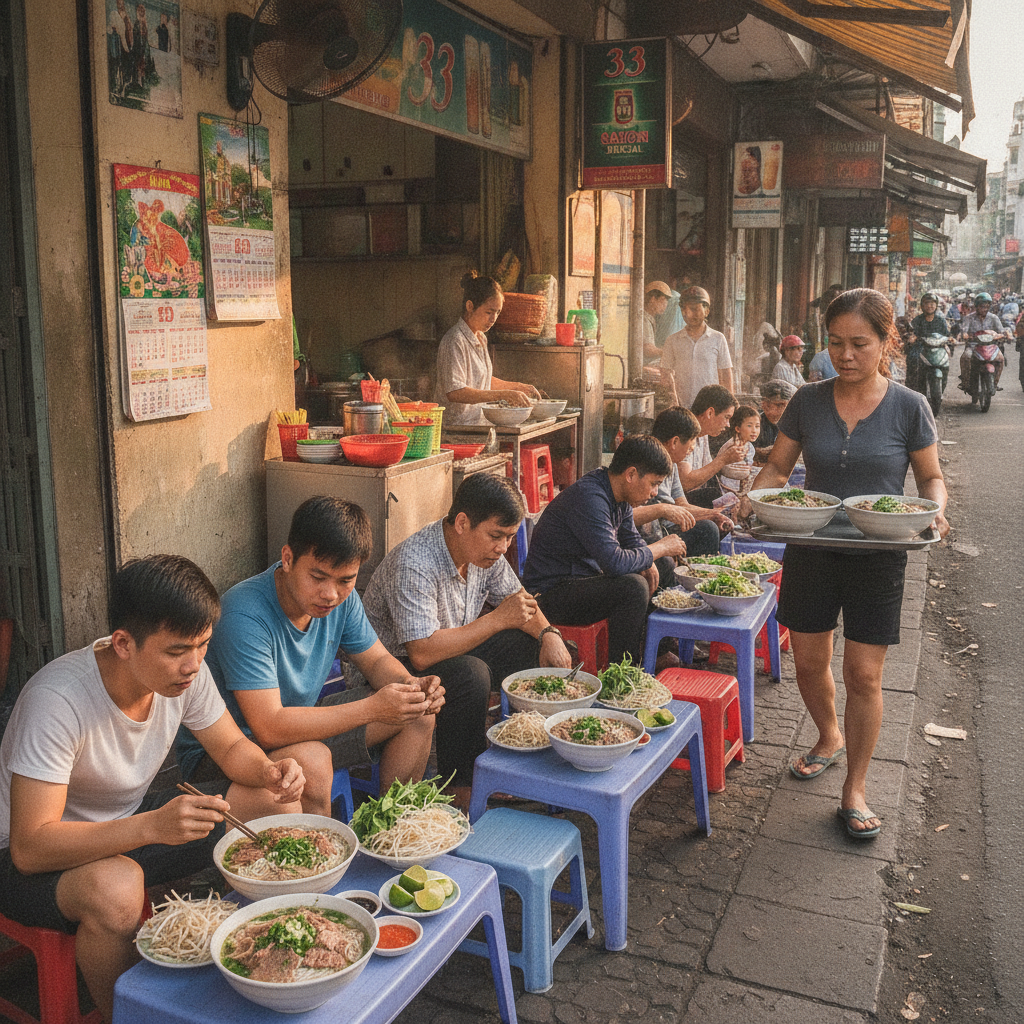
Phở, Bánh Mì & Saigon Street Food — Vietnam on a Plate
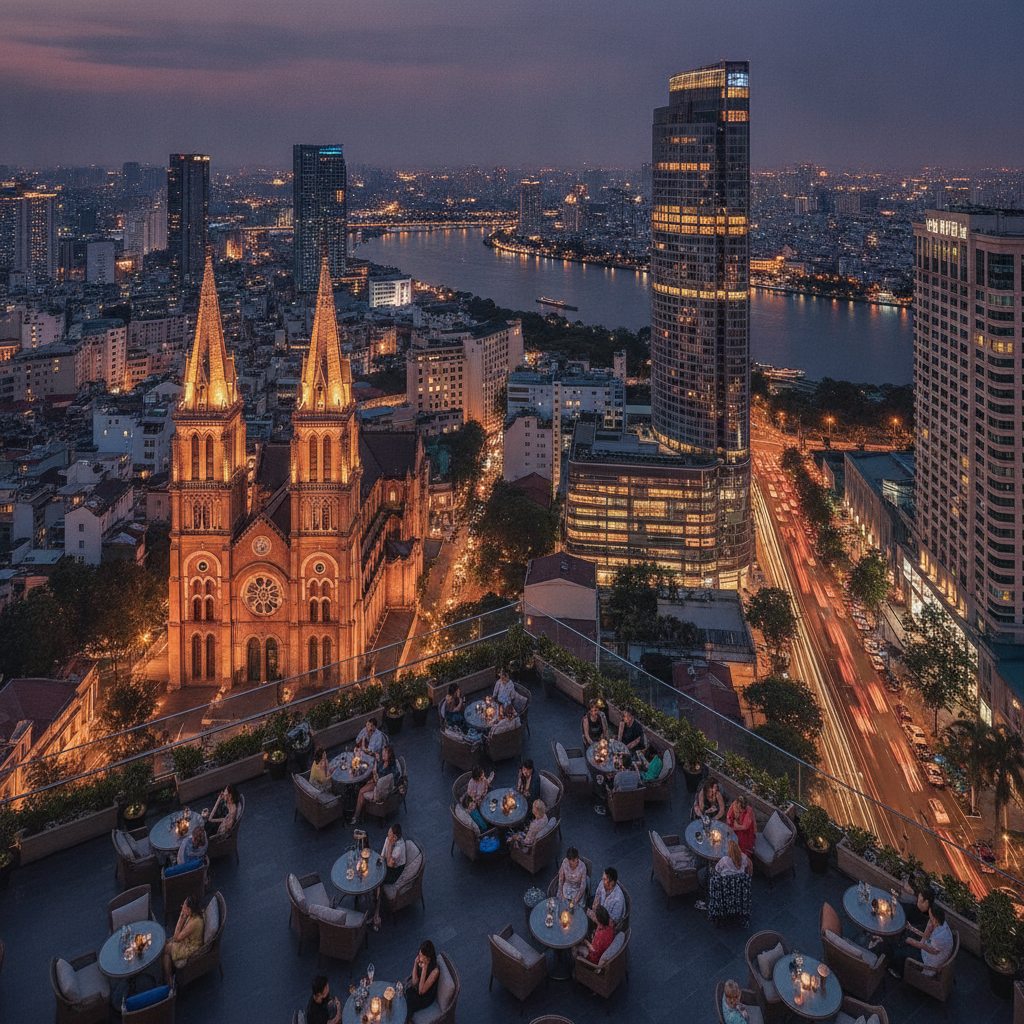
Saigon After Dark — Rooftop Bars, Night Markets & the City That Never Sleeps
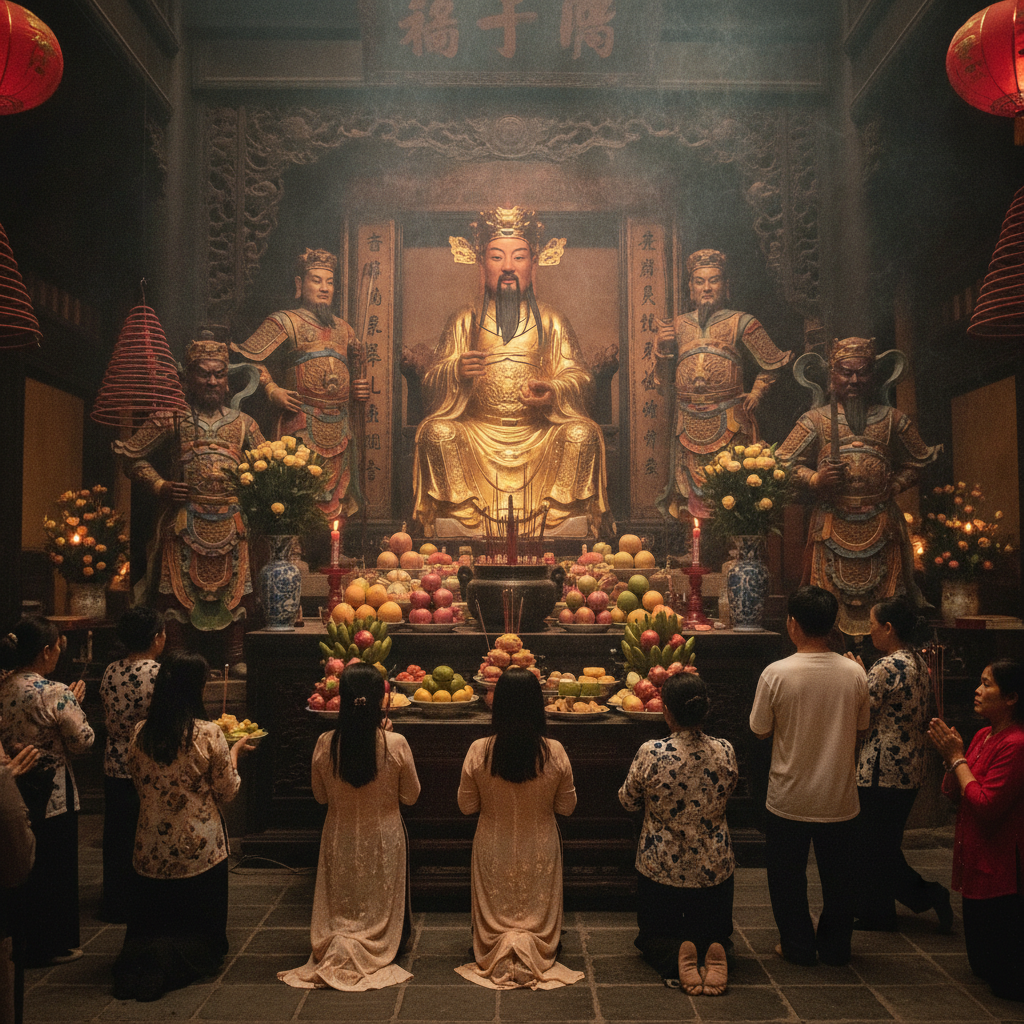
Jade Emperor Pagoda & Saigon's Temple Culture