Andō's Underground Museum, the Teshima Water That Finds Itself & 70 Kilometres of Bridge-Hopping to Shikoku
The Chichu Art Museum's three permanent installations including Monet's Water Lilies in natural skylight and Turrell's Open Sky room; the Teshima Art Museum's water that seeps from the floor and flows toward the light as the building's only art work; the Shimanami Kaidō's 70-km cycling route across 6 islands to Shikoku now accessible by e-bike; Shodoshima's olive oil and tamari soy sauce from 1903 cedar barrel breweries; the sea-kayak approach to Miyajima replicating the historical pilgrim arrival by boat; and the Hiroshima seasonal calendar from March cherry blossom to the August 6 lantern float to the winter oyster peak.
- 1
Naoshima – The Art Island
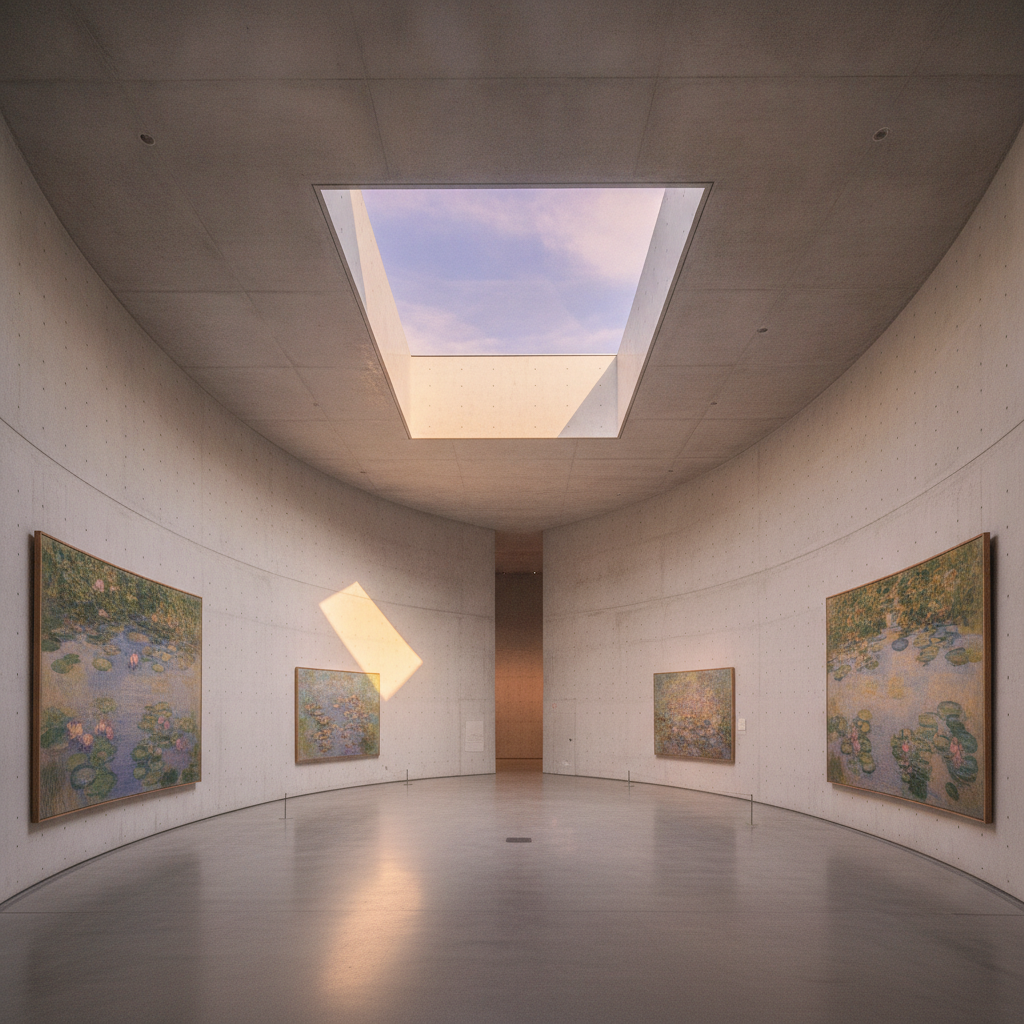
Naoshima (2.5 hours from Hiroshima by JR Shinkansen to Okayama then ferry from Uno Port, or 3 hours directly by ferry from Hiroshima Ujina Port) is the most internationally celebrated example of art-led island regeneration in the world—a previously depopulated island of 3,200 residents that has been transformed since 1992 by the Benesse Corporation and the architect Tadao Andō into an open-air contemporary art museum. The Benesse House Museum (Tadao Andō's concrete museum and hotel integrated into the hillside above the Seto Inland Sea—the permanent collection includes site-specific works by Bruce Nauman, Richard Long, and Hiroshi Sugimoto; guests staying in the museum hotel have nocturnal exclusive access to the collection after public hours). The Chichu Art Museum (the underground Andō museum built entirely below ground so as not to disrupt the landscape above—three permanent installations: Claude Monet's late Water Lilies paintings displayed in a white gallery lit only by natural skylights; James Turrell's 'Open Sky' (a room where the ceiling is open to the sky and the perimeter light changes with the ambient light level); and Walter De Maria's 'Time/Timeless/No Time' (27 spheres and geometric forms in a granite hall)). The Kusama pumpkins (Yayoi Kusama's yellow polka-dot pumpkin sculpture on the Naoshima pier—destroyed by Typhoon No. 9 in 2021 and reinstalled in 2022): the most photographed art work in Japan by international visitors after the Osaka Teamlab installations.
- 2
Teshima & Inujima – Smaller Island Art
Teshima (1 hour from Naoshima by ferry) is the island that contains the Teshima Art Museum—the single most architecturally remarkable building in Japan of the past 20 years (Ryūe Nishizawa designed the museum as a concrete shell with no internal walls and no columns, a 40×60-metre elliptical form with two oval openings in the roof through which light, wind, rain, and birds enter freely; the sole artwork inside is 'Matrix' by Rei Naito—water that seeps from the floor at hundreds of points, pools into micro-droplets that move slowly across the slightly curved concrete floor, finding each other and joining, flowing toward the light). The Teshima Art Museum is accessible only by 60-minute timed-entry tickets (¥1,570, booked at the island ferry terminal or online) and the experience is conducted in silence. Inujima (15 minutes by ferry from Hoden on Okayama's mainland; 3,000-year copper smelting history): the Inujima Seirensho Art Museum occupies the ruins of a 1909 copper smelter—the brick chimney stacks remain standing and the museum by Hiroshi Sambuichi uses solar and geothermal energy to power itself completely off-grid. The Setouchi Triennale (the island art festival held every 3 years across 12 Seto Inland Sea islands; next full edition 2025 and 2028): Naoshima, Teshima, and Inujima are the three most visited islands but the full triennale circuit includes Ogijima, Megijima, and Shodoshima.
- 3
The Shimanami Kaidō – Japan's Greatest Cycling Route
The Nishiseto Expressway (Shimanami Kaidō—'Sea Road of Islands'): the 70-km series of six bridges crossing six islands from Onomichi on Honshu to Imabari on Shikoku, opened in 1999 and designated an International Cycling Route in 2014. The cycle path runs alongside or beneath the expressway structure on a dedicated lane (3 metres wide; signed at every junction) for the full 70 km, with each island providing an opportunity to diverge from the main route into the island interior. The elevation challenge: the bridges are the high points (the Kurushima Kaikyō Bridge complex—the three suspension bridges at the western end—rises to 65 metres above sea level); the islands between are relatively flat. The standard routing: most cyclists complete the full route in one direction (Onomichi→Imabari or reverse) over one day (8–10 hours at touring pace) with overnight on Ōshima island as the most common splitting point for a 2-day circuit. Bicycle rental: the Giant rental network with 14 shops along the route (including at Onomichi Station and Imabari Station) offers same-day same-shop return or one-way rental with drop at any network shop. The electric assist option (e-bike rental ¥3,300–4,400/day at most network shops): the most significant development in Shimanami Kaidō accessibility—makes the route manageable for non-cyclists and reduces the Onomichi→Imabari completion time to 5–6 hours.
- 4
Shodoshima – Olive Island & Soy Sauce Country
Shodoshima (3 hours from Hiroshima Ujina Port by ferry, or 1 hour from Takamatsu on Shikoku): Japan's second-largest Seto Inland Sea island (153 km² area) is the only place in Japan where olives have been grown commercially since 1908 (the Meiji government imported olive seedlings from France as part of the agricultural modernisation programme; the Shodoshima soil and climate—similar to the Mediterranean basin—produced the only commercially viable olive harvest in Japan). The Olive Park (the 4-hectare cultivated olive grove with working mill and the Greek-style windmill that appears in the 1993 film 'Kinako'—the most-photographed location on Shodoshima): olive-themed products include the olive sōmen (the thin wheat noodle incorporating olive oil in the dough—Shodoshima produces approximately 40% of Japan's sōmen noodle output), olive-fed Wagyu beef (the cattle fed on olive oil pressing waste after harvest—the intramuscular fat has a higher oleic acid content than standard Wagyu), and the island's craft olive oil (cold-pressed, unfiltered—exported to Europe and the US since 2012). The soy sauce district (the Marukin Soy Sauce Museum in the Yasuda area of Shodoshima—the island produces high-quality aged soy sauce (tamari-class) in traditional cedar barrels; the museum is in a functioning 1903 brewery with original equipment): the smell of fermenting soy mash is detectable from 200 metres outside the building.
- 5
Hiroshima to Miyajima by Kayak
The Hiroshima Bay sea kayaking route from Hiroshima Ujina Port to Miyajima Island (approximately 15 km; 4–5 hours of paddling depending on tide and wind conditions) is the most physically engaging approach to the island—the view of the Grand Torii from the water at the approach angle that worshippers historically experienced the shrine. The kayak logistics: rental and guided tours available from two operators based at Hiroshima Ujina Port (Hiroshima Outdoor Centre and Setouchi Kayak); the tidal window (the Seto Inland Sea tidal currents run consistently at 2–3 knots between Hiroshima and Miyajima—the favourable tidal window is critical for timing; the operators schedule departures to use the incoming tide). The crossing hazard: the Hiroshima Bay ship traffic (commercial ferries and cargo vessels using the Hiroshima-Matsuyama ferry lane) crosses the kayak route at the bay center—the operators conduct a comprehensive briefing and the crossing is made in a compact group. The arrival: approaching the Miyajima Grand Torii by kayak from the sea replicates the experience of historical pilgrims who arrived by wooden boat—the standard ferry approach is from the rear of the island, while the kayak approach comes directly to the shrine's sea-facing entrance. The tidal flat landing (at low tide, the kayaks are beached on the tidal flat in front of the shrine): the most unusual landing in any Japanese kayaking itinerary.
- 6
Hiroshima by Season – The Complete Calendar
Hiroshima's seasonality is more varied than most visitors to the Peace Park appreciate. Spring (March–May): the Peace Memorial Park's 130 cherry trees form an avenue along the Motoyasu River bank—the blossom typically peaks in late March or early April (the 2026 Hiroshima forecast is 27 March ± 5 days). The Hiroshima Flower Festival (Golden Week: the first weekend of May; 1.2 million visitors over 3 days; Heiwa Odori Boulevard is the main venue with bands, food stalls, and a parade). Summer (June–August): the rainy season (tsuyu) runs June through mid-July; the Peace Memorial Ceremony on 6 August (08:15: the moment of silence; the Peace Bell; the mayor's speech; the lantern floating at dusk) is the year's defining event—hotel rooms in Hiroshima on 5–6 August must be booked 6–8 months in advance. Autumn (September–November): the Shukkei-en garden's maple (momiji) peak in mid-November is one of the finest foliage events in western Japan. Winter (December–February): the oyster season peak; Miyajima's snow (rare but transformative—the Torii in snow is one of the most sought-after photographs in Japan, occurring perhaps 3–5 times per decade). The Hiroshima-Nagasaki comparative circuit (most long-stay Japan visitors cover both atomic bomb cities; the Hikari Shinkansen connection takes 1h45m; Nagasaki's Urakami Cathedral district, Glover Garden, and Peace Park provide a contrasting perspective on the same historical event).
Walk this route with audio
Stories play automatically as you reach each stop — no tapping needed.
More in Hiroshima
Before the Bomb Was a Target, It Was a Military Hub – Hiroshima's Korean Victims, Tange's Architectural Argument & the 7-Year Censorship That Shaped Memory
The Physics of 15 Kilotons, Sadako's Contested Crane Count & Why 8,200 Mayors Now Carry Hiroshima's Message
Layered Okonomiyaki, Soft-Water Sake & the Seto Inland Sea Oyster – Hiroshima Beyond the Peace Park
Sadako's Cranes, Bashō's Sea & the Misen Fire That Has Burned for 1,200 Years – Hiroshima's Two Essential Days