Before the Bomb Was a Target, It Was a Military Hub – Hiroshima's Korean Victims, Tange's Architectural Argument & the 7-Year Censorship That Shaped Memory
Hiroshima's role as Japan's primary Pacific War logistics centre and the Target Committee's reasons for choosing it; the Franck Report recommending a demonstration over uninhabited territory (rejected) and the historiographical debate over whether the bomb or Soviet declaration ended the war; the Korean memorial's location history as a map of contested victimhood; the Peace Memorial Museum's piloti as a fusion of Le Corbusier and Ise Shrine elevated platforms; the 7-year Occupation press censorship that created a gap in atomic bomb documentation; and the dawn Peace Park experience before tour groups arrive as the most resonant timing for the visit.
- 1
Hiroshima Before the Bomb – The Military City
Before 6 August 1945, Hiroshima was Japan's primary military logistics centre—the city that supplied and commanded Japanese forces across the Pacific and in China. Understanding the pre-war city is essential context for understanding both the choice of Hiroshima as a target and the depth of the city's post-war transformation. The Hiroshima Imperial Headquarters (Dai-Hon'ei—the Supreme Headquarters established in Hiroshima Castle's Ninomaru court in 1894 during the First Sino-Japanese War; Hiroshima was chosen because its rail connections to the port at Ujina made it the most efficient logistic hub for supplying the Shimonoseki Strait crossing to Korea): the original Hiroshima Imperial HQ buildings were destroyed in 1945, but the site is marked within the Hiroshima Castle park. The Ujina Port military history: the Ujina district (now Hiroshima Port) was the main embarkation point for Japanese military expeditions from the 1894 Sino-Japanese War through the 1945 Pacific War—the port infrastructure remains, though it has been redeveloped for civilian and ferry use. The Military Cemetery: the Hiroshima Military Cemetery (approximately 1.5 km from the hypocenter—the cemetery where Japanese soldiers who died in the Sino-Japanese and Russo-Japanese Wars are interred; damaged by the bomb; partially restored): the most overlooked historical site in Hiroshima and the least visited by international tourists.
- 2
The Decision to Drop the Bomb – Historical Context
The US decision to use atomic weapons against Japan involved a sequence of considerations that are documented in the US National Archives and the Stimson papers and which the Hiroshima Peace Memorial Museum's east wing now presents in detail—a significant evolution from the museum's original 1955 framing, which avoided the American decision-making context. The Target Committee deliberations (April–May 1945): Hiroshima was selected as the primary target for the following reasons: it had been largely spared from conventional bombing (making it a 'pristine' target for measuring bomb damage); it was a major military logistics centre; it was surrounded by hills that would concentrate the blast; and it was large enough (300,000 population in 1945) to produce a visible demonstration. The Interim Committee recommendation (May 31, 1945—the advisory body including Secretary of War Stimson, James Byrnes, and scientists including James Franck who dissented): the Franck Report (June 11, 1945) recommended a demonstration detonation over an uninhabited area instead of a city—the recommendation was rejected. The Truman decision (August 1, 1945—the authorization order): Truman later described the decision as 'the most terrible bomb in the history of the world', though he consistently maintained that it saved more lives by avoiding a land invasion of Japan. The Japanese government's response to the bombing and the decision to surrender (August 15, 1945) is still contested by historians—the relative weight of the atomic bombs versus the Soviet declaration of war on August 8 in precipitating surrender is one of the most actively debated questions in Second World War historiography.
- 3
Hiroshima in the Cold War – Nuclear Policy & Japan
Hiroshima's role in Cold War nuclear politics was shaped by the US Occupation's press censorship policy (September 1945–April 1952): the Occupation authorities classified detailed descriptions and photographs of atomic bomb damage, restricted Japanese scientific studies of radiation effects, and prevented the publication of survivor testimonies for the first seven years after the bombing. The effect on Hiroshima's public memory: the suppression of detailed atomic bomb documentation during the Occupation created a 7-year gap in the public record and contributed to a tendency to frame the atomic bomb experience in emotional and humanistic rather than scientific terms—a framing that partly persists in the Peace Memorial Museum's emphasis on personal testimonies over physical and medical science. The Bikini Atoll test (March 1, 1954): the US Castle Bravo hydrogen bomb test contaminated the crew of the Japanese fishing vessel Lucky Dragon No. 5 with radioactive fallout—the incident triggered a massive anti-nuclear movement in Japan (20 million signatures on a petition against nuclear testing collected in 1954–1955) and directly led to the establishment of the Japan Confederation of Atomic and Hydrogen Bomb Sufferers Organizations. The Three Non-Nuclear Principles (Kakuheiki wo motazu, tsukurazu, mochikomanasazu—'not possessing, not producing, not permitting introduction of nuclear weapons'): adopted as policy by the Japanese government in 1967, these principles have never been codified in law and the US nuclear umbrella policy creates a structural tension with the third principle that has been documented but never formally resolved.
- 4
Hiroshima's Korean & Burakumin Victims
The atomic bomb deaths were not exclusively Japanese—approximately 10% of the victims were Korean forced labourers and their families who had been brought to Hiroshima under Japan's wartime mobilization programme. The Korean memorial (the Korean Atomic Bomb Victims Memorial—originally placed outside the Peace Memorial Park because the park management did not initially allow it inside; moved inside the park only in 1999): the memorial's location history reflects the complicated relationship between Japan's postwar peace narrative and its acknowledgment of Japanese wartime actions against other Asian nations. The forced Korean labour history in Hiroshima: Korean workers were brought to the city's military factories and port facilities from 1939 onward; estimates of Korean dead range from 10,000 to 30,000. The Burakumin community history: the Funari district (the traditional Burakumin community within pre-war Hiroshima—the community descended from the Edo-period outcast class who performed butchery, leather-working, and execution-related occupations) was located close to the Hiroshima military facilities and suffered disproportionately high casualties. The recognition of atomic bomb victims who were not Japanese nationals: the hibakusha legal framework (the Atomic Bomb Survivors Relief Law) was extended to Korean survivors living in Korea only in 2003—the 58-year gap in legal recognition is one of the most significant examples of the complexity of Japan's atomic bomb victimhood narrative.
- 5
Hiroshima's Architecture – Kenzō Tange & the Metabolism Legacy
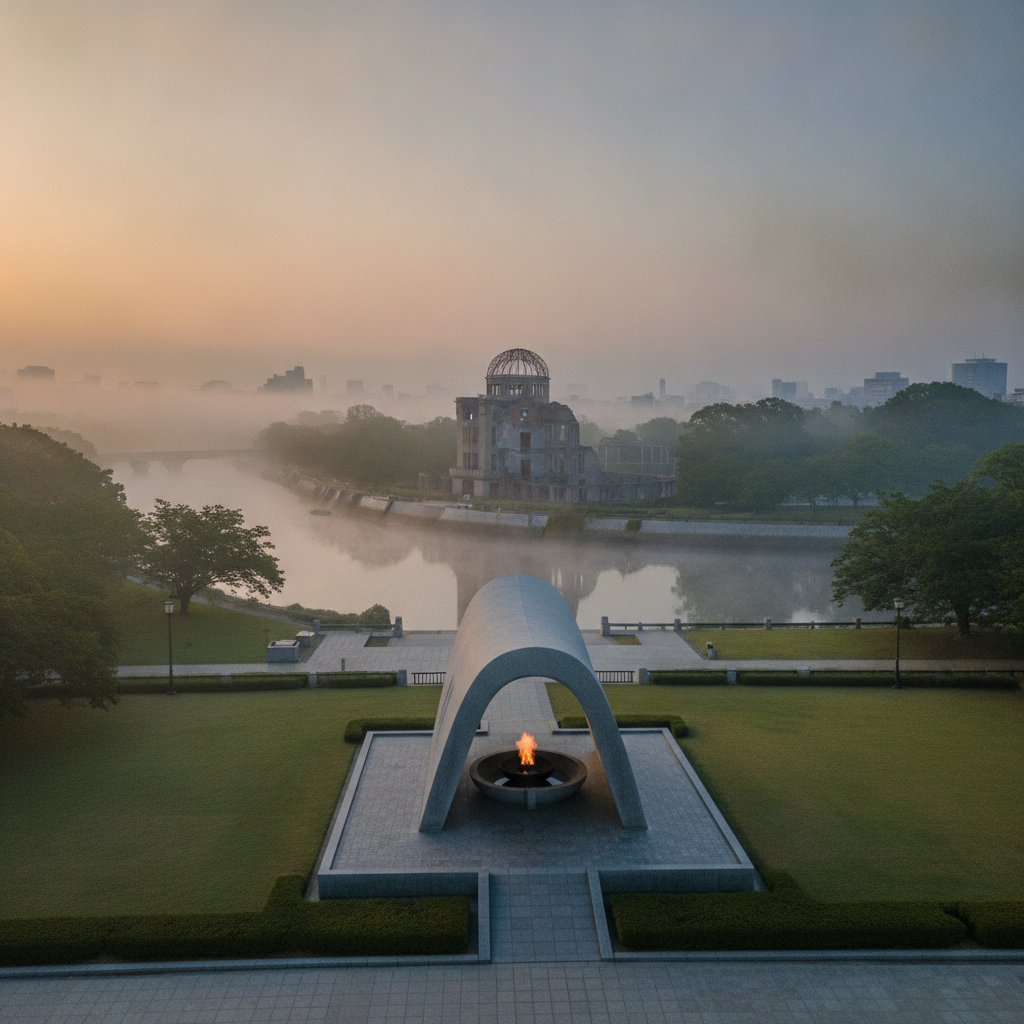
Hiroshima is the city where Kenzō Tange produced his most important early work and established his international reputation. The Peace Memorial Park master plan (1949–1950): Tange's design introduced to Japan the concept of architectural ensemble planning—a group of buildings designed as a composition rather than individually, with the axis running from the museum's elevated piloti through the Cenotaph arch to the A-Bomb Dome as a single spatial argument about memory, loss, and the passage of time. The Peace Memorial Museum (the main museum building elevated on piloti—the concrete pillar legs that raise the building above ground level, allowing the axis view to continue beneath): the piloti are a reference to Le Corbusier's Five Points of Architecture, filtered through Tange's study of the Ise Shrine's elevated timber platforms—the fusion of European modernism with Japanese traditional architecture that defines the Tange synthesis. The Hiroshima Bank Headquarters (1942—completed by Tange before the war; one of the few pre-war Tange buildings surviving; located 380 metres from the hypocenter): the building survived the bomb because its steel-reinforced concrete construction was sufficiently robust at that distance. The post-Tange Hiroshima architecture: the Hiroshima City Museum of Contemporary Art (Kisho Kurokawa, 1989—Metabolism architecture's late masterwork), and the Mazda Zoom-Zoom Stadium (Nikken Sekkei, 2009—the city-center baseball stadium whose open panels and river-side location represent the contemporary urban design approach to the city).
- 6
Hiroshima Overnight – Where to Stay & Evening Rhythm
The Hiroshima accommodation geography has three distinct districts. The Peace Park area (within 500 metres of the park—the Rihga Royal Hotel Hiroshima and the Hotel Granvia Hiroshima at the station are the two large internationally-known properties; the smaller Sora Nishiki boutique hotel and the Imahan Inn near the Naka-ku district are the best small-property options). The Nagarekawa nightlife district (the adult entertainment, bar, and izakaya concentration 10 minutes east of the Peace Park—Hiroshima's most active evening district by volume of visitors, running along a canal that no longer carries water; the izakaya concentration around Yagenbori Street has the best density of good-value eating per metre in the city). The Onomichi day-trip option (for visitors who want a quieter overnight alternative to the city: staying in Onomichi at the Onomichi U2—the converted waterfront warehouse hotel with a bicycle hotel, cycle cafe, and bakery—puts you in one of western Japan's best small-hotel experiences 75 minutes from Hiroshima). The timing question: hotels in Hiroshima are fully booked on the nights of 5 and 6 August within 6 months of the date—if the 6 August ceremony is part of the plan, book immediately. The Peace Park dawn (arriving at the park at 06:00–07:00 before the tour groups): the most tranquil and emotionally resonant time to visit the cenotaph and the dome—the lanterns from the previous night's ceremony may still be drifting on the river, and the park is essentially empty.
Walk this route with audio
Stories play automatically as you reach each stop — no tapping needed.
More in Hiroshima
The Physics of 15 Kilotons, Sadako's Contested Crane Count & Why 8,200 Mayors Now Carry Hiroshima's Message
Layered Okonomiyaki, Soft-Water Sake & the Seto Inland Sea Oyster – Hiroshima Beyond the Peace Park
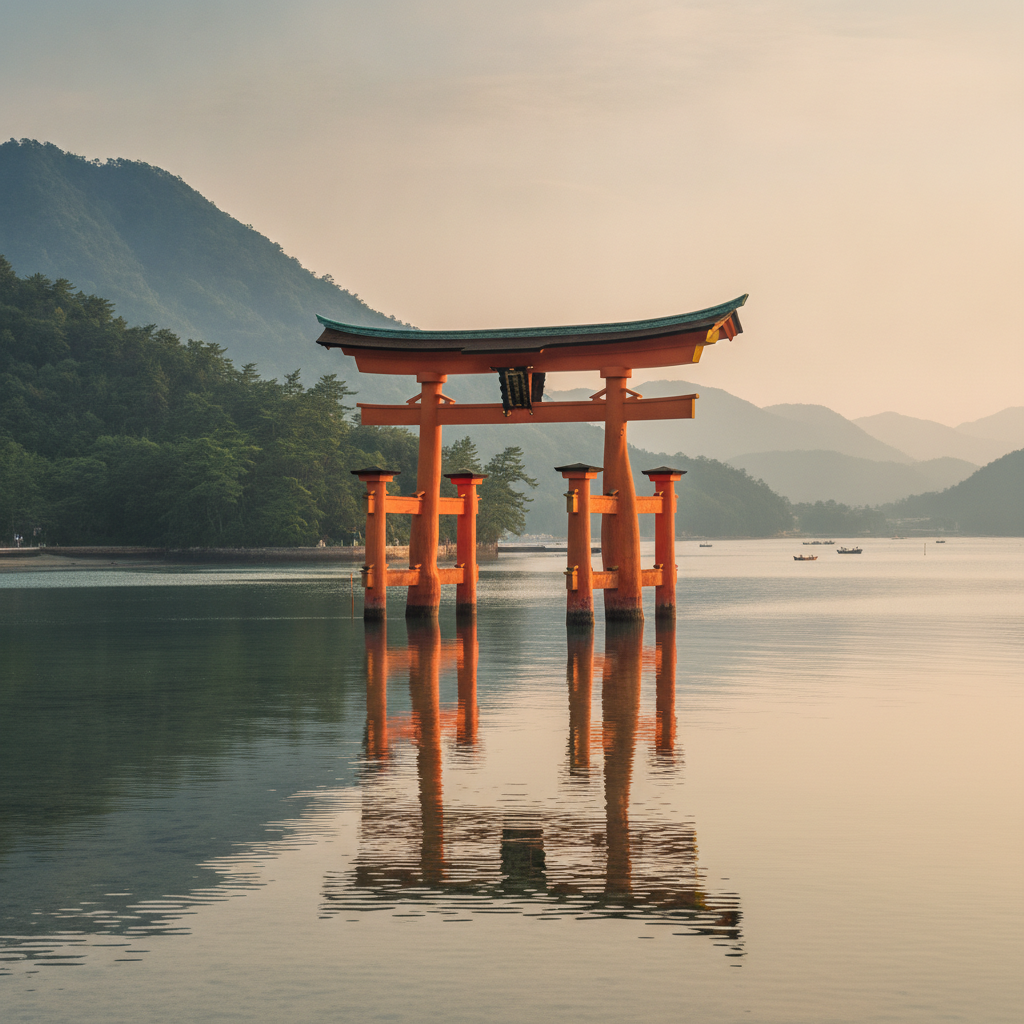
Sadako's Cranes, Bashō's Sea & the Misen Fire That Has Burned for 1,200 Years – Hiroshima's Two Essential Days
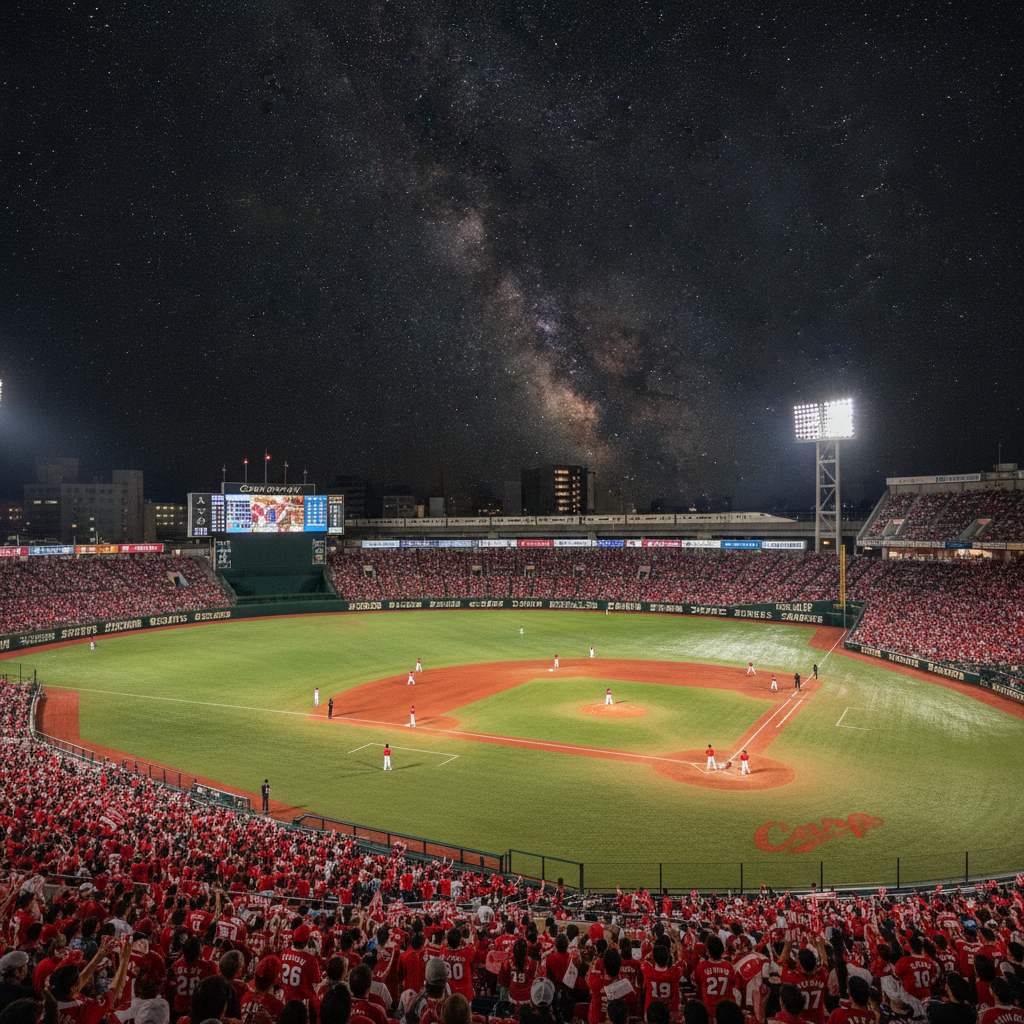
Mazda's Le Mans-Winning Rotary Engine, the Carp's Fan-Owned Recovery Team & Hiroshima's 2030 Bid for a Nuclear Disarmament Summit