Sadako's Cranes, Bashō's Sea & the Misen Fire That Has Burned for 1,200 Years – Hiroshima's Two Essential Days
The Peace Memorial Park's Cenotaph containing 350,000+ names updated annually as new radiation deaths are confirmed; the Peace Museum's melted bento box and the burned human shadow on stone steps; Miyajima's Grand Torii walkable at low tide and floating at high tide with the ropeway to the Misen summit revealing 700 Seto Inland Sea islands; the Misen Eternal Flame lit by Kūkai 1,200 years ago that became the source for Hiroshima's Peace Flame in 1964; the Mazda Museum as the emblem of Hiroshima's industrial recovery; and the practical logistics for a 2-day visit that honours both the museum's weight and Miyajima's lightness.
- 1
Peace Memorial Park – The Ground Zero Circuit
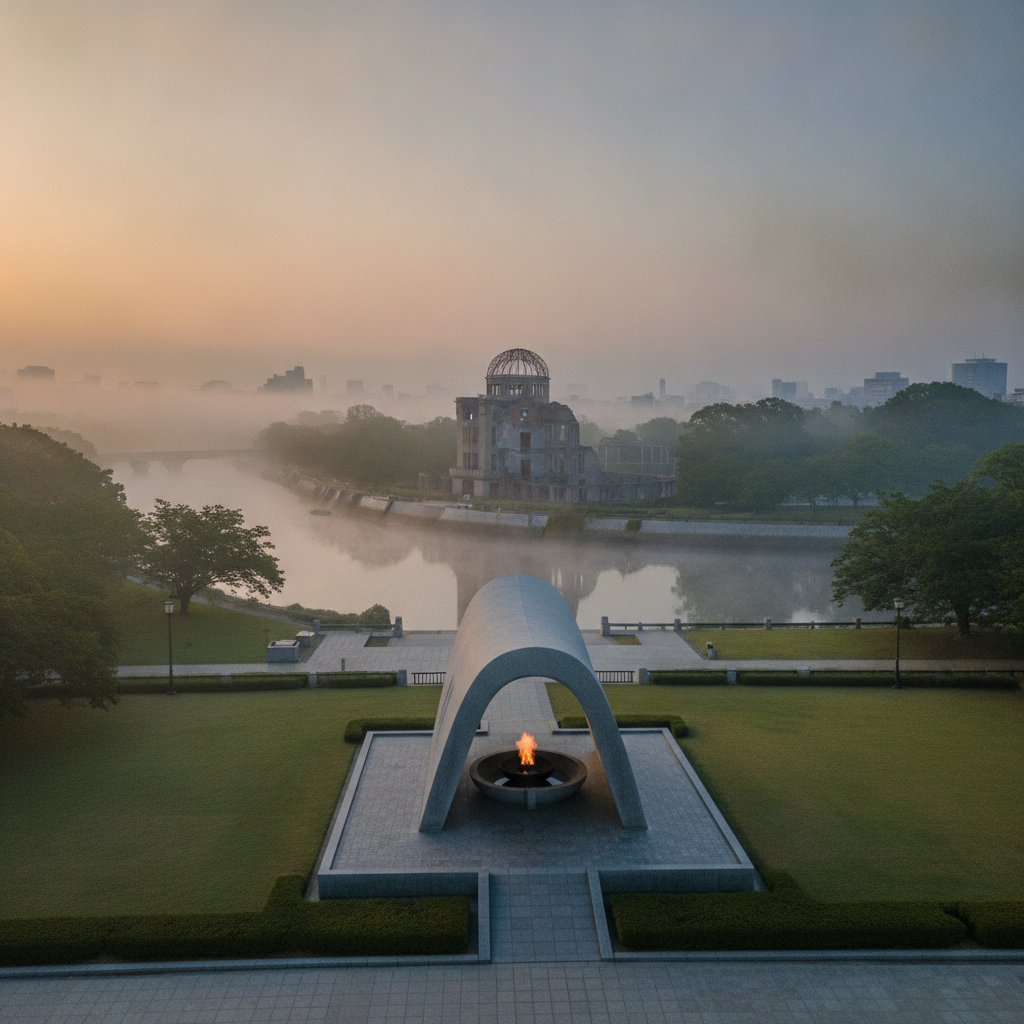
The Peace Memorial Park occupies the hypocenter district—the area directly below the 6 August 1945 detonation at 580 metres altitude. The park's central axis is deliberately aligned with the A-Bomb Dome (the Genbaku Dōmu: the former Hiroshima Prefectural Industrial Promotion Hall, the only structure left standing near the hypocenter and the most photographed ruin in Japan) and the Flame of Peace (burning since 1964, intended to be extinguished only when all nuclear weapons are destroyed). The Cenotaph for A-bomb Victims (the arched Memorial Mound designed by Kenzō Tange in 1952) contains the register of 350,000+ names of confirmed dead—the register is updated annually as new deaths are certified as radiation-related. The Peace Bell (the Tōrō Nagashi lantern-floating ceremony on 6 August evening—hundreds of paper lanterns floated on the Motoyasu River past the A-Bomb Dome—is the most visually striking annual event in Hiroshima and the most emotionally charged ritual in postwar Japan). The Children's Peace Monument (the Sadako Sasaki statue—the 12-year-old girl who died of leukemia in 1955 and whose legend of folding 1,000 paper cranes has made the origami crane the universal symbol of peace): the monument receives millions of paper crane offerings annually from Japanese schoolchildren.
- 2
Hiroshima Peace Memorial Museum – Inside the Record
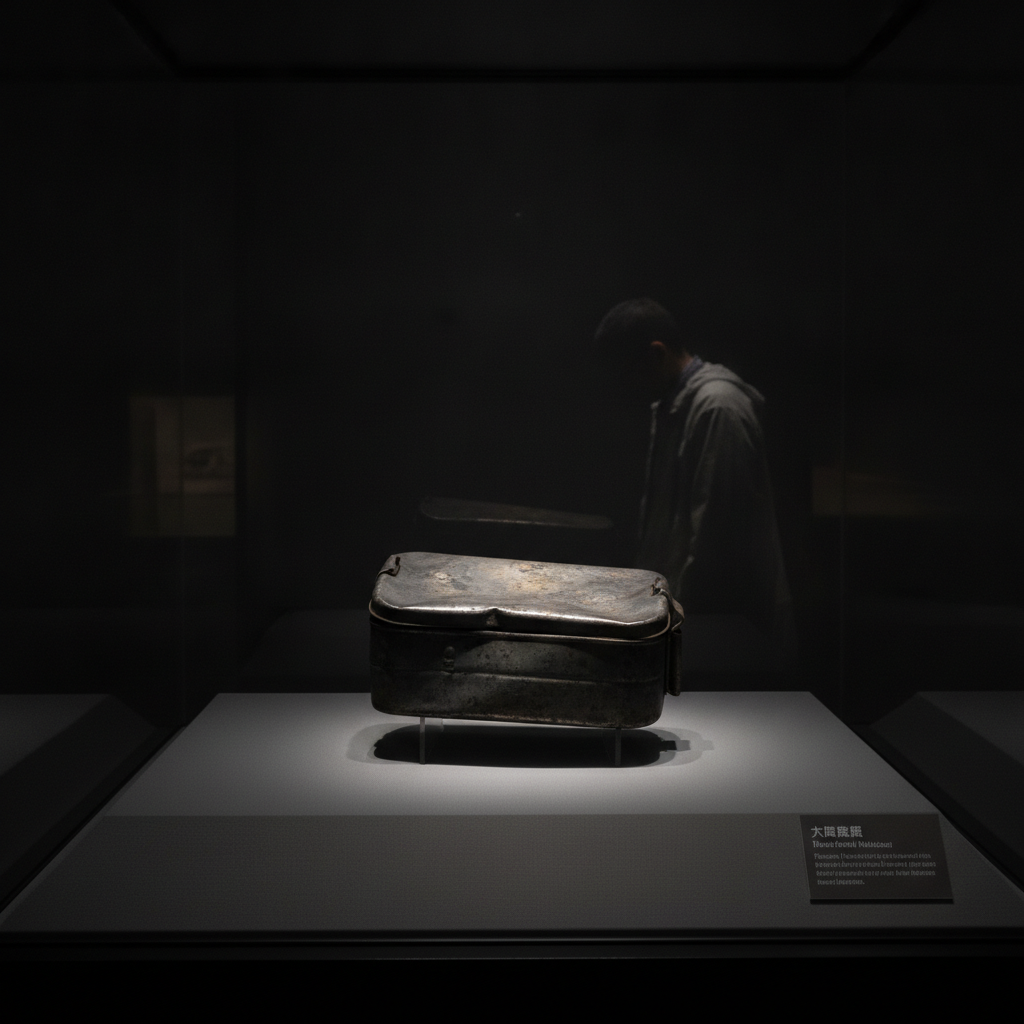
The Hiroshima Peace Memorial Museum (the most visited museum in Japan by international visitors after the Osaka Aquarium, attracting 1.7 million visitors annually) documents the atomic bombing through physical evidence, personal testimony, and scientific explanation in a format that has evolved since its 1955 opening. The east building (the contextual building—the history of Hiroshima before the bombing, the Manhattan Project, the decision to use the bomb, and the broader Pacific War context): the most politically complex section of the museum—the only section in Japan that examines the American decision in detail without the standard Japanese-museum framing of pure victimhood. The west building (the physical evidence building—the most affecting section): the melted lunch box (a child's steel bento box melted and fused shut by the heat), the shadow of a person burned into stone steps at the Sumitomo Bank (the person's body absorbed the radiation and shielded the stone beneath, creating a permanent shadow-negative), the reconstructed room interior showing the state of a house interior at 08:15 on 6 August. The survivor testimony room: the recorded testimonies (the hibakusha oral history programme—the testimonies of atomic bomb survivors recorded since the 1960s; approximately 100,000 hibakusha remain alive as of 2026, the youngest now in their late 70s).
- 3
Miyajima Island – The Floating Torii
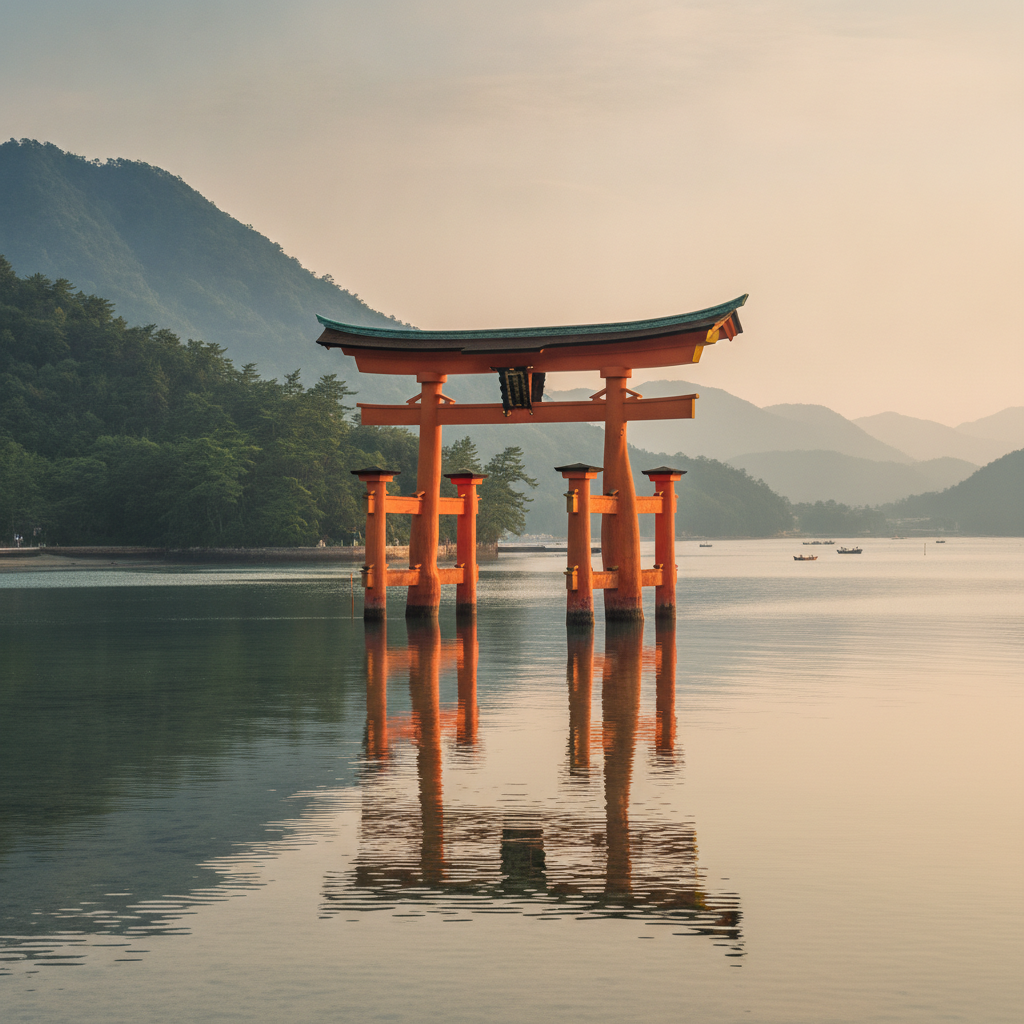
Miyajima (Itsukushima Island, 30 minutes from Hiroshima by JR ferry from Miyajimaguchi—the 17-minute JR San'yō Line train from Hiroshima Station plus the 10-minute ferry) is one of Japan's three officially designated 'scenic views' (nihon sankei) alongside Matsushima and Amanohashidate. The Grand Torii (the O-Torii of Itsukushima Shrine—the 16-metre wooden gate standing in the tidal shallows of the Seto Inland Sea; constructed in the current form in 1875 from camphor wood; floated by its own buoyancy without foundations; the most reproduced image in Japanese tourist literature): the high-tide silhouette (the gate appearing to float as the water rises around its base, experienced from the shrine's wooden pier galleries) versus the low-tide walk (you can walk to the base of the torii and touch it at low tide—the base circumference is 9.9 metres). The Itsukushima Shrine complex (the UNESCO World Heritage orange-lacquered shrine buildings extending over the sea on wooden piers—constructed in the 12th century under Taira no Kiyomori, the ruling military commander who made Itsukushima the family tutelary shrine). The sika deer: the approximately 500 semi-wild deer that roam freely through the island town are not hunted or fed by the shrine and survive by eating tourist maps (literally—they are known to take pamphlets from visitor hands).
- 4
Itsukushima Shrine & Miyajima's Mountains
The Itsukushima Shrine interior (accessible by paying the entrance fee—JPY 300; the shrine's inner chambers contain the honden, or main hall, and the dancing stage over the sea where bugaku court dance performances are held): the shrine's architectural structure is designed so that the entire complex faces the Seto Inland Sea and the tidal flat with Mount Misen behind. The ropeway to Mount Misen (the two-stage ropeway from Momijidani Park to the Shishi-iwa Station at 433 m, then the final 30-minute walk to the Misen summit at 535 m; the summit lookout provides the panoramic view of the Seto Inland Sea island chains that constitutes the 'scenic view' designation—approximately 700 islands visible on clear days). The Misen Eternal Flame (the fire in the Reikado Hall on Mount Misen said to have been burning continuously since the monk Kūkai (Kōbō Daishi) lit it 1,200 years ago; the flame is the source of the Peace Flame in Hiroshima's Peace Memorial Park—a piece of the fire was carried to Hiroshima and used to light the park's eternal flame in 1964). The Daisho-in Temple complex (the 1,200-year-old Shingon Buddhist temple at the base of Mount Misen, accessible without the ropeway: 500 stone lanterns on the approach stairway, the sand mandala rotated by prayer wheels, and the cave where Kūkai is said to have meditated).
- 5
Hiroshima's Rebuilding – The City Today
Hiroshima's post-atomic rebuilding is one of the most dramatic urban recovery stories of the 20th century. By 1958, the city's population had returned to pre-war levels. By 1975, it had grown to 850,000. The city's official rebuilding strategy (the Hiroshima Peace Memorial City Construction Law, 1949—the only city in Japan with its own dedicated urban planning legislation) allocated the Peace Memorial Park site, created wide boulevards designed to serve as firebreaks, and established the city as a hub for Japan's steel and automotive industries (Mazda—headquartered in Hiroshima since 1920, now employing 48,000 people in the city—is the most visible symbol of Hiroshima's economic recovery). The Mazda Museum (the Mazda Motor Corporation museum at the Mazda Ujina Plant, 20 minutes by Hiroshima Electric Railway from the city center; free admission with advance booking): the factory floor tour shows the Mazda production line in operation and the museum exhibits the company's pre-war history—the company was producing trucks and military vehicles in 1945 and was severely damaged by the bomb. The Mazda Zoom-Zoom Stadium (the 33,000-seat Hiroshima Toyo Carp baseball stadium, opened 2009 in the city center): the Carp are the most passionately supported baseball team in Japan, and the stadium's city-center location (unusual in Japanese baseball, where most stadiums are suburban) reflects the civic pride that defines modern Hiroshima.
- 6
Planning Your Hiroshima Visit
Hiroshima is best visited as a 2-day base: Day 1 for the Peace Memorial Park and Museum (allow 3–4 hours for the museum alone; mornings are significantly less crowded than afternoons), and Day 2 for Miyajima. The Hiroshima Peace Memorial Museum is closed on Mondays from December through February; otherwise open daily 08:30–18:00 (08:30–19:00 in summer). The Itsukushima Shrine entrance fee is JPY 300; the Daisho-in Temple is free. The Miyajima ferry runs from Miyajimaguchi (served by JR San'yō Line from Hiroshima, 17 minutes, ¥410; the JR Pass covers both the train and the JR ferry). The most common routing mistake: attempting Miyajima and the Peace Memorial Museum on the same day—the museum requires full emotional attention and 3+ hours; Miyajima requires 4–5 hours to do the ropeway and shoreline properly. The JR Hiroshima–Osaka Shinkansen connection (52 minutes on the Nozomi; ¥10,490) makes Hiroshima a feasible day trip from Kyoto, though an overnight stay allows the 6 August lantern ceremony (if timing permits) or the quieter early-morning Miyajima experience before the day-trip crowds arrive.
Walk this route with audio
Stories play automatically as you reach each stop — no tapping needed.
More in Hiroshima
Before the Bomb Was a Target, It Was a Military Hub – Hiroshima's Korean Victims, Tange's Architectural Argument & the 7-Year Censorship That Shaped Memory
The Physics of 15 Kilotons, Sadako's Contested Crane Count & Why 8,200 Mayors Now Carry Hiroshima's Message
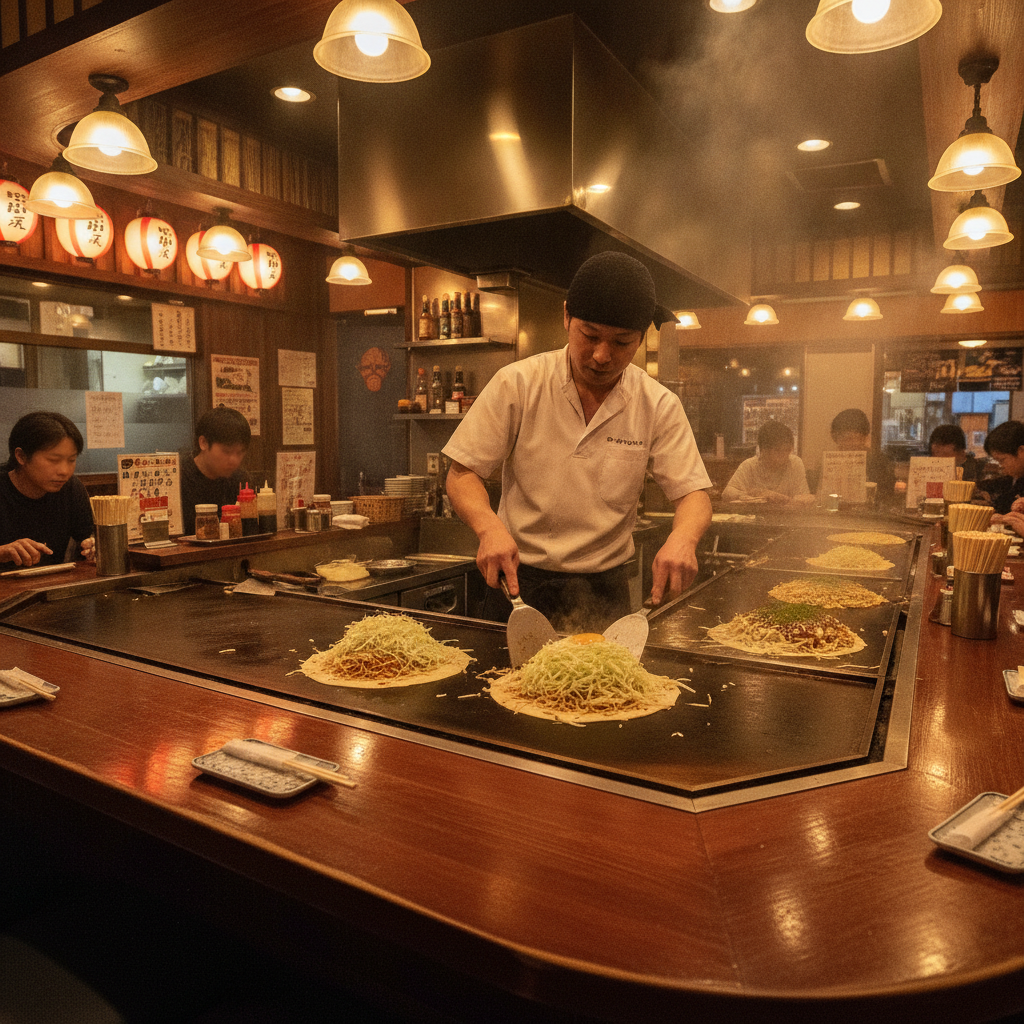
Layered Okonomiyaki, Soft-Water Sake & the Seto Inland Sea Oyster – Hiroshima Beyond the Peace Park
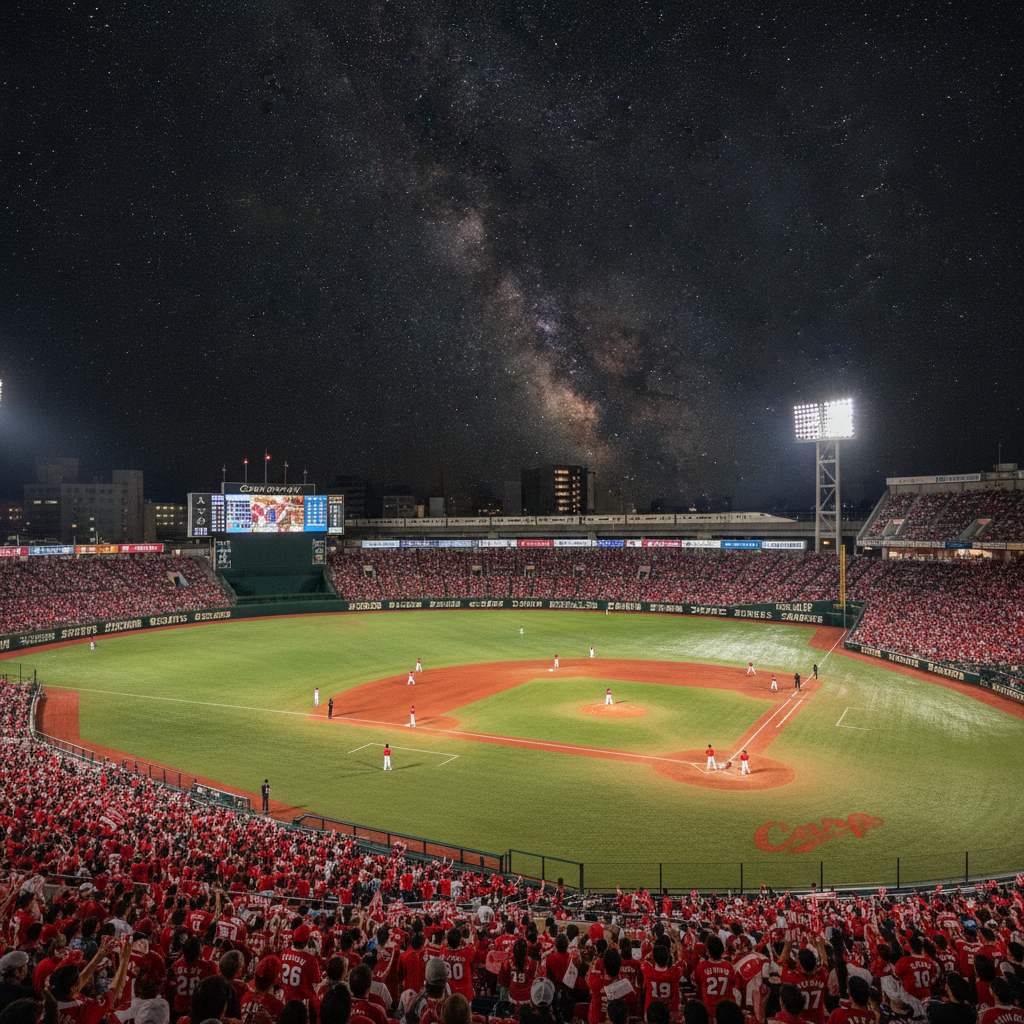
Mazda's Le Mans-Winning Rotary Engine, the Carp's Fan-Owned Recovery Team & Hiroshima's 2030 Bid for a Nuclear Disarmament Summit