Mazda's Le Mans-Winning Rotary Engine, the Carp's Fan-Owned Recovery Team & Hiroshima's 2030 Bid for a Nuclear Disarmament Summit
The Mazda Museum's 787B rotary car (the only Japanese Le Mans winner) and the factory floor tour showing the CX-5 production line; Hiroshima's craft beer Lemon Sour, anago-meshi conger eel rice boxes, and the Seto Inland Sea sashimi calendar; the Carp's fan-ownership structure unique in Japanese baseball and the open-air Mazda Stadium's city-center location; the Mitaki-dera mountain temple within the urban area used as an atomic bomb mass burial site in 1945; and the city's 2030 nuclear disarmament summit bid built on the G7 Hiroshima legacy and 8,200 Mayors for Peace member cities.
- 1
Mazda – Hiroshima's Industrial Recovery Story
Mazda Motor Corporation (founded in Hiroshima in 1920 as the Toyo Cork Kogyo Company; renamed Mazda after Ahura Mazda, the Zoroastrian deity of wisdom, and after the company's founder Jujiro Matsuda—the romanization of Matsuda is also Mazda): the company has been headquartered in the Fuchu-chō district of Hiroshima Prefecture continuously since 1920, making it the oldest surviving major industrial enterprise in the atomic bomb area. The Mazda timeline: the company was producing military trucks when the bomb fell; the factory at Fuchu-chō (6 km from the hypocenter) was damaged but not destroyed; production resumed within months; the company launched the first passenger car (the Mazda R360 Coupe) in 1960 as part of the Japanese economic miracle automotive expansion; the Mazda Familia (1963) was the first Mazda exported internationally; the RX-7 (1978) introduced the Wankel rotary engine to the mass market. The Mazda Museum (the company museum at the Mazda Ujina #1 factory—accessible by free shuttle bus from Hiroshima Station; advance reservation required via Mazda's website; English-language tours at 10:00 and 13:00 on weekdays): the factory floor tour shows the Mazda production line assembling the CX-5 and CX-8 models; the museum wing covers the pre-war truck manufacturing and the bomb damage. The Mazda connection to Formula 1 (Mazda is the only Japanese company to have won Le Mans outright—the 1991 24 Hours of Le Mans with the 787B rotary-engined car): the 787B is on permanent display in the museum.
- 2
Hiroshima's University & Young City
Hiroshima has one of Japan's largest university populations relative to city size (Hiroshima University—the national university, reorganized in 1949 from pre-war imperial university colleges, now with 15,000+ students at the main Higashihiroshima campus; Hiroshima City University—the city-run art and international studies university near Shukkei-en Garden): the student population creates a young urban energy in the Hondori shopping district and the Yokogawa and Hon-dori bar areas that contrasts with Hiroshima's international reputation as a memorial destination. The craft beer scene (the Hiroshima craft beer movement, concentrated around the Nagarekawa district and the Ujina harbour area: Hatchobori Beer, Y. Market Brewing, and the Hiroshima Taproom being the three most visited; the Hiroshima Lemon Sour—the locally evolved highball variant using Seto Inland Sea lemons, shochu, and soda water—is the most distinctly Hiroshima cocktail). The Hiroshima music scene (the LIVE JAM Hiroshima concert circuit—the city's live music venue concentration around the Nagarekawa and Yagenbori districts; Hiroshima has produced a disproportionate number of major Japanese rock bands relative to its size, including the B'z—Japan's best-selling musical act of all time—whose vocalist Koshi Inaba was born in Asakuchi, the adjacent prefecture). The Hiroshima startup ecosystem (the Hiroshima Innovation Hub, established 2019—the city government's attempt to leverage the automotive and aerospace (Mazda, Mitsubishi Hitachi Power Systems) industrial base into a technology cluster): 150+ startups as of 2026.
- 3
Hiroshima's Cuisine Depth – Beyond Okonomiyaki
The Hiroshima food system beyond the internationally known okonomiyaki includes several local food traditions of equivalent importance within Japanese culinary culture. Anago (conger eel—distinct from unagi, the freshwater eel that dominates Tokyo and Osaka eel cuisine): Hiroshima's conger eel is harvested from the Seto Inland Sea's tidal estuaries and prepared as anago-meshi (the conger eel rice box served in the Miyajima area and Hiroshima center—the Ueno Hiroshima store near Hiroshima Station is considered the city's benchmark anago-meshi, served in a wooden lacquer box with the conger braised in soy-mirin and grilled). Goma-dofu (the sesame tofu of Miyajima—made by cooking sesame paste with kuzu (arrowroot) starch into a firm, smooth block without soybeans—a traditional temple food associated with the Daisho-in Temple's Shingon Buddhist cuisine): the Miyajima goma-dofu is sold by three specialist shops along the shrine approach and is consumed at room temperature with soy and wasabi. The Hiroshima ramen (Hiroshima chuka soba—a thin straight-noodle ramen in a clear chicken-and-soy broth topped with neginiku (green onion with pork slices)—distinct from the Onomichi ramen (a heavier pork-bone and soy broth with back fat floating on the surface) that is considered the region's landmark ramen style). The Seto Inland Sea sashimi calendar: tai (red sea bream, peak March–April; the species that represents auspicious occasions in Japanese culture) and aji (horse mackerel, peak June–August) are the two most distinctively Hiroshima sashimi species.
- 4
The Hiroshima Carp – Baseball as Civic Identity
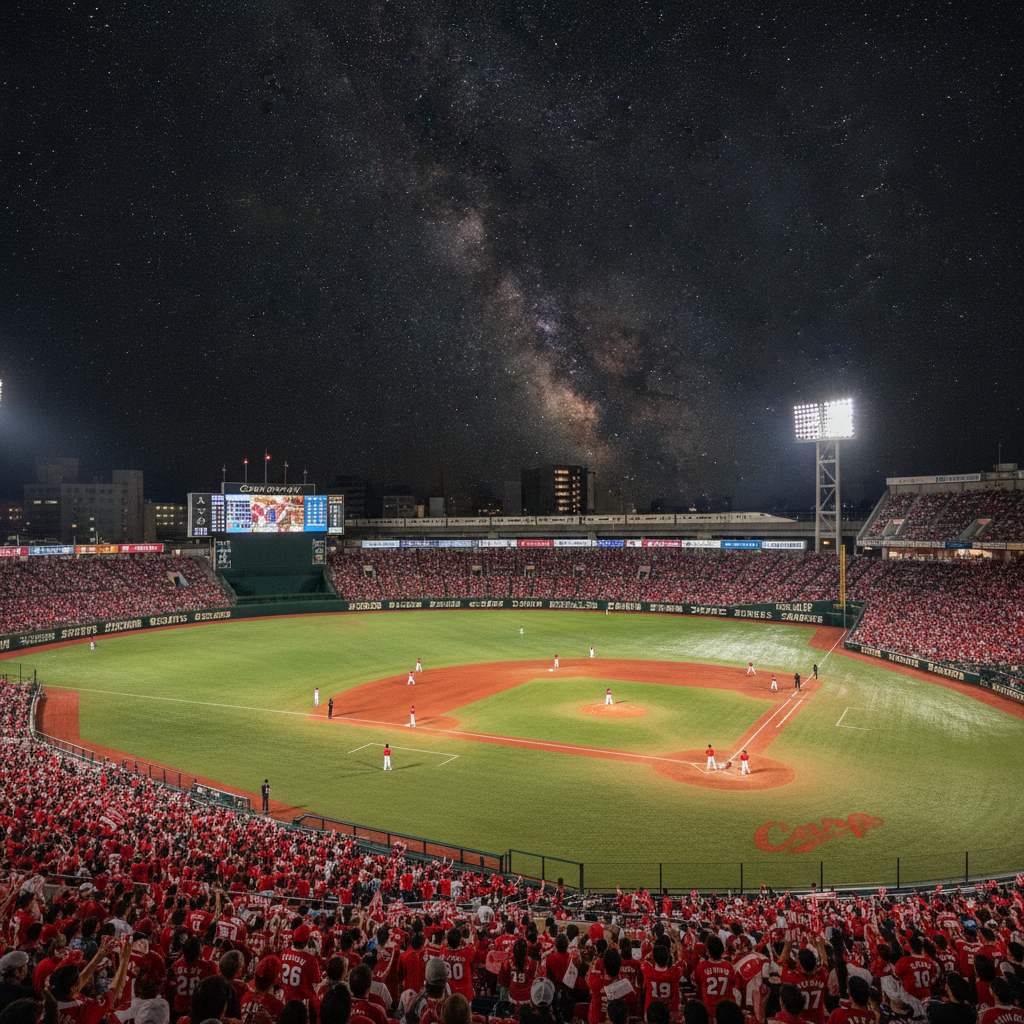
The Hiroshima Toyo Carp (the NPB Central League team that plays at Mazda Zoom-Zoom Stadium in Hiroshima's city center) occupy a position in Hiroshima civic identity that no other Japanese baseball team replicates in its home city. The Carp's unique ownership structure: the team was founded in 1950 by the city of Hiroshima as a symbol of post-atomic recovery (the 'reconstruction team'—the name carp was chosen because the carp fish had survived in the contaminated rivers after the bomb, becoming a local symbol of resilience); the team is co-owned by the city and the fans (a fan-ownership share structure unique in Japanese professional baseball). The Carp colour (Carp red—the intense vermillion used for the team's uniforms, banners, and merchandise): on home game days, the approach streets to Mazda Zoom-Zoom Stadium are entirely red-uniformed from 2 hours before first pitch. The stadium design (Mazda Zoom-Zoom Stadium Hiroshima, opened 2009—the first open-air, natural-grass stadium in Japanese professional baseball; designed to face the outfield toward downtown Hiroshima with the iconic view of the Shinkansen tracks in the background visible from upper deck seats; the right-field bleacher section is standing-only and the most passionate seating area): the stadium has hosted consecutive Central League Championships (2016, 2017, 2018—the first three-peat since 1982) and is consistently voted Japan's best baseball stadium in fan surveys.
- 5
Hiroshima's Spiritual Geography – Temples & Shrines
Beyond Miyajima, Hiroshima Prefecture contains a dense network of mountain temples and coastal shrines that most visitors miss entirely. The Onomichi temple walk (the 25-temple route on the Senkoji mountain above Onomichi—the most concentrated temple grouping in western Japan; each temple has a distinct architecture and season-dependent garden; the Fukuzen-ji Temple at the walk's western end has a garden with a view of the Seto Inland Sea that has been designated a 'national scenic beauty'). The Kannon-ji Temple at Onomichi (housing Japan's largest indoor Kannon statue—a 12-metre gilded Kannon standing in the temple's central hall; accessible via a steep lane 5 minutes from the Senkoji ropeway base station): the temple is rarely mentioned in Hiroshima guide literature but consistently cited by Japanese travellers as one of the most affecting Kannon experiences in western Japan. The Mitaki-dera Temple in Hiroshima city (the waterfall temple 3.5 km from Hiroshima Station—a rare mountain forest environment within the urban area, with three waterfalls and a garden established in 809 CE; the temple complex's garden was used as a mass burial site for atomic bomb victims in August 1945 and the memorial stupas in the forest mark these graves). The Miyajima Daisho-in complex (500 stone lanterns on the approach to the Shingon Buddhist temple at the base of Mount Misen—the lanterns are lit for the Misen Tōrō Festival in November, the single most atmospheric night event on Miyajima island).
- 6
Hiroshima's 2025–2030 Future – Nuclear Abolition & Urban Renewal
Hiroshima's contemporary civic identity is organized around two parallel projects: the city's bid to host a UN nuclear disarmament summit before 2030 (supported by Mayors for Peace's 8,200+ member cities), and the urban renewal project around the Hiroshima Station area (the Hiroshima Station South Exit redevelopment—the largest urban infrastructure project in the city since the Peace Memorial Park was built; the new elevated tram line running directly into the station concourse at second-floor level, replacing the current street-level crossing; completion scheduled for 2025). The nuclear context: as of 2026, 9 states possess nuclear weapons (US, Russia, UK, France, China, India, Pakistan, Israel (undeclared), North Korea); the NPT (Non-Proliferation Treaty) framework is under its most severe stress since the Cold War (Russia's nuclear threat rhetoric in the Ukraine conflict; North Korea's ICBM development; Iran's enrichment programme). The Hiroshima Peace Declaration 2025 (the 80th anniversary declaration delivered by Mayor Matsui on 6 August 2025): the most politically significant Hiroshima declaration of the post-Obama era, delivered amid active European nuclear threat scenarios for the first time since 1989. The Hiroshima Vision for 2030: the city's official plan positions Hiroshima as a global education and meeting center for nuclear-risk reduction, building on the G7 summit legacy (2023) and the Mayors for Peace network's sustained growth—the ambition is to be the permanent secretariat city for any future international nuclear disarmament framework.
Walk this route with audio
Stories play automatically as you reach each stop — no tapping needed.
More in Hiroshima
Before the Bomb Was a Target, It Was a Military Hub – Hiroshima's Korean Victims, Tange's Architectural Argument & the 7-Year Censorship That Shaped Memory
The Physics of 15 Kilotons, Sadako's Contested Crane Count & Why 8,200 Mayors Now Carry Hiroshima's Message
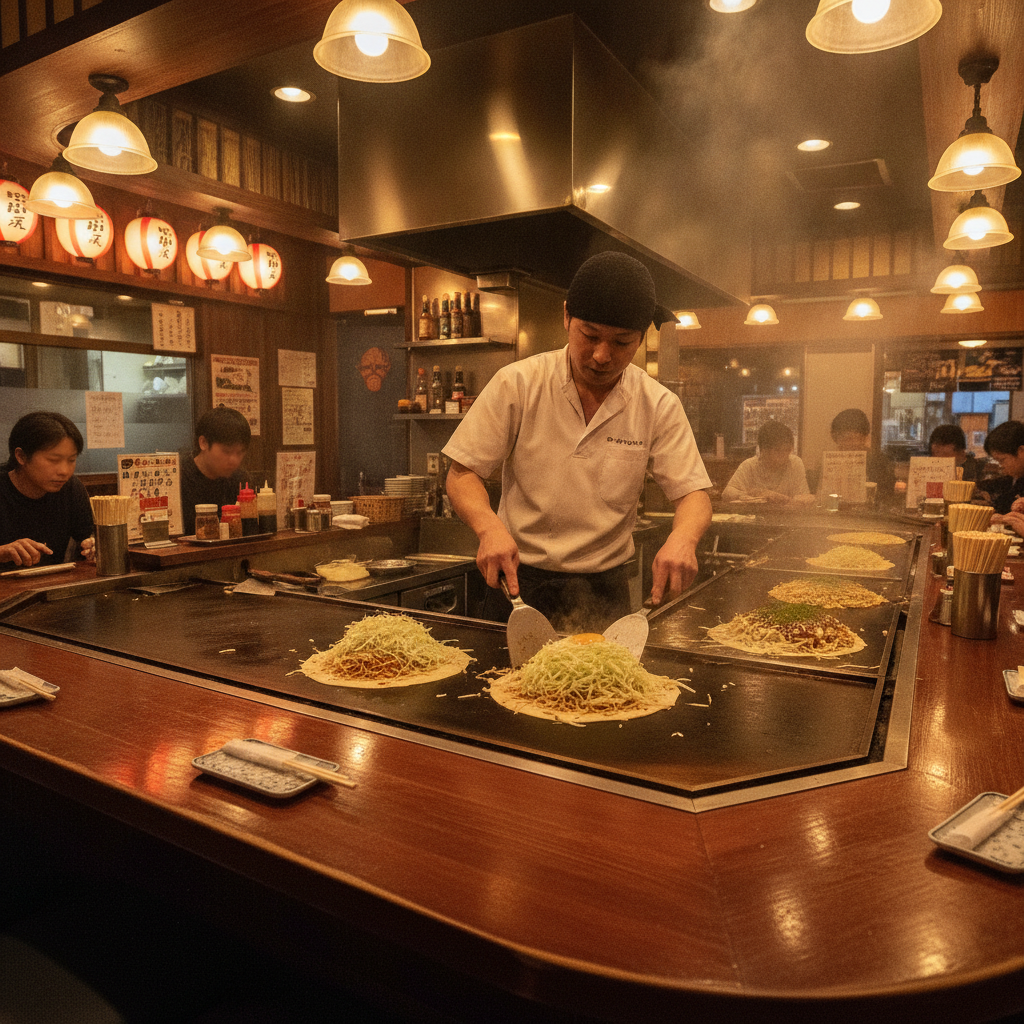
Layered Okonomiyaki, Soft-Water Sake & the Seto Inland Sea Oyster – Hiroshima Beyond the Peace Park
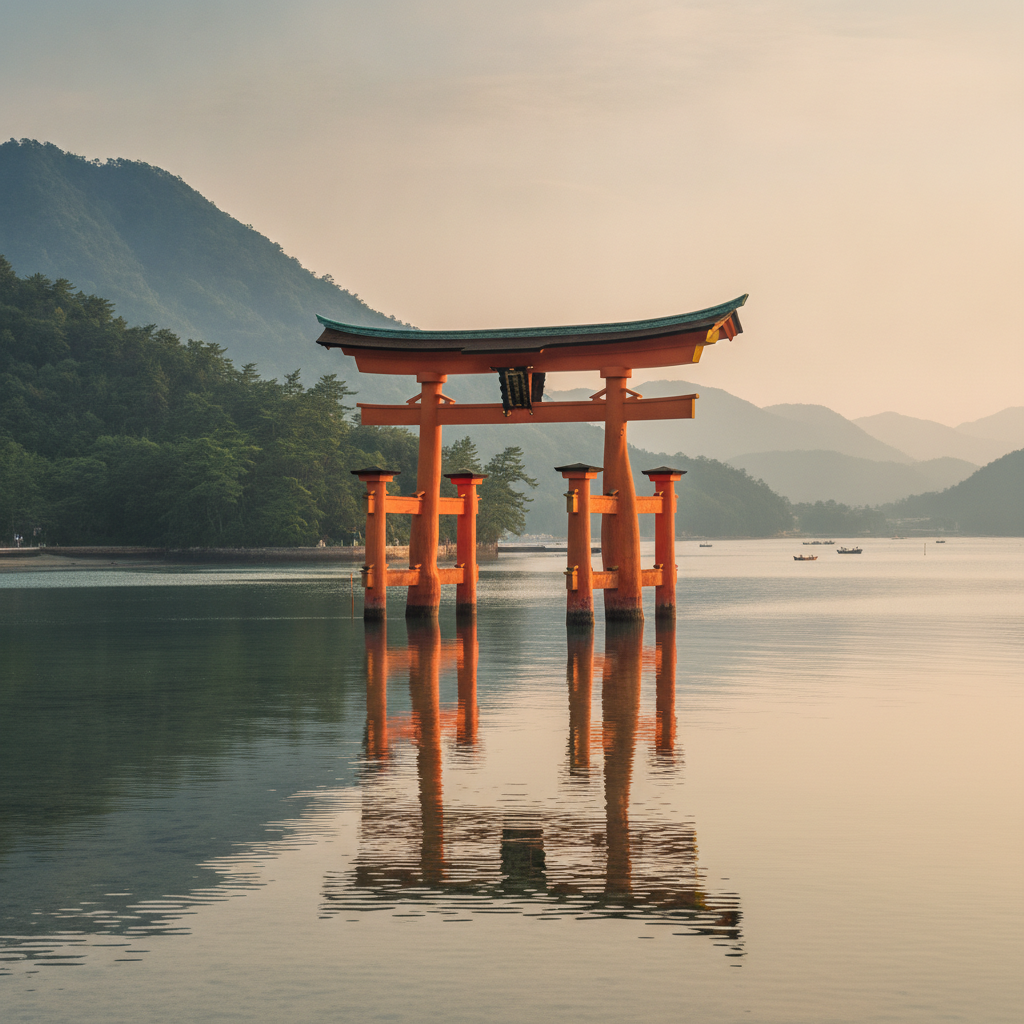
Sadako's Cranes, Bashō's Sea & the Misen Fire That Has Burned for 1,200 Years – Hiroshima's Two Essential Days