Layered Okonomiyaki, Soft-Water Sake & the Seto Inland Sea Oyster – Hiroshima Beyond the Peace Park
The Okonomimura's 25 hotplate restaurants each cooking the distinctively layered Hiroshima version; Onomichi's 25-temple mountain walk and the Shimanami Kaidō cycling route to Shikoku; the Ōta River delta cycling circuit connecting castle, garden, and stadium in 15 km; Saijo's 8 brick-chimney sake breweries and the October festival drawing 200,000 visitors; Hiroshima Museum of Art's counterintuitive Impressionist collection as a city statement about beauty alongside memory; and the December–February oyster peak season when Hiroshima Prefecture's farms produce 60% of Japan's total supply.
- 1
Hiroshima-Style Okonomiyaki – The Layered Version
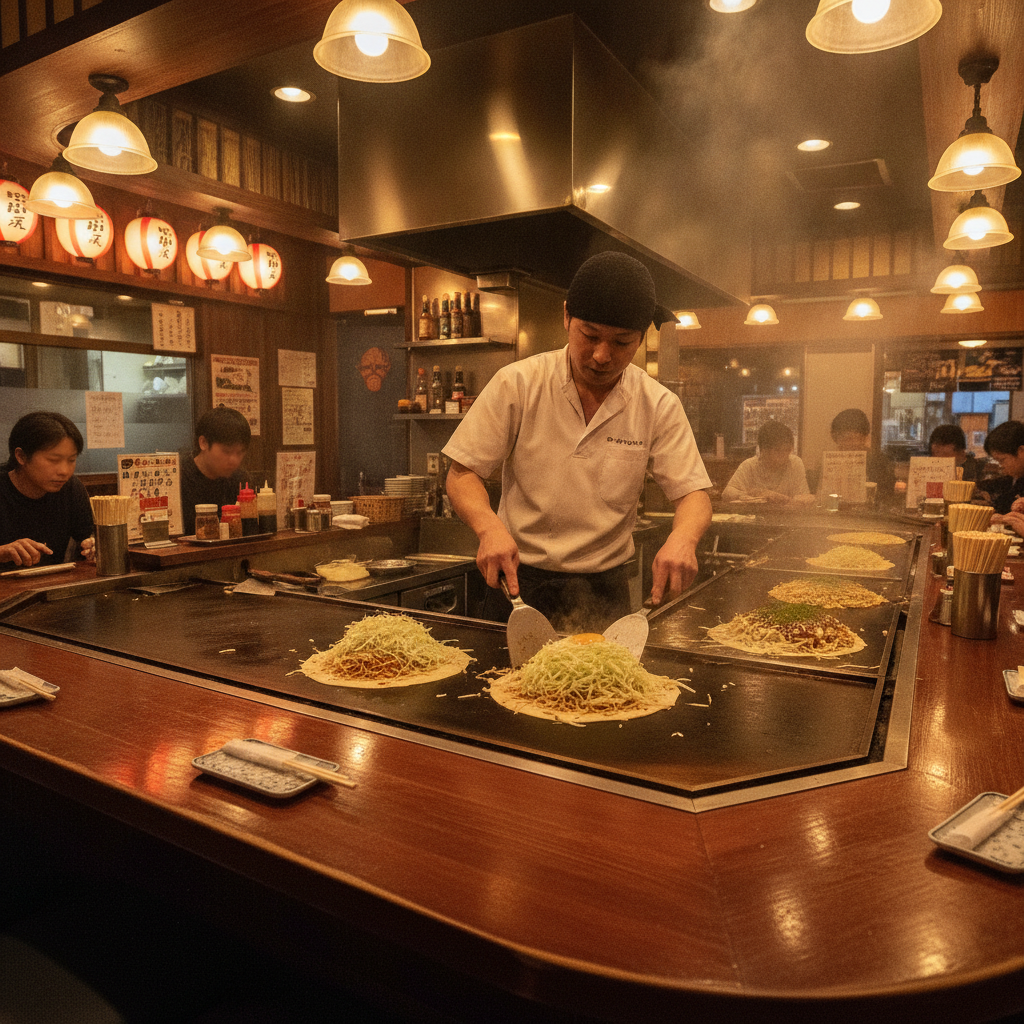
Hiroshima okonomiyaki is categorically different from the Osaka version (the more internationally known style): where Osaka okonomiyaki mixes all ingredients into the batter before cooking, Hiroshima-style layers each component separately—the thin crepe base, the cabbage mound, the beansprouts, the pork belly, the yakisoba noodles, and the egg—producing a taller, more structurally complex result that must be eaten immediately from the iron hotplate. The Okonomimura (the 'Okonomi Village'—the six-story building near Hiroshima Station containing approximately 25 okonomiyaki restaurants on floors 2–6; each restaurant has a counter with the cook's hotplate visible; the most concentrated okonomiyaki experience in Japan): the price range is ¥900–1,400 per person; the standard order is okonomiyaki with noodles (soba) and roe (mentaiko) as the premium addition. The origin dispute: Hiroshima's claim that layered okonomiyaki originated as a post-war street food—the cabbage and noodles were filling and cheap in the immediate post-bomb period and the dish evolved from the booths operated by women feeding displaced residents in 1945–1950. The etiquette: eating at the counter (not a table) and watching the cook is the authentic experience; the spatulas (kote) are the serving utensil and you eat directly from the hotplate.
- 2
Onomichi & the Seto Inland Sea Hill Town
Onomichi (75 minutes east of Hiroshima by JR San'yō Line; ¥1,520) is the hillside port town whose steep lanes, 25 temples on the mountain slope, and literary association (4 major Japanese directors and novelists were born or lived here, including Shōhei Imamura and the novelist Fumiko Hayashi) make it the single most atmospheric small town accessible as a day trip from Hiroshima. The temple walk (Senkoji Ropeway to the hilltop, then the walking route down through 25 temples and shrines on the steep slope back to the waterfront—approximately 2.5 km, 90 minutes of walking): the Senkoji Temple summit view over the Seto Inland Sea and Onomichi waterway is the canonical Onomichi image. The cat alley (Neko no Hosomichi—the narrow lane between Senkoji and the residential area known for the colony of cats that rest on the temple walls and stone steps; the most photographed lane in western Japan after the Kyoto bamboo grove). The Onomichi Literature Museum (the collection documenting the town's disproportionate contribution to 20th-century Japanese literature; free with a ¥500 literature walk map). The Shimanami Kaidō cycle route begins in Onomichi—the 70 km cycling bridge-and-island route across 6 islands of the Seto Inland Sea to Imabari on Shikoku is the most celebrated cycling route in Japan.
- 3
The Hiroshima Delta – Cycling the Seven Rivers
Hiroshima is built on the Ōta River delta—a city of seven river channels flowing into the Seto Inland Sea from the Chūgoku mountains. The cycling network along these channels (the Hiroshima Cycling Map available free at the tourist information center at Hiroshima Station) connects the Peace Memorial Park (on the Motoyasu River), the Hiroshima Castle (on the Honkawa River channel), the Shukkei-en garden, and the Mazda stadium in a flat urban circuit of approximately 15 km. The Hiroshima Castle (the 1589 castle reconstructed in 1958 after atomic bomb destruction—the original castle was 2.7 km from the hypocenter and destroyed instantly; the reconstruction is a concrete interior museum with the original exterior appearance; the most historically complete document of the original castle's structure exists only in the 1945 post-bombing aerial photographs taken by US military reconnaissance flights 2 hours after the blast). The Shukkei-en Garden (the 17th-century garden designed to miniaturize the West Lake of Hangzhou in China in a 4-hectare site—the garden was severely damaged by the bombing and used as a triage and burial site for bomb survivors in August 1945; restored to its current condition by 1951): the autumn foliage (mid-November) in the garden is one of the top-10 momiji (maple viewing) events in western Japan.
- 4
Hiroshima's Sake Country – Saijo & the Western Brews
Saijo (45 minutes east of Hiroshima by JR Sanyo Line; ¥590) is one of Japan's three great sake brewing towns (alongside Nada in Kobe and Fushimi in Kyoto)—the town's 8 sake breweries are visible from the station by their distinctive brick chimneys and white clay warehouses clustered within 500 metres of the platform. The Saijo sake brewing science: the soft water of the Hiroshima region (low in mineral content, particularly magnesium and potassium) was historically considered unsuitable for sake brewing because it produces slower, colder fermentation and was thought to yield inferior results. The Meiji-era brewer Sanzaemon Mishima (1868–1943) developed the 'soft water brewing method' (Nanzoshu) in the 1890s, demonstrating that soft water could produce a sweeter, more delicate sake style—a style now associated with Hiroshima and Saijo specifically. The Saijo Sake Festival (Saijo Sake Matsuri—held annually on the second weekend of October; approximately 200,000 visitors attend the two-day festival to taste sake from 8 local breweries and 100+ producers from across Japan; the largest sake festival in western Japan). The Kamotsuru brewery tour (Kamotsuru Shuzo—the largest Saijo brewery and the one that produces the ginjo sake served to visiting world leaders at G7 summits hosted in Japan).
- 5
Hiroshima's Contemporary Art Scene
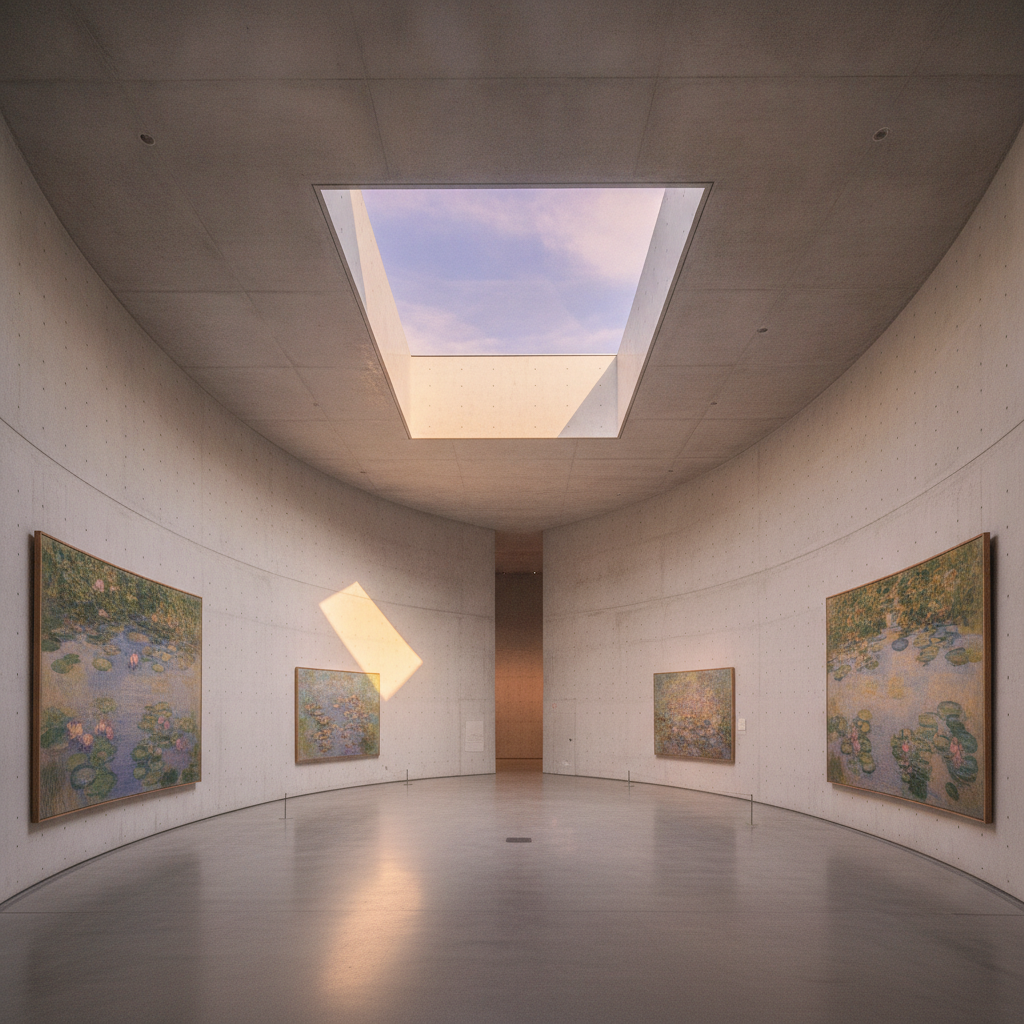
The Hiroshima Museum of Art (the Impressionist collection—the Hiroshima Museum of Art houses the largest Impressionist collection in Japan outside Tokyo and Osaka, including works by Monet, Renoir, Van Gogh, and Gauguin acquired in the 1970s by the Hiroshima Bank as part of a corporate art collection programme that became one of the most significant private art acquisitions in postwar Japan): the collection is counterintuitive in a city most associated with historical trauma—a deliberate decision to establish Hiroshima as a city of beauty as well as memory. The Hiroshima City Museum of Contemporary Art (the Sōgō-Kōen hilltop museum designed by Kisho Kurokawa in 1989—the first public contemporary art museum in Japan; the permanent collection focuses on contemporary Japanese artists alongside international works; the building itself is a major Metabolism architecture example, the design movement that dominated Japanese architectural thought from the 1960s through the 1980s). The Nakanoseki island art projects (the Seto Inland Sea islands near Hiroshima that participate in the Setouchi Triennale art festival—held every three years, with the next edition in 2025 and 2028; the island art installations on Naoshima, Teshima, and Inujima are 2–3 hours from Hiroshima by ferry).
- 6
Hiroshima's Oysters & the Inland Sea Food Culture
Hiroshima Prefecture produces 60% of Japan's oysters—the Seto Inland Sea's calm, nutrient-rich waters and the rivers flowing from the Chūgoku mountains create the ideal oyster farming conditions. Hiroshima oysters are grown on suspended rope culture (the ropes hanging from floating frames in the sheltered sea bays) from October through March, with the peak season in December–February when the cold water produces the sweetest, largest oysters. The oyster street (the Kaki-sen restaurant strip near Miyajima-guchi ferry terminal—approximately 20 restaurants serving Hiroshima oysters within 200 metres of the Miyajima ferry dock): the standard formats are kaki-furai (oyster tempura in breadcrumbs—the most popular Japanese oyster preparation), kaki-dōfu (oyster and tofu hot pot), and grilled oyster on the half-shell over charcoal. The Miyajima oyster feast (the Miyajima island restaurants lining the shopping street between the ferry terminal and the shrine serve oysters in the same formats but with the premium of eating on an island classified as a scenic national treasure). The Hiroshima lemon (Hiroshima Prefecture is Japan's largest lemon producer—the Seto Inland Sea islands, particularly around Ōshima, produce the domestic lemon that features in Hiroshima cuisine as a lemon-cured sashimi, lemon-dressed oyster, and the Hiroshima lemon beer produced by three local craft breweries).
Walk this route with audio
Stories play automatically as you reach each stop — no tapping needed.
More in Hiroshima
Before the Bomb Was a Target, It Was a Military Hub – Hiroshima's Korean Victims, Tange's Architectural Argument & the 7-Year Censorship That Shaped Memory
The Physics of 15 Kilotons, Sadako's Contested Crane Count & Why 8,200 Mayors Now Carry Hiroshima's Message
Sadako's Cranes, Bashō's Sea & the Misen Fire That Has Burned for 1,200 Years – Hiroshima's Two Essential Days
Mazda's Le Mans-Winning Rotary Engine, the Carp's Fan-Owned Recovery Team & Hiroshima's 2030 Bid for a Nuclear Disarmament Summit