The Physics of 15 Kilotons, Sadako's Contested Crane Count & Why 8,200 Mayors Now Carry Hiroshima's Message
The Little Boy gun-type design never tested before use and the A-Bomb Dome's survival because the vertical blast compressed rather than pushed it; the 106,000 surviving hibakusha with a median age of 85 and the volunteer testimony programme still operating in the museum; Mayors for Peace network's 8,200 member cities and the 2023 G7 summit as the most politically significant Hiroshima visit since Obama; Kenzō Tange's arch aligned to frame the ruined dome as architecture-as-argument; the tram network running since 1912 as the city's most convenient transport; and the practical 2-day routing logic that separates the museum from Miyajima.
- 1
The Physics of 6 August 1945
The atomic bomb detonated above Hiroshima at 08:15 on 6 August 1945 was a gun-type uranium-235 device (the Little Boy design—the simpler, less efficient of the two bomb types used in Japan; never tested before deployment because the gun-type design was considered reliable enough not to require testing). The detonation point was 580 metres above the Shima Surgical Clinic, 160 metres southeast of the intended target (the Aioi Bridge T-junction). The yield: approximately 15 kilotons TNT equivalent—equivalent to the simultaneous detonation of 15,000 metric tons of conventional explosive. The immediate effects: the fireball reached 6,000°C at its core (hotter than the sun's surface); the overpressure wave destroyed masonry structures within 2 km of the hypocenter; the thermal pulse ignited fires within 4 km; the initial gamma and neutron radiation delivered lethal doses to anyone within 1 km of the hypocenter with no physical shelter. The death toll uncertainty: the official Hiroshima city estimate is 140,000 dead by the end of 1945 (±10,000); the range in academic literature is 90,000–166,000 depending on methodology and the population estimate for the pre-bombing city. The A-Bomb Dome survives because it was almost directly beneath the detonation: the downward force of the blast compressed the building vertically rather than pushing it sideways, preserving the steel dome structure while destroying the surrounding brick walls.
- 2
The Hibakusha – Survivor Testimony & Recognition
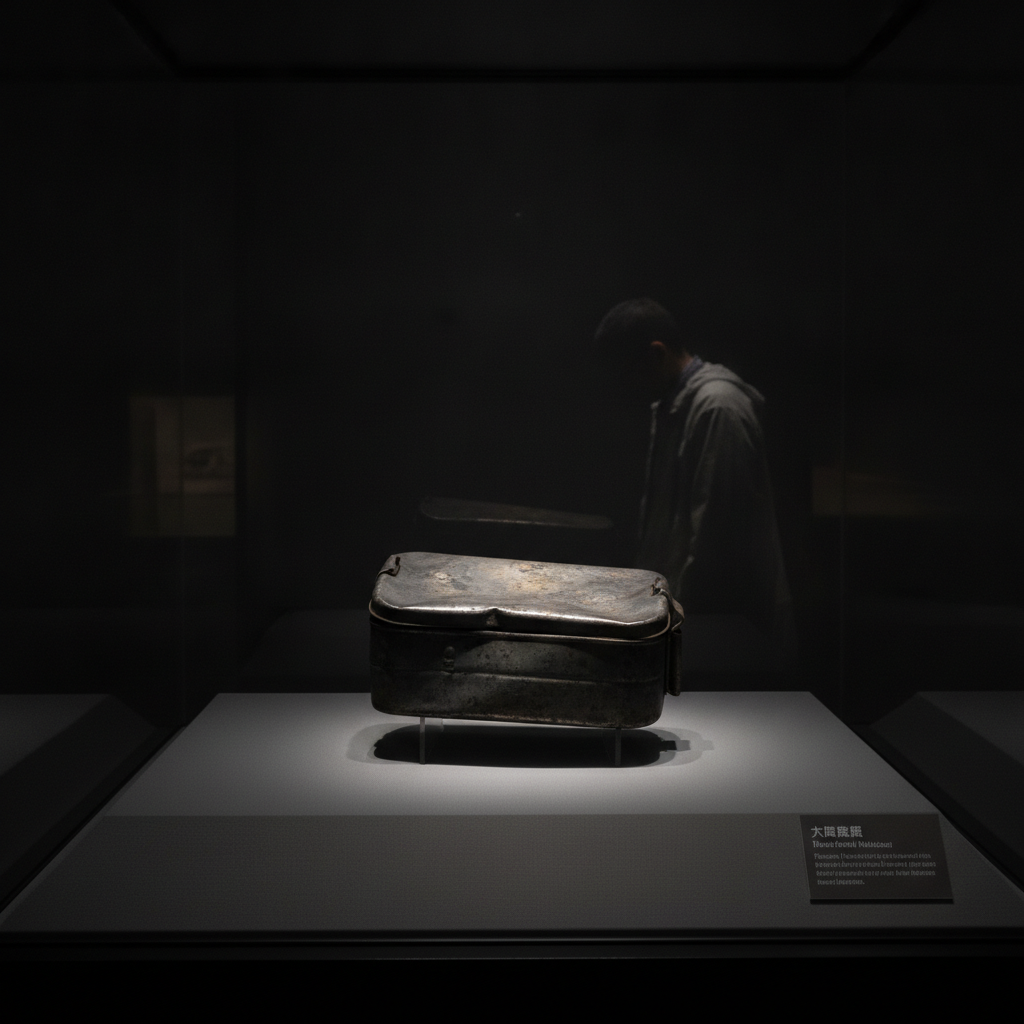
The hibakusha (the Japanese term for atomic bomb survivors—literally 'explosion-affected people') are a legally defined category in Japan under the Atomic Bomb Survivors Relief Law (1994). As of 2026, approximately 106,000 registered hibakusha remain alive (down from a peak registration of 375,000 in 1981), with a median age of approximately 85. The Hiroshima Peace Memorial Museum's volunteer hibakusha testimony programme: approximately 90 surviving hibakusha volunteer to give personal testimony to museum visitors in Japanese (with interpretation available)—the most direct survivor testimony programme for any modern historical event still operating. The Sadako Sasaki case (the 12-year-old girl diagnosed with leukemia in 1954, nine years after the bombing; her practice of folding paper cranes in the hospital, and her death in October 1955 before completing the traditional 1,000 cranes, became the central story of childhood atomic bomb suffering in Japan; her original paper cranes are preserved at the Hiroshima Peace Memorial Museum): the story's accuracy is partially contested (she may have completed 1,000 cranes before her death—the discrepancy reflects competing family accounts). The Nagasaki hibakusha comparison: the Nagasaki and Hiroshima survivor communities have maintained separate organisations and separate political advocacy since the 1950s, reflecting the different demographic composition of the two bombed cities and the different post-war political environments.
- 3
Hiroshima's Peace Diplomacy – Mayors for Peace
The Mayors for Peace network (founded by Hiroshima Mayor Takeshi Araki in 1982, the year of the UN Second Special Session on Disarmament) is the most internationally active nuclear disarmament advocacy organisation operating through elected local officials. As of 2026, the network comprises 8,200+ member cities in 165 countries, with the Hiroshima mayor serving as president and the Nagasaki mayor as vice-president. The Hiroshima Call (the annual message from the Hiroshima mayor delivered at 08:15 on 6 August): the most-watched annual political speech in Japan; the 2023 Hiroshima Call specifically referenced the Russian nuclear threat in Ukraine, marking the first time the speech directly named a specific geopolitical nuclear risk. The G7 Hiroshima Summit (May 2023): the first time a G7 meeting was held in Hiroshima; the leaders' visit to the Peace Memorial Park and Museum was the most politically significant visit since Obama's 2016 visit (the first sitting US president to visit). The Obama 2016 visit: Obama did not apologize for the bombing (consistent with US government policy) but gave a speech emphasizing 'a world without nuclear weapons'; the reaction in Hiroshima was predominantly positive—the visit itself was considered more significant than the content of the speech.
- 4
The Hiroshima Reconstruction Plan – Urban Design as Healing
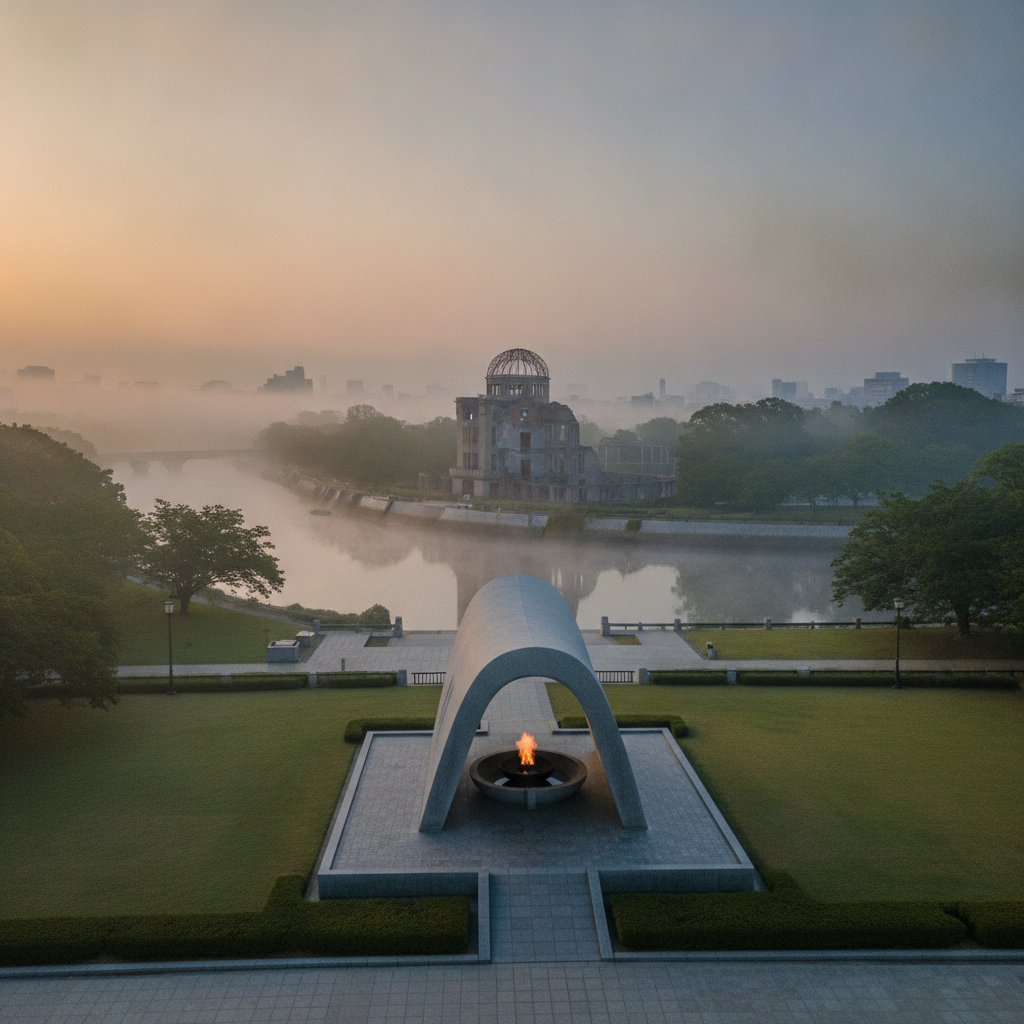
The Hiroshima Peace Memorial City Construction Law (法律 June 1949) gave Hiroshima city government authority to redesign the city with unusually broad powers—the law was drafted by city officials who wanted to prevent the pre-war industrial and military land use patterns from being replicated in the rebuilt city. The Kenzō Tange master plan (Tange, later the architect of the Tokyo Metropolitan Government Building and dozens of international projects, designed the Peace Memorial Park in 1949–50; his design of the Cenotaph as a saddle-shaped arch aligned precisely with the A-Bomb Dome is considered one of the finest examples of architecture as historical argument in the 20th century—the viewer's eye is led through the arch directly to the ruined dome in the distance, creating an inescapable visual alignment between living memory and destroyed past). The Peace Boulevard (Heiwa Odori—the 100-metre-wide avenue running east-west through the city, planted with cherry trees; designed as both a civic promenade and an emergency firebreak; the annual Flower Festival in May (the Hiroshima Flower Festival, attended by 1.2 million visitors over three days) uses the boulevard as its main venue). The hipocenter neighborhood today: the district immediately surrounding the hypocenter (the area within 500 metres of ground zero, now occupied by a hospital, schools, an office tower, and the Peace Memorial Park) is the most intensively redeveloped area in the city—no building from before 1945 exists within 600 metres of the hypocenter except the A-Bomb Dome.
- 5
Hiroshima Beyond the Bomb – Castles, Gardens & Night Life
Hiroshima-jo (Hiroshima Castle): the 1589 castle nicknamed 'Carp Castle' (Rijō—after the carp that lived in the moat, and the origin of the Hiroshima Toyo Carp baseball team name) was one of the largest castle complexes in western Japan before the bombing destroyed it in 1945. The reconstructed five-story keep (donjon) now serves as a museum of Hiroshima's feudal history, with the original foundation stones visible in the moat area. The Shukkei-en Garden (the adjacent 17th-century stroll garden): the garden was under 1.4 km from the hypocenter and was devastated by the blast and subsequent fires; the garden was used as a triage area where thousands of bomb survivors sought water from the ponds; it is now one of the finest examples of a coastal-reference Japanese garden in western Japan. Parco Hiroshima (the Hiroshima Parco department store area in the Hondori shopping arcade—the main covered shopping street, 600 metres running east-west through the city center): the Hondori arcade is where Hiroshima's youth culture concentrates, with record shops, vintage clothing, cafes, and the Nagarekawa and Yagenbori nightlife districts (the concentrated bar and restaurant area two blocks south of Hondori) beginning to fill from 19:00. The Hiroshima Toyo Carp home game (Mazda Zoom-Zoom Stadium, April–October): the stadium's opening panels create one of the few open-air baseball viewing experiences in Japan; a Carp home game with the stadium full of red-wearing supporters is the most distinctively local Hiroshima evening.
- 6
Getting to & Around Hiroshima – Practical Guide
Hiroshima is served by the JR Sanyō Shinkansen from Tokyo (Nozomi: 3h47m, ¥18,340), Osaka (Nozomi: 52 minutes, ¥10,490), and Hakata/Fukuoka (Kodama: 1h17m, ¥5,940). The JR Pass covers all Hikari and Kodama Shinkansen services but NOT the fastest Nozomi trains. Hiroshima Airport (HIJ—45 minutes east of the city by limousine bus, ¥1,370) serves ANA and JAL domestic routes and seasonal international services. Within the city, the Hiroshima Electric Railway tram network (the oldest operating electric tram in Japan, running since 1912; a flat-fare ¥190 for all city-center routes) is the most convenient urban transport—the Route 2 and Route 6 trams connect Hiroshima Station to the Peace Memorial Park in 14 minutes. The 1-day unlimited tram pass (¥700) makes sense for a Peace Park + Castle + Hondori day. For Miyajima: JR Miyajima Ferry from Miyajimaguchi (10 minutes; included in JR Pass); the island is car-free and walkable. The 2-day access pass (Hiroshima Tourist Pass, ¥3,000) covers trams, the ferry, and one-way ropeway on Miyajima—the most cost-efficient option for a standard 2-day Hiroshima visit.
Walk this route with audio
Stories play automatically as you reach each stop — no tapping needed.
More in Hiroshima
Before the Bomb Was a Target, It Was a Military Hub – Hiroshima's Korean Victims, Tange's Architectural Argument & the 7-Year Censorship That Shaped Memory
Layered Okonomiyaki, Soft-Water Sake & the Seto Inland Sea Oyster – Hiroshima Beyond the Peace Park
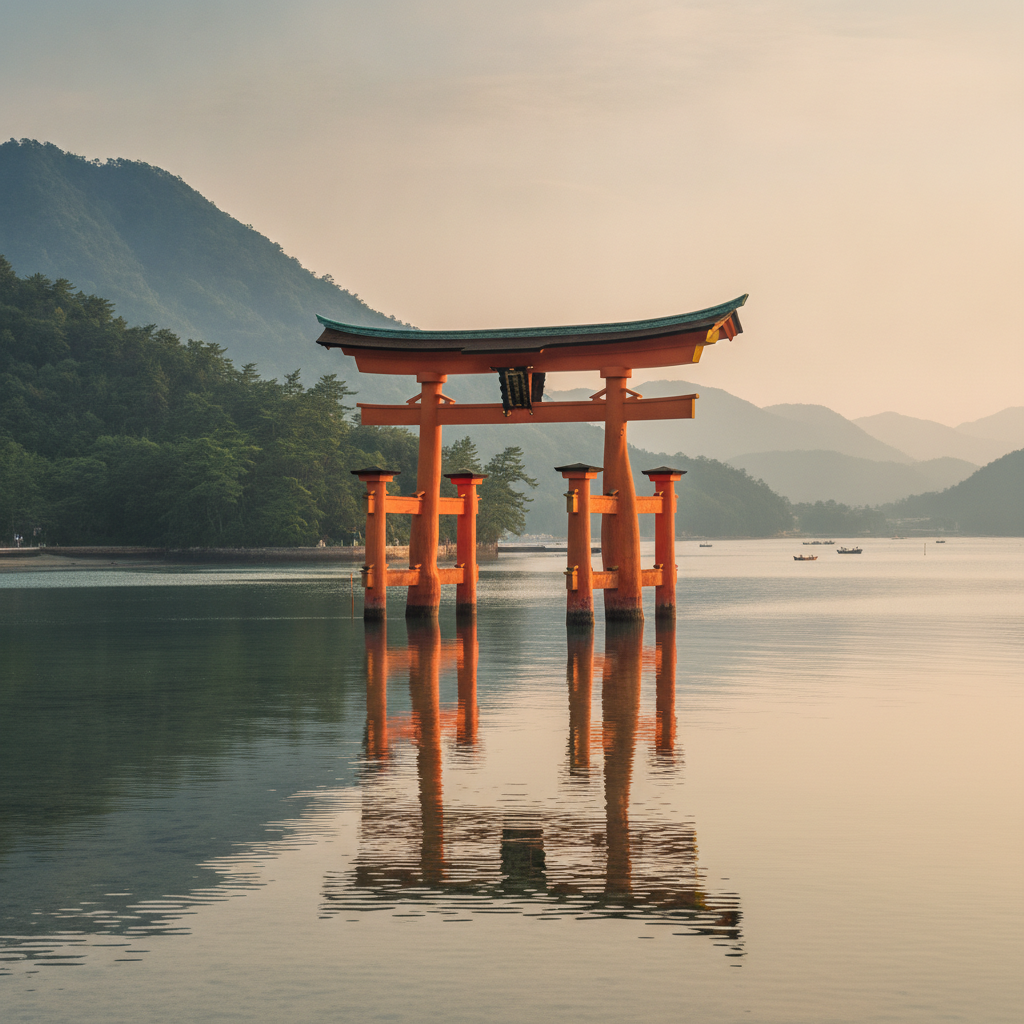
Sadako's Cranes, Bashō's Sea & the Misen Fire That Has Burned for 1,200 Years – Hiroshima's Two Essential Days
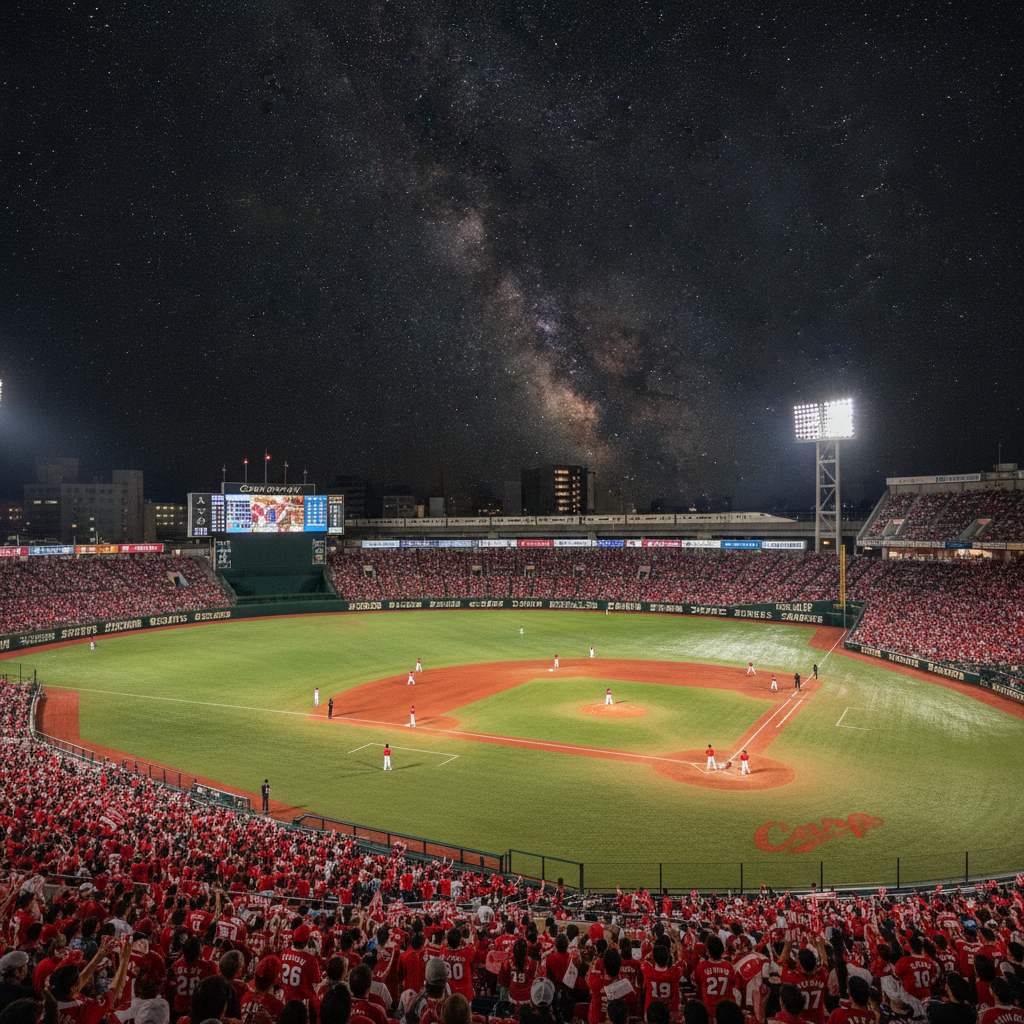
Mazda's Le Mans-Winning Rotary Engine, the Carp's Fan-Owned Recovery Team & Hiroshima's 2030 Bid for a Nuclear Disarmament Summit