Heraklion Complete: Knossos and Museum Essential Pairing, Lasithi Plateau Windmill Agriculture, Malia and Zakros Alternative Palaces, Peza Wine PDO, Fodele El Greco Village, and Summer vs. Autumn Season Guide
The complete Heraklion guide closes with the essential Knossos-museum paired visit strategy, the Lasithi Plateau circular highland with surviving windmills, the more authentic Malia and Zakros palace alternatives, the Peza cooperative winery 15 minutes from the capital, the El Greco birthplace village of Fodele, and the honest comparison of the peak July summer with the preferred September autumn season.
- 1
Knossos vs. the Museum: The Essential Pairing
The essential Heraklion experience requires both Knossos and the Archaeological Museum on the same day or on consecutive days, because the site without the museum artifacts is an architectural mystery and the museum without the site is a disconnected collection. The museum presents the original frescoes from which Evans made his reconstructed copies, the Linear A tablets whose script remains unread, and the artifacts of daily Minoan life that give the palace at Knossos the human dimension that the concrete reconstruction cannot provide.
- 2
Lassithi Plateau: The High Plain of Windmills
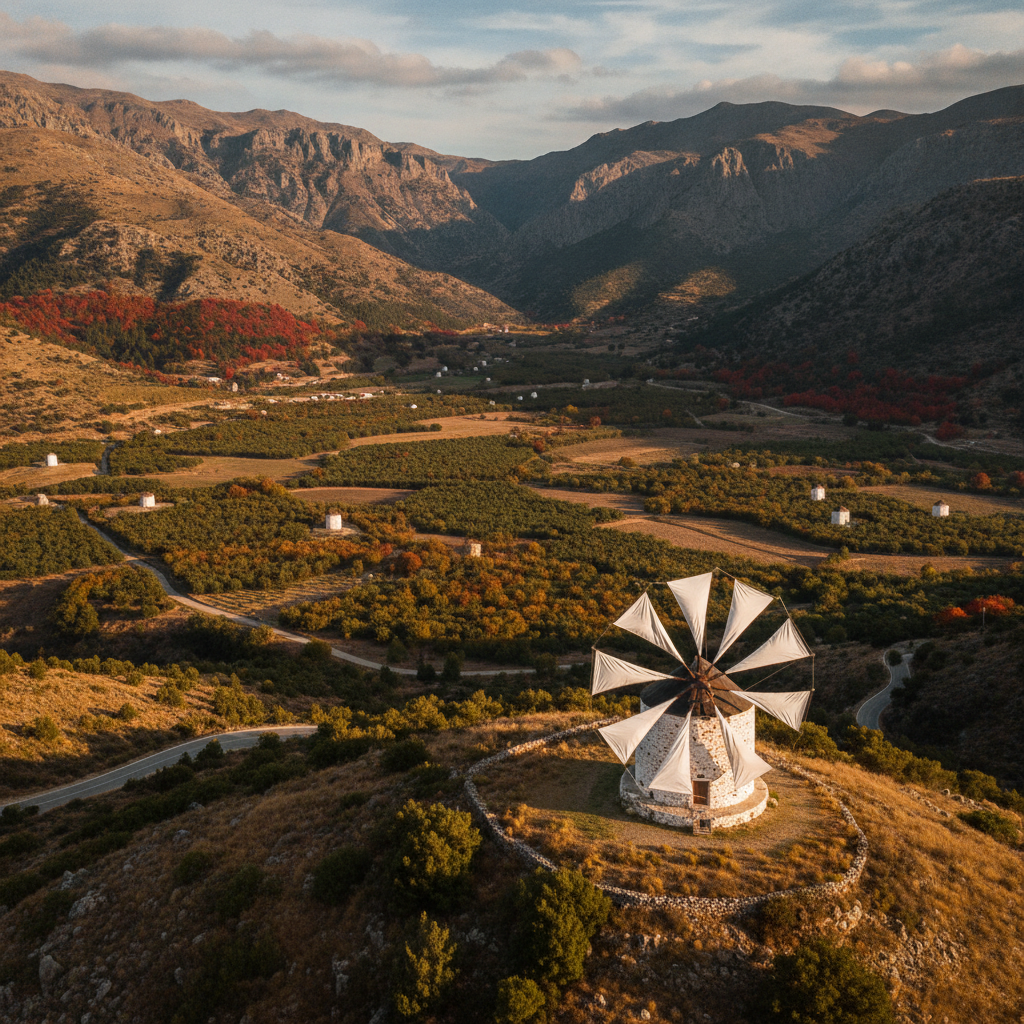
The Lasithi Plateau, the circular upland basin at 840 meters elevation surrounded by the Diktaean Mountains 60 kilometers east of Heraklion, is the most distinctive agricultural landscape in Crete, planted with the apple and pear orchards that produce the finest fruit in the island and historically dotted with the 10,000 canvas-sailed windmills that pumped the irrigation water from the water table. Only a few windmills survive in operation but the plateau remains the most complete traditional Cretan agricultural landscape accessible to the visitor.
- 3
Minoan Palaces Beyond Knossos: Malia and Zakros
Malia, the third Minoan palace 35 kilometers east of Heraklion on the north coast, and Zakros, the easternmost Minoan palace at the foot of the Gorge of the Dead on the east coast, complete the main palace circuit with sites of considerably less reconstruction than Knossos and proportionally more archaeological authenticity. The Malia palace is the most accessible alternative to Knossos for the visitor who wants the Bronze Age palace experience without the Evans reconstruction, and the Zakros palace is the most dramatically situated in the coastal cliff setting.
- 4
Peza Wine Region: The Heraklion Hills
Peza, the wine region in the hills 15 kilometers south of Heraklion, is the most productive wine PDO in Crete, producing the Kotsifali and Mandilari red wines and the Vidiano white from the most concentrated viticultural landscape in the island. The Union of Vinicultural Cooperatives in Heraklion manages the Peza PDO certification and the cooperative winery is the most accessible single winery destination from the Heraklion base for the visitor who wants the Cretan vineyard experience.
- 5
Fodele Village: The El Greco Birthplace
Fodele, the small orange-growing village 25 kilometers west of Heraklion in the coastal valley that claims to be the birthplace of El Greco and maintains a small museum to the painter in the traditional stone village house, is the most pleasant single day excursion from Heraklion for the visitor who wants the combination of the landscape and the art history. The journey through the orange and olive groves of the Giofyros river valley to the quiet Byzantine church of Panagias in the village center provides the most peaceful Cretan rural landscape accessible from the capital.
- 6
Heraklion in Summer vs. Autumn
Heraklion in July and August operates at the peak of the European package holiday season with the highest temperatures (35 to 38 degrees Celsius), the most crowded Knossos site, and the most active harbor nightlife. Heraklion in September and October, when the tourist numbers reduce, the temperatures moderate to 25 to 30 degrees, the grape harvest proceeds in the Peza wine region, and the Cretan landscape recovers the green of the autumn rains, is the finest season for the visitor who wants the archaeological depth without the July heat.
Walk this route with audio
Stories play automatically as you reach each stop — no tapping needed.
More in Heraklion
Heraklion Food and East: Cretan Market Produce and Indigenous Wine Revival, the Diktaean Cave Zeus Birthplace, Heraklion Nightlife, the Vai Palm Grove, Eastern Crete Minoan Zakros, and the Capital Infrastructure
Heraklion History Deep: Minoan Civilization Mysteries, Evans Knossos Reconstruction Debate, the Battle of Crete 1941, Kazantzakis and the Cretan Spirit, the Venetian Harbour Arsenali, and the Spinalonga Leper Colony
Heraklion and Crete: Samaria Gorge European Grand Canyon, the Elafonisi Pink Lagoon, Rethymno Venetian Town, the Chania Harbor Pearl, the Cretan Diet Village Tavernas, and the Heraklion Airport Island Network
Heraklion Practical and Farewell: Morning City Walk Circuit, Psiloritis Mountain Anogeia Village, Archanes Minoan Cemetery Wine Village, Family Archaeology Education, Hotel Accommodation Guide, and the Final Museum Departure
Heraklion Culture and Summary: Cretan Lyra Music and Mantinada Poetry, the Leventia Character Ideal, Heraklion Taverna Tradition, the Minoan Atlantis Thera Connection, Retail City Shopping, and the Bronze Age Gateway Conclusion