Gran Teatro, Ballet Nacional & Havana's Performing Arts Scene
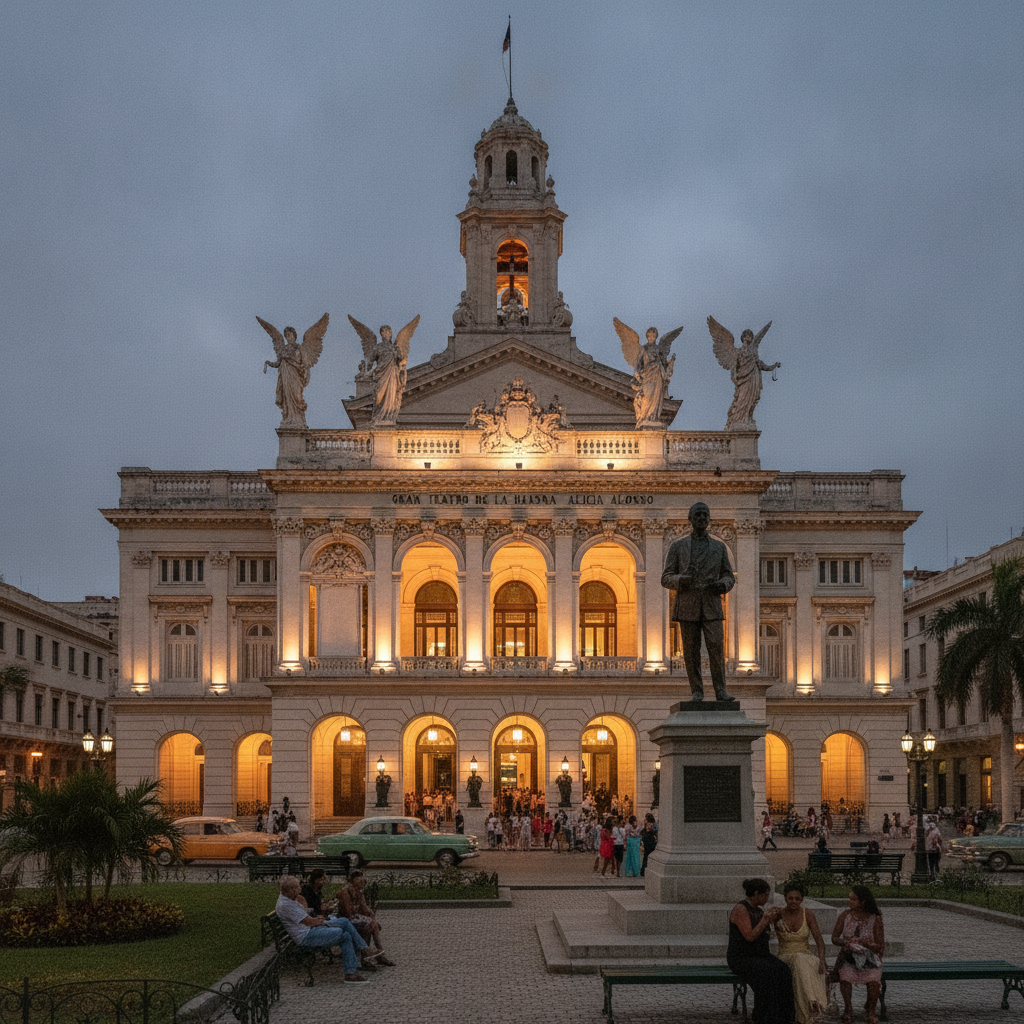
The Gran Teatro de La Habana Alicia Alonso (the 1915 neo-baroque theatre on the Parque Central — the most beautiful theatre building in Latin America) and the Ballet Nacional de Cuba (the national ballet company founded in 1948 by the legendary Cuban ballerina Alicia Alonso (1920-2019), who continued to direct the company until her death at 98 years of age — despite having been nearly blind since 1941 — and who produced some of the finest dancers in the history of classical ballet) are the supreme achievements of Cuban high culture.
- 1
Gran Teatro de La Habana Alicia Alonso
The Gran Teatro de La Habana Alicia Alonso (the neo-baroque theatre on the western side of the Parque Central in La Habana Vieja — the home of the Ballet Nacional de Cuba and the Opera Nacional de Cuba): the history (the Gran Teatro built in 1915 by the Belgian architect Paul Belau for the Centro Gallego (the Galician immigrant social club of Havana) — the theatre built as part of the larger Centro Gallego complex (the headquarters of the social club that served the Galician immigrants who formed the largest immigrant community in Cuba in the early 20th century)): the architecture (the extraordinarily ornate neo-baroque facade — the four marble angel sculptures (the 'Angeles de la Beneficencia') representing Charity, Education, Music, and Theatre perched on the corners of the building towers, the colonnaded facade, and the ornate dome above the main auditorium): the interior (the main auditorium of the Gran Teatro — the horseshoe-shaped auditorium with 4 tiers of boxes and a capacity of 1,500 spectators, the painted ceiling, the ornate plasterwork, and the grand chandelier): the Ballet Nacional (the Ballet Nacional de Cuba — the company founded in 1948 by Alicia Alonso (1920-2019), the Cuban ballerina who trained in New York and performed as a principal dancer with the American Ballet Theatre before returning to Cuba to found the national ballet company): Alicia Alonso (the most important figure in the history of Cuban culture — the ballerina who began losing her sight at the age of 19 and who underwent multiple eye surgeries throughout her career, who danced the role of Giselle at the Metropolitan Opera in New York in 1943 to unanimous critical acclaim despite being nearly blind, and who continued to direct the Ballet Nacional de Cuba until her death at the age of 98 in October 2019).
- 2
Callejón de Hamel — Havana's Afro-Cuban Cultural Heart
The Callejón de Hamel (the 'Hamel Alley' — the 200-metre (660-foot) long alley in the Centro Habana district of Havana, between the Calles Aramburu and Hospital, the most concentrated expression of Afro-Cuban visual culture in Havana): the history (the Callejón de Hamel created by the Cuban artist Salvador González Escalona (b.1948) beginning in 1990, when he began painting the walls of the alley with the images of the Santería Orishas and the Afro-Cuban cultural tradition, transforming the ordinary back alley into the most vibrant outdoor gallery of Afro-Cuban visual culture in the city): the murals (the walls of the Callejón de Hamel covered in the floor-to-ceiling murals depicting the Orishas (the deities of the Afro-Cuban Santería religion — the Yemayá (the goddess of the sea, in blue and white), the Changó (the god of thunder and lightning, in red and white), and the Ochún (the goddess of love, in yellow)), the symbols of the 'palo monte' (the Afro-Cuban Bantu-derived religion) and the Regla de Ifá (the Yoruba divination system), and the abstract Afro-Cuban motifs that cover every surface of the alley): the Sunday rumba (the rumba performance that takes place in the Callejón de Hamel every Sunday from midday — the performance of the 'rumba' (the Afro-Cuban music and dance genre that is distinct from the salsa, the cumbia, and other Latin music forms — the rumba is the direct and purest expression of the Afro-Cuban music tradition, with the batá and conga drums, the chekeré (the gourd rattle), and the call-and-response singing of the 'coro' (the chorus) and the 'décima improviser')).
- 3
Havana's Film Culture & ICAIC
Cuban cinema (the film culture of Cuba — one of the most important and most internationally recognized national film cultures in Latin America, the cinema of a country that despite its limited resources has produced some of the most influential films in the history of Latin American cinema): the ICAIC (the Instituto Cubano del Arte e Industria Cinematográficos — the Cuban Film Institute established by the revolutionary government in March 1959 (just 3 months after the Cuban Revolution) as one of the first acts of cultural policy of the new government — the institution that has produced all Cuban films since 1959 and that has fostered the development of the distinctive 'Cuban cinema' style): the key films (the most important Cuban films produced by ICAIC — 'Memorias del Subdesarrollo' ('Memories of Underdevelopment', 1968, directed by Tomás Gutiérrez Alea — the film considered the greatest Cuban film and one of the greatest Latin American films ever made, the story of a bourgeois intellectual who chooses to remain in Cuba after the Revolution), 'Fresa y Chocolate' ('Strawberry and Chocolate', 1994, directed by Tomás Gutiérrez Alea and Juan Carlos Tabío — the first Cuban film to be nominated for the Academy Award for Best Foreign Language Film, the film about the friendship between a gay intellectual and a communist militant that broke a 35-year silence on homosexuality in Cuban cinema): the ICAIC Cinemateca (the Cinemateca de Cuba — the Cuban film archive and cinema museum, the institution that preserves the history of Cuban cinema and that operates the most important arthouse cinema in Havana).
- 4
Cuban Baseball — The National Passion
Cuban baseball (the 'béisbol cubano' — the most popular sport in Cuba by a very significant margin, the sport that has been played in Cuba since 1874 (when Nemesio Guilló introduced baseball to Cuba from the United States, where he had been studying) and that became the national sport of Cuba partly as a reaction against the bullfighting that was associated with Spanish colonial culture): the history (the history of Cuban baseball — the Cuban teams that dominated the first Caribbean Series (played 1949-1960) and the Amateur World Series (Cuba won 23 of the 25 Amateur World Series played between 1939 and 1969): the Cuban national team (the Cuban national baseball team — the team that dominated international amateur baseball from 1959 to the early 2000s, winning 3 Olympic gold medals (1992, 1996, 2004 — no gold in 2000) and numerous World Championships in the period when Cuba's best players were not allowed to play in the Major Leagues): the defections (the exodus of Cuban baseball players to the Major Leagues that began in the 1990s and accelerated in the 2000s-2010s — the Cuban players who defected and became Major League stars (Orlando 'El Duque' Hernández, José Contreras, Liván Hernández, Yoenis Céspedes, José Abreu, Yasiel Puig) and the ongoing tension between the Cuban government's desire to keep its players and the players' desire to play in the highest-paying and most competitive baseball league in the world): the Estadio Latinoamericano (the Latinoamericano Stadium — the 55,000-seat baseball stadium in the Cerro district of Havana, the home of the Industriales (the 'Lions' — the Havana-based team that is the most popular and most successful team in the Cuban National Series, with 11 championships).
- 5
Havana Street Art & Contemporary Cuban Visual Arts
Contemporary Cuban visual arts (the art scene of a country that has maintained one of the most distinctive and most internationally recognized national visual arts traditions in Latin America since the 1980s — the Cuban art that has achieved international recognition through the galleries of New York, London, and Miami despite the US trade embargo and the restrictions on the movement of Cuban artists): the ISA (the Instituto Superior de Arte — the national arts university of Cuba, established in 1976 in the abandoned Havana Country Club golf course in Miramar — the university designed by a team of young Cuban architects (Ricardo Porro, Roberto Gottardi, and Vittorio Garatti) in the early 1960s in a visionary post-colonial style (the organic, brick-vaulted buildings inspired by the African traditions of the 'Caribbean corrective' of Modernism) that was left unfinished when the architects fell out of political favour in the mid-1960s and that is now considered one of the most important examples of 20th-century architecture in the Americas): the Wifredo Lam (Wifredo Lam (1902-1982) — the Cuban painter of Chinese, African, and Spanish heritage who is the most internationally recognized Cuban visual artist of the 20th century, the artist who studied in Havana and Spain before moving to Paris in 1938, where he became closely associated with Pablo Picasso and the Surrealist movement, developing the distinctive style that fuses Afro-Cuban visual symbolism (the Santería Orishas, the 'palo monte' symbols, the Yoruba iconography) with the Cubist and Surrealist formal language of European modernism).
- 6
Cuban Poster Art & The ICAIC Visual Tradition
Cuban poster art (the 'cartelismo cubano' — the tradition of graphic design and political poster art that is one of the most internationally recognized contributions of the Cuban Revolution to global visual culture): the ICAIC posters (the film posters produced by the ICAIC (the Cuban Film Institute) from 1959 to the present — the silk-screened film posters designed by the graphic artists of the ICAIC's visual arts department (the 'Departamento de Difusión Cultural'), using bold colours, constructivist compositions, and the silkscreen printing technique: the most celebrated of the ICAIC poster artists (Eduardo Muñoz Bachs (1937-2001) — the Spanish-born Cuban graphic designer whose ICAIC film posters from the 1960s-1990s are the most sought-after examples of the Cuban poster tradition, the posters characterized by the bold flat colours, the witty imagery, and the hand-lettered typography): the political posters (the 'carteles políticos' — the political propaganda posters produced by the COR (the Organization of Revolutionary Orientation) and the OSPAAL (the Organization of Solidarity with the People of Asia, Africa, and Latin America) from the 1960s to the 1980s, the posters that have become icons of 20th-century political graphic design: the most famous (the Che Guevara poster — the 'Guerrillero Heroico' ('Heroic Guerrilla Fighter') photograph by Alberto Korda (1960) that has been reproduced on more posters, T-shirts, and consumer products than any other image in the history of political graphic design, the photograph of Ernesto 'Che' Guevara taken at the memorial service for the victims of the La Coubre explosion in Havana on March 5, 1960, the photograph that was converted into the iconic graphic image by the Irish artist Jim Fitzpatrick in 1967 and that has since become the most reproduced political image in history).
Walk this route with audio
Stories play automatically as you reach each stop — no tapping needed.
More in havana
Son Cubano, Salsa & Havana's Living Music Culture
Vedado, Plaza de la Revolución & 20th-Century Havana
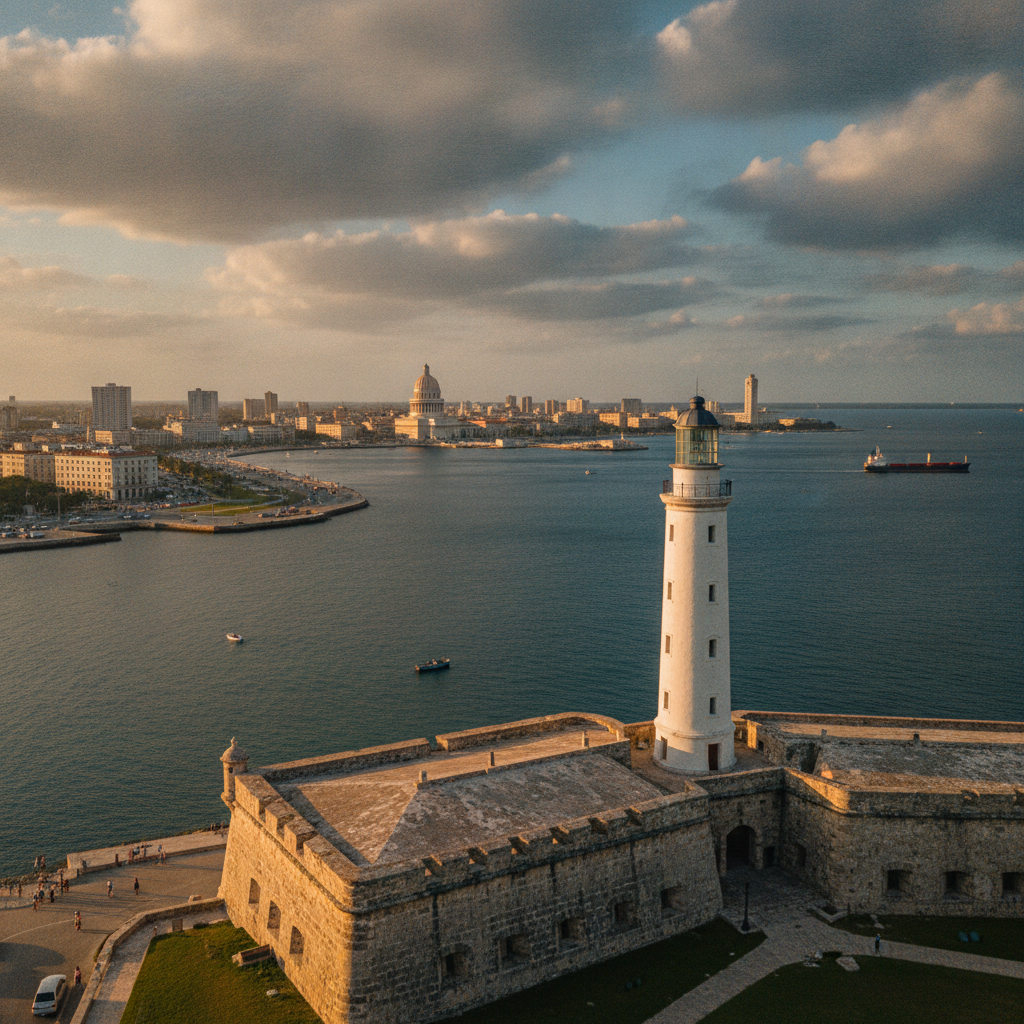
El Morro Fortress, Havana Harbour & The Bay
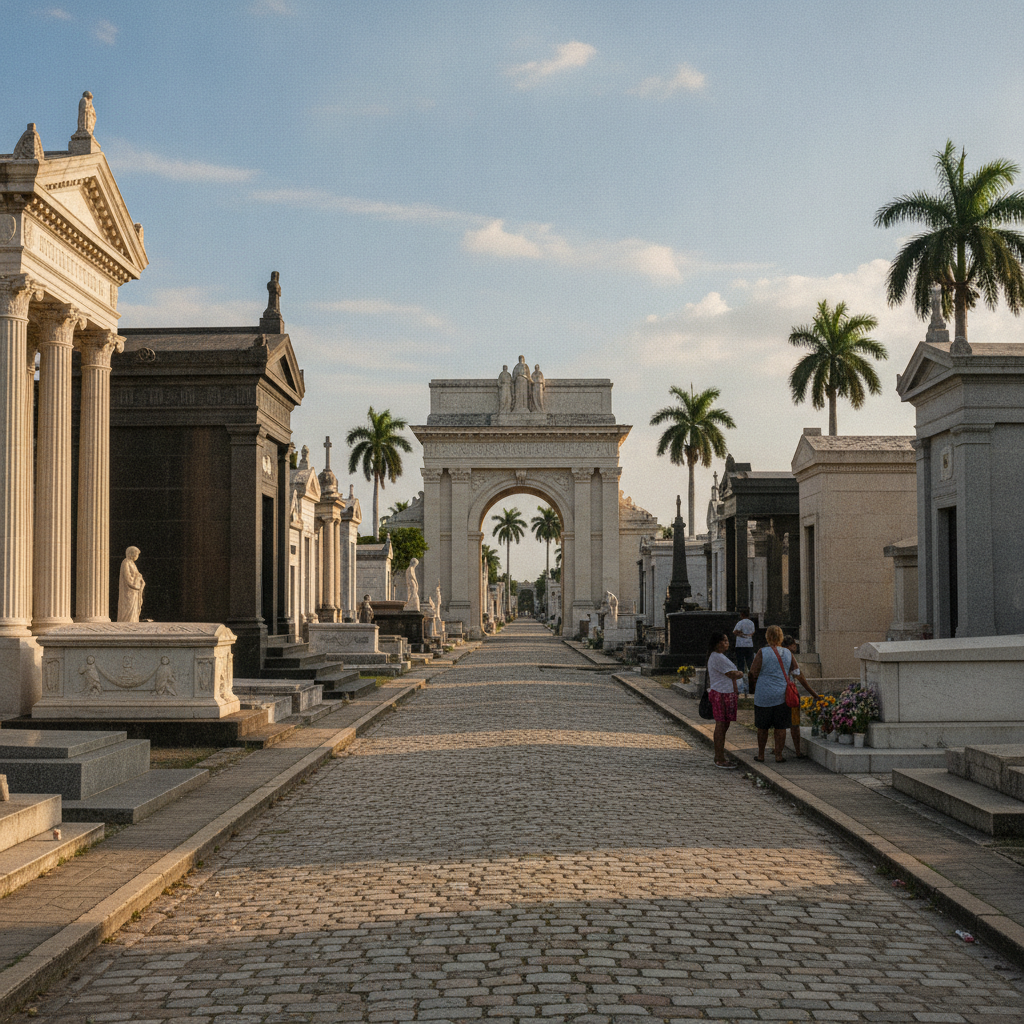
Cementerio de Colón — Havana's City of the Dead
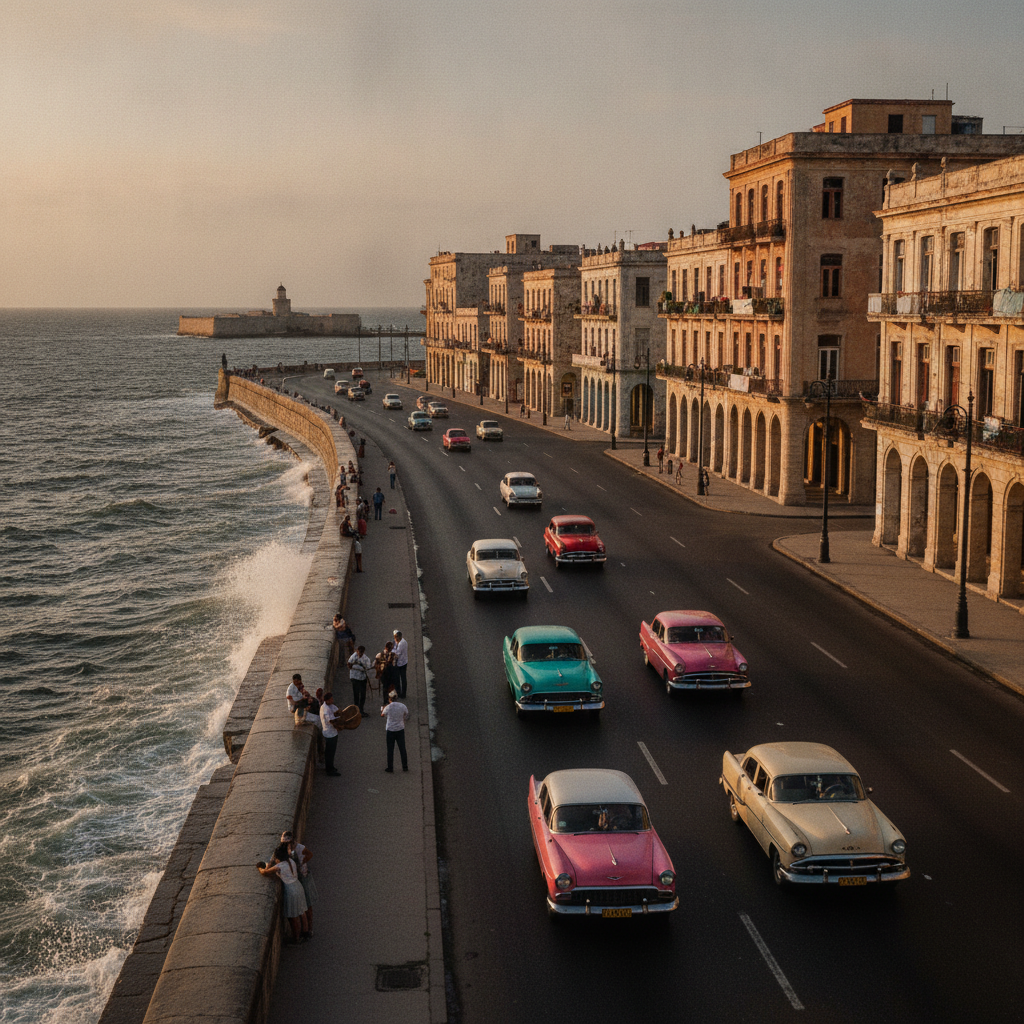
Habana Vieja, the Malecón & Havana's Classic Cars