Hamburg — Schanzenviertel, Lübeck, Working Port, Events & the Historic Altstadt
Hamburg's bohemian Schanzenviertel, the day trip to UNESCO Lübeck, the working port infrastructure, and the historic Nikolaifleet canal complete the city's essential itinerary.
- 1
Schanzenviertel — Hamburg's Bohemian Quarter
Schanzenviertel (the bohemian neighbourhood west of the Altstadt — the most politically alternative and the most culturally active residential area in Hamburg): the Schulterblatt (the primary Schanzenviertel street — the 1km café-bar-and-shop strip, the Flohschanze flea market on the square the most visited Saturday flea market in Hamburg with vintage clothing, second-hand vinyl records, and 1970s-80s furniture, Saturday 9am-4pm, free entry), the Rote Flora (the Rote Flora at Schulterblatt 71 — the occupied former theatre building squatted since 1989 as the autonomous political and cultural centre, the most politically symbolically loaded single building in Hamburg with the red facade murals and the 'Rote Flora Bleibt' banner), the Schanzen food scene (the most internationally diverse restaurant mile in Hamburg on the Schulterblatt and the Bartelsstrasse — Vietnamese pho, Turkish bakeries, Lebanese meze bars, and Hamburg independent coffee roasters in a 500m stretch), the Isemarkt (the Isemarkt at the Isestrasse between the Hoheluftbrücke and Eppendorfer Baum U-Bahn stations — the most atmospherically unique Tuesday and Friday morning food market in Germany under the elevated U3 railway viaduct, the Demeter organic produce stalls the most visited section, 8:30am-2pm) and the Karoviertel (the Karolinenstrasse and the Marktstrasse east of the Schanzenviertel — the most densely independent-retail neighbourhood in Hamburg for vintage clothing, design boutiques, and Hamburg-label fashion, the most Instagram-dense neighbourhood in Hamburg).
- 2
Lübeck — Hamburg's UNESCO Day Trip
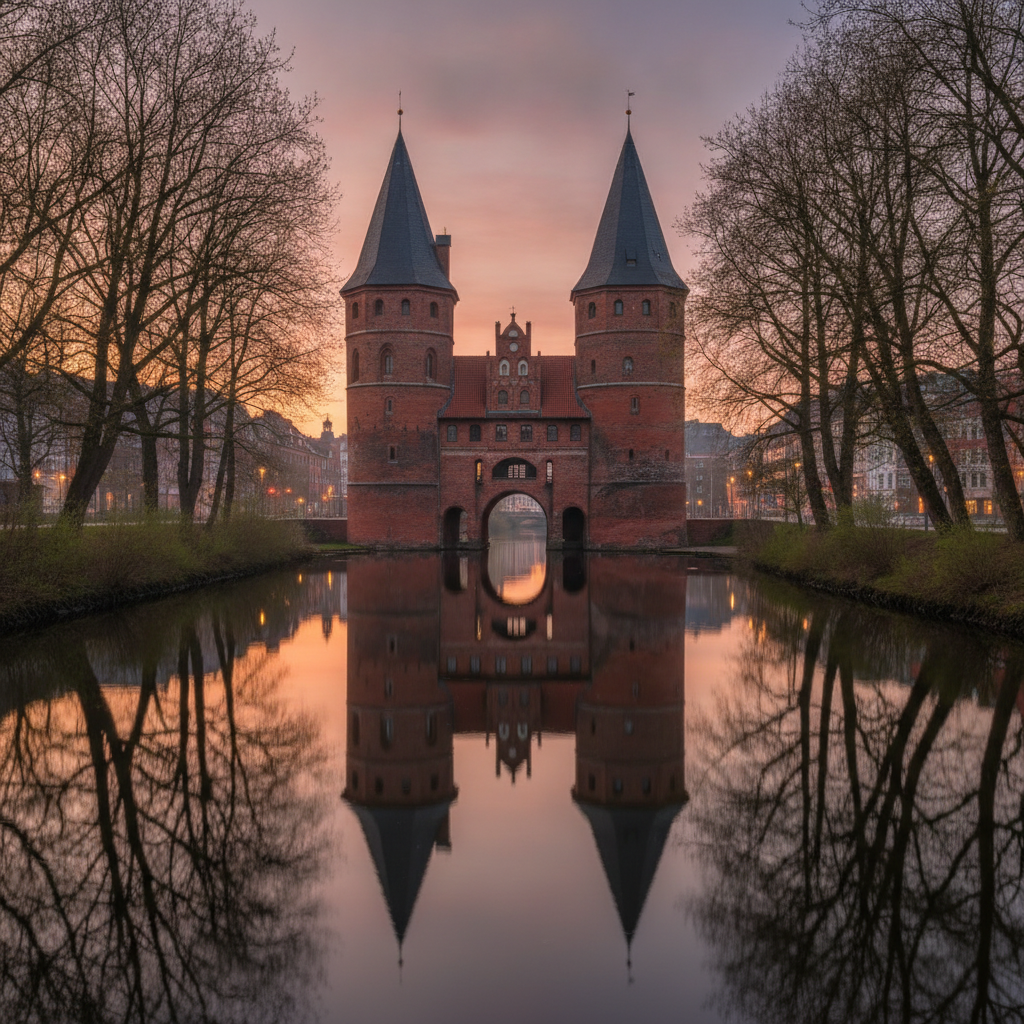
Lübeck day trip (the Hanseatic city of Lübeck 64km northeast of Hamburg — the most historically complete day trip destination from Hamburg, the UNESCO World Heritage Altstadt on the Trave River island the most intact medieval Hanseatic city in northern Europe): the Holstentor (the Holstentor — the most photographed medieval city gate in Germany, the 2-tower brick gate of 1478 the defining symbol of Lübeck and the primary image on the pre-euro German 50 pfennig coin, the museum inside the Holstentor the most complete single-building Hanseatic trade history museum in Germany, CHF 7 adults, Tuesday-Sunday), the seven church towers (the Lübeck skyline of 7 medieval brick church towers — the Marienkirche the most architecturally complete Gothic brick church in northern Europe and the inspiration for all subsequent north German brick Gothic churches including the Cologne Cathedral brick influences, the church rebuilt after the 1942 bombing with the original bronze bells left where they fell as a war memorial, the most resonant single anti-war memorial in a German church), the Thomas Mann House (the birthplace of Thomas Mann at Mengstrasse 4 — the 16th-century merchant house the childhood home of the Nobel laureate, the 'Buddenbrooks' novel based on the Hamburg-Lübeck merchant family dynasty set in this house, the most visited literary heritage house in Schleswig-Holstein, CHF 8 adults), the Niederegger marzipan (the Café Niederegger at Breite Strasse 89 — the world's foremost marzipan brand established in Lübeck in 1806, the marzipan shop and the café the most visited single food retailer in Lübeck, the marzipan pigs and the Lübecker Marzipantorte the most purchased edible souvenirs from the Lübeck day trip), the Holsten Gate to Marienkirche walk (the 10-minute walk from the Holstentor through the Lübeck Altstadt island to the Marienkirche — the most concentrated single 10-minute walk through intact Hanseatic medieval urban fabric in Germany, the brick facades and the merchant warehouses (Speicher) on the Grosse Petersgrube the most atmospherically complete medieval merchant street in northern Europe) and the transport (the Regional Express RE8 from Hamburg Hauptbahnhof to Lübeck in 42 minutes at €14 adults, the trains every 30 minutes from 5am to midnight, the Lübeck Hauptbahnhof 15 minutes walk from the Holstentor, the most efficiently accessible UNESCO World Heritage city from Hamburg).
- 3
Hamburg's Working Port Beyond the Tours
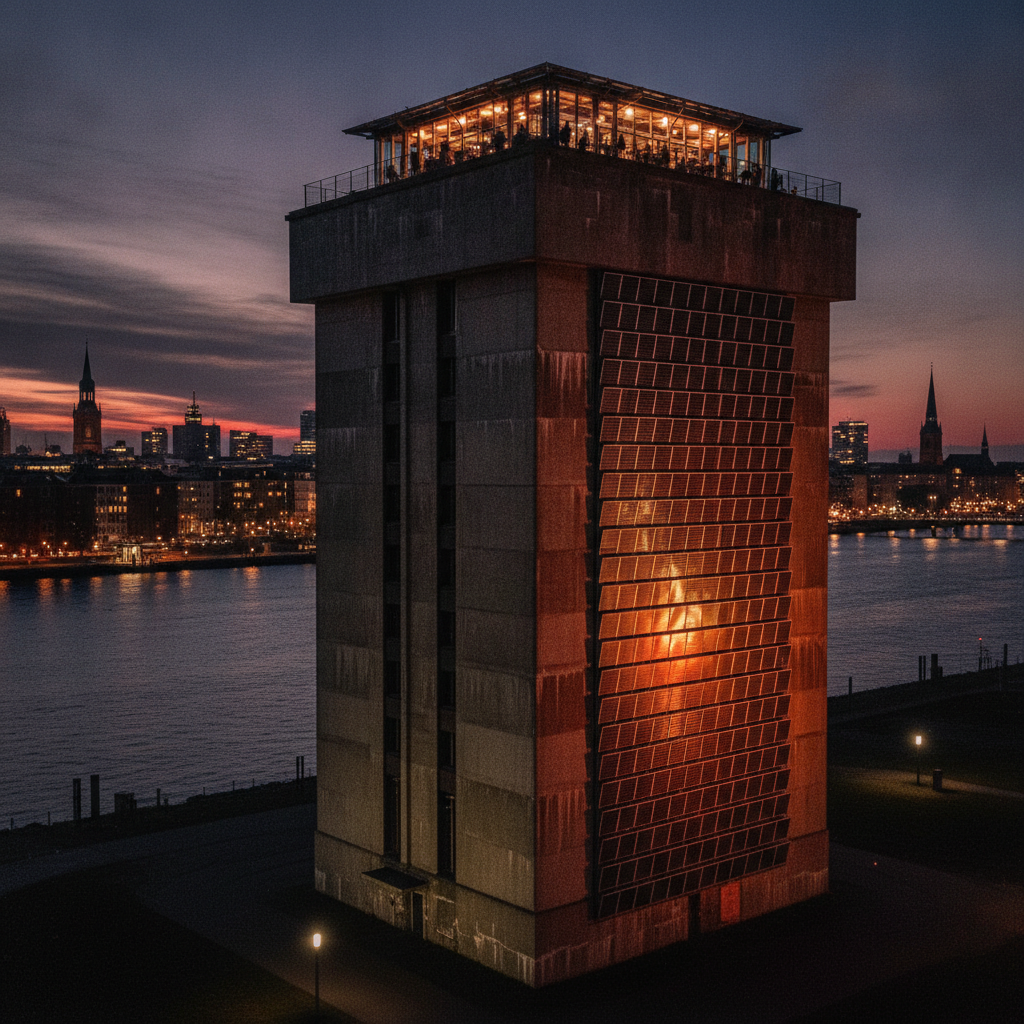
Hamburg Hafen (the working port of Hamburg — the 3rd largest container port in Europe by TEU throughput, the most industrially scaled active port in Germany and the most complex waterway geography in northern Europe): the Köhlbrandbrücke (the Köhlbrandbrücke — the 3.62km cable-stayed bridge at 55m above the Elbe in the working port, the most architecturally photogenic industrial bridge in the Hamburg harbour, carrying the A7 motorway at 32,000 truck crossings per day, visible from the Övelgönne beach and the Elbe promenade), Blohm + Voss (the Blohm + Voss shipyard at Steinwerder — the builder of the Bismarck battleship 1939, the largest warship ever built in Germany, the current facility the maintenance and repair yard for the largest cruise ships in Europe, visible from the HADAG harbour tour), the Elbe tunnel (the St. Pauli Elbtunnel — the 1911 tunnel under the Elbe River connecting the St. Pauli waterfront to the Steinwerder island, the cast-iron round tunnel sections the most remarkable engineering survival of the Wilhelmine era in Hamburg, the original hydraulic lifts now electric, free pedestrian and cyclist access 24 hours, the most unusual free urban transport experience in Hamburg), Wilhelmsburg (the Wilhelmsburg island between the two Elbe arms — the Energiebunker at Am Inselpark 83, the 1943 WWII flak tower converted to a renewable energy plant and a public rooftop café, the most historically layered single rooftop view in Hamburg at €5, the IBA Hamburg 2013 urban renewal projects the most internationally studied urban regeneration in a German island community) and the Port of Hamburg statistics (the Hamburg port handling 9 million TEU per year, the port the 17th largest in the world, the primary export commodity: automobiles from the Volkswagen, the BMW, and the Audi factories; the primary imports: consumer electronics from Asia, the coffee (Hamburg imports 40% of all European coffee through the harbour), and the grain from the eastern European producers — the port the primary reason for Hamburg's GDP of €113 billion, the highest per-capita of any German city state).
- 4
Hamburg Seasons and Annual Events
Hamburg annual calendar (Hamburg the city with the most diverse annual events calendar in northern Germany — the Hamburger DOM funfair, the Alstervergnügen, the Reeperbahn Festival, and the Hafengeburtstag the 4 events that define the Hamburg calendar): the Hafengeburtstag (the Hamburg Port Birthday festival in May — the annual celebration of the granting of customs privileges to the Hamburg harbour by Emperor Frederick Barbarossa on May 7 1189, the port's official birthday, the 3-day festival on the Landungsbrücken waterfront and the harbour the most attended single outdoor event in Hamburg at 1.5 million visitors, the harbour parade of historic ships and the largest raft of tugs and fireboats in the world the primary spectacle, free to watch from the Landungsbrücken promenade), the Alstervergnügen (the Alstervergnügen waterfront festival on the Binnenalster in August — the most attended single free festival in Hamburg at 1 million visitors over 3 days, the water stage on the lake, the food stalls on the Jungfernstieg, and the illuminated fountain shows the most specifically Hamburg summer celebration, the best single weekend evening event on the Alster), the Reeperbahn Festival (the Reeperbahn Festival in September — the most important urban music discovery festival in Germany with 900 concerts in 100 venues over 4 days on the Reeperbahn and the St. Pauli neighbourhood, the primary industry showcase for new European musical talent, the 4-day pass at €100 the best value access to the most geographically concentrated music festival in northern Europe), the Hamburger DOM (the Hamburger DOM funfair at the Heiligengeistfeld — the largest funfair in northern Germany held 3 times per year, each for 4 weeks, in spring (March-April), summer (July-August), and winter (November-December), the most attended single funfair series in Hamburg at 10 million visitors annually, the ghost rides and the ferris wheel the most visited attractions, free entry, rides individually priced) and the Weihnachtsmarkt (the Hamburg Christmas market on the Rathausmarkt — the most architecturally framed Christmas market in northern Germany with the Rathaus neo-Renaissance facade behind the stalls, the Glühwein in the ceramic cup at €4-5, the Weihnachtsmarkt on the Jungfernstieg the most fashionably located alternative market, the season from late November to December 23, the Sunday evenings the most atmospheric).
- 5
Hamburg's Historic Altstadt and the Nikolaifleet
Hamburg Altstadt (the historic centre of Hamburg — the area bounded by the Binnenalster, the Nikolaifleet canal, and the Alsterfleet, the most historic single urban zone in Hamburg containing the city's oldest surviving buildings): the Nikolaifleet (the Nikolaifleet — the oldest surviving canal in Hamburg dating to the 12th century, the most historically significant single waterway in the city, the Deichstrasse on its north bank the only surviving row of the original Hamburg merchant houses of the 17th and 18th centuries, the most historically complete single street in Hamburg, the restaurant terraces facing the canal the most atmospherically historic dining position in Hamburg, the Deichstrassenfleet bridge the most photographed bridge on the historic canal system), the Deichstrasse (the Deichstrasse merchant houses — the 17th and 18th century Kontorhäuser (counting houses) with the original facades, the ground floors now the restaurant row with the canal terrace tables, the Hamburger Geschichtshaus at Deichstrasse 29 the most documentary account of the 1842 Hamburg Great Fire which destroyed most of the medieval Altstadt, making the Deichstrasse the single most precious surviving pre-1842 streetscape in the entire city), the Hamburg Great Fire of 1842 (the Hamburger Brand of May 5-8 1842 — the most destructive single urban fire in 19th-century German history, the fire consuming 1,992 houses and 102 warehouses in the Hamburg Altstadt in 3 days, the fire the primary reason why so little pre-19th century Hamburg Altstadt survives, the Nikolaikirche the most important building destroyed in the fire and subsequently rebuilt — the predecessor of the Mahnmal St. Nikolai ruin), the Trostbrücke (the Trostbrücke bridge — the oldest bridge site in Hamburg, the 1233 bridge the first river crossing over the Nikolaifleet and the literal founding point of the Hamburg trade connection between the bishops of Hamburg and the Count of Holstein, the most historically significant single bridge site in Hamburg for the origin of the city's commercial history) and the Rathausmarkt (the Rathausmarkt — the most formally beautiful public square in Hamburg, the 1897 neo-Renaissance Hamburg Rathaus with the 112m tower the most architecturally imposing civic building in Germany, the free 45-minute tour of the 647-room building's state rooms at €4 adults, Monday-Friday hourly 10am-3pm, the Rathausmarkt the primary venue for the Hamburg Christmas market and the Christopher Street Day rally).
- 6
Hamburg Practical — Transport, Hotels and Orientation
Hamburg practical guide (the essential logistics for the Hamburg visitor — the Hamburg Card, the main transport connections, the neighbourhood orientation, and the key seasonal advice): the Hamburg Card (the Hamburg Card at €12.90 for 1 day covering all HVV public transport — the U-Bahn (4 lines), the S-Bahn (6 lines), the bus, the Alster ferry, and the harbour ferries within the Hamburg city zone, plus the 50% discount at the Kunsthalle, the 15% discount at the Miniatur Wunderland, the 25% discount on the HADAG harbour tour, and free entry to 30+ smaller museums, the 3-day card at €31.90 the best value for the multi-day visit, available at the main HVV service centres and online), the airport (the Hamburg Airport (HAM) at 8km north of the city centre — the S-Bahn S1 connects the airport to the Hauptbahnhof in 25 minutes at €3.50, the taxi at €25-30, the airport the 5th busiest in Germany with the Lufthansa and the Eurowings as the primary carriers, the most frequent connections to London, Amsterdam, and Vienna), the Hauptbahnhof (the Hamburg Hauptbahnhof — the busiest railway station in Germany by daily passenger count at 550,000, the ICE connections to Berlin (1h45m), Frankfurt (3h30m), and Munich (5h30m), the regional connections to Lübeck (42m), Bremen (55m), and Hannover (1h15m)), the hotel neighbourhoods (the recommended hotel areas: the Altstadt and the HafenCity for the most central access to the Speicherstadt and the Elbphilharmonie; the Schanzenviertel for the most independently characterful accommodation; and the Eppendorf for the most residential-scale quiet hotel option), the Hamburg Card Museum Night (the Hamburger Museumsnacht — the annual late-night museum opening on one Saturday in April, the 50 Hamburg museums open until 2am, the shuttle bus circuit connecting the venues, the single ticket at €18 covering all entry and the shuttle bus — the most cost-efficient single evening of museum access in northern Germany) and the walking distances (the key Hamburg walking reference: the Hauptbahnhof to the Kunsthalle 5 minutes; to the Rathaus 10 minutes; to the Speicherstadt 20 minutes; to the Landungsbrücken 25 minutes; to the Elbphilharmonie 35 minutes; to the Schanzenviertel 25 minutes; to the Reeperbahn 30 minutes — all reachable on foot from the Hauptbahnhof within 35 minutes, the U-Bahn and S-Bahn reducing these to 5-10 minutes by public transport).
Walk this route with audio
Stories play automatically as you reach each stop — no tapping needed.
More in hamburg
Hamburg — Kunsthalle, Parks, Elbchaussee, Beatles & St. Nikolai
Hamburg — Hanse Heritage, Wilhelmsburg, Literary Culture, North Sea & the Practical Guide
Hamburg — Rathaus, Gängeviertel, Cycling, Neighbourhoods, Food & the Events Calendar
Hamburg — Speicherstadt, Elbphilharmonie, Reeperbahn, Alster & the Port