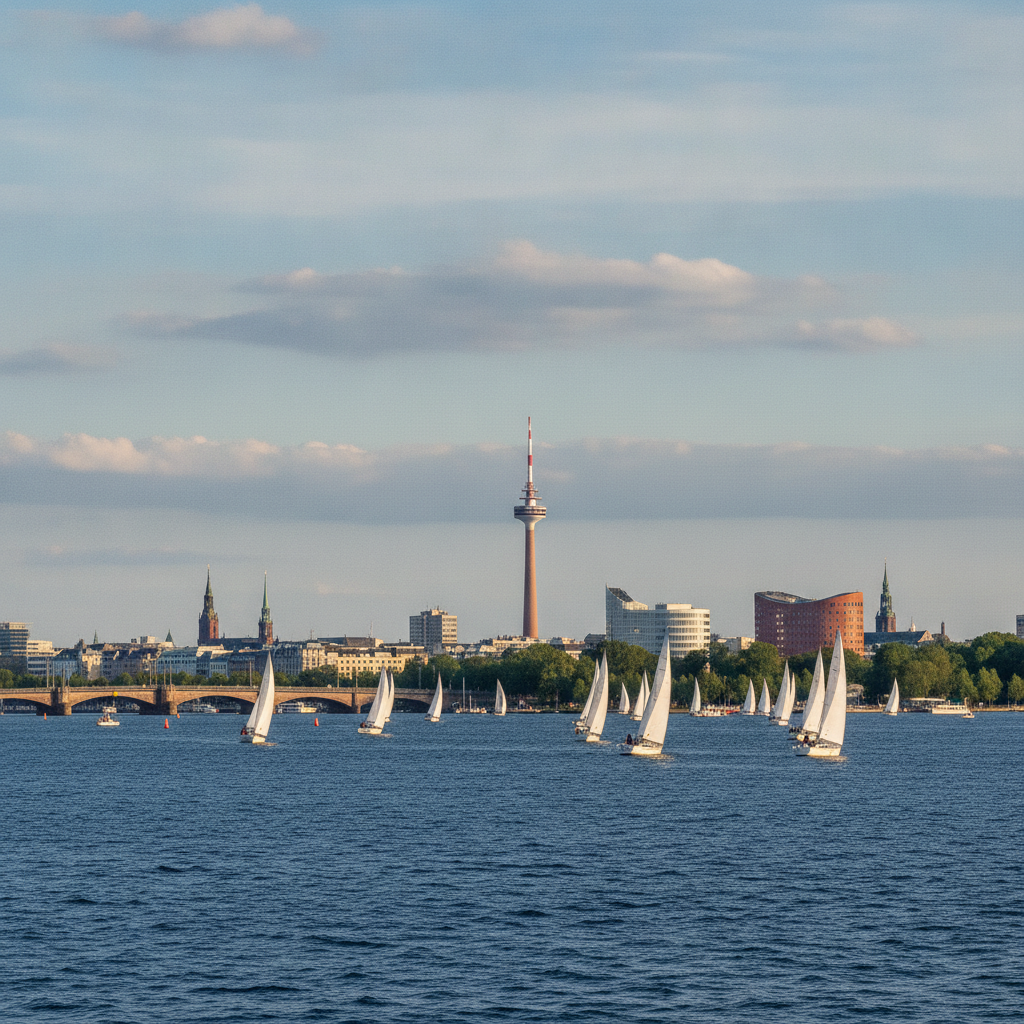
Hamburg — Hanse Heritage, Wilhelmsburg, Literary Culture, North Sea & the Practical Guide
Hamburg's Hanseatic trade origins, the innovative Wilhelmsburg island urban renewal, the Brahms and Thalia literary heritage, and the North Sea connection complete the essential Hamburg guide.
- 1
Hamburg as a Hanseatic City — the Medieval Trade Heritage
Hamburg Hanse (the Hanseatic League — the Hamburg membership in the most powerful medieval trading network in northern Europe, the city's founding commercial logic the most directly traceable to the Hanseatic trade system of any surviving German city): the Hanse heritage (the Hamburg Hanseatic League membership from 1241 — the alliance between Hamburg and Lübeck the founding agreement of the most powerful commercial consortium in medieval Europe, the network eventually comprising 200 cities trading from London to Riga, the Hamburg specialisation in the grain trade (Umschlag) from the Baltic through the Hamburg-Elbe route to the Atlantic ports the most commercially decisive single trade route in northern European medieval history, the Hamburg Speicherstadt the functional descendant of the medieval Hanse warehouse system), the Trostbrücke (the oldest bridge site in Hamburg at the Trostbrücke crossing of the Nikolaifleet — the 1233 bridge the literal founding commercial connection point of the Hamburg trade, the historic markers at the Trostbrücke ends the most specifically Hanseatic public commemoration in Hamburg), the Hamburg Merchant Houses (the few surviving Kontorhäuser (counting houses) on the Deichstrasse the last direct physical remnant of the Hamburg medieval merchant trading infrastructure, the Deichstrasse buildings the most historically consequential surviving commercial architecture in the Hamburg Altstadt), the Hamburg Stock Exchange (the Hamburger Börse at Adolphsplatz 1 — the 1558 Hamburg Stock Exchange the oldest continuously operating commodity exchange in the world, the current 1841 neo-Classical building the most historically significant civic commercial building in Hamburg after the Rathaus, the exchange floor visible through the entrance hall, the most directly traceable single Hanseatic commercial institution in contemporary Hamburg) and the Speicherstadt origin (the Speicherstadt as the functional continuation of the Hanseatic free-port concept — the 1888 free-port warehouse district the largest implementation of the medieval Hanseatic warehouse-bond concept in German legal history, the UNESCO Heritage inscription specifically citing the Speicherstadt as the living institutional continuation of the Hamburg Hanse commercial tradition).
- 2
The Wilhelmsburg Island — Hamburg's Urban Renewal Frontier
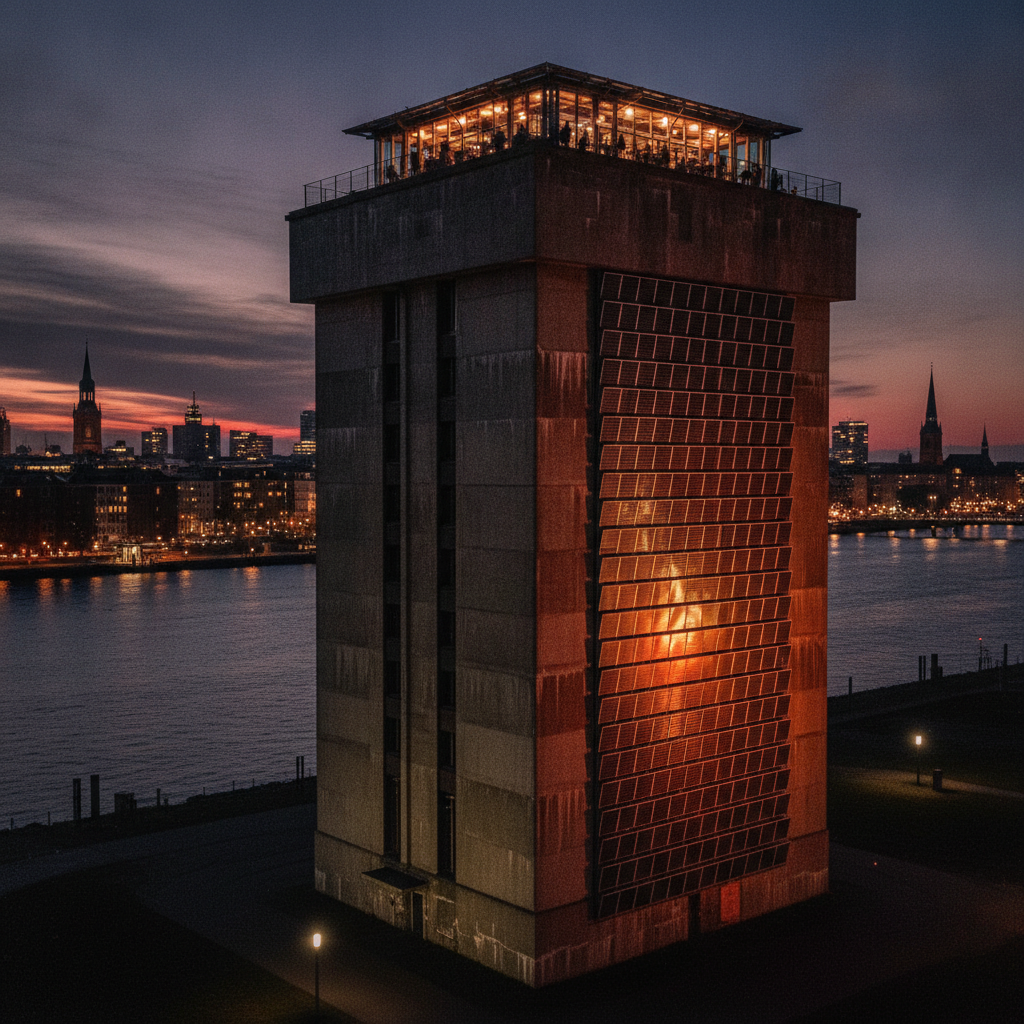
Wilhelmsburg (the Elbinsel (Elbe Island) of Wilhelmsburg between the two Elbe arms south of the Hamburg Altstadt — the most ethnically diverse island municipality in Germany, the primary site of the IBA Hamburg 2013 International Building Exhibition, the most internationally studied urban renewal project in a German island community): the Energiebunker (the Energiebunker at Am Inselpark 83 — the 1943 WWII anti-aircraft flak tower converted to a district renewable energy plant with the solar thermal collectors on the south face and the biogas plant in the former ammunition storerooms, the 4.4 megawatt thermal output the most productive single converted wartime structure in the European renewable energy sector, the rooftop café with the panoramic Elbe and Hamburg city view at €5 access the most historically layered single rooftop café in Germany), the IBA Hamburg (the IBA Hamburg 2013 — the International Building Exhibition on Wilhelmsburg the most internationally cited single urban renewal programme in Germany of the 2010s, the 70+ projects including the Smart Material Houses, the Waterhouses on the Kanalstrasse, and the Georgswerder Wind Energy Hill the most comprehensively documented sustainable urban development in a German island community), the InselPark (the InselPark at Am Inselpark — the 100-hectare park created on the former IGS Garden Show site 2013 the most extensively planted new public park in Hamburg in the 21st century, the outdoor sports facilities, the BMX track, and the model boat pond the most actively used recreational facilities in the Wilhelmsburg area, free, accessible from the Hamburg Veddel S-Bahn station), the Wilhelmsburg Rathaus (the Wilhelmsburg Rathaus at Rotenhäuser Strasse — the 1912 neo-Baroque town hall the most architecturally incongruous municipal building in the industrial Wilhelmsburg landscape, the building the most historically grounded civic reminder that Wilhelmsburg was an independent municipality before the 1937 Greater Hamburg Act) and the Süderelbe (the Süderelbe (southern Elbe arm) bordering the south of Wilhelmsburg — the most industrially active river arm in the Hamburg working port, the Kattwyk lift bridge the most technically impressive moveable bridge in the Hamburg harbour at 288m length and 46m vertical clearance, the bridge raising for the ocean-going vessels the most dramatic mechanical event visible from the Wilhelmsburg harbour promenade, the bridge viewpoint the most recommended Hamburg industrial heritage observation point).
- 3
Hamburg's Literary and Intellectual Heritage
Hamburg intellectual heritage (Hamburg the birthplace of some of the most consequential figures in the German intellectual tradition — Johannes Brahms, Heinrich Heine's Hamburg period, the Thalia Theater, and the Hamburg Kunsthalle's Old Masters collection the primary reference points): the Johannes Brahms Museum (the Brahms Museum at Peterstrasse 39 — the house adjacent to the Brahms birthplace site (the original 1833 birthplace destroyed in the 1943 bombing), the museum the most comprehensive single-composer museum in Hamburg, the manuscripts, the piano, and the personal letters the most intimate single-room Brahms documentation in Germany, CHF 5 adults, Tuesday-Sunday 10am-5pm, the Laeiszhalle concert hall named after Carl Laeisz the adjacent connection between the Brahms heritage and the active Hamburg concert life), the Thalia Theater (the Thalia Theater at Alstertor 1 — the most prestigious German-language theatre company outside Berlin and Munich, the most consistently internationally co-produced theatre programme in Germany, the most awarded single theatre company in the annual German Theatre Critics Prize, tickets from €12 for the Studiobühne to €120 for the main stage, September-June season), the Hamburger Abendblatt (the Hamburger Abendblatt at the Axel-Springer-Platz — the most read daily newspaper in northern Germany and the primary Hamburg-identity media institution, the newspaper archives the most comprehensive single documentation of Hamburg post-war urban history in any non-academic institution), the Hamburg University (the Universität Hamburg at Edmund-Siemers-Allee 1 — the most comprehensive research university in northern Germany with 42,000 students, the 1911 Hauptgebäude the most architecturally imposing university building in Hamburg, the Hamburger Kunsthalle 10 minutes on foot from the university the most naturally combined academic and museum visit in Hamburg), the Literaturhaus Hamburg (the Literaturhaus at Schwanenwik 38 on the Aussenalster — the primary literary venue in Hamburg for readings, the 100 annual author events the most complete single literary programme in northern Germany, tickets from €12, the café the most atmospherically literary single café in Hamburg with the Aussenalster view) and the SPIEGEL archive (the SPIEGEL magazine Hamburg archive at the Spiegel-Insel at Brandstwiete 19 — the historical archive of Germany's most influential news weekly, founded in Hamburg in 1947 the most historically consequential German media institution for post-war political journalism, the building the most architecturally striking media house in Hamburg with the glass bridge over the street connecting the two archive towers).
- 4
Hamburg's North Sea Connection — Cuxhaven and the Elbe Estuary
Hamburg North Sea connection (Hamburg positioned 120km from the North Sea at the head of the Elbe estuary — the river connection to the coast the most historically defining geographical fact of the Hamburg commercial identity): the Elbe estuary (the Elbe River from Hamburg to Cuxhaven — the 120km tidal river the most heavily trafficked single river in northern Germany, the Elbe the primary access channel for the Hamburg port, the river depth maintained at 15.3m by the regular dredging programme, the most controversial single environmental management issue in Hamburg since 2000 — the deepening project disputed between the Port of Hamburg and the environmental protection authorities for the impact on the Wadden Sea National Park 60km downstream), Cuxhaven (the Cuxhaven port and resort town at the Elbe-North Sea junction — the Alte Liebe (Old Love) pier at Cuxhaven the most historically evocative single Elbe pilotage landing point in Germany, the HADAG ferry from Hamburg Landungsbrücken to Cuxhaven the most complete Elbe river journey accessible to the visitor at 6 hours downstream, the Kugelbake landmark (the navigational mark at the Elbe mouth) the most specifically navigational heritage object at the North Sea coast), the Wadden Sea (the Wattenmeer National Park 20km north of Cuxhaven — the UNESCO World Heritage tidal mudflat ecosystem, the largest unbroken tidal mudflat in the world at 10,000 square kilometres, the guided Wattwanderung (mudflat walk) at low tide the most physically extraordinary nature walk accessible from Hamburg, the walk crossing the exposed mudflat between the islands and the mainland, the tidal current schedule the essential logistical reference), the Helgoland (the Helgoland island 70km northwest of Cuxhaven in the North Sea — the most dramatically isolated German island, the red sandstone cliffs the most geologically distinctive in the German North Sea, the day trip from Hamburg by catamaran from Cuxhaven in 1.5 hours the most complete single-day North Sea island excursion from the Hamburg metropolitan area, the duty-free shopping and the Lummenfelsen (gannet cliff) the 2 primary visitor attractions) and the North Sea cycling (the North Sea Cycle Route from Hamburg northwest to the Cuxhaven coast — the 145km Elbe Radweg the most complete single flat cycling route accessible from Hamburg, the section from Hamburg to Stade 50km the most historically Hanseatic cycling day route in the Hamburg region, the Stade old town with the preserved Hanseatic merchant houses the most architecturally complete single Hanseatic harbour town within cycling distance of Hamburg).
- 5
Hamburg's Innovative Gastronomy and the Emerging Food Scene
Hamburg new gastronomy (Hamburg the fastest evolving food city in northern Germany — the Michelin star count growing from 4 in 2010 to 14 in 2024, the HafenCity and the Schanzenviertel the 2 most innovative food neighbourhoods in the city, the Hamburg food scene the most internationally diverse of any German city outside Berlin): the Michelin restaurants (the Hamburg Michelin stars: the Landhaus Scherrer at Elbchaussee 130 the most long-established 2-star restaurant in Hamburg, the Haerlin at the Fairmont Hotel Atlantic at Lange Reihe 68 the most glamorously located 2-star restaurant with the Aussenalster view, the Matsumi at Colonnaden 96 the most critically precise Japanese restaurant in Hamburg with 1 star, the Lakeside at the Elysée hotel the most accessible of the starred Hamburg restaurants by setting), the Schanzenviertel food (the Café Mimosa at Lippmannstrasse 4 the most consistently recommended breakfast café in Hamburg, the Omas Apotheke restaurant at Schanzenstrasse 87 the most neighbourhood-authentic dinner restaurant in the Schanzenviertel, the Bäckerei Hinsch at Grindelallee 19 the most traditional Hamburg bakery in the Schanzenviertel area with the rye bread the most characteristically northern German bakery product in Hamburg), the HafenCity restaurants (the HafenCity food cluster at the Marco-Polo-Terrassen — the 5 restaurants on the waterfront terrace the most atmospherically complete harbour-front dining location in Hamburg, the Bistro am Sandtorhafen the most casual of the group with the waterfront sandwich menu at €8-14 and the Elbphilharmonie directly above), the Sunday Fischmarkt (the Hamburger Fischmarkt at Grosse Elbstrasse 9 in Altona from 5am Sunday — the most atmospherically intense market experience in Hamburg, the Bismarck herring rolls at €4-6 the most specifically Hamburg Sunday morning food ritual, the Fischauktionshalle for the seated breakfast the most architecturally dramatic Sunday morning dining space in the city) and the Hamburg food app (the FERRY app — the Hamburg-developed food delivery and the restaurant discovery platform, the most Hamburg-specific restaurant booking resource for the visitor without the local knowledge, the Schanzenviertel and the Eimsbüttel the 2 most densely restaurant-listed neighbourhoods on the platform for the independent restaurant discovery in the non-tourist Hamburg food scene).
- 6
Hamburg Practical — the City Card, Hotels and the Airport
Hamburg practical guide (the essential logistics for the Hamburg visitor — the Hamburg Card, the accommodation zones, the airport connection, and the key orientation facts): the Hamburg CARD (the Hamburg CARD at €12.90 for 1 day — the public transport pass covering all HVV subway (U-Bahn), S-Bahn, bus, Alster ferry, and harbour ferries within the Hamburg city zone, plus the 50% discount at the Kunsthalle, the 15% discount at the Miniatur Wunderland, the 25% discount on the HADAG harbour tour, and free entry to 30+ smaller museums, the 3-day card at €31.90 the best value for the multi-day visit), the HVV transport (the single-journey city ticket at €3.50 adults, the U-Bahn (4 lines), the S-Bahn (6 lines), and the 115 bus lines covering the entire city, the Hauptbahnhof the central interchange for all lines, the airport connected by the S-Bahn S1 in 25 minutes to the Hauptbahnhof at €3.50), the accommodation zones (the best hotel areas: the Altstadt and the HafenCity for the Speicherstadt and the Elbphilharmonie proximity; the Schanzenviertel for the most independently characterful hotels; the Eppendorf for the most residential-scale quiet option at the Aussenalster; the St. Georg for the most budget-and-LGBTQ+-friendly area immediately east of the Hauptbahnhof), the airport (the Hamburg Airport (HAM) at 8km north of the city centre — the S-Bahn S1 to the Hauptbahnhof in 25 minutes at €3.50, the taxi at €25-30, the 5th busiest airport in Germany with the most frequent connections to London, Amsterdam, and Vienna), the walking distances (the Hamburg walking reference: the Hauptbahnhof to the Kunsthalle 5 minutes; to the Rathaus 10 minutes; to the Speicherstadt 20 minutes; to the Landungsbrücken 25 minutes; to the Elbphilharmonie 35 minutes; to the Schanzenviertel 25 minutes; to the Reeperbahn 30 minutes — all reachable on foot from the Hauptbahnhof within 35 minutes) and the Hamburg Card Museum Night (the Hamburger Museumsnacht — the annual late-night museum opening on one Saturday in April, the 50 Hamburg museums open until 2am with the shuttle bus circuit, the single ticket at €18 covering all entry and the shuttle bus, the most cost-efficient single evening of museum access in northern Germany).
Walk this route with audio
Stories play automatically as you reach each stop — no tapping needed.
More in hamburg
Hamburg — Kunsthalle, Parks, Elbchaussee, Beatles & St. Nikolai
Hamburg — Rathaus, Gängeviertel, Cycling, Neighbourhoods, Food & the Events Calendar
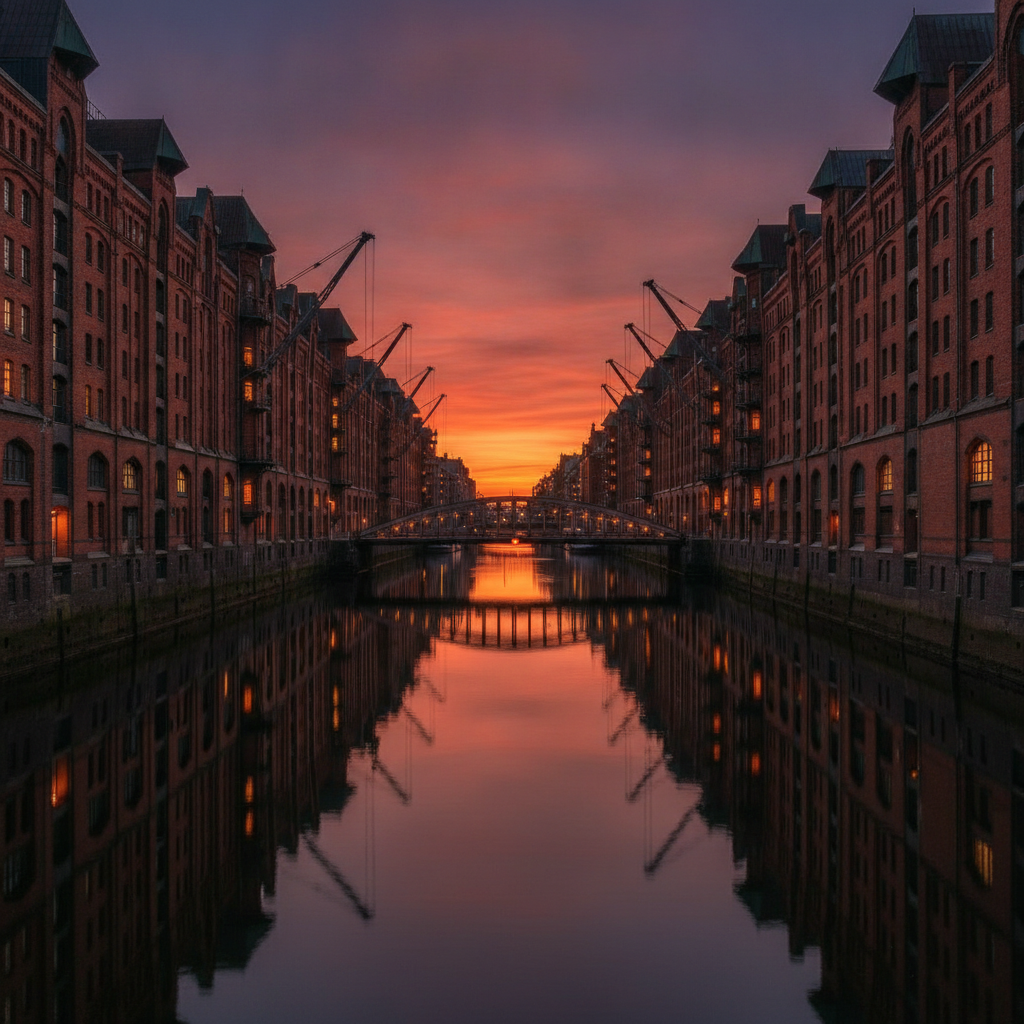
Hamburg — Speicherstadt, Elbphilharmonie, Reeperbahn, Alster & the Port
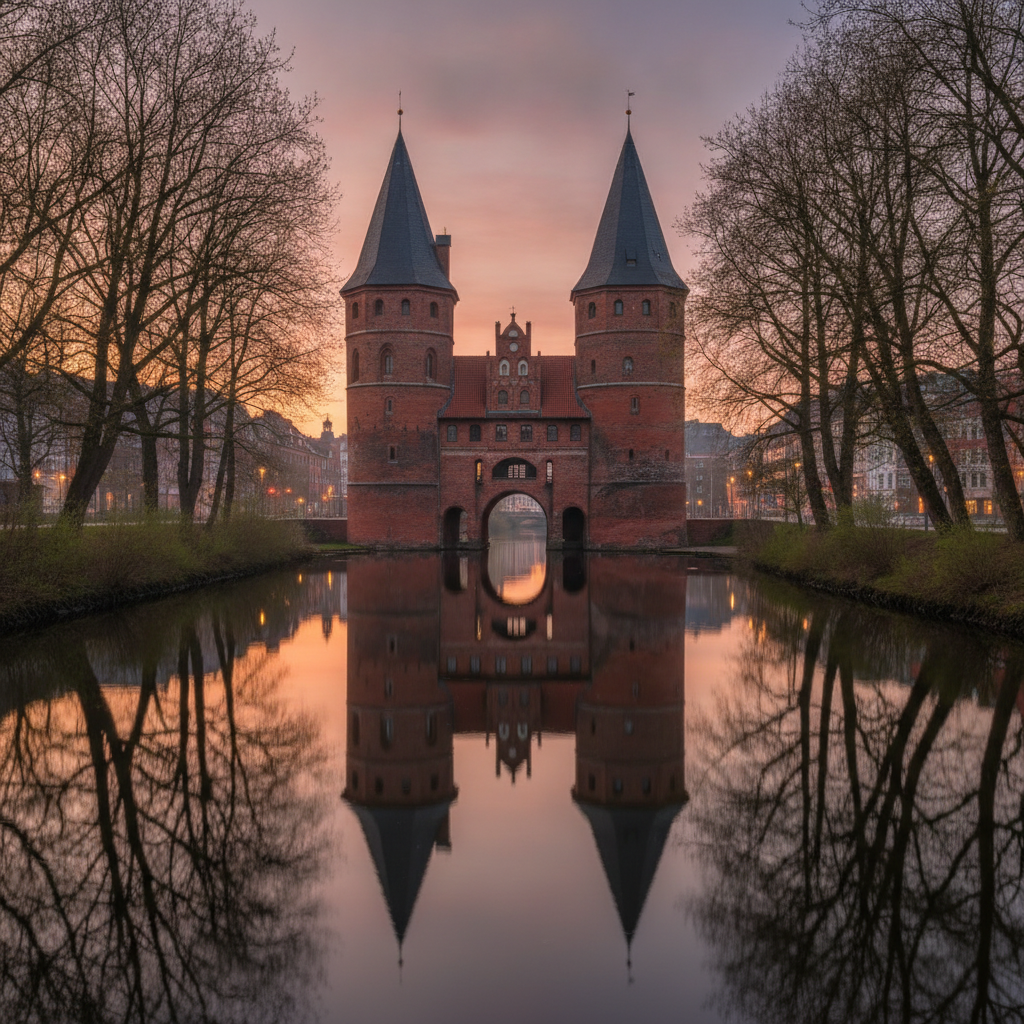
Hamburg — Schanzenviertel, Lübeck, Working Port, Events & the Historic Altstadt