90 Seconds Between Gondolas, the Tattooed Visitor Policy & Why the Outer Caldera Beech Forest Is More Reliable Than Maple in November
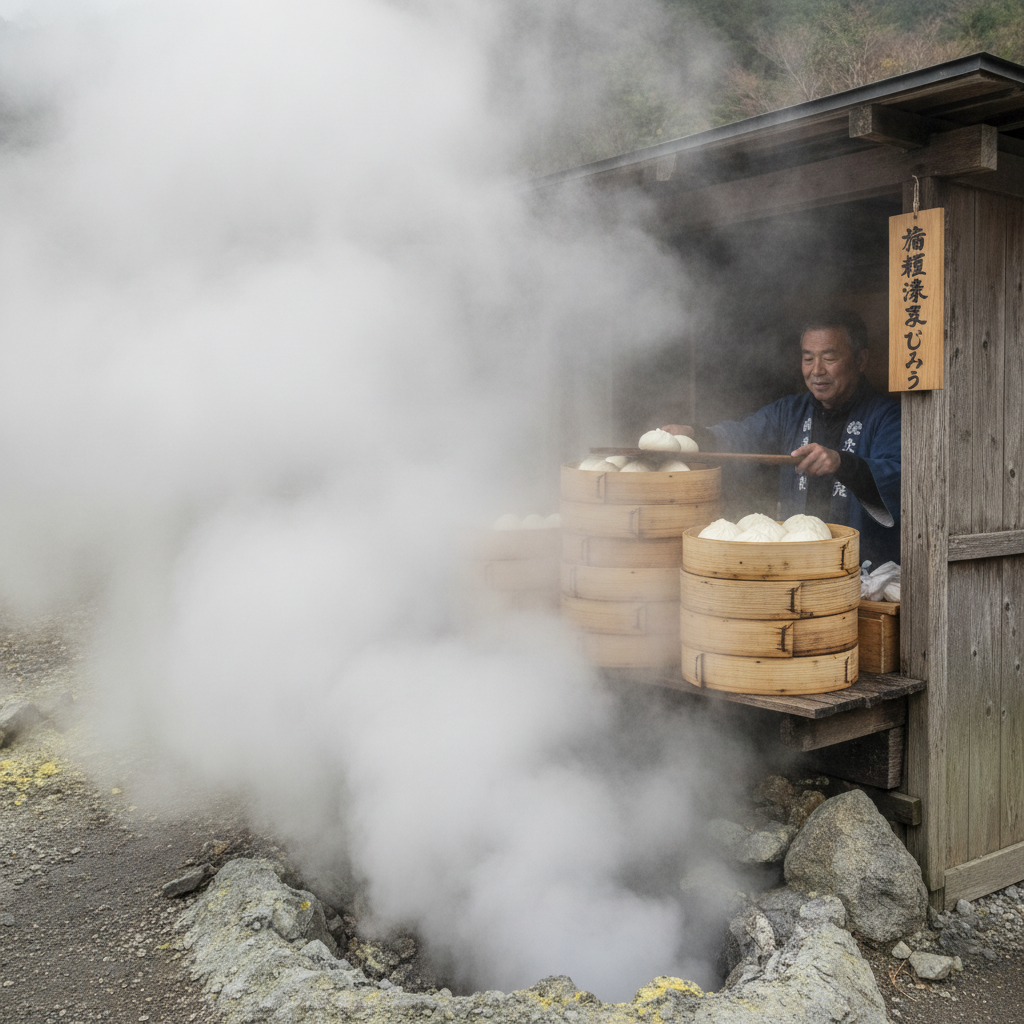
The ropeway's 3-minute Fuji window between Owakudani and Ubako and the congestion strategy of the first 09:00 cable car from Gora; the Komagatake ropeway summit as the only single viewpoint showing the complete caldera geology in one panorama; the rinse-before-entering onsen protocol and the private reserved bath as the tattoo-policy solution; Minamoto no Yoritomo's 1193 shrine visit and the Tokugawa sword donations in the Treasure Museum; the 15–20 winter days per year when Fuji and a calm lake surface coincide at dawn; and the pirate galleon and black sulfur egg as the two reliably captivating child experiences.
- 1
The Hakone Ropeway – Japan's Most Scenic Cable Car
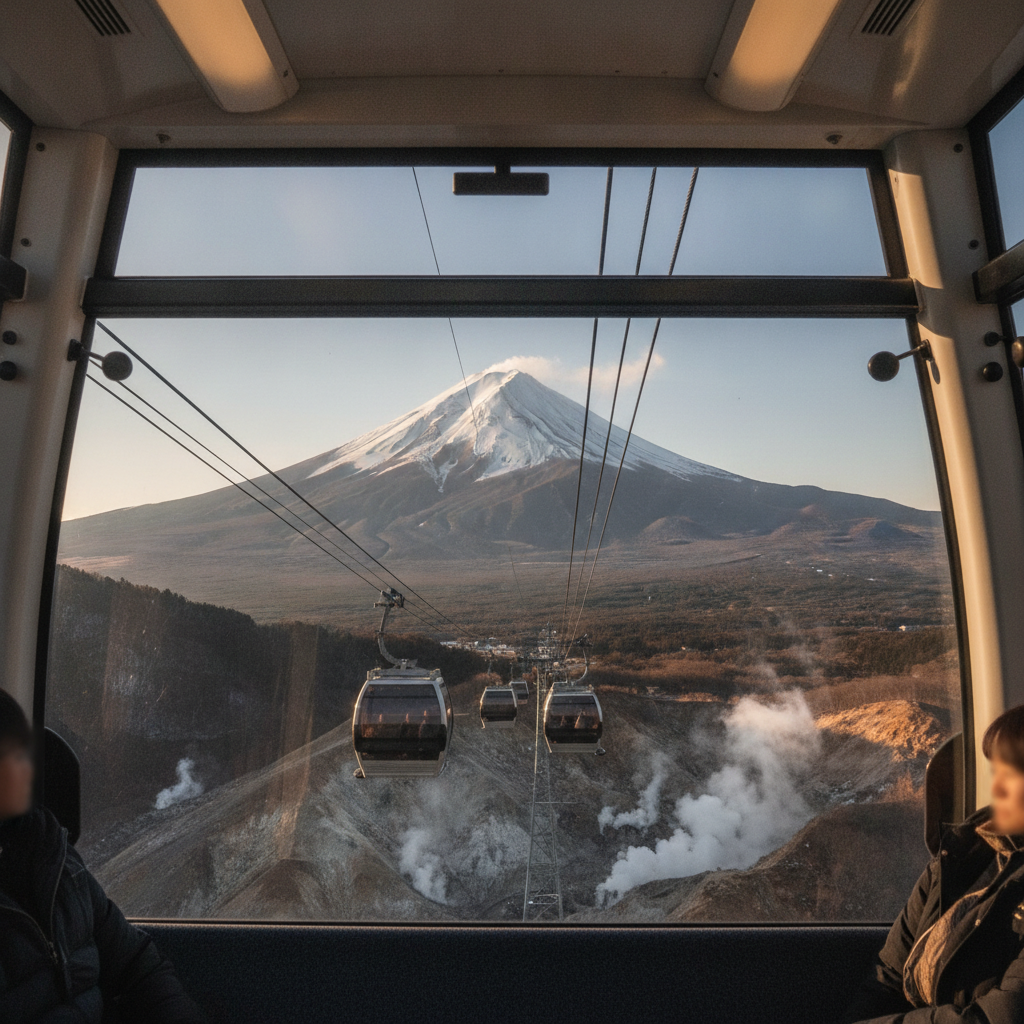
The Hakone Ropeway (the aerial tramway from Sōunzan to Togendai—4 km, 25 minutes, ascending to 1,044 metres at the Owakudani Station before descending to 741 metres at Togendai on Lake Ashi): the most scenically dramatic component of the Hakone Free Pass circuit and the transport link between the inland mountain area and the lake. The three-station route: Sōunzan (the upper terminus of the Tozan Cable Car from Gora; 767 metres elevation) → Owakudani (the volcanic vent area; 1,044 metres; 10-minute midway stop) → Ubako (the forest station; 862 metres) → Togendai (the Lake Ashi waterfront terminal; 741 metres). The gondola design (the Hakone Ropeway gondolas—8-person enclosed cabins departing at 90-second intervals; the capacity of the system is approximately 1,200 persons per hour per direction; the gondola window design prioritizes the upward view toward the volcanic ridge rather than the downward view): the gondola approach to Owakudani from below—the steam plumes visible above the ridge 10 minutes before arrival—is the most visually building approach to a volcanic landscape accessible by public transport in Japan. The Fuji view from the ropeway: the clearest Fuji views on the ropeway occur between Owakudani and Ubako on the western side of the run—the mountain appears directly ahead of the gondola for approximately 3 minutes if the sky is clear. The congestion: ropeway queues on peak autumn weekends can reach 60–90 minutes at Sōunzan; arriving by the first cable car from Gora (09:00) puts you at the ropeway before the day-trip crowd from Tokyo reaches the Gora area.
- 2
Hiking the Hakone Caldera – Trail Network
The Hakone hiking trail network (the approximately 50 km of marked walking trails within the Fuji-Hakone-Izu National Park in the Hakone area, managed by the Kanagawa Prefecture Parks Bureau) is the least-used major hiking network in the Greater Tokyo region relative to its accessibility—the majority of Hakone visitors use the transport circuit (train, ropeway, boat) without walking any trails longer than the approach to the ropeway station. The Komagatake route (the trail from the Hakone Komaga-take Ropeway summit (1,327 metres—the highest accessible point in the Hakone area; the ropeway from Hakone-En on Lake Ashi takes 7 minutes to the summit): from the summit, the Hakone caldera is visible in its complete geological form—the outer walls, inner caldera, Lake Ashi, and Mount Fuji in a single panorama that no other single Hakone viewpoint provides). The Old Tokaido walking section (the 2-km stone-paved cedar road from the Amazake-chaya to Moto-Hakone—fully flat, accessible to any fitness level, and the most historically charged 2 km in the Hakone area): this trail was walked by every Edo-period traveller, including all 47 Daimyo who passed through the Hakone checkpoint annually with their entourages. The Myōjōdake and Kintoki routes (the circular trail connecting the outer caldera peaks—Kintokiyama (1,212 metres) and Myōjōdake (1,169 metres)—a 5-hour intermediate walk through the beech forest above the resort area with consistent Fuji views in clear conditions).
- 3
Hakone's Onsen Bathing Culture – A Practical Guide
The Japanese onsen bathing practice has a formal cultural protocol that is consistent across Hakone's 19 spring areas but is frequently misunderstood by international visitors who approach the baths as a simple hot-pool experience. The entry sequence: the undressing room (the entrance lobby where shoes are removed; the changing room (the dressing room where all clothing is removed and left in the numbered basket or locker—bathing suits are not worn in traditional Japanese onsen); the rinse station (the seated shower station with individual basin, stool, soap, and shampoo—every bather rinses thoroughly before entering the shared bath; this is not optional and is the single most important rule of onsen etiquette); the shared bath (the communal hot bath entered only after thorough rinsing—the temperature range at Hakone's springs is 40–44°C (104–111°F): hot by international standards). The tattoo question: many traditional Hakone onsen prohibit tattooed bathers—the prohibition relates to historical associations of tattoos with criminal organizations in Japan (tattooed visitors should check each facility's policy; the trend toward tattoo acceptance is accelerating in tourist-focused facilities as of 2026, but many traditional facilities maintain the prohibition). The private bath option: most mid-tier and premium Hakone ryokan offer private reserved baths (kashikiri-buro—the enclosed private bath bookable by guests in 45-minute slots, typically at no extra charge): the private bath eliminates the tattoo question and the communal protocol requirement and is the recommended option for first-time onsen visitors.
- 4
The Hakone Gongen Shrine – History & Ceremonies
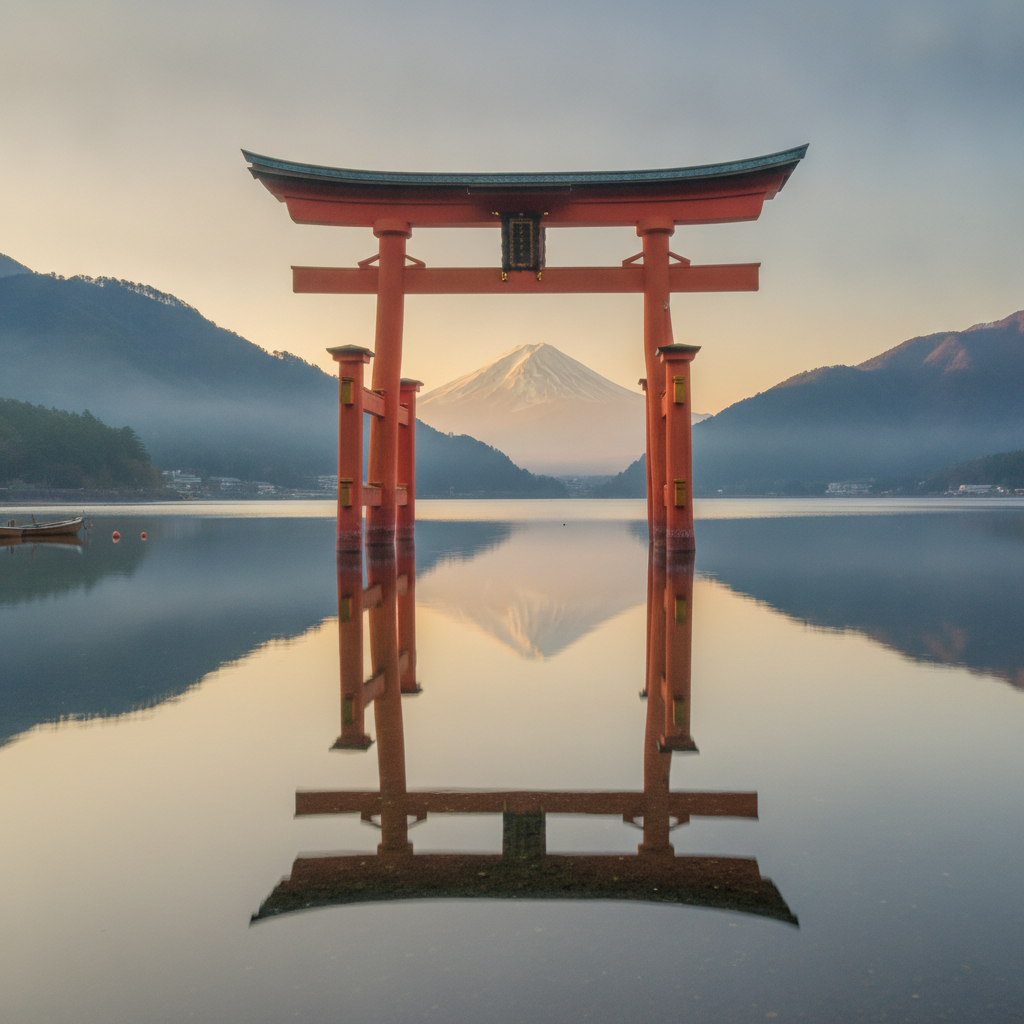
The Hakone Gongen (Hakone-Jinja—the Shinto shrine on the western shore of Lake Ashi at Moto-Hakone): the most significant Shinto institution in the Hakone area, established in 757 CE by the monk Mangan who built the first shrine on the shores of the sacred lake. The shrine's historical significance: the Hakone Gongen was the object of devotion for the Kamakura shogunate (Minamoto no Yoritomo, the first shogun, visited the shrine in 1193 to pray for victory in his campaigns; the shrine has maintained documented connections to the ruling military class in Japan from 1193 through 1868). The Shrine complex: the Main Hall (the current Honden reconstructed in 1667—the oldest structure in the Hakone area; the shrine's red lacquer main hall is visible through the ancient cedar forest that surrounds it); the Moto-Hakone Torii Gate (the vermilion gate standing in the lake shallows that appears in every Hakone promotional image—erected in 1952, replacing earlier gates dating to the 8th century; the current gate is technically the 'lake torii' (umidori) of the Moto-Hakone Shrine pier rather than the main shrine gate). The Horse Race Ceremony (the Hakone Jinja Zenkokuichijōsha Ceremonial Horse Race—the annual May ceremony where a traditional horse race is held on the lakeshore in Shinto ritual context): the ceremony's combination of horse racing, Shinto ceremony, and Lake Ashi backdrop makes it the most photographed annual event at the shrine. The Treasure Museum (the Hakone-jinja Treasure Museum at the shrine entrance—displaying artifacts donated to the shrine from the Kamakura period through the Edo period, including swords donated by Minamoto no Yoritomo and items from the Tokugawa family).
- 5
Hakone's Photography Opportunities
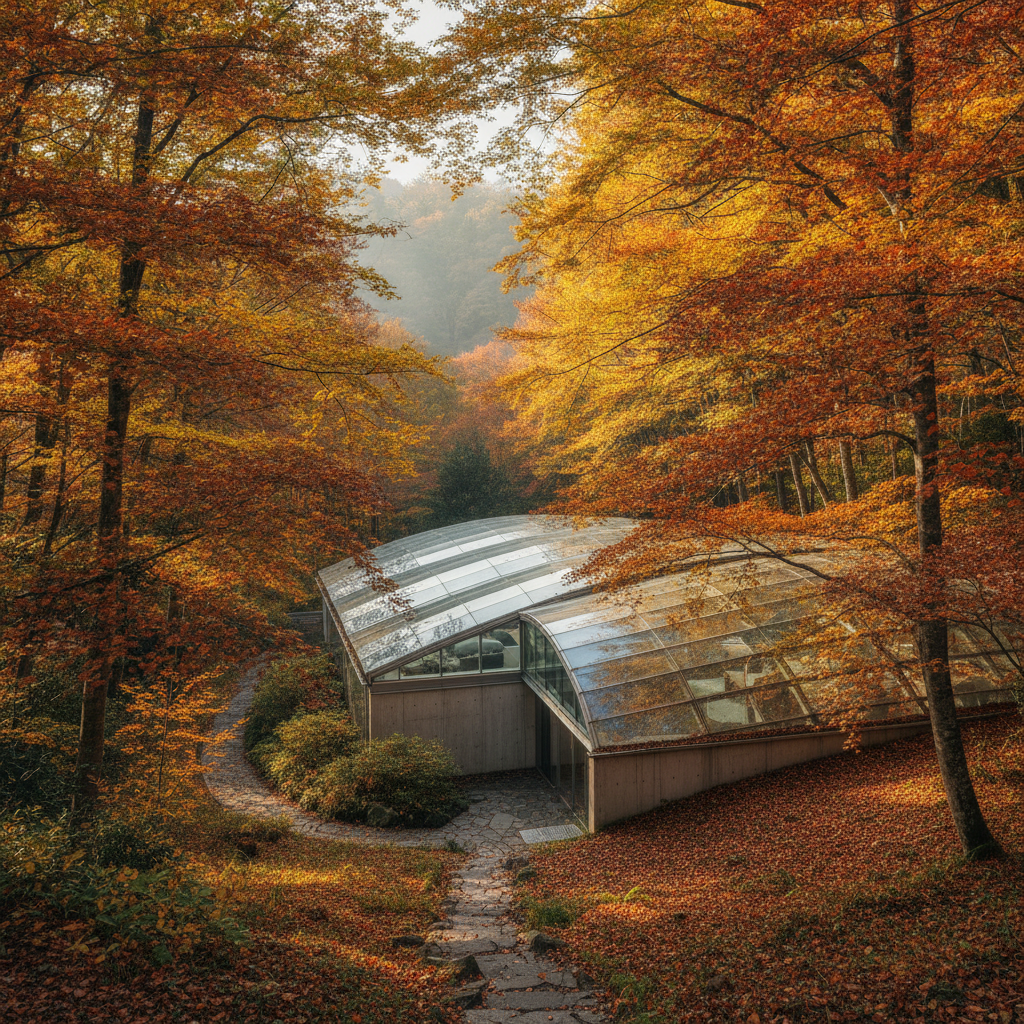
The Hakone photography programme—the circuit of viewpoints, seasonal events, and optical conditions that produce the most compelling images of the Hakone landscape—is more time-dependent and weather-dependent than the general tourist literature acknowledges. The priority viewpoints: Lake Ashi Torii Gate at dawn (the gate in still water with Fuji—requires a clear morning, calm lake surface, and arrival before 07:00 when the tourist boats begin moving the water); the Owakudani steam in strong afternoon light (the steam plumes are most visible when backlit by the afternoon sun from the west—the 14:00–16:00 window at Owakudani provides the most dramatic lighting); the Sengokuhara pampas grass at 09:00 (the silver seed heads catch the low morning light before the midday flattening). The seasonal optima: the pampas grass (late September, peak colour before the autumn rain flattens it); the autumn beech forest on the Komagatake and Kintoki trails (mid-November—the beech (buna) forest of the Hakone outer caldera produces the finest autumn foliage in the area, more consistent than the maple (maple requires specific conditions; beech is reliable); the winter Fuji reflection in the lake (December–February, depending on cloud and wind—the probability of the simultaneous Fuji clear sky and calm lake at dawn is approximately 15–20 days per winter). The photography transport: the ropeway gondola window glass is tinted in the morning light direction (eastern side); position yourself on the western-facing gondola side for the morning Owakudani steam and the afternoon Fuji view.
- 6
Hakone for Children – Family Circuit
Hakone's visitor infrastructure caters extensively to the Japanese family market—the resort's proximity to Tokyo and the variety of transport modes (train, cable car, aerial ropeway, pirate ship, bus) make it one of the most transport-engaging day trips available for children in Japan. The pirate ship (the Lake Ashi sightseeing boat—the full-scale galleon replica is the single transport experience that reliably captivates children in the Hakone circuit; the observation deck and the costumed crew photos (available for ¥500 at the dockside)). The kuro-tamago (the black sulfur eggs at Owakudani—the combination of the sulfur smell, the visible steam vents, and the black egg is a reliably memorable sensory experience for children; the '7 years of life per egg' marketing legend is understood by children as literal and enthusiastically embraced). The Open-Air Museum (the outdoor sculpture collection is the most child-appropriate major art museum in Japan—the outdoor setting allows running between sculptures, the Stravinsky fountain produces unexpected water jets, and the foot onsen provides the first onsen experience for children who cannot use adult baths): the museum's combination of art, outdoor space, and warm water is the best single Hakone experience for mixed-age groups. The Hakone wildlife (sika deer visible in the Sengokuhara area mornings, and Japanese serow (the mountain goat-antelope endemic to Japan, visible on the outer caldera slopes above the Komagatake ropeway): the serow is one of Japan's most distinctive endemic mammals and the most difficult to see in the wild.
Walk this route with audio
Stories play automatically as you reach each stop — no tapping needed.
More in Hakone
The Museum Sunk Below the Forest, the Anime City Built in a Caldera & the 1952 Imperial Villa That Now Charges ¥150,000 Per Night
The Torii Gate in the Lake, the Black Egg That Adds 7 Years & the 1878 Hotel That Hosted Both Charlie Chaplin and John Lennon
The Caldera That Collapsed Three Times, the Pampas Grass Plain & the Teahouse That Has Served Sweet Rice Drink Since the Same Year the Checkpoint Opened
The 10,000 Illuminated Hydrangeas Seen From a Moving Train at Night, the Kōrin Irises Behind 4 Escalator Tunnels & the Third Week of July as the Statistical Peak for Both Fuji and Lake