The Caldera That Collapsed Three Times, the Pampas Grass Plain & the Teahouse That Has Served Sweet Rice Drink Since the Same Year the Checkpoint Opened
The Hakone nested caldera's 3 collapse events over 400,000 years and Owakudani's hydrogen sulfide concentration management; Sengokuhara's 100,000 m² of September pampas grass and the Lalique Museum inside a 1960s resort hotel; the Hakone moss garden maintained by volcanic steam and the yosegi-zaiku marquetry craft made nowhere else in Japan; the 400-year-old cedar tunnel over the old Tokaido stone road and the Amazake-chaya teahouse open since 1619; the 17 distinct onsen water chemistry types in 20 km; and the Hakone-vs-Nikko-vs-Karuizawa decision tree for Tokyo mountain escapes.
- 1
Hakone's Volcanic Geology – Understanding the Caldera
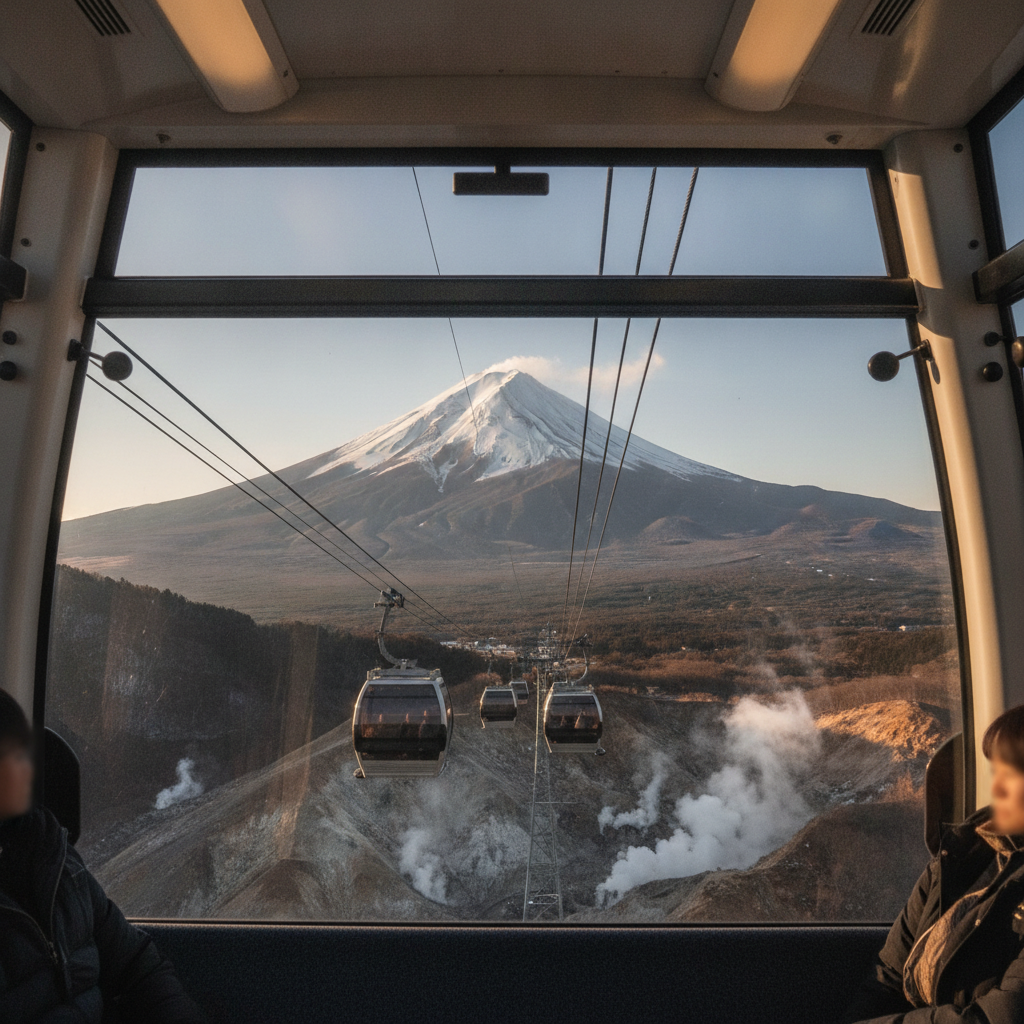
The Hakone volcanic system is a complex nested caldera—a volcanic structure formed by at least 3 separate caldera collapse events over the past 400,000 years, with the most recent major collapse approximately 60,000 years ago creating the outer caldera walls that now form the mountain ring surrounding the Hakone basin. The geological layers visible in the Hakone landscape: the outer caldera rim (the mountain peaks surrounding the Hakone basin—Myōjō, Kintoki, Marugatake—representing the remnants of the original volcanic cone); the inner caldera (the Hakone basin containing Gora, Sengokuhara, and the southern towns); and Lake Ashi (the terminal lake occupying the southernmost caldera depression, sealed by lava flows from the Ko-dake secondary volcanic cone approximately 3,100 years ago). Owakudani's current activity: Owakudani sits above a fumarolic zone where volcanic gases rise through fissures in the caldera wall—the hydrogen sulfide concentration at the vent area averages 20–40 ppm (the threshold for eye irritation is 10 ppm; the OSHA 15-minute exposure limit is 50 ppm): the Owakudani observation area is designed to keep visitors at concentrations below the irritation threshold on normal wind days. The 2015 eruption alert (the phreatic explosion on 29 June 2015—a steam explosion at Owakudani that produced a plume of 400 metres and prompted evacuation of nearby areas): the alert system (the Kanagawa Prefecture Volcanic Alert Level system) that resulted in the 15-month ropeway closure demonstrated both the effectiveness of the monitoring system and the economic dependence of Hakone's tourism on the ropeway route.
- 2
Sengokuhara & the Pampas Grass Plain
Sengokuhara (the plateau area on the northeastern edge of the Hakone basin, at approximately 700 metres elevation—accessible by Hakone Tozan Bus from Gora or Hakone-Yumoto): the seasonal grassland whose silver pampas grass (susuki) bloom in September–November constitutes the most celebrated Hakone seasonal event for Japanese domestic visitors. The susuki season (the approximately 100,000 square metres of pampas grass on the Sengokuhara plain—the grass reaches 2–2.5 metres in September and the silver seed heads emerge in mid-September; the optimum period is late September through October before the grass bends in the autumn rain): the most-photographed susuki viewing location in Japan (competitive with Sonohara, Nagano and Tanzawa, Kanagawa, but the Sengokuhara plain's proximity to Tokyo makes it the most visited). The Sengokuhara glass museum (the Lalique Museum—the Sengokuhara Lalique Museum, the largest collection of René Lalique glass in Japan, housed in a renovated 1960s resort hotel building in the pampas grass area; Lalique's Art Nouveau glass in the setting of a Japanese mountain plateau: the least predictable combination of Hakone's cultural programme). The Pola Museum of Art (the contemporary art museum set in the beech forest above Sengokuhara—the purpose-built 2002 building housing the Pola Corporation's collection of 9,500 art objects, including 230 Impressionist works and the largest collection of Japanese woodblock prints in a private museum in Japan): the most architecturally significant museum building in Hakone.
- 3
The Gora Botanical Garden & Traditional Crafts
Hakone's cultural programme beyond the geothermal drama and Fuji views includes two significantly undervisited experiences in the Gora area. The Hakone Botanical Garden of Wetlands (the 5-hectare botanic garden near Gora—focusing on the wetland plants of the Hakone caldera floor, including the native Hakone white gentian (Gentiana triflora var. japonica f. albiflora) that grows only in the Hakone caldera bogs; Japanese iris, water plantain, and the carnivorous sundew (Drosera rotundifolia)): the garden is the most scientifically specific botanical collection in the Kanto region for native alpine and sub-alpine wetland species. The Hakone Museum of Art (the oldest art museum in Hakone, established 1952 at Gora—housing Japanese ceramics from the Jōmon period through the Edo period, with the famous moss garden (the low-cropped moss surrounding the garden paths maintained at a consistent moisture level by the onsen steam from the garden's volcanic spring): the moss garden is the most visited garden element in Hakone and the most unusual (the combination of volcanic steam heat and the Pacific maritime climate creates a moss growth rate that requires daily maintenance). The Hakone woodwork tradition (yosegi-zaiku—the Hakone marquetry woodwork technique using geometric parquetry patterns of contrasting wood species bonded together and planed into thin veneers; a craft exclusive to the Hakone area and produced nowhere else in Japan): the Yosegi-zaiku production studios in Hatajuku village (on the old Tokaido road east of Hakone-Yumoto) accept visitors for demonstration and purchase.
- 4
The Old Tokaido Road & Hakone Checkpoint
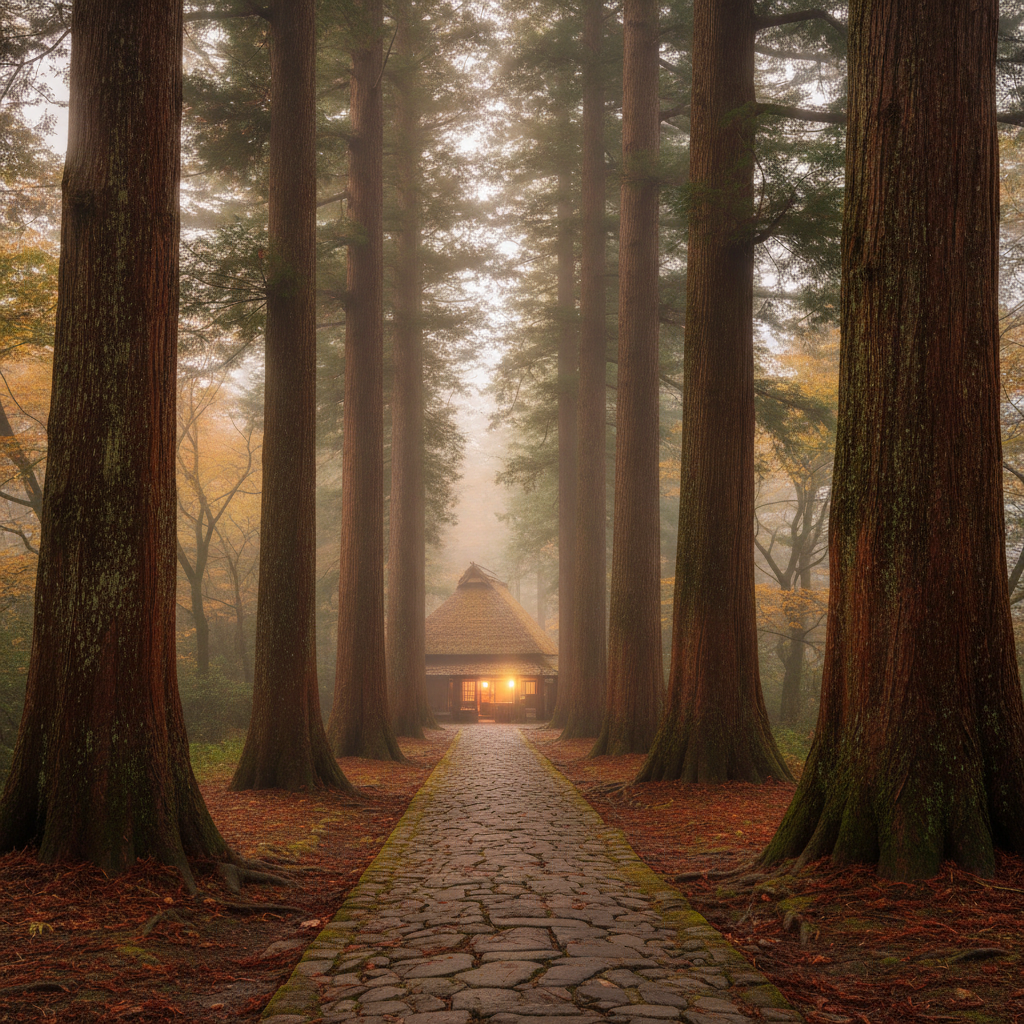
The Tokaido (the 'Eastern Sea Road'—the main road connecting Edo (Tokyo) and Kyoto during the Edo period (1603–1868); the most important road in Japan for 265 years): the Hakone section of the old Tokaido passes through the Hakone Mountains on a cedar-lined stone-paved mountain road that survives in its original condition for approximately 2 km between the Amazake-chaya teahouse and the Moto-Hakone area. The Hakone Checkpoint (the Hakone Sekisho—the Tokugawa shogunate checkpoint established in 1619 to control traffic on the Tokaido; particularly to prevent weapons being moved toward Edo (iron and guns coming in) and the daimyo hostage family members from leaving (women going out)—the reconstructed checkpoint building and gate at Moto-Hakone Lake Ashi shows the inspection procedure): the checkpoint operated continuously for 249 years (1619–1868) and was the most significant traffic control point on the Tokaido. The cedar avenue (the 2-km cedar-lined stone road from the old checkpoint area to the Amazake-chaya teahouse—the cedars were planted in 1618 on the shogun's order; the 400-year-old cedars are now 40–50 metres tall and their canopy makes the old road a forest tunnel): the Amazake-chaya (the Sweet Sake teahouse—operating continuously since 1619, the same year as the checkpoint; the oldest continuously operating teahouse in Japan; serving amazake (sweet fermented rice drink) and mochi in the original thatched-roof building).
- 5
Hakone's Onsen Science – What's in the Water
Hakone's 17 onsen areas (the 17 distinct spring sources in the Hakone area designated by the Japanese government as separate onsen districts, each with distinct water chemistry depending on their proximity and connection to the volcanic system): the range of water chemistry in such a geographically compact area (20 km across) is unusual in the world's onsen landscape and the primary reason Hakone has historically attracted multiple distinct onsen culture communities. The water chemistry types in Hakone: the sulfurous water of Owakudani-sourced springs (high hydrogen sulfide—the smell that defines the 'onsen smell' in Western cultural consciousness); the salt chloride water of the Ashinoyu springs (sodium chloride dominant—the 'warming' type associated with longer heat retention after bathing); the carbonated water of the Sōunzan springs (dissolved CO₂ producing the tingling sensation on the skin—the type most valued for cardiovascular health in Japanese onsen medicine); and the calcium sulfate water of the Koma springs. The rotenburo (the outdoor onsen bath—the element of the ryokan experience most valued by Japanese and international guests alike): the combination of hot mineral water, mountain forest air, and (if cloud permits) Fuji view from an outdoor bath constitutes the defining Hakone sensory experience—the rotenburo at the best ryokan overlooks the forest with a wind-fed bamboo sound effect that completes the Japanese bath aesthetic. The shared public bath (the sento-style onsen facility—the Tenzan Touji-kyo public bath in Yumoto and the Yunosato open-air public bath: accessible without accommodation booking for ¥1,000–1,500).
- 6
Hakone vs Nikko vs Karuizawa – Choosing Your Mountain Escape
The three primary mountain escapes from Tokyo each serve a different visitor need. Hakone (90 minutes from Tokyo; the volcanic-lake-onsen circuit; the most internationally visited mountain destination): the choice for the complete traditional Japanese inn experience, the most dramatic volcanic landscape within day-trip range, the best Fuji viewpoint with water reflection, and the most developed tourist infrastructure. Nikko (2 hours from Tokyo; the most ornate shrine complex in Japan in mountain forest; waterfall hiking): the choice for the elaborate Tōshō-gū mausoleum, the Nikkō cedar forests, and the mountain lake hiking extending north into Oku-Nikkō: see the Nikkō route entry. Karuizawa (70 minutes from Tokyo by Shinkansen to Karuizawa; the high-altitude plateau resort where the Japanese upper class has summered since the 1890s; the outlet mall): the choice for cycling on the plateau road network, the Shiraito Falls, the Kumoba Pond forest walk, and the John Lennon–Yoko Ono connection (the summer house where Lennon spent summers 1976–1980 is visible from outside; the Lennon memorabilia cafe operates near the station). The Hakone premium: Hakone consistently prices at 20–30% above comparable Nikko accommodation for equivalent quality—the Tokyo day-trip proximity and the stronger international brand recognition justify the premium for many visitors. The single-night decision: if one mountain overnight is available, Hakone wins on onsen quality and the Fuji view probability.
Walk this route with audio
Stories play automatically as you reach each stop — no tapping needed.
More in Hakone
The Museum Sunk Below the Forest, the Anime City Built in a Caldera & the 1952 Imperial Villa That Now Charges ¥150,000 Per Night
The Torii Gate in the Lake, the Black Egg That Adds 7 Years & the 1878 Hotel That Hosted Both Charlie Chaplin and John Lennon
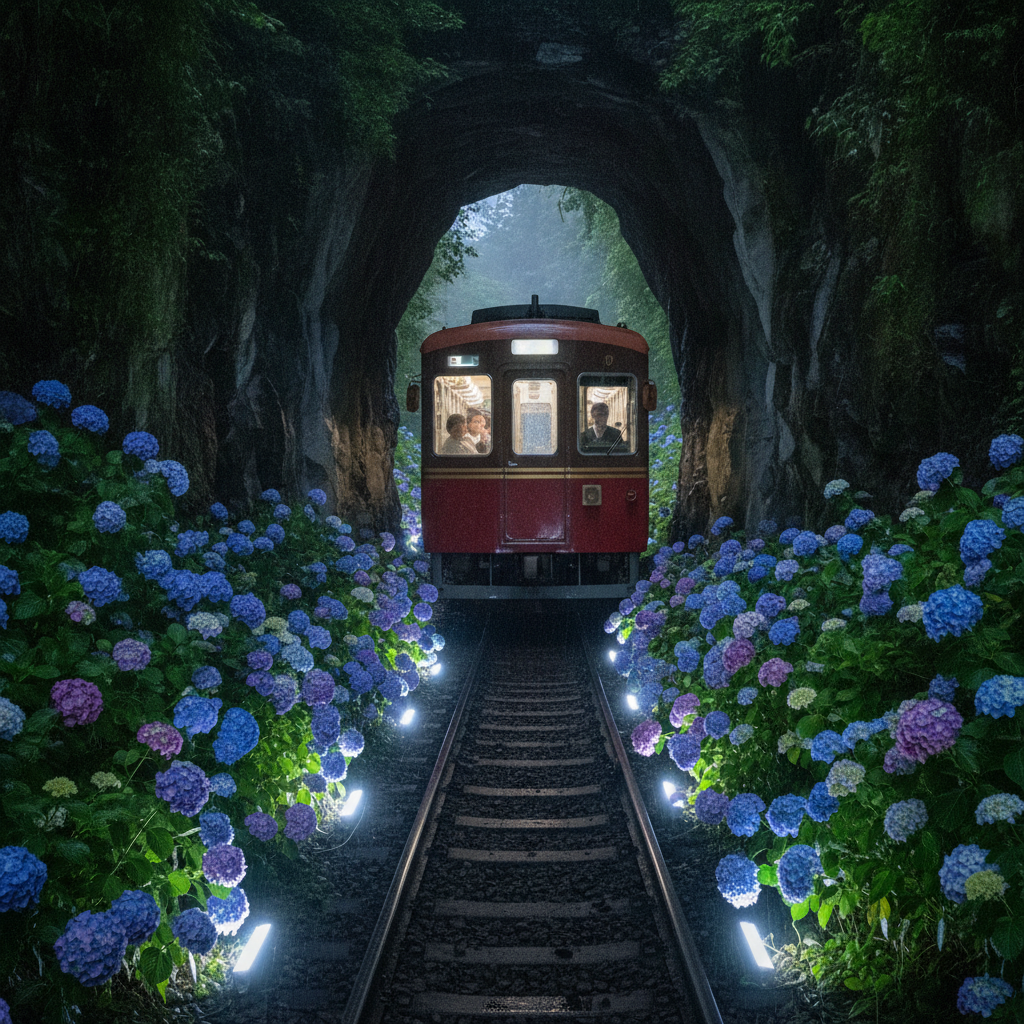
The 10,000 Illuminated Hydrangeas Seen From a Moving Train at Night, the Kōrin Irises Behind 4 Escalator Tunnels & the Third Week of July as the Statistical Peak for Both Fuji and Lake
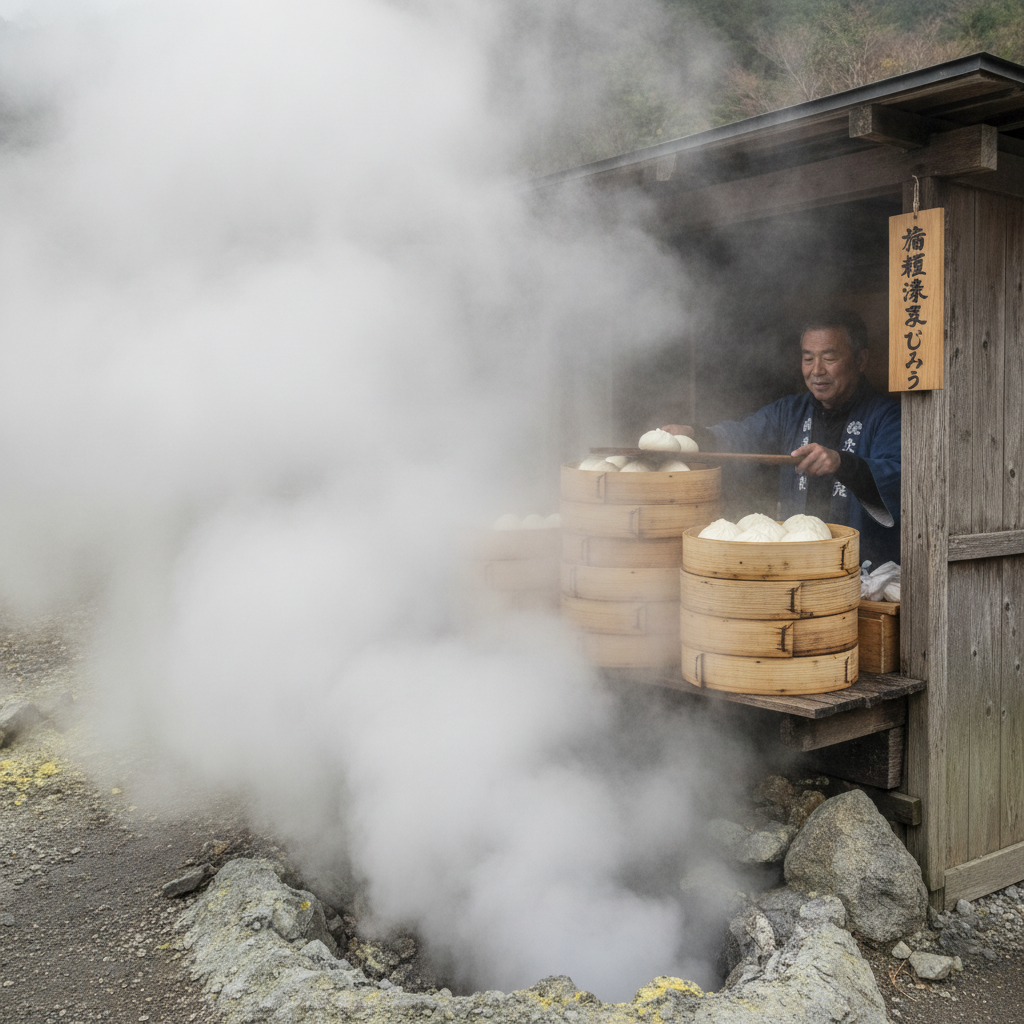
The Free Pass Breakeven Analysis, the 15-Month Ropeway Closure That Cost ¥20 Billion & the Tozan Railway Running on 100% Renewable Electricity Since 2021