The Free Pass Breakeven Analysis, the 15-Month Ropeway Closure That Cost ¥20 Billion & the Tozan Railway Running on 100% Renewable Electricity Since 2021
The Free Pass value calculation showing the Romance Car surcharge as the tipping point; the Level 1–5 volcanic alert system with the 2015 phreatic explosion's 15-month closure and ¥20 billion cost; the funicular's 200‰ gradient—Japan's steepest passenger funicular—and the moss garden visible from the cable car window; the complete annual calendar from January's Fuji clear-day peak through the June hydrangea season to November momiji; the kaiseki's Ashigara Wagyu, Sagami Bay kinmedai, and Hakone volcanic-water wasabi; and the 2021 transport carbon neutrality achievement.
- 1
The Hakone Free Pass – Complete Guide & Value Analysis
The Hakone Free Pass (the Odakyu Railway area pass covering Hakone transportation and museum admissions): the most important logistical decision for any Hakone visitor and the first question to resolve before planning the specific itinerary. The 2-day pass from Shinjuku (¥6,100): covers the Odakyu Romance Car to Odawara (except the Romance Car express surcharge—¥900 additional each way for the reclining seat car; recommended for the 85-minute journey), the Hakone Tozan Railway (Odawara to Gora), the Hakone Tozan Cable Car (Gora to Sōunzan), the Hakone Ropeway (Sōunzan to Togendai), the Lake Ashi cruise (all routes), and the Hakone Tozan Bus and retro-bus routes throughout the area. Museum discounts included: Open-Air Museum (¥1,600 full → ¥1,440 with pass), Hakone Museum of Art (¥900 → ¥700 with pass), Pola Museum (¥1,800 → ¥1,600 with pass). The value calculation (the breakeven analysis for day visitors vs overnight): for a single-day visitor doing the standard circuit (Odawara–Gora–Ropeway–Lake Ashi–Bus back) and 1 museum, the pass value equals approximately ¥4,200–4,800 of transport and ¥1,600 museum admission = ¥5,800–6,400, which is below the ¥6,100 pass price. Add the Romance Car (¥900) and the pass is clearly valuable. For 2-day overnight visitors using 2 museums, the pass saves approximately ¥3,000–4,000. The 3-day pass (¥6,500) adds value only if additional museum visits or bus journeys are planned on Day 3.
- 2
Hakone's Volcanic Alert System – Living With Risk
The Hakone volcanic alert system (the Kanagawa Prefecture Volcano Monitoring Division monitors the Hakone volcanic system continuously using seismographs, GPS ground deformation sensors, gas analyzers, and satellite radar): the most sophisticated public-facing volcanic monitoring system in Japan after Mount Fuji. The alert levels: Level 1 (normal—the baseline; no restrictions; the usual condition for approximately 350+ days per year); Level 2 (volcano alert near vent—approach to the crater area restricted; Owakudani visitors can still reach the observation platform but the vent-edge trail is closed); Level 3 (mountain approach forbidden—the Owakudani ropeway station is evacuated; the ropeway may continue to operate for evacuation but no public access); Levels 4 and 5 (residential evacuation alerts for the closest areas). The 2015 alert: the June 2015 Level 3 alert (the most recent significant alert in Hakone) followed a series of microseismic events and a small phreatic eruption (steam explosion) at Owakudani—no casualties; the ropeway closure lasted 15 months (June 2015–July 2016), costing the Hakone tourism economy an estimated ¥20 billion in lost revenue. The monitoring transparency: the Hakone Ropeway website maintains a real-time alert level display and the NIED (National Research Institute for Earth Science and Disaster Resilience) publishes daily Hakone seismic bulletins: the most accessible real-time volcanic monitoring data in Japan.
- 3
The Tozan Cable Car & Gora–Sōunzan Elevation
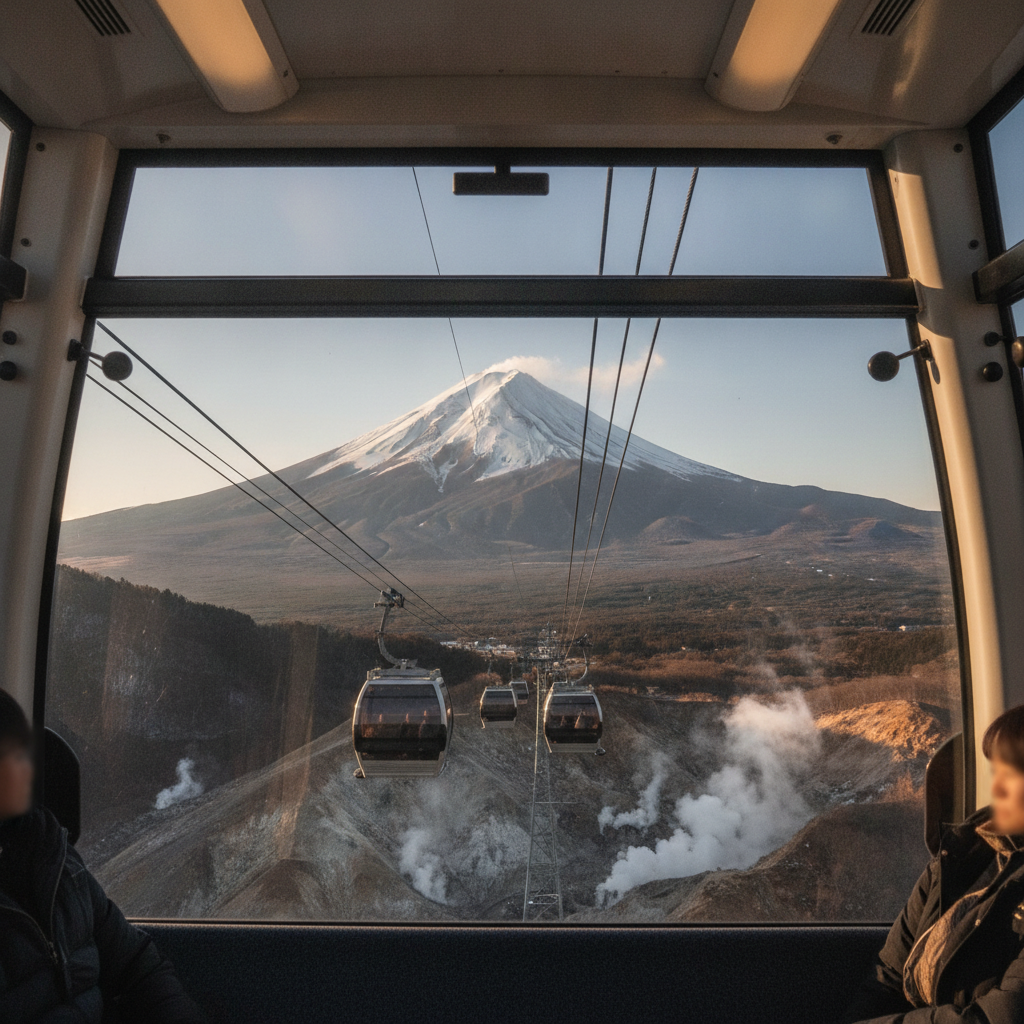
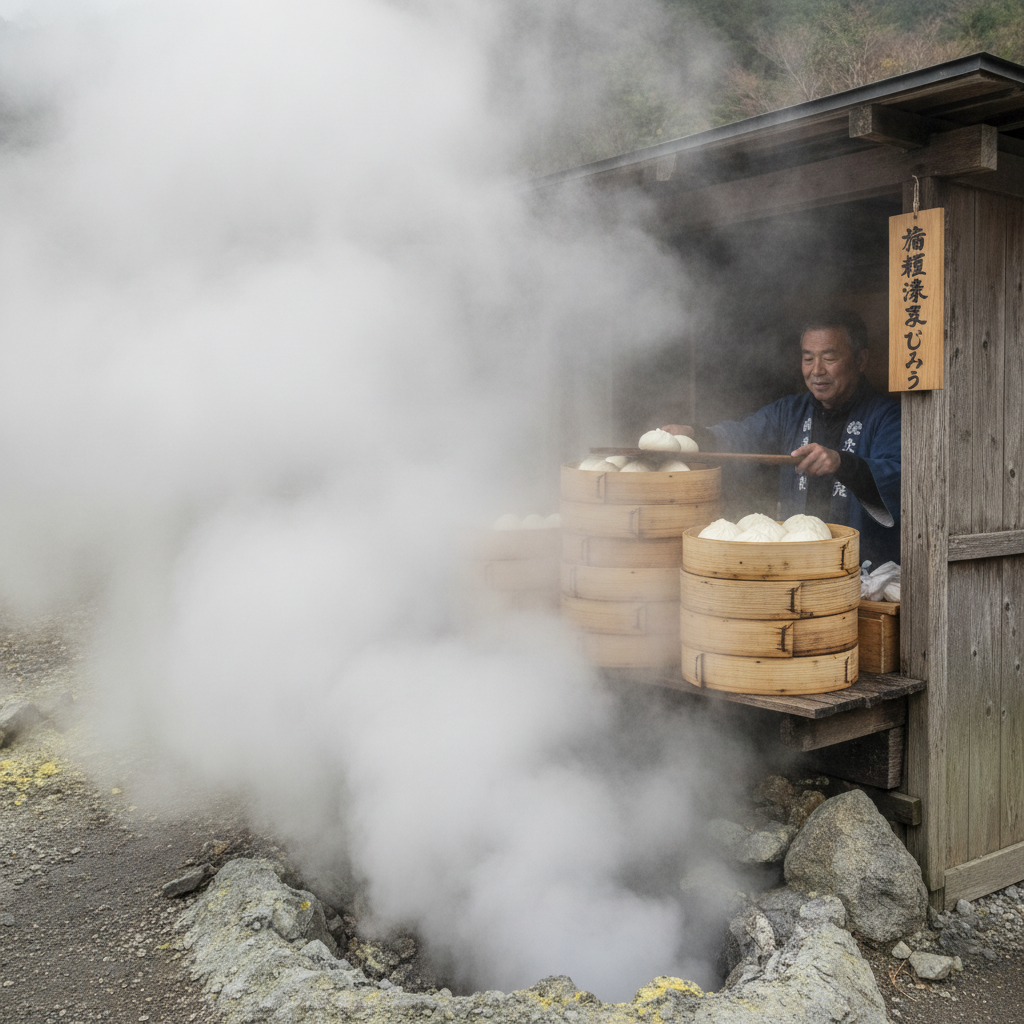
The Hakone Tozan Cable Car (the funicular from Gora to Sōunzan—1.2 km, 10 minutes, ascending 212 metres through 4 stations: Gora, Kōen-Shimo, Kōen-Kami, Naka-Gōra, Sōunzan): the transition vehicle between the cogwheel railway and the aerial ropeway in the Hakone circuit. The maximum gradient (the Gora–Kōen-Shimo section: 200‰ gradient, 20-degree incline—the steepest passenger funicular section in Japan; the sensation of near-vertical ascent in the cable car is the most physically dramatic moment of the Hakone circuit for visitors unfamiliar with funicular gradients). The Hakone Museum of Art (the station immediately below Sōunzan at Kōen-Kami Cable Car Station—the exit from the cable car deposits you directly at the museum entrance; the moss garden visible from the cable car windows as you pass): the museum is the most conveniently accessed of the four Hakone art museums, with no additional walking required. The Naka-Gōra and Kōen-Kami craft area (the steep lane between the cable car stations lined with traditional pottery studios, sweets shops (wagashi—the Hakone-specific confections including the ume plum jelly, the Hakone azalea-flower rice cake, and the onsen manju (the steamed bun cooked over onsen steam rather than water)), and the outdoor bath-foot station at Naka-Gōra): the 5-minute walk between the cable car stations in this area is the most commercially active section of the Hakone circuit outside Yumoto.
- 4
Hakone's Seasons at a Glance – The Annual Calendar
The complete Hakone seasonal calendar for planning purposes. January–February (the winter window): the fewest visitors; Fuji visibility at its statistical peak (30–40 clear-day days per season); the onsen experience at its most atmospheric (outdoor baths in cold air, possible snow on the outer caldera peaks); the ropeway may be affected by ice on the cable. March–April (early spring): the Lake Ashi ice melts (the northern shallow areas occasionally freeze in January–February); the cherry blossom at Gora and Miyagino (late April—1–2 weeks after Tokyo, making Hakone a usable secondary cherry destination for visitors who missed Tokyo peak); the rhododendron Festival at the Hakone Museum of Art (late April–mid-May). May (the green season): the beech forest fresh-green (the shindryoku colour); the Hakone Spring Music Festival; the Horse Race Ceremony at Hakone Jinja (late April or early May). June–mid-July (the hydrangea season): the Hydrangea Train night illumination (the highest demand evening transport event of the year); the rainy season (tsuyu) brings consistent cloud cover that typically obscures Fuji for June–early July. Mid-July–August (the summer peak): the highest visitor volume of the year; the Fuji climbing season; the Gora fireworks in early August; the highest ryokan prices. September–November (the autumn peak): the pampas grass (September peak); the momiji maple (November); the clearest Fuji days of autumn (October). December: the onsen winter transition; the Christmas illumination on the lake cruise.
- 5
Hakone's Cuisine – Kaiseki & Mountain Food
The Hakone food culture is centered on the kaiseki dinner—the formal multi-course Japanese dinner served at the ryokan—and supplemented by the local food specialties of the Ashigara-Odawara region that feeds the resort area. The kaiseki at a Hakone ryokan (the standard kaiseki dinner at a mid-tier Hakone ryokan, 10–12 courses): sakizuke (the opening amuse-bouche—typically a seasonal Hakone item: fresh mountain wasabi (the Hakone caldera's clean volcanic water produces wasabi with a purer, less bitter flavour than lowland wasabi)); hassun (the seasonal arrangement course); yakimono (the grilled fish—typically Sagami Bay fish: aji (horse mackerel), kinmedai (golden eye snapper), or the local amadai (tilefish)); niku (the meat course—Ashigara Wagyu beef from the valley below the caldera: the Kanagawa-area Wagyu with a more restrained marbling than the heavily marketed Kobe beef, resulting in a cleaner flavour). The Odawara kamaboko (the fish paste cake from Odawara—the Ashigara-Odawara region's signature food product; the Odawara kamaboko is considered the benchmark of the Japanese fish cake industry; sold at every Odawara Station shop and available as a hotel amenity gift in Hakone): the bamboo-steamed and grilled varieties. The Hakone free-range egg (the Hakone-area chicken farm eggs with a distinctive orange yolk from the volcanic-mineral water used in the chicken's feed water): used in the kaiseki dashimaki (the rolled omelette that appears in nearly every Hakone ryokan breakfast).
- 6
Hakone's Future – Tourism Management & Volcanic Coexistence
The Hakone tourism management challenge is the most complex in Japan's resort landscape: a high-volume international destination (20 million annual visits) built around an active volcanic system that can close its primary attraction (the ropeway) with 24 hours' notice when the alert level rises. The overtourism question (the Hakone tourism saturation—the Odakyu Railway records approximately 50,000 passenger journeys to Hakone on peak autumn Sundays; the Owakudani ropeway station has a theoretical capacity of 1,200 persons per hour but actual peak-day throughput reaches 1,800 due to extended loading sequences): the Kanagawa Prefecture has implemented a dispersal strategy (promoting the Sengokuhara pampas grass area, the outer caldera hiking, and the Izu Peninsula as alternatives to the core Owakudani-Lake Ashi circuit) with limited success. The volcanic risk communication (the challenge of communicating volcanic risk to international visitors whose cultural context provides no framework for understanding the difference between a Level 1 and Level 2 alert): the Hakone Tourism Association's English-language volcanic alert communication (the website banner and the Free Pass sleeve that include alert level information) is the most accessible volcanic risk communication in the Japanese resort sector. The sustainability programme (the Hakone Carbon-Neutral Tourism Initiative, 2023—the Kanagawa Prefecture plan to shift the Hakone resort's transport energy to renewable sources by 2030; the Hakone Tozan Railway has been operating on 100% purchased renewable electricity since 2021): the first major Japanese resort area to achieve transport carbon neutrality.
Walk this route with audio
Stories play automatically as you reach each stop — no tapping needed.
More in Hakone
The Museum Sunk Below the Forest, the Anime City Built in a Caldera & the 1952 Imperial Villa That Now Charges ¥150,000 Per Night
The Torii Gate in the Lake, the Black Egg That Adds 7 Years & the 1878 Hotel That Hosted Both Charlie Chaplin and John Lennon
The Caldera That Collapsed Three Times, the Pampas Grass Plain & the Teahouse That Has Served Sweet Rice Drink Since the Same Year the Checkpoint Opened
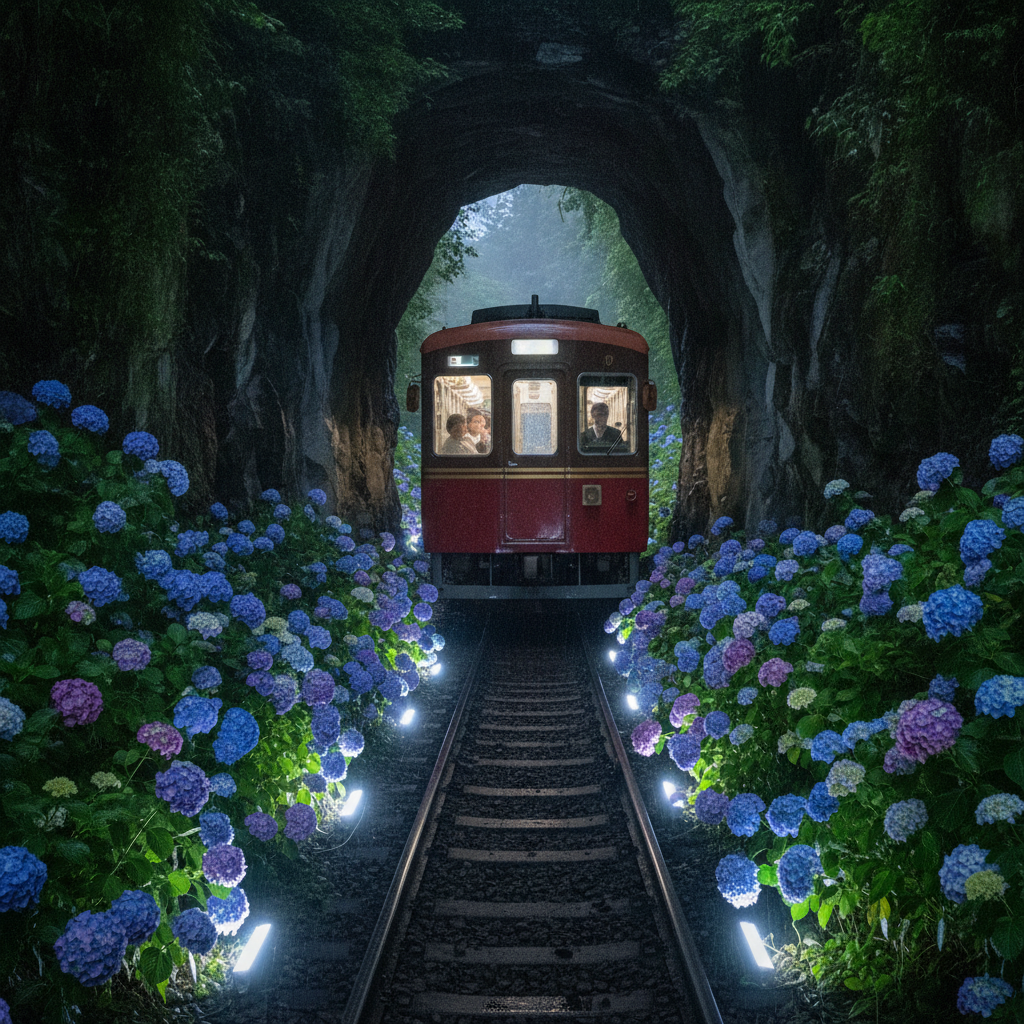
The 10,000 Illuminated Hydrangeas Seen From a Moving Train at Night, the Kōrin Irises Behind 4 Escalator Tunnels & the Third Week of July as the Statistical Peak for Both Fuji and Lake