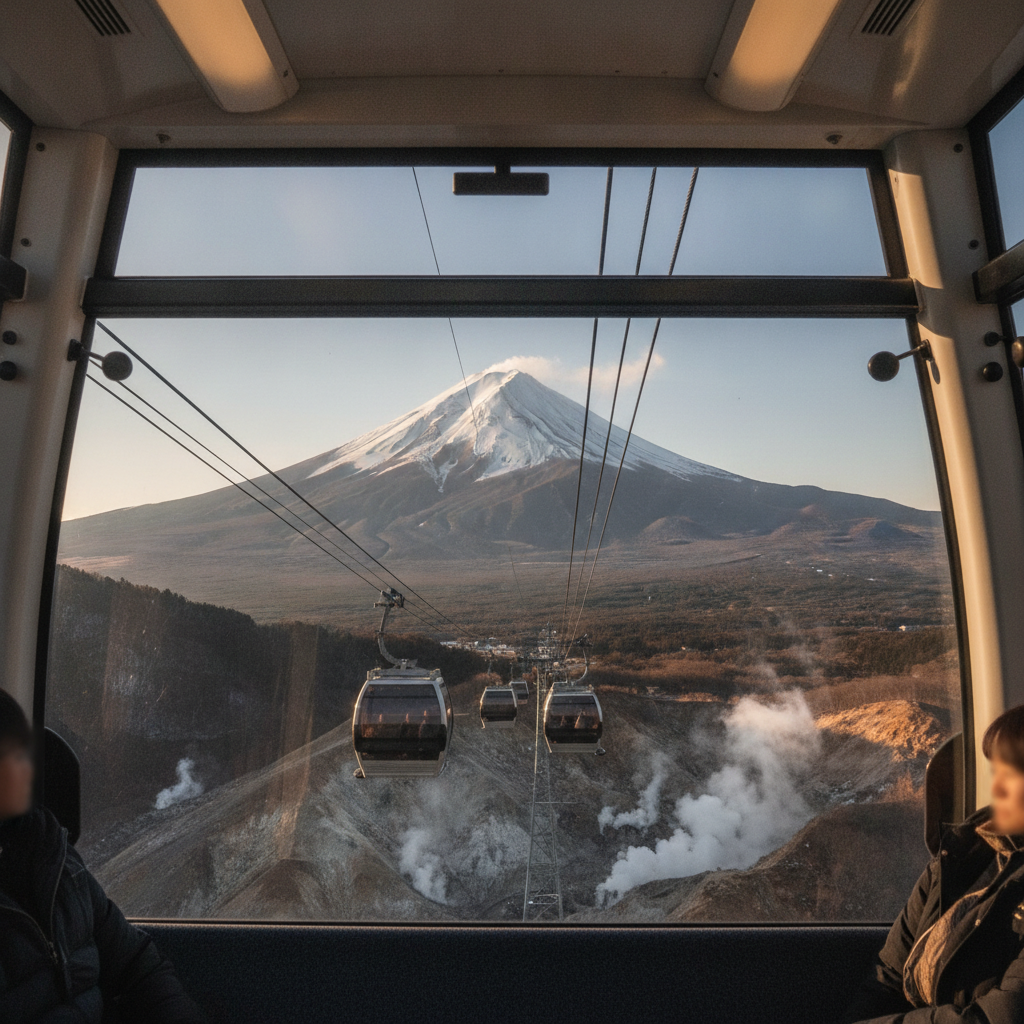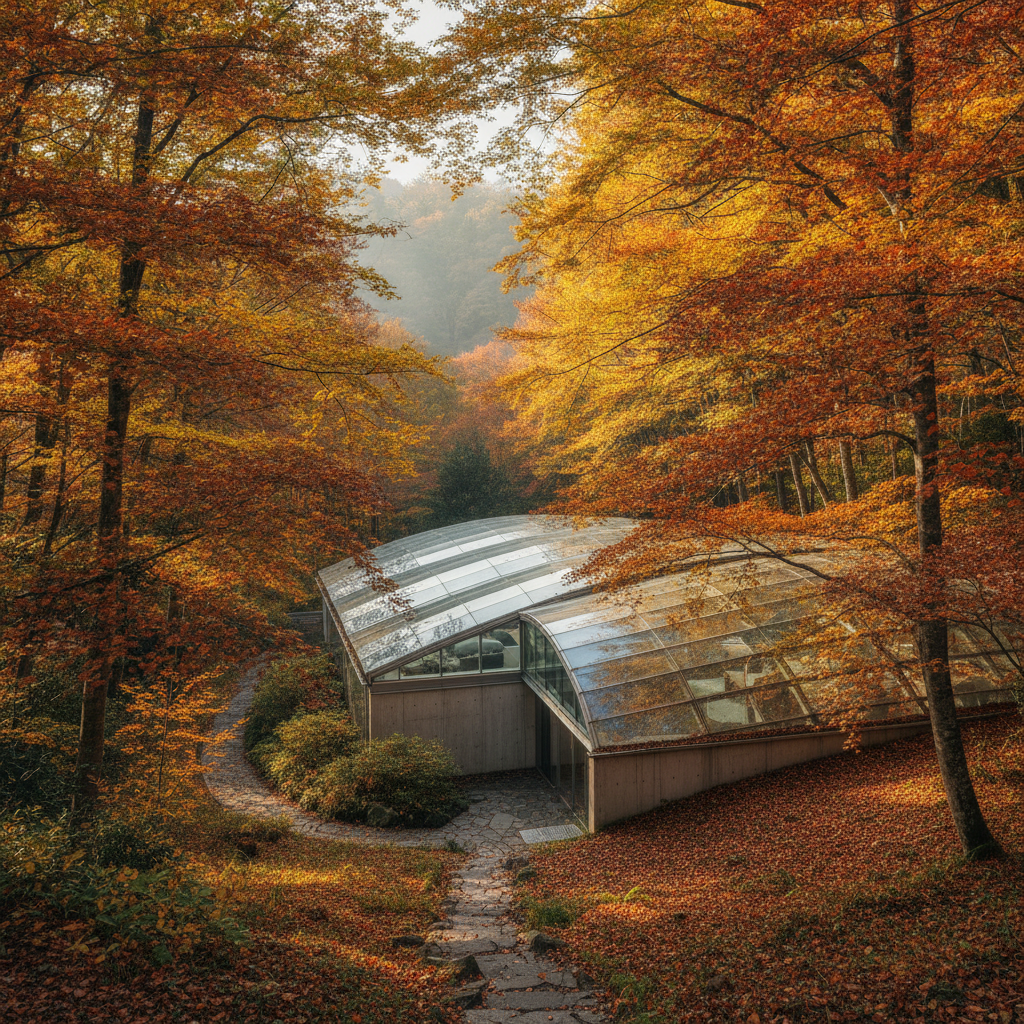
The Museum Sunk Below the Forest, the Anime City Built in a Caldera & the 1952 Imperial Villa That Now Charges ¥150,000 Per Night
The Pola Museum's intentional invisibility and the four-museum circuit covering outdoor Rodin, sunken Impressionism, moss garden ceramics, and Tange's tunnel-approach Atami building; Natsume Sōseki's Fujiya Hotel room and Charlie Chaplin in Japanese dress at the same property; the Evangelion Hakone tourism campaign that converted the volcanic caldera into anime pilgrimage territory; the Gōra Kadan's 6-month advance booking requirement for the converted imperial villa; winter as the Fuji clear-day peak with outdoor baths in snowfall; and the three budget tiers from converted farmhouse to dorm hostel.
- 1
Hakone's Art Museums – The Full Circuit
Hakone has the highest concentration of art museums per capita of any municipality in Japan (4 internationally significant museums within a 5-km radius of Gora Station): the result of a post-war policy by the Kanagawa Prefecture and the Hakone Tourism Association to use art museums as a mechanism for converting the resort's natural attractions into year-round international tourism. The four-museum circuit: the Hakone Open-Air Museum (outdoor sculpture, Rodin, Moore, Picasso ceramics—7 hectares; see Route 1); the Pola Museum of Art (Impressionism + Japanese woodblock—purpose-built 2002; 9,500 works; the forest building visible only by its roof above the beech tree canopy); the Hakone Museum of Art (Japanese ceramics + moss garden; Gora location; oldest in Hakone); the MOA Museum of Art (the museum outside Hakone proper in Atami—2 hours by Tokaido Line from Tokyo, or 45 minutes from Hakone; the Atami coastal hillside museum designed by Kenzo Tange with the famous 4 tunnel approach and the Ko-rin Korin screens—the most important private art museum building in Japan). The Pola Museum architectural strategy (the 2002 building was designed to be essentially invisible from the forest—the main building floor sunk 2 storeys below ground level so only the roof is visible from the approach path; the building received the Architectural Institute of Japan Award in 2003): the intentional invisibility of the building in its landscape is the most radical architectural position in Japan's museum building stock.
- 2
Hakone's Literary & Cultural History
The Hakone resort area attracted Japan's literary and artistic elite from the Meiji period onward, creating a secondary cultural layer beneath the volcanic drama and temple-visiting. The key figures: the novelist Natsume Sōseki (author of Kokoro—stayed at the Fujiya Hotel in Miyanoshita during the 1906 composition of his novel; the Fujiya Hotel maintains the Sōseki room as a memorial exhibit); Thomas Edison (visited the Fujiya Hotel in 1922 during his Japan tour); Charlie Chaplin (1932 and 1936 Fujiya Hotel visits—the hotel photographs of Chaplin in traditional Japanese dress are some of the most distinctive celebrity tourist photographs of the 20th century). The Manyō Poetry Collection and Hakone: the Man'yōshū (8th-century poetry collection) includes 5 poems set in the Hakone area—the earliest written documentation of the landscape. The Hakone effect on Japanese literature (the hot spring literary tradition—the distinction between an onsen (hotspring) town and a resort in Japanese cultural consciousness relates to the creative output associated with the place: Dōgo Onsen (Shiki), Kinosaki Onsen (Shiga Naoya), and Hakone (multiple writers) are the three onsen areas most associated with Japanese literary production in the modern era). The contemporary writing connection: the Hakone Novel Prize (the annual award given by the Hakone Tourism Board to a novel set substantially in Hakone; established 1989; the winning novel is displayed and sold at the major Hakone hotels during the following year).
- 3
Hakone in the Anime Universe
Hakone gained an unexpected international profile as the setting for the 2013 anime 'Yowamushi Pedal' (the cycling club anime in which Hakone Academy's cycling team features prominently—the Hakone Academy setting made the anime the first major Japanese production to place Hakone in a contemporary youth culture context rather than a traditional resort context) and as the setting for 'Neon Genesis Evangelion' (the 1995 anime whose fictional city 'Tokyo-3' is explicitly set in the Hakone caldera—the Geofront concept (the underground city beneath the caldera floor) uses the Hakone volcanic geography as the backdrop for the series' central architecture). The Evangelion Hakone tourism (the Hakone Tourism Association's official Evangelion-themed tourism campaign, launched in 2015 and continuing as of 2026—the campaign has produced significant increases in younger male visitors from Taiwan, South Korea, and China who combine the standard Hakone circuit with visits to the Evangelion filming locations and the dedicated Evangelion Store in Hakone-Yumoto Station): the first systematic use of anime tourism infrastructure by a traditional Japanese resort town. The Hakone anime map (available at Hakone-Yumoto Station tourist information) identifying the Evangelion filming locations visible from the Tozan Railway and bus routes: the Hakone caldera landscape as seen from the railway corresponds closely to the 'Angel Attack' sequence animation backgrounds, making the correspondence between fictional city and real landscape unusually direct.
- 4
Hakone's Gardens & Natural Landscapes
Beyond the volcanic drama, Hakone has a garden and natural landscape culture rooted in the area's role as a feudal-era resort for the Tokugawa shogunate administration and later the Meiji-era aristocracy. The Gotemba area (the southeastern access to the Hakone area—the Gotemba Premium Outlets (Japan's largest outlet mall, visible from the Tomei Expressway) provides an unusual adjacency to the natural Hakone landscape; the Gotemba area is also the primary access point for the Fuji Yoshida Trail's 5th Station on the Gotemba route, with fewer visitors than the Yoshida 5th Station approach): the Gotemba and Hakone combination is the standard routing for Japan visitors who want both Fuji and Hakone in a single mountain area day. The Hakone Wetlands Botanical Garden (the Sengokuhara wetland area protecting the native Hakone caldera bog plants—the gentian, Japanese bog cotton, and carnivorous sundew): the autumn wetland colours (September–October: the bog grasses turning yellow-red while the pampas grass silver heads emerge) provide the most nuanced natural colour display in the area. The Amazake-chaya teahouse garden (the garden around the 1619 teahouse in the old Tokaido cedar forest—maintained in its original style with moss-covered stone lanterns and a small maple grove that turns red in mid-November): the most historically continuous garden in Hakone.
- 5
Hakone Day Trip from Tokyo – The Numbers
The Hakone day trip is one of the most thoroughly analysed tourism journeys in Japan—the visitor volume (approximately 20 million visits per year to the Hakone area, of which approximately 65% are same-day), the transport options (Odakyu Romance Car from Shinjuku, JR from Tokyo Station to Odawara then Tozan Railway, highway bus direct from Shinjuku to Hakone-Yumoto, and coach tour packages from Tokyo hotels), and the crowd pattern (the weekday/weekend split—Sunday is approximately 40% busier than Monday throughout the year, and Golden Week (April 29–May 5) increases volume by approximately 3× normal). The autumn peak (the September–October window when the pampas grass is at peak and the Fuji clear-day probability begins to rise—this coincides with the Japanese domestic tourism high season): the accommodation in this period requires booking 2–3 months in advance. The summer trough (July–August: the Fuji cloud season and the highest humidity at altitude—the ryokan prices are lower by approximately 20–30% but the Fuji views are rare; the trade-off is the clearest possible ropeway experience of the Owakudani volcanic landscape without Fuji). The winter opportunity (December–February: the Fuji clear-day peak at 30–40 days; accommodation 15–25% below autumn peak; the outdoor rotenburo in snowfall: the most atmospheric Hakone onsen experience but the coldest—bring warm footwear for the outdoor walk between the room and the bath).
- 6
Hakone Accommodation Guide – Ryokan to Budget
The Hakone accommodation spectrum runs from ¥50,000+ per person per night at the luxury kaiseki ryokan to ¥3,000/night at Hakone backpacker hostels, with the most interesting middle tier concentrated in the Yumoto and Gora areas. The luxury tier: the Gōra Kadan (the converted imperial villa in Gora—the most historically significant ryokan property in Hakone; the building was the Mōri family imperial villa before its conversion to a ryokan in 1952; 18 rooms; per-person price including 2-meal kaiseki ¥80,000–150,000): the single most sought-after Hakone accommodation reservation, typically requiring booking 6+ months in advance. The mid-tier: the Tenzan Hotel (the onsen ryokan in the Yumoto area; the most value-consistent mid-tier option; ¥15,000–25,000 per person including dinner): the recommended first Hakone ryokan experience for visitors who haven't stayed at a Japanese inn before, providing the complete sequence (yukata, kaiseki, futon, rotenburo) at a price point accessible to most international travelers. The budget: the Guesthouse Sou (the converted farmhouse guesthouse in Sengokuhara—the most design-conscious budget option in Hakone; ¥5,000–8,000 per person; kitchen facilities available; walking distance to the pampas grass plain): popular with cycling visitors and anime-tourism groups. The hostel (the Khaosan Hakone hostel in Yumoto—dorm beds from ¥3,000; the most centrally located budget accommodation for the standard Hakone circuit).
Walk this route with audio
Stories play automatically as you reach each stop — no tapping needed.
More in Hakone
The Torii Gate in the Lake, the Black Egg That Adds 7 Years & the 1878 Hotel That Hosted Both Charlie Chaplin and John Lennon
The Caldera That Collapsed Three Times, the Pampas Grass Plain & the Teahouse That Has Served Sweet Rice Drink Since the Same Year the Checkpoint Opened
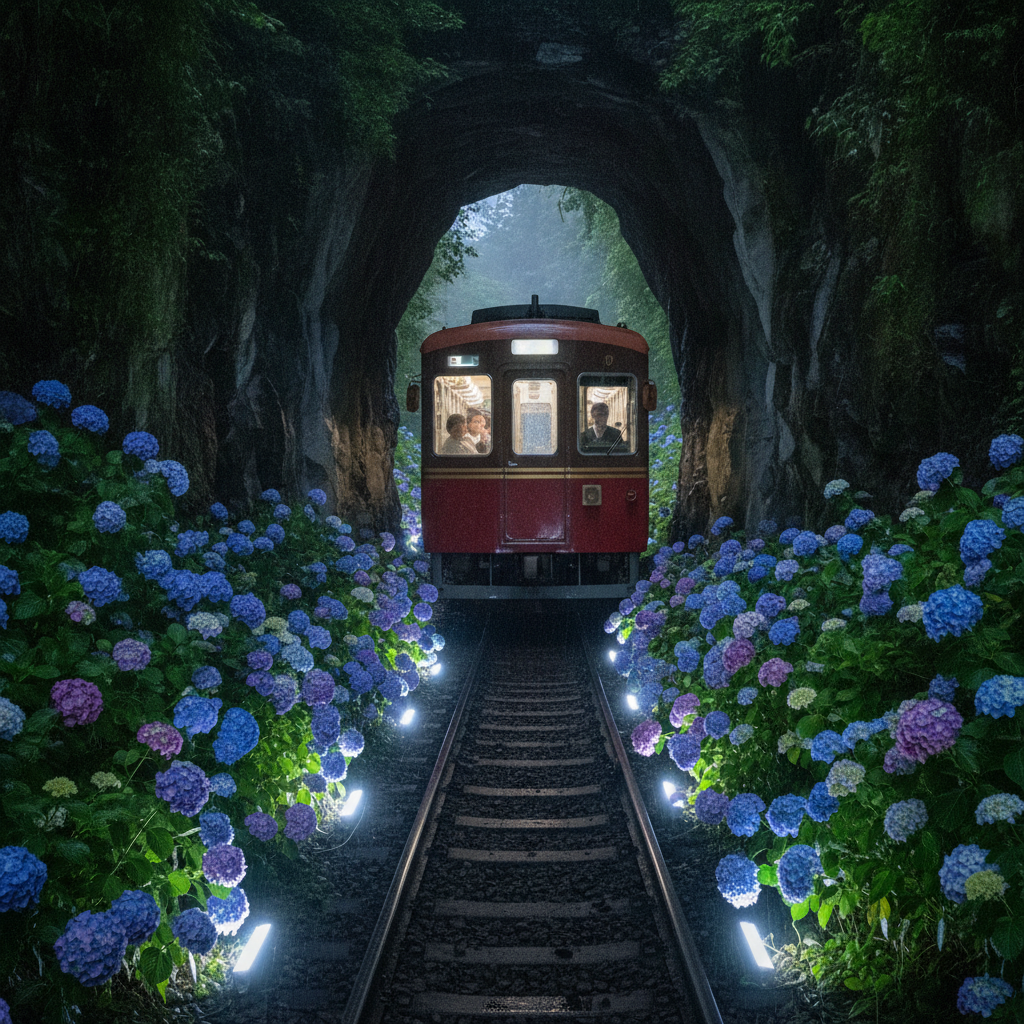
The 10,000 Illuminated Hydrangeas Seen From a Moving Train at Night, the Kōrin Irises Behind 4 Escalator Tunnels & the Third Week of July as the Statistical Peak for Both Fuji and Lake
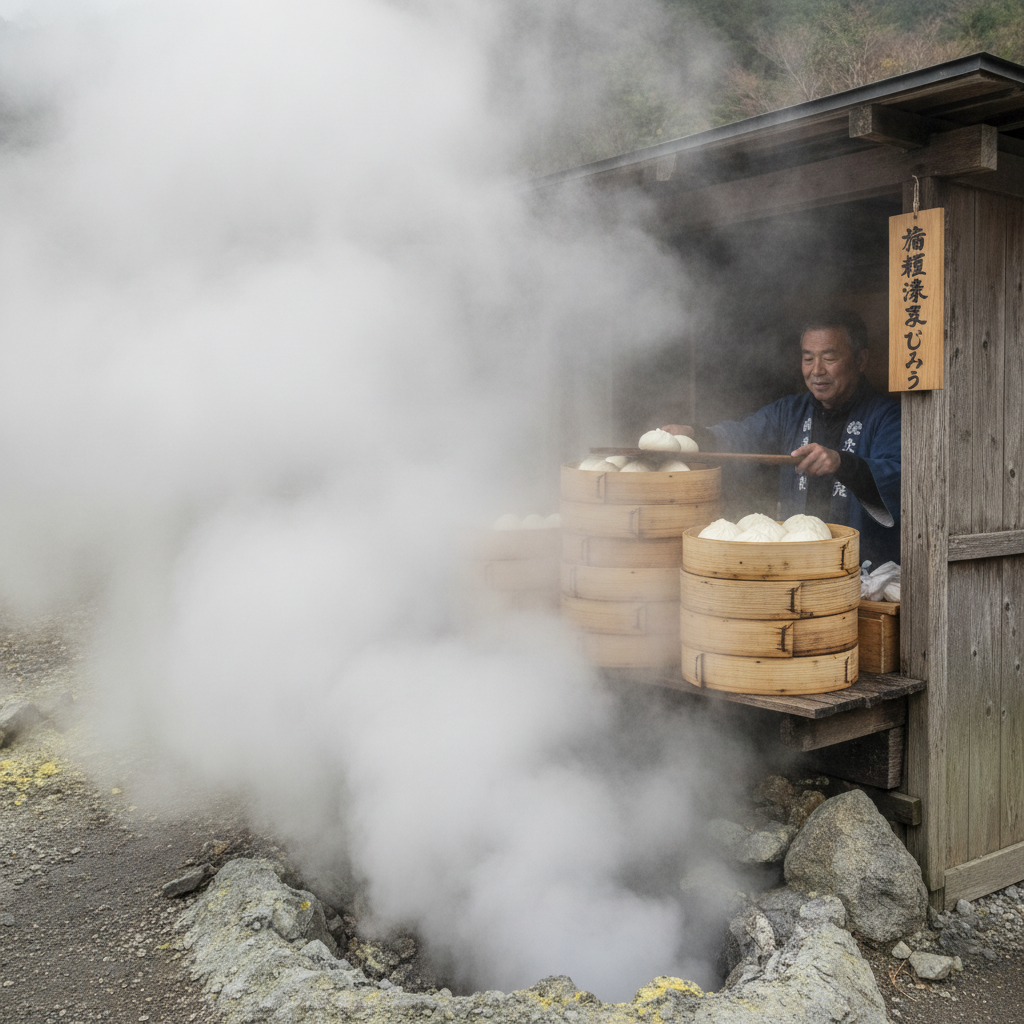
The Free Pass Breakeven Analysis, the 15-Month Ropeway Closure That Cost ¥20 Billion & the Tozan Railway Running on 100% Renewable Electricity Since 2021