Ha Long Bay's Uncomfortable Truths: 500 Diesel Cruise Boats in a UNESCO Heritage Zone, the Dugong Functionally Extinct Since 2010 & the 1288 Battle That Repelled Kublai Khan's Third Invasion
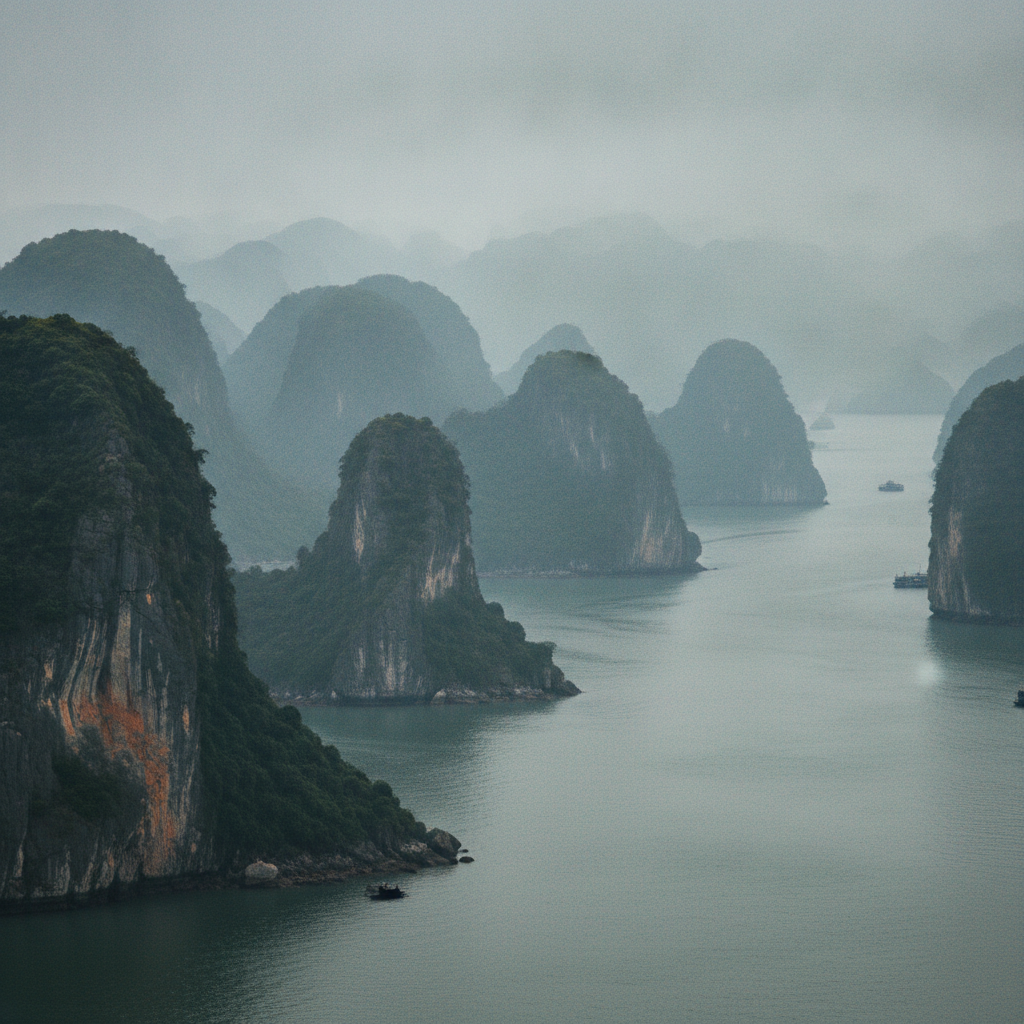
The LED cave lighting that promotes algae growth on stalactites—the theatrical improvement that accelerates the degradation it is installed to showcase; the 1288 Bach Dang River iron-tipped wooden stakes that impaled Kublai Khan's Mongol fleet at the falling tide—the third and final Mongol invasion of Vietnam, all three failed; the dugong's last confirmed sighting in 2010 after the seagrass beds declined 50% from 1990 to 2020; Lan Ha Bay's Dark Cave 300-metre swim in total darkness versus Ha Long Bay's Hang Sung Sot's coloured LED theatrical lighting—same limestone geology, different management philosophies; the squid fleet's LED gantry lights on the horizon at 10 pm as the most surprising Ha Long Bay image; and Bai Tu Long Bay as the experienced traveller's Ha Long Bay.
- 1
Ha Long Bay's UNESCO Management Challenge – Cruise Boat Pollution
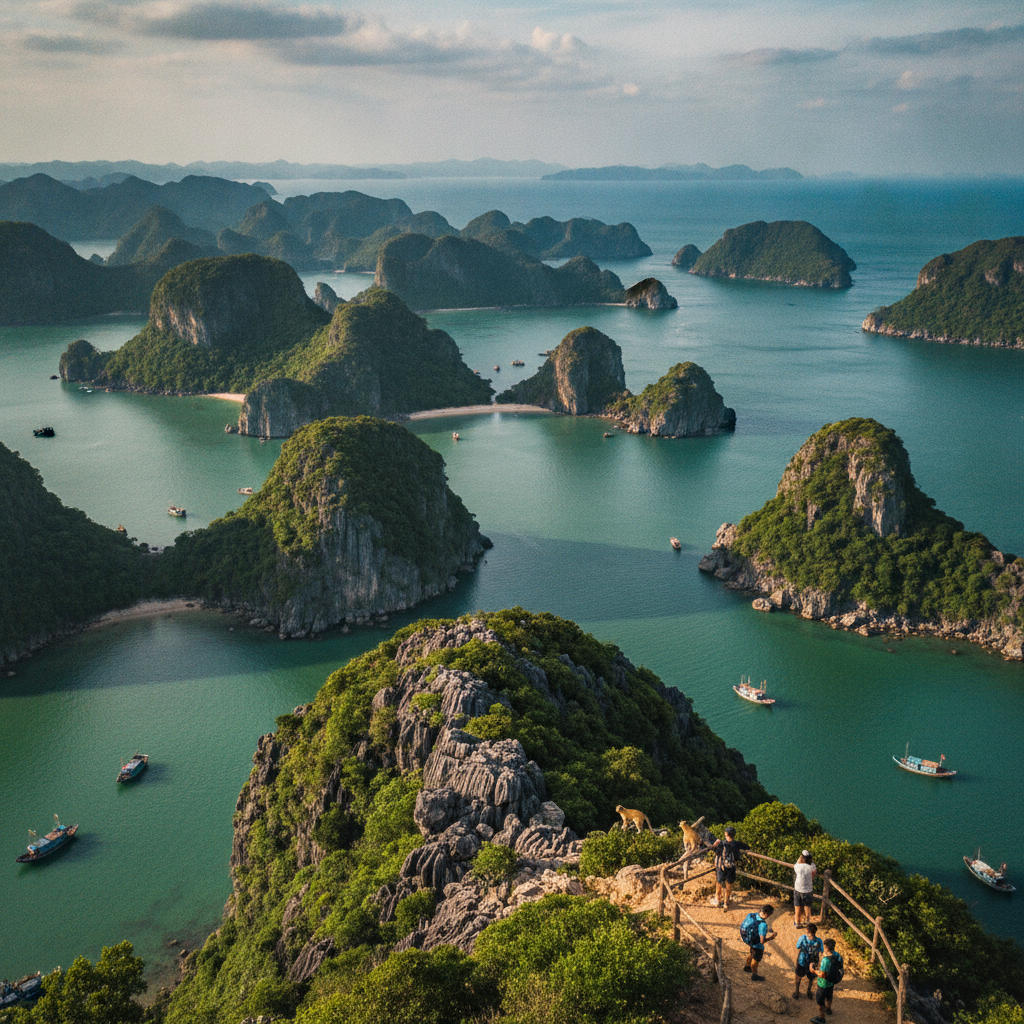
Ha Long Bay's UNESCO World Heritage management is the most publicised environmental management failure in Vietnamese tourism: the bay that was inscribed in 1994 for its outstanding natural beauty has been subjected to 30 years of uncontrolled tourism expansion that has produced documented water quality degradation, solid waste accumulation on the seabed, and physical damage to the cave environments. The boat pollution: the 500 cruise boats operating on Ha Long Bay (approximately 300 in the inner heritage zone) discharge grey water and bilge water directly into the bay (the requirement for holding tanks and shore-based waste disposal has been mandated but enforcement is inconsistent); the fuel emissions from the diesel engines (most boats have switched to cleaner engines in the 2018–2022 period, following provincial government pressure); the antifouling paint (the copper-based antifouling paint applied to boat hulls leaches into the bay water at concentrations that affect coral and seagrass). The plastic waste: the Ha Long Bay plastic accumulation (floating and seabed—the combination of the littering by tourist boats, the waste brought in by the Cua Luc River from Ha Long City, and the marine debris arriving from the wider Gulf of Tonkin) is the most visible environmental problem in the bay; the cruise industry has organised periodic cleaning operations (the 'Clean Up Ha Long Bay' campaigns, most recently 2023) but the volume of waste entering the system exceeds the cleaning capacity.
- 2
The Ha Long Bay Fishing Industry – Squid, Crab & Grouper
The Ha Long Bay fishing industry—the economic activity that predates tourism in the bay by approximately 2,000 years and that continues alongside the tourism cruise circuit—is invisible to most visitors but constitutes the most important livelihood in the bay's coastal communities. The fishing calendar: the Ha Long Bay fishing season is year-round but with seasonal targets: squid (tháng giêng—January to March, when the squid concentrate near the surface on calm nights around lights; the squid fishing boats visible from the cruise decks at night as clusters of bright lights on the horizon); crab and lobster (March–June and September–November, the peak seasons for the Ha Long Bay spiny lobster—an export product to China); grouper aquaculture (the fish farm cages anchored in the protected bays between karst towers—grouper, cobia, and pearl oysters; the aquaculture sector has expanded rapidly since the 2014 floating village relocation, as the former village residents turned to cage aquaculture as a replacement income). The seafood restaurants: the seafood restaurants of Ha Long City (on the mainland shore opposite the bay) are the least visited and the most authentic seafood eating experience for Ha Long Bay visitors—the squid, grouper, and mantis shrimp from the bay itself, cooked simply and priced at market rates rather than tourist rates.
- 3
The Lan Ha Bay Circuit – Cat Ba's Quieter Alternative
Lan Ha Bay (the bay on the southeastern coast of Cat Ba Island—outside the Ha Long Bay World Heritage boundary and therefore less regulated; containing approximately 400 islands with comparable limestone karst scenery but significantly fewer tourist boats) is consistently recommended by experienced Vietnam travellers as the better Ha Long Bay experience for visitors seeking the landscape quality without the cruise crowd. The boat access: the Cat Ba-based boat operators offer full-day tours of Lan Ha Bay (USD 20–40/person including kayak) and overnight cruises of Lan Ha and the adjacent Dark and Bright Cave area (USD 80–150/person for 2 days/1 night on boats that are newer and better maintained than many in the Ha Long Bay fleet). The Dark and Bright Cave (Hang Toi and Hang Sang): the twin caves on a small island in Lan Ha Bay—the 'Dark Cave' (300-metre swim through a pitch-black cave passage—headlamps available) and the 'Bright Cave' (a higher passage with natural light from a skylight); the most adventurous cave experience in the Ha Long Bay system, requiring swimming rather than walking, and available only on Lan Ha Bay rather than Ha Long Bay proper. The snorkelling: the Lan Ha Bay coral (significantly better preserved than the heavily-trafficked Ha Long Bay inner area) provides the only decent snorkelling available in the Ha Long system—the fish diversity is limited by overfishing but the coral health is measurably better.
- 4
Ha Long Bay History – The Bach Dang River Battles
The Ha Long Bay region's history of maritime warfare—the most significant in Vietnamese history—is the context for the most famous military victory in Vietnamese legend: the Battle of Bach Dang River (1288), in which General Tran Hung Dao's Vietnamese navy defeated the Mongol fleet of Kublai Khan's third invasion of Vietnam. The battle: the Bach Dang River (north of Ha Long Bay, connecting the bay to Haiphong)—Tran Hung Dao drove iron-tipped wooden stakes into the riverbed at the point where the tidal channel narrowed; at low tide the Mongol fleet pursued the Vietnamese boats upriver; as the tide turned and began to fall, the Vietnamese boats retreated; the Mongol fleet, attempting to follow, was impaled on the submerged stakes and immobilised; the Vietnamese attacked from both banks and from boats; the Mongol fleet was destroyed; the invasion abandoned. This was the third and final Mongol invasion of Vietnam—all three failed (1258, 1285, 1288). The French naval history: the Ha Long Bay was also the site of significant French colonial naval activity (the French gunboats that established control over the Gulf of Tonkin from the 1880s used Ha Long City as a naval base); and the American War (the bombing of Ha Long City and the mining of Haiphong harbour in 1972—the Nixon mining operation that was intended to prevent Soviet supplies reaching North Vietnam and that prompted the most serious risk of US-Soviet confrontation since the Cuban Missile Crisis).
- 5
The Ha Long Bay Ecosystem – Coral, Seagrass & Marine Mammals
The Ha Long Bay marine ecosystem—one of the most biodiverse in the Gulf of Tonkin—supports approximately 950 fish species, 500 mollusc species, and 400 crustacean species, along with sea turtles, dolphins, and the dugong (the last confirmed dugong sighting in Ha Long Bay was 2010—the species is effectively functionally extinct from the bay due to seagrass bed destruction and hunting). The coral: the Ha Long Bay coral (concentrated in the more sheltered bays and in the Lan Ha Bay area) comprises approximately 200 species—the richest coral diversity in northern Vietnamese waters; the coral coverage has declined from approximately 40% in the 1990s to 15–20% in the 2020s, the result of boat anchor damage, sedimentation from the nearby coal mining operations in Quảng Ninh province, and agricultural runoff. The seagrass: the Ha Long Bay seagrass beds (Cymodocea rotundata and Halophila ovalis, in the shallow bays) are the critical feeding ground for sea turtles and were the feeding ground for the dugong; the seagrass beds have declined by approximately 50% since 1990 (estimated from aerial photography) due to water quality degradation and propeller damage from boat traffic. The white-bellied sea eagle: the resident white-bellied sea eagle (Haliaeetus leucogaster—resident on Cat Ba Island and several Ha Long Bay islands; the most visible raptor in the bay) nests in the karst cliff faces and is reliably observed from cruise decks in the early morning.
- 6
Ha Long Bay Night – Stars, Squid Boats & Plankton Bioluminescence
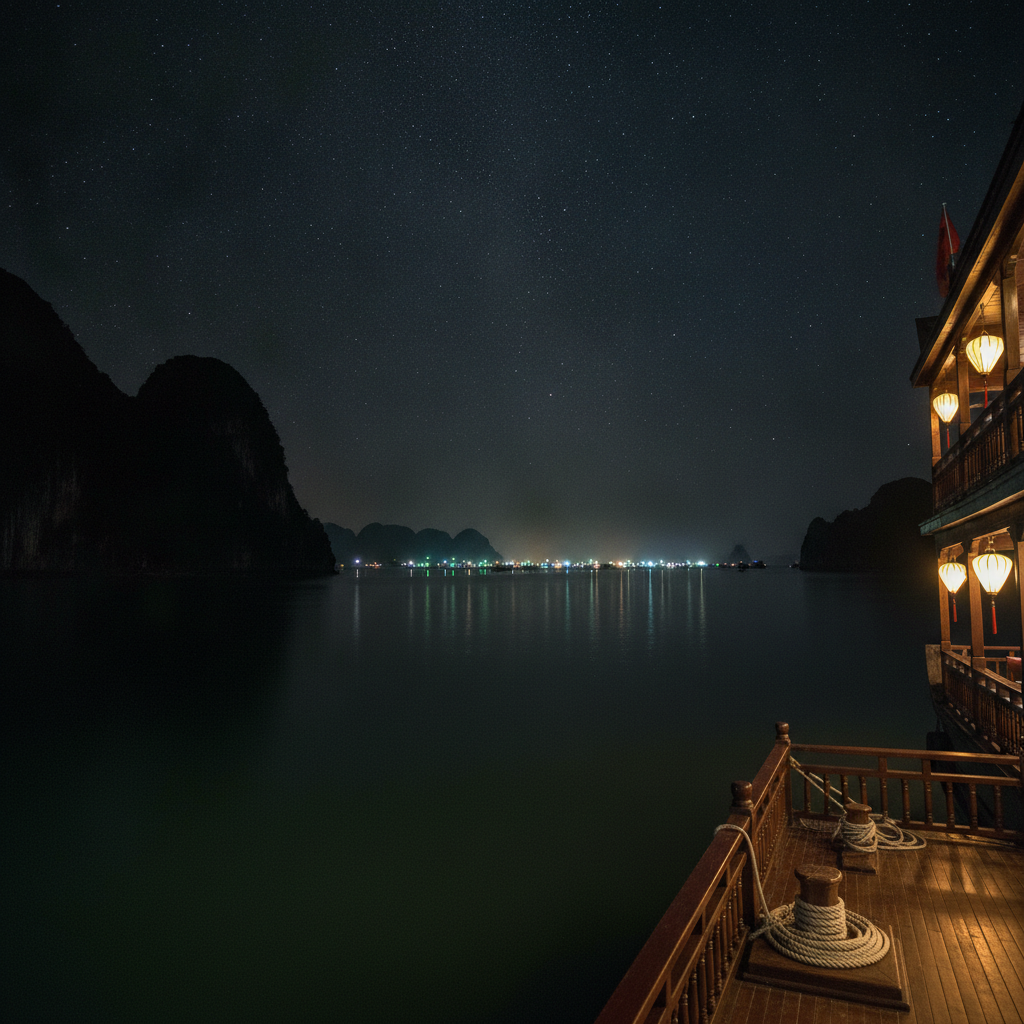
The Ha Long Bay night experience—sleeping on the junk boat anchored in a quiet bay between the karst towers—is the qualitative difference between the day trip and the overnight cruise: the bay at night, free of the day cruise traffic, contains only the overnight cruise boats, the squid fishing fleet, and the karst towers rising into the dark sky. The star observation: Ha Long Bay is sufficiently distant from the major urban light sources (Ha Long City is 20–25 km from the main cruise anchorages) for moderate star observation—the Milky Way is visible from the boat deck on clear, moonless nights from October through March. The squid boats: the squid fishing fleet (operating from March to August when the squid are near the surface) uses powerful white LED lights (replacing the incandescent lights that previously attracted squid with a different spectrum) mounted on horizontal gantries extending from the sides of the fishing boat; the cluster of lights visible at 10–20 km distance across the dark water is the most atmospheric element of the Ha Long Bay night seascape—the combination of the black karst silhouettes and the distant lights of the fishing fleet produces the image that is most surprising to visitors who expected only the daytime landscape. The bioluminescence: the Ha Long Bay bioluminescent plankton (Noctiluca scintillans) is occasionally triggered by the boat wake and paddle strokes during the evening kayak sessions—the glow is most visible in the darkest months (October–February) when the plankton bloom is densest.
Walk this route with audio
Stories play automatically as you reach each stop — no tapping needed.
More in Ha Long Bay
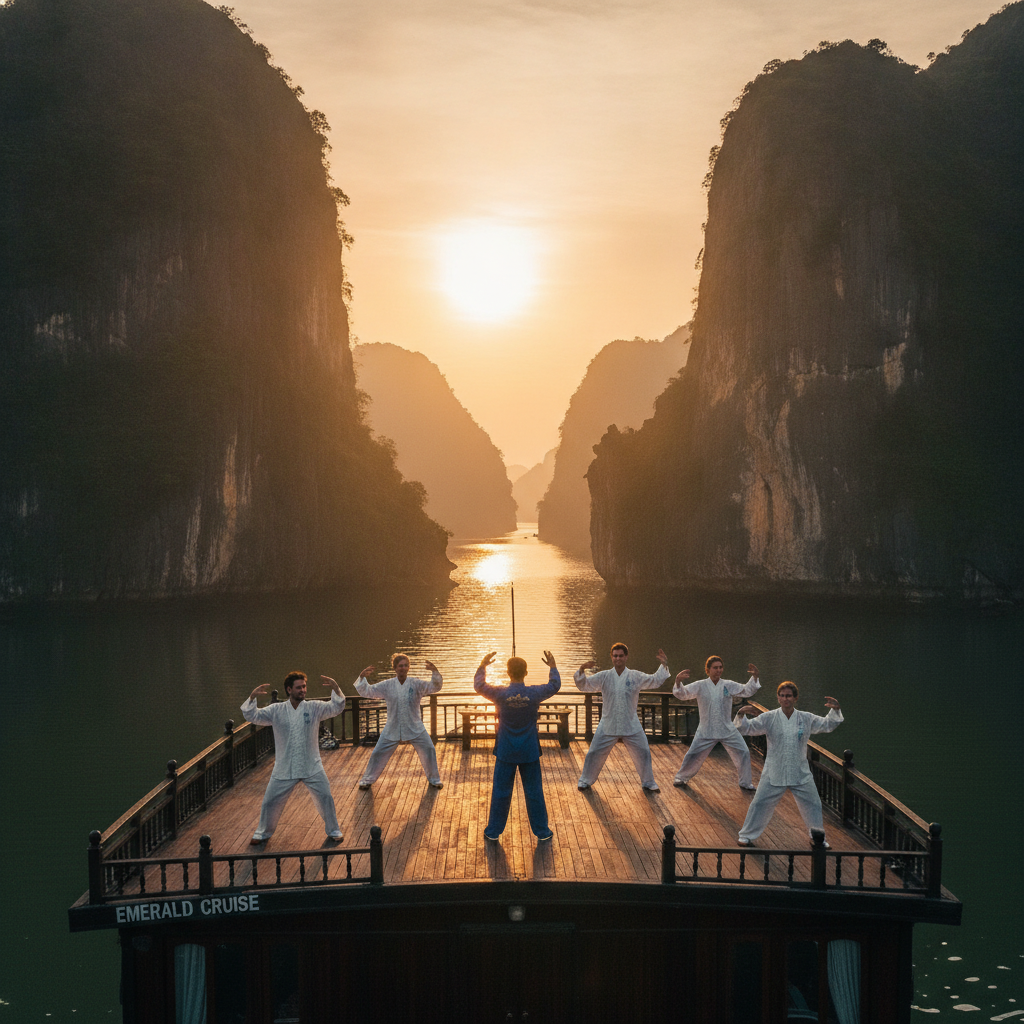
Ha Long Bay's Daily Cycle: The 05:30 Tai Chi Deck, the Stone Beach Limestone Pebbles Between Vertical Karst Walls & the 10-Million-Year Geological Reckoning on the Drive Back to Hanoi

Ha Long Bay: 1,969 Islands from 350-Million-Year Coral Reefs, the Cave That Stored Mongol-Fleet-Defeating Wooden Stakes & the 1,600 Floating Village Residents Relocated by UNESCO Management
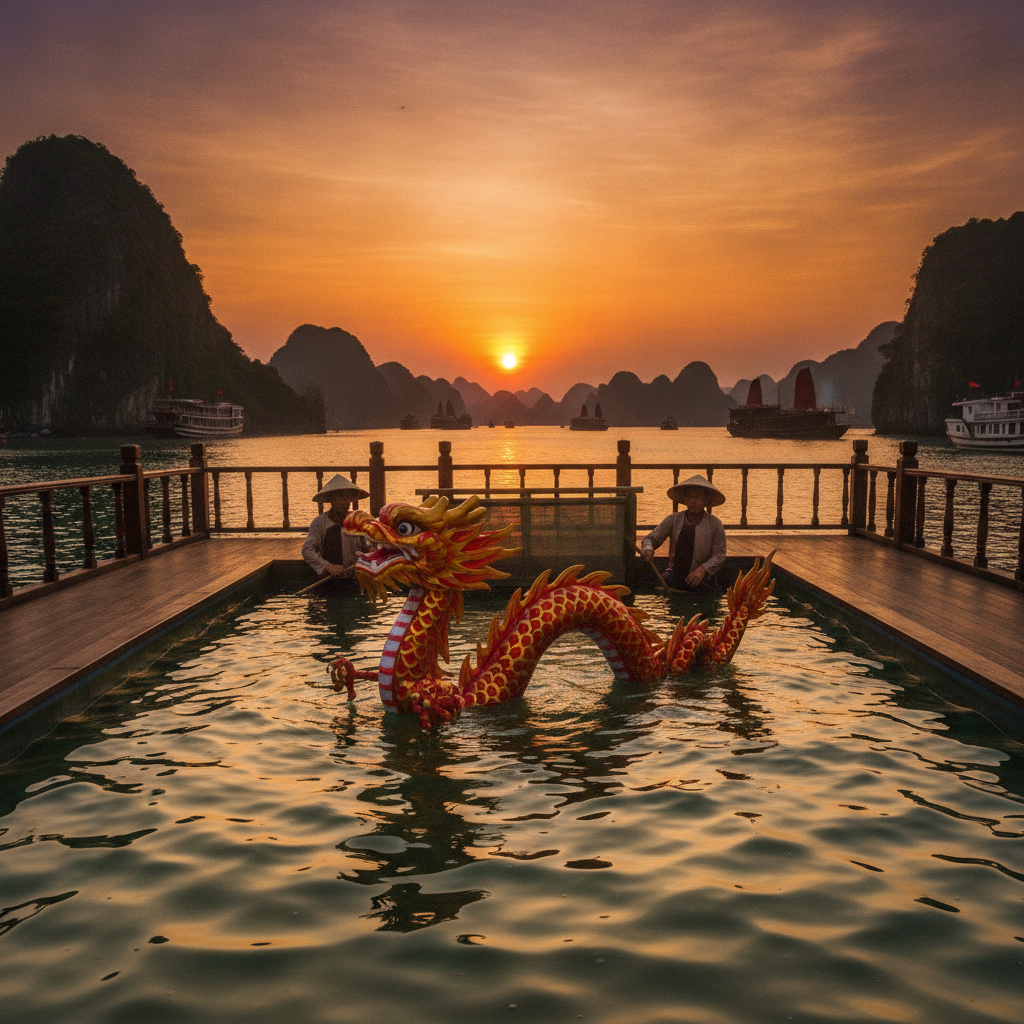
Ha Long Bay's Hidden Layers: Nixon Mining Haiphong Harbour in 1972, Akoya Pearls at 40% Below Japanese Prices & the Dragon Mother Legend That Explains Every Island You're Looking At
Ha Long Bay Versus the World: 1,969 Islands Against Phang Nga Bay's 42, the 1992 Indochine Oscar That Built the Bay's European Reputation & the Month-by-Month Guide That Actually Matters