Ha Long Bay's Full Picture: The Cat Ba Langur's 60-Remaining-Individuals Cliff Habitat, Giant Freshwater Prawns in the Cua Luc River & Why the USD 60 Cruise and the USD 200 Cruise Are Different Products
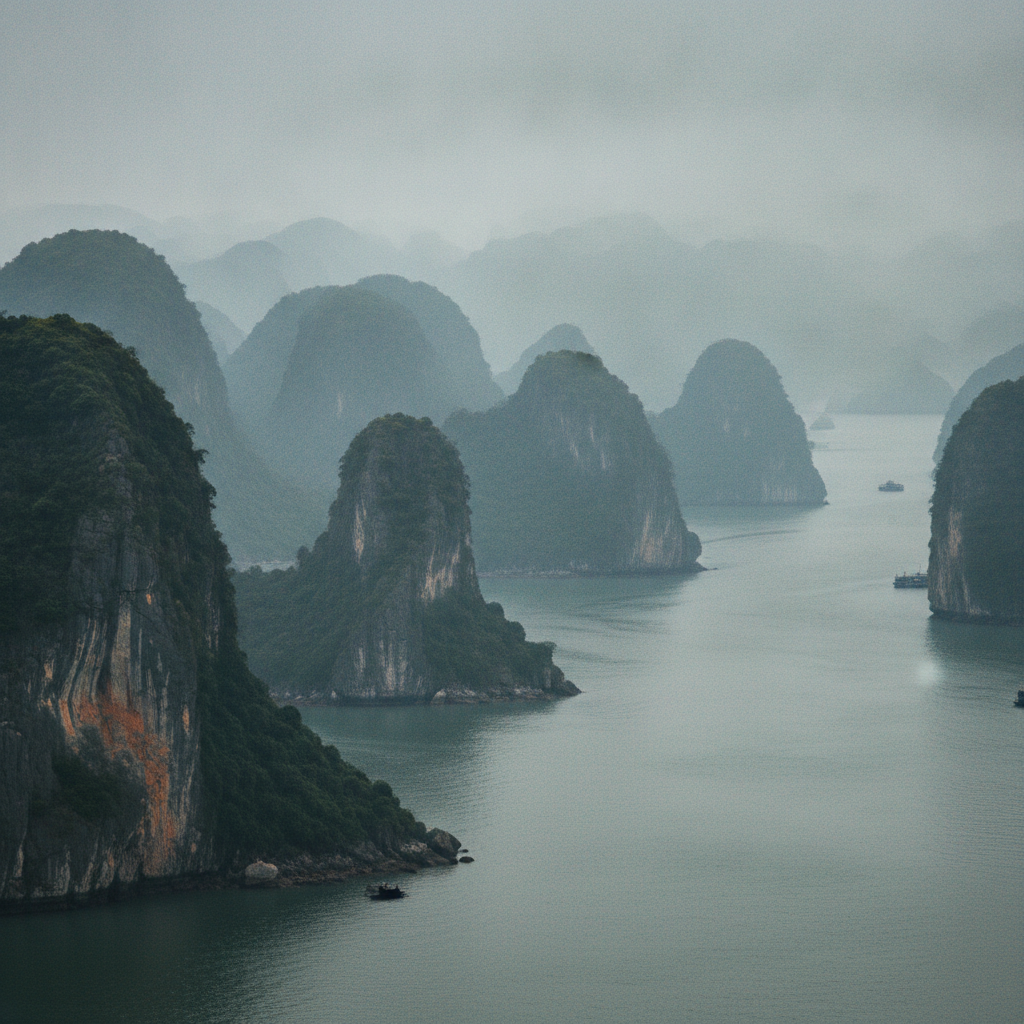
Dawn mist at 05:30 before the day fleet arrives—the conditions producing the floating-islands illusion require the temperature differential of October to March; the Quảng Ninh coal basin's 8 billion tonnes of anthracite and the sedimentation it's causing in the UNESCO heritage water; Cat Ba langur's 60–70 individuals on the island that has a national park dating to 1986 and a tourist town on the same coastline; the Giant freshwater prawn Macrobrachium rosenbergii at 30 cm peak season April–June in Ha Long City wet market versus the budget cruise's engine-room diesel fumes; Typhoon Yagi September 2024 the strongest typhoon to hit northern Vietnam in 70 years; and the Cat Ba Town independent kayak base as the best Ha Long Bay experience for people who have already been once.
- 1
The Ha Long Bay Sunrise Photography Circuit
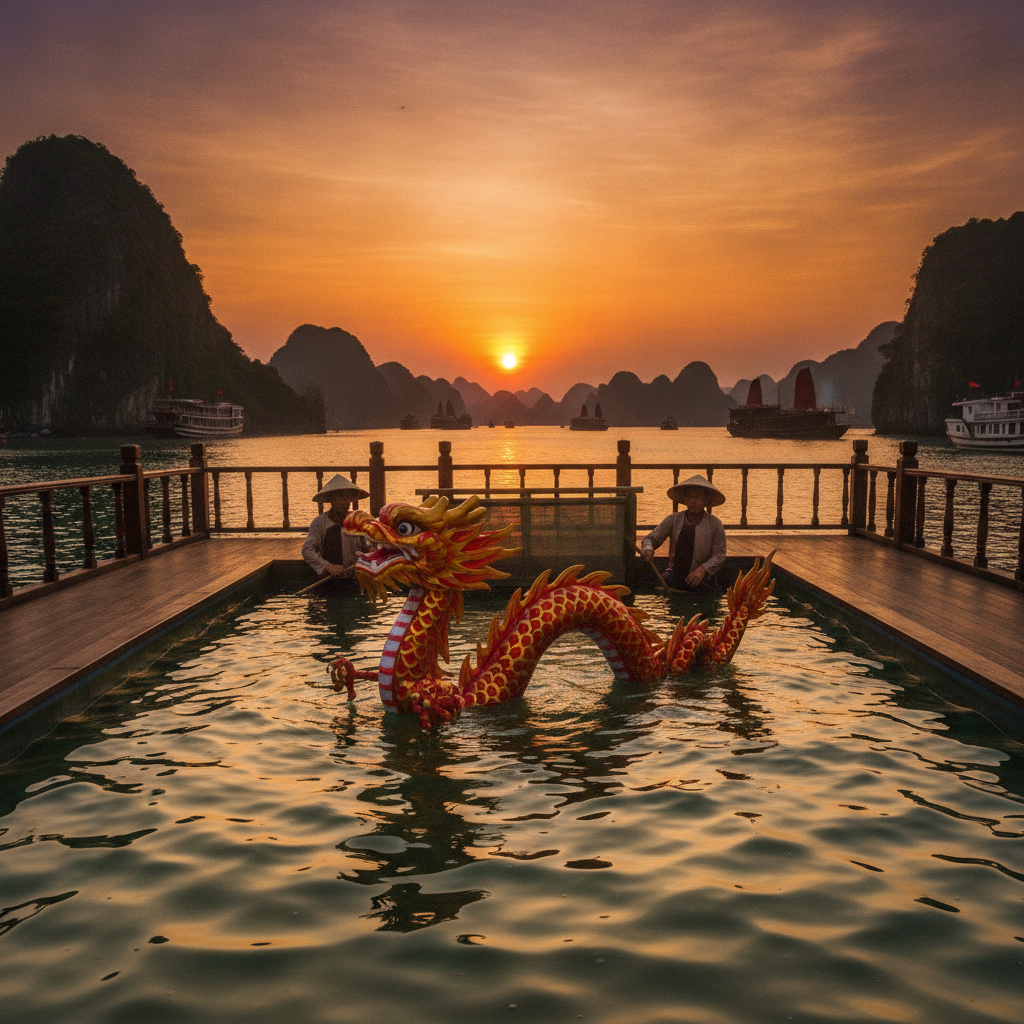
The Ha Long Bay dawn—the sequence from the first light defining the karst tower silhouettes against the pre-dawn sky, through the mist rising from the warm water, to the full sunrise catching the limestone cliff faces with orange horizontal light—is the most photographed morning in Vietnamese tourism and the primary reason the overnight cruise commands a premium over the day trip. The photography sequence: departure from the cruise anchorage at 05:30 (the boat moves to the dawn photography position—an open water area with multiple karst tower profiles visible); the pre-dawn blue hour (05:30–06:00); the actual sunrise (approximately 06:00–06:30, varying seasonally from 05:30 in June to 06:45 in December); the golden hour photography (06:00–07:00—the most productive photography window before the day cruise fleet begins arriving at 07:30). The mist: the Ha Long Bay mist (formed when the humid air over the warm bay water contacts the cooler dawn air—most common and most dense from October to March, when the temperature differential is greatest) is the most important atmospheric element for Ha Long Bay photography; the mist that partially obscures the base of the karst towers while their peaks remain clear creates the floating-islands illusion that is the defining visual idea of Ha Long Bay. The photography position: the most productive dawn photography position (the area between Bo Hon Island and the Floating Village area) requires the cruise captain to anchor accordingly—this is a request that mid-range and luxury cruise operators accommodate without difficulty.
- 2
Ha Long City – The Urban Gateway Most Visitors Ignore
Ha Long City (Thành phố Hạ Long—the provincial capital of Quảng Ninh province, population 250,000, the urban gateway to Ha Long Bay; most visitors pass through the pier without engaging with the city itself) is one of the fastest-growing cities in northern Vietnam and one of the few Vietnamese cities built almost entirely since 1975 (the pre-1975 Ha Long was a small coal port without significant urban infrastructure). The coal industry: Quảng Ninh province contains the largest coal reserve in Vietnam (the Quảng Ninh coal basin—proven reserves of approximately 8 billion tonnes of anthracite, the highest-grade coal in Southeast Asia); the coal mining operations (the Vinacomin company operates 12 mines in the province) are the source of both the province's economic wealth and the sedimentation that is degrading the Ha Long Bay marine environment. The Quảng Ninh Museum (the most architecturally significant new museum in Vietnam—opened 2013; a dramatic building with a curved grey roof designed by a French architectural firm; the interior covers the natural history of the bay, the human history of the province, and the coal industry): the best single introduction to Ha Long Bay available in a 2-hour museum visit. The Sun World Ha Long Park (the largest entertainment complex in northern Vietnam—opened 2018 on the Ba Chay peninsula, with a cable car to the Nui Bai Tho summit, an amusement park, and shopping facilities): the alternative Ha Long experience for visitors with children.
- 3
Cat Ba National Park – Trekking & the Last Cat Ba Langur
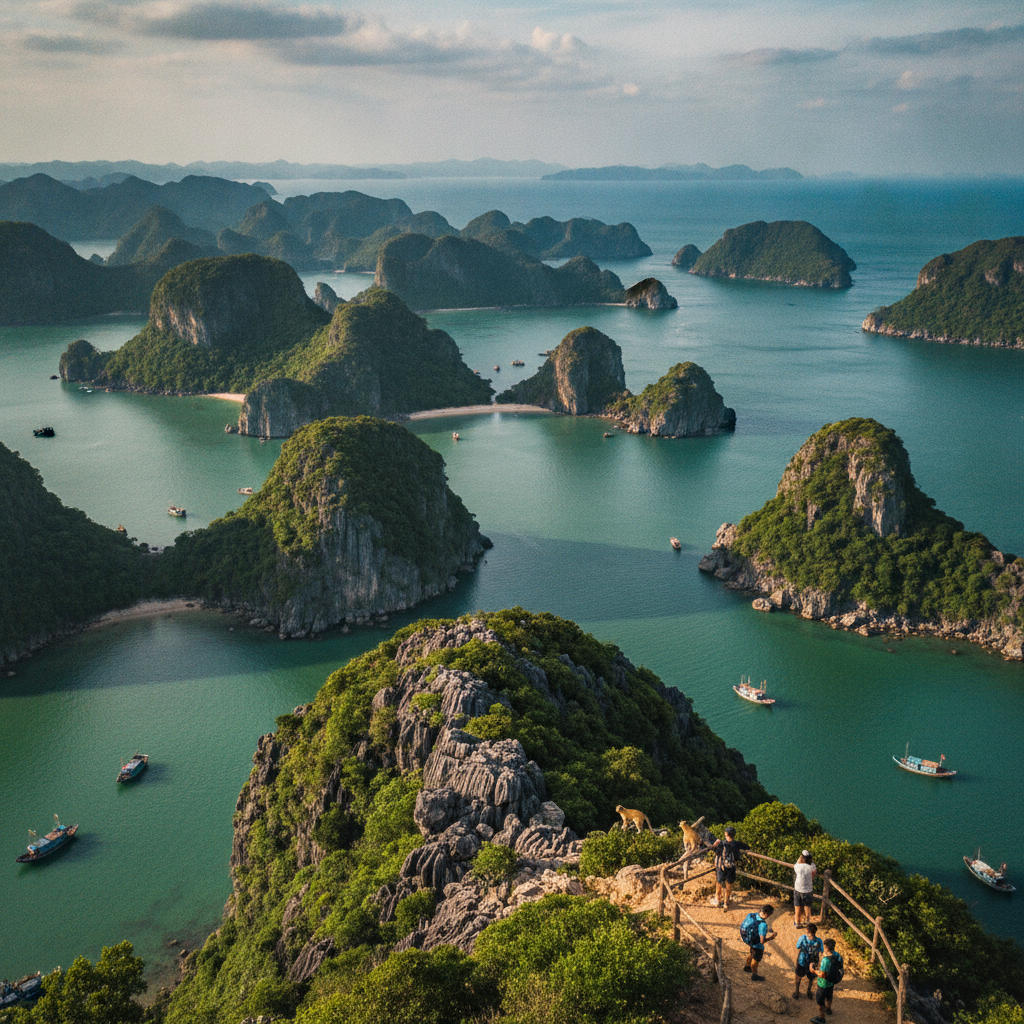
Cat Ba National Park (the 26,241-hectare protected area covering the interior of Cat Ba Island—the largest island in Ha Long Bay; established 1986; the oldest national park in northern Vietnam) is the terrestrial counterpart to the Ha Long Bay marine environment—the tropical forest, mangrove, and freshwater lake system of Cat Ba Island's interior protects a complete island ecosystem that remains largely intact despite the tourism development of Cat Ba Town on the island's southeast coast. The park trekking: the Ngu Lam peak trail (a 4-hour return trek from the park headquarters to the 222-metre summit—the best panoramic viewpoint in the Ha Long Bay system, with views over Lan Ha Bay and the limestone karst to the south); the Hospital Cave trail (passing by the preserved 3-level underground hospital used by Vietnamese military and communist leadership during the American War—a significant cultural heritage site within the park). The Cat Ba langur: the Trachypithecus poliocephalus (white-headed langur—a golden-mantled black leaf monkey endemic to Cat Ba Island, with approximately 60–70 individuals remaining in the park's cliffs and forested karst; one of the rarest primates in the world; protected since 1986 but critically endangered by hunting and habitat disturbance). The marine lake: the Viet Hai lagoon (accessible by boat to the north coast of Cat Ba Island, then by bicycle 8 km through the park to a freshwater lake in the island interior—the only freshwater lake accessible within a day trip from Cat Ba Town).
- 4
The Ha Long Bay Culinary Circuit – Seafood on the Water
The cuisine of Ha Long Bay—the freshest seafood in northern Vietnam, eaten most authentically on the cruise boats and in the Ha Long City seafood restaurants rather than in the tourist restaurants of Ha Long pier area—defines the gastronomic experience of the bay visit. The on-board cuisine: the best overnight cruise boats prepare their meals from the fresh seafood purchased at Ha Long City market before departure; the signature dishes are steamed squid (the Ha Long Bay squid—mực ống—smaller and sweeter than the Pacific squid commonly served in international restaurants), the whole grilled grouper (cá mú—the aquaculture-raised grouper from the Ha Long Bay fish cages, grilled whole with lemongrass and chilli), and the Ha Long Bay crab (cua biển—blue swimming crab from the bay's crab traps, steamed and served with ginger dipping sauce). The freshwater prawn: the freshwater prawn of the Cua Luc River (the tidal river connecting Ha Long Bay to the inland waterways of Quảng Ninh province) is a specific Ha Long Bay product—the giant freshwater prawn (Macrobrachium rosenbergii—up to 30 cm long) is a seasonal product (peak season April–June) available at the Ha Long City wet market and at the cruise boat galleys of the better operators. The bánh cuốn Quảng Ninh: the Quảng Ninh version of the steamed rice roll (thicker than the Hanoi version, filled with wood-ear mushrooms and minced pork, served with a more intense fermented shrimp sauce) is the most regionally distinctive breakfast available in Ha Long City.
- 5
Ha Long Bay Climate & the Drizzle Season
The Ha Long Bay climate—the most discussed practical consideration for visitors planning their trip—is fundamentally misunderstood by most travel guidebooks, which describe a simple wet/dry season binary. The reality: the Ha Long Bay climate has four distinct periods with different character: (1) the Spring Mist season (January–March)—low visibility, drizzle, air temperatures 15–20°C, the mist creating the most atmospheric photography conditions but the worst swimming weather; (2) the dry season (April–June)—clearest water, best visibility, increasing temperatures, the best overall conditions for the bay; (3) the hot season (July–September)—the peak tourist months, temperatures 28–35°C, high humidity, occasional tropical storms (typhoons—the most active typhoon season, with the bay closing to cruise boats during active typhoons), the most crowded period; (4) the cool and calm season (October–December)—good visibility, cooling temperatures, falling tourist numbers after mid-November, the second-best season for the cruise. The typhoon risk: Ha Long Bay is in the path of approximately 2–4 typhoons per year (August–September peak); the cruise operators cancel departures when typhoon warnings are issued; the northern Vietnam coast has been affected by increasingly severe typhoons (Typhoon Yagi, September 2024, the strongest typhoon to hit northern Vietnam in 70 years, caused significant damage to Ha Long City).
- 6
The Ha Long Bay Verdict – Worth the Crowds?
The Ha Long Bay verdict—the question that every sceptical traveller asks—is empirically settled: the Ha Long Bay landscape is irreplaceable; no other place on Earth combines limestone tower karst, sea, and scale in the same way; even at its most crowded (the July–August peak season, with 500 cruise boats and 3,000+ passengers simultaneously in the bay), the landscape is large enough that the karst towers remain dominant and the visual quality is undiminished. The worthwhile caveats: the experience quality varies enormously with the boat quality (the USD 60 budget cruise puts 30 people in 15 sharing cabins on a poorly maintained vessel with diesel fumes from the engine room; the USD 200 cruise puts 16 people in 8 private-bathroom cabins on a well-maintained boat with a professional chef); the bay is at its best in the morning (05:30–08:00, before the day fleet arrives) and in the evening (17:00–sunset, after most day boats have departed). The Bai Tu Long recommendation: experienced Ha Long Bay visitors (those returning for a second visit) consistently recommend Bai Tu Long Bay over Ha Long Bay proper—the comparable landscape quality with a fraction of the boat traffic. The Cat Ba base recommendation: the independent traveller who bases in Cat Ba Town and does day trips to Lan Ha Bay by kayak and hired boat has the best balance of flexibility, cost, and experience quality—the experience that most resembles what Ha Long Bay was before the cruise industry scaled to 500 boats.
Walk this route with audio
Stories play automatically as you reach each stop — no tapping needed.
More in Ha Long Bay
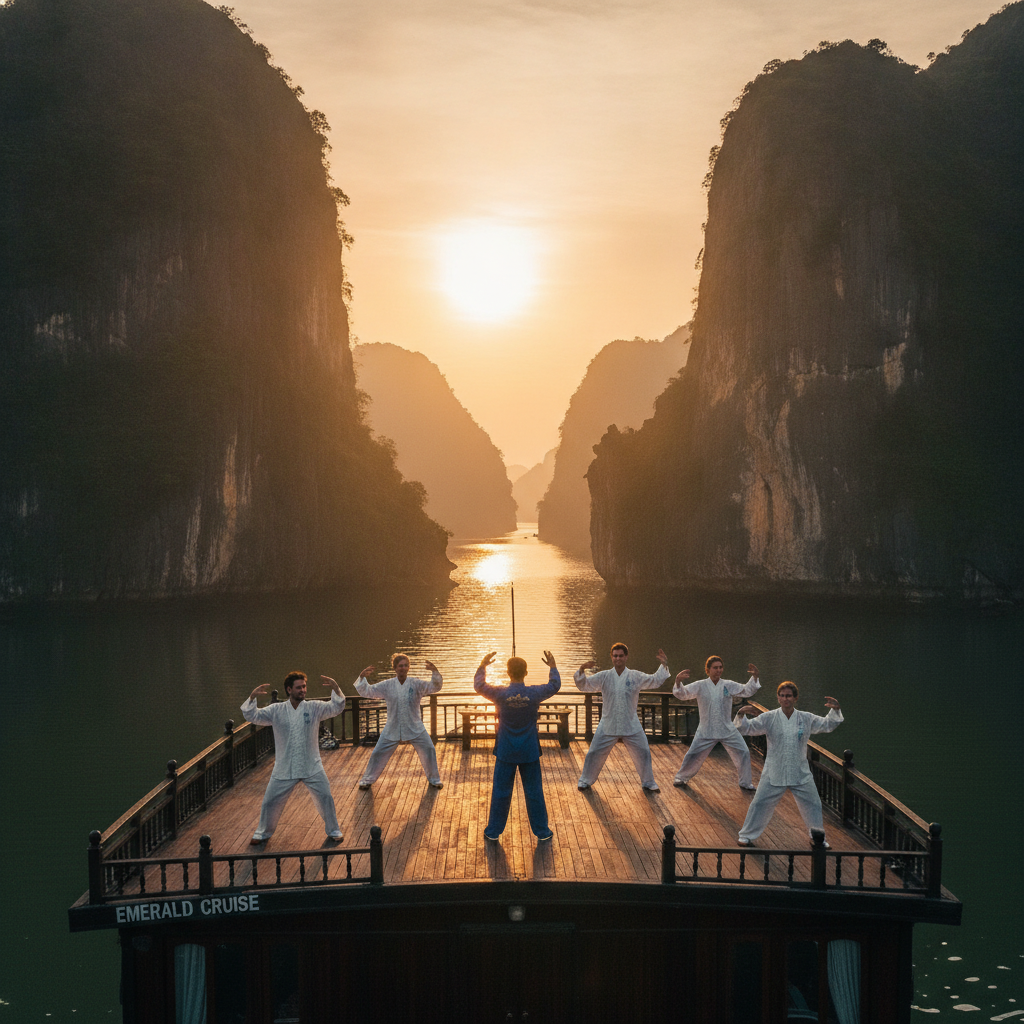
Ha Long Bay's Daily Cycle: The 05:30 Tai Chi Deck, the Stone Beach Limestone Pebbles Between Vertical Karst Walls & the 10-Million-Year Geological Reckoning on the Drive Back to Hanoi
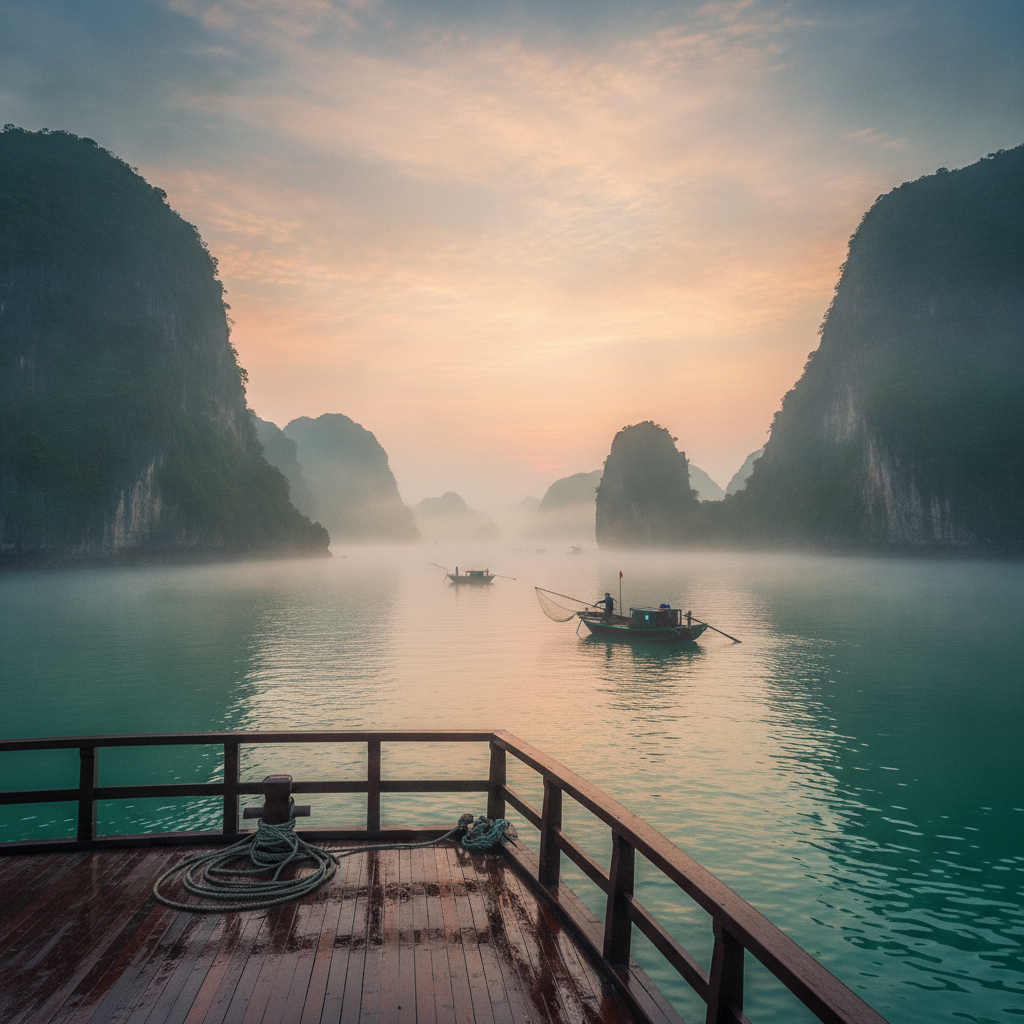
Ha Long Bay: 1,969 Islands from 350-Million-Year Coral Reefs, the Cave That Stored Mongol-Fleet-Defeating Wooden Stakes & the 1,600 Floating Village Residents Relocated by UNESCO Management
Ha Long Bay's Hidden Layers: Nixon Mining Haiphong Harbour in 1972, Akoya Pearls at 40% Below Japanese Prices & the Dragon Mother Legend That Explains Every Island You're Looking At
Ha Long Bay's Uncomfortable Truths: 500 Diesel Cruise Boats in a UNESCO Heritage Zone, the Dugong Functionally Extinct Since 2010 & the 1288 Battle That Repelled Kublai Khan's Third Invasion