Ha Long Bay's Hidden Layers: Nixon Mining Haiphong Harbour in 1972, Akoya Pearls at 40% Below Japanese Prices & the Dragon Mother Legend That Explains Every Island You're Looking At
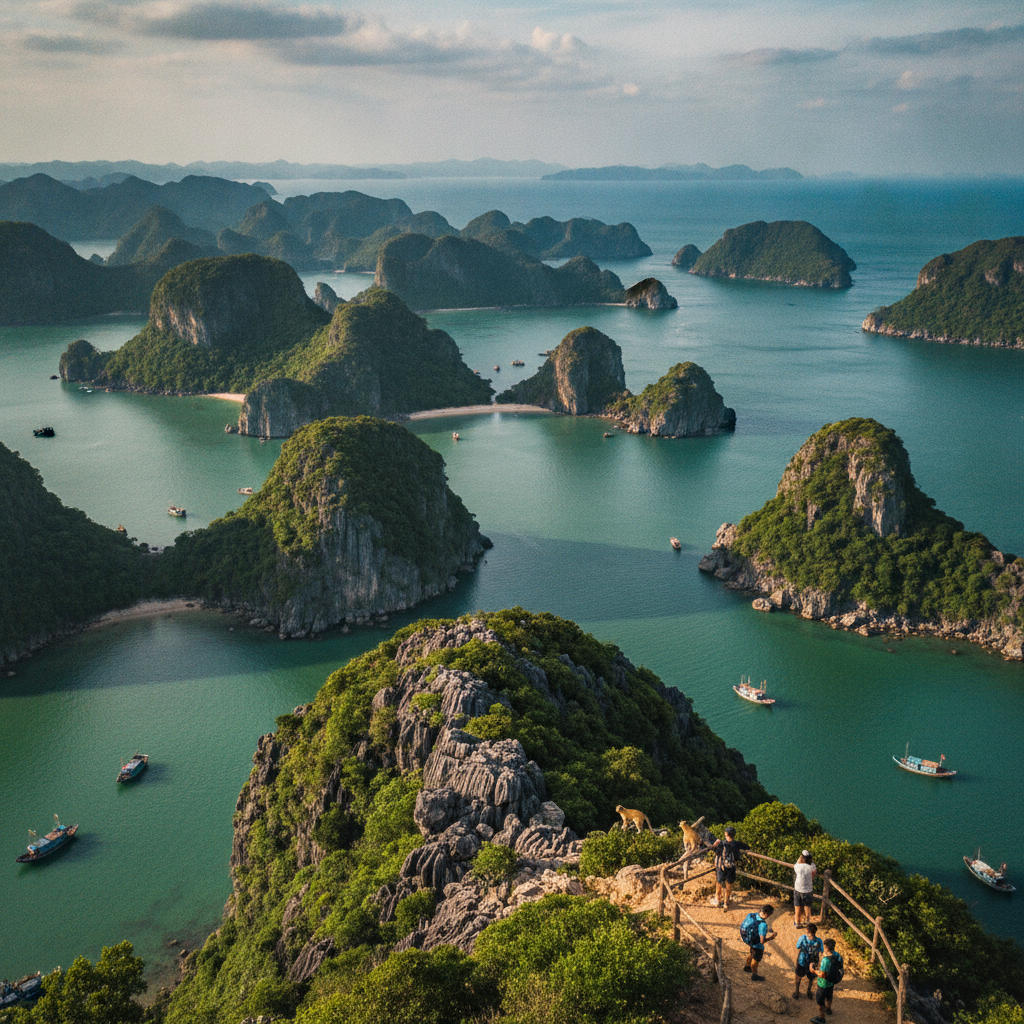
The Ha Long pearl farm's Pinctada fucata oysters producing AAA Akoya pearls at 40–60% below equivalent Japanese prices in the same bay where the legend says dragon children exhaled jewels that solidified into the karst; Operation Pocket Money's 8 May 1972 mining of Haiphong harbour—Nixon calculating Soviet SALT treaty interest exceeded their Haiphong interest, correctly; water puppetry's 1121 CE Lý dynasty court origin with the dragon scenes depicting the same legend visible in the surrounding landscape; Bai Tu Long Bay named for the dragon children bowing to their mother as she descended; the Aries wreck in Lan Ha Bay sunk as an artificial reef in 2016 now colonised by hard coral; and the return pho in Hanoi Old Quarter as the geological and culinary counterpoint to 350 million years and fresh squid.
- 1
The Ha Long Bay Floating Market & Pearl Farm
The Ha Long Bay pearl farm (the cultured pearl aquaculture operations in the sheltered bays between the karst towers—the most geographically appropriate farming environment in Vietnam for the Akoya pearl oyster, Pinctada fucata) is the most commercially significant non-fishing aquaculture activity in the bay. The pearl cultivation: the Ha Long Bay pearl farms (the most accessible for visitors is the Thien Nga pearl farm on Thien Nga Island, 15 km from Ha Long City; included in many cruise itineraries) demonstrate the full cultivation cycle—spat collection, shell implantation, long-line suspension, harvesting (2–3 years after implantation), and grading. The pearls: the Ha Long Bay Akoya pearls (the saltwater cultured pearl produced from the Pinctada fucata oyster—the same species that produces the most commercially significant Japanese pearls) are marketed as 'Vietnamese pearls'; the quality ranges from AAA (the roundest, most lustrous, with the thickest nacre layer—3.0+ mm) to A grade (less round, thinner nacre, lower lustre); the Ha Long Bay retail prices (at the farm or in the Ha Long City pearl shops) are approximately 40–60% below equivalent quality Japanese Akoya pearls for comparable specifications. The floating market: the floating vegetable and seafood market in the Cua Van floating village area (the market where the former floating village community, now relocated onshore, sells produce and seafood to the cruise boats) operates from 06:00–09:00—the most authentic commercial interaction available between visitors and the bay's former resident community.
- 2
The American War & Ha Long Bay – The Mining of Haiphong Harbour
The Ha Long Bay and its adjacent Haiphong harbour were the site of one of the most significant and most dangerous American military operations of the Vietnam War: Operation Pocket Money (8 May 1972)—the mining of Haiphong harbour by the US Navy, ordered by President Nixon to cut off Soviet and Chinese maritime supply routes to North Vietnam. The context: by 1972, North Vietnam was receiving approximately 1.5 million tonnes of military and economic supplies per year, predominantly by sea through Haiphong; the land routes (the Ho Chi Minh Trail) were being attacked by US bombing but the sea routes had been considered untouchable because mining them risked direct confrontation with Soviet and Chinese vessels. The decision: Nixon decided to mine Haiphong harbour in May 1972, over the objection of the State Department and the National Security Council's concern about Soviet response; the mines (Destructor sea mines, laid by A-6 Intruder aircraft from the carriers USS Coral Sea, Kitty Hawk, and Constellation) were activated on 11 May 1972, closing Haiphong harbour to all surface traffic. The Soviet response: the Soviet Union (which had 8 ships in Haiphong harbour when the mines were laid) protested but did not escalate; the Nixon-Kissinger calculation (that the Soviet interest in the concurrent SALT arms control negotiations exceeded their interest in Haiphong) proved correct. The duration: the mines remained active until January 1973 (the Paris Peace Accords), when the US began Operation End Sweep—the mine clearance using Navy minesweepers.
- 3
Ha Long Bay's Water Puppet Theatre Connection
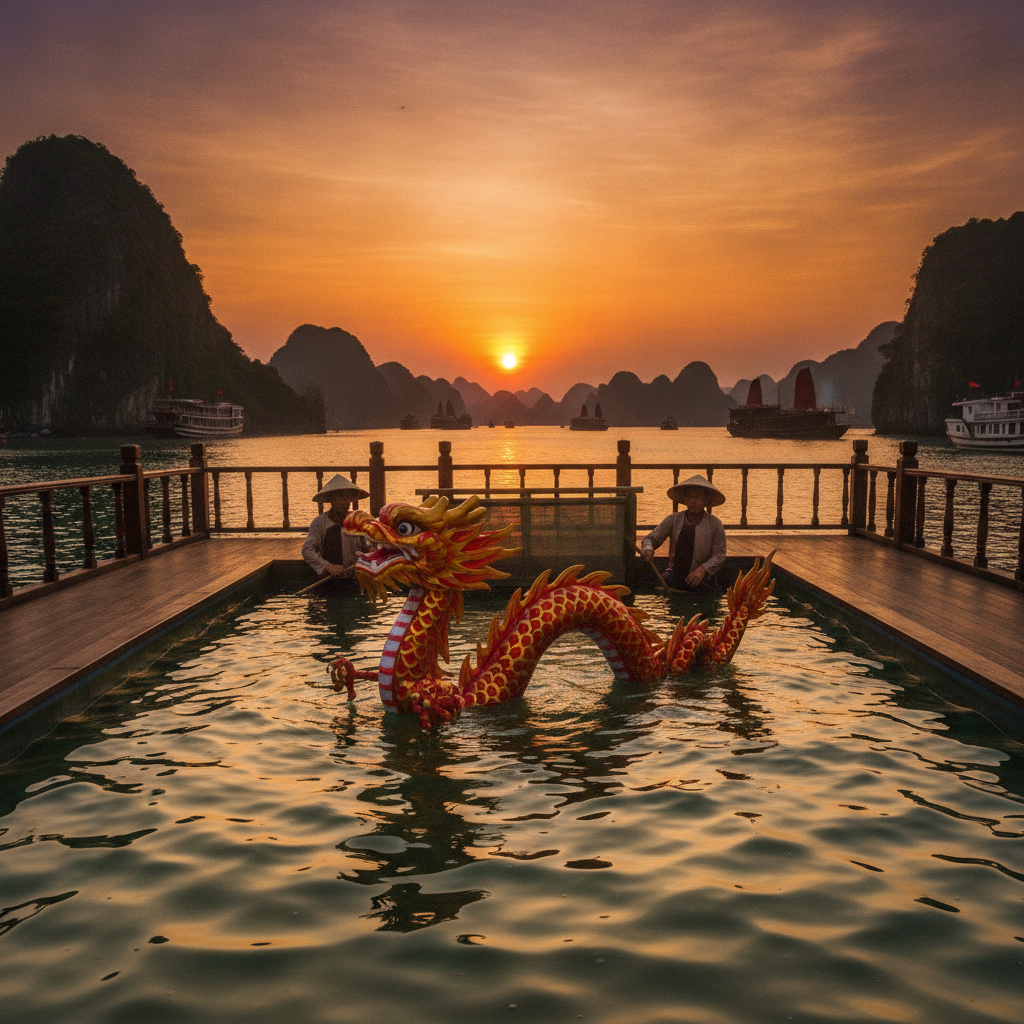
Water puppetry (múa rối nước—the Vietnamese traditional performance art performed in a waist-deep pool or lake, with the puppeteers standing in the water behind a bamboo screen and operating the wooden lacquered puppets through underwater rods and strings) is the most distinctively Vietnamese performance art—originating in the Red River Delta approximately 1,000 years ago (the earliest documented water puppet performance dates to 1121 CE, at the Lý dynasty court)—and is performed in the lakes and pools of the Ha Long Bay area as part of the cruise programme. The Ha Long connection: the water puppet scenes most commonly performed on the Ha Long Bay circuit include the dragon scenes (the dragon—rồng—is the mythological creature that gave Ha Long Bay its name: the legend of Ngọc Hoàng sending the Dragon Mother and her children to defend Vietnam from an invasion; the dragons' bodies forming the Ha Long karst islands); the fishing village scenes (the fishermen and their boats, the fish and the water buffalo—the most relevant to the Ha Long Bay landscape); and the battle scenes (Tran Hung Dao's Bach Dang River victory against the Mongols, depicted in the water puppet tradition since the 14th century). The Hanoi performances: the best water puppet performances in Vietnam are at the Thăng Long Water Puppet Theatre in Hanoi (the most frequent shows—multiple performances daily; the most accomplished puppeteers; the traditional music ensemble (the chèo musicians) performing live alongside the puppet action).
- 4
Ha Long Bay & the Halong Legend – Dragon Mother's Children
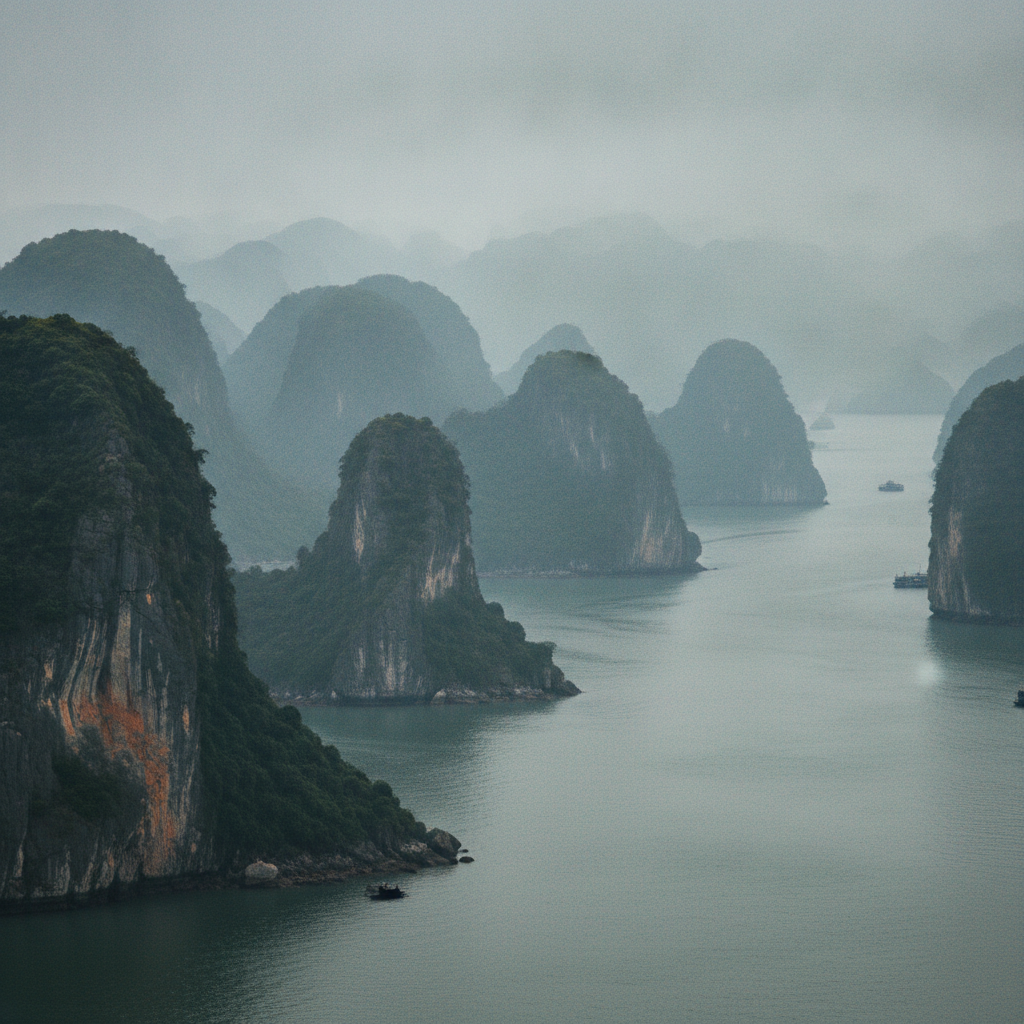
The origin legend of Ha Long Bay—the story that gives the bay its name and that provides the mythological framework for the karst landscape's interpretation in Vietnamese culture—is the most frequently repeated origin story in Vietnamese travel literature. The legend: Ngọc Hoàng (the Jade Emperor, the supreme deity of Vietnamese folk religion) sent the Dragon Mother (Âu Cơ) and her children to defend Vietnam against a seaborne invasion from the north; the dragons descended from the sky to the sea, exhaling jewels and jade that solidified into the karst islands as a defensive barrier against the invading fleet; the sea filled the spaces between the islands; the dragons liked the landscape they had created and remained—the Ha Long karst towers are their bodies, still present in the water. The etymology: Hạ Long (下龍) means 'Descending Dragon' in Sino-Vietnamese; the legend was attached to the bay approximately in the 14th century (the period of the Bach Dang River victory against the Mongols, when the karst towers' defensive utility against seaborne invasion was being actively exploited). The related legend: Bai Tu Long Bay (Bái Tử Long—'Bowing to the Dragon Children') is named for the Dragon Mother's children bowing to their mother as she descended to the sea—the adjacent bay's legend contextualises the two bays as a single mythological landscape.
- 5
Ha Long Bay Diving – The Underwater Karst System
The Ha Long Bay dive sites—accessible primarily from Cat Ba Island and from the Lan Ha Bay liveaboard operations—provide the only underwater karst diving in Vietnam and some of the most unusual topography available to recreational divers in Southeast Asia. The dive site types: the underwater wall dives (the submerged bases of the karst towers extend below the water, creating vertical limestone walls at depths of 5–25 metres—the most distinctive Ha Long Bay dive topography); the cave dives (the underwater cave systems in some of the Ha Long Bay islands—specifically in the Cat Ba Island area—extend the cave systems visible above water into the marine environment, producing habitats for sleeping whitetip reef sharks and resting sea turtles); the artificial reef dives (the wreck of the Aries ship sunk in Lan Ha Bay as an artificial reef in 2016—now colonised by hard and soft coral, providing the best wreck dive accessible from Cat Ba). The visibility: the Ha Long Bay visibility (limited by the sediment load from the Cua Luc River and the boat traffic) is 5–10 metres in the inner bay—adequate for recreational diving but significantly below the 15–30 metres of the best Vietnamese dive sites (Phu Quoc, Con Dao); the Lan Ha Bay visibility (further from the river and the boat traffic) is consistently better at 8–15 metres.
- 6
Leaving Ha Long Bay – Returning to Hanoi & What the Bay Gave
The Ha Long Bay departure—the return journey from the pier to the Ha Long City bus station, the 4.5-hour expressway drive to Hanoi, re-entering the city after 2–3 days of the karst landscape—produces one of the most distinctive post-destination emotional transitions in Vietnamese travel: the contrast between the timeless geological scale of the karst towers and the urban intensity of Hanoi is sharpened by the compressed timeframe of the bay visit. What the bay gives: the Ha Long Bay experience provides two gifts that are not available at other Vietnamese destinations: the understanding of geological time (the 350-million-year compression of coral reef formation, tectonic uplift, and karst dissolution into a visible landscape) and the experience of physical vastness (the only sensation in Vietnam of being surrounded by a landscape that exceeds human scale in all directions). What the bay leaves unresolved: the environmental management questions (the 500 boats, the coal mining sedimentation, the displaced floating village communities) that the cruise experience raises but does not answer; the question of whether the UNESCO designation is protecting the landscape or sanctioning its commercialisation. The Hanoi landing: the return to Hanoi from Ha Long Bay traditionally involves the best meal of the Vietnam trip—the Hanoi pho as the counterpoint to the Ha Long Bay fresh seafood, the vertical density of the Old Quarter as the counterpoint to the horizontal expanse of the karst, the 1,000-year street food tradition as the counterpoint to the 350-million-year geology.
Walk this route with audio
Stories play automatically as you reach each stop — no tapping needed.
More in Ha Long Bay
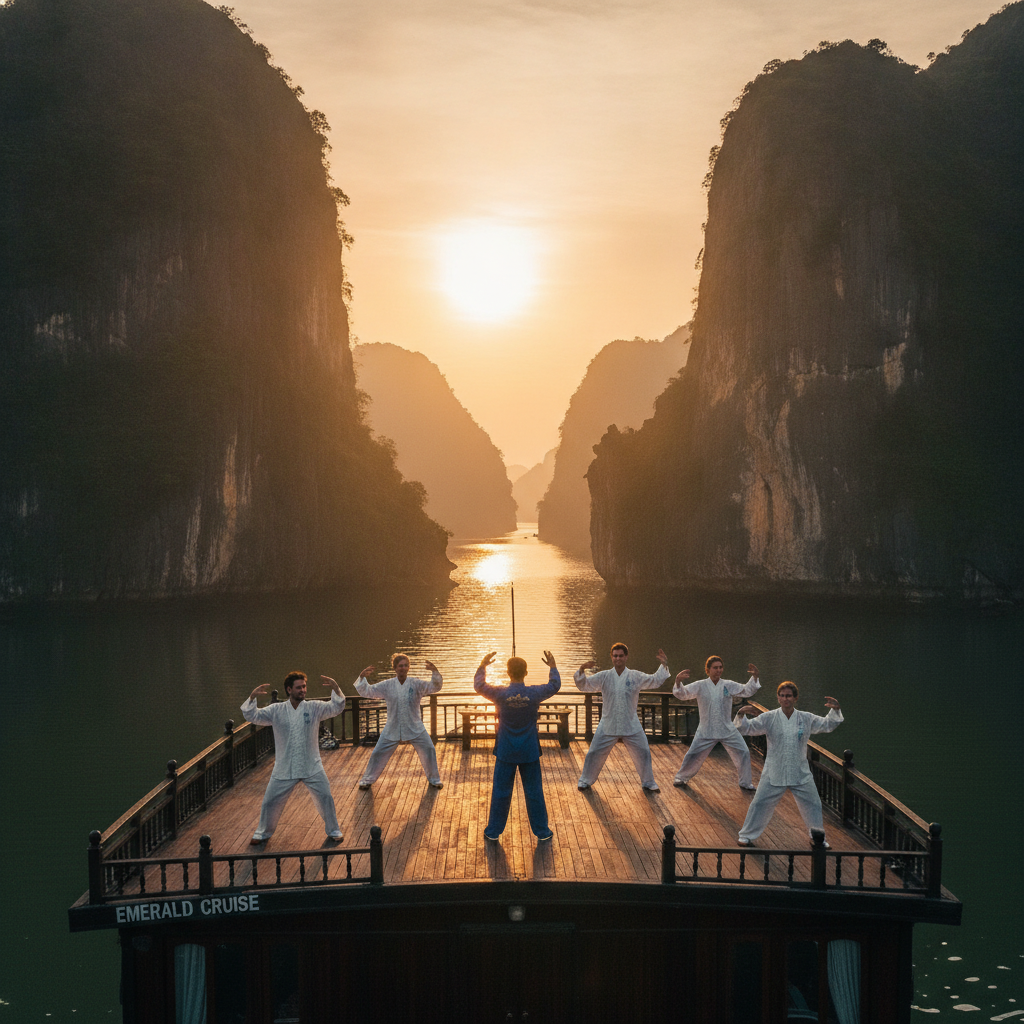
Ha Long Bay's Daily Cycle: The 05:30 Tai Chi Deck, the Stone Beach Limestone Pebbles Between Vertical Karst Walls & the 10-Million-Year Geological Reckoning on the Drive Back to Hanoi

Ha Long Bay: 1,969 Islands from 350-Million-Year Coral Reefs, the Cave That Stored Mongol-Fleet-Defeating Wooden Stakes & the 1,600 Floating Village Residents Relocated by UNESCO Management
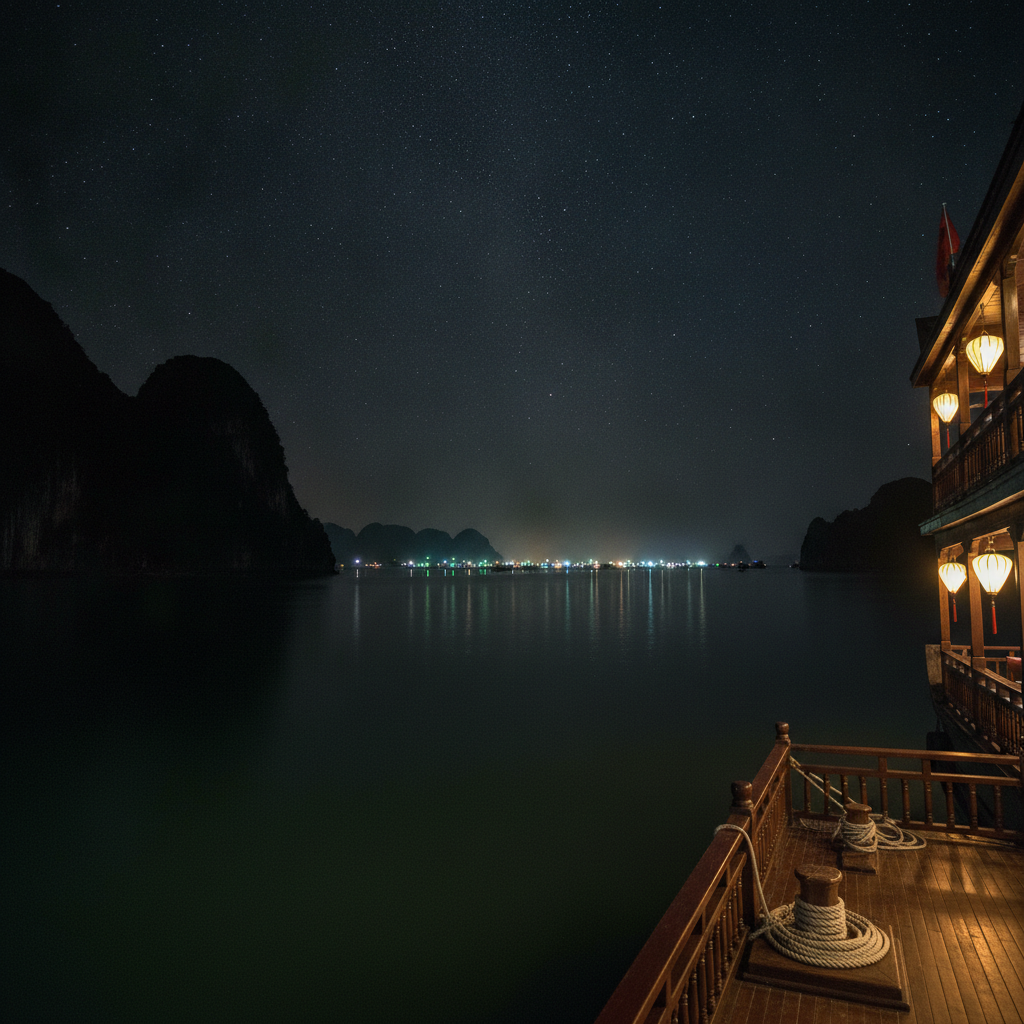
Ha Long Bay's Uncomfortable Truths: 500 Diesel Cruise Boats in a UNESCO Heritage Zone, the Dugong Functionally Extinct Since 2010 & the 1288 Battle That Repelled Kublai Khan's Third Invasion
Ha Long Bay Versus the World: 1,969 Islands Against Phang Nga Bay's 42, the 1992 Indochine Oscar That Built the Bay's European Reputation & the Month-by-Month Guide That Actually Matters