Ha Long Bay's Daily Cycle: The 05:30 Tai Chi Deck, the Stone Beach Limestone Pebbles Between Vertical Karst Walls & the 10-Million-Year Geological Reckoning on the Drive Back to Hanoi
The cruise ritual refined over decades—tai chi at 05:30, cooking class at 14:00, squid fishing at 21:00—as the best operators' structure for maximising the emotional impact of the landscape's natural qualities; Ba Be Lake's 2-day freshwater karst counterpart with the Tày minority stilt house villages at 10% of Ha Long's visitor volume; the stone beaches between 60-metre vertical karst walls providing more visceral scale appreciation than any panoramic viewpoint; July–August jellyfish bloom intensified by wastewater eutrophication; the Ha Long City market at 03:00 where the cruise chef buys the day's squid for the cooking class; and the geological timeline where French colonialism and cruise boats both occupy the same last pixel of 350 million years of limestone.
- 1
The Ha Long Bay Tai Chi Morning – Cruise Culture & Day Rituals
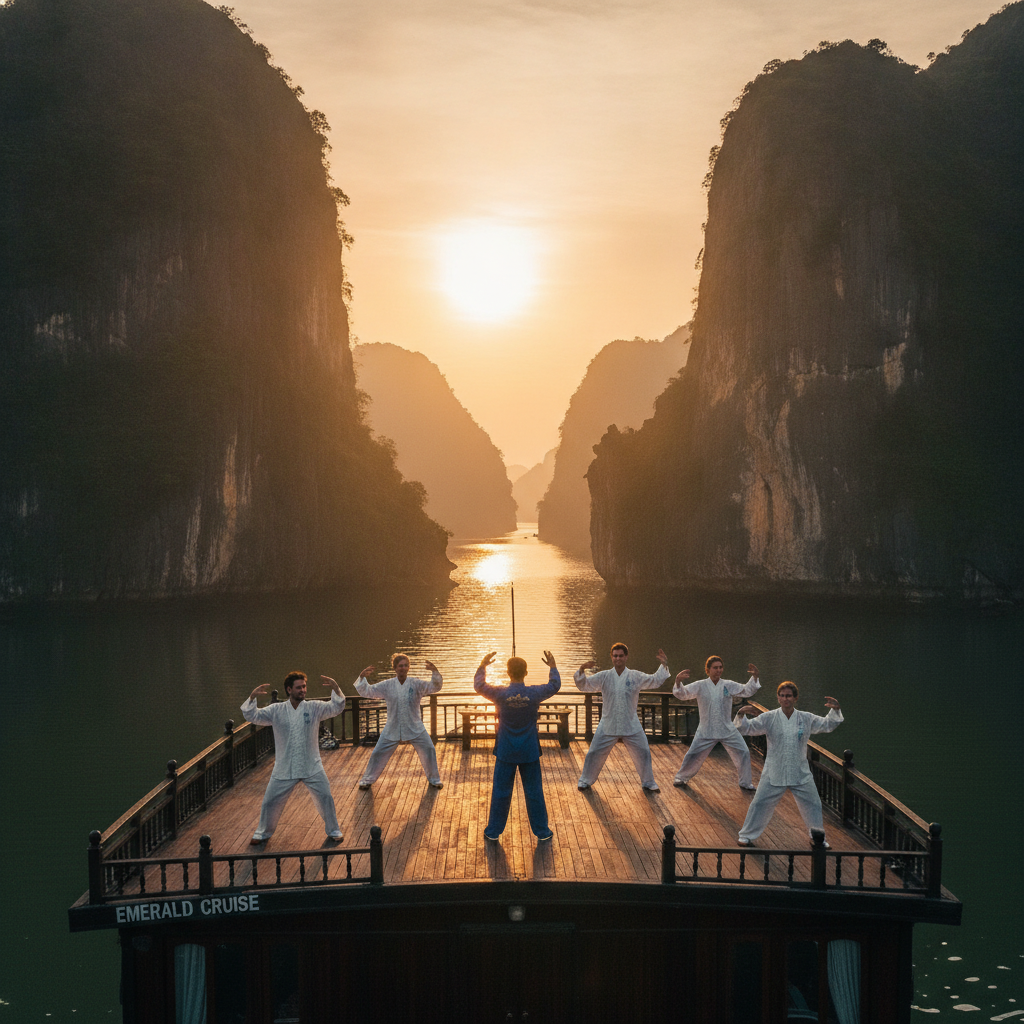
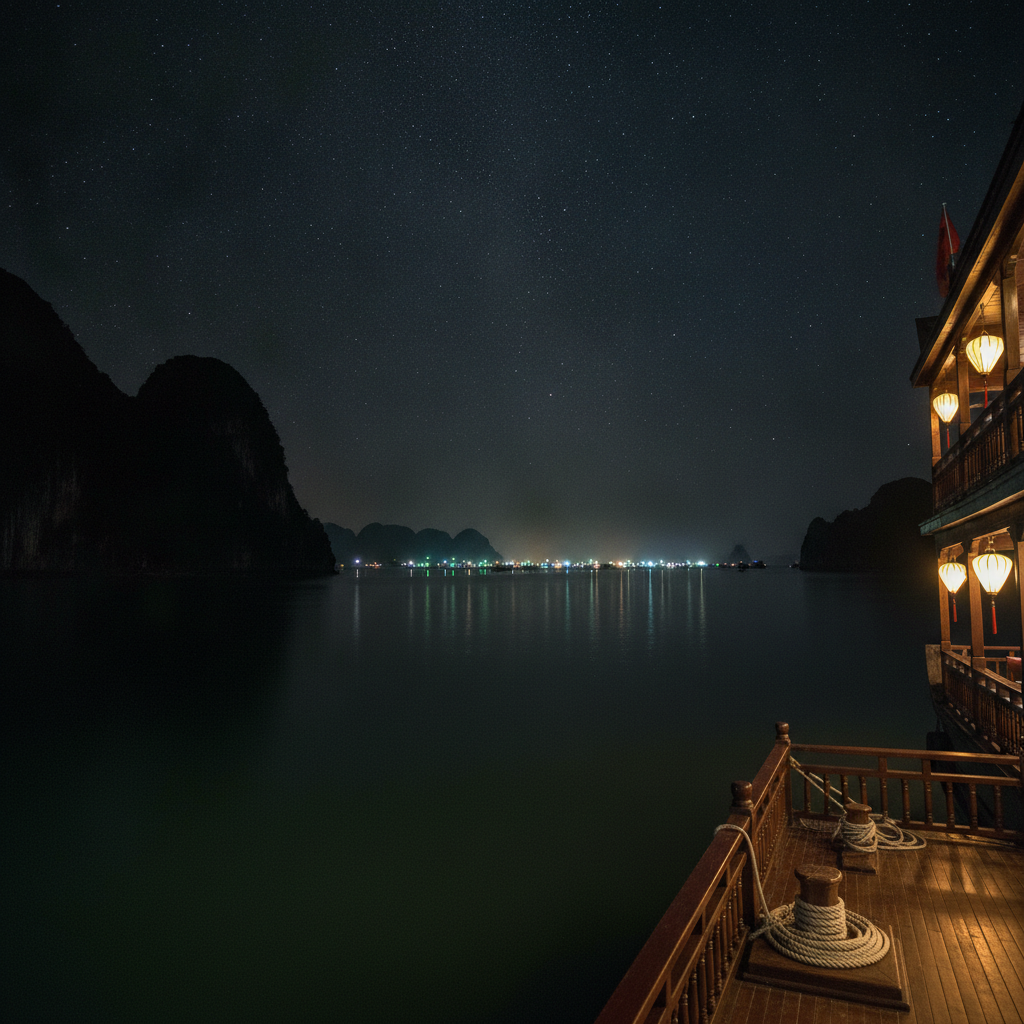
The overnight Ha Long Bay cruise has developed its own specific daily ritual culture: the 05:30 tai chi class (offered on the top deck of every mid-range and luxury cruise boat—the instructor leading a small group of bleary guests through the forms with the karst towers as backdrop); the sunrise photography session (06:00–06:30); the dawn kayaking (06:30–07:30 before the day boats arrive); the breakfast of Vietnamese pho and banh mi served while the boat moves between sites; the cave visit (09:00–11:00); the swimming stop (11:00–12:00, usually at a beach with clean water); lunch (the most elaborate meal of the day—the boat kitchen's display of effort); the cooking class (conducted on the boat deck: the demonstration of Vietnamese spring roll assembly or nem cuon preparation); the sunset cocktail hour (17:30–18:30); the squid fishing attempt (the boat's fishing rods deployed over the side with bright lights on the water—most guests catch nothing, occasionally someone lands a squid); dinner and the night in the anchored bay. The ritual's value: the Ha Long Bay cruise ritual—its daily sequence, its combination of activity and contemplation, its transitions between the geological and the human—is not accidental; the best cruise operators have refined this sequence over decades to produce the maximum emotional impact from the landscape's natural qualities.
- 2
Ba Be Lake – Ha Long Bay's Freshwater Counterpart
Ba Be Lake (the largest natural freshwater lake in Vietnam—8 km², in Bắc Kạn province, 240 km northwest of Ha Long Bay; a UNESCO World Heritage Site listed in 2011; accessible from Hanoi in 5 hours by road): the Karst landscape continuation into freshwater—the lake system is surrounded by the same limestone karst topography as Ha Long Bay but in a freshwater, forest, and river canyon context. The comparison: Ba Be Lake provides the Ha Long Bay experience at 10% of the visitor volume—the overnight boat trips on Ba Be Lake (in traditional wooden long-tail boats accommodating 6–8 people) pass through narrow river gorges between forested karst cliffs, past the Hua Ma cave (a dry cave with stalactites accessible by boat and on foot), and past the floating villages of the Tày minority community. The Tày community: the Tày (the largest ethnic minority in Vietnam—approximately 1.9 million people; the most culturally distinct from the Kinh Vietnamese majority of the mountain minorities) have lived in the Ba Be Lake basin for approximately 2,000 years; the stilt house villages (houses on wooden piles above the flood plain—the architecture adapted to the lake's seasonal flood cycle) are the most intact traditional mountain minority architecture accessible from Hanoi. The Ba Be circuit: the 2-day/1-night Ba Be Lake itinerary (Hanoi → Ba Be by bus or car → overnight boat trip → Tày village → return) is the most recommended alternative to the Ha Long Bay cruise for visitors who have already done Ha Long or who want a significantly less-visited karst environment.
- 3
Ha Long Bay's Stone Beach – Where the Karst Meets the Coast
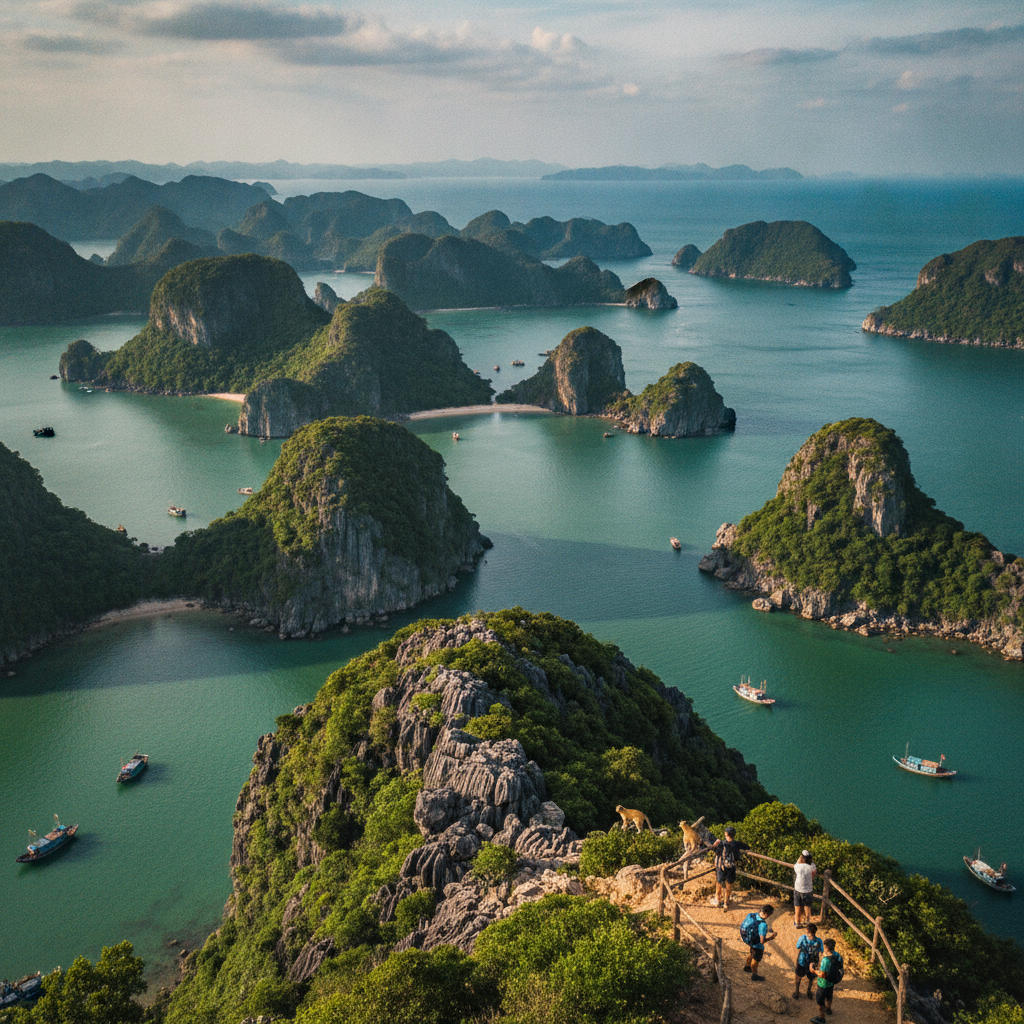
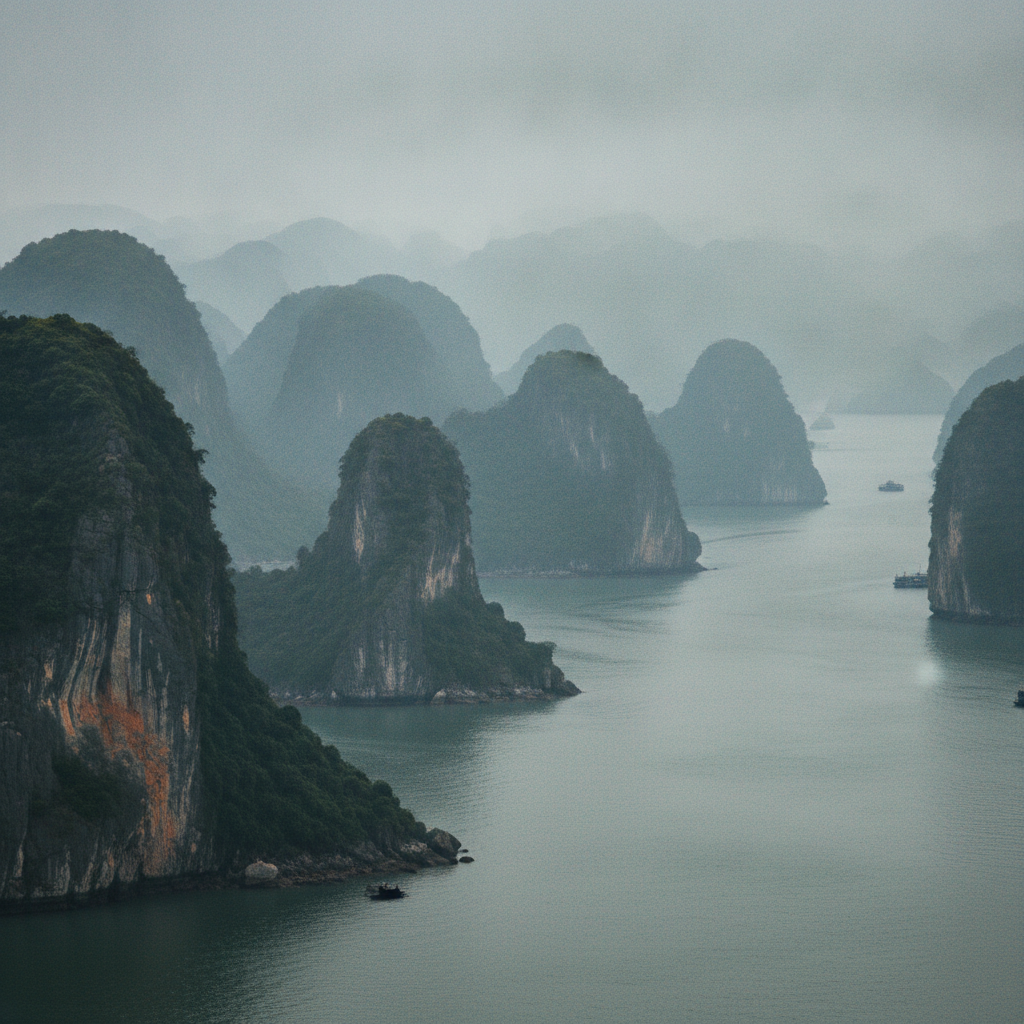
The stone beaches of Ha Long Bay—the specific coastal environment where the base of the karst towers meets the water, creating the most photogenic and physically distinctive beach type in Vietnam—are accessible to cruise guests as alternative swimming stops to the sand beaches of the Ti Top Island and the Soi Sim area. The stone beach character: the Ha Long Bay stone beaches (the most photogenic is the beach on the west side of Bo Hon Island—a 50-metre crescent of rounded limestone pebbles between two vertical karst walls, accessible by cruise boat but rarely included in the standard itinerary): the limestone pebbles (white, grey, and rust-orange from iron oxide staining) create a completely different swimming and sitting experience than the sand beaches. The swimming quality: the water at the stone beaches is typically clearer than at the sand beaches (no suspended sand particles from boat wash) and the depth drops immediately (good for swimming and snorkelling directly from the beach). The vertical karst walls: the swimming between the vertical karst walls of the Ha Long Bay stone beach coves—with the limestone rising 60–80 metres directly from the water on both sides—produces the most visceral appreciation of the karst tower scale available to the non-diver: the towers viewed from sea level, directly adjacent, are dramatically larger than the towers viewed from the cruise deck at a distance.
- 4
Ha Long Bay's Seasonal Jellyfish Migration
The Ha Long Bay jellyfish (the seasonal bloom of jellyfish in the inner bay areas from approximately July to September, coinciding with the warmer water temperatures of the summer season) is the most discussed practical hazard for Ha Long Bay swimmers and the most interesting seasonal ecological phenomenon in the bay. The species: the Ha Long Bay jellyfish bloom is dominated by the moon jellyfish (Aurelia aurita—mildly stinging, producing a rash similar to nettle contact on sensitive skin; not dangerous but unpleasant) and occasionally the box jellyfish (Chiropsalmus quadrigatus—potentially dangerous; rare in the inner bay but present). The bloom timing: the jellyfish bloom typically begins in July, peaks in August, and recedes in September; the bloom is most intense in the enclosed bays (the areas favoured for cruise boat anchorage and swimming stops). The response: the responsible cruise operators deploy jellyfish nets at the designated swimming spots during bloom season; the guests are informed of the jellyfish presence and advised on protective clothing (the jellyfish stinging cells cannot penetrate the lycra of the rash guard or wetsuit). The ecological significance: the jellyfish bloom (a natural seasonal event that has occurred in Ha Long Bay for millions of years) has been intensified in recent decades by the nutrient increase from wastewater discharge—the same eutrophication process that drives jellyfish blooms worldwide in response to coastal pollution.
- 5
The Ha Long Bay Cooking Class – Vietnamese Seafood on Water
The Ha Long Bay cooking class—conducted on the boat deck with the karst landscape as the backdrop—is the most memorable cooking instruction setting in Vietnam: the spring rolls assembled on a cutting board balanced on the boat's stern rail, the fish sauce dipping tested against the background of the karst silhouettes, and the instructor's patience with guests whose knife skills are tested by the rocking boat. The instruction: the Ha Long Bay cruise cooking class typically teaches 2–3 dishes (nem cuon—fresh spring rolls; the marinated squid preparation—the squid caught the previous night or purchased at the Ha Long market; and the Vietnamese dipping sauce construction—the nuoc cham that appears at every Vietnamese table); the emphasis is on technique simplicity rather than authentic professional technique. The market visit: the better cruise operators include a morning visit to the Ha Long City morning market (03:00–06:00; the most active seafood market in Quảng Ninh province; the cruise chef selects the day's fish and shellfish while guests observe the wholesale transaction) as the practical introduction to the cooking class that follows. The take-home: the recipe cards provided by the better cruise operators are the most practically useful souvenir of the Ha Long Bay experience—the nem cuon recipe, properly followed at home, produces the result closest to the boat-deck instruction.
- 6
Leaving Ha Long Bay – The Geological Reckoning
The departure from Ha Long Bay—driving back along the new expressway with the karst landscape receding into the distance, returning to Hanoi's urban density—produces the most specific type of travel reckoning in the Vietnamese itinerary: the confrontation with geological time. The Ha Long Bay geological timeline: the limestone was deposited 350 million years ago; the tectonic uplift that raised it above sea level occurred 250–200 million years ago; the karst dissolution that created the tower forms began 20 million years ago; the sea level rise that drowned the tower bases occurred 10,000 years ago. Within this timeline, the entire history of human civilization (12,000 years from the first cities), the Cham Kingdom (1,800 years), the Vietnamese state (2,000 years), the French colonialism (90 years), the American War (20 years), and the cruise boat industry (30 years) occupy the last pixel of the geological image. The reckoning: every Ha Long Bay visitor who engages with the geological timeline leaves with a specific recalibration of the human scale—the tourism damage to the bay (the sedimentation, the pollution, the displaced village communities) is simultaneously urgent (because it is happening now) and trivially small (because the limestone towers will continue to dissolve at their current rate for another 10 million years, long after the tourism industry has ceased to matter). The most honest Ha Long Bay verdict: the landscape is too large to be ruined by tourism; the tourism management is too weak to protect the bay from the coal mining; and both the landscape and the tragedy are real at the same time.
Walk this route with audio
Stories play automatically as you reach each stop — no tapping needed.
More in Ha Long Bay
Ha Long Bay: 1,969 Islands from 350-Million-Year Coral Reefs, the Cave That Stored Mongol-Fleet-Defeating Wooden Stakes & the 1,600 Floating Village Residents Relocated by UNESCO Management
Ha Long Bay's Hidden Layers: Nixon Mining Haiphong Harbour in 1972, Akoya Pearls at 40% Below Japanese Prices & the Dragon Mother Legend That Explains Every Island You're Looking At
Ha Long Bay's Uncomfortable Truths: 500 Diesel Cruise Boats in a UNESCO Heritage Zone, the Dugong Functionally Extinct Since 2010 & the 1288 Battle That Repelled Kublai Khan's Third Invasion
Ha Long Bay Versus the World: 1,969 Islands Against Phang Nga Bay's 42, the 1992 Indochine Oscar That Built the Bay's European Reputation & the Month-by-Month Guide That Actually Matters