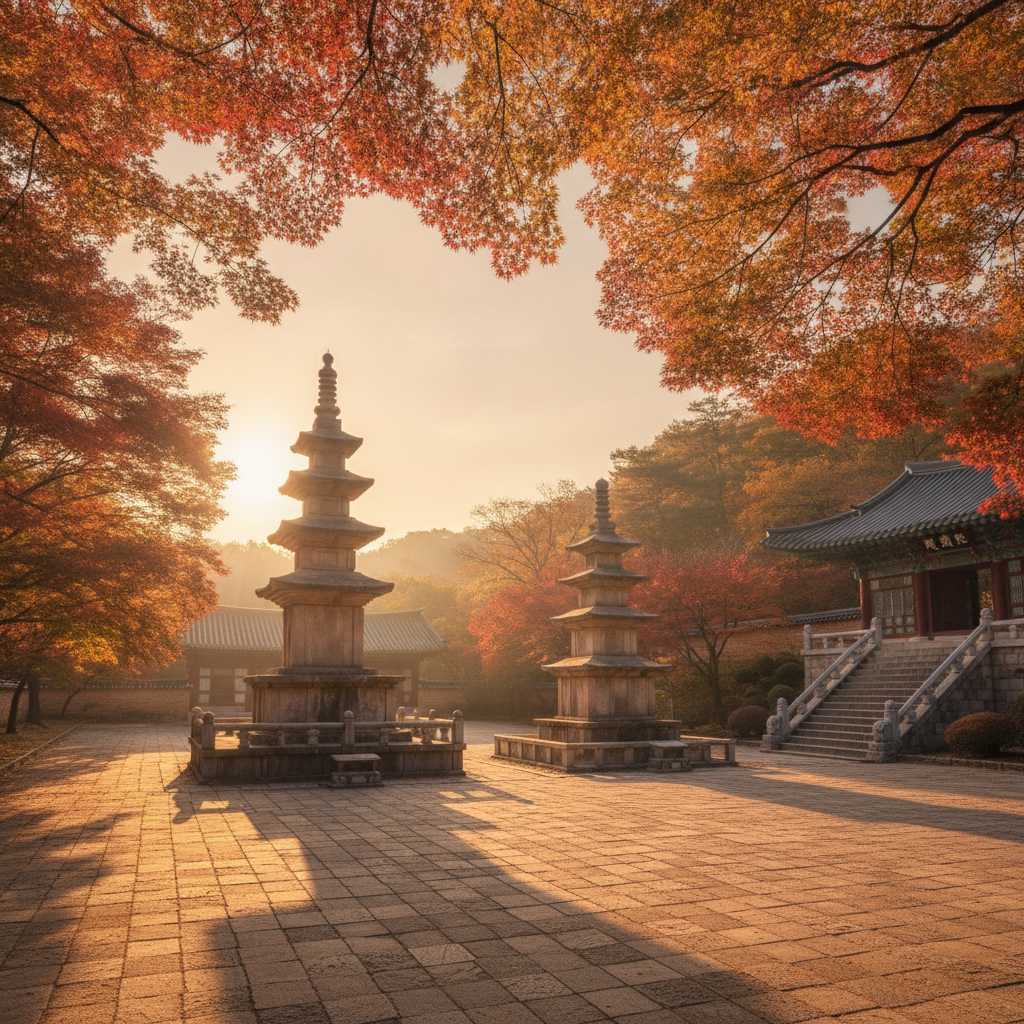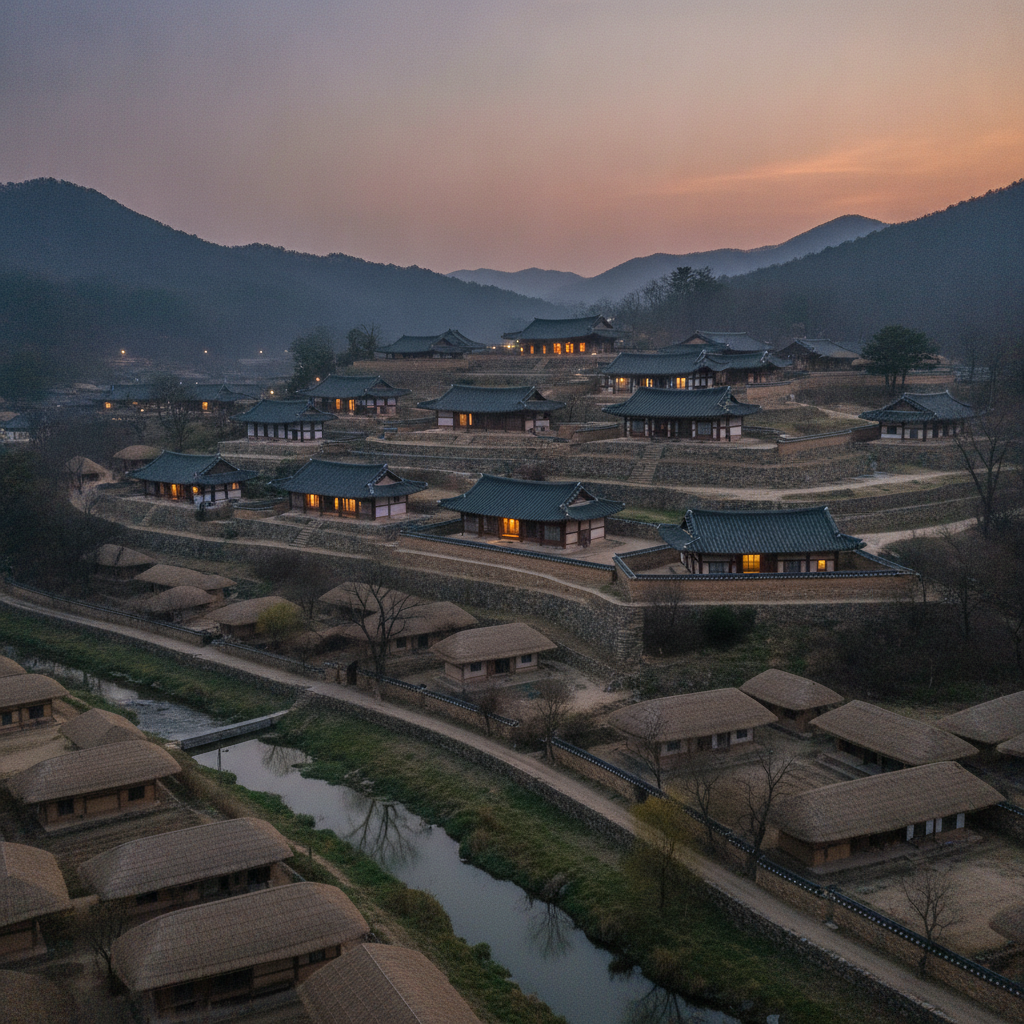
The 600-Year-Old Village Where the Same Two Clans Still Live, the Warrior Youth Who Unified Korea at Age 16 & the 81,258 Buddhist Woodblocks Carved to Stop the Mongol Invasion
Yangdong's 54 historic manor houses and 110 thatched farmhouses with descendants of the same two clans for 600 years; Kim Chun-chu's Tang alliance diplomacy that set the Korean unification in motion; Gwan Chang's solo charge into the Baekje lines at age 16 whose execution inspired Silla victory; the Tripitaka Koreana's 81,258 woodblocks carved in 52 years as a prayer against Mongol invasion; the Bangudae Petroglyphs as the world's oldest whale-hunting depiction; and the Ulsan–Gyeongju–Andong circuit as the most complete ancient Korean heritage itinerary.
- 1
Gyeongju's Confucian Heritage & Yangdong Village
The Confucian heritage of the Gyeongju region (the side of the city's historical record that postdates the Silla Buddhist period and reflects the Joseon Dynasty (1392–1897) Confucian civilization that replaced Buddhism as the state religion and ideology): the most intact Confucian landscape in Korea. The Yangdong Folk Village (양동마을—the UNESCO World Heritage Site (listed 2010 as one of the 2 'Historic Villages of Korea')—the largest and best-preserved traditional Confucian clan village in Korea (the village has been continuously inhabited by the descendants of the Won and Lee (Yi) clans for approximately 600 years; the village contains 54 historic Joseon-period tile-roofed manor houses (기와집, giwajip) and 110 traditional thatched-roof houses (초가집, chogajip) arranged on the hillside of the U-shaped valley 16 km north of Gyeongju City)): the single most intact pre-modern Korean settlement surviving in the country. The Oksan Seowon (옥산서원—the Confucian academy (서원, seowon) established in 1573 in the Gyeongju region—the educational institution where Joseon literati studied the Neo-Confucian texts): the Oksan Seowon is one of the 9 Korean Confucian academies listed as UNESCO World Heritage in 2019 (the 'Seowon, Korean Neo-Confucian Academies' inscription). The Gyerim Forest (계림—the sacred forest between the Wolseong Palace and the Cheomseongdae—the forest associated with the founding legends of the Kim clan (the founding legend states that a rooster crowed in the forest and the first Kim clan ancestor was found in a golden box beneath a tree): the most mythologically charged natural space in Gyeongju.
- 2
Gyeongju's Gold & The National Museum
The Silla gold artifacts (the most extraordinary material expression of Silla civilization—the gold crowns, belts, earrings, and necklaces excavated from the royal burial mounds in the 20th century): the guide to understanding and viewing the Silla gold. The gold crown technology (the Silla gold crown production technique—the hammered sheet gold (the gold was hammered from ingots to a thickness of approximately 0.3–0.5 mm (thinner than a modern credit card) while maintaining structural integrity through careful work-hardening): the crown's distinctive upright ornaments (the tree-branch and deer-antler gold projections rising from the crown band—the shamanic symbols of the world-tree and the sacred deer that position the Silla king as a shaman-king at the center of the cosmos): the most elaborate gold crown construction technique in the world. The jade ornaments (the comma-shaped jade (곡옥, gogok) pendants hanging from the crown on gold wire chains): the gogok jade shape (derived from the curved jade form seen in Chinese Neolithic jade culture and in the Japanese magatama tradition—the Silla gogok is the Korean variant of this shared East Asian jade ornament tradition). The Gyeongju National Museum layout (the 11 display halls covering Prehistory, the Silla Kingdom periods, and the Buddhist art of the Unified Silla period): the Emille Bell Hall (the outdoor display hall housing the 18.9-tonne Emille Bell (the bell cannot be moved indoors due to its weight and the requirement for acoustic resonance space): the bell is struck on special occasions and the 3-minute resonance can be heard throughout the southern museum grounds).
- 3
Gyeongju's East Coast – Gampo & The Sea
The Gyeongju eastern coast (the coastal area of the Gyeongju region on the East Sea (Sea of Japan) about 20 km from the city center): the dimension of the Gyeongju region most invisible to the typical visitor who comes specifically for the UNESCO sites but most rewarding for a visitor with a rental car and a half day to spare. The Gampo coastal area (감포—the small fishing town on the Gyeongju coast, 20 km east of Gyeongju City): the fishing harbor and the fresh seafood (the most economical place in the Gyeongju region to eat the East Sea raw fish (회, hoe) directly from the fishing boats—the small seafood restaurants along the Gampo harbor serve the day's catch at prices significantly lower than the Gyeongju city restaurants). The Munmu Royal Tomb (문무왕릉—the underwater royal tomb of the Silla King Munmu (661–681 CE) who unified the Korean Peninsula): the tomb consists of a large flat rock (Daewangam—'the great king's rock') 200 metres offshore from the Bongil Beach coast, visible from the beach at low tide: the legend (King Munmu requested in his will to be buried at sea so that his spirit could become a sea dragon to protect the Silla Kingdom from the Japanese pirates): the combination of the open sea, the visible offshore tomb rock, and the sunken reef below the rock make this the most atmospheric royal tomb site in Korea. The Gyeongju Bongil Beach (봉길해수욕장—the beach immediately south of the Munmu Tomb coastal area—the quiet beach backed by a pine forest).
- 4
Gyeongju's Night Markets & Entertainment
The Gyeongju evening experience (the city after dark—the heritage city's nighttime character that is defined more by the illuminated archaeological sites than by a developed bar or restaurant culture): the practical evening guide. The Wolji Pond illumination (the Donggung Palace and Wolji Pond evening illumination—the most important Gyeongju evening attraction: the palace complex illuminated from 18:00 to 22:00, with the still pond surface reflecting the lit buildings in the clearest weather): the pond is most atmospheric in the autumn (October–November) when the cool air keeps the water still and the evening is crisp. The Gyeongju Night Market (the Jungang Market night market in the center of Gyeongju City—the evening food stall market operating from 18:00): the ssambap (leaf-wrap rice) sets and the Gyeongju bbang (the local bread variations including the Hwangnam ppang and the Cheonmachong dduk (rice cake)) are the most characteristic evening market foods. The Gyeongju Night Heritage Walk (the organized evening heritage trail—the 'Night Gyeongju' programme run by the Gyeongju City tourist information office on Fridays and Saturdays in May and October: a guided 2-hour walking tour of the lit heritage sites with English-language interpretation): the most structured evening cultural experience available to international visitors. The Gyeongju folk performance (the traditional Silla court music (향악, hyang-ak) and dance performances at the Bomun Lake Sirimad Hall during the spring and autumn tourism peaks—the most direct connection to the Silla court culture available to visitors without specialist knowledge).
- 5
The Hwarang – Silla's Elite Warrior Youth
The Hwarang (화랑—literally 'Flowering Knights'—the Silla Dynasty youth corps (c. 576 CE onwards) of elite male aristocratic warriors, scholars, and artists who were educated in the 5 Hwarang commandments (loyalty to the king, filial piety, faithfulness to friends, no retreat in battle, and discrimination in taking life)): the most influential single institution in Korean cultural history that is still unknown to most international visitors to Gyeongju. The Hwarang culture (the Hwarang combined military training with Buddhist study, Confucian ethics, and aesthetic cultivation (music, dance, and poetry)—the most holistic youth training programme in East Asian history, producing the generals who unified the Korean Peninsula and the cultural elite of Unified Silla): the Korean martial arts (Taekkyeon—the Korean foot-fighting martial art that traces its lineage to the Hwarang training tradition). The 3 Hwarang figures most significant in Korean history: Kim Yushin (김유신—the Hwarang general who commanded the Silla forces in the unification wars against Baekje and Goguryeo—the most important military figure in the Korean unification); Kim Chun-chu (later King Muyeol—the Silla king who negotiated the Tang Dynasty alliance and set the unification in motion); and Gwan Chang (관창—the 16-year-old Hwarang warrior who charged alone into the Baekje lines at the Battle of Hwangsanbeol (660 CE) and was executed by the Baekje commander, whose death inspired the Silla forces to victory). The Hwarang Park (화랑마을—the cultural history park recreating Hwarang training culture 5 km north of Gyeongju City).
- 6
Gyeongju vs. Gyeongnam – The UNESCO Region Circuit
The Gyeongju regional circuit (the broader Gyeongsang Province UNESCO and heritage landscape that can be combined with a Gyeongju visit to create the most comprehensive ancient Korean history itinerary): the guide to the greater Gyeongju heritage region. The Gyeongnam UNESCO sites accessible from Gyeongju: Haeinsa Temple (해인사—the Buddhist temple in the Gaya Mountains (Gayasan National Park) that holds the Tripitaka Koreana—the 81,258 woodblocks carved with the entire Buddhist canon in 52 years (1237–1289 CE) to pray for divine protection against the Mongol invasion—the single most important Buddhist text collection surviving from the medieval Korean period and UNESCO World Heritage Site 1995): accessible from Gyeongju by rental car (1h50m) or bus (3h via Daegu). The Andong Hahoe Village (안동 하회마을—the UNESCO World Heritage traditional Joseon clan village (listed 2010 jointly with Yangdong Village)—the most photographed traditional Korean village, famous for the Hahoe mask dance (하회 별신굿 탈놀이) and the river bend setting): 1h20m by bus from Gyeongju via Andong. The Ulsan Petroglyphs (반구대 암각화—the Bangudae Petroglyph—the 8,000-year-old rock carvings of whales, deer, and humans at the Taehwa River gorge near Ulsan, 30 km south of Gyeongju): the oldest whale hunting depiction in the world and one of the oldest narrative art compositions in East Asia. The combined itinerary: Gyeongju (2 days) + Yangdong Village (half day) + bus to Andong Hahoe Village (1 day) + return to Busan via Gyeongju: the complete southeastern Korean heritage circuit.
Walk this route with audio
Stories play automatically as you reach each stop — no tapping needed.
More in Gyeongju
The 60-Metre Wooden Pagoda Burned by the Mongols in a Single Day, the First Silla Gold Crown Found in 1921 by Colonial Archaeologists & the Valley Where 7 Stone Pagodas Stand in 500 Metres
The Roman Glass Bowl Found in a Korean Royal Tomb, the Largest Steel Mill in the World 30 km from the Oldest Observatory in East Asia & the Dynasty That Had More Female Rulers Than Any Other in Korean History
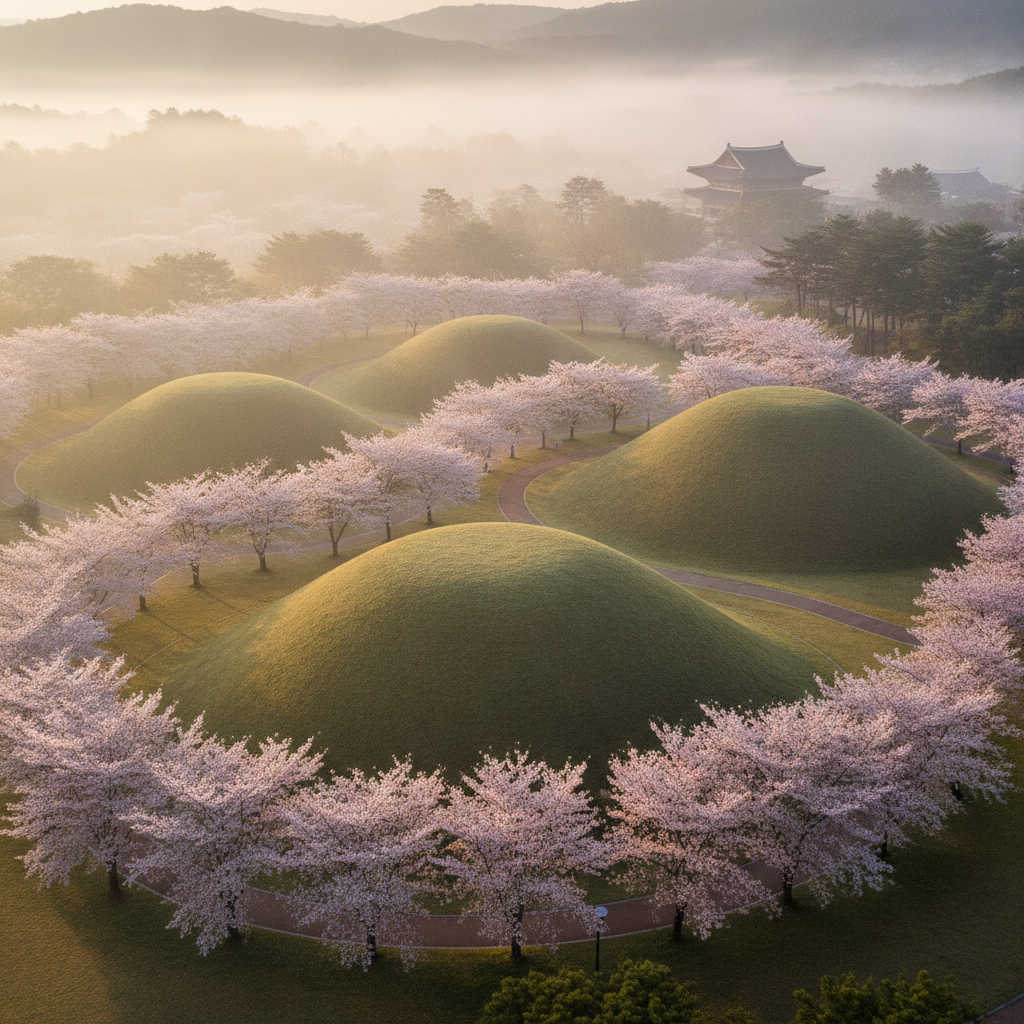
The 1-Million-Person City of the 8th Century, the Dome Built Like Mycenae on a Korean Mountain & the Bread Shaped Like a Royal Burial Mound
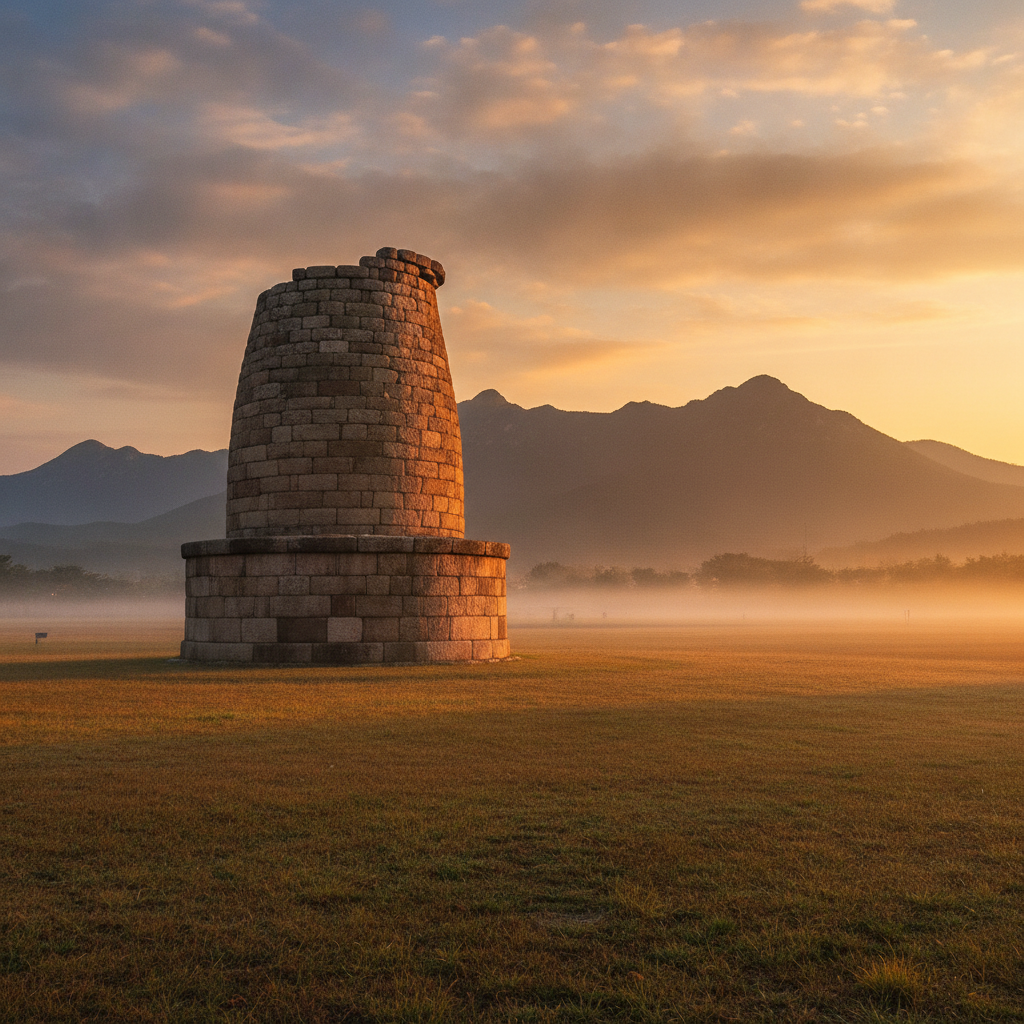
The Observatory Whose Astronomical Function Has Been Debated Since the 1970s, the Female King Who Built It & the School Field Trip That Every Korean Child Takes