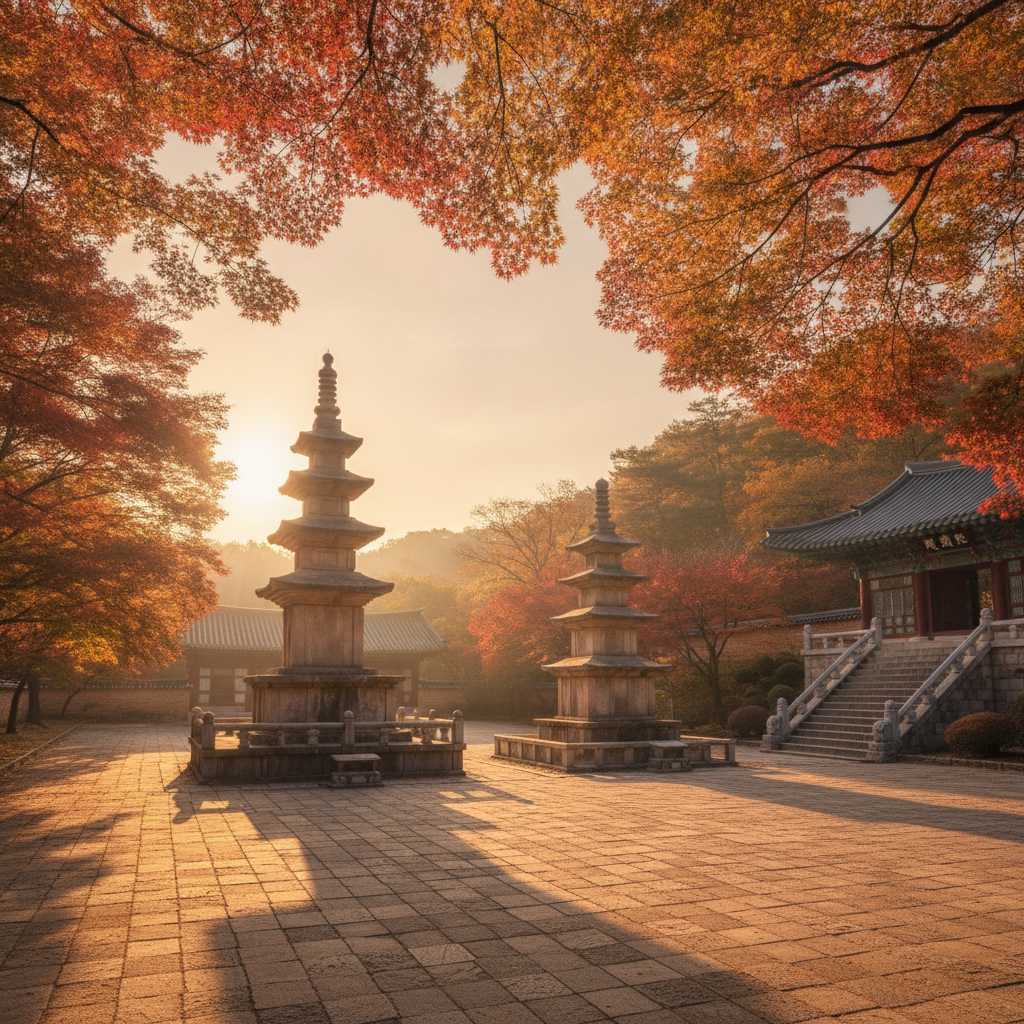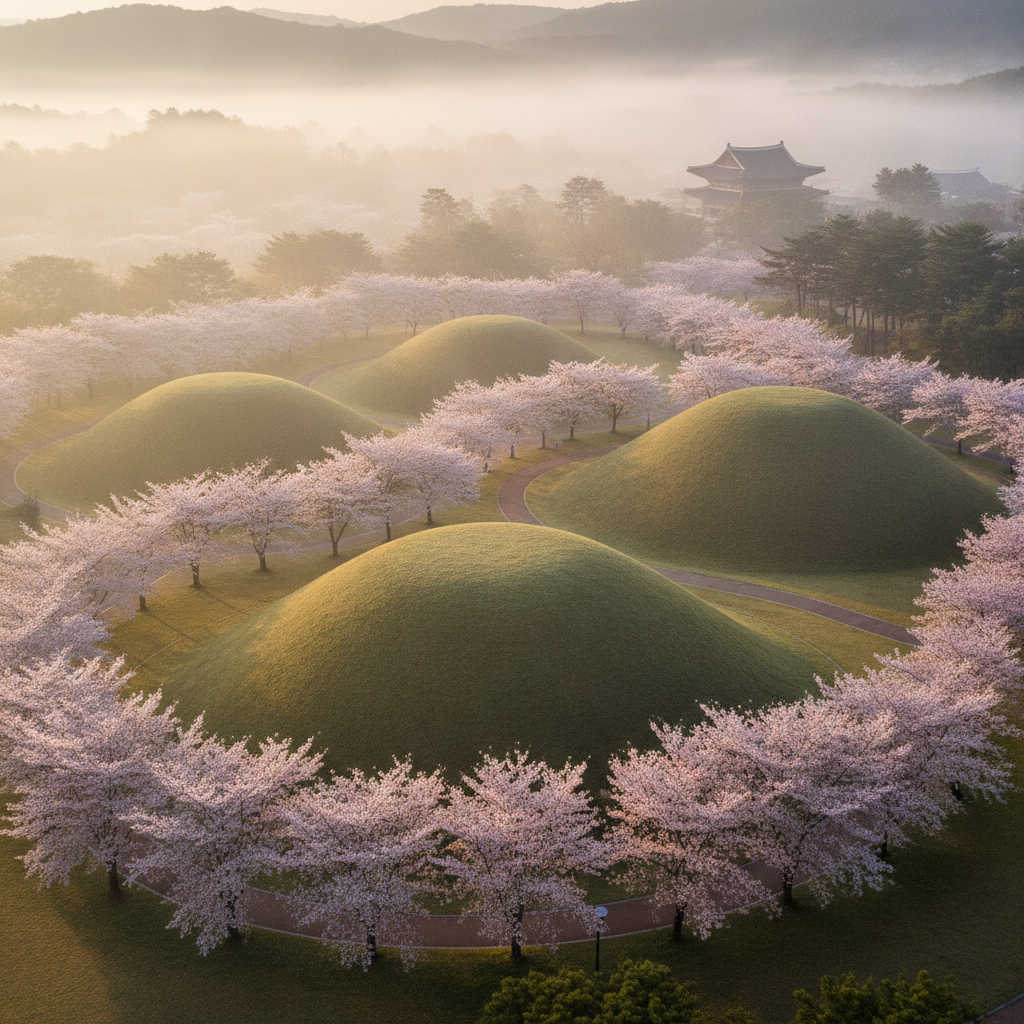
The 1-Million-Person City of the 8th Century, the Dome Built Like Mycenae on a Korean Mountain & the Bread Shaped Like a Royal Burial Mound
The Silla Kingdom's Gyeongju reaching 1 million inhabitants in the 8th century as one of the world's largest cities; the Seokguram's corbeled dome construction technique applied independently from the Greek Mycenaean tradition; the 150 rock-carved Buddhas of Namsan as the single richest outdoor Buddhist art concentration in Korea; the Emille Bell legend of the child melted into the bronze for its voice; the Hwangnam ppang bread shaped to evoke the burial mound profile; and the Gyeongju cherry blossom + tumuli combination as the most cinematically surreal spring landscape in Korea.
- 1
The Silla Kingdom – 1,000 Years of Korean History
The Silla Kingdom (신라왕국—57 BCE to 935 CE—the kingdom that ruled the southeastern Korean Peninsula for 992 years, unified the Korean Peninsula in 668 CE, and made Gyeongju (then called Geumseong, later Seorabeol) its capital for the entire duration): the political and cultural achievement that makes Gyeongju the most historically significant city in Korea. The Silla founding myth (the Bak Hyeokgeose legend—the founder of Silla who was said to have been born from a large egg that descended from heaven in a white light to the Najeong Well site in what is now the Gyeongju city center): the mythological foundation that positioned the Silla king as a heavenly descendant (the same legitimating framework used by the Japanese imperial line and the Goryeo Dynasty founders). The Three Kingdoms Period (the rivalry between Silla (southeastern Korea), Baekje (southwestern Korea), and Goguryeo (northern Korea and Manchuria) from the 1st century BCE to 668 CE): the Silla unification of 668 CE (the alliance between Silla and the Tang Dynasty of China that defeated Baekje in 660 CE and Goguryeo in 668 CE, creating the Unified Silla Kingdom): the most significant political transformation in Korean history before the 20th century. The Silla cultural golden age (the Unified Silla period 668–935 CE when Gyeongju reached its maximum size (approximately 1 million inhabitants—one of the largest cities in the world in the 8th century CE) and produced the Bulguksa Temple, the Seokguram Grotto, the Emille Bell, and the Cheomseongdae—the cultural monuments that represent the peak of Korean pre-modern civilization).
- 2
Seokguram Grotto – Korea's Finest Buddhist Art
The Seokguram Grotto (석굴암—the artificially constructed granite grotto on the eastern slope of Mount Toham, 3 km east of Bulguksa Temple via mountain road): the UNESCO World Heritage Site (listed 1995 jointly with Bulguksa Temple) and the most artistically significant single structure in Korea. The construction (the grotto was completed in 774 CE under the supervision of the Silla minister Kim Daeseong (the same minister who commissioned Bulguksa Temple): the construction involved cutting and fitting 360 granite blocks without mortar to create a domed ceiling (the corbeled dome—the structural technique used in the Mycenaean Treasury of Atreus in Greece, applied independently in 8th-century Korea): the most technically sophisticated stone construction in Korean history. The central Buddha (the 3.78-metre seated Shakyamuni Buddha in the main circular chamber—the Buddha carved from a single granite block): the iconographic perfection (the Buddha's proportions conform to the canonical measurement system of Gupta-period Indian Buddhist sculpture transmitted to Korea via Tang China): the morning sun alignment (the Seokguram Grotto faces due east—at sunrise on the spring and autumn equinoxes, the rising sun illuminates the Buddha's forehead through the entrance passage in a deliberate astronomical alignment). The 39 relief figures (the carved relief figures of bodhisattvas, guardians, and disciples arranged around the circular chamber wall—the most complete programmatic arrangement of Buddhist iconography in 8th-century East Asian stone sculpture).
- 3
Gyeongju's Stone Carvings & Rock Art
The outdoor stone art of Gyeongju (the carved stone monuments scattered across the Gyeongju Basin in fields, forests, and mountain sites—the 'museum without walls' quality of Gyeongju that distinguishes it from any other Korean city): the stone heritage that rewards a visitor who moves beyond the major UNESCO sites. The Namsan Mountain (남산—the mountain rising above the southern edge of Gyeongju City, honeycombed with Silla-period Buddhist rock carvings): the single richest concentration of outdoor Buddhist stone art in Korea (the Namsan mountain area contains 150 rock-carved Buddhas, 40 stone pagodas, and 150 temple sites spread across the mountain trails—accessible by 12 different hiking routes from 1.5 to 5 hours): the most rewarding hiking experience in the Gyeongju region. The Baerimsa Valley carvings (the concentration of Silla-period rock carvings in the western valley of Namsan—the most dramatic single grouping of Namsan rock art accessible in a 2-hour walk from the southern edge of Gyeongju City). The Tapgok Valley (the 'Pagoda Valley' in the eastern Namsan slopes—the valley with the highest density of stone pagodas per kilometre of trail in Korea). The Golgulsa Temple (골굴사—the temple built into the limestone cliff face 8 km north of Gyeongju City—the cave temple carved directly into the limestone cliff with a 4-metre rock-carved Buddha on the cliff face above the cave chambers): the only surviving cliff-face cave temple in Korea and the home of the Sunmudo martial arts school (the Korean Buddhist martial arts equivalent of the Chinese Shaolin kung fu tradition).
- 4
Gyeongju's Food & Market Culture
The Gyeongju food culture (the culinary traditions of the former Silla capital—a city with a food culture that reflects both its agricultural hinterland (the Gyeongju Basin's rice and vegetable farming) and its tourist economy (the most visited heritage city in Korea)): the food dimension that rewards the visitor who eats beyond the tourist restaurant street. The Gyeongju bread (경주빵—the most famous Gyeongju local food product): the 'Hwangnam ppang' (황남빵—the Hwangnam-district bread—the small oval bread filled with red bean paste): the most purchased food souvenir in Gyeongju, baked at the original Hwangnam Bakery established in 1939 and sold in every bakery in the city: the bread whose shape was designed to evoke the profile of the royal burial mounds. The Ssambap (쌈밥—the Gyeongju ssambap—the Korean leaf-wrap rice meal with multiple vegetable side dishes served in traditional ceramic bowls): the most representative traditional Gyeongju meal format, served at the restaurants of the Gyeongju Hanok Village area (the traditional Korean house district near the Gyeongju city center). The Gyeongju Jungang Market (경주 중앙시장—the traditional covered market in the center of Gyeongju City): the most authentic non-tourist food market in the city with the full range of Korean traditional market foods at local prices. The Gyodong Bap (교동 법주—the Gyodong traditional rice wine): the Gyeongju-region makgeolli (the unfiltered rice wine) produced by the Gyodong House, the oldest continuously operating traditional wine producer in Gyeongju.
- 5
Gyeongju's Hanok Village & Night Walks
The Gyeongju living historic experience (the traditional Korean house (한옥, hanok) district and the night experience of the heritage city that turns the archaeological landscape into an atmospheric evening): the side of Gyeongju most rewarding for the visitor who stays overnight rather than visiting on a day trip from Busan. The Gyeongju Hanok Village (the district of traditional Korean tile-roofed houses near the Wolseong Palace site): the most concentrated traditional architecture zone in the Gyeongju city center. The Gyeongju night walk (the evening walk from the Wolji Pond illumination through the Daereungwon tumuli to the Cheomseongdae): the 3-hour evening circuit that provides the most atmospheric encounter with the Silla heritage: the Wolji Pond at 19:00–20:00 (the illuminated palace reflection in the pond at its most photogenic in the blue hour immediately after sunset), followed by the walk through the Daereungwon park (the tumuli silhouetted against the night sky), and the Cheomseongdae (the stone tower lit in warm light in the empty field). The Gyeongju Bulguksa night illumination (the Bulguksa Temple nighttime opening on selected evenings in May (the Lantern Festival period) and October: the temple lit by hundreds of paper lanterns in the most beautiful single illumination event in Gyeongju). The Gyeongju Gwanseumgwa (the traditional entertainment programme at the Bomun Lake area—the regular programme of Silla court music and dance performances at the Bomun Lake resort's Sirimad Performance Hall).
- 6
Gyeongju in Spring – Cherry Blossom Season
The Gyeongju spring experience (the most visually dramatic seasonal event in the Gyeongju region—the simultaneous blooming of the cherry blossom (late March to early April) with the archaeological landscape, creating the most cinematically beautiful combination of nature and heritage in South Korea): the spring-visit case for Gyeongju. The Gyeongju cherry blossom locations: the Bomun Lake circuit (the 7-km lakeside road completely lined with cherry blossom trees—the most complete cherry blossom road in the Gyeongju region, usually at peak bloom in late March to early April); the Bulguksa Temple approach road (the cherry blossom trees lining the 1-km approach road to the Bulguksa Temple gate—the combination of pink blossom canopy and the temple architecture visible at the end of the avenue is the most photographed Gyeongju spring image); the Tumuli Park (the cherry trees within the Daereungwon complex—the combination of the pink blossom with the green grass mounds creates the most surreal spring landscape in Korea). The spring festival (the Gyeongju Cherry Blossom Festival—held annually at the Bomun Lake resort in late March to early April, coinciding with the peak bloom): the most attended spring festival in the Gyeongsang Province. The spring hiking (the Namsan mountain spring wildflower display—the Korean violet and the mountain azalea blooming on the Namsan trails in April): the best period for the 150 rock-carved Buddhas of Namsan (the warm spring light on the grey granite carvings).
Walk this route with audio
Stories play automatically as you reach each stop — no tapping needed.
More in Gyeongju
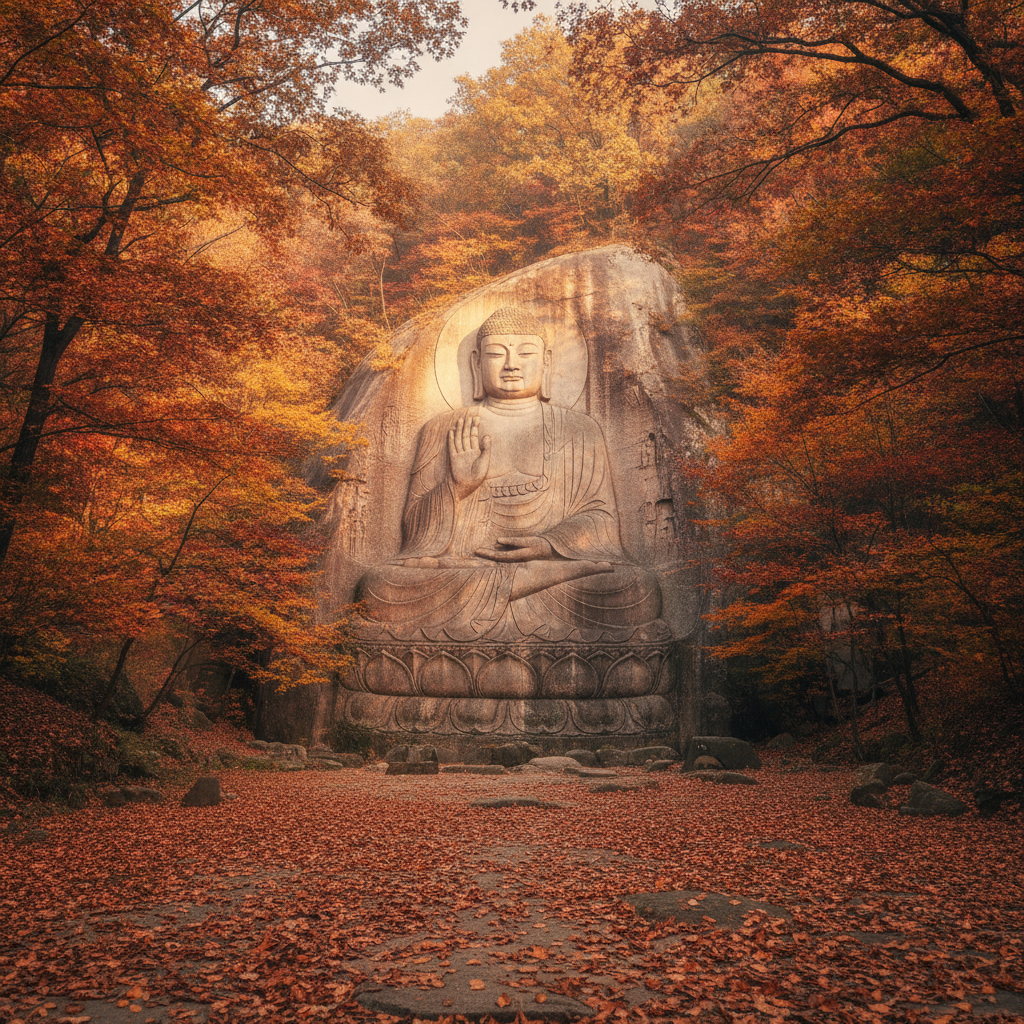
The 60-Metre Wooden Pagoda Burned by the Mongols in a Single Day, the First Silla Gold Crown Found in 1921 by Colonial Archaeologists & the Valley Where 7 Stone Pagodas Stand in 500 Metres
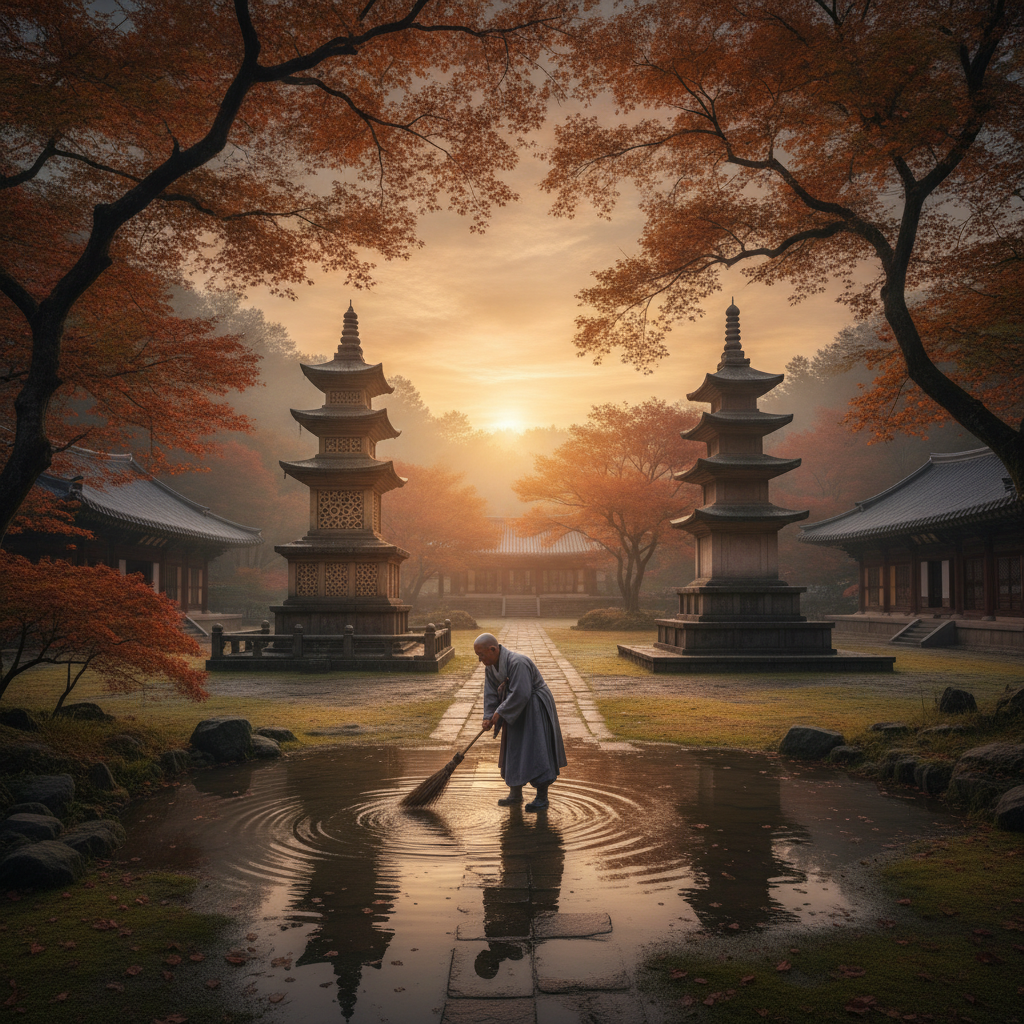
The Roman Glass Bowl Found in a Korean Royal Tomb, the Largest Steel Mill in the World 30 km from the Oldest Observatory in East Asia & the Dynasty That Had More Female Rulers Than Any Other in Korean History
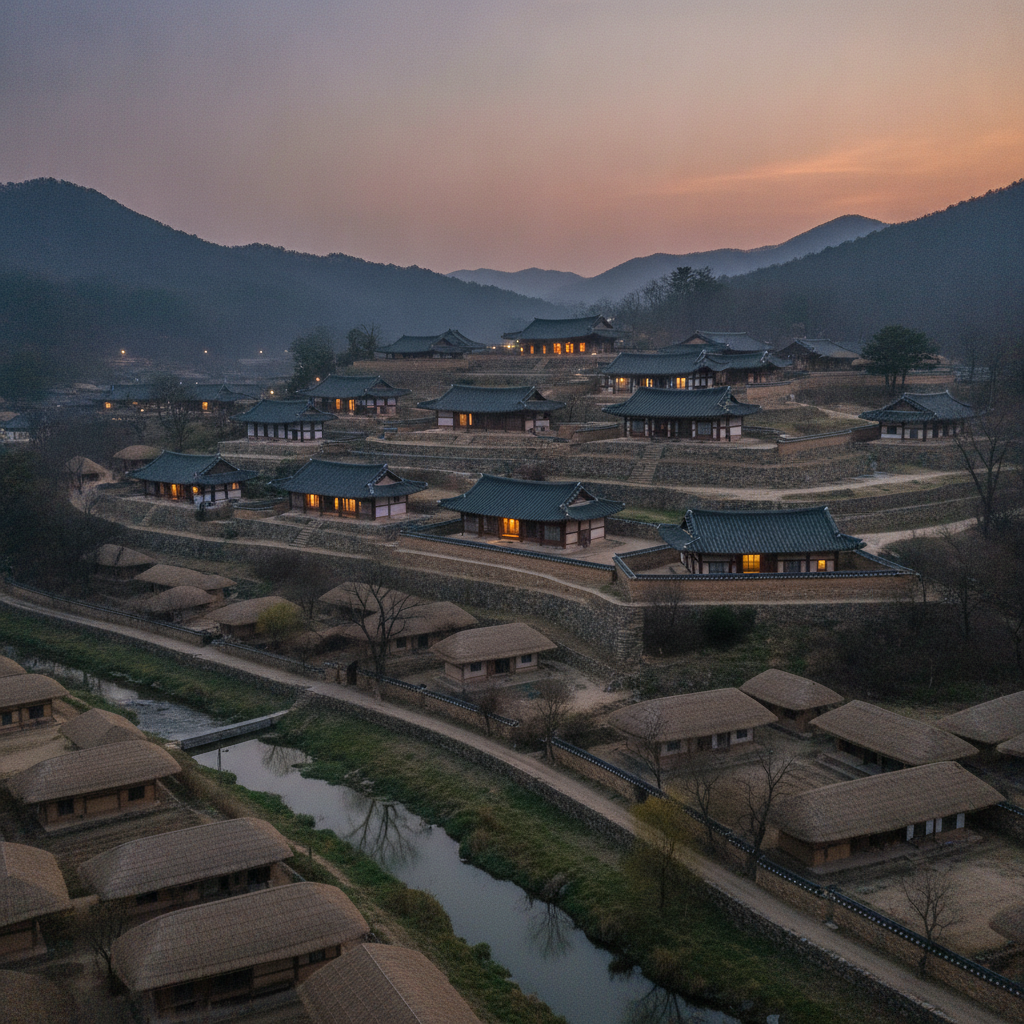
The 600-Year-Old Village Where the Same Two Clans Still Live, the Warrior Youth Who Unified Korea at Age 16 & the 81,258 Buddhist Woodblocks Carved to Stop the Mongol Invasion
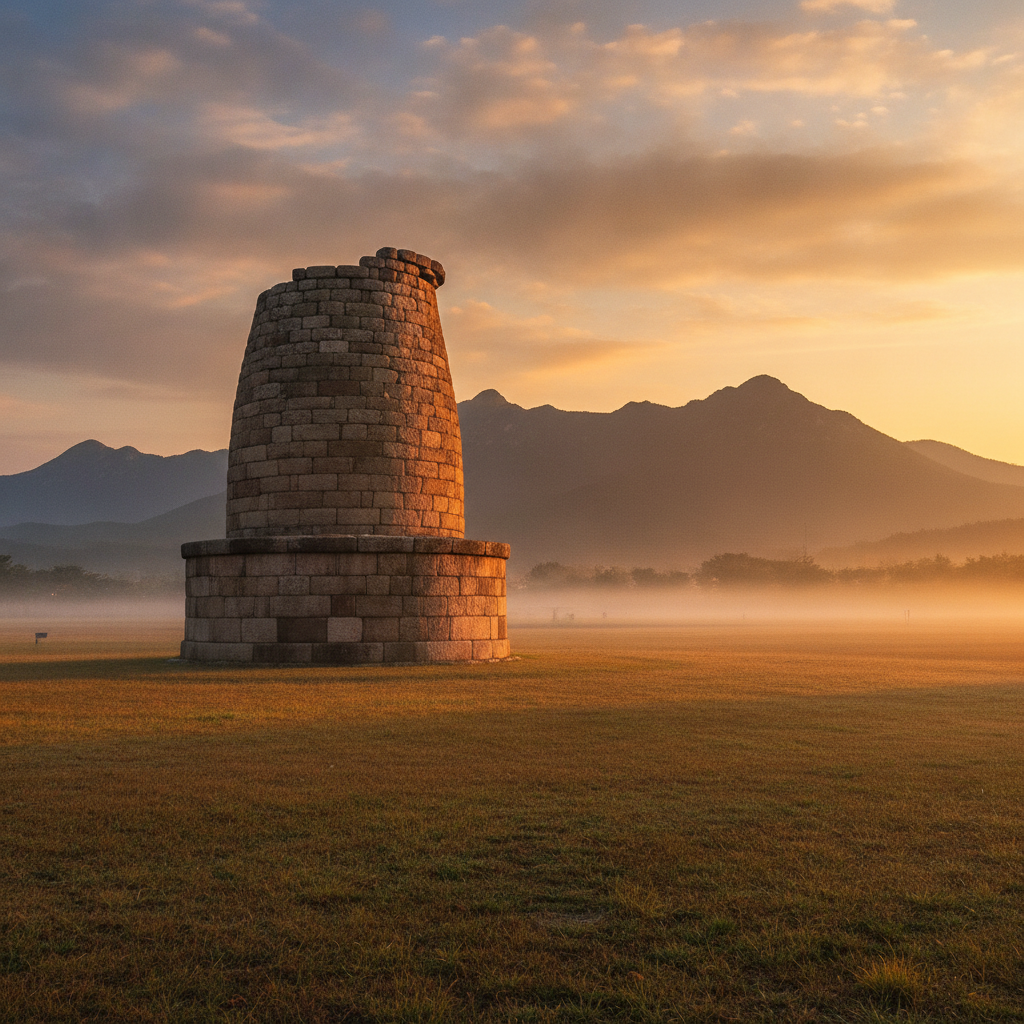
The Observatory Whose Astronomical Function Has Been Debated Since the 1970s, the Female King Who Built It & the School Field Trip That Every Korean Child Takes