The Observatory Whose Astronomical Function Has Been Debated Since the 1970s, the Female King Who Built It & the School Field Trip That Every Korean Child Takes
The Cheomseongdae's three competing astronomical function hypotheses still unresolved; Queen Seondeok as Korea's first female ruler whose name appears on the 27 courses of stone; the mandatory Korean school field trip to Gyeongju as the most institutionalized heritage education in South Korea; the Silla unification narrative's complexity (the 668 CE unified Korea was geographically smaller than modern South Korea); the Gyeongju matsutake mushroom from Toham Mountain pine forests as the most prized in Korea; and the 150 Namsan rock-carved Buddhas on their most photogenic autumn trail.
- 1
Gyeongju's Buddhist Art – Beyond the Major Sites
The Buddhist art landscape of the Gyeongju region beyond Bulguksa and Seokguram (the lesser-visited Buddhist monuments that collectively constitute the richest concentration of Buddhist heritage in Korea): the guide for the visitor who has seen the UNESCO sites and wants to go deeper. The Girimsa Temple (기림사—the mountain temple 10 km northeast of Gyeongju City on the eastern slope of Hamwol Mountain): the temple most deeply embedded in living monastic practice in the Gyeongju region—the temple monks maintain the traditional schedule of 5 daily prayer services and the temple functions as a working monastery (the templestay programme at Girimsa is consistently rated the most authentic in the Gyeongju region). The Bunhwangsa Temple (분황사—the temple within the Gyeongju city boundary, adjacent to the Cheomseongdae): the temple where the monk Wonhyo (617–686 CE—the most important philosopher in Korean Buddhist history, the same monk who co-founded Beomeosa in Busan) lived and wrote his major philosophical commentaries): the Bunhwangsa stone pagoda (the 3-story stone pagoda (of an original 9 stories) built in 634 CE—the oldest surviving stone pagoda in Korea constructed in the 'brick-style' (the stone pagoda built to imitate the appearance of a brick pagoda)): the most historically significant single stone structure in Korea. The Namsan outdoor Buddhist art (the 150 rock-carved Buddhas scattered across the southern mountain of Gyeongju—the most rewarding half-day hike in the heritage city for the visitor with Buddhist art interest).
- 2
Gyeongju Accommodation – From Hanok to Resort
The Gyeongju accommodation guide (the range of options from the most authentic traditional Korean house experience to the international resort hotel, organized by location and appropriate visitor type): the framework for choosing where to base a Gyeongju visit. The Gyeongju Hanok guesthouses (the traditional Korean tile-roofed house (한옥, hanok) guesthouses in the historic center of Gyeongju—the accommodation type most directly connected to the heritage city character): the most recommended Gyeongju hanok area (the cluster of traditional house guesthouses in the streets near the Wolseong Palace site and the Cheomseongdae—within walking distance of the 3 central Gyeongju UNESCO sites). The Bomun Lake resort hotels (the international hotel cluster on the south and east shores of Bomun Lake—the Gyeongju Hilton (now Commodore), the Gyeongju Concorde Hotel, and the Gyeongju Chosun (now under renovation)): the most complete resort infrastructure, 5 km from the city center (shuttle service available to the major sites). The Bulguksa Temple-area guesthouses (the pension and minbak (민박—the Korean family bed & breakfast format) cluster in the village at the base of the Bulguksa Temple approach road—the accommodation nearest to the Bulguksa and Seokguram UNESCO sites): the practical choice for a visitor whose primary purpose is early-morning temple photography. The Gyeongju budget travel (the yeogwan (여관—the traditional Korean budget inn) and motel options near the Gyeongju train station—the least expensive accommodation in the city at ₩40,000–70,000 per night for a double room).
- 3
Gyeongju's Cheomseongdae & Scientific Heritage
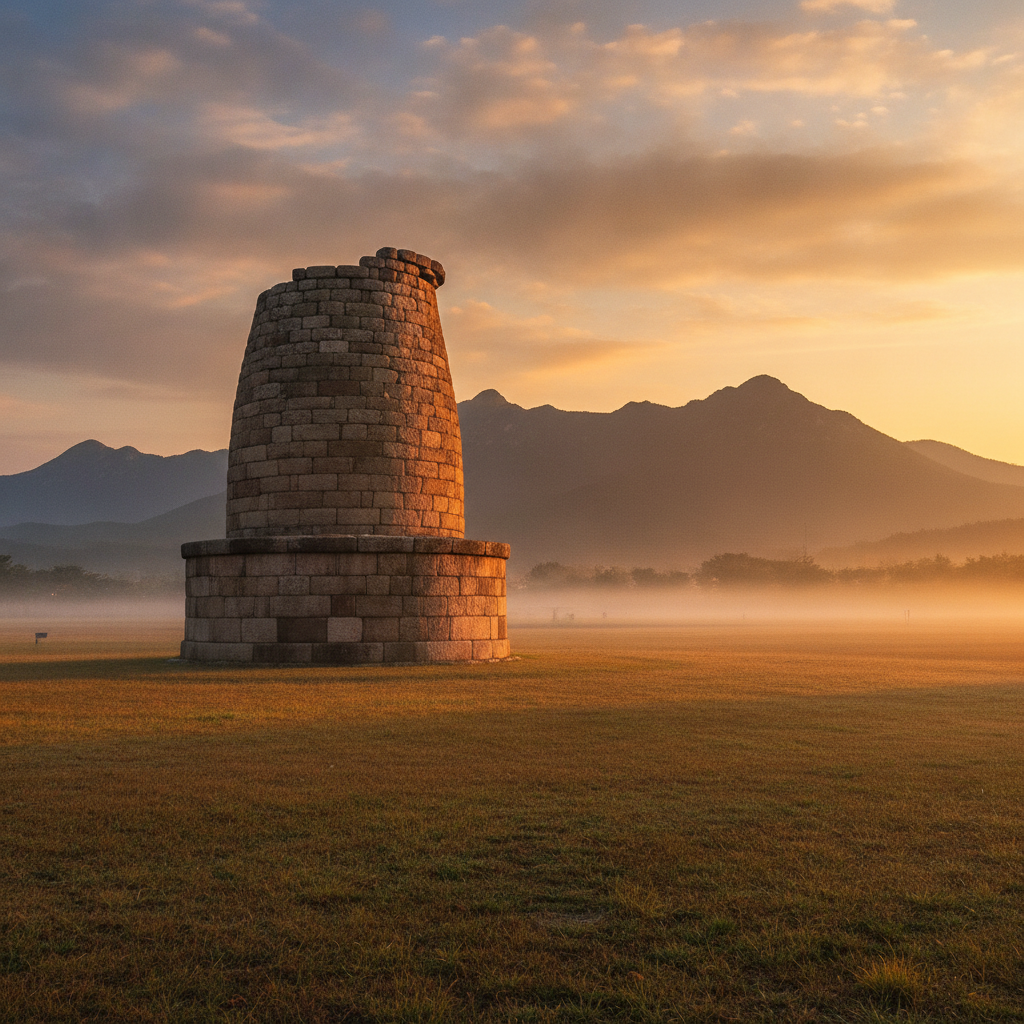
The Cheomseongdae (첨성대—the 7th-century astronomical observatory built during the reign of Queen Seondeok (632–647 CE)—the oldest surviving astronomical observatory in East Asia and the most symbolically loaded single structure in Gyeongju): the scientific heritage that positions Gyeongju as a center of ancient East Asian knowledge. The Cheomseongdae structure (the 9.4-metre cylindrical tower with a square base and a square top—the body of the tower consists of 27 courses of granite blocks arranged in a specific pattern): the astronomical function debate (the Cheomseongdae's precise astronomical function has been disputed since the 1970s—the primary hypotheses are: (1) a direct observation platform where astronomers climbed through the central window and observed the sky from the top; (2) a shadow-measurement instrument where the tower body was used to cast shadows for solstice and equinox measurement; (3) a symbolic monument whose dimensions encode the Silla calendar (365 stones = days of the year, 12 foundation stones = months, 27 courses = the 27th ruler Seondeok)). Queen Seondeok (선덕여왕—the 27th ruler of the Silla Kingdom, the first female ruler in Korean history, reigning 632–647 CE): the most significant political figure associated with Gyeongju's scientific heritage (her patronage of the Cheomseongdae and the Bunhwangsa Temple demonstrates the female ruler's investment in both scientific and religious knowledge). The Silla astronomical knowledge (the Silla Kingdom's astronomical calendar (역법, yeokbeop)—the lunar calendar maintained by the court astronomers who observed from the Cheomseongdae).
- 4
Gyeongju's Rural Surroundings – A Cycling Guide
The Gyeongju cycling landscape (the flat alluvial Gyeongju Basin surrounded by low mountain ranges—the most cycle-friendly heritage landscape in South Korea outside of the island destinations): the guide to experiencing the Gyeongju historic area on two wheels. The Gyeongju bicycle rental (the city-operated bicycle rental at the Gyeongju Station (₩3,000/4 hours) and the private rental shops at the Daereungwon entrance): the practical starting point for a half-day or full-day cycling circuit. The Inner City Circuit (the 6-km flat cycling circuit from the Daereungwon tumuli through the Cheomseongdae field, past the Gyerim Forest to the Wolseong Palace site and the Anapji (Wolji Pond), returning via the Gyeongju National Museum): the most complete cycling encounter with the central Silla archaeological landscape (6 km; 90 minutes at touring pace; entirely flat). The Bomun Lake Circuit (the 7-km lakeside cycling path around Bomun Lake—the most pleasant cycling environment in the Gyeongju region with the lake views, the resort hotel gardens, and the World Culture Expo Park): the optional extension to the inner circuit for a full-day cycling day (combined inner city + Bomun Lake = approximately 20 km, 3–4 hours). The Namsan foothills approach by bicycle (the cycling from the Gyeongju city center south through the flat agricultural land to the Namsan Mountain hiking trailhead at Tongil-ro): the most efficient access to the Namsan outdoor Buddhist art trails. The Yangdong Village bicycle route (the 16-km cycling from Gyeongju Station north along the Hyeongsan River bank trail to Yangdong Village).
- 5
Gyeongju in Autumn – The Best Season
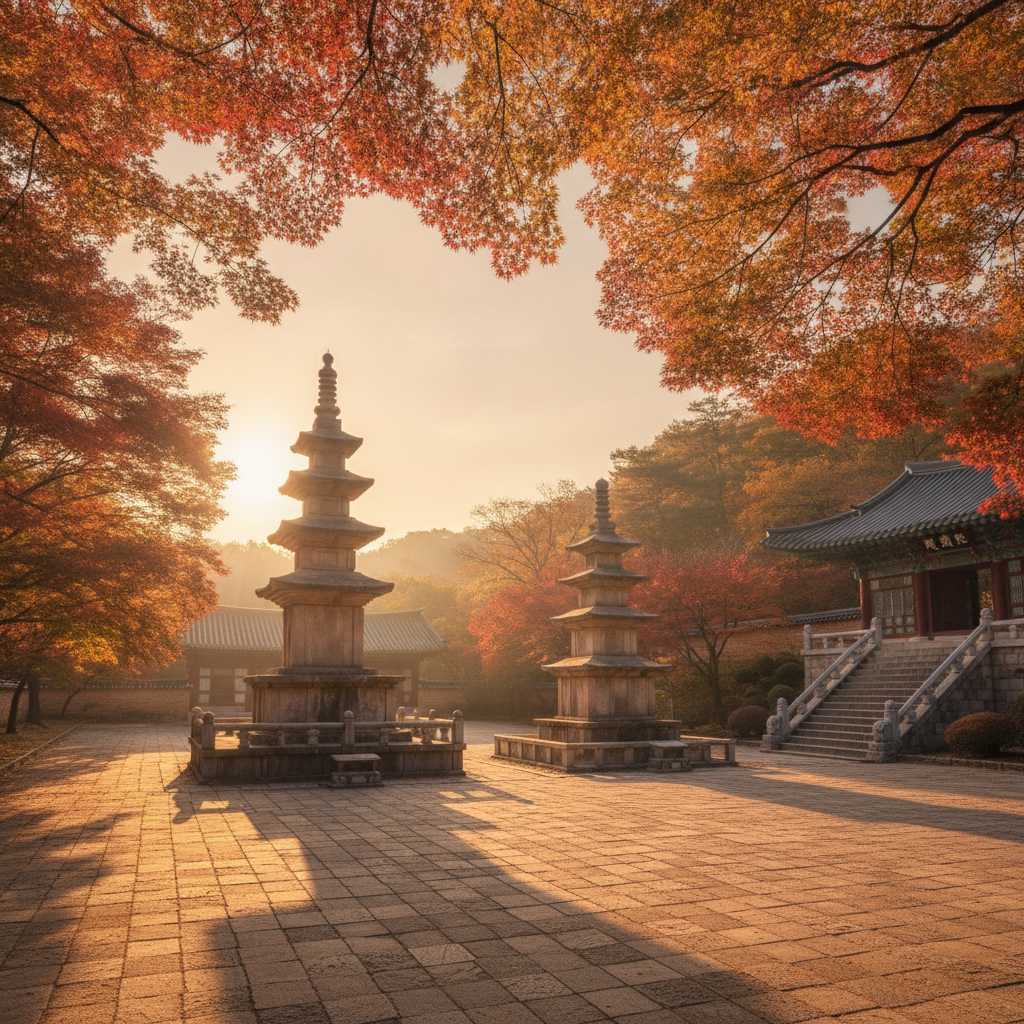
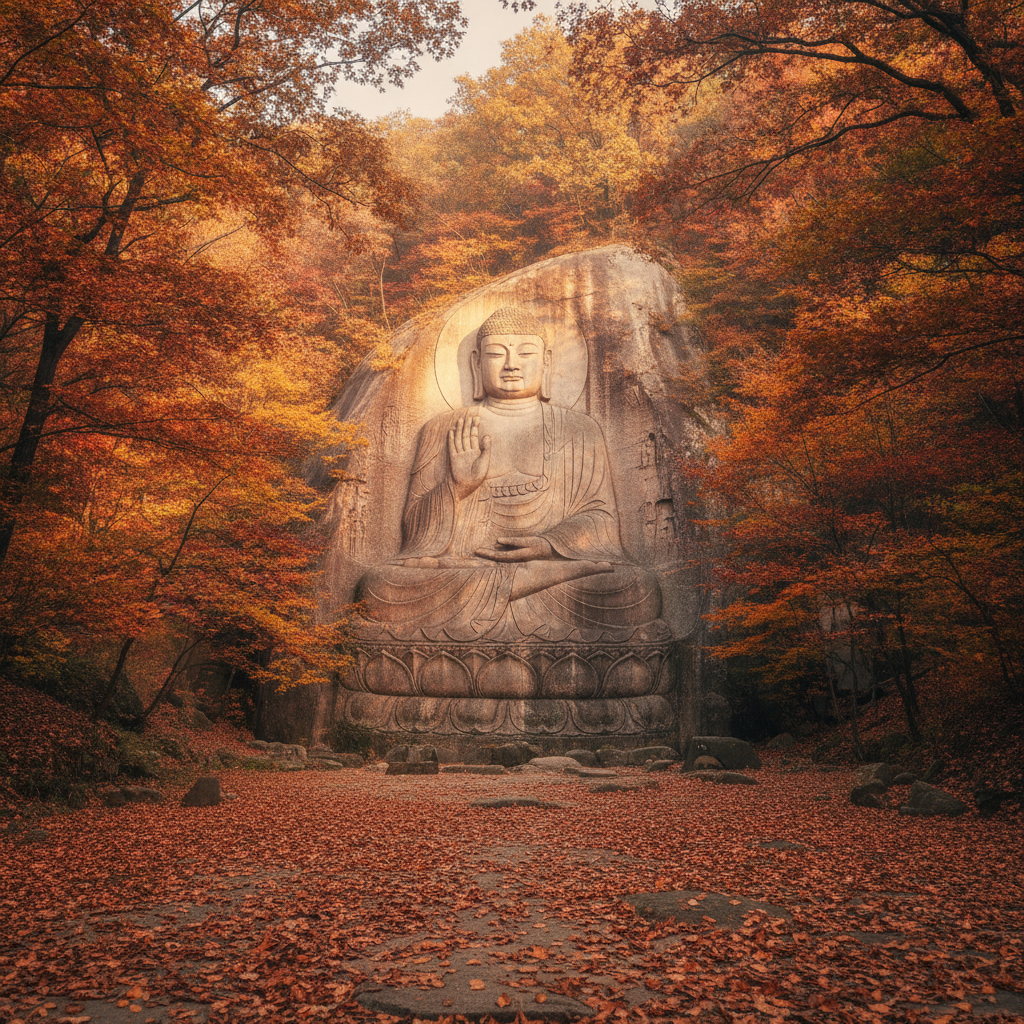
The Gyeongju autumn experience (the most rewarding season for the heritage city—the combination of the autumn foliage, the festival programme, and the moderate temperature that makes the archaeological sites most comfortable to visit): the case for an October–November Gyeongju visit. The autumn foliage at Bulguksa (the approach road and the temple grounds of Bulguksa in mid-October to early November—the maple (단풍, danpung), ginkgo (은행나무, eunhaeng), and zelkova trees surrounding the temple complex produce a warm orange and gold frame for the grey stone pagodas): the most beautiful single natural-heritage combination in the Gyeongju region. The Gyeongju Cultural Festival (경주문화제—the annual autumn festival in October celebrating the Silla Kingdom cultural heritage with traditional music, the Hwarang youth parade, the royal tomb ceremony (the annual rite performed at the royal tumuli by the descendants of the Silla royal clan (Park, Kim, and Seok clan representatives)—the most direct living connection to the Silla royal lineage): the most complete annual Silla heritage performance event. The Namsan autumn hike (the Namsan mountain forest in October–November—the most rewarding period for the 150 rock-carved Buddhas hike: the fallen leaves, the warm forest light, and the contrast of the carved stone against the autumn forest floor): the Namsan Baerimsa Valley trail is the most photogenic autumn hiking route in the greater Gyeongju area. The Gyeongju autumn food (the Gyeongju mushroom (송이버섯, songi-beoseot—the pine mushroom (matsutake)): the Gyeongju region produces the most prized matsutake mushrooms in Korea (the Toham Mountain and Namsan pine forests support the mycorrhizal pine mushroom)—the matsutake season is September–October.
- 6
Gyeongju's Legacy in Korean Identity
The Gyeongju legacy (the role of the former Silla capital in modern Korean national identity and the way the city's history has been used, misused, and genuinely celebrated in Korean public life): the cultural and political dimension of the heritage city. The Gyeongju in Korean education (every Korean student visits Gyeongju on a school field trip—the mandatory elementary and middle school visit to Gyeongju is the single most institutionalized heritage education practice in South Korea): the Korean students who fill the Daereungwon tumuli in the morning hours and the Bulguksa Temple approach in the afternoon are the primary domestic visitor group. The Silla heritage as Korean identity (the Silla unification of 668 CE as the founding event of the unified Korean Peninsula—the moment that established the geographic and ethnic framework of the Korean nation): the Silla unification narrative (the complex reality: the Silla unification expelled the Tang Chinese allies but left significant portions of the Korean Peninsula under Tang influence for decades; the 'unified Korea' of 668 CE was geographically smaller than modern South Korea): the most politically loaded historical narrative in Korean heritage. The Gyeongju in Korean literature and film (the Gyeongju heritage as a recurring setting in Korean literature—the most famous Gyeongju literary reference: Akutagawa Prize winner Kim Young-ha's novel 'Gyeongju' (2015) and the Gyeongju film (2014) directed by Zhang Lu): the Gyeongju heritage in contemporary Korean cultural production. The Gyeongju heritage conservation challenge (the archaeological preservation pressure from the tourism industry and the urban development of Gyeongju City—the tension between the need to develop the city economically and the requirement to preserve the densely buried archaeological landscape).
Walk this route with audio
Stories play automatically as you reach each stop — no tapping needed.
More in Gyeongju
The 60-Metre Wooden Pagoda Burned by the Mongols in a Single Day, the First Silla Gold Crown Found in 1921 by Colonial Archaeologists & the Valley Where 7 Stone Pagodas Stand in 500 Metres
The Roman Glass Bowl Found in a Korean Royal Tomb, the Largest Steel Mill in the World 30 km from the Oldest Observatory in East Asia & the Dynasty That Had More Female Rulers Than Any Other in Korean History
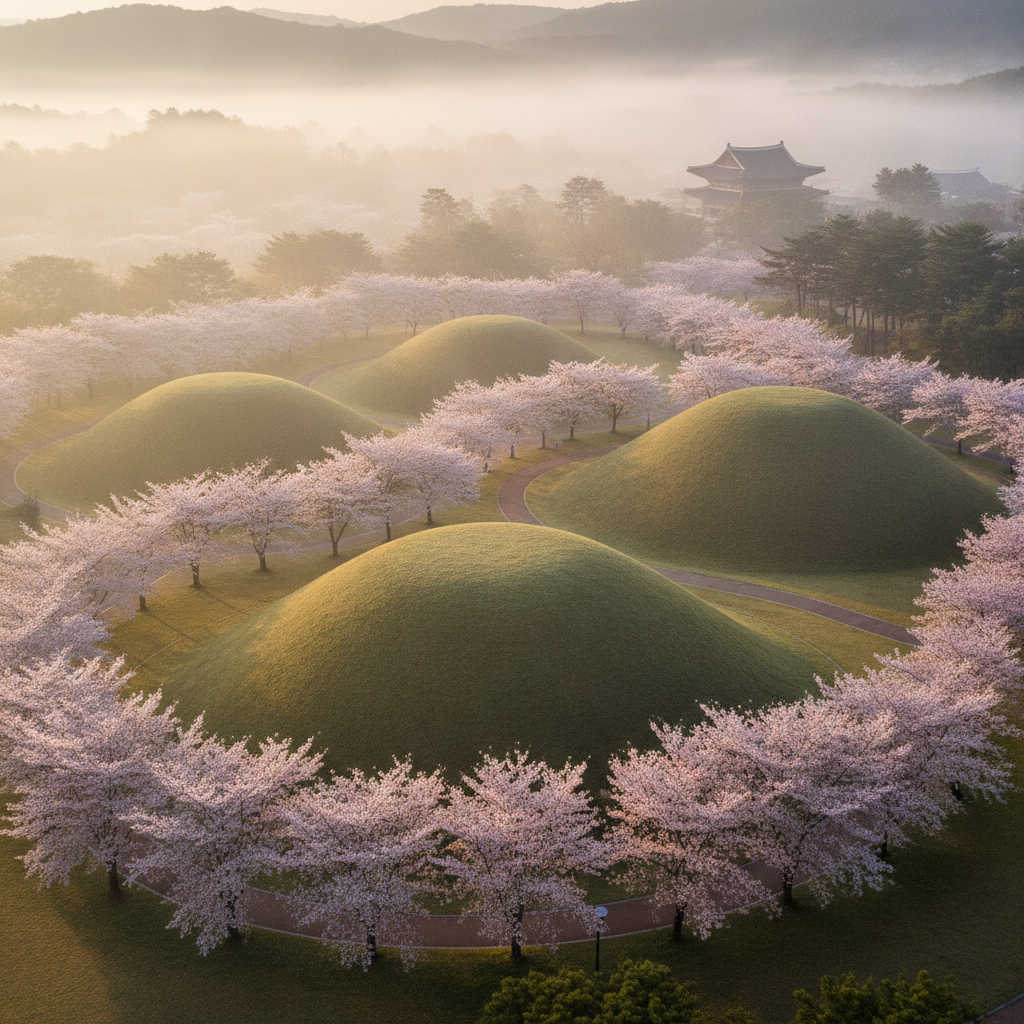
The 1-Million-Person City of the 8th Century, the Dome Built Like Mycenae on a Korean Mountain & the Bread Shaped Like a Royal Burial Mound
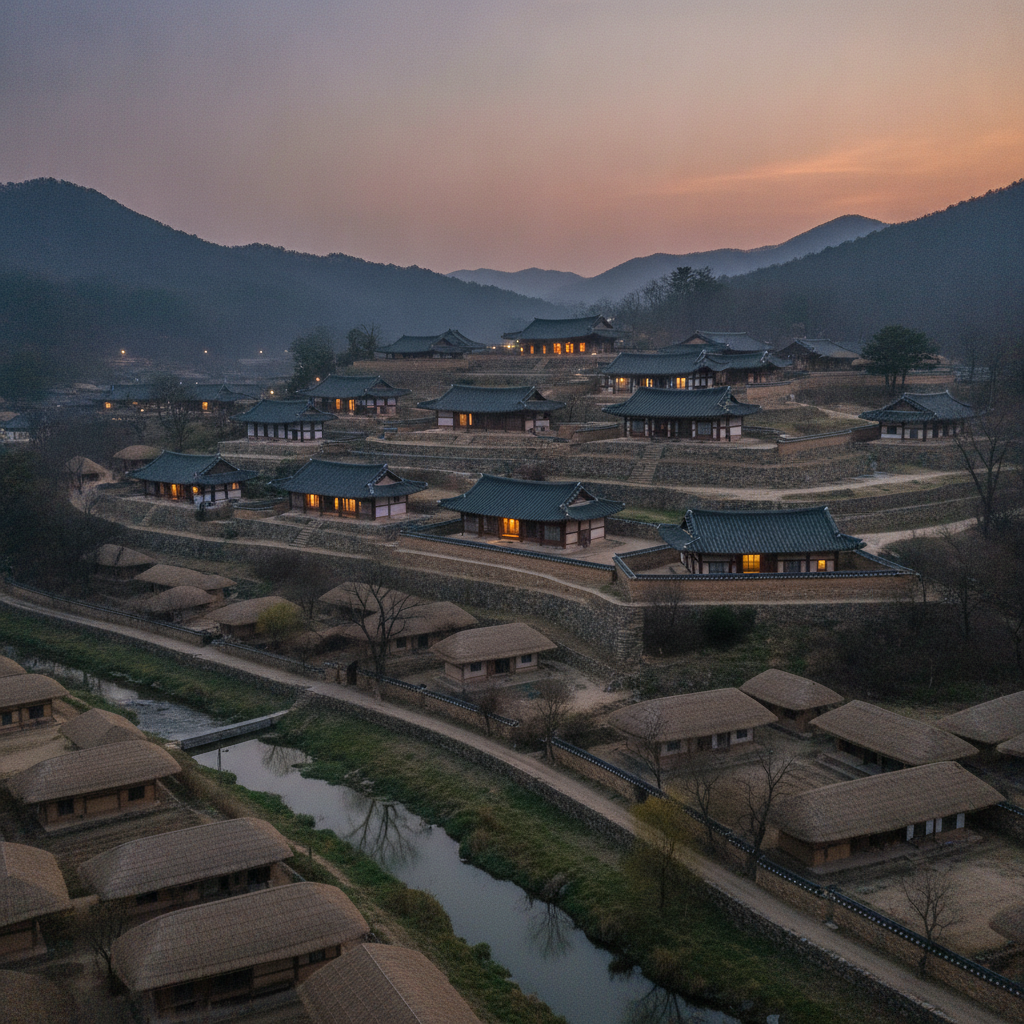
The 600-Year-Old Village Where the Same Two Clans Still Live, the Warrior Youth Who Unified Korea at Age 16 & the 81,258 Buddhist Woodblocks Carved to Stop the Mongol Invasion