The Guanajuato Independence Conspiracy Miguel Hidalgo Ignacio Allende and the Bajio Network That Launched the Mexican War of Independence From a Silver Mining City in September 1810
The Mexican War of Independence conspiracy that culminated in the Grito de Dolores on September 16, 1810, was organized largely within the social and geographic network of the Bajio cities, with Guanajuato as the wealthiest and most strategically important city in the region. The intendancy of Guanajuato, the colonial administrative unit that covered the territory of the modern state, was the richest province in New Spain due to the silver production of the Guanajuato and Zacatecas mines, making its control the central strategic objective of both the insurgent and loyalist forces in the early independence conflict. Miguel Hidalgo y Costilla, the parish priest of Dolores whose Grito launched the insurgency, had spent years in Guanajuato as a student at the Colegio de San Nicolas and maintained the intellectual and social connections with the Guanajuato criollo elite that made him a natural leader for the regional conspiracy. Ignacio Allende, the Guanajuato military officer from San Miguel el Grande who became the military commander of the independence movement, had participated in the Guanajuato social elite that gathered in the tertulias and literary societies of the city to discuss the Enlightenment ideas filtering in from Europe and the example of the American and French revolutions. The insurgent capture of Guanajuato in September 1810 and the storm of the Alhondiga de Granaditas was the first major military action of the independence war, a victory that also became the defining atrocity that alienated moderate opinion and set the pattern for the bloody decade of conflict that followed before independence was achieved in 1821.
- 1
Hidalgo and the Guanajuato Independence Network
Miguel Hidalgo y Costilla studied at the Colegio de San Nicolas in Guanajuato before becoming a parish priest in the Bajio region, and the intellectual formation he received in the colonial educational system of Guanajuato introduced him to the Enlightenment philosophy, theological debate, and the social connections with the Creole elite that made him both a capable conspirator and a figure whose religious authority could mobilize the indigenous and mestizo population of the Bajio in ways that secular military officers like Allende could not. Hidalgo's circle of conspirators, meeting in the tertulias of Queretaro and the social gatherings of the Bajio criollo elite, included the corregidor couple Dominguez and Ortiz de Dominguez, the military officers Allende and Juan Aldama, and the political intellectuals who had been reading the Declaration of Independence, the Rights of Man, and the French constitutional documents that the colonial authorities tried to suppress. The discovery of the conspiracy in early September 1810 by royalist informants forced the decision to launch the uprising immediately, with Josefa Ortiz de Dominguez sending word to Allende through a sympathetic magistrate, and Allende riding through the night to Dolores Hidalgo to warn Hidalgo that the conspiracy had been exposed. The Grito de Dolores at dawn on September 16, delivered from the steps of the Dolores parish church to the assembled congregation who had come for the early morning mass, was the improvised response to the discovery of the conspiracy rather than the planned beginning of a carefully prepared military campaign, a fact that explains the lack of military discipline that characterized the subsequent insurgent army.
- 2
Storm of the Alhondiga September 1810
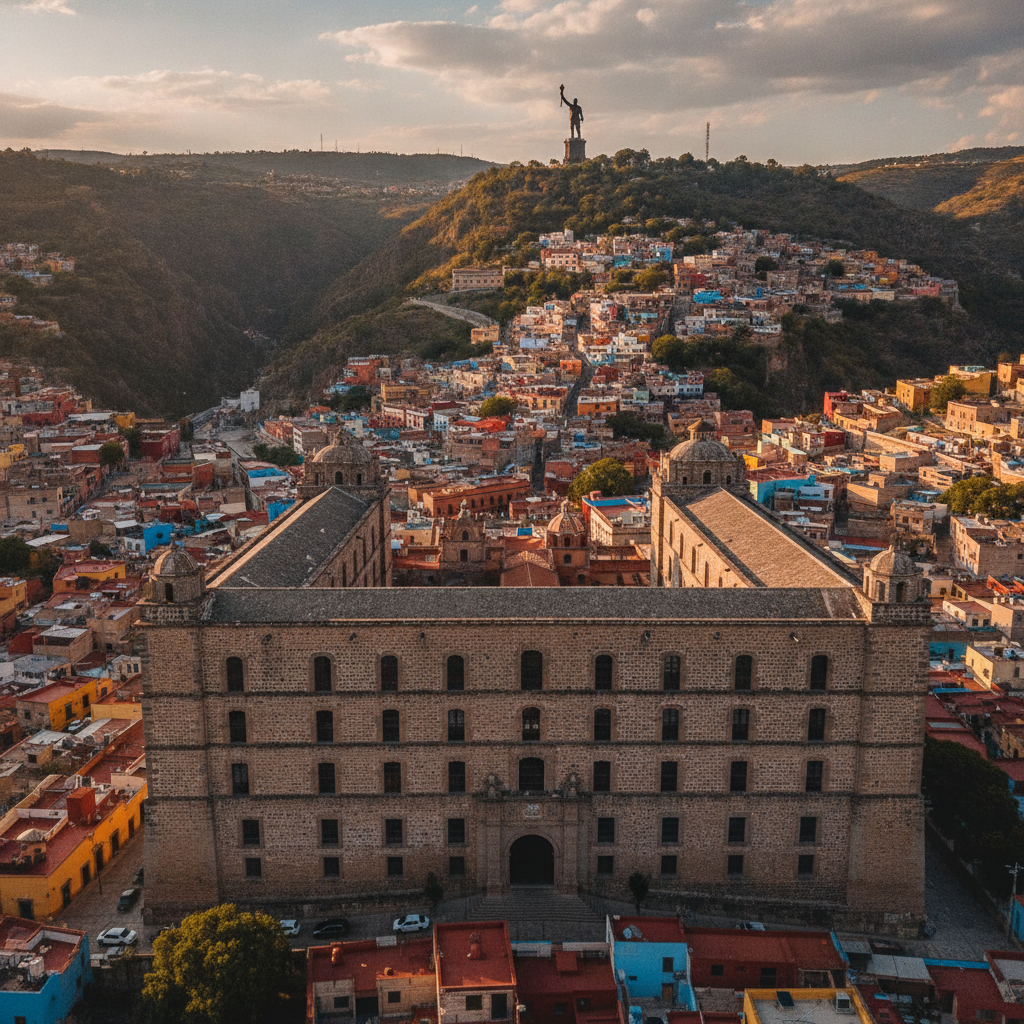
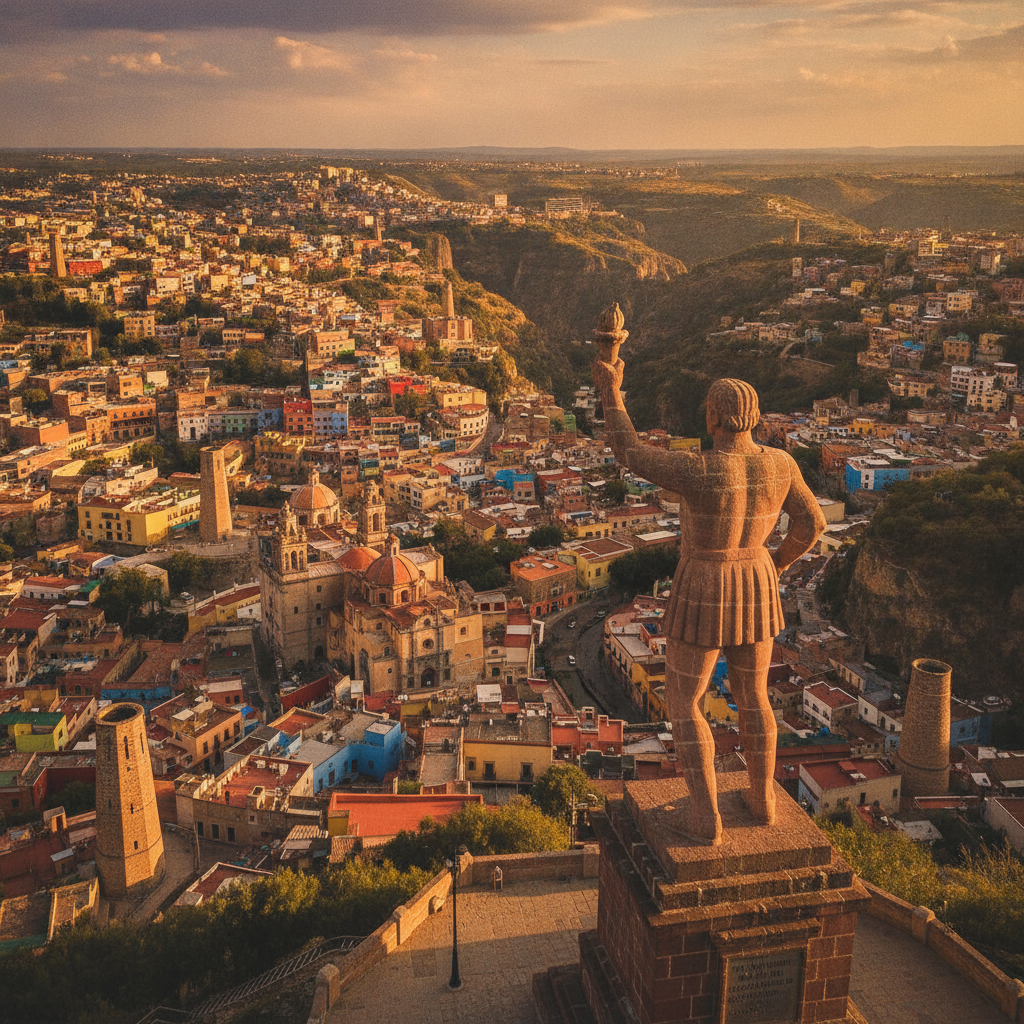
The insurgent army that Hidalgo and Allende led from Dolores Hidalgo south toward Guanajuato in September 1810 grew rapidly as it traveled through the Bajio villages, with indigenous and mestizo agricultural workers joining the column in numbers that grew from a few hundred to an estimated 50,000 to 80,000 by the time the force reached San Miguel and Celaya. The composition of the insurgent force reflected the social demographics of the Bajio: indigenous peones from the haciendas, mestizo artisans and market vendors, and a small nucleus of criollo military officers who tried to impose discipline on a force motivated by a complex mixture of anti-colonial resentment, land hunger, religious devotion, and opportunistic looting. The Spanish loyalists and wealthy criollos of Guanajuato barricaded themselves with their valuables in the Alhondiga de Granaditas, the massive stone granary, confident that the building was impregnable. Juan Jose de los Reyes Martinez, the mine worker who history would name El Pipila, carried a large flat stone strapped to his back as a shield against the musket fire of the defenders and crawled to the wooden doors of the Alhondiga to ignite them with a pine torch. The breach of the Alhondiga doors allowed the insurgent mass to storm the building, and the killing of the loyalist defenders and the prominent criollo families inside, followed by the looting of the valuables that had been stored there, was the decisive event that determined the subsequent direction of the independence war: a social revolution of the dispossessed against the colonial elite that the moderate criollo conspirators had not planned and could not control.
- 3
Guanajuato as Capital of the Insurgency and Royalist Recapture
Guanajuato served briefly as the de facto capital of the insurgency after its capture in September 1810, with Hidalgo establishing his headquarters in the Alhondiga and attempting to organize the political and military administration of the movement while Allende tried to build a disciplined military force from the mass of insurgent followers. The Hidalgo insurgency's administration of Guanajuato was short-lived: the royalist commander Felix Maria Calleja mobilized the professional military forces of New Spain and retook the city in November 1810, two months after the insurgent capture, with the massacre and execution of prominent insurgent supporters and the subsequent disciplined royalist military campaign that pushed the insurgency out of the Bajio and into the western mountains. The decapitation of Hidalgo, Allende, Aldama, and Jimenez in Chihuahua in July 1811 after their capture at the Wells of Bajan ended the first phase of the independence war, and the royalist display of their heads on the four corners of the Alhondiga for ten years was calculated to demonstrate that the colonial order had been restored. The independence struggle continued for a decade under Morelos, Guerrero, and other commanders before the convergence of royalist military officer Agustin de Iturbide and insurgent veteran Vicente Guerrero produced the Plan de Iguala in February 1821 and the peaceful negotiation of independence in August 1821. Guanajuato's role in the independence narrative is commemorated in the Alhondiga museum, the El Pipila monument, and the annual independence celebrations of September 15 and 16 that make the city one of the principal venues for the national patriotic commemoration.
- 4
Porfiriato and the 1910 Centenary Celebration
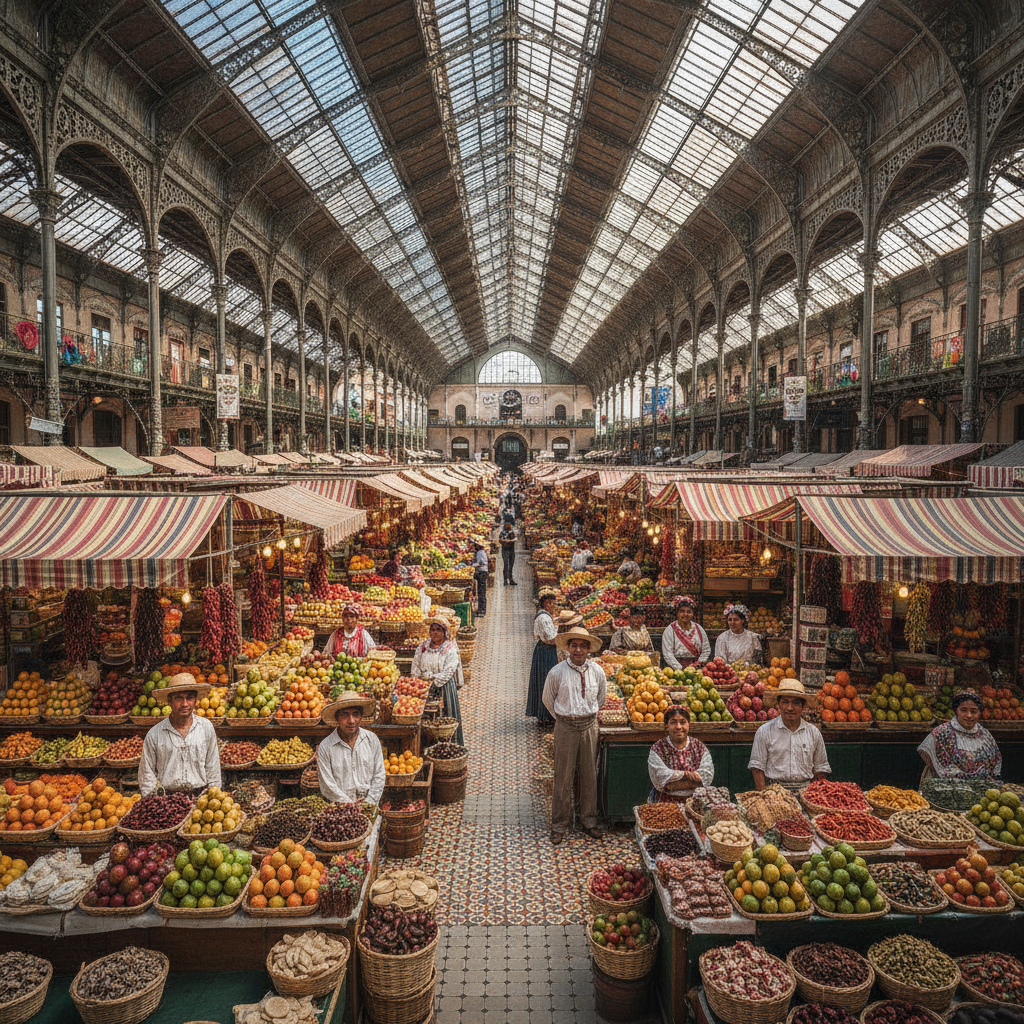
The Porfiriato period of 1876 to 1910, the long presidency of Porfirio Diaz that modernized Mexico through foreign investment, railroad construction, and authoritarian political control, had a significant impact on Guanajuato as the silver mining economy was industrialized by British and American mining companies using modern extraction technology that deepened the mines and extended the productive life of the deposits. The Teatro Juarez, the opera house built between 1873 and 1903 as the showpiece of Porfiriato cultural investment in the provincial capital, was inaugurated in the year of the Mexican independence centenary celebrations that Diaz organized as a national propaganda event demonstrating the modernity and stability of his regime. The 1910 centenary celebrations in Guanajuato included the inauguration of the Mercado Hidalgo, the iron market hall commissioned to commemorate the independence hero whose name it bears, and the opening of the new penitentiary and civic buildings that Diaz's federal investment program funded in the state capitals. The Revolution of 1910 that erupted in the months following the centenary celebrations brought the Porfiriato to an end, and Guanajuato state experienced the social disruption and political transition that the Revolution imposed on the Bajio without the extreme violence that affected the mining cities of the north or the rural south. The post-Revolutionary civic architecture of Guanajuato, including the government buildings of the 1920s and the University expansion of the mid-20th century, completed the historic center's architectural ensemble that UNESCO recognized in 1988.
- 5
Leon Shoe Capital and Guanajuato State Economy
Leon de los Aldama, 50 kilometres west of Guanajuato city on the Bajio plain, is the industrial capital of Guanajuato state, Mexico's largest city in terms of shoe manufacturing, and one of the primary leather goods production centers in Latin America, with an industry that produces an estimated 250 million pairs of shoes annually and exports to markets throughout the Americas. The Leon shoe industry, whose origins lie in the colonial period leather working tradition of the Bajio cattle economy, grew with the 20th-century industrialization of the tannery and shoe factory complex in the La Feria artisan district, where hundreds of small and medium workshops produce everything from working boots to fashion footwear for the national and export market. The annual Sapica shoe fair in Leon, the largest footwear trade show in Latin America held twice yearly, draws buyers from throughout the Americas and establishes the seasonal trends for the Mexican shoe market. The Del Bajio International Airport in Silao, between Leon and Guanajuato, was built to serve the expanding Leon industrial economy and the Guanajuato tourist economy simultaneously, and is the primary international gateway for the Bajio region. The automotive manufacturing cluster of the Bajio, concentrated in the Silao corridor where General Motors, Volkswagen, Honda, and their supplier networks operate large assembly plants attracted by the labor costs, the infrastructure investment, and the proximity to the US border market, represents the 21st-century economic transformation of the region from silver mining to advanced manufacturing.
- 6
Guanajuato Literature Diego Rivera and Cultural Legacy
Diego Rivera, born in Guanajuato on December 8, 1886, at Pocitos 47, a colonial house in the historic center that is now the Casa Museo Diego Rivera, is the most internationally famous person associated with Guanajuato, whose influence on Mexican national identity, visual culture, and the international understanding of Mexico is comparable only to that of Frida Kahlo, his wife and artistic partner. Rivera left Guanajuato at the age of six when his family moved to Mexico City, and his formation as a painter occurred in the European modernist tradition during his decade in Paris and Madrid, but he returned to Mexico in 1921 committed to the muralism program that would transform the walls of the new revolutionary government's public buildings into a visual narrative of Mexican history and indigenous culture. The Guanajuato connection to Rivera is maintained through the Casa Museo, the Alhondiga murals that Rivera designed for the stairwell depicting Guanajuato history, and the Rivera-Kahlo studies program at the University of Guanajuato. The literary tradition of Guanajuato is less celebrated than its visual arts heritage but includes significant figures in Mexican letters, particularly the essayist and novelist Jorge Ibargüengoitia, born in Guanajuato in 1928, whose satirical novels Los Relámpagos de Agosto and Las Muertas fictionalized Mexican political and social history with a dark comic intelligence that made him one of the most distinctive voices in 20th-century Mexican literature before his death in the Iberia Airlines crash of 1983. The Cervantino festival's literary programming continues the tradition of letters in a city whose architecture is more famous than its books.
Walk this route with audio
Stories play automatically as you reach each stop — no tapping needed.
More in Guanajuato
Guanajuato Walking the Callejones by Night Romantic Legends Ghost Stories and the Social Life of a Canyon City Where Every Alley Has a Story and Every Stairway Leads to a Different Century
Guanajuato Day Trips Sierra Gorda Queretaro Dolores Hidalgo and the Bajio Heritage Circuit Connecting Colonial Silver Cities Mountains and Hot Springs in the Heart of Central Mexico
Guanajuato Practical Guide Getting There Navigation Tips Neighborhoods Safety Climate and How to Survive the Underground Tunnels the Cobblestone Callejones and the Most Disorienting Colonial City in Mexico
Guanajuato Baroque Art Churrigueresque Architecture La Valenciana Church and the Artistic Legacy of a Colonial City That Built the Most Elaborate Religious Buildings in Mexico With Silver Money
Guanajuato Food Cajeta Enchiladas Mineras Mercado Hidalgo and the Working Class Cuisine of a Silver Mining City Where the Miners Diet and the Aristocrats Table Developed Side by Side for Three Centuries