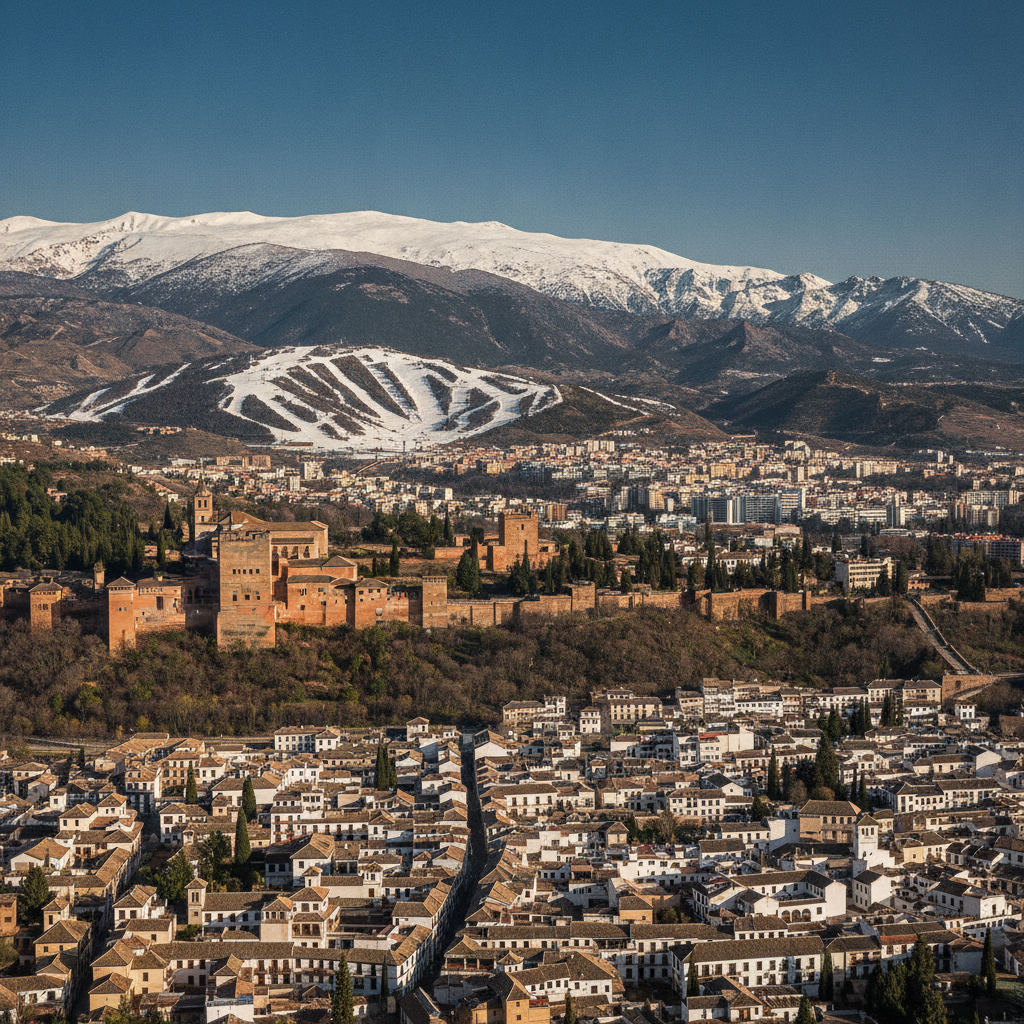
Sierra Nevada, Ski Resort & Granada's Mountain Wilderness
The Sierra Nevada (the mountain range immediately south of Granada — the highest mountain range in the Iberian Peninsula, with the peak of the Mulhacén (3,479 metres / 11,414 feet — the highest point in mainland Spain) and the Sierra Nevada National Park (the most southern high-altitude national park in Europe)): the extraordinary fact that the city of Granada is the only city in Europe where you can ski in the morning and swim in the Mediterranean Sea in the afternoon (the Mediterranean coast at Motril is only 70 km / 43 miles from Granada).
- 1
Sierra Nevada National Park — Spain's Southern Alpine Wilderness
The Parque Nacional Sierra Nevada (the 'Sierra Nevada National Park' — the national park covering 86,208 hectares (862 km²) of the highest terrain of the Sierra Nevada mountain range, designated a national park in 1999 (previously a natural park since 1989) and a UNESCO Biosphere Reserve since 1986): the terrain (the Sierra Nevada national park terrain — the high alpine terrain above the tree line (the timberline in the Sierra Nevada at approximately 2,400 metres / 7,874 feet above sea level): the terrain above the timberline characterized by the 'piornal' (the dwarf gorse and the low shrubs), the 'cervunal' (the high-altitude mat grass pasture), and the rocky peaks and the glacial lakes ('lagunillas') of the summit terrain): the biodiversity (the biodiversity of the Sierra Nevada — the national park with the highest concentration of endemic plant species in the Iberian Peninsula (the Sierra Nevada has approximately 66 endemic plant species — plants found nowhere else in the world — including the 'Viola cazorlensis' (the Cazorla violet), the 'Senecio boissieri' (the Sierra Nevada groundsel), and the dwarf narcissus ('Narcissus nevadensis')), the endemic invertebrates (the Betic midwife toad ('Alytes dickhilleni'), the Sierra Nevada salamander ('Salamandra salamandra longirostris')), and the large mammals (the 'cabra montés ibérica' (the Iberian wild goat — 'Capra pyrenaica hispanica' — the mountain goat of the Sierra Nevada, the population of approximately 8,000 individuals, the most visible large mammal in the national park)): the summit (the Mulhacén — the summit of the Sierra Nevada at 3,479 metres (11,414 feet), the highest point in mainland Spain and the highest point in the Iberian Peninsula (the Pico de Teide in Tenerife at 3,715 m is the highest point in Spain as a whole but is an island peak), accessible on foot via the marked hiking trail from the 'Albergue Poqueira' mountain hut (the starting point at approximately 2,500 metres altitude)).
- 2
Sierra Nevada Ski Resort — Europe's Most Southerly Ski Station
The Estación de Esquí Sierra Nevada (the 'Sierra Nevada Ski Resort' — the ski resort in the municipality of Monachil, 32 km south of Granada in the Sierra Nevada mountains, the most southerly ski resort in Europe): the resort (the Sierra Nevada ski resort — the resort located at the 'Pradollano' base station (elevation 2,100 metres / 6,890 feet above sea level) with the ski lifts ascending to the 'Borreguiles' plateau (elevation 2,645 metres / 8,678 feet) and the highest skiing area at approximately 3,300 metres): the skiing (the ski area of the Sierra Nevada resort — approximately 110 km of marked ski runs, 37 ski lifts, the runs ranging from the beginner-friendly wide blue runs of the Borreguiles plateau to the challenging red and black runs of the higher slopes): the snow season (the Sierra Nevada ski season — typically December to April, with the best snow conditions in January-February: the ski resort famous for the long season (often 5 months) and the sunny Andalusian weather that gives the resort the sobriquet 'Sol y Nieve' ('Sun and Snow')): the ski resort hosting (the Sierra Nevada's history as a venue for the Alpine Ski World Cup — the resort hosted the FIS Alpine World Ski Championships in 1996 (the championship scheduled for 1995 but postponed due to poor snow): the ski resort that is accessible from Granada by bus (the Granada-Sierra Nevada bus service — the 'Alsa' bus that runs from the Granada bus station to the ski resort in approximately 45 minutes during the ski season).
- 3
Las Alpujarras — The Villages of the Moorish Mountains
Las Alpujarras (the 'Alpujarras' — the region of mountain villages on the southern slopes of the Sierra Nevada, the valleys ('barrancas') of the Río Guadalfeo and its tributaries on the Mediterranean side of the mountain range): the history (the Alpujarras — the region that was the last refuge of the Moriscos (the Muslims forced to convert to Christianity after 1492) after the fall of the Nasrid Emirate: the Moriscos of the Alpujarras maintaining their Islamic culture, language, and dress until the Morisco Revolt (1568-1571) and the subsequent expulsion of the entire Morisco population from the Alpujarras ordered by Philip II (the Alpujarras repopulated with Christian settlers from other parts of Spain after the expulsion)): the villages (the Alpujarras villages — the whitewashed, flat-roofed mountain villages built in the Berber style (the architecture of the Alpujarras villages is the most North African-looking architecture in Spain (the 'tinao' — the covered alleyway between the houses that is a characteristic feature of the Alpujarras villages) and the 'launa' (the compacted grey clay used as the waterproofing layer on the flat roofs of the Alpujarras houses (the clay slate 'launa' forms the characteristic grey roof of every Alpujarras village))) of the most famous villages (the Pampaneira, the Bubión, and the Capileira — the three villages of the Poqueira gorge, the most visited of the Alpujarras valleys, the villages perched on the steep slopes of the gorge at elevations of 1,058, 1,300, and 1,436 metres respectively)): the Gerald Brenan connection (the English writer Gerald Brenan (1894-1987) — the writer who lived in the Alpujarras village of Yegen from 1919 to 1934 and who documented the traditional life of the Alpujarras in his memoir 'South from Granada' (1957), the book that introduced the Alpujarras to the international literary world).
- 4
Granada Cathedral & Royal Chapel
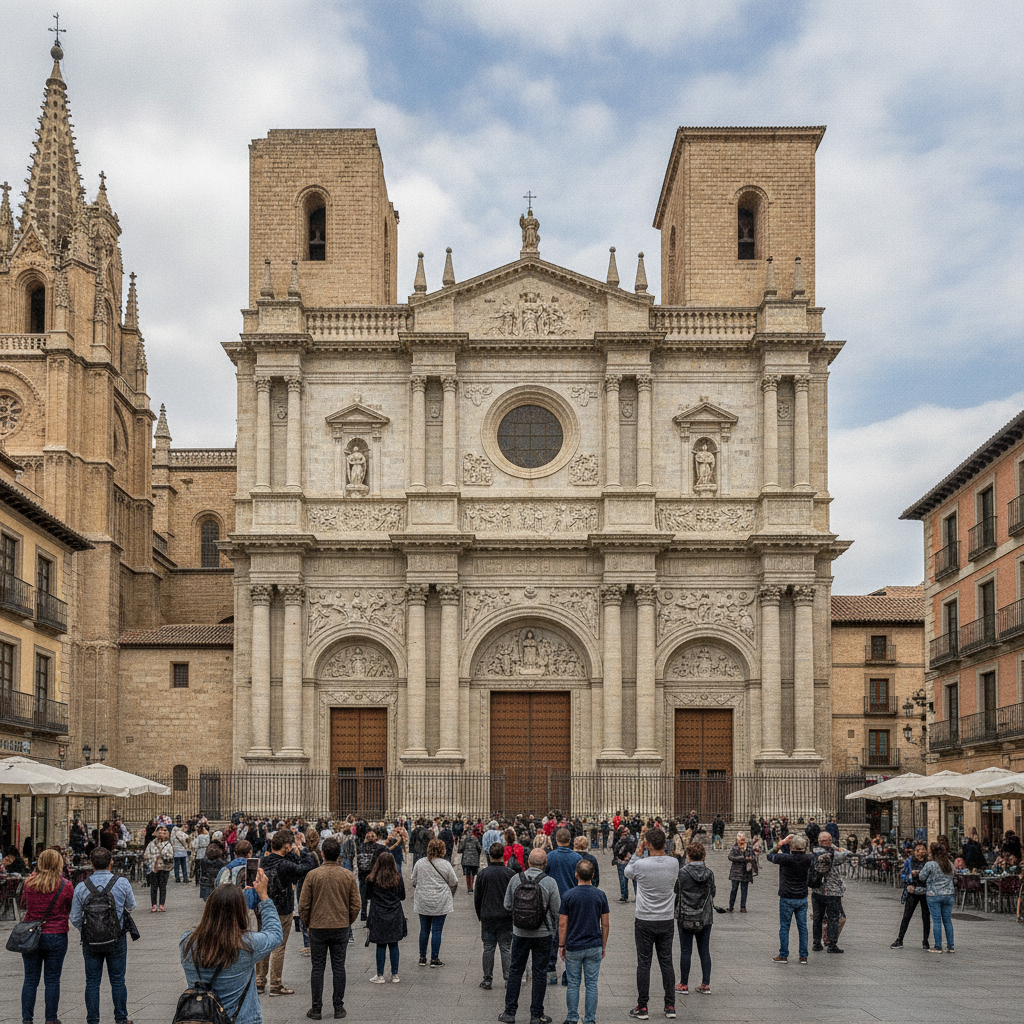
The Catedral de Granada (the 'Granada Cathedral' — the Gothic-Renaissance cathedral in the historic centre of Granada, begun in 1523 on the site of the main mosque of the Nasrid Emirate (the 'Masjid al-Jami'a' — the Great Mosque of Granada, demolished after the Christian conquest of 1492)): the architecture (the Granada Cathedral — the first Renaissance cathedral in Spain (the building that introduced the Italian Renaissance architectural style to the Iberian Peninsula in a cathedral building), designed in its current form by the architect Diego de Siloé (c.1495-1563) beginning in 1529 after the earlier Gothic design of Enrique Egas had been partially built (the lower sections of the building in the Late Gothic Isabelline style, the upper sections in the Renaissance style of Diego de Siloé)): the Capilla Real (the 'Royal Chapel' — the Gothic chapel adjacent to the Cathedral, built 1505-1521 by Enrique Egas on the order of the Catholic Monarchs Ferdinand and Isabella as the royal mausoleum of the reconquista: the chapel containing the marble tombs of the Catholic Monarchs (the 'Reyes Católicos' — Ferdinand II of Aragón (1452-1516) and Isabella I of Castile (1451-1504)) and of their daughter Juana I of Castile (1479-1555, the 'Juana la Loca' — 'Joanna the Mad') and her husband Philip I of Castile (1478-1506, 'Philip the Handsome') — the four tombs carved in the Italian Renaissance style by the sculptor Domenico Fancelli (the tombs of Ferdinand and Isabella, 1517) and Bartolomé Ordóñez (the tombs of Philip and Joanna, 1520)): the treasury (the treasury of the Capilla Real — the collection including the crown of Isabella I of Castile, the sceptre of Isabella, the cross of Fernando de Talavera, and the collection of Flemish paintings collected by Isabella (including the 'Descent from the Cross' attributed to Rogier van der Weyden and the 'Birth of Christ' by Hans Memling)).
- 5
Granada's Tapa Culture — Free Tapas with Every Drink
Granada's tapa tradition (the Granada tapas tradition — the most generous tapas tradition in Spain: the Granada custom of serving a free tapa with every drink ordered at the bar, the custom that makes Granada the most economical city in Spain for eating and drinking out and the city that attracts the largest number of Spanish university students per capita of any city in Spain): the free tapa tradition (the Granada custom — when a drink (any drink: the beer ('cerveza'), the wine ('vino'), the 'mosto' (the grape juice), or the soft drink) is ordered at any bar in the Granada historic centre, a free tapa is served automatically with the drink, the tapa ranging from the simple (a small plate of olives, a few slices of sausage, or a portion of the house potato stew ('patatas') to the more elaborate (a portion of the 'puchero' (the Andalusian stew), a 'montadito' (the open sandwich), or a 'ensaladilla rusa' (the Russian salad)): the drinks streets (the 'calle de bares' of Granada — the bar streets where the free tapa tradition is most generously practised: the Calle Navas (the most popular tapas street in the Granada historic centre), the Calle Elvira (the street leading up to the Albaicín), the Plaza de la Trinidad (the student bar square), and the Calle de las Tablas): the granada beer (the 'Alhambra' beer — the Granada beer brand (the Cervezas Alhambra company, founded 1925 in Granada) that is the most famous product of Granada's food and drink industry and the beer most associated with the city: the Alhambra Reserve 1925, the Alhambra Especial, and the Alhambra Roja).
- 6
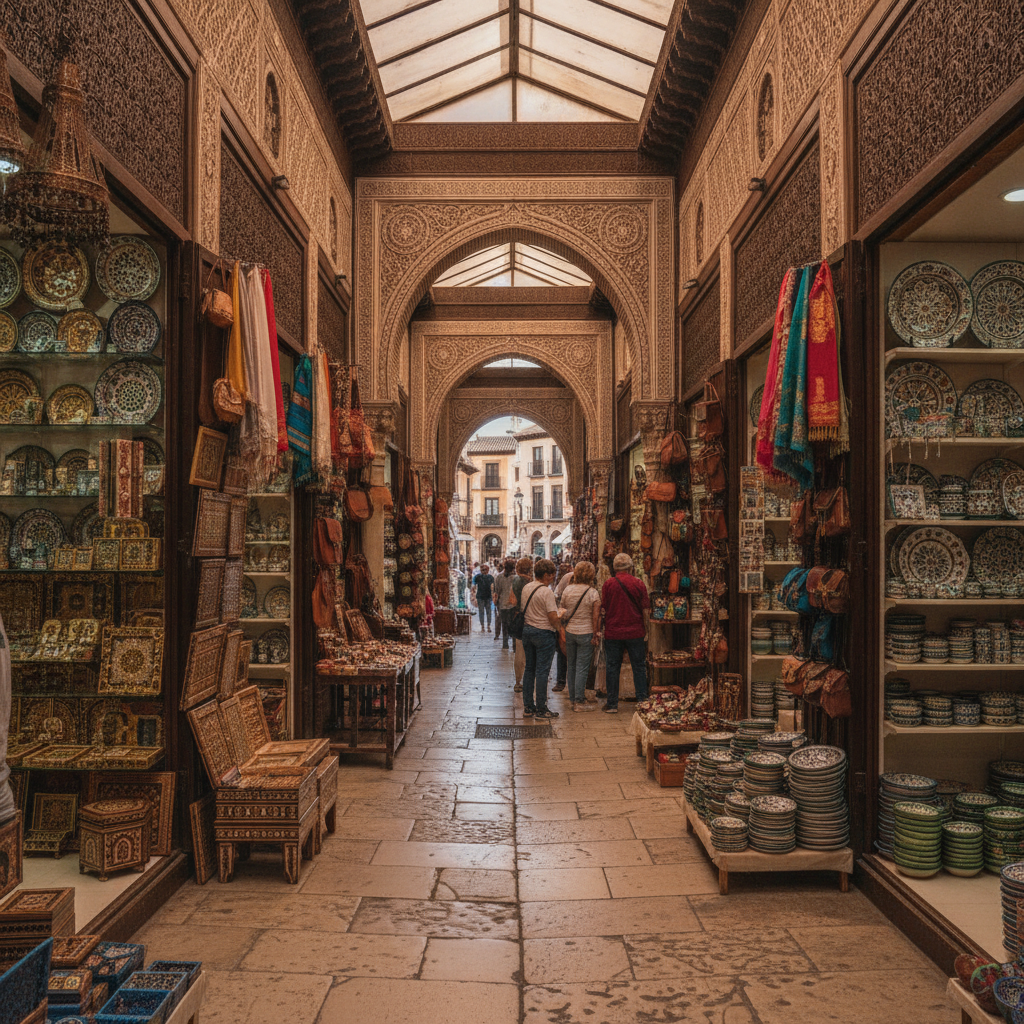
Corral del Carbón & Granada's Nasrid Commercial Heritage
The Corral del Carbón (the 'Coal Yard' — the 14th-century Nasrid caravanserai ('funduq') in the historic centre of Granada, the best-preserved example of a medieval Islamic caravanserai in Spain): the building (the Corral del Carbón — the 14th-century 'funduq' (the 'caravanserai' or 'fondouk' — the travellers' inn of the medieval Islamic city, the building that served as the warehouse, the inn, and the place of trade for the merchants visiting the city): the structure (the Corral del Carbón — the rectangular interior courtyard surrounded by the three-story galleries (the 'corredores') that provided the storage (the ground floor), the sleeping quarters (the upper floors), and the stabling (the basement level) of the caravanserai: the Nasrid horseshoe-arched gateway (the 'portada' — the elaborate gateway of the Corral del Carbón, with the horseshoe arch framed by the alfiz (the rectangular moulding surrounding the horseshoe arch — the characteristic decorative element of Andalusian Islamic architecture), the muqarnas niche above the arch, and the Nasrid epigraphic inscription on the lintel): the name (the name 'Corral del Carbón' (the 'Coal Yard') — the name given to the former Nasrid funduq after the Christian conquest of 1492, when the building was converted first into a coal ('carbón') storage facility, then into a theatre ('corral de comedias') in the 16th-17th century (the theatrical association explaining the acoustically excellent design of the courtyard), and finally into worker housing in the 18th-19th century before its restoration in the 20th century as a cultural centre).
Walk this route with audio
Stories play automatically as you reach each stop — no tapping needed.
More in granada
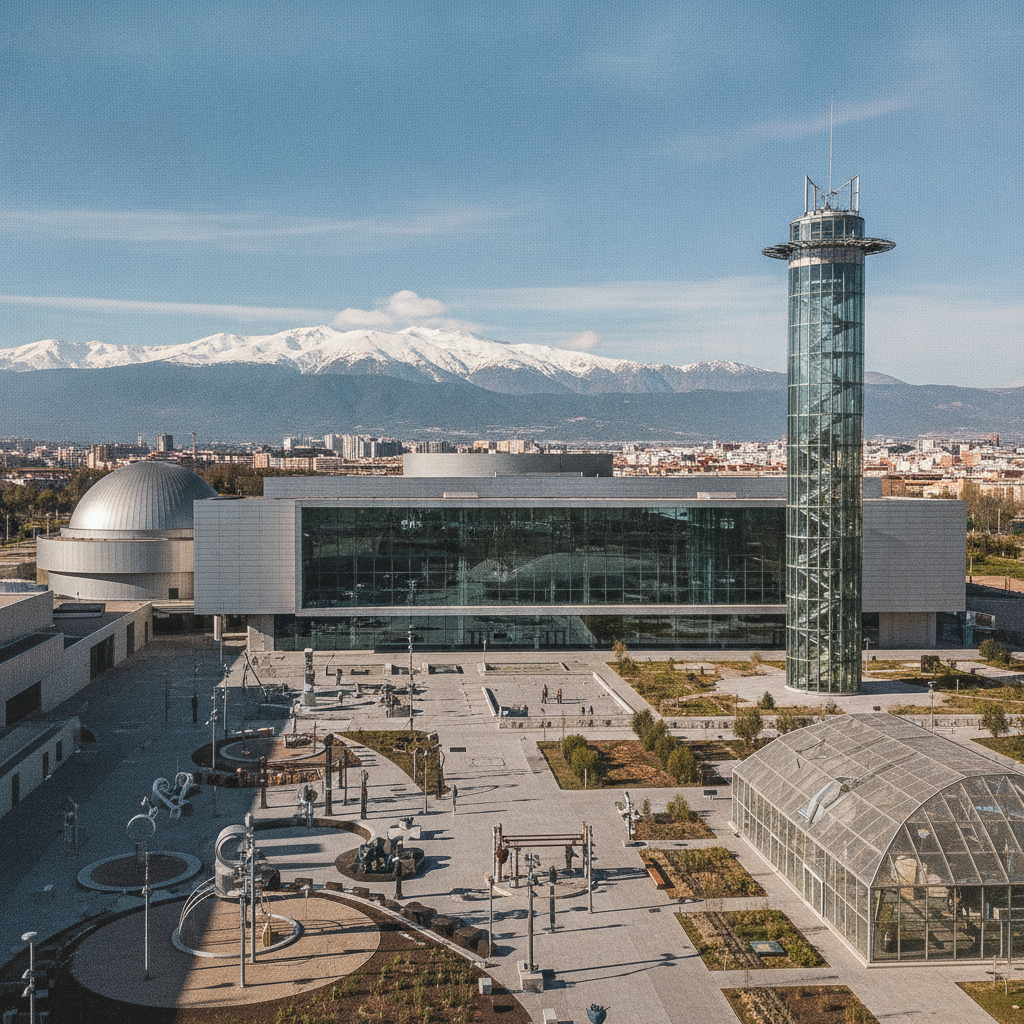
Parque de las Ciencias, University of Granada & Modern City
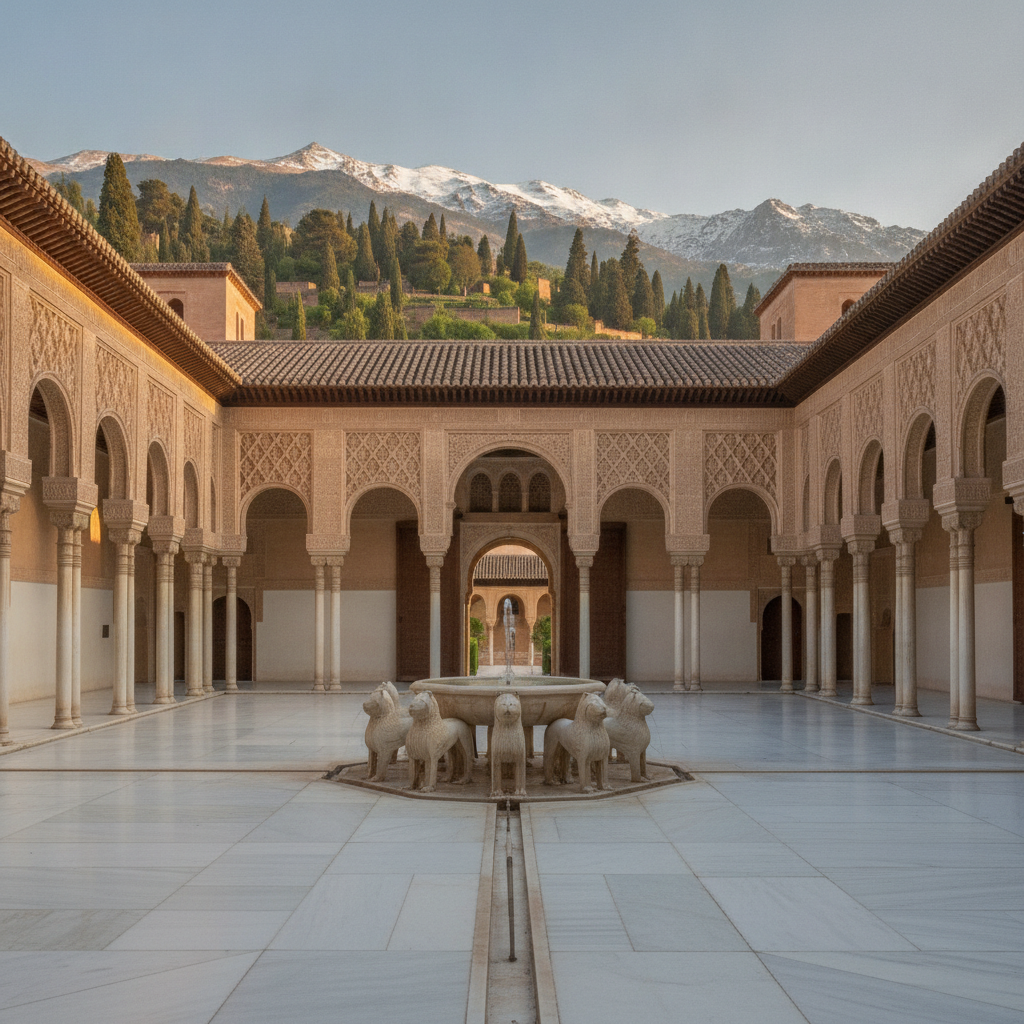
The Alhambra, Nasrid Palaces & the Generalife Gardens
Granada Cathedral, Royal Chapel & the End of the Reconquista
Lorca's Granada, Fuente Vaqueros & the Vega Countryside
Albaicín, Sacromonte & Granada's Moorish Quarter