Parque de las Ciencias, University of Granada & Modern City
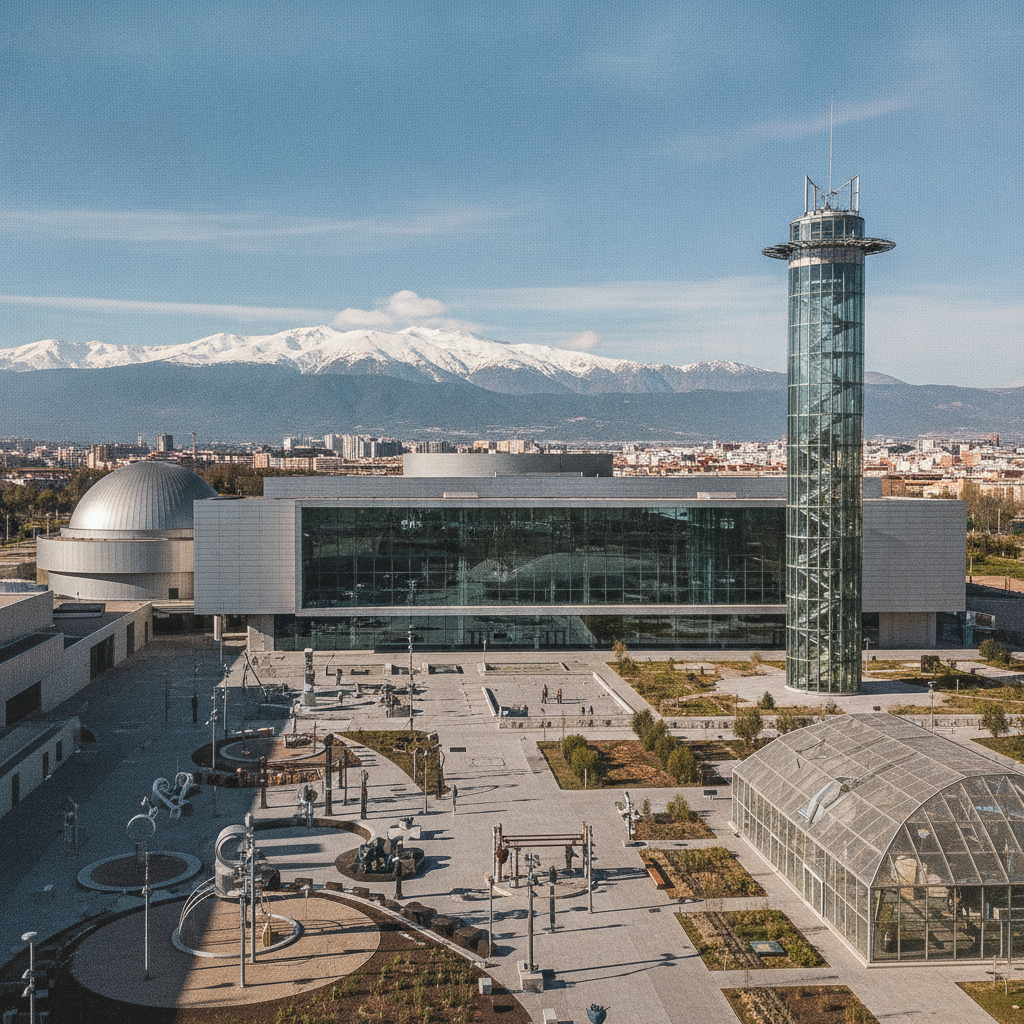
The Parque de las Ciencias de Granada (the 'Granada Science Park' — the largest interactive science museum in Andalusia, with the permanent exhibitions on biology, physics, astronomy, and the environment) and the Universidad de Granada (the University of Granada — founded in 1531, one of the oldest and the largest universities in Spain, with 55,000 students) together represent the modern, forward-looking face of a city that is also defined by its extraordinary medieval and Islamic heritage.
- 1
Parque de las Ciencias — Granada's Interactive Science Museum
The Parque de las Ciencias de Granada (the 'Granada Science Park' — the interactive science museum on the Avenida de la Ciencia in the southern part of Granada, the most important contemporary cultural institution in Granada and the largest interactive science museum in Andalusia): the museum (the Parque de las Ciencias — opened in 1995 and expanded multiple times since, the museum now covering approximately 70,000 square metres of exhibition space (indoor and outdoor) and attracting over 500,000 visitors per year): the permanent exhibitions (the permanent exhibitions of the Granada Science Park — the 'Macrocosmos' (the exhibition on astronomy, cosmology, and the nature of the universe), the 'Sala de la Vida' (the 'Hall of Life' — the exhibition on biology, evolution, and the diversity of life on Earth), the 'Sala del Cuerpo Humano' (the exhibition on human anatomy and physiology), the 'Al-Ándalus y la Ciencia' (the exhibition on the scientific achievements of Islamic Andalusia — the medicine, the astronomy, the mathematics, and the philosophy of the Islamic Golden Age in al-Ándalus), and the 'Explora' (the hands-on interactive science exhibits)): the Planetario (the Planetarium of the Granada Science Park — the dome-screen digital planetarium showing the sky shows on the astronomy and the space exploration): the Pérgola tower (the 'Pérgola' observation tower — the 50-metre tall contemporary observation tower with the panoramic views of Granada, the Alhambra, and the Sierra Nevada from the top of the tower).
- 2
University of Granada — One of Spain's Oldest Universities
The Universidad de Granada (the 'University of Granada' — the public university founded in 1531 by the Habsburg Emperor Charles V on the order of the Pope Clement VII, one of the oldest and the largest universities in Spain): the university (the Universidad de Granada — the university with approximately 55,000 students (making it one of the five largest universities in Spain) and 3,500 academic staff, organized into 27 faculties and schools across the city of Granada): the historic buildings (the historic university buildings of Granada — the 'Hospital Real' (the 'Royal Hospital' — the 15th-century hospital founded by the Catholic Monarchs Ferdinand and Isabella, now the central building of the University of Granada, a Renaissance building with the two symmetrical patios in the cruciform hospital plan), the 'Escuela Técnica Superior de Arquitectura' (the Architecture School in the neoclassical building on the Gran Vía), and the 'Facultad de Letras' (the Faculty of Humanities in the historic building adjacent to the Corrala de Santiago in the centre of Granada)): the Erasmus students (the Erasmus student community of the University of Granada — the University of Granada consistently receives the largest number of Erasmus students of any university in Spain (over 2,000 Erasmus students per year), making Granada one of the most cosmopolitan university cities in southern Europe and a city with a vibrant international student culture): the influence of the university on the Granada economy (the university's approximately 55,000 students represent approximately 15% of the entire population of the city of Granada, making the student population the most economically significant group in the city).
- 3
Granada's Tech Scene & Innovation Ecosystem
Granada's technology and innovation scene (the 'Silicon Valley of Andalusia' — a designation that overstates the case but reflects the genuine technology and innovation cluster that has developed in Granada in the 2000s-2020s around the Universidad de Granada, the Parque Tecnológico de la Salud ('Health Technology Park'), and the concentration of technology companies in the city): the Parque Tecnológico de la Salud (the PTS — the 'Health Technology Park' in the southern outskirts of Granada, the technology park developed in the 2000s as a cluster of biomedical research institutions, pharmaceutical companies, biotechnology firms, and health technology startups: the PTS covering approximately 1.4 million square metres and housing the Hospital Universitario Virgen de las Nieves (the main teaching hospital of the University of Granada), the Complejo Hospitalario de Granada, the GENYO (Pfizer-University of Granada-Junta de Andalucía Centre for Genomics and Oncological Research), and the Instituto de Biosanidad y Biomedicina (IBIOMED)): the tech ecosystem (the Granada tech startup ecosystem — the hub of technology startups and digital companies that have established operations in Granada (attracted by the large pool of computer science and engineering graduates from the University of Granada, the lower cost of living compared to Madrid and Barcelona, and the quality of life of a city with the Alhambra and the Sierra Nevada): the technology companies (the technology companies with significant operations in Granada — the Carto (the location intelligence platform founded in Granada in 2012), the Cosentino (the surface materials company headquartered near Granada — the company famous for the 'Silestone' quartz surface brand), and the multiple defense and aerospace technology companies attracted by the presence of the 'General Dynamics European Land Systems' military vehicle factory near Granada).
- 4
Plaza Nueva & Granada's Historic Centre Plazas
The Plaza Nueva (the 'New Square' — the main square of the Granada historic centre, at the base of the Alhambra hill, the point where the Cuesta de Gomerez (the road up to the Alhambra) meets the Carrera del Darro (the riverside walk along the Río Darro)): the plaza (the Plaza Nueva — the square built in the 1530s on the covered section of the Río Darro (the river was channelled underground through the centre of the city in the early Christian period to create a flat plaza surface), the plaza with the 18th-century Fuente de Fuentenueva (the fountain in the centre of the square) and the 16th-century 'Real Chancillería' (the Royal Court of Appeal — the Renaissance building that is the most important civil building of the early Christian period in Granada, now the seat of the Tribunal Superior de Justicia de Andalucía)): the adjacent Cuesta de Gomerez (the 'Hill of Gomerez' — the street that climbs from the Plaza Nueva to the Alhambra, the most used route for visitors ascending to the Alhambra on foot): the Puerta de las Granadas (the 'Gate of the Pomegranates' — the Renaissance triumphal arch at the top of the Cuesta de Gomerez that marks the entrance to the forest of the Alhambra, the gate designed by Pedro Machuca in 1536, the three arches of the gate decorated with the pomegranates (the 'granada' — the pomegranate, the heraldic symbol of Granada that gives the city its name)): the Plaza Bib-Rambla (the 'Bib-Rambla Square' — the flower market square in the Granada historic centre, adjacent to the Cathedral, the square with the flower stalls, the café terraces, and the 16th-century Fuente de los Gigantes (the 'Fountain of the Giants')).
- 5
Monasterio de la Cartuja — Granada's Baroque Masterpiece
The Monasterio de la Cartuja (the 'Charterhouse Monastery' — the Carthusian monastery on the northern outskirts of Granada, founded in 1516 and built in stages until the 18th century, the monastery whose church sanctuary (the 'Sanctasanctórum') is considered the most extreme example of Spanish Baroque decoration in existence): the monastery (the Monasterio de la Cartuja — the Carthusian charterhouse built in the 'Cartuja' (the Carthusian monastery tradition of the isolated, silent, contemplative religious community) style, with the white-washed cloister gardens and the spartan monks' cells contrasting dramatically with the extraordinary Baroque decoration of the church sanctuary): the Baroque decoration (the Baroque decoration of the Cartuja monastery church — the 'Sanctasanctórum' (the inner sanctuary of the Cartuja church, built 1702-1720): the most extreme example of the 'Churrigueresque' style (the ultra-Baroque Spanish decorative style named after the architect José de Churriguera (1665-1725) and his brothers): the Sanctasanctórum decoration covering every centimetre of the walls and ceiling in the white stucco carved into the most intricate organic forms (the curling volutes, the acanthus leaves, the cherubs, and the floral ornaments, all painted in the white stucco with the gilded highlights) that creates an effect of hallucinatory visual intensity: the 18th-century Baroque painting by Antonio Palomino on the ceiling dome of the Sanctasanctórum: the marble inlay floor (the 'tarsia' marble floor — the floor of polychrome marble inlaid in the geometric pattern, the finest example of marble tarsia inlay in Spain)): the Sacristía (the Sacristy of the Cartuja monastery — the earlier (1727) Baroque sacristy, also by Luis de Arévalo (the Granada Baroque architect responsible for the Sanctasanctórum design), the room with the extraordinary cabinet (the 'armario relicario' — the reliquary cabinet of the sacristy, the wooden cabinet inlaid with the tortoiseshell, the silver, the ivory, and the ebony in the Baroque marquetry style).
- 6
Granada by Night — Tapas, Teterías & the Alhambra Illuminated
Granada by night (the nocturnal life of Granada — the city that is most famous for its free tapas culture and for the spectacle of the Alhambra illuminated against the dark sky): the free tapas night (the Granada night-time tapas experience — the custom of starting the evening at one bar with a drink and the free tapa (the first bar typically serving the simple tapas — the olives, the peanuts, the crisps), then moving to the next bar (the second bar typically serving a more substantial tapa — the portion of the house stew, the half-sandwich), then the third bar (the third bar serving the most substantial tapa — the full plate of food), the progression of bars and tapas that constitutes the classic Granada evening): the Calle Navas (the 'tapas street' of Granada — the Calle Navas and the surrounding streets of the Granada historic centre, the busiest bar streets of Granada in the evening): the teterías (the Moroccan tea houses ('teterías') of the Calle Calderería Nueva — the tea houses that open in the evening and that serve the Moroccan mint tea, the 'agua de Valencia' (the orange juice cocktail), and the Moroccan pastries to the Granada evening crowd (the teterías filling with the mix of the Granada students, the tourists, and the North African community residents in the evening): the Alhambra illuminated (the Alhambra at night — the palace complex lit from below by the warm golden floodlighting that illuminates the red walls and the towers of the Alcazaba and the Nasrid Palaces against the dark sky, the night-time view from the Mirador de San Nicolás in the Albaicín that is the most romantic and the most dramatic view in Granada).
Walk this route with audio
Stories play automatically as you reach each stop — no tapping needed.
More in granada
The Alhambra, Nasrid Palaces & the Generalife Gardens
Granada Cathedral, Royal Chapel & the End of the Reconquista
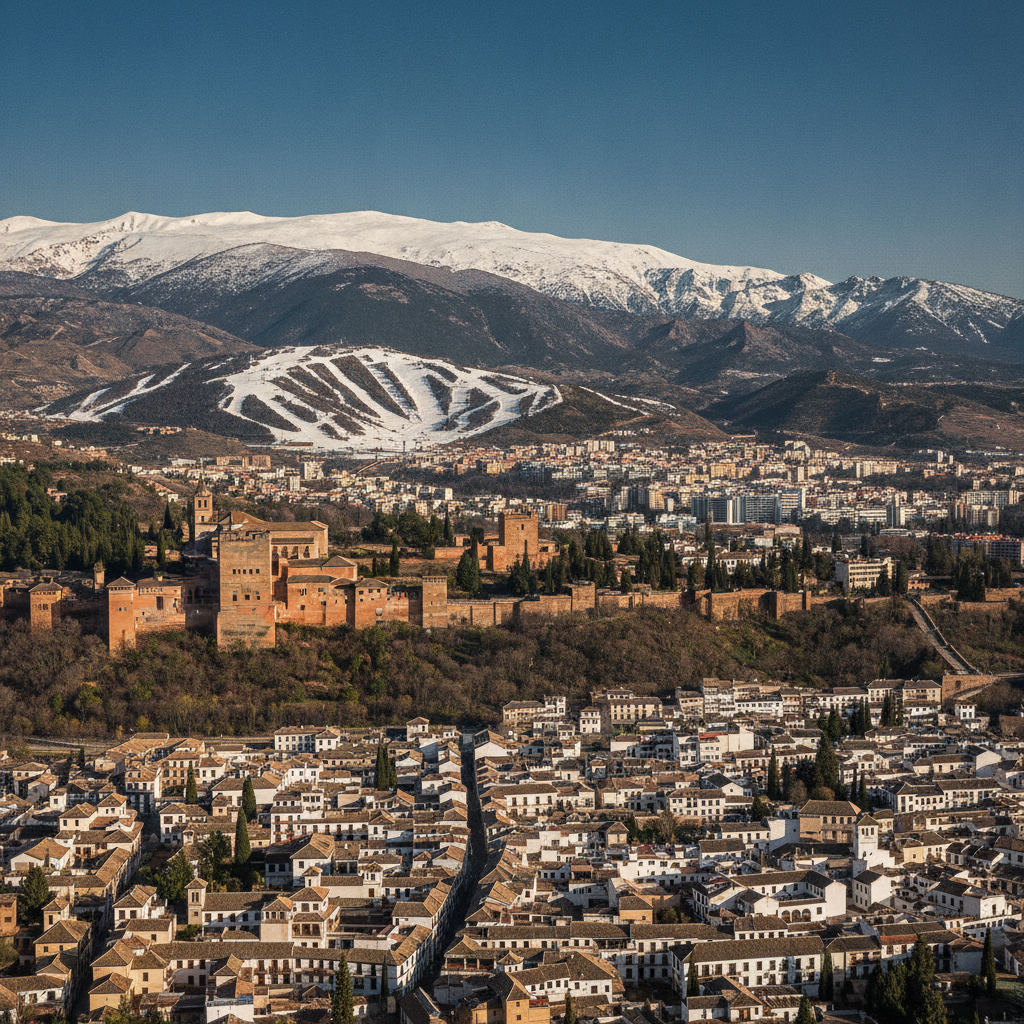
Sierra Nevada, Ski Resort & Granada's Mountain Wilderness
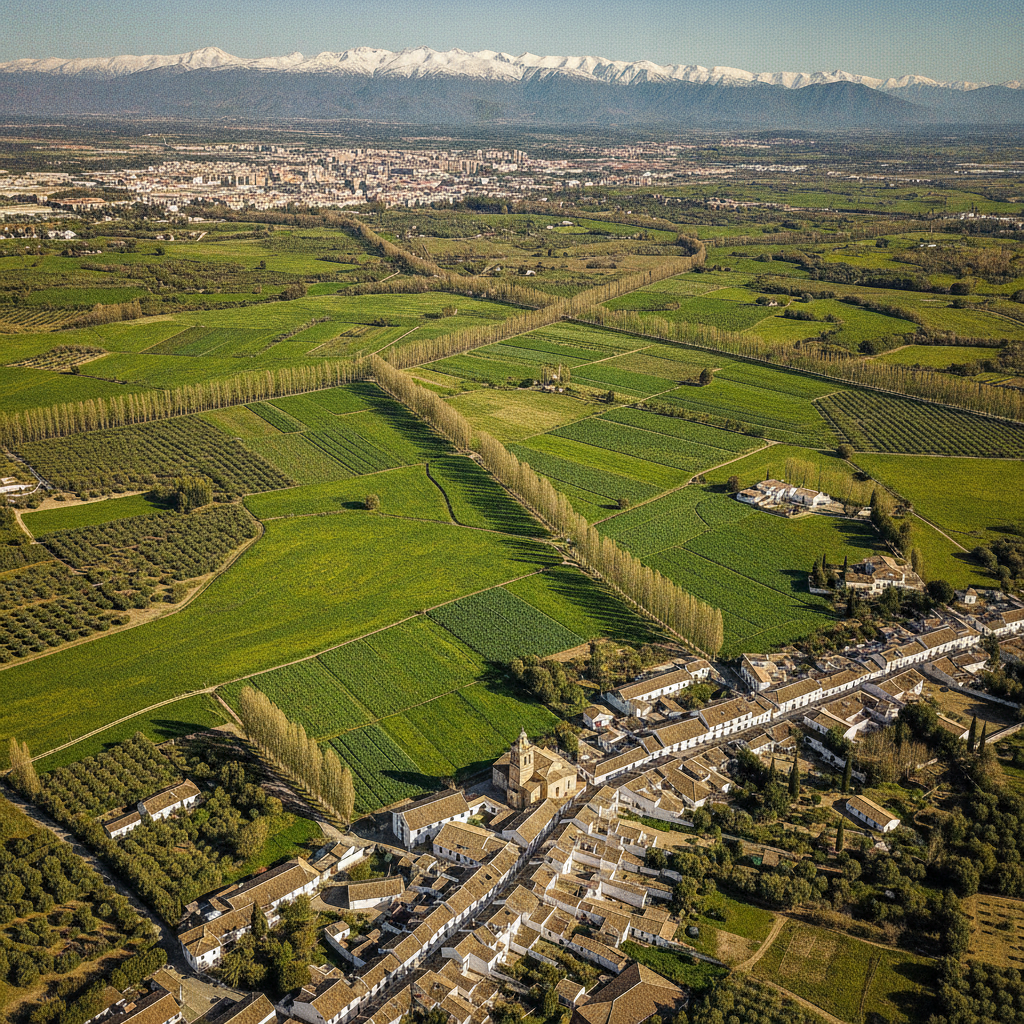
Lorca's Granada, Fuente Vaqueros & the Vega Countryside
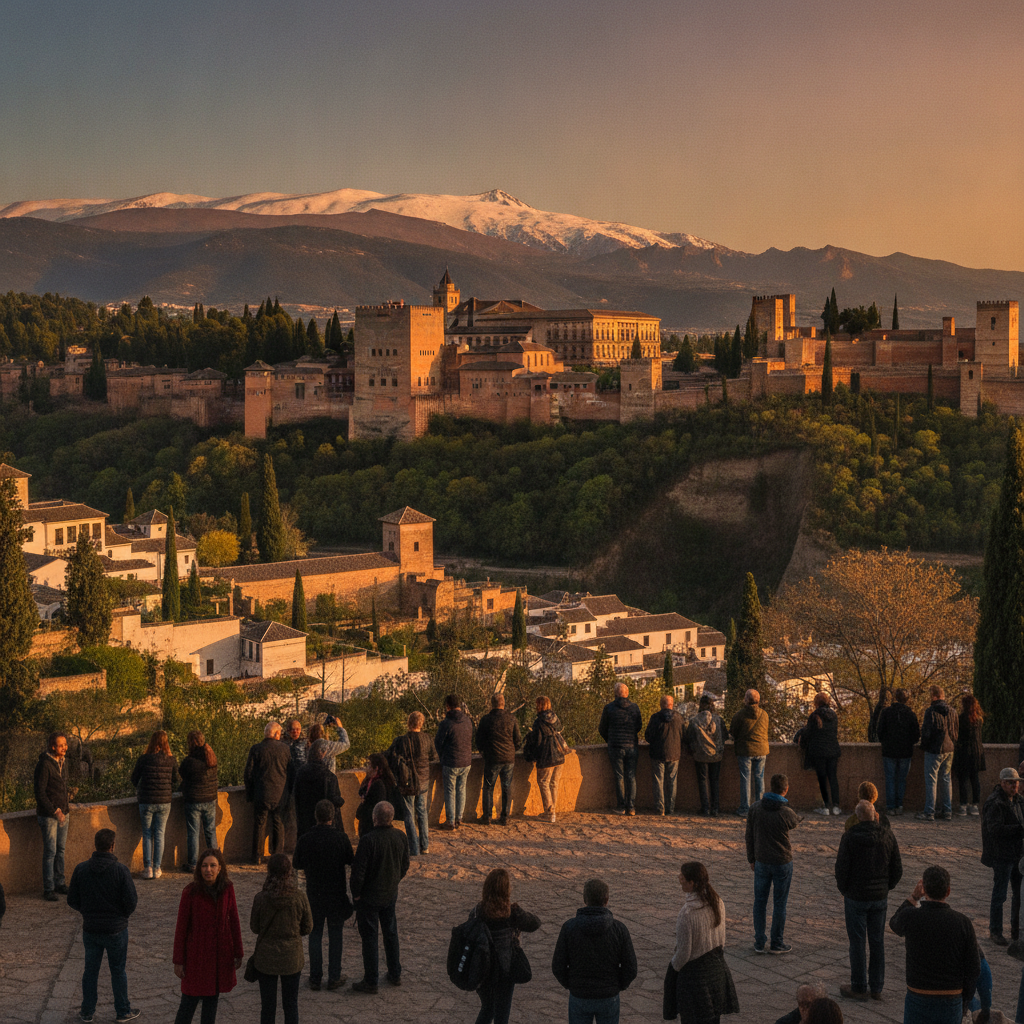
Albaicín, Sacromonte & Granada's Moorish Quarter