The Alhambra, Nasrid Palaces & the Generalife Gardens
The Alhambra de Granada (the 'Red Fortress' — the UNESCO World Heritage Site palace and fortress complex on the Sabika hill above Granada, the greatest monument of Islamic architecture in the western world and the most visited tourist site in Spain): the Nasrid Palaces (the royal palaces of the last Islamic dynasty in Spain — the Nasrid sultans of Granada who ruled from 1238 to 1492), the Alcazaba (the military fortress), the Generalife (the summer palace and gardens), and the Palace of Carlos V (the Renaissance palace begun in 1527) — together the most extraordinarily beautiful monument in the Iberian Peninsula.
- 1
The Alhambra — The Red Fortress of Granada
The Alhambra (from the Arabic 'Qal'at al-Hamra' — the 'Red Fortress' or the 'Red Castle', the name referring to the reddish colour of the walls of the fortress, built from the red clay and the red sandstone of the Sabika hill): the site (the Alhambra — the fortress-palace complex on the elongated ridge of the Sabika hill (elevation 740 metres / 2,428 feet above sea level) on the eastern edge of Granada, the hill that overlooks the city of Granada from the east (the 'Albaicín' — the Moorish quarter of Granada on the hill directly facing the Alhambra across the valley of the Darro River) and is backed by the forest of the Bosque de la Alhambra): the history (the Alhambra — built by the Nasrid dynasty, the last Islamic dynasty to rule in the Iberian Peninsula: the Nasrid dynasty (the Banu Nasr — the dynasty that founded the Emirate of Granada in 1238 after the fall of the Almohad caliphate, the dynasty that ruled Granada for 254 years until the final surrender of the last Nasrid sultan Muhammad XII (known as 'Boabdil') to the Catholic Monarchs Ferdinand and Isabella on January 2, 1492): the UNESCO World Heritage Site (the Alhambra — designated UNESCO World Heritage Site in 1984, in the inscription 'Alhambra, Generalife and Albayzín of Granada'): the visitor numbers (the Alhambra — the most visited tourist site in Spain, with approximately 2.5-3 million visitors per year, the access limited to the Nasrid Palaces section by timed-entry tickets (the maximum of 300 visitors per half-hour in the Nasrid Palaces), the tickets that sell out weeks in advance for the peak tourist season (April-October)).
- 2
The Nasrid Palaces — The Jewel of Islamic Architecture
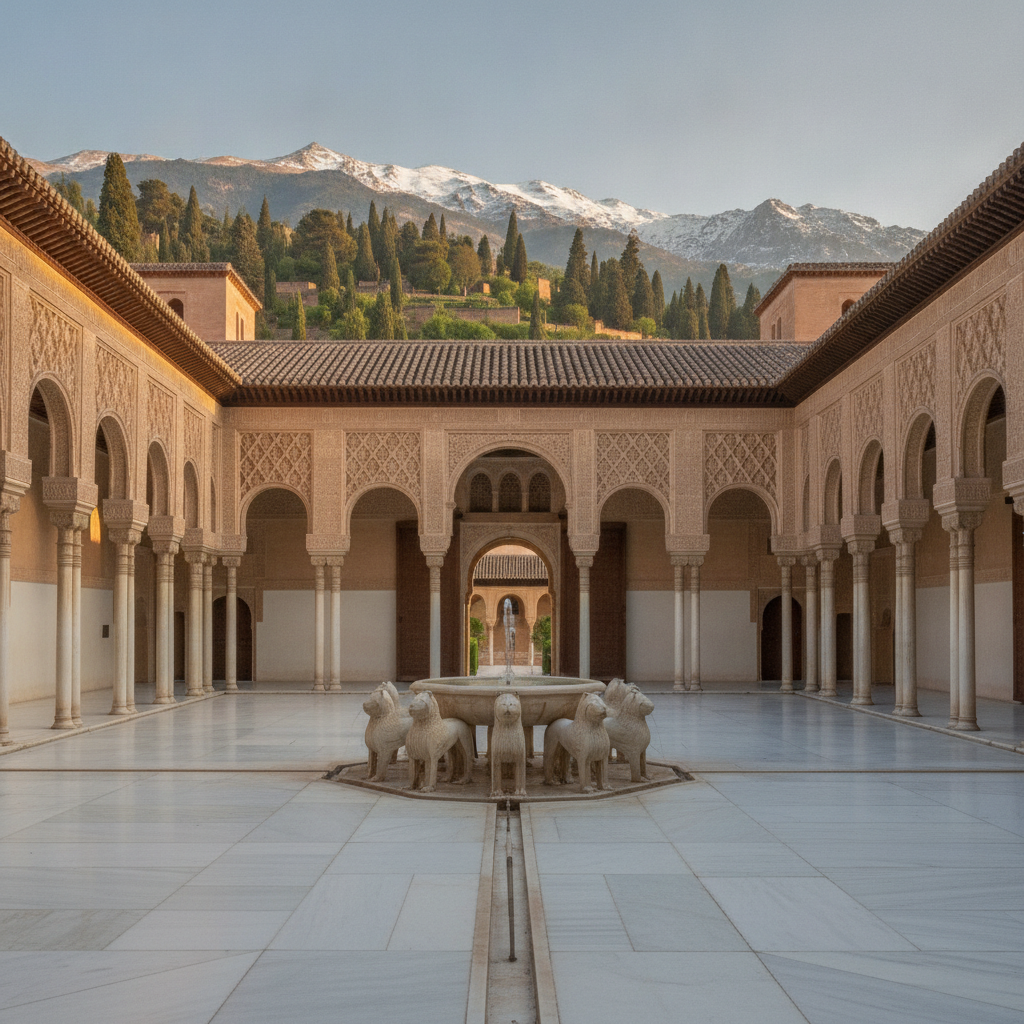
The Palacios Nazaríes (the 'Nasrid Palaces' — the royal palaces at the heart of the Alhambra, the most elaborate and the most exquisitely decorated complex of Islamic architecture in the world): the three interconnected palace units (the Nasrid Palaces composed of three principal units: the 'Mexuar' (the earliest of the three units — the 14th-century council chamber where the sultan administered justice and received petitions, now partially converted into a Christian oratory), the 'Comares Palace' (the 'Palacio de Comares' — the formal reception palace built by Yusuf I (1333-1354): the Patio de los Arrayanes (the 'Myrtles Court' — the great rectangular courtyard with the long reflecting pool flanked by the myrtle hedges and the two arcaded gallery ends), and the Salón de Comares (the 'Comares Throne Room' — the state throne room with the most complex wooden ceiling in the Alhambra (the carved and gilded cedarwood ceiling depicting the seven heavens of Islamic cosmology, with the central star-shaped 'cupola' representing the Throne of God)) and the 'Lion Palace' (the 'Palacio de los Leones' — the private harem palace of Muhammad V (1354-1391): the Patio de los Leones (the 'Court of the Lions' — the most famous courtyard in the Alhambra, the most celebrated Islamic architectural interior in the world), the Sala de las Dos Hermanas (the 'Hall of the Two Sisters' — the most magnificent room in the palace, with the extraordinary 'muqarnas' (honeycomb/stalactite) vault (the plasterwork vault composed of more than 5,000 individual 'stalactite' cells) covering the domed ceiling), and the Sala de los Abencerrajes (the 'Hall of the Abencerrajes' — the room with the hexagonal star-shaped 'muqarnas' vault)).
- 3
The Generalife — The Sultan's Summer Garden
The Generalife (the 'Jannat al-'Arif' — the 'Garden of the Architect' or the 'Garden of the Overseer' in Arabic — the summer palace and garden of the Nasrid sultans of Granada, situated on the Cerro del Sol (the 'Hill of the Sun') immediately above and east of the Alhambra palace complex): the history (the Generalife — the summer retreat built for the Nasrid sultans in the early 14th century (the building dated to the reign of Muhammad III (1302-1309) and expanded by Ismail I (1314-1325)), the garden complex designed to provide the sultan with the pleasures of the garden (the 'rawda' — the Islamic garden (the pleasure garden of water, shade, and fragrance) in the tradition of the Qur'anic descriptions of Paradise): the garden design (the Generalife gardens — designed on the terraced hillside above the Alhambra in the Islamic garden tradition: the water (the 'acequias' — the irrigation channels that bring the water from the Sierra Nevada snowmelt through the 'Acequia Real' (the 'Royal Channel') to the Alhambra and the Generalife), the shade (the cypress trees, the bay laurels, the orange trees, and the roses that provide the shade and the fragrance of the garden), and the sound (the sound of the water flowing in the channels and the fountains that is the most characteristic sensory experience of the Alhambra and the Generalife)): the Patio de la Acequia (the 'Court of the Long Pond' — the central courtyard of the Generalife summer palace, the rectangular courtyard with the long narrow pool down the centre (the 'acequia real' — the 'royal channel'), the jets of water arching over the pool from both sides, and the flower beds and the orange trees surrounding the pool: the most romantic garden space in the Alhambra complex).
- 4
The Alcazaba — The Military Fortress
The Alcazaba (the military fortress at the western end of the Alhambra ridge — the oldest part of the Alhambra, begun in the 9th century and expanded by the Nasrid dynasty in the 13th-14th centuries): the fortress (the Alcazaba — the 'alcazaba' (from the Arabic 'al-qaṣaba' — the 'citadel') that forms the military stronghold of the Alhambra, the network of defensive towers, walls, barracks, and cisterns that protected the Alhambra palace complex from the west (the direction of attack from the city of Granada below)): the Torre de la Vela (the 'Watchtower' — the tallest tower of the Alcazaba, the tower from which on January 2, 1492, the standard of the Catholic Monarchs Ferdinand and Isabella was raised above the Alhambra, marking the completion of the Reconquista (the Christian reconquest of Islamic Iberia) and the end of the Nasrid Emirate of Granada (the last Islamic state on the Iberian Peninsula)): the view from the Torre de la Vela (the most spectacular view in Granada — the 360° panorama from the top of the Torre de la Vela: to the east, the Nasrid Palaces and the Generalife gardens; to the south, the Sierra Nevada mountain range; to the north and west, the city of Granada spread out below the hill, with the Albaicín quarter visible on the hill directly opposite and the Sierra de la Alfaguara beyond): the bell (the 'Campana de la Vela' — the bell in the Torre de la Vela, rung to regulate the irrigation water distribution among the farmers of the Granada vega in the centuries after the Christian conquest (the bell rung to signal the opening and closing of the irrigation channels), now rung on January 2 each year to mark the anniversary of the Christian conquest).
- 5
Palace of Carlos V — Renaissance in the Heart of Islam
The Palacio de Carlos V (the 'Palace of Charles V' — the Renaissance palace built within the Alhambra complex by the Habsburg Emperor Charles V (as King of Spain: Carlos I) beginning in 1527): the building (the Palacio de Carlos V — the most important Renaissance building in Spain (after the El Escorial palace-monastery near Madrid), designed by the architect Pedro Machuca (c.1490-1550) (a pupil of Michelangelo who had studied in Rome and Florence in the early 16th century) in the classicizing Italian Renaissance style): the design (the Palacio de Carlos V — the unique circular interior courtyard set within a square exterior building: the square exterior (approximately 63 × 63 metres) with the two Renaissance facade elevations (the main (west) facade and the (south) garden facade) in the Italianate Renaissance style (the first story in the Doric order, the second story in the Ionic order), and the circular interior courtyard (30 metres in diameter) with the two-story circular colonnade (the lower story in the Doric order, the upper story in the Ionic order) of 32 columns on each story): the current use (the Palacio de Carlos V — currently used as the exhibition galleries of the Museo de la Alhambra (the museum of Islamic art from the Alhambra, housing the original Nasrid artefacts and the finds from the Alhambra excavations) and the Museo de Bellas Artes de Granada (the Fine Arts Museum of Granada) on the two floors of the building): the unfinished state (the Palacio de Carlos V — a palace that was never completed in the intended manner: the building was begun in 1527 but interrupted by the Morisco Revolt of 1568-1571 and left unfinished, the interior dome of the circular courtyard never built, leaving the courtyard open to the sky (which the current architectural opinion regards as the most beautiful accidental feature of the building)).
- 6
The Alhambra at Dusk & Night Visit
The Alhambra at dusk (the Alhambra in the late afternoon and at sunset — the most atmospheric time to visit the complex): the late afternoon light (the light of the Andalusian late afternoon sun — the 'luz de las cinco' (the 'five o'clock light') that the poet Federico García Lorca (1898-1936 — the Granada-born poet who is the most famous literary son of Granada) described as the most beautiful light in the world, the warm orange light that illuminates the red walls of the Alcazaba and the towers of the Nasrid Palaces in the late afternoon, the light that turns the white marble of the Patio de los Leones to gold and casts the deep shadows of the muqarnas stalactite vaulting into sharp relief): the night visits (the Alhambra night visits — the timed-entry visits to the Nasrid Palaces offered on Friday and Saturday evenings (and certain other evenings in the high season) from approximately 10 pm to midnight: the Nasrid Palaces at night — the palace lit by the soft warm electric light from below (the uplighting of the key architectural elements), with the dark sky visible through the open-air patios and the sound of the water in the fountains and the channels carrying clearly in the night air): the view from the Albaicín (the view of the Alhambra from the Mirador de San Nicolás in the Albaicín — the most celebrated view of the Alhambra, the view of the Alhambra walls and the Nasrid towers with the Sierra Nevada snow-capped mountains as the backdrop, the view that is the single most photographed view in Spain and one of the most photographed views in the world).
Walk this route with audio
Stories play automatically as you reach each stop — no tapping needed.
More in granada
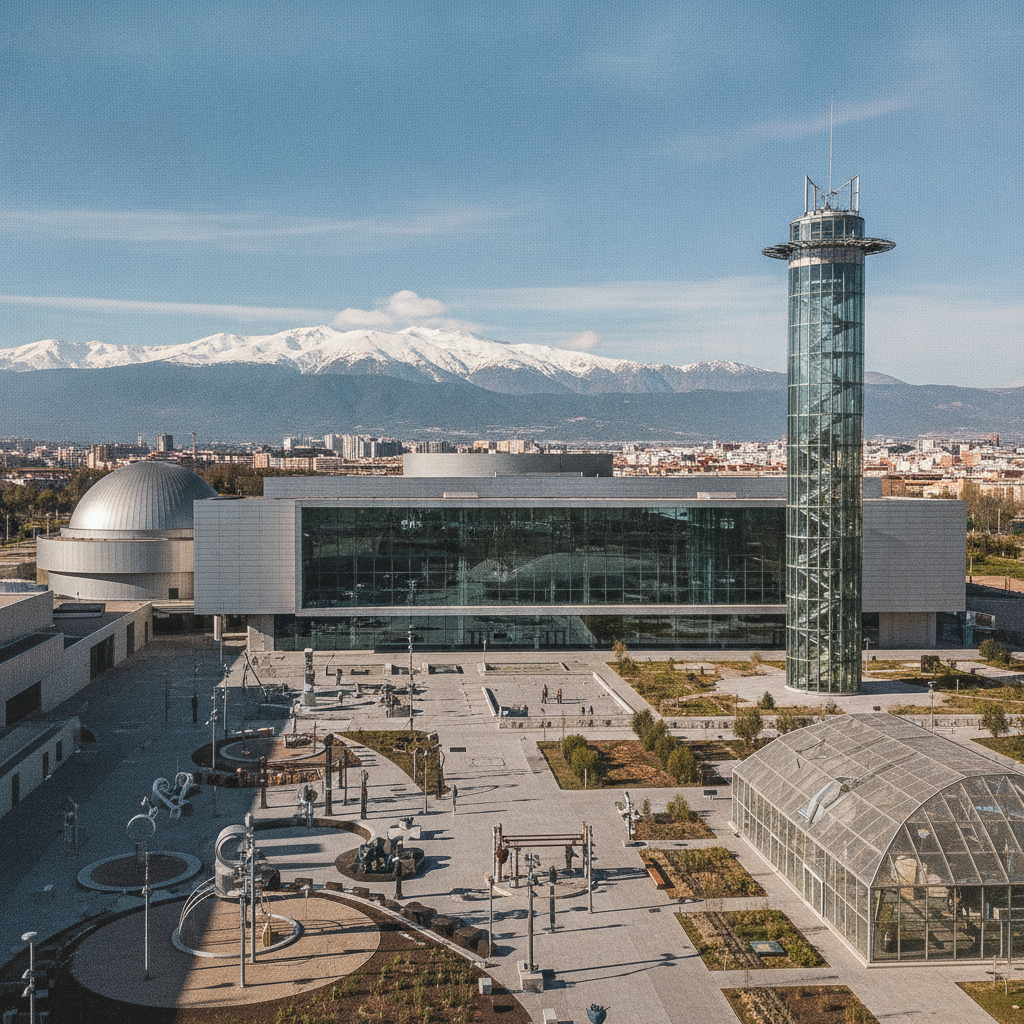
Parque de las Ciencias, University of Granada & Modern City
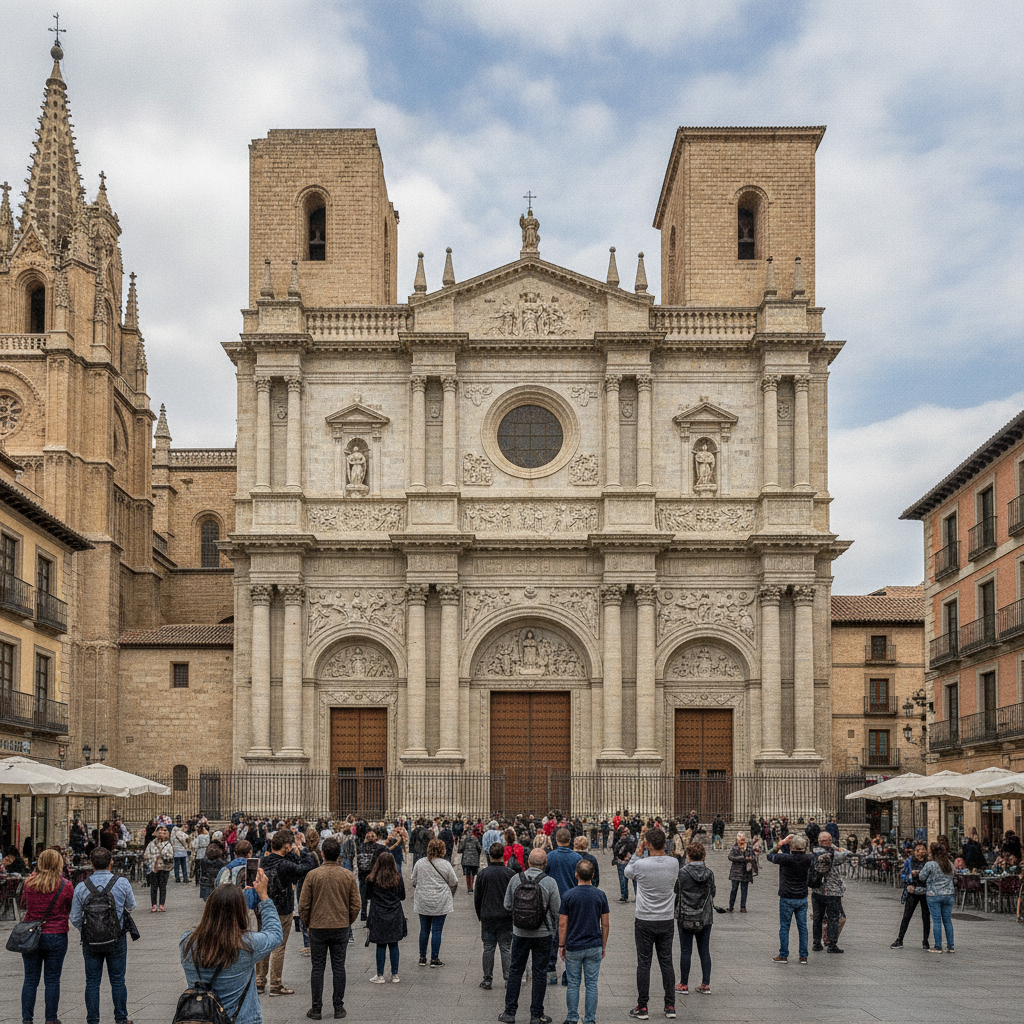
Granada Cathedral, Royal Chapel & the End of the Reconquista
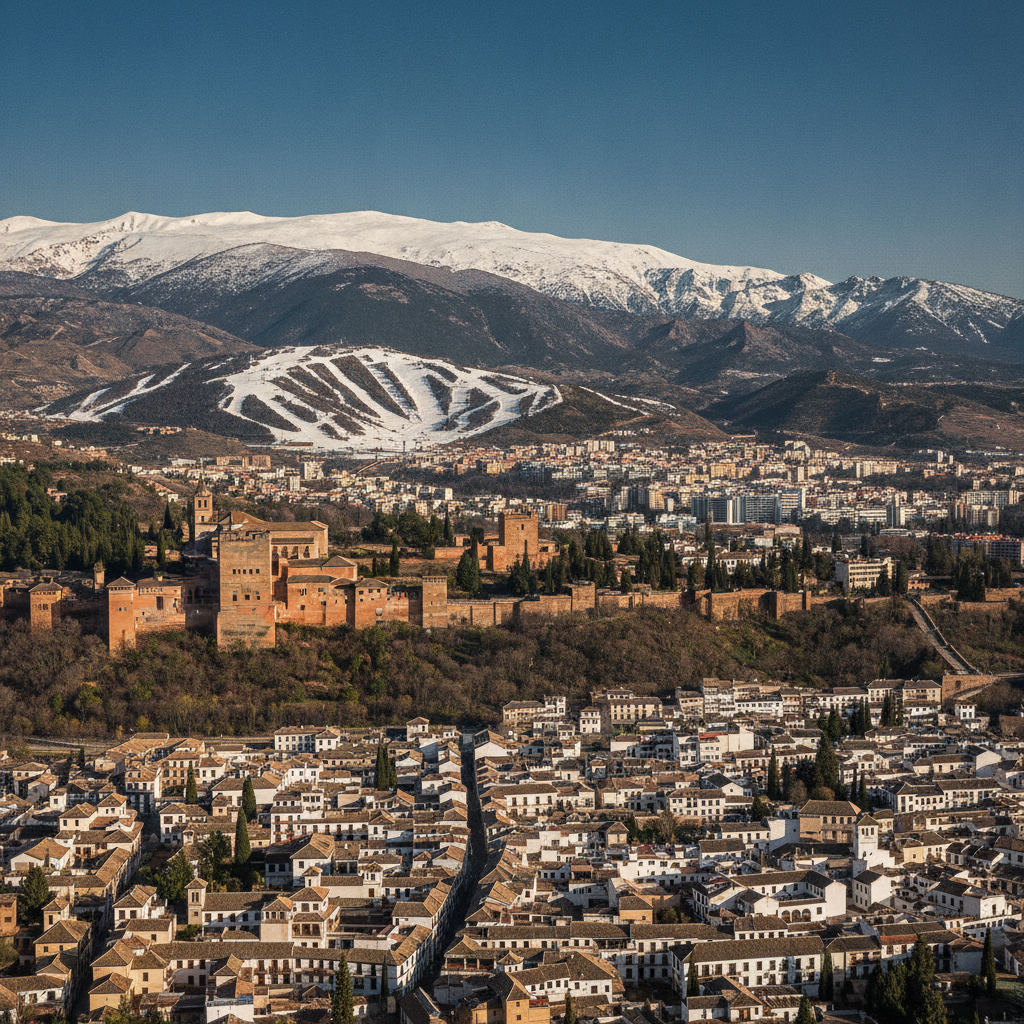
Sierra Nevada, Ski Resort & Granada's Mountain Wilderness
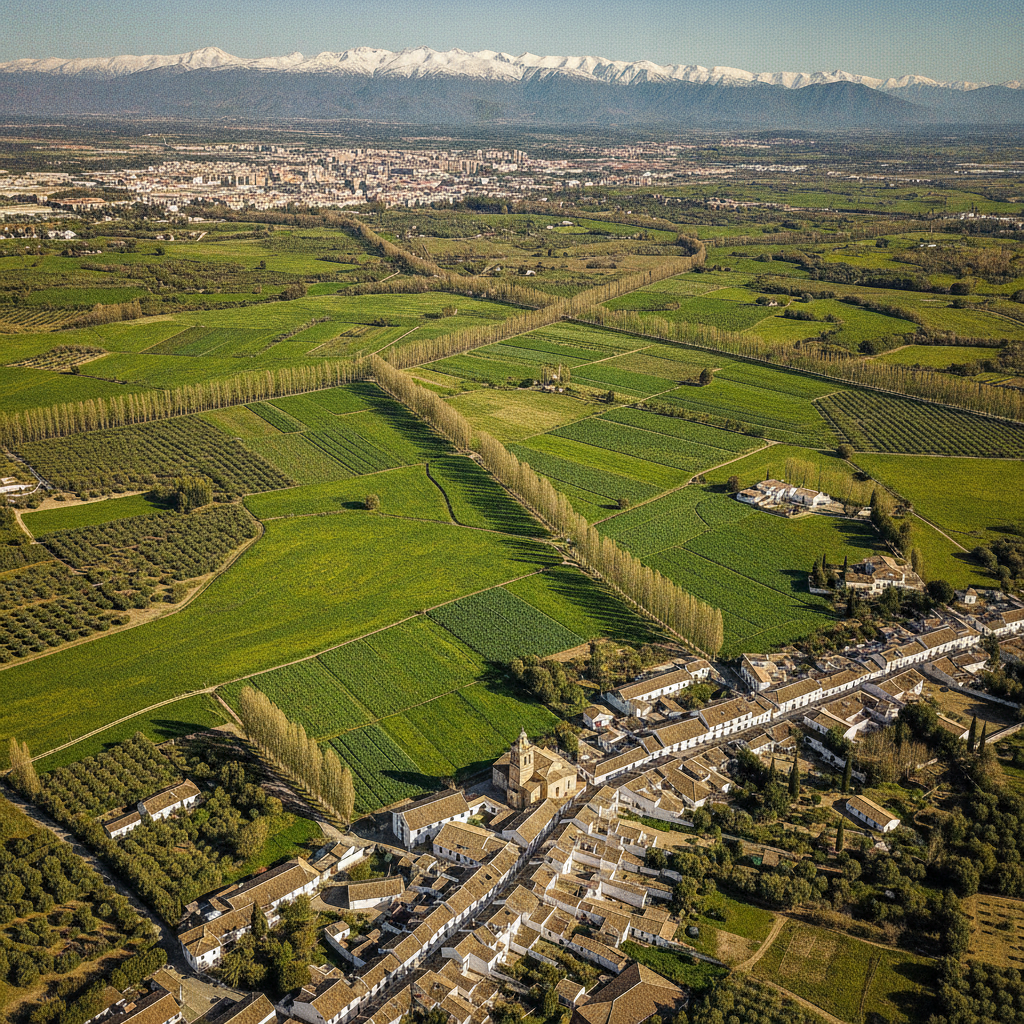
Lorca's Granada, Fuente Vaqueros & the Vega Countryside
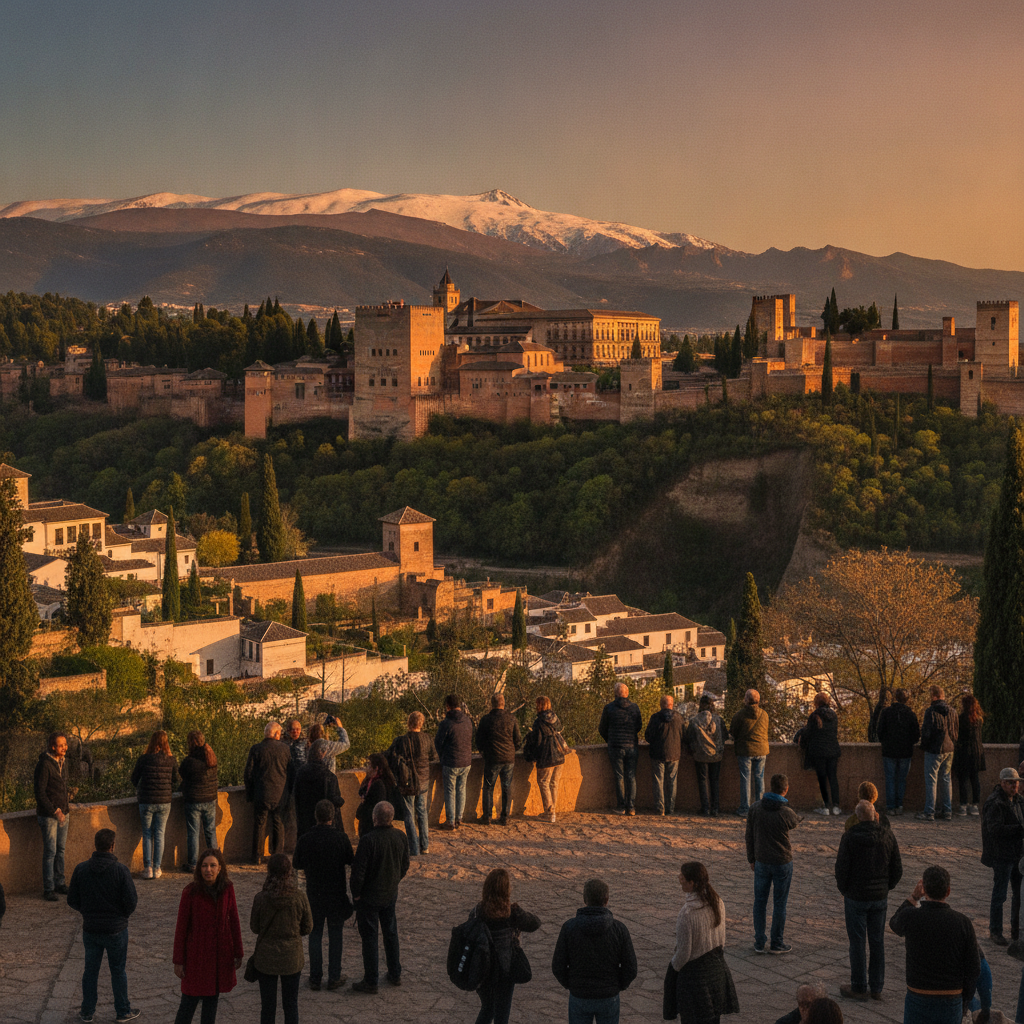
Albaicín, Sacromonte & Granada's Moorish Quarter